An artists journey

Category: Photography

  • Why Do It?

    Why Do It?

    Here’s a dirty secret of the photography world: we don’t make much money on fine art sales. Then why do it?

    Crowded market

    The art market in general is crowded, over-saturated, cutthroat. And photography is even worse. Everyone is a photographer. Trillions of images are shot every year. If only 1 trillion pictures are taken a year, that is an average of over 2.7 billion pictures a day. Who has time to look at anything anymore?

    And people have come to view photographs as some pixels on their phone screen. They quickly scan through hundreds of them a day. That devalues art in general and fine art in particular.

    Even if your work is excellent, how do you get people’s attention? Not many people go to galleries. If you are looking for a nice image to go over your couch or fireplace, where do you go? Etsy? Art Marketplace? Amazon? Maybe, but you will quickly drown in choices. Some of them are good.

    Other channels

    The fine art photographers I know who are making money sell through galleries or art fairs. But even that generally does not support them.

    No, most “professional’ fine art photographers support themselves through conducting workshops or selling online courses or writing books. There is still money to be made there. Seems like everybody is a perpetual beginner and needs training. A photographer who makes a name for himself can do well teaching other people.

    Fine Art

    I keep saying “fine art” photography. That is what I generally do and what I like. It is a small niche of the overall photography market.

    People whose main motivation is selling art are told, rightly, to go to Art Marketplace or Amazon or places like that and research what people are buying. Then do more of that. Following the crowd is a sure strategy to sales.

    That is not what I do and I do not want to do it. I am interested in creating art – exploring and using my creative vision – instead of copying what other people are doing.

    Self motivation

    I would love to sell more of my prints. ( photos.schlotzcreate.com or contact me ed@schlotzcreate.com 🙂 ), but maybe not for the reason you would first think.

    In my view, my art will be expressed mainly as prints. A print has many great qualities that are well beyond what a screen can provide.

    I want people to appreciate my work enough to pay for a large, excellent quality print to put in their home or office. Something they want to look at frequently over the years because it stirs something in them. It creates a relationship between us, between my vision and its effect on their life. I want to know who is buying the print and why. To me, another nice nighttime shot of the Dallas skyline they buy off Amazon does not do that.

    I spent a great career as an engineer, but I kept alive a secret desire to express my creativity through photographic imagery. It is one of the important things I do to keep growing as a human. I don’t actually have to support myself financially through my art. I can be selective. Call me privileged if you want, or call it good planning and knowing how to build a good life.

    Can’t not do it

    So I have a strong desire to share my works with people, to have them resonate with some of them enough to decide to buy them to look at for years to come. I hope my art will add something to their lives.

    But if no one sees my work and no one buys my prints, I still have to do them. Ultimately, my art is for me. It is something I need to do, that I am driven to do. My art completes something in me. It is something I can’t not do.

    I have long since given up on the romantic notion of becoming rich and famous through my art.

    Today’s image

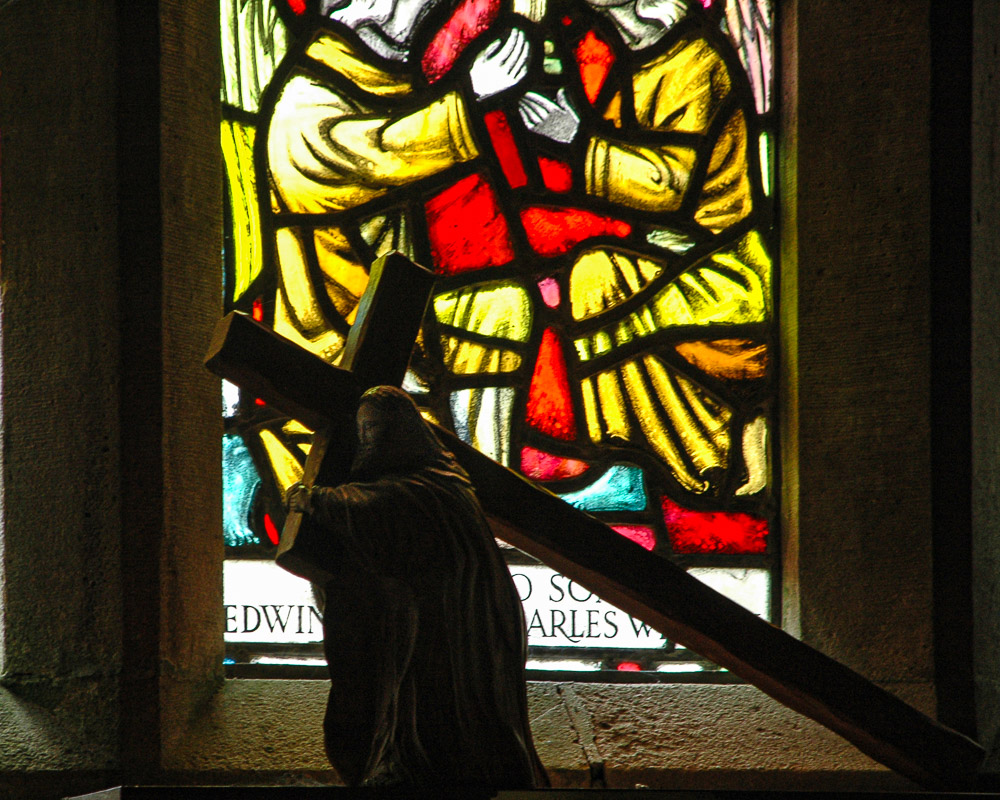
    I can’t pass up something like this. The simplicity and distinct graphic lines grab me. In this case, I risked getting fired, because I took it at a company I worked for where they had a strict no camera policy. But I walked in this door every day and when the light was right… Well, I couldn’t stop myself.

  • The Histogram is Just Data

    The Histogram is Just Data

    I don’t mean to be insulting, but I cannot understand when people look at histograms as some magical, mysterious, and intimidating technical artifact. It is not. It is just data about what our sensor is seeing. The histogram is just data, and it is useful. Use it. Do not be afraid of it.

    Trigger

    A newsletter I received today triggered this semi-rant. But looking back, I see it has been over 3 years since I wrote about histograms, so it is probably time to revisit the subject. This actually is a subject I feel some passion for and believe it needs to be better understood by photographers.

    The newsletter author declared that our histograms lie. I realize that click-bait is commonly used to try to get people to read articles, but I still feel it is being somewhat underhanded. Now, in fairness, the newsletter author made some valid points – except for the part about histograms lying.

    What is a histogram?

    We see this graph of some data and maybe it does look complex and mysterious if you are not used to working with data and don’t know where the data comes from. Let’s get over that by understanding how simple but effective it is.

    By convention we play like our cameras measure light in a range of 0 to 255. There are no units: 0 represents black and 255 is pure white. The convention came from the history of early digital cameras. It is obsolete today, but still used. That is a topic for another day.

    So there are 256 possible values of brightness (0-255). If we go through and count the number of pixels of each value – the number of pixels in the image that have value 0, the number of pixels in the image that have value 1, etc. – and put them on a graph, we have a histogram.

    Here is a simple example:

    Again, black is on the left going to white on the right. Even without me showing the actual image, we can see that there is a “bump” of dark values on the left and a larger hill of bright values on the right. In between is a relatively low and even count.

    What can we learn from this? It is a black & white image, because there is no separate data for red, green and blue. There is high contrast because of the hills at the dark and bright ends. It is bright but not overexposed. There are deep blacks, but not enough to have lost important information. So, even without seeing the image, we can tell a lot about it. Is the image exposed “correctly”? Ah, that is the question my rant is based on.

    This is why histograms are useful. They are useful data about our image. It gives simple information to help us understand our exposure better.

    Benefit

    Today’s mirrorless cameras bring us the amazing benefit of real-time histograms. We can select to see the histogram live in our viewfinder or on the display on the back.

    What is the benefit? We see an immediate graphical view of the exposure the camera is determining. In the example above, we can see that the light tones are very bright, but not overexposed.

    I routinely use it to watch for “clipping” of brights or darks. If there is a large hump of data jammed up against the left or right edge, that is probably a problem. I will often choose to override the camera’s exposure determination to avoid these peaks.

    Again using the example above and knowing that my camera was in aperture priority mode, we see that it chose 1/750 second as the shutter speed. That works OK in this case, but if I did not agree, I would have easily used the exposure compensation dial to adjust the exposure. I do this a lot.

    So the histogram is a quick and easy to get a feeling for the “shape” of the exposure.

    They don’t lie

    Now coming to the basis of my rant: histograms do not lie (actually, they do; I will say how later and why it doesn’t matter).

    The newsletter author gave the example of a picture of some fruit on a dark table with a black background. She said the histogram lied because the camera did not give the exposure she wanted. It tried to make the whole image evenly exposed.

    No, the histogram is just a straightforward measurement of the data. If you take your temperature but don’t like the reading you get, it is silly to say the thermometer lied.

    What the author was describing was that she wanted to expose to have the same look as the scene she saw. This was a case of disagreeing with the camera’s matrix metering calculation. It was doing it’s job of trying to capture all the data that was there and preventing blown out blacks. But she decided to use exposure compensation to force the camera to expose the scene the way she wanted.

    The histogram did not lie. As a matter of fact, she relied on it to do her exposure compensation values. She used the histogram to determine how to override the camera exposure calculation.

    Actually, I would have used the camera’s original exposure determination. I like to have all the data available to work with. This is called exposing to the right. Bringing the brightness down in post processing to the level she wanted is simple, non-destructive, and does not add noise. Capturing the compensated image the way she wanted irreversibly crunches the blacks.

    They lie

    I said they don’t lie, but they do a little. For speed and efficiency the histogram is derived from the jpg preview of the image. Same as the preview shown in the viewfinder or camera back. If you study jpg processing you will see that it alters and discards a lot of information to give a good perceptual result.

    So the histogram is not actually looking directly at the literal RAW data from the sensor. But there is little observable discrepancy. On my camera, I find that it exaggerates the highlight values very slightly. Still, I typically back the exposure off to avoid highlight clipping, so it adds a little conservatism into the process.

    Trust the data you see. It is good enough.

    They’re not the photographer

    The histogram gives you data. It does not determine exposure. People talk about “good” or “bad” histograms. This is a misunderstanding. There are no absolute good or bad ones. What counts is did you get the exposure you wanted.

    There are valid artistic reasons for shooting what some people would consider bad histograms. If it is what the artist wants, it is correct.

    Histograms give us a reading of the exposure. They do not determine what is right. It gives some insight on what the automatic exposure calculation in the camera is trying to do.

    Use it

    The histogram is a brilliantly simple and wonderfully useful tool. We are lucky to have real-time histograms available to us now. It is a game changer. But it is just data. Do not be afraid of it.

    The histogram does not lie. But it does not automatically ensure that the exposure is exactly what you want. You have to sometimes take change and override the camera settings. When you do, the histogram is there showing you the result of your decisions.

    It is not magical or mysterious. It is a great tool. Use it. A craftsman know how to use his tools.

  • Buy My Presets, Make Work Just Like Me!

    Buy My Presets, Make Work Just Like Me!

    Maybe I’ve just gotten on some bad mailing lists, but it seems I am being bombarded by offers to get the “secret sauce” of many photographers. Promises that if I will just take and use their presets I will now have all I need to be just like them. No sweat; no learning, just buy my presets, make work just like me.

    Plugins and presets can be good

    I use plugins, presets, profiles, Photoshop actions, and whatever else I can use productively. There is nothing inherently wrong with any of them. They can be great productivity tools and they are getting more capable all the time.

    Lightroom Classic’s latest technology allowing us to include “AI” masks in a preset – adaptive presets – that can be a great help. This is one reason a larger preset market is appearing. Including the automatic masks makes the presets more general.

    Adobe includes quite a few presets and profiles in Lightroom Classic. Many of them are useful. If you include all of them in your lists you will be wading through hundreds of choices. That’s before buying sets of them from other photographers.

    Maybe it’s just me, but I find too many choices overwhelming. If you are exploring a look for an image, are you really going to try out hundreds of options? Maybe once every few months just to stimulate ideas. But routinely doing that would waste lots of time.

    That is why I carefully curate a small set of presets and profiles that are important to me and that I may actually use. This gets into the next topic.

    If you didn’t make it, you probably won’t know when to use it

    I have tried downloading a couple of sets of presets from well known photographers. What I find is that the presets represent their thinking and choice sets. They had dozens or hundreds of minor variations of some basic edits. E.g. make the sky a little more blue, make the sky even more blue, make it real blue, make the foreground a little warmer, make the foreground even more warm, etc.

    But there was little there I could not do as well and faster by myself, since i know how to edit in Lightroom Classic. If I want to make the sky more blue, that is some simple, almost automatic edits that I can do in a few seconds with little thought. Doing it myself is much faster than searching through hundreds of presets someone else made and that have confusing names.

    I removed all the ones I downloaded.

    What I find is that if I want to repeat something fairly consistently, I make a custom preset for it. Then I can find it easily, because it is in my User Preset list and I know what I called it and why I made it. Even though it is probably duplicating what many others offer in their preset sets, I will never find theirs and I would not recognize the strange name they called it.

    But if I make it, I know what it does and where to find it. Besides, the adjustments reflect my vision, not someone else’s.

    Profiles

    Profiles are another rich area in Lightroom Classic. They have gotten very powerful in recent releases. If I am doing a B&W conversion in Lightroom, I will usually run through a short list of my favorite B&W profiles to get a starting point.

    In some ways profiles are more powerful than presets, but also more mysterious. Presets do their work by changing the normal settings we can see. It is easy to apply a preset then go look at the settings and modify them to our preferences. A profile’s work is hidden in the internals of Lightroom. You can’t really see how it did what it did.

    This is a problem for me. Maybe I am too much of a control freak, but I take the responsibility for knowing how to create the image I produce. Besides, vintage photography looks and “modern” color styles are not very appealing to me. That seems to be the main application of many profiles.

    Craftsmanship

    I would never say we have to suffer for our art, but I do believe we have to be a good enough craftsman to be able to realize our vision. That is an argument for doing the work ourselves. This is one of the arguments against AI generated “art”. For me, there is a serious question of authorship if we are unable to create the work entirely our self.

    I will capture my own image, not download something someone else shot. My image curating will be done by me. I feel I need to be able to edit and craft my work to the point of being a final image. I will also print it, to the limits of my small printer. That whole cycle is important to me. I feel it defines a lot of me as an artist.

    If it actually did it, why would I want it?

    But this is just looking at mechanisms and process. What is going on behind the scenes in the editor. The overarching question for me is why would I use these artist-specific presets?

    Sorry, but I don’t want my work to look like yours. Perhaps I will analyze what appeals to me about some feature of your work and find out how to do some of that on my own. But I do not want a preset that says “make this image look like <_______> did it”.

    How much different is using a “make it look like x did it” preset from telling ChatGPT (or one of it’s cousins) to “create a landscape image of the Grand Tetons in the style of Ansel Adams”?They are not quite the same, but too close for my comfort. I am deadly serious about wanting to follow my personal vision and do work that creatively expresses what I feel.

    No, I will stumble along in my own way, taking my own path, missing out on the ease of being able to simulate various other artists. The risk is not worth the reward for me. I would feel like a fake.

    Thank you for your offer to buy your presets and easily make work that looks just like yours. I will pass.

    Today’s image

    This is taken in a rail yard near my studio. Nothing very special (although if you look at those rails you can wonder, like I do, how a train stays on the track). Maybe it is not a very good image. But it is all mine. I am responsible for every pixel. The original image is mine and no presets or profiles or plugins were used. No attempts to imitate any other photographer’s style. Just like I want it to be.

    Do you use other photographer’s presets or profiles? Let me know. I am curious. No criticism if you do, I just welcome your experience and thought process.

  • Mix a New Image

    Mix a New Image

    Recently I was watching a video series on audio mixing. That is a separate story. But I was struck by some of the similarities between the process of mixing for certain genres of music and image editing and creation for certain types of art. It made me think of the ways we mix a new image.

    Audio mixing

    Producing an audio recording is simple but difficult. Let me take a rock band as an example. The group goes into a studio and the source material is captured, sometimes for the group all together but more often by “tracking” each band member individually. It is fairly typical to start with the drummer, because the percussion is the base beat that everything else fits into. Then guitars and/or other instruments are overlaid. Finally, the vocals are recorded last, because the singer needs to hear everything else.

    Each individual or instrument is recorded on one or more tracks. The drum, for instance, might need 10 or more tracks to capture the full drum kit. And there are multiple takes for each track.

    Then in the studio, the recording engineer works with the performers to create a mix that pleases them and had good production value.

    Digital image creation

    Let me take an example of creating a fine art composite image. It will be built of many layers and elements.

    The artist has a general plan for what will be needed and how it will come together. This helps to ensure that all the pieces are photographed and the individual images are created with consistent lighting and perspective and mood and focal length, etc. The artist shoots each element separately.

    Working in the computer, the elements are brought together and blended to create the final image.

    On the surface, there seem to be certain parallels of structure and process. but let’s go a little deeper.

    What really goes on?

    What I observed in several videos and in first hand experience is that a song is basically re-built from scratch in the mixing phase. Of course, simple problems are fixed. Pops and noise is removed. Parts of tracks may be re-pitched. The best parts of several takes are cut together for each performer or instrument to make the master.

    Then it gets weird. After a good basic master is put together the producer goes on to ‘liven up” the sound. This may involve equalizer changes, to tailor the frequency response of a track. It probably involves effects processing that will add delays and reverberation and echoes to give the sound depth and sound like it is performed in a large venue. Maybe even adding things like claps or new percussive effects.

    And it goes on. The producer then may start to “play”. It may involve intentional distortion in parts. It may introduce new sounds that were not in the original recording. As an example, one trick I saw was playing tracks into a garden hose and recording the weirdly distorted sound and mixing it in subtly. You miight even see them put is a track played backwards! Several other very strange techniques can be used to create strangely distorted effects that you would not directly notice, but that add character to the overall sound mix.

    My learning was that, to the recording producer, the original recordings were just raw material to be used, changed, distorted, added to and anything else that could be thought of to produce a sound they liked.

    Similarities

    Isn’t it about the same with photography sometimes? I used the example of fine art compositing. Brooke Shaden and Renee Robyn are 2 good practitioners I think of.

    All the individual pieces that were shot are just raw material. The artist puts them together to create the basic image, then starts to mold it into a final work of art.

    The finishing may involve distortion, warping, masking, radical color changes, and extreme lighting changes. Then new elements are probably introduced, like textures or patterns. There may be multiple layers of them combined using blending modes. Often subtle and not immediately recognized, but making the image into something different.

    An artist using a non-destructive workflow will end up with dozens of layers to create this final image. The end result may only look a little like the original parts.

    Let go more

    This emboldens me to think I am usually too cautious with my vision of what the final image could be. Being an ex-engineer I have an ingrained tendency to go for realism. The final image must look exactly like the original.

    This is probably a mistake. I am self-limiting my artistic freedom. Long past are the days then the novelty of capturing a scene gave interest to a picture. Now an image needs to be a work of art. It needs to show vision and creativity from the artist. That involves letting go of an absolute realistic goal for the image.

    Have you ever heard a “dry” (unmodified) recording of a famous singer? There are very few of them who are so perfect they would let it be heard. All music is heavily processed. It is coming to be the same with images.

    I do not mean AI. That is a separate issue. I am claiming that, to be well received, many images need to be heavily and artistically processed. We have the tools. Let’s use them well.

    A song is built by getting good tracks recorded. Then the producer takes it apart and builds a final song. In a similar way, we can often do the same with an image. The only thing stopping us is our self-imposed limits.

    I will try to learn to not be afraid to mix a new image. Think like a song producer. The original data is raw material to be created with. Post processing is just another tool we use to achieve our vision or feeling.

    Today’s image

    This is me starting to let go. A little. It seems like a pretty conventional aerial image. But of someplace you don’t recognize. Looks can be deceiving.

    Sometime I may describe what it is.

  • Sustainability

    Sustainability

    Sustainability is a common buzz word these days. It is applied to everything. Every company and product claims it. For this, I’m going to redefine sustainability from an artistic point of view.

    Creative sustainability

    As artists, we live on our creativity. Do you worry that the well may dry up? What if your creativity goes away?

    If we produce hard, do we use it up? Or is the engine somehow fed by using more? Is creativity a “sustainable” resource or does it get used up?

    Since this is the core of what we do as artists, it is natural to worry about it. Probably all of us at some point have concerns that we may use it up. What would we do then?

    So, an ongoing concern for many of us is, should we ration and conserve our creativity so we don’t use it up? Is it even possible to conserve it?

    Sustainable creativity

    I don’t believe creativity actually gets used up. It is like a good well that always seems to be full when we need it. If anything, creativity thrives on being challenged and used. It seems like the more we call on it, the more there is.

    But is it sustainable? I think so, but we can be our own worst enemies. If we keep doing the same stuff over and over we get less creative. When we try to stay in a safe rut, there is less need to exercise creative. We’ve done it all. Many times. It is a major challenge to apply new creativity to repeating the same things.

    Unless we are following the lead of where our creativity wants to take us, we risk getting stale. When that happens, we seriously fear we are not creative any more. And we are right.

    That doesn’t mean our creativity is gone. But if we do not give it free rein to take us in new directions, it stops challenging us. For all practical purposes, our creativity is them used up.

    Creativity is like a good friend. It will be there for us, but we have a responsibility to nurture the relationship. If we ignore it, if we do not make time for it, it will eventually give up on us.

    Burnout

    Everyone goes through cycles. Creativity, and everything else in life, can ebb and flow. That is natural. But burnout is an extreme. It is a depressed state where it can seem impossible to ever again do the quality of work we want to do. It can persist for months or years if we let it.

    I know. I have been there. There was a time in my career when I worked long hours for years in a job that was not fulfilling. It caught up to me. I crashed. I pulled back, working less hours and not being as satisfied with the quality of my work. Eventually, by changing position and increasing the creativity of my role, I became productive and happy in my job again. It was probably a 3 year process.

    In burnout, it seems evident that creativity must be unsustainable. That’s not true, though. It is not creativity that lets us down, it is the other parts of our context. It is important to manage our lives and environment if we want to stay creative.

    Creative stimulus

    Like an athlete trains constantly, we must exercise our creativity to stay on top of our game. Everyone’s needs are different, so it is impossible to lay out a plan for you to follow to do it. You have to figure that out for yourself.

    I can provide some creative stimulants I have seen and used. Consider them. Try the ones that seem to fit you. Develop your own methods.

    I will just bullet point some of them. Each could be a topic on it’s own.

    Read. And not just the same old stuff. Read new things. Read things by people you disagree with. And also read some light stuff just for fun.

    Study something new. Don’t plan to get a PhD in it. Just learn something about it. If you like it, go deeper. If not, try something else.

    Write

    Go back and review your old work. Put together a new portfolio.

    Go to a museum.

    Travel to a new place that is NOT a major iconic photo location.

    Put blocks of time in your calendar to do nothing. Turn off your phone. Let your mind wander. Doodle. Look around. Intentionally be unproductive.

    Spend time with friends, just living life.

    Take your significant other out for a nice and unexpected meal.

    Find things that make you happy, but that are not just entertainment. Try to do more of them.

    Take walks, with and without your camera.

    Just do it

    The theme here is to fill your mind with new information. This connects in strange and unexpected ways, leading to who knows what. And to give yourself space and time to just think, ponder, consider, unwind. The more pressure we put ourselves under, the more it shuts down creativity.

    And like the inspired Nike tag line, “just do it”. Get out and work. Take pictures, Don’t worry so much about the results. Going through the motions is comforting and leads to results. Eventually. Creativity is not just inspiration, it is a process.

    Relax and try to de-clutter your head. Follow your instincts.

    Is creativity sustainable? I would say definitely. It is one of the most important traits we have as artists. We can consciously take actions to keep our creativity healthy and flowing. But we have to listen to ourselves and recognize what our needs are.