An artists journey

Category: Mindfulness

  • Acceptance

    Acceptance

    Some people are detailed planners for a shoot. Some go out with an attitude of acceptance, ready to work with what they find. Which is best?

    Planning can achieve great results

    Some people love planning and are good at it. I will totally admit that there are occasions where it is necessary and appropriate.

    Chris Weston (sorry, this is a subscription site; I asked, but they could not provide a way for me to give you access to this lesson for free) tells of a time on assignment when he had a very special shot in mind. Lions hunting at night under the stars. By planning it out in detail, even sketching the final shot, he knew what lens to use, how many flashes to use and where, where to set up, and what direction to aim the camera to get the milky way positioned as he wanted. It worked and he got his desired shot. But even then it took 6 days. Not because it took many tries to get it, but because he had to wait for the new moon so the stars would be optimum.

    It was a unique and interesting shot. I applaud his persistence and hard work. Yes, and even his planning. But it is not the way i work. I don’t do National Geographic or book assignments where a certain result is needed. I accept the scene I’m given and try to make it the best I can.

    Mountain lake at sunrise©Ed Schlotzhauer

    Not negative

    Acceptance may be a negative word to some people. It could imply a type of fatalism. A form of low standards and values, where you are willing to settle for anything. Like, you are not worthy. Or you are not the kind of person who should expect to receive good things. Or maybe it’s not worth trying for something better. Poor me. Eeyore.

    Don’t go there. I encourage you to take a different meaning. View acceptance as a kind of peace and contentment. In the context of photography, I mean it to be a mindful encounter with our subject or scene. One where we are willing and able to look at it honestly and evaluate it for what it is. Once you accept it, you can more fully see its story. You might discover something unexpected. And you are free to reinterpret it according to the story you want to tell with it. But it is important to get our biases out of the way first.

    Seeing it for what it is releases us from assumptions and expectations that could hold us back. We see the flaws, but also the possibilities.

    Dead tree in snow. Bent, broken, but still trying to stand.©Ed Schlotzhauer

    Acceptance gets more results

    I hear people complaining about not getting the great shot they had planned because conditions were not what they anticipated and planned for. Some astronomer friends of mine spent a year planning a trip around a solar eclipse. When they got there, it was cloudy. There was nothing else they wanted to photograph. That is sad. I empathize with them, because it has happened to me.

    I sometimes still go out with expectations in mind. That is a trap, but it is natural and I’m not immune. For example, it being winter here as I write this, I went out shooting today with images in mind of nice ice shapes along the river. Well, it snowed a couple of days ago and most of the ice is covered up. And it is warmer today and some of the ice has melted. Not what I had in mind.

    Having a fixed expectation in mind is like a filter. Our mind obediently screens out everything else that is not what we are looking for. So we are disappointed because we did not see any good picture possibilities.

    But there’s a different reaction we can take to a situation like this. We could say to our self “Bummer, the conditions I wanted are not there. But let’s see what is there and what I can do with it.” I believe if we take a mindful attitude we can discover new points of view, even on an iconic scene.

    Accept what you see and make your images to the highest level of quality you know how to do. Compose each frame as if it was the most important image you have ever shot. It might be.

    And peace

    A hidden benefit of having an accepting attitude is that it can bring us peace and joy. Rather than getting frustrated and walking away we can launch into a productive session exploring what we discover. We turn disappointment into joy and contentment. Most likely, we come away with unexpected images we like. Some may even make it into our portfolio.

    Happiness springs from a clear-minded engagement with the present moment

    Gary Buzzard

    Changing our attitude and turning a disappointment into a joy is a good thing. Even if the pictures aren’t great, isn’t the good feeling worth it?

    This is a benefit I don’t hear talked about for mindfulness. When we are mindful, we are looking for the opportunity, the good, the fresh. That is beneficial to our life and attitude.

    And we can get some interesting pictures.

    So is detailed planning or spontaneity best? That’s up to you. It depends on your personality and your needs. But whichever you choose, I recommend keeping a mindful attitude of acceptance. You will enjoy yourself more and discover some new images you did not have in mind.

    An interpretation of my feelings for Trail Ridge Road©Ed Schlotzhauer

    Today’s image

    This is an example of lemons to lemonade. We were on top of Mount Washington. I guess it was fairly typical weather for there. Completely socked in by clouds. So windy we could barely stand up. Not good photography weather.

    We were going to walk the last few feet up to the top, but conditions were so bad that I decided to not even to take my camera. Then I saw this, ran back to the car – still close luckily – got my camera and was only able to get this one shot.

    I don’t know the story. I don’t understand why it is happening. And still, years later, I wonder about it. If you know of a reason to have the dog hung on his back, please let me know. But it is one of those images i remember.

    Side note: after that, I took the camera to the top. The clouds broke for moments and I got some shots I liked. Don’t ever leave your camera behind.

  • If You Were There

    If You Were There

    One “rule” I hear about expressiveness is “is this creative, or is it the same picture anyone would take if they were there?” I struggle with this. Should I care what picture you would take if you were there?

    Obvious

    I think I understand the intent of this phrase. Most pictures are fairly obvious. At least, to the photographer.

    You come out at tunnel view in Yosemite, stop, and shoot the scene you see. You are doing the same thing and getting basically the same picture thousands of other people do every day.

    Obvious and uncreative. Yes, that is judgmental, but it is very difficult to get creative with such an iconic scene.

    As we grow in our artistic journey, we should try to avoid doing the simple and obvious thing. We should find something fresh and creative to add to the image. But at a famous icon location, good luck. It has been shot in every light and every weather.

    You might catch an eagle flying by in the foreground carrying a large fish, just as a storm breaks allowing a majestic sunbeam to light up the scene. That would stand out. Some. But wouldn’t anyone else there shoot it, too?

    I don’t see you

    But here’s one of the things: I didn’t see you there when I was shooting most of the images I like best. Maybe you chose not to be out in the sub-zero cold, or not in a remote location where few people go. I didn’t see you embarrassing yourself too, shooting photos out the window of any of my recent flights. You weren’t around when I was in the junkyard looking for interesting rusty old trucks.

    How broadly do I interpret the “if you were there” question? Do I question what a dozen other photographers would have done if they were magically transported to where I am now? I think that the fact that they are not here is significant.

    Perhaps it means that what I choose to see and give significance is part of my unique style. What I am drawn to by my own particular mindfulness.

    A fact is that there are seldom any other photographers around me when I am shooting. I guess few people care about the things that call to me.

    Pinocchio?©Ed Schlotzhauer

    On a recent trip to France we did some short tour groups part of the time. Sure, I would look at what the guide is talking about, maybe even shoot a couple of pictures to remember it. But I found myself wandering off on side trips. The light is great over here. Look at the scene down this side street. That window is interesting. Look at this ancient stone work. Occasionally I would lose the group completely and have to go try to find them. Luckily for me my wife would sometimes come looking for me. I would hate to be a guide with me in the group.

    My point is, no one else was tagging along on these side trips. It was just places and things I was being drawn to. No one else. If people had followed me, they likely would have shot some of the same things I did. But they didn’t seem to be called to do that.

    I don’t know what you would do

    Another, even bigger factor, is that I cannot predict what you would shoot, even if you were there. It has become obvious to me that I am drawn to some things most other people would ignore. And vise versa.

    If you were flipping through my portfolios you would likely be thinking to yourself “that’s weird; I wonder why he shot that”. Even if I was shooting at a location you were familiar with, you probably would say “I didn’t see that, or if I did, it did not register with me as being a picture.”

    The point being that a significant part of our personal style is our vision – what we are drawn to. What we are mindful of. Some things seem to jump out to me. Other things jump out to you.

    This is one of the reasons I don’t trust the test of “if you were there, would you shoot the same picture?” We have different interests and values. If you were standing right beside me, you may well chose to not shoot at all. Rather, you would probably get engaged by something off to the side that I ignored.

    Zig-zag shadow©Ed Schlotzhauer

    Expressiveness

    We are told that we have to add our own expression, our own point of view and feelings to distinguish our images. While I believe this, I also don’t believe it is something to worry too much about.

    If we are an artist, we have a burning need to express our view. Just do it.

    Fall in love with every frame. You are taking the picture because you love it, right? If that is genuine, it will come through. Never try to fake it. You should not have to.

    If you are an artist, you make images that express your feelings and beliefs, or at least, what interests you in a scene. If you are a businessperson, you take pictures that you calculate will make the most money. Some of us are a mix of both. Only you can set your own goals.

    Balanced between. Which path to take? Uncertain.©Ed Schlotzhauer

    Do my own thing

    So I plan to bumble along on my own path, not worrying about what other photographers may or may not do. One reason is that there seldom are any around. Another is that I believe I have a different viewpoint and value set than them.

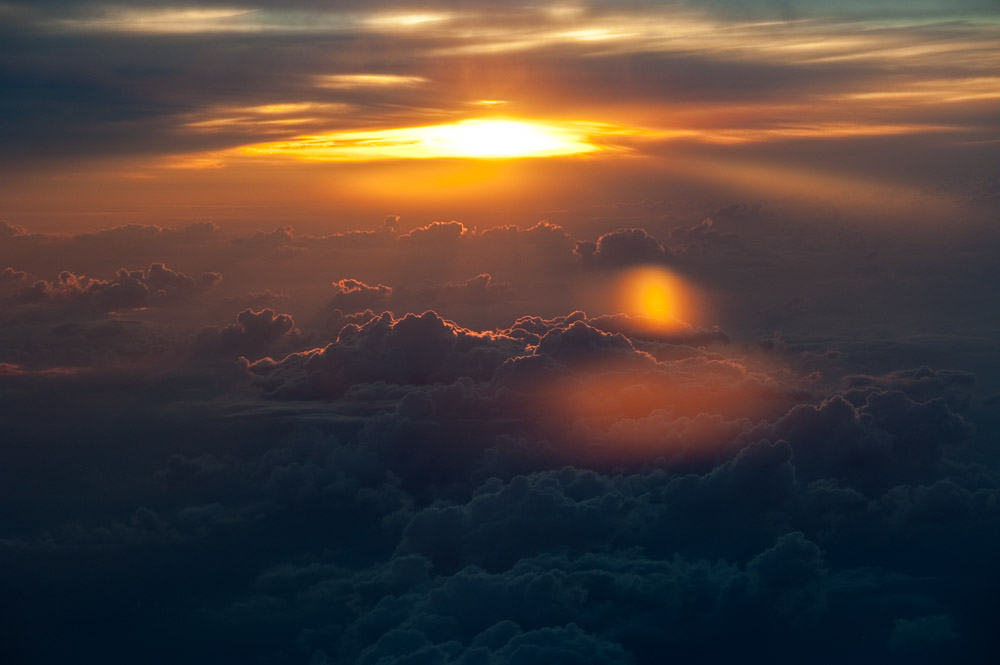
    I’ll be the guy you see stopped along the road shooting a picture of who knows what. I’ll be the geek shooting out the window of the airplane, even at night. You may drive by and see me wandering around out in a snowstorm.

    Anything that interests me is fair game. It is the dead of winter as I write this. Today I shot up through patterns of snow on a grid what was part of a sign above a sidewalk. I shot ice patterns forming along a river. Some majestic old Cottonwood trees silhouetted against storm clouds drew me in. I did not see a single other photographer. Not even someone using a cell phone camera.

    If you were walking with me, would you have seen these things? Even if you did, would they interest you enough to shoot them? In the cold?

    Maybe. Maybe not. I’m not going to bother worrying about what interests you. I have trouble keeping up with what interests me.

    I hope you do, too.

  • Sometimes You Can’t Describe It

    Sometimes You Can’t Describe It

    I find that my most interesting work is difficult or impossible to explain. I can’t describe what it means to me, much less what it should mean to you.

    Concrete

    It seems like people often want a concrete description or explanation of our work. Being generous, I would say they are really seeking to understand and want to know what the artist was thinking and feeling. Being less generous, I might say they are being lazy. It is easier to be told the “answer” than to try to work out an explanation for themselves.

    It might be a gallery director needing an Artist Statement for the piece. Or it might be as simple as a friend asking “what is it?” Either one can occasionally put us in a difficult position.

    I know the gallery director needs the statement so they can talk to customers about the piece. That is right and good. I guess it is better for me to give them something rather than have them hallucinate a story. Although I would love to hear their thoughts. Artist statements tend to be a load of bovine excrement.

    Even more challenging is the simple “what is it?” question. Of course, I could tell them exactly what it actually is. But I often feel that this takes a lot away from the experience. The picture may be saying a lot more than what it is literally “of”.

    Creative modification of a simple capture©Ed Schlotzhauer

    I don’t know

    But behind all this is the problem that I don’t actually know what it is. I do not have words to represent concretely what I think the image is showing. And even if I had a good enough grasp of vocabulary, my thoughts are fuzzy and confused. It’s hard to describe something when you don’t understand what you think about it.

    A lot of instructors tell us that every image should be pre-visualized. That is, that we know why we are taking it and we anticipate exactly how it will come out. And that works for me for a lot of images. I nearly always know (almost) exactly how an image will look on screen on my computer. Except for those happy surprises, but that is another topic.

    But to me, strictly pre-planning and pre-visualizing everything takes some of the joy and creativity out of it. It becomes more documentation rather than art. I honestly do not know why I take some pictures.

    Instinct

    A lot of the shots I end up liking best are purely instinctive. In normal shooting, I have all kinds of subroutines running in my head, analyzing composition and framing and exposure and focus and lighting and all the other considerations in making a decent picture. But when I am shooting instinctively, they are mostly subconscious. I am not spending much conscious thought on design and technique in the moment. Things just seem to take on a life of their own.

    Sometimes this can happen in a flow state, which is a joy. But not necessarily. Sometimes it is like there is a light flashing, signaling from my subconscious. Telling me “hey dummy, look! There is a great shot there!”

    When I am smart enough to pay attention to that signal, I don’t spend much time on analysis. I don’t stop and describe what it is and what I am feeling. Maybe I should. But I feel like I should just be scrambling to take advantage of the gift I have been given.

    Abstract image with serious gamut problems.©Ed Schlotzhauer

    Can’t hurt to try

    Some great photographers do try to document their thoughts when they shoot. They tend to keep notes and even analyze their feelings and thoughts at the moment. A great example is Tony Hewitt, an amazing photographer in Australia. He not only writes down his thoughts, he sometimes even writes poems expressing what he felt while shooting!

    I don’t write poems and I very seldom can force myself to take the time to analyze my feelings. I would like to. I always carry a notebook. Usually all I note is where I am, if I am in an unfamiliar location. Later, examining the images on my computer, I have to try to reconstruct my feelings.

    So I encourage you to do what I say, not what I do. Try to record some of your thoughts in the field, while it is fresh. It might help to understand them better.

    Get used to disappointment

    When someone asks the dreaded “what does it mean” question, what do we do? Maybe we bluff and make up some nonsense about representing the existential struggle between good and evil. Maybe we be brutally literal and say it is a picture of a weathered car door. I just liked the shapes.

    I would like to say, like Wesley said to Inigo in their sword fight (Princess Bride) “Get used to disappointment.” I don’t know what it means, so how can I try to tell you? Do the work yourself. Come up with your own story. It is just a valid as mine.

    Packed with story©Ed Schlotzhauer

    Language doesn’t work

    Each type of art media has they own unique strengths and weaknesses. You can’t always represent equivalent ideas with sculpture and painting.

    Words and images are 2 different art forms. They cannot always say the equivalent things. I believe an image can tap into feelings, yearnings, deep beliefs, dreams, and memories that cannot adequately be written down in words. These things exist as things that pass through our minds as thoughts and feelings without being expressed in words.

    Perhaps I am not doing my work justice by not spending the effort to try to unpack the “meaning” of my images. That would take a lot of time, and i know from experience that when I return to the description some time in the future, I would say no, I see something else now.

    Our feelings when looking at art are based on our experience, knowledge, emotional state and perhaps health at the moment. These are moving targets.

    So I do not consider it a fault when I cannot describe exactly what an image means. I could only tell you what it means to me, today. You should have the privilege of deciding for yourself what it means to you. If anything. Maybe nothing.

    it could be that an image “means” nothing. It only has the value or meaning we ascribe to it personally. Too deep for now. That is a discussion for another day.

    Meanwhile, let yourself be led to make images that are meaningful and significant to you. Even if you can’t describe what it precisely is you can take joy in what you feel looking at it. Not all of the world can be expressed in words.

  • Staying Creative

    Staying Creative

    Since you are reading this, you probably call yourself a “creative”. That is great. But creativity seems to be cyclic. Staying creative is a continuous process. Some would say a struggle.

    Cycles

    Creativity is not a constant level. We experience creative peaks where exciting new work seems to burst from us. But we also have low points. In those troughs we don’t feel like we can generate any creative ideas. It is depressing and scary.

    The encouraging reality is that this is normal. We do not and cannot operate at a peak of creative output all the time. We empty the tank. The reserve has to be refilled. It can’t be predicted or planned, but at some point it seems to dry up. But keep in mind that we really do not know what creativity is.

    We know it is cyclic. And we know it will come back at some point. But when we are in that valley it can seem like a time of doom and gloom. Will it ever come back? Have I used up all the creativity I had and now I will never have any again?

    You have thought these things. Admit it. I’m not the only one with these fears.

    Tennessee Stream©Ed Schlotzhauer

    Forcing creativity

    So what do we do? At some point we often resort to forcing it. We are determined to regain our creative highs, so we try to make our self create.

    How does that work for you? Probably as poorly as it does for me. Sure, we can do some good work, even very good work. But we can’t kid ourselves that it is up to the level of our best.

    Whatever it is in us that generates creativity operates on its own schedule. It is not sympathetic with our wishes. We can be welcoming and encouraging to it, but it does not operate at our command.

    Do something

    Now I will seem to contradict what I just said, but I do not believe it is a conflict. We will get through a creative valley easier and probably faster if we work through it. I used the idea of “emptying the tank” of our creativity. I believe practicing our craft and following our curiosity are very good behaviors to help refill it.

    You may not be inspired with amazing new creative ideas, but go out and see what you can find. Explore. Do not expect to do your best portfolio work. Taking that pressure off will help you relax and lean into it. But doing something is better than sitting around moping.

    It is a wonderful time to learn new skills, take some courses or watch some videos. Pick out some new technique you have been curious about and learn it. Practicing it now without all those creative bursts getting in the way is a good time to learn. It is a great time to explore some of those dark, scary corners of Photoshop that have intimidated you for a long time.

    Like most of life, doing something is better than doing nothing. Don’t sit feeling sorry for yourself, thinking you are useless and have no more creativity. Fill. your time with learning, exploring, practicing, experimenting, even catching up with cataloging your images. And always follow your curiosity.

    The word “create” is a verb. Be active. Go make things. Make dinner, make a drawing, make a fire, make some noise, but make. If all your attempts at being creative consist of passively consuming, no matter how brilliant what you consume is, you’ll always be a consumer, not a creator.

    Scott Berkun, in The Myths of Innovation

    An un-pre-visualized shot taken from a moving boat on the Seine River.©Ed Schlotzhauer

    Relax

    When creativity seems to slip away, when the muse no longer is with us, relax. It does not mean it is gone forever. Like waves, there are highs and lows. It will come back.

    Even when we are not feeling inspired, we can keep on working and learning. Do not be passive and waste your time. Be preparing for the rush of creativity when it comes.

    We are not a failure when it seems we cannot create astounding new things on command. We are recharging. Accept it. Go do your work anyway.

    Have you done creative work you are proud of? Then you should be able to do it again when you are ready. Creativity is not a limited resource that is used up. When you are feeling it, pour it out on everything you do.

    Let it flow

    Being in a flow state is a great feeling. But it is not exclusive to feeling creative. Anytime you are immersed in applying your skill to a difficult and challenging problem you can be in flow.

    Flow and creativity, then, are not synonymous. We can do great work even when we are not riding the crest of creativity. Don’t stop working.

    Curiosity is the thing that pulls us along through life and through our art. It does not come and go like creativity. In that way, it is more powerful than creativity.

    The cure for boredom is curiosity. There is no cure for curiosity. – Dorothy Parker

    I like that idea that there is no cure for curiosity. I don’t want to be cured of it.

    We can develop our curiosity by asking questions and wondering about things. Give yourself permission to follow your questions. Find the answers. Try things. See what happens. This healthy attitude will carry us through the ups and downs. Creativity may come and go, but our curiosity goes on and gets stronger.

    So, even if you feel that your creativity has evaporated, trust that it will return again, just like it has in the past. While you are waiting, keep photographing, learn, practice, experiment, and especially, feed your curiosity. You might find that the extra kick of creativity is actually just an incremental boost to the power of your curiosity.

    The artist is nothing without the gift, but the gift is nothing without work. – Emile Zola

    An unexpected travel shot. It came from taking the time to stop and watch and wait.©Ed Schlotzhauer

    Staying creative

    So, as far as staying creative. You won’t always be at your peak. Sometimes you may feel way down in the valley. Don’t panic. It will come back. In the meantime, there are things you can do to improve yourself as an artist and a person and to entice the creativity back. Work on your curiosity. Explore new ideas and techniques. When you feel the creativity flowing again, you will be even more ready to use it.

    But no matter what, keep working.

    Today’s image

    Sunset downtown. I turned my view down to the parking lot instead of out at the glowing buildings. Is this creative? Or is it just following my curiosity? I don’t know. I will leave that for greater minds to decide. Either way, I was letting it flow.

  • Life Is Happening

    Life Is Happening

    Life is happening right now. it is not something you hope will happen someday. Make the most of it, now. This includes your photography.

    Now is all we have

    The past is gone. The future is uncertain. The present time is what we have. Use it. Use it up. Wring it dry.

    Time is a scarce and fleeting resource. We can’t slow it or bank it or save it. It passes, whether we want it to or not. It moves at the same rate for all of us. Use this very moment wisely. Once it is gone, it can never be reclaimed.

    I don’t mean to be all Zen or depressing. But this is true and should be top of mind for all of us. Time is a resource we cannot control. All we can do is use it wisely.

    Pinocchio?©Ed Schlotzhauer

    We don’t get a “do over”

    We only have one life. I won’t argue reincarnation with you.

    The choices we make on a day to day basis shape our future. When we decide not to do something, it is rare to get a second chance. How many opportunities do we let slip by to do something that would make us better?

    Deciding to spend our time watching TV or playing games or hanging out on social media is wasting one of our most valuable treasures – our time. Solely my opinion, of course. Only you can decide what is the best use of your life.

    Do days seem to slip away, disappear into a fog of sameness as we repeat the same actions every day? Why do that? That is the result of having no direction. Of letting external voices control our lives. Those voices do not have our best interests at heart.

    It is commonly documented that when people are asked on their death bed what they regret, one of the most common regrets is that they did not take the chances they wanted to. For instance:

    I wish I’d had the courage to live a life true to myself, not the life others expected of me. This was the most common regret of all. When people realize that their life is almost over and look back clearly on it, it is easy to see how many dreams have gone unfulfilled. Most people had not honored even half of their dreams and had to die knowing that it was due to choices they had made, or not made.Old Colony Hospice

    Fear caused them to miss out on the opportunities to lead a different life. This is what they regret at the end. It is so easy to do and it seems like the safe path. But who said everything should be safe or easy?

    Rise Against, representing the daily struggle©Ed Schlotzhauer

    Don’t just live for the future

    On the other hand, we sometimes see people who seem to live entirely for the future. They have a “plan”. Their current time and energy and money is being banked for what they plan to do “someday”.

    This is another way of avoiding living your life in the present. It is great to have goals. Even great goals that will take years to achieve. But what about now? The goals should direct the trajectory of our lives and influence how we spend our time. But they should not shut us down. No matter how important our long term goals seem, we are still living our life right now.

    Even if you’re an entrepreneur and are starting a business from the ground up, you still have a life to live Maybe you decide it is in your best interest right now to be working 100 hours a week and pouring all your money into this business. But at least have an exit plan. It’s got to be a temporary agreement with yourself. Know when to call it quits. Think about what it is doing to your life and health and your family. Some things are more important than making a big bundle of money.

    There is a saying “if you want to make God laugh, tell him your plans.” One point of this is that we are not as in charge of our plans as we sometimes think. If we cannot control the future then it is foolish to pin our entire life on an uncertain outcome. Live for now, too, while we are working for that future.

    I had a friend who worked and saved to retire early. He had great plans: extensive travel, learning languages, doing good works for charity, etc. A great list. A few months after he retired, he was dead. Didn’t see it coming.

    Wouldn’t he have been better off doing those things when he had the chance rather than putting them off to “someday”?

    Be in the moment

    That probably seems very heavy and perhaps depressing. It shouldn’t be. It really resolves to a theme I come around to a lot – mindfulness.

    Mindfulness simply means being present, in the moment, aware of things around you and what you are doing. It helps us to live our lives now rather than fretting about the past or worrying about the future. A mindful attitude encourages curiosity. It leads us to learn, to explore, to experiment.

    As photographers, these are skills we should always be practicing. Are we really seeing what is around us? Are we open to the opportunities that are there? Do we see past our preconceptions? Are we able to see the things around us for what they are and what they can be? And are we willing to put it in action by going out and photographing it?

    Compared to the life experiences I was talking about this may seem trivial. But it is all related. When we are mindful – when we can really be aware and in the moment – we will be more successful living in the present. Think of photography as training for living a more rewarding life.

    So I believe it is at least a double reward. Being mindful in our photography will keep us more engaged. We will be more creative and we will likely be happier with our images. Isn’t that one of our purposes in photography? What is really more important than growing creatively and being pleased with our work?

    But, too, as we practice mindfulness in our photography it helps discipline us to be mindful in our daily life. Just thinking and being aware and in the present helps us to consider what is important. It helps us to decide how to make better use of this moment.

    In a storm? Standing bravely?©Ed Schlotzhauer

    Moderation

    Am I suggesting that you should quit your job and go do whatever “fulfills” you at the moment? Of course not. Living your life means you have responsibilities. Some things are urgent, some are important, some are just necessary. Being mature is knowing the difference and deciding what to do when.

    You have bills to pay. You have a career, a family, housing to provide, people have to eat. Your government wants you to pay taxes. Unfortunately, we do not just get to do anything we want. We will do what is necessary because we are responsible adults.

    But we have a hundred moments a day to choose what to do. When we can choose to drift instead of doing something useful and constructive. To be on automatic and just do the easy things. Practicing mindfulness is a great help in being aware of what we are doing and deciding to choose better things to do.

    Mindfulness in photography is practice that helps us lead a more mindful life overall. Photography can help shape our life. Who knew?

    Life is happening all the time. We can’t call a time out. Let’s not let our life drift away without giving it the best we can do.

    I don’t want to come across as “preachy” or judgmental or having all the answers. I am a fellow traveler, looking for my path. Perhaps I am further down my path than you are.

    Please take this as encouragement to practice a more mindful life. Remind me, too. When we are mindful we can take joy in where we are and when we are.