An artists journey

Category: Mindfulness

  • Lean Into It

    Lean Into It

    I can’t be passive about my art, my photography. The only way I know to approach it is to lean into it. To boldly and confidently attack it.

    Different styles

    We all have different personalities and different working styles for our art. A portrait photographer or wedding photographer might need to be in positive control of the situation. To direct the subjects to get the shots and results anticipated. On the other hand, a street photographer may unobtrusively “stalk” the shots he wants. He works completely in the background and usually without the subjects being aware of being photographed.

    A landscape photographer may plan a trip long in advance to be at a certain location at what he determines to be the best time for the shot he wants. Or another one may just go wandering with no preconceived plans or shot list.

    These are examples. All show different methods of approaching the craft. But regardless of the approach or the personality, one of the common ingredients in our art is intensity.

    Rusty Ford truck; delaminated window.©Ed Schlotzhauer

    Intensity

    All good artists I know share a certain type of intensity about their craft. When they are doing their art, they are “on” – focused, earnest, single-minded.

    In my limited experience, this seems to be true no matter what genre they work in. Their personality modifies the way this intensity is expressed, but it is usually there.

    I think this intensity helps to focus us on where we are and what is happening. On our goals or what we are experiencing. It helps us to stay in the moment.

    People talk with some longing about flow states and how desirable they are. But in my art and in the career I had before that, I find them common. Valuable and wonderful, but fairly easily achieved.

    That is not bragging. I think the intensity and focus I can bring to my work enables flow. It is not uncommon for me to be so caught up in my photography or writing or editing that hours can pass without me being conscious of them. From talking to other artists, I believe this is a shared experience for many.

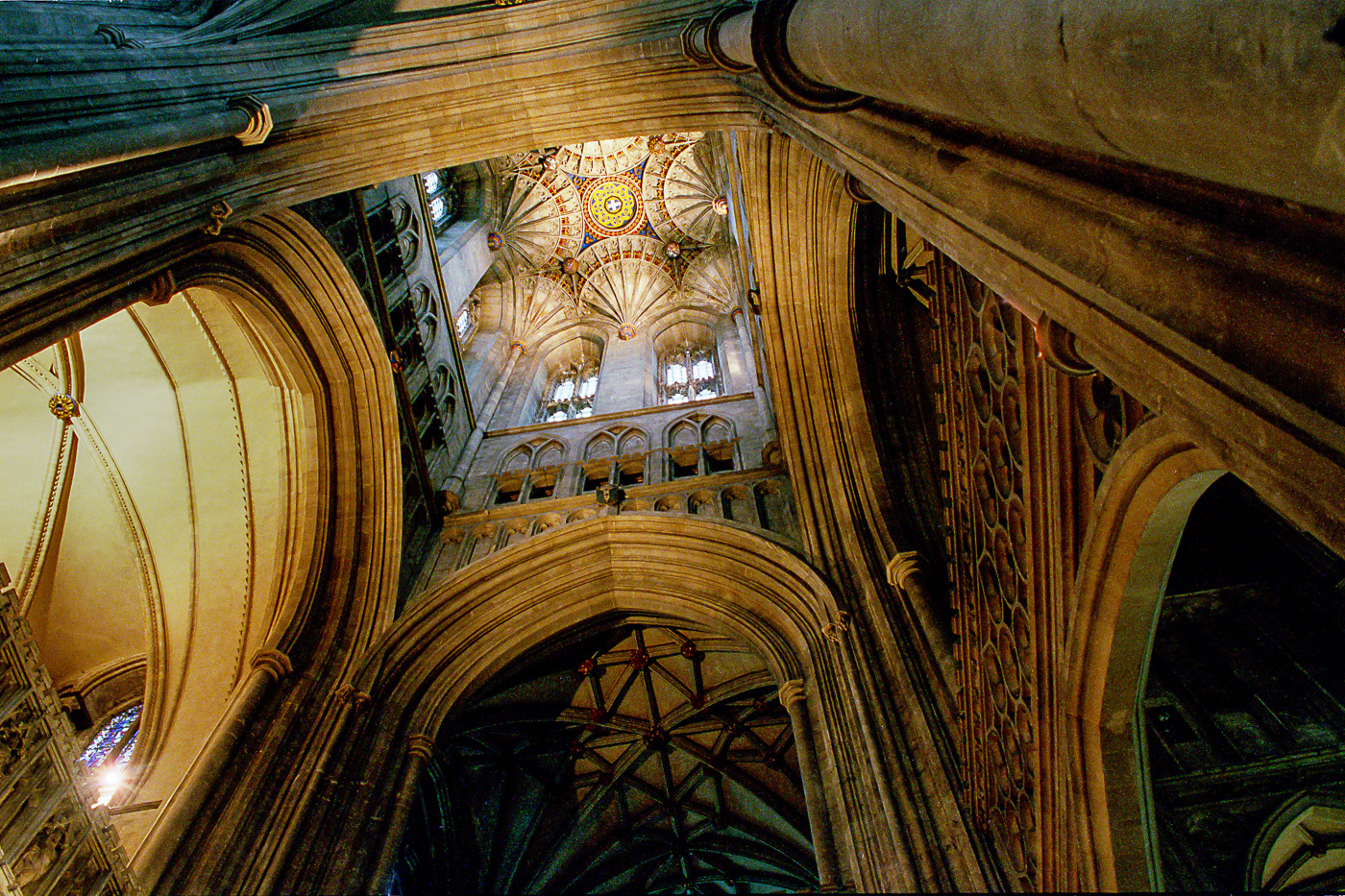
    Canterbury Cathedral ceiling©Ed Schlotzhauer

    Mindful

    I often talk about the desirability of being mindful. The intensity of our focus on our work leads to this type of mindfulness. Mindfulness in the sense that we are completely caught up in the moment. We are immersed in our art and the creative process. Other concerns and considerations do not exist for us at that moment.

    Let me emphasize that I am taking about lower case “mindfulness”. Not some system of chants or meditation. It is not a semi-religious experience for me. I hold my own religious beliefs, and they are separate from this.

    I believe this type of mindfulness is a result of my intense focus on my art, not a cause of my creative output. That is, my focus leads to creativity and mindfulness, not the other way around.

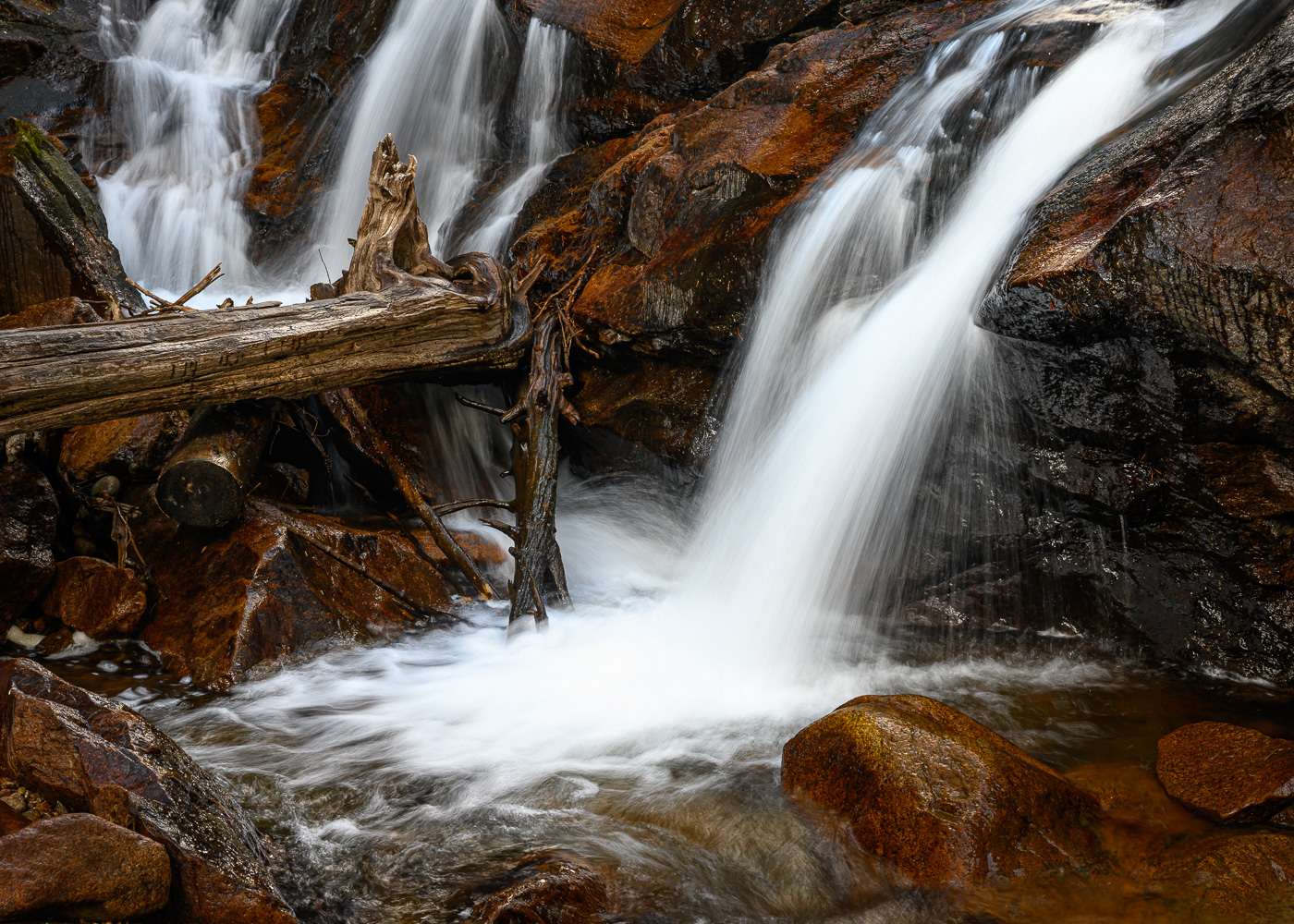
    Fall River, Rocky Mountain National Park©Ed Schlotzhauer

    Do it

    We all get into creative slumps. No new ideas are popping up. We aren’t even enthusiastic about getting out and taking pictures or editing. That’s natural.

    But I feel that one of the worst things we can do is just sit around waiting to feel inspired. At these times, I believe it is important to get up and get out and work. Go out to “do” art and do it until we loosen up and get into the moment and things start to flow.

    This is what I mean by “lean into it“. It is a process of embracing what we are doing and the situation we are in, making it into something good. It is a matter of overcoming a situation or our inertia. We push back against what is resisting us, and deal with it, with confidence and determinism.

    The Word - is shut©Ed Schlotzhauer

    Resistance can often be a good thing. That is what exercise basically is. Forcing our body to work against the weights or the track builds up strength and endurance. I believe strongly that it works the same way for our mental powers. We need to read and think about challenging material. Things that exercise our brain. I can’t prove it, but I believe it also works for our creative powers. We learn to create better by going through the pain of creating.

    Same in our photography. We often blame circumstances, and they are real and inescapable. But much of the time the real barrier is our attitude. We are not willing to change our attitude and put in the work to overcome the situation. Get out the door (or go to where you do your work), get switched on, find your intensity. Lean into it.

    Nike was right: just do it.

    Do one thing every day that scares you. Those small things that make us uncomfortable help us build courage to do the work we do.

    Eleanor Roosevelt

    Inspiration is for amateurs. Us professionals just go to work in the morning.

    Chuck Close

  • Shoot It Now

    Shoot It Now

    Shoot it now. If you see it and like it, shoot it. It may not be the same later. This moment is the most control you have.

    Conditions change

    The world about us is in constant motion and change. The light, the weather, what people are doing, how things are arranged, even our attitude. Things are different all the time. We must give ourselves permission to take advantage of what we find when it is there and right.

    It is too easy to say: “that’s nice. I will plan to come back and shoot that scene when I have time.” But we’re not in control of events. When it is convenient for us, everything else may be wrong. My experience is, it likely will be so different that we will lose interest in it.

    Or have you found conditions to change quickly, but you were able to take advantage of it? Maybe you were at a location you like, trying to make a good landscape. Except conditions were not helpful. Perhaps it was cloudy and rainy, and the mood was not what you hoped for. But you stayed there seeing what you could do, and, for a moment, the clouds broke. A golden sunbeam poured through and spotlighted the subject you wanted. It was magic.

    The whole look and feel of the scene changed in a blink. And then it was gone in seconds. You had to shoot it right then, in those few seconds when conditions were optimum.

    When we find a subject we like in conditions we like, we better shoot it right then. It may never be the same.

    40,000 ft sunset©Ed Schlotzhauer

    Nothing is permanent

    When something has been there for a long time, it is easy to take the attitude that it will be there forever, so we can shoot it at our leisure or when conditions are spectacular.

    Maybe. But maybe not. We do not control circumstances and other people’s decisions.

    This image at the top of this article of the car on a roof is an example. I shot it at various angles and conditions for years. It was always there as an exercise to work on. Until one day it was gone. I didn’t pass by the location for a couple of days and next time, the car was no longer there. I can never shoot it again. All the future shots I had envisioned for finding certain weather or light are useless now. I have to be content with the ones I have, that I took the time and effort to shoot when I had the chance.

    In the same way, that interesting railroad track fragment in the next picture was evocative to me and a metaphor for several ideas. But it does not exist anymore. It was removed

    Another example, at the other extreme, last week we had a heavy rain – rare here. I walked a new trail the next day and there were a couple of places where dirt had washed across the path, making interesting patterns. That is something that interests me, so I shot a couple of frames and went on, intending to come back and work it some more after I thought about it. I only walked down, maybe, a half mile and came back, and a city worker was sweeping the path. Gone.

    Shoot it now.

    Derail track to nowhere.©Ed Schlotzhauer

    Now is the moment

    A good picture is a dance of many conditions. If everything comes together ideally, we have a much better opportunity to get an image we want.

    Likewise, when we have a mindful attitude and are open to seeing things, we often encounter things we did not deliberately go looking for. And when the conditions and our observation come together at the right time and place, we discover magic.

    But those magical moments are transitory. Light changes, people move, trees are cut down, even building are torn down. Floods change things. Forest fires alter the landscape. Have you ever gone back to a spot you really liked after a couple of years and found it a condo development now?

    Familiar subject at an optimum time.©Ed Schlotzhauer

    Gone forever

    It’s like in a conversation where you had something important to say, but as you were waiting for the right opportunity, the direction changes and it would no longer be relevant. The opportunity was there, but you didn’t take it and now it is gone forever.

    One of my heroes, Jay Maisel, said “Always shoot it now. It won’t be the same when you go back.” I have found this to be true too often.

    What if you break open a river rock?©Ed Schlotzhauer

    To be honest, I am a mindful explorer. I follow some of Jay’s other advice to “go out empty”. That is, I usually do not have specific shots in mind. Instead, I am mindful of interesting things I encounter as I wander. This may not be your style. I understand. Photography, like all art, is intensely personal.

    But for me these days, I try to shoot it now. If possible and it’s not too disruptive, I stop to shoot it when I see something I feel is worthwhile. Apologizing for being late feels better than missing the shot. I have a lot of regrets of shots I didn’t stop to take when I had the chance.

    That realization of the possible fleeting nature of our subjects drives me to act outside my comfort zone. My “what if” is engaged all the time.

  • Pull Out a Moment

    Pull Out a Moment

    Isn’t that what we do so well with photography, to pull out a moment of time to examine? Most art does this, but photography excels at it.

    Time

    Time flows continually. It so envelops and controls us that we often do not even consider it. But we cannot escape it. It carries us along with it whether we want it to or not.

    Some of us live for the future, planning for a “someday” when things will slow down or be better. Some live only for now, trying to experience life or just have fun with little regard for what may come in the future. Others are stuck in the past. Living in memories or regrets for past events.

    Regardless of our attitude about it, time keeps flowing relentlessly along. No one is rich enough to buy more time. No one is powerful enough to command it to slow down or speed up. We each have the same number of seconds in a day.

    But photographers seemingly have a power over time, to freeze it or stretch it and to pull moments out to keep forever. This is an amazing ability for mere mortals.

    Fast action at a County Fair©Ed Schlotzhauer

    Artists view

    To an artist, time can seem like a continuous series of pictures. We look at things happening and think that may have never been seen like that before and it may never happen like that again. We better capture it now before it is gone.

    Much of art is based on capturing moments. Paintings are usually of a moment in time. Sculptures often depict a moment of action or a grand pose.

    But photographs do it better. After all, a painting or a sculpture of a moment is probably based on photographs the artist took to record it. So the photograph is the prime material, the basis of the art.

    That is because photographs have a unique ability to record moments in time. We should be proud of that and use it to our advantage and to make our art more unique.

    Manipulate time

    Time flows constantly and at the same speed for everyone. But through photography we can look at time differently, depending on how we choose to see it.

    We can slice it very fine at 1/1000 of a second or even faster. This will freeze an instant so we can examine things happening too fast for. us to perceive in real time. Birds in flight, a waterfall, a galloping horse, even a bullet in flight are frozen into a clear moment. We can see the details of the action, the turbulence, the skill.

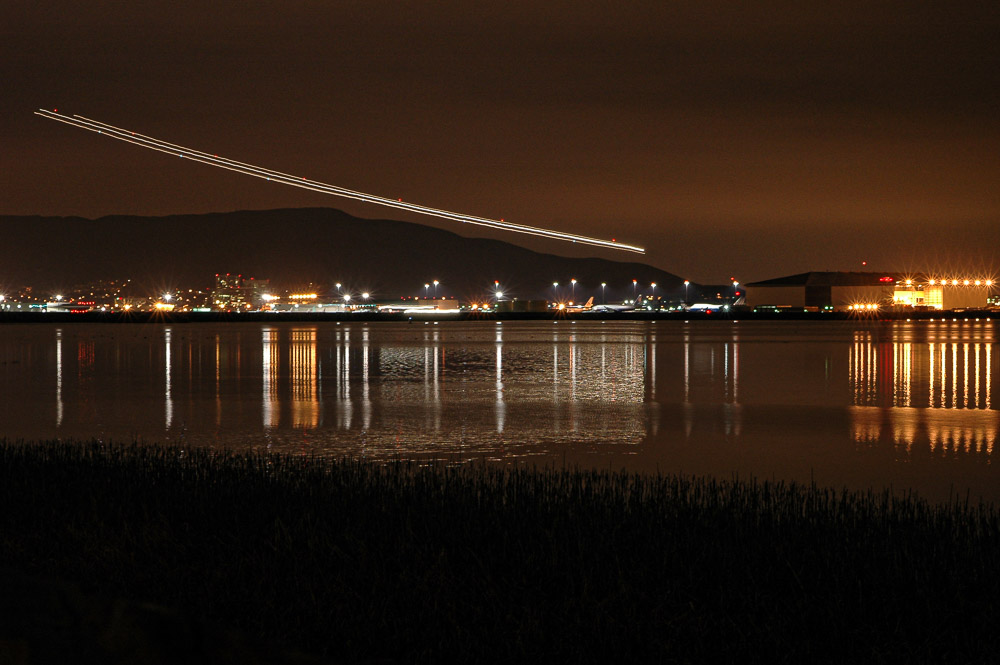
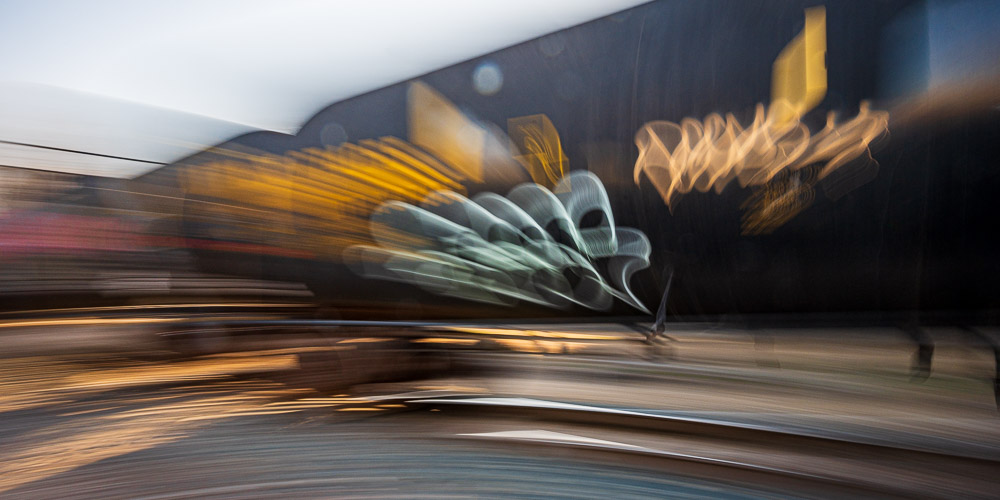
    At the other extreme, we can compress time. Any reasonable length of time can be imaged into a single frame. This allows us to visualize or see the effects of action happening over an extended amount of time. Car lights at night streaking into a long trail. A waterfall smoothing into a velvety flow. We might be able to capture multiple lightning flashes in one frame during a thunderstorm.

    All of these and more help us see action over time. It visualizes what we can only imagine without the aid of photography.

    An interpretation of my feelings for Trail Ridge Road©Ed Schlotzhauer

    Keep a time

    Whether short exposures or long exposures or a “normal” speed, this slice we capture is preserved for us to examine and contemplate at our leisure. We have plucked it out of the stream of time and kept it for ourselves.

    It is said that in a fire or flood, one of the first thing people try to save is the family pictures. These are our history, our memory. Moments that are important to us. (Many online sites tell us at length how to prepare a “go bag“; it’s a good idea; but the emotional reaction is to grab important memories in an emergency.)

    And they keep us together as humans. A friend told me recently about getting together for a rare visit with his brother and sister. One of them had digitized old pictures their parents took of them as children. They spent hours looking at them and sharing stories and memories. Most of these were originally shot 60-70 years ago. They still have power of moments.

    Candles, Catholic Church, Regensburg Germany.©Ed Schlotzhauer

    View differently

    Obviously, family pictures have special memories for us. But how about art?

    As I mentioned before, most art involves the capture of moments that we can look at or think about whenever we want. Photography is uniquely suited for this.

    Street photography gives us insightful glimpses of people in their daily life. Landscape photography captures moments of beauty or awe in the natural world. Portraits give us a formal view of people. Whether abstract or realistic or black & white or an alternative process or any other rendering, they capture a moment.

    When we capture moments, we have the opportunity to study the moments at our leisure. Time ceases to flow for these images. Taking the moment out of the stream of time gives us a unique chance to spend all the time we want with the moment. We see and understand it differently.

    Years from now, that moment will still be there for us to bring out and examine again. Or our descendants may look at them and see a glimpse of what we saw, maybe even what we felt.

    Time is a key component in our photography. Photography is perhaps the best of the arts for capturing and manipulating time. Other forms of art rely on the artist seeing or imagining something, then representing it. Photography allows us to see things that could not otherwise be seen.

    Looking through clock, Musee Orsay©Ed Schlotzhauer

    Reflect

    We see a potential image and take it. What is it for? Who is it for? Does it matter how many people see it?

    It is quite possible it does not have more of a purpose than that we were compelled to make art. If we are making art, it may be sufficient that it fulfilled something in us.

    Most of us would love for great numbers of people to view our work and give us lots of compliments. Especially the compliment of buying it. But is that why we do it?

    Perhaps these moments in time are painting our history, marking our journey, filling our memory bank. Maybe their significance could not be apparent to anyone else.

    Or maybe something is compelling us to capture these moments so that someday we can begin to understand them ourselves.

    Regardless, we are compelled. We pluck these moments out of time and set them aside for reasons we may not understand. Or perhaps it is enough that they are beautiful, at least, to us.

    Every time we press the shutter release, we are capturing a moment. Be very aware of that. They are our moments. They have meaning to us. Sharing them with other people is an intimate act.

    “Life is a collection of moments; cherish them, embrace them, and create more of them.”

  • Go to a Forest, Again

    Go to a Forest, Again

    Go to a forest. It is good for you in many ways and it can benefit your photography. I say “again” because I wrote about this before, but it has been over 4 years and I decided to update my thoughts.

    Forest Bathing

    I am a believer in what is called forest bathing. This was my practice before I ever heard the term.

    Some research shows that just being in a forest, experiencing the sights, sounds, smells, and feel of nature will improve our physical and mental health.

    Forests are a magnet for me. Every place I travel to, I try to get out into the local forests. The different trees are special to me and are refreshing, each in their own way.

    My previous article talked a lot about forest bathing, but it is not just an idea. We can’t just put it on our to do list and try to fit it in somewhere, maybe as we listen to a podcast.

    Spreading oak branches.©Ed Schlotzhauer

    Silent Walk

    Just being in a forest is not magically going to make all our problems go away. Actually, nothing is going to magically make them go away. Things like forest bathing can help. Some people are proposing a parallel stress reducing plan called silent walking.

    We seem so totally controlled by our technology these days that it can even impact our forest experience. To get the most from the forest exposure, or any calming moment, we have to unplug.

    To get the benefits of being in the forest, we have to actually be there in the forest, physically and mentally. Leave the distractions behind. It is great that you love your music, but when you are in the forest, leave your headphones behind. Listen to the birds and the wind in the trees. Hear the sound of the river flowing by. And it is not a time for your run. That is great to do for exercise some other time, but try just taking it easy. Relax. Set a slow pace. This is a time to unwind.

    Promise yourself you will not pick up your phone while you are in the forest. Except maybe to take a picture. But them put it back away and don’t post the picture until later.

    Benefits

    Here are some benefits of being in nature as noted in an article quoting Allison Chase, PhD, CEDS-S, Regional Clinical Director at Pathlight Mood & Anxiety Center in Austin, Texas. She is more gentle and articulate than I am.

    “Spending time in nature, with more serene and slower paced stimuli, can be very calming to the nervous system, where stress and cortisol levels are impacted.”

    But to get this result, it requires being completely present. “The key is to slow down and take in the environment and its natural beauty,” which also helps the body calm down. “Without the input of screens and other modern or electronic stimuli, one’s brain [aka neurons] can calm down. This slows down the entire body to be more calm and relaxed.”

    Additionally, nature itself can be a great boost for your overall wellbeing. “Nature offers stimuli that can impact a number of senses, [such as] touch, sound and smell,” adds Chase. “Whenever our senses can be heightened in a healthy, positive, serene way, it is always good for the body and brain.” In fact, a study in Environmental health and preventive medicine found that forest bathing significantly lowered blood pressure and reduced negative moods.

    Stark, bare aspen tree. Chaos of branches.©Ed Schlotzhauer

    Mindfulness

    This sounds a lot like mindfulness to me. Imagine that.

    I’m not a formal practitioner of mindfulness, but I believe my secular practice of it has great value. It seems I recommend it a lot in my writings.

    And I will continue to recommend it. In our fast paced, high stress, over scheduled world it can help bring us back to a healthy state.

    Find your place

    I’m lucky. My house is about 10 miles from the edge of the Rocky mountains. In abut 20 minutes I can be in the mountains and forests. That is one of my happy places.

    But not living next to a National Forest does not exclude you. As a matter of fact, I do not go up into the National Forest nearly as much as the time I spend in the parks and natural areas in my town. You probably live near parks and open spaces, too. Use them. Don’t ignore the good even if we can’t have the best.

    I have come to believe it is our intent and our approach that makes the difference in what we get from our time. If we go out with the intent to slow down, calm our mind, and take in the environment with most of our senses, it will happen. If we just go for exercise, well, we will just get exercise.

    Leaning trees.©Ed Schlotzhuaer

    Get out there

    As I write this, spring is emerging in much of the country. Many of us are waking up, stretching, and resolving to get out and start taking pictures again.

    Do it.

    I hope there is nothing hindering you from picking up your camera, heading out to your local park, and getting back into nature. Or, optionally, leave the camera. Just experience the outdoors again. It is good for you

    A couple of days ago while wandering through a local natural area I saw 2 sights that made me feel good. A middle aged woman wearing a backpack was approaching me going the opposite direction. I wondered if she was another photographer, since I carry my camera in a backpack. As I got closer I saw that she was on oxygen. She had a tube under her nose going back to a tank, presumably, in the pack.

    In the other case, I came on a woman making her way along the trail using a walker. This was a gravel trail, not paved, so I assume it was work for her.

    Both of these ladies were quite a ways away from the closest parking lot. I thought they were awesome and encouraging. They were making a determined effort to get out in nature despite some hindrances.

    What is keeping you from doing it? Really.

    Get back out there.

    Forest bathing hack

    Everybody seems to want a quick way to hack the system. OK. Here is your hack for forest bathing, again from Allison Chase.

    1. Find your sanctuary

    Look for a local park, nature preserve or even your own backyard if it boasts a decent tree coverage. Find a place that feels calming and allows you to disconnect from everyday life. This also means silencing your phone and tucking it away.

    2. Slow down and savor

    Forest bathing isn’t a race. Meander along a path at a leisurely pace, allowing yourself to truly appreciate the sights and sounds around you. Take slow, deliberate breaths of the fresh air. You can even stop and sit under a shade tree for a while. Your session doesn’t have to be long — aim for 30 minutes to start.

    3. Engage your senses

    Don’t just look — touch, smell, listen and really see everything around you. Take note of the soft aroma of fresh blooms, how freshly-cut grass feels against your bare feet or the vibrant colors of a passing butterfly. If worries or negative thoughts start to creep into your mind, gently guide your thoughts back to the present and the beauty surrounding you.

    Layers and layers©Ed Schlotzhauer

    On photography

    Mostly I have talked about the general mental and physical benefits of being in nature. I believe there are benefits for photography also.

    Being in a forest refreshes us and awakens our senses. It is invigorating. If we are better physically we have more stamina and are more capable of getting out for photo shoots.

    And if we are calmer and less stressed we can better apply our creativity to our art. The more hindrances we can remove, the more we can focus on our art.

    Forest bathing leads to mindfulness. Mindfulness leads to more creativity.

    Note on the pictures selected

    I deliberately selected black & white images for my forest pictures today. There are 2 basic reasons. One, I really love b&w. Two, I want to make a subtle point that the benefits of being in a forest are not reserved just for what we think of as “peak” comfortable, colorful summer and fall times. The forests have benefits for me all year, in all of its moods and weather.

  • Map vs GPS

    Map vs GPS

    It really is the journey, not just the destination.

    There are 2 major ways to navigate as we travel. The main choice or conflict is map vs GPS. There are alternatives, like being on a tour or “dead reckoning”, but I will rule those out for now.

    GPS

    By GPS, I mean, of course, a Global Positioning System app on our phone or in our car. What an astonishingly useful technology. Who would have thought not that long ago that we would have such precise navigation available to anyone, anywhere, right in our hand?

    GPS is an important supporting technology that aids our great transportation system.

    When we are going to an unfamiliar place, who hasn’t entered the destination in their device and welcomed the detailed, turn by turn directions? Or been annoyed by the nagging “Proceed to the route” admonition when we veer off for some reason. Even for familiar places, we often use the app, because the magic of the internet allows it to provide real time route updates to take us around congestion or road construction. Amazing.

    I would say that most of us expect this level of service now. These wonderful apps will take us by the best route direct to our destination with little decision making or navigation required by us.

    But that can be the problem.

    Antique diesel locomotive©Ed Schlotzhauer

    Physical map

    Do you remember maps? Like that image at the top of this article? You know, those folded paper things that always seem to tear when we try to open them. And spread out to cover everything around us.

    Some of you may never have held an actual map.

    What is it? A map is a representation of an area on a 2-dimensional print. There are limitless kinds of maps, but I am only talking about geographic maps. Usually, a Mercator Projection. Sorry. TMI, but I like detail.

    A typical map shows cities and towns, roads, lakes, rivers, and oceans. Some have topographic lines to show elevation and some use shading to give an idea of elevations. It is not unusual for them to show train tracks, parks, monuments, military installations, and other features of interest.

    The area the map can show is a function of the amount of detail wanted and the allowable size of the map. To “zoom in” and see more detail means it cannot cover as much area.

    In a large place like the United States, a fairly detailed map may cover a state. In other places, it might show a whole country. We can also get very detailed topographic maps that cover only a few miles in great detail.

    So, a map shows us a top-down view of what is there, but it is up to us to interpret and use the information and navigate to where we want to go.

    That’s more work. Why would anyone choose that over a GPS app? That is where it gets interesting to me.

    Waterfall in southern France©Ed Schlotzhauer

    What does it say about us?

    Yes, indeed, why ever use a map? I think it has to do with our goals, our personality, and, if we are photographers, how we work and think.

    A GPS app will take us to a destination with little thought or planning on our part. We do not have to pay much attention to where we are or what we are going through.

    It does its job efficiently. It is a faithful robot that does not distract us with sightseeing suggestions or side trip possibilities.

    Get there. Check it off. The destination is the goal.

    A map, though, can be a storybook of possibilities. It is a tool for our curiosity. Look, there is a waterfall just a few miles away. And that small, twisty road through the National Forest looks a lot more interesting than this Interstate highway. I wonder what that is over there. Oh, there’s where that town is. I’ve wanted to visit it. It’s just a little way off this route. That is worth a look. Maybe I will even stay the night there.

    A map shows the layout of everything that is around. It is kind of like browsing a buffet. I can pick a little of this, some of that, sample this other that I have wanted to try. It doesn’t try to guide us along any path. That is up to us.

    There are often endless possibilities, depending on what I am interested in and how I want to use my time. I select where to go and how to get there. I know that, for me, my interests are usually in the small towns and back country rather than big cities and major highways. If I have the choice, that is what I pick.

    Back road in West Virginia, New Bridge©Ed Schlotzhauer

    Use the right tool

    GPS and maps are both just tools. Each has strengths and weaknesses. It is up to us to choose the best tool to use for the need at hand.

    If the destination is the goal and time is tight, GPS will take us there directly and give precise directions. But if we have the luxury of choosing our own path on our own schedule, maps let us see an overview of the area. It lays out the information visually for us to see and to decide and choose. I don’t think I have ever discovered anything great that I wanted to photograph just following GPS directions.

    Map vs GPS. They are not actually in competition. I use both. For example, I recently got back from a 5000 mile driving trip. I used GPS to navigate to specific destinations, like to a hotel, once I got close. Otherwise, I used maps to let my imagination wander. And I did wander. Through swamps, finding a hidden winery, along back roads in the Ozarks, to some charming places I knew nothing about along the gulf coast. None of these were things my GPS would have suggested. I would have hated to miss any of them.

    It is said that it’s the journey, not the destination. I try to live that way. I’m partial to maps. GPS is excellent for getting to a destination. Maps, though help me discover a more interesting journey.

    Lobster shack, Maine coast©Ed Schlotzhauer

    Try maps again

    I encourage you to try maps again. When I see a detailed map like the section at the top, my pulse quickens, and I start getting excited. Sitting in a hotel room at night with a high quality, detailed map spread out on the table, visualizing possibilities for the journey ahead can be like reading a great story. But in this case, we are writing our own story.

    After all, we are creatives. We do that.

    To finish the moment, to find the journey’s end in every step of the road, to live the greatest number of good hours, is wisdom.

    Ralph Waldo Emerson

    Getting maps

    The image at the head of this article is a very small section of a National Geographic map of southern France. This covers about 70 miles by 50 miles. I have been to this area, and I used this very map for navigation. NatGeo has become my preferred map source.

    The best map providers I know of are National Geographic and Michelin. They have an amazing catalog of detailed maps. Some are printed on a plastic coated, tear proof paper, like the France map above.

    If you are in the USA and are a AAA member, you can get maps from them for free. Just go to your nearest AAA office. These are good maps, I use them, but they tear easily. But then, free…

    These map provider suggestions are for your information. I do not receive any compensation.

    About these images

    All of these images (other than the map image, of course) are places that had to be discovered by exploring while using maps. None of these could easily have been navigated to by GPS unless someone gave you a precise location. One of them is a location on that map of France.

    Try maps. They may change how you travel and photograph.