An artists journey

Category: Artist

  • Its Been Done

    Its Been Done

    There’s nothing new left to photograph

    It’s been done! We all know it and feel it. The world is over-photographed. Why bother anymore? Nothing new is left. Should we pack up our gear and stow it in a closet?

    Too many photographs

    Trillions of photographs are taken every year. Think of that. As many as if every man, woman, and child on the planet takes over 100 pictures a year. Most of them seem to be uploaded to social media.

    Every person. you meet is carrying around a good camera – their phone. And they’re not afraid to use it.

    How many times have you been enjoying the view at a peaceful overlook, only to have a car skid up and unload a noisy group of parents and kids. The kids are herded in front of you and lined up and forced to smile so they can take a group selfie to show they were there. They may even ask you to take the picture. Then they rush back to their car to get back on their phones.

    Probably 99.9999% of this flood of photos are uninteresting selfies or food shots or other things like that that are just “look at me” pictures. Just think of the Exabytes of disk space they are taking up. Yes, this is judgmental on my part, but I am making a point. And I’m talking about uninteresting in an artistic sense.

    There is such a glut of pictures that it devalues photography as an art form. Why should I be interested in your photograph? I can take my own. I’ve seen that scene 1000 times. To the point that It’s a yawn.

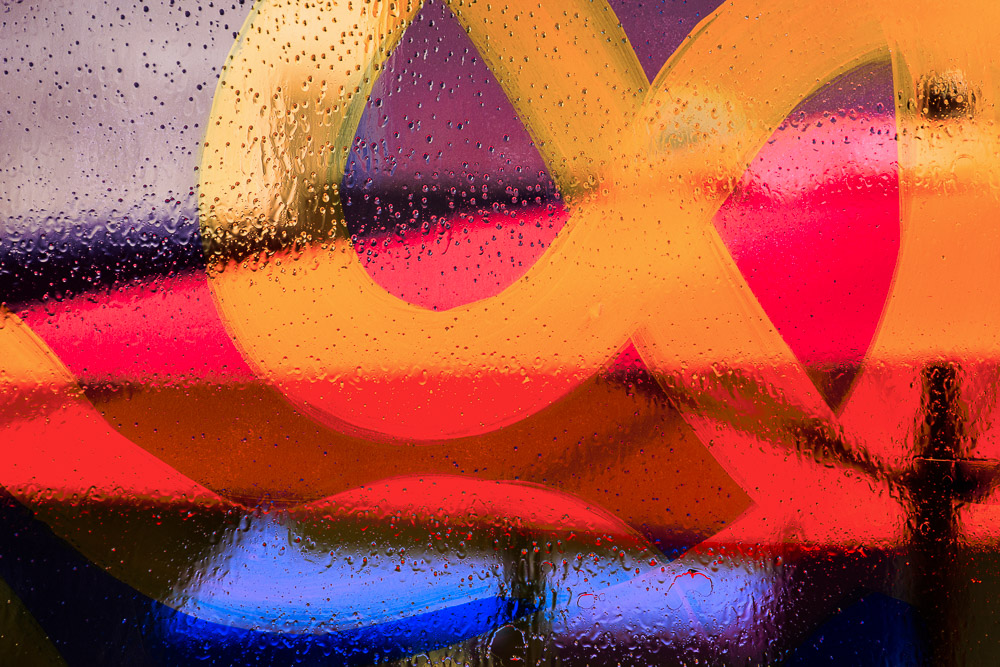
    Fabric covered head©Ed Schlotzhauer

    Everything interesting is shot

    Every location on, above, or under the Earth that can be reached without the funding of a major expedition has been shot to death. Even the ones that are ridiculously hard and dangerous to get to have. So, should we give up?

    That depends on your goals. Since you are reading this, you probably consider yourself a “creative”. What does that mean to you? Do you define your creativity as photographing a location no one has ever shot before? If so, perhaps you should modify your definition. All the major sights have been photographed.

    There are other ways to be creative.

    Dancing in the Rust©Ed Schlotzhauer

    Do something bizarre?

    But for many, the perceived need to stand out and be different leads to strange ends. To try to create things no one has ever done sometimes leads to going for shock, or bizarre, or, at the other extreme, deliberate banality. Is this what you want for your art? If so, go for it. You do your art. But ask yourself if that is really you.

    Others may go back to film for its nostalgia. Maybe even to other non-traditional technology such as tin type or wet plates. People deliberately leak light onto film, use badly flawed lenses, or develop their film in unusual chemicals. Some use intentional camera motion or deliberate focus problems or other “errors”. Sometimes just for the goal of making something no one else has ever done.

    We are led to believe that creative means totally new that no one else has ever seen or done. Perhaps this is an overly strict definition of creativity.

    Surreal hamburgers©Ed Schlotzhauer

    Be you

    Artists have always done the same subjects over and over. There are only a limited number of subjects and not that many truly different ways to approach them.

    Are you not going to do ponds because Monet has “done” them? Are you not going to do a night sky because Van Gogh was the only one to be able to do that? Da Vinci did the definitive portrait, so no sense going there. Likewise, will you never photograph landscapes because there are no more to do after Ansel Adams finished? Must you forever avoid flowers because O’Keeffe did everything that could be done?

    Have all the songs been created? Have all the novels been written?

    Of course not. Humans always come up with creative new ways to present things. Therefore, “never been done” is not the strict test of creativity.

    Apply your style

    If artists do the same subjects over and over, where is the creativity? Isn’t it in the unique perspective of the artist? The new point of view or treatment or interpretation they can bring to it.

    If the famous ones can do it, then why can’t we? We are artists, too. Each of us can still do new, fresh, creative work.

    Sure, if you park at Tunnel View in Yosemite and put your tripod in the same spot that thousands of others have used and shoot the same wide-angle scene, like everyone else, it is going to be hard to stand out. But look around. There is a nice river there, and beautiful trees. Wildlife is around, flowers, and people doing weird or dumb things. We can direct our creativity in other directions.

    We each have our own unique point of view and way of expressing it. Use it. Be intentional. You are drawn to certain things. Recognize that and work it. You do not need to chase the crowd of popularity. It does not matter what “influencers” are promoting.

    Say what is in you, about what calls to you, in your own way. Unless you are on a commission, your art should be first for you. If everybody loves your work, but you don’t, isn’t that a failure? If you love your work but no one else seems to, isn’t that still satisfying your need to do art?

    By making art, we are trying to express something we feel or perceive. Maybe to other people, but sometimes just to ourselves. That brings a unique perspective to it. If we succeed, it is perceived as different, meaningful. That is creative. No one else has done that the way you do.

    Fence built of skis©Ed Schlotzhauer

    Creative, our way

    Creativity is not usually something radically new. Sometimes it is an incremental build on the past. It is the little twist that makes it uniquely our own. The little spin on the conventional way it has been done. Sometimes it is spotting what others overlook and treating it as art, not just something on the side of the road.

    Be curious. By going through life with a mindful attitude, we can see things other people look past. Our vision usually applies to the unique way we see the same thing other people see, but don’t really see. We will not often see something that no one else in history has ever seen before. The secret is what we bring to the common. Can we make something new out of things everyone else ignores?

    Everything has been photographed. But not everything has been seen.

    To be a photographer today requires us to see more clearly and think deeper and work harder to separate ourselves from the crowd, but we can do that. We are artists. We have the right to be obsessed and passionate. After all, this is our art.

    Follow your enthusiasm … The only quality common to all great artists and creative people is that they are obsessed with their work.

    Richard Avedon

    Today’s images

    Given what I am talking about, I decided to feature unexpected, hopefully creative images. All are things found in my explores. None are grand landscapes or iconic locations. These are the kind of treasures I like to collect. I hope they are all things you have never seen.

  • Ethics of Editing

    Ethics of Editing

    I thought this question was completely discussed and laid to rest. But just in the last week I have seen 3 posts questioning the ethics of editing images. Not really saying it is wrong, just questioning it in general.

    Let me give you my conclusion so you can stop reading if you disagree: the question is wrong. It is not an ethical issue for art.

    Are photographs special?

    Because of its nature of recording the scene in front of the camera, some people still assume that photography is some kind of “pure” imaging form. That is, that what you see is reality. It is not and never has been.

    You would never make that assumption of a painting. It is clear to everyone that it is a constructed image. Even if it was painted as “plein air”, the artist would leave out things that distract and freely put in things that “should” be there.

    Just because the sensor (or film) images everything in the field of view of the lens does not certify that the resulting image is “truth”. And speaking of the field of view, changing it is a valid and common way to change the story you are telling. Zooming in on a small part or moving to the side a little may completely alter the message of the image. Is that ethical?

    Giant flamingos, in Colorado.©Ed Schlotzhauer

    Modifying darkroom prints

    Prints were routinely modified even from the days of film and darkroom printing. Filters made serious modification to tonal renderings in the captured negatives. Negatives were spotted to remove dust (or distractions). Dodging and burning further altered the tonality of the original scene.

    If you are familiar with Photoshop, you know that one of the layer blend modes is Screen. Do you know where this name came from? A way of compositing film images was to project 2 images together onto a screen, then re-photograph the resulting combined image.

    Photographers are resourceful. They find a way to make the image they need or want to make. Even if the result departs from the original.

    Modifying digital images

    But it is so much easier to alter digital images. Does that somehow make it unethical to do it?

    We have wonderful technology in our computers and image processing software. But would we be better artists if we printed our images “straight” – unmodified in any way?

    No, we would not. Digital sensors are amazing, but the straight output of a RAW file is bland, low contrast, probably with a bad color cast, and it has dust spots and distractions. You could never sell an image like this, and it would be foolish to even show it to viewers in this state. Other than to make a point about how important correction is.

    Even black & white prints are an advanced modification of color images. It is no longer a throwback to simpler and more pure times.

    We are expected to correct the color and contrast, to remove spots and distractions, to alter the lighting and tonality to make it more pleasing. You could never win a contest or be admitted to a gallery without doing at least those steps.

    Beyond that, pixels can be processed and combined much more freely than film images ever could. To say that it is wrong to do that with digital images is like saying that writing should only use the grammar and vocabulary of 19th Century English, because it was more pure.

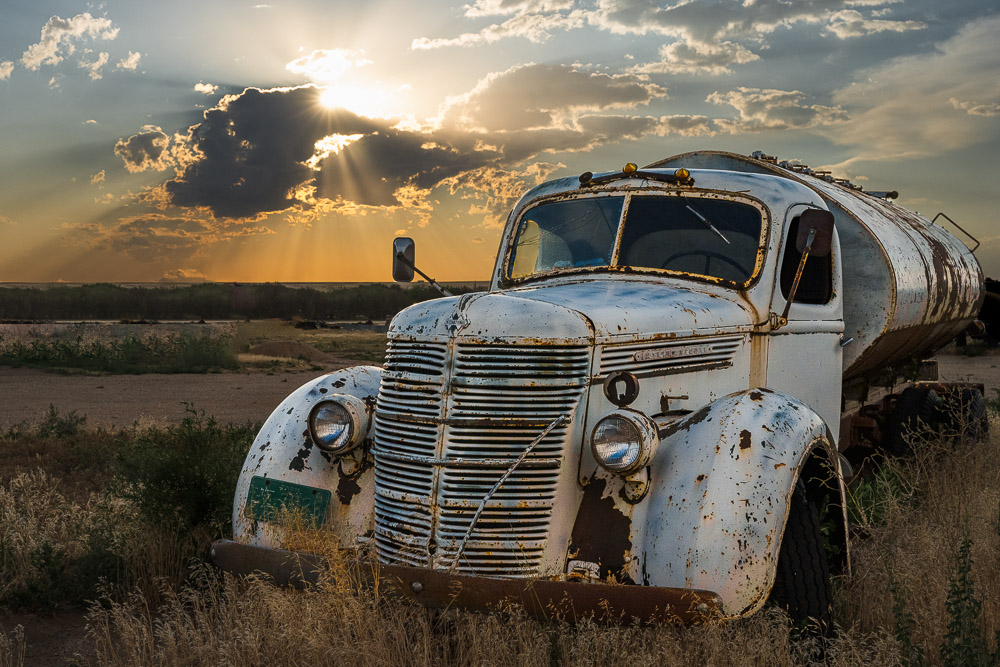
    Antique narrow gauge steam locomotive snowplow©Ed Schlotzhauer

    Why do it?

    Is it too simple to say, “because we can”? Simple but true. We can. Pixels are raw material. They can be modified or combined or stretched or colored at our will. The same way that a painter can use any colors or put any brush strokes down on his canvas.

    What we choose to do depends on the image. Sometimes we compose the “final” shot almost entirely in camera. We recognize what we want to do, and we can make it happen in the field. These images still need a lot of work to bring out the quality we want, but the result may be very close to the scene as shot.

    But sometimes I go out shooting what I call “raw material”. These images are deliberately not intended to be a finished image by itself. They become parts blended or composited together with other parts to form a final image concept. Is that valid? Is it ethical? To me, completely.

    Terra Incognita©Ed Schlotzhauer

    When not to do it

    There are times that images should be labeled as “truth”. If you are representing the work as photojournalism or documentary, it should relatively unmodified. Relatively in the sense that it may be cropped or spotted or exposure balanced. Things like that that do not seriously alter the result that is presented to the viewer.

    Even so, there are the issues of point of view and field of view. I discussed field of view. For journalism what the photographer chooses not to show may completely change the ‘truth” of an image. And anyone, even a seasoned journalist, has a point of view they bring to the shoot. That POV determines how they represent the scenes, what to feature, how to frame it, etc.

    So, we must accept that what we see is the truth from their point of view.

    Kentucky Coal Miner©Ed Schlotzhauer

    Ethics?

    One of the articles I read recently asks “how much we can ethically alter a photograph?” My response is that only photojournalists and documentary photographers should be expected to “tell the truth”. Other than that, there are no ethics involved. The concept does not even apply to art.

    All other photographers are creating something artificial. The resulting image is a creative work of fiction. Trying to say that there is some artificial ethical limit on what they do is like saying all writers must only tell the absolute factual truth. I hope not. I like reading fiction.

    There are many reasons for creating images. A few uses of them should maintain a semblance of truth. Most do not have any link to truth.

    My images are only truth in the sense that I created them (no AI involved), they are my product, and they represent what I felt or believed at the moment. Any ethical questions are within my mind and based solely on my values. If anyone else raises an ethical concern about my work, I thank them for being interested, I might want to find out their concerns, but I would tell them to apply their ethical anxieties to their own work.

    Of all the things there might be to worry about in the world, the ethics of altering my images is not one of them.

    The real ethical dilemma

    There is a serious ethical issue that needs a lot more discussion. That is AI generated work and creating images that deliberately lie about events. But I am out of room here.

  • Go to a Forest, Again

    Go to a Forest, Again

    Go to a forest. It is good for you in many ways and it can benefit your photography. I say “again” because I wrote about this before, but it has been over 4 years and I decided to update my thoughts.

    Forest Bathing

    I am a believer in what is called forest bathing. This was my practice before I ever heard the term.

    Some research shows that just being in a forest, experiencing the sights, sounds, smells, and feel of nature will improve our physical and mental health.

    Forests are a magnet for me. Every place I travel to, I try to get out into the local forests. The different trees are special to me and are refreshing, each in their own way.

    My previous article talked a lot about forest bathing, but it is not just an idea. We can’t just put it on our to do list and try to fit it in somewhere, maybe as we listen to a podcast.

    Spreading oak branches.©Ed Schlotzhauer

    Silent Walk

    Just being in a forest is not magically going to make all our problems go away. Actually, nothing is going to magically make them go away. Things like forest bathing can help. Some people are proposing a parallel stress reducing plan called silent walking.

    We seem so totally controlled by our technology these days that it can even impact our forest experience. To get the most from the forest exposure, or any calming moment, we have to unplug.

    To get the benefits of being in the forest, we have to actually be there in the forest, physically and mentally. Leave the distractions behind. It is great that you love your music, but when you are in the forest, leave your headphones behind. Listen to the birds and the wind in the trees. Hear the sound of the river flowing by. And it is not a time for your run. That is great to do for exercise some other time, but try just taking it easy. Relax. Set a slow pace. This is a time to unwind.

    Promise yourself you will not pick up your phone while you are in the forest. Except maybe to take a picture. But them put it back away and don’t post the picture until later.

    Benefits

    Here are some benefits of being in nature as noted in an article quoting Allison Chase, PhD, CEDS-S, Regional Clinical Director at Pathlight Mood & Anxiety Center in Austin, Texas. She is more gentle and articulate than I am.

    “Spending time in nature, with more serene and slower paced stimuli, can be very calming to the nervous system, where stress and cortisol levels are impacted.”

    But to get this result, it requires being completely present. “The key is to slow down and take in the environment and its natural beauty,” which also helps the body calm down. “Without the input of screens and other modern or electronic stimuli, one’s brain [aka neurons] can calm down. This slows down the entire body to be more calm and relaxed.”

    Additionally, nature itself can be a great boost for your overall wellbeing. “Nature offers stimuli that can impact a number of senses, [such as] touch, sound and smell,” adds Chase. “Whenever our senses can be heightened in a healthy, positive, serene way, it is always good for the body and brain.” In fact, a study in Environmental health and preventive medicine found that forest bathing significantly lowered blood pressure and reduced negative moods.

    Stark, bare aspen tree. Chaos of branches.©Ed Schlotzhauer

    Mindfulness

    This sounds a lot like mindfulness to me. Imagine that.

    I’m not a formal practitioner of mindfulness, but I believe my secular practice of it has great value. It seems I recommend it a lot in my writings.

    And I will continue to recommend it. In our fast paced, high stress, over scheduled world it can help bring us back to a healthy state.

    Find your place

    I’m lucky. My house is about 10 miles from the edge of the Rocky mountains. In abut 20 minutes I can be in the mountains and forests. That is one of my happy places.

    But not living next to a National Forest does not exclude you. As a matter of fact, I do not go up into the National Forest nearly as much as the time I spend in the parks and natural areas in my town. You probably live near parks and open spaces, too. Use them. Don’t ignore the good even if we can’t have the best.

    I have come to believe it is our intent and our approach that makes the difference in what we get from our time. If we go out with the intent to slow down, calm our mind, and take in the environment with most of our senses, it will happen. If we just go for exercise, well, we will just get exercise.

    Leaning trees.©Ed Schlotzhuaer

    Get out there

    As I write this, spring is emerging in much of the country. Many of us are waking up, stretching, and resolving to get out and start taking pictures again.

    Do it.

    I hope there is nothing hindering you from picking up your camera, heading out to your local park, and getting back into nature. Or, optionally, leave the camera. Just experience the outdoors again. It is good for you

    A couple of days ago while wandering through a local natural area I saw 2 sights that made me feel good. A middle aged woman wearing a backpack was approaching me going the opposite direction. I wondered if she was another photographer, since I carry my camera in a backpack. As I got closer I saw that she was on oxygen. She had a tube under her nose going back to a tank, presumably, in the pack.

    In the other case, I came on a woman making her way along the trail using a walker. This was a gravel trail, not paved, so I assume it was work for her.

    Both of these ladies were quite a ways away from the closest parking lot. I thought they were awesome and encouraging. They were making a determined effort to get out in nature despite some hindrances.

    What is keeping you from doing it? Really.

    Get back out there.

    Forest bathing hack

    Everybody seems to want a quick way to hack the system. OK. Here is your hack for forest bathing, again from Allison Chase.

    1. Find your sanctuary

    Look for a local park, nature preserve or even your own backyard if it boasts a decent tree coverage. Find a place that feels calming and allows you to disconnect from everyday life. This also means silencing your phone and tucking it away.

    2. Slow down and savor

    Forest bathing isn’t a race. Meander along a path at a leisurely pace, allowing yourself to truly appreciate the sights and sounds around you. Take slow, deliberate breaths of the fresh air. You can even stop and sit under a shade tree for a while. Your session doesn’t have to be long — aim for 30 minutes to start.

    3. Engage your senses

    Don’t just look — touch, smell, listen and really see everything around you. Take note of the soft aroma of fresh blooms, how freshly-cut grass feels against your bare feet or the vibrant colors of a passing butterfly. If worries or negative thoughts start to creep into your mind, gently guide your thoughts back to the present and the beauty surrounding you.

    Layers and layers©Ed Schlotzhauer

    On photography

    Mostly I have talked about the general mental and physical benefits of being in nature. I believe there are benefits for photography also.

    Being in a forest refreshes us and awakens our senses. It is invigorating. If we are better physically we have more stamina and are more capable of getting out for photo shoots.

    And if we are calmer and less stressed we can better apply our creativity to our art. The more hindrances we can remove, the more we can focus on our art.

    Forest bathing leads to mindfulness. Mindfulness leads to more creativity.

    Note on the pictures selected

    I deliberately selected black & white images for my forest pictures today. There are 2 basic reasons. One, I really love b&w. Two, I want to make a subtle point that the benefits of being in a forest are not reserved just for what we think of as “peak” comfortable, colorful summer and fall times. The forests have benefits for me all year, in all of its moods and weather.

  • Map vs GPS

    Map vs GPS

    It really is the journey, not just the destination.

    There are 2 major ways to navigate as we travel. The main choice or conflict is map vs GPS. There are alternatives, like being on a tour or “dead reckoning”, but I will rule those out for now.

    GPS

    By GPS, I mean, of course, a Global Positioning System app on our phone or in our car. What an astonishingly useful technology. Who would have thought not that long ago that we would have such precise navigation available to anyone, anywhere, right in our hand?

    GPS is an important supporting technology that aids our great transportation system.

    When we are going to an unfamiliar place, who hasn’t entered the destination in their device and welcomed the detailed, turn by turn directions? Or been annoyed by the nagging “Proceed to the route” admonition when we veer off for some reason. Even for familiar places, we often use the app, because the magic of the internet allows it to provide real time route updates to take us around congestion or road construction. Amazing.

    I would say that most of us expect this level of service now. These wonderful apps will take us by the best route direct to our destination with little decision making or navigation required by us.

    But that can be the problem.

    Antique diesel locomotive©Ed Schlotzhauer

    Physical map

    Do you remember maps? Like that image at the top of this article? You know, those folded paper things that always seem to tear when we try to open them. And spread out to cover everything around us.

    Some of you may never have held an actual map.

    What is it? A map is a representation of an area on a 2-dimensional print. There are limitless kinds of maps, but I am only talking about geographic maps. Usually, a Mercator Projection. Sorry. TMI, but I like detail.

    A typical map shows cities and towns, roads, lakes, rivers, and oceans. Some have topographic lines to show elevation and some use shading to give an idea of elevations. It is not unusual for them to show train tracks, parks, monuments, military installations, and other features of interest.

    The area the map can show is a function of the amount of detail wanted and the allowable size of the map. To “zoom in” and see more detail means it cannot cover as much area.

    In a large place like the United States, a fairly detailed map may cover a state. In other places, it might show a whole country. We can also get very detailed topographic maps that cover only a few miles in great detail.

    So, a map shows us a top-down view of what is there, but it is up to us to interpret and use the information and navigate to where we want to go.

    That’s more work. Why would anyone choose that over a GPS app? That is where it gets interesting to me.

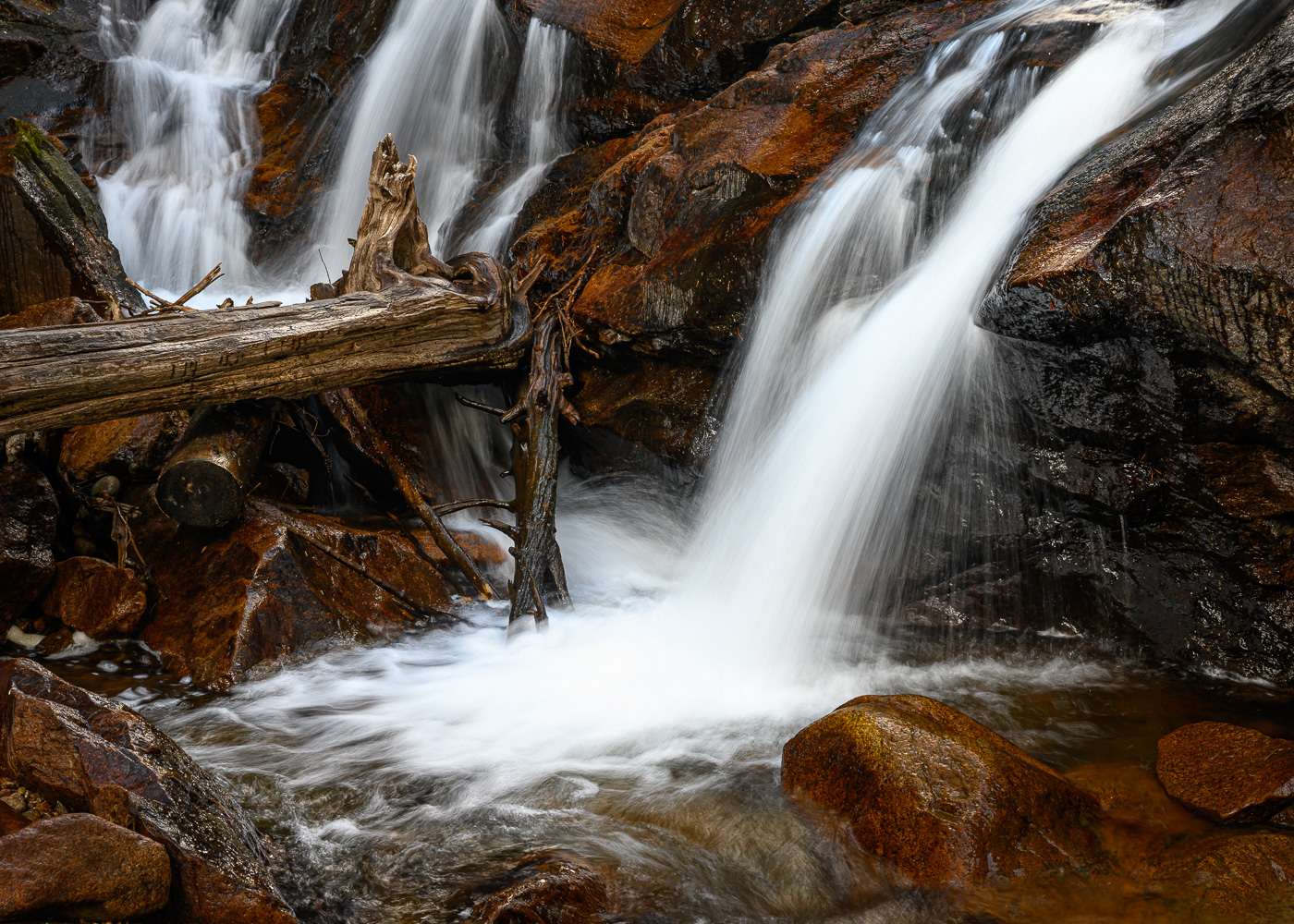
    Waterfall in southern France©Ed Schlotzhauer

    What does it say about us?

    Yes, indeed, why ever use a map? I think it has to do with our goals, our personality, and, if we are photographers, how we work and think.

    A GPS app will take us to a destination with little thought or planning on our part. We do not have to pay much attention to where we are or what we are going through.

    It does its job efficiently. It is a faithful robot that does not distract us with sightseeing suggestions or side trip possibilities.

    Get there. Check it off. The destination is the goal.

    A map, though, can be a storybook of possibilities. It is a tool for our curiosity. Look, there is a waterfall just a few miles away. And that small, twisty road through the National Forest looks a lot more interesting than this Interstate highway. I wonder what that is over there. Oh, there’s where that town is. I’ve wanted to visit it. It’s just a little way off this route. That is worth a look. Maybe I will even stay the night there.

    A map shows the layout of everything that is around. It is kind of like browsing a buffet. I can pick a little of this, some of that, sample this other that I have wanted to try. It doesn’t try to guide us along any path. That is up to us.

    There are often endless possibilities, depending on what I am interested in and how I want to use my time. I select where to go and how to get there. I know that, for me, my interests are usually in the small towns and back country rather than big cities and major highways. If I have the choice, that is what I pick.

    Back road in West Virginia, New Bridge©Ed Schlotzhauer

    Use the right tool

    GPS and maps are both just tools. Each has strengths and weaknesses. It is up to us to choose the best tool to use for the need at hand.

    If the destination is the goal and time is tight, GPS will take us there directly and give precise directions. But if we have the luxury of choosing our own path on our own schedule, maps let us see an overview of the area. It lays out the information visually for us to see and to decide and choose. I don’t think I have ever discovered anything great that I wanted to photograph just following GPS directions.

    Map vs GPS. They are not actually in competition. I use both. For example, I recently got back from a 5000 mile driving trip. I used GPS to navigate to specific destinations, like to a hotel, once I got close. Otherwise, I used maps to let my imagination wander. And I did wander. Through swamps, finding a hidden winery, along back roads in the Ozarks, to some charming places I knew nothing about along the gulf coast. None of these were things my GPS would have suggested. I would have hated to miss any of them.

    It is said that it’s the journey, not the destination. I try to live that way. I’m partial to maps. GPS is excellent for getting to a destination. Maps, though help me discover a more interesting journey.

    Lobster shack, Maine coast©Ed Schlotzhauer

    Try maps again

    I encourage you to try maps again. When I see a detailed map like the section at the top, my pulse quickens, and I start getting excited. Sitting in a hotel room at night with a high quality, detailed map spread out on the table, visualizing possibilities for the journey ahead can be like reading a great story. But in this case, we are writing our own story.

    After all, we are creatives. We do that.

    To finish the moment, to find the journey’s end in every step of the road, to live the greatest number of good hours, is wisdom.

    Ralph Waldo Emerson

    Getting maps

    The image at the head of this article is a very small section of a National Geographic map of southern France. This covers about 70 miles by 50 miles. I have been to this area, and I used this very map for navigation. NatGeo has become my preferred map source.

    The best map providers I know of are National Geographic and Michelin. They have an amazing catalog of detailed maps. Some are printed on a plastic coated, tear proof paper, like the France map above.

    If you are in the USA and are a AAA member, you can get maps from them for free. Just go to your nearest AAA office. These are good maps, I use them, but they tear easily. But then, free…

    These map provider suggestions are for your information. I do not receive any compensation.

    About these images

    All of these images (other than the map image, of course) are places that had to be discovered by exploring while using maps. None of these could easily have been navigated to by GPS unless someone gave you a precise location. One of them is a location on that map of France.

    Try maps. They may change how you travel and photograph.

  • Photography is Human

    Photography is Human

    Photography is a human activity. It is by humans and for humans. Why else would anything you call art be done?

    By humans

    Photography is a uniquely human product, as is all art. Humans have an innate desire to record and to express. We preserve memories or pour out what we feel or even just want to make something “pretty” or significant.

    No other creature feels a need to produce lasting works of visual art.

    I do not believe it is just because we have opposable thumbs or have mastered tool making. It is much deeper than that.There is something we feel and have to express. We want to leave some record of our passage through this life.

    And this is a near universal, spontaneous need. It just comes out because we are human.

    Bridge beams over river©Ed Schlotzhauer

    For humans

    Who do we create art for? Isn’t it always and only for humans?

    There is no need to make a large landscape mural for your dog. He will not appreciate it. He may be your best friend, even almost a surrogate child, but he won’t even notice the art you created for him.

    But don’t assume quantity of views is a valid measure of worth, or that we have failed unless we have public showings attracting large numbers of people. I am an example of that. I have had showings, but I am clear that my main audience is myself. That is, ultimately, I am the one who gets to approve my art. But, then, I am a human. My art is for humans.

    I believe you can have a rewarding satisfaction of being an artist even if you only show your work to a select set of friends. The value of our art should not be measured in the amount of publicity we get or the number of collectors holding our work.

    I love it when other people see my work. Some are even kind enough to make encouraging comments. That is a kind of connection and validation. It feels good since it comes from humans.

    Old photo. Torn up but re-assembled.©Ed Schlotzhauer

    Uniquely human

    Humans create art for other humans. We are the only creatures who can value or even recognize it. Unlike your dog, people can be touched by an image. Viewing it can translate to multiple feelings and emotions in another human.

    Animals don’t create art. Fish don’t either. Only humans. We have a need to create.

    If we visited some tribes making cave art in France 20,000 years ago and asked them why they did it, what do you think they would say? I doubt they would say they were decorating the cave so that when they moved out and a bear moved in, it would be happier. No, they would probably just say they felt a need to create and to record events and to establish aspirational goals for younger people to follow. And because they liked it. That is human.

    Whenever we live and wherever we go we feel the need to paint on our walls.

    The largest AI model might, with good prompts, make a picture that would be acceptable for some uses. But it could never step back and look at it with satisfaction and think “Wow, i like that”.

    Birds flocking in the snow.©Ed Schlotzhauer

    Not just taking pictures

    To be clear, I am only talking about photography intended to be art. What is often called fine art photography. There are other kinds.

    I guess that most of the photographic images captured daily are taken by machines. Try to picture the vast amount of automatically captured imagery. Police surveillance cameras on every corner, speed cameras, security cameras on every business and house, dash cams, body cams, Google Street View captures. More than we can probably imagine.

    There must be millions of hours of video and millions of still images captured by robots every day. However, none of those robots are emotionally attached to the images. The machines did not feel excitement or sadness or awe when they “looked” at any of the frames. They did not feel anything. And the machines did not take the images with the goal of causing happiness or warmth or longing or any other emotion in human viewers.

    Those automatically captured images are not art, and they are not for humans, really. Some may be used by humans for a particular purpose, but none of it is printed and framed and hung on their wall to be called art.

    Rusty chair, shadows at sunset©Ed Schlotzhauer

    First, live life

    Before we are artists, we are humans. In life we experience joy and success and sadness and loss. We grow from these experiences. Our values and life views develop. It gives us a point of view. Sharing this point of view is called art.

    Don’t photograph just to be technically perfect. That is shallow and dead. Photography is a beautifully technical craft. Technical skill is required to make an interesting image, but it does not by itself make an image great. Machines can do technical perfection.

    Don’t photograph to “make art”. That is a false goal. Photography is a perfectly valid art form. However, if we don’t have anything to say, we will say that. Make images that are art because you are an artist and have feelings or a view that you want to share with your viewers.

    Photography that is art comes from life. Living and experiencing is something only a human can do. Don’t give up your humanity to machines or algorithms. Live the life only you can live. Be who only you can be. Let it come through in your images.

    It’s not about metrics or hits or any other numbers. It is about you seeing and expressing something and being able to help other people to see and feel it too.

    Postscript

    Steven Levy of Wired Magazine recently gave the Commencement talk at Temple University. A topic on graduates minds is will they lose their jobs to AI. Steven addressed this and had what I consider an insightful observation.

    In his conclusion he said “The lords of AI are spending hundreds of billions of dollars to make their models think LIKE accomplished humans. You have just spent four years at Temple University learning to think AS accomplished humans. The difference is immeasurable.”

    You are a human. Art is a human activity. Only you can make art.