An artists journey

Category: Artist

  • What Is Creativity?

    What Is Creativity?

    I’ve discussed aspects of creativity before. Mostly from a practical standpoint. It is a topic that has a special call to me. But what is creativity actually? I decided I would do research to find out what the experts say.

    Psychology

    So I set out to find out what people who spend their career studying creativity have to say about it. I have mentioned Teresa Amabile and some of the intriguing papers she has written. They led me to believe there might be useful insight to be learned.

    After some internet research I saw several mentions of a book “The Nature of Human Creativity“, published by Cambridge University Press. It is a collection of papers by 24 psychology scientists that are frequently cited in textbooks and other papers. The first page describes it as “an overview of the approaches of leading scholars to understanding the nature of creativity, its measurement, its investigation, its development, and its importance to society.” Wow! That’s exactly what I wanted!

    I eagerly bought it and jumped in, only to find it was like wading through a swamp. Turns out the giveaway I should have caught was that this was by “leading scholars”. Works like this are written by PhD’s to impress other PhD’s. There is little thought of communicating practical advice to real people. But I have read a lot of PhD and above papers, so I pressed on, although with diminishing enthusiasm.

    Spoiler alert: I gave up about half way through. It’s not that I couldn’t understand it. Instead, I found it very unsatisfying. I could tell there would be no light at the end of the tunnel, because the real answer is that the scientists don’t know. Sure there are lots of theories. Scholars live by making and publishing theories. That does not mean they are very meaningful.

    So, what is it?

    A lot of psychologists accept the statement that “creativity involves the production of original, high-quality and elegant solutions to a certain class of problems – novel, complex, and ill-defined, or poorly structured problems.” [Mumford, Medeiros, and Partlow, 2012] This is one of the simplest and most concise statements defining creativity I have found by the psychologists.

    In practice, though, it leaves a lot of unanswered questions for me. The one word I definitely agree with is production. You cannot evaluate the creativity of something until it is made or built. Someone has to be able to see it, hold it, examine it, compare it to other things. Otherwise it is just an idea.

    But then what about terms like “original” and “high-quality” and “elegant”? What do they mean? Who defines them? And is art included in the set of “novel, complex, and ill-defined” problems they study? To me art is definitely all of those.

    How to measure it

    One of the greatest problems I had with the psychologists, though, is how do you measure creativity? If something calls itself a science then its theories must be measurable and other scientists must be able to repeat and independently verify the results.

    Most of the psychologists agreed, probably correctly, that creativity varied by domain. They pretty consistently solved the measurement problem for their research by using a panel of domain experts in each specific area to score the creative works. The expert scores determined the creativity judgment for any work being evaluated. The fact that the expert’s scores had decent statistical correlation was their “proof” that the measurement was valid.

    That is easy and it takes the researchers off the hook. They do not have to be the judges. To me, though, it is the thing that invalidates the whole research approach.

    Is art different?

    The psychologist’s measurement approach will work OK for engineering or math or software or accounting. Most any problem solving discipline where the problems can be expressed and solution quality can generally be analyzed and agreed on.

    I believe art does not fit this pattern and has a terrible history of valid critical judgment. There are no clear right or wrong solutions in art. Critic judgment is often strongly biased by their opinions and background and training. Just look at the resistance and rejection a new movement like the Impressionists got when they opposed the established Realist intelligentsia. Or look at Paul Klee. History seems to repeat itself about every generation.

    On a much smaller scale, look at typical photography contests or exhibition competitions. Perhaps I am just an arrogant curmudgeon, but I often look at the winners selected and think “you’ve got to be kidding; I throw away better ones than that”. I have done judging (forgive me) and I know judges can come to consensus and select the top 3 entries they like best according to the criteria they have set. But unless a work is a blatant copy, I disagree that they can reliably determine a quantitative measure of its creativity.

    To me this shows that we should have little confidence in the ability of critics to judge creativity in art.

    If we don’t know what it is, how can we do it?

    Sherlock Holmes seems to be the first to state “I know what is good when I see it”. Don’t we as artists do that all the time? Isn’t that the only criteria that can guide us?

    We could say “I don’t know what creativity is, and judges seem to be telling me I must not be creative, and I can’t always do work that is demonstrably original and novel, so I will give up”. If we did that no art would ever be done. At least not by honest, truth seeking artists. It is easy to copy what seems to be popular, but really different work always fights against a headwind.

    But think. Who is it that is telling you your work is no good? The same people who told Monet and Van Gogh and Klee they were no good. I’m glad they didn’t listen. They kept their head and did the work that was unique to them. And the world is better for it.

    We each have to determine what evaluations we choose to accept for our art. Do not give weight to the negative talk by the critics when your inner voice disagrees. Your inner voice may not be right. It may need new training and experience. But you have to trust yourself, and go with your instincts. You really don’t have any other reliable standard.

    Talent or skill?

    So is creativity a talent or a skill? Does it come from the Muses or is it something we are born with? Can we develop and enhance it or are we stuck with what we have? Can other people reliably measure our creativity?

    Probably some or all of that. Don’t expect the answers to come from psychology research . They are at least as blind as the rest of us. If scientists can’t give us objective answers, we have to decide who we listen to. As an artist we need to give greatest weight to our own evaluation. It is the only way we will follow our path.

    One thing I do know is that creativity seems to reward hard work. If we sit around waiting for inspiration, we may be sitting a long time with nothing to show for it. Get busy. Go out in the field or go to your studio and make trash if necessary. Do something. Movement seems to generate creativity. Make your own path and don’t look back.

    Disclaimer

    I am not belittling psychologists. Most of them I have studied seem to be very intelligent, hard working people. I’m just saying I don’t think the methodologies I have seen used in studying creativity are destined to lead to much success in understanding art.

    Maybe they can understand why 2 software developers with seemingly equivalent training and experience can exhibit vastly different levels of creativity and productivity and quality in their work. Something I have often seen first-hand. But that is a different and easier to study domain.

    I wish them luck. But for me, I will not look to psychology research for future help in understanding artistic creativity.

  • It Is What It Is

    It Is What It Is

    It is what it is. This is actually an expression I hate, but I’m used to it because some of my kids occasionally use it. In one sense, what I photograph is what it is.

    My methods

    I photograph outdoors in natural light. The subjects I shoot are “found” things. Things I encounter on my way and I shoot them as I find them. That is, I do not stages shots. I will very seldom move anything or do any “gardening” to remove distractions or competing elements.

    This is the method that appeals to me. There is a kind of honesty or transparency about it that feels right.

    One of the things I am indirectly pointing out in it is that most of us go through our daily life with blinders on. We tend to be oblivious to most things we encounter unless they are what we are looking for or they seem a threat.

    What I want to do is take these found subjects and elevate them in a way that makes them interesting and to gently say, “see what you missed by not being mindful”.

    Explore

    To accomplish this, I have to be an explorer. I forage for images rather than planning them. And it requires heightened senses. I have to be outside my head and paying attention to things around me. Some may say I’m out of my head, but I will call it outside my head. I have to quiet the inner critic and be constantly scanning around me for interesting things.

    It is a learned skill that I have practiced for quite a while. While I am far from perfect, I feel like I am getting better at it.

    It has become a joy to me. I look forward to these explores. Most often I am just wandering in the vicinity of my studio. Familiar and well worn paths. It constantly surprises me that I can discover new and interesting things in such familiar territory. Some days it is easier than others. But more often than not I find something new or I see something differently. Even if I don’t come back with any images, I have enjoyed getting out and being in tune with what is around me.

    Go out empty

    One of my inspirations is Jay Maisel. I have mentioned him many times. Jay is a famous photographer living in New York City – now Brooklyn. One of the many things he is famous for is just going out rambling every day on the streets close to home.

    He is so good at spotting interesting scenes that it is almost depressing. I would hate him if he weren’t so phenomenal. πŸ™‚

    Jay describes what he is doing as “going out empty”. He wants to go out as unprepared as possible so he can get filled up with what the world has to offer. The point he makes frequently is that if he has a certain thing in mind to shoot, that is a mental block. He might find that, but would probably miss everything else that’s on offer.

    Through lots of practice I have determined this style works well for me, too.

    Make something out of it

    So I explore. I wander. I’m searching for things that catch my interest. And when I find them, I don’t rearrange them or clean them up, except maybe for a stray blade of grass or a piece of trash.

    Therefore, the challenge is to make something out of what is there. Position, crop, lens choice – these all factor in to making the image. Someone has said the picture is already there, we just have to crop it. There is truth to that. The excellent instructor Ben Willmore once said “What elements are adding to the image? What elements are detracting? How do I remove more of the detractions and add more of the good?” That is a good description of the game: try to remove enough of the bad and include enough of the good.

    It is what it is – work with it

    It is often stated that everything has been shot. What matters now is our personal treatment of it. Can we use our unique vision to see the subject in a new and interesting way?

    I choose to work with things that interest me as I find them. It is what it is. How can I make it the best it can be? It can be a challenge, but the reality is there is a lot more interest in the world around us than we usually notice.

    It is a joy to me when someone exclaims over one of my images and I can think – or say out loud – that is right where you go by every day and you’ve never noticed it.

    A final quote from Jay Maisel: I want people to see what I see. It’s all out there. It’s a joy to look at.

    Yes, it is what it is, but it can be more.

    This process works for me. It fits me and there are benefits. I recommend you experiment with it. It might need several outings to become comfortable. You might discover a new world around you.

    Let me know your experience!

    Today’s image

    OK, I didn’t find this around my studio. But thousands of people passed by this daily and I bet few if any ever glanced at the scene closely enough to take notice of it. It was clearly visible from a main highway. There seems to be a story and a lot of unanswered questions wrapped up in a single frame.

    I was driving and I turned around and came back to it. I’m glad I took the time. It is a good memory for me.

    The scene is gone now. But that is a topic for another day.

  • Lighten Up

    Lighten Up

    By lighten up I don’t suggest we make more high key images. It’s not a bad idea if you don’t do it much. But I mean to give our viewers more opportunity to figure things out for themselves.

    Serious

    Most of us take the world very seriously. Of course, there are serious issues we live with all the time. I don’t minimize them. But I learned from an expert in culture that, being an official old guy, I typically have less anxiety than most of you younger people.

    Personally, I’m glad. I hate going around burdened down with angst and fear. Instead, when I’m out taking pictures I see joy and hope and feel uplifted.

    I’m not trying to change the world with my images. At best, I hope to help a few people have a better day by looking at my work.

    But another way to lighten things up it to be more ambiguous. I notice that most of my work has a clear subject. Low ambiguity. Also, not so many questions for you to answer for yourself. This is probably a fault.

    Ambiguity

    Ambiguity is a marvelous tool. Used sparingly it can liven up our work and give our viewers more challenges and rewards. Ambiguity means being open to more than one interpretation.

    I recently watched a video on Creative Live by Renee Robyn. She is a conceptual artist who constructs images as composites of many layers. Some of her work leads to various interpretations. I was interested that she said about one that she asked many people what it meant to them and every one had a different interpretation. And none matched what she had in mind. That is ambiguity.

    Ambiguity introduces the option of different interpretation. Of course, that is always possible with any image, but more ambiguity makes it more possible.

    Leave questions unanswered

    As I get older I find my work asking more questions than answering them. Maybe I realize I know less as I age.

    I cynically view that a lot of young people come out of art training thinking they now think deep thoughts and have to raise great questions for their viewers. Later, whether they realize it or not, most of them settle down some and their work says “this is what I see”. Even later, like me, they might come around to saying “these are things I still don’t understand, but I see them different and less rigidly now”.

    Intentionally introducing more ambiguity is one way to move away from imposing my own interpretation on a scene. By leaving more room for the viewer to create their own story it becomes more of a conversation.

    Say more

    It is quite possible to say more by saying less. This is one of the beauties of poetry. Great poetry may introduce deep truths in a few words, but in a way that keeps the reader thinking about it on and off for years.

    I have no images where I claim such insight or depth. But I do think that by leaving more for the viewer to fill in from their own experience and viewpoint, there can be more interest.

    Giving viewers the clear answer to things can come across like a boring lecture. It may be good information, but it doesn’t necessarily engage you. I have this problem with a lot of landscape images I see (and take). It’s a landscape. Beautiful place, great time of year, I’d like to go there, but there’s nothing else. Nothing left for me to figure out or question.

    It seems much more rewarding to hint that there is more depth there to be discovered. To give the viewer a chance to participate, to become a co-creator.

    Today’s image

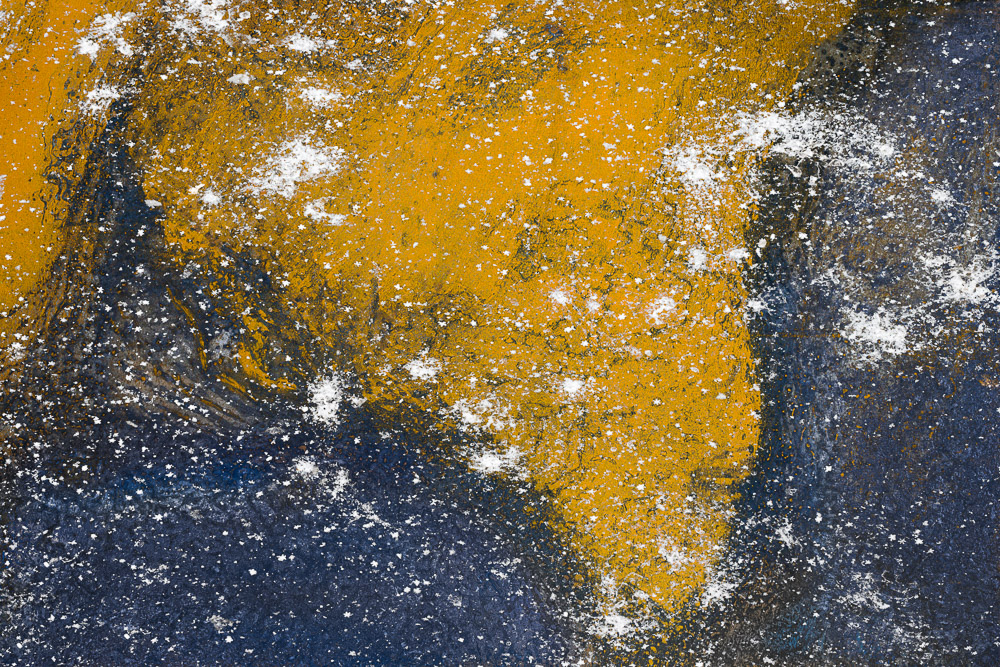
    This image is a little ambiguous. I’ll let you figure out what it actually is. I left a couple of strong hints, but feel free to make up your own interpretation, your own story.

  • Print It!

    Print It!

    Some would argue that an image is not final until it is printed. More and more I am tending to agree. Print it – you will learn a lot and be a better photographer.

    What is the thing you are creating?

    I am intrigued by the idea of creativity and I have studied creativity research some recently. Real, hard core theoretical psychology. It has been disappointing. One of these days I will write an article on what I have observed.

    One of the things I do appreciate about the papers I have read is that they tend to tie creativity to producing something. Sort of the idea that if you just think creative thoughts, are you creative? If you can’t or won’t produce a creative work, is the creativity really there?

    There is benefit in producing something and holding it up for yourself and others to see and examine. Small images on a screen do not have the impact

    Why a print

    A print is real – a tangible, physical product. It takes on a life of its own; it is held, examined, felt, passed around, hung on a wall. It is permanent.

    Creating a print changes our thought process and our relationship to the image. We must finalize it, because the print will never change. And we have to re-think it in terms of the limitations of the print medium.

    It is kind of like having a child. Initially it is my baby, very closely held and personal and protected. Then it grows up and becomes an independent person.

    And by analogy, the print is made to be permanent and independent. It is a work we have produced for others to have and enjoy.

    What do we learn

    I am amazed by what I learn by printing an image. It was edited for hours until I am sure I am happy with it. Then when the print comes out, it’s “Really? That needs more work”.

    Viewing a print is quite different than looking at an image on screen. We have a different relationship with it. Our perception is very different. Even at a simple technical level, an image on a screen is formed by light being generated, an additive process. A print is seen as light reflecting off a substrate as modified by colored pigments. A subtractive process. The perception and the psychological process is different.

    But ignoring all technical considerations, there is something about a print that points out all the flaws in your image. Seeing it as a physical representation on paper changes how we look at it and what we see. If you want to find out if your image is any good, print it.

    How is it that I can work with an image for hours on screen and not see that sensor dust spot in the sky? Why didn’t I see that the mid tone contrasts are inadequate? And that purple highlight just doesn’t have the punch I wanted. Where did that distracting line leading off the edge come from?

    We see a print more critically. Since it is a different process on a different medium we have a fresh look. And a print is far more limited in dynamic range than our camera sensor or computer monitor, so we have to map it differently to get the result we want.

    A real thing

    Holding our image makes it real. It has weight and texture and it is a permanent work independent of us. To use the baby analogy again, before the child is born it is still kind of an abstract idea. After it is born it is real and living.

    In the days of film, making your first print was often a seminal moment. The experience of seeing a black & white image “come to life” in the darkroom bath is often the moment people say they became hooked on photography. It can be somewhat similar with printing, if you do your own. Seeing this baby of yours coming to life on paper right there in your studio is a joy.

    Have you held a print? Isn’t it magical? And if you hand a print to someone, watch their reaction. Wonder, joy, maybe fear of ruining it combined with a desire to touch it. They only see images on screens. When it leaps off the screen and becomes a real, physical object they perceive it very differently.

    Summary

    I am doing more printing recently. I knew it would be a change and a learning, since I had not done it for a while. But even I was not prepared for it. But I love it. A great print is a thing of beauty. The image becomes real, alive, permanent. Like our child, it grows up and has a life of its own.

    Try it. It could change your viewpoint.

  • The Subject Isn’t the Subject

    The Subject Isn’t the Subject

    Huh? Wrap your self around that for a minute. When we shoot images, we almost always have a distinct subject. What sense does it make to say the subject isn’t the subject?

    Inspired by a quote

    This article was inspired by an article by Ian Plant in Nature Photography Network, Feb 8, 2023. In part, he said:

    But the single most difficult, most counterintuitive aspect of photography, the one thing that most photographers have a tough time wrapping their heads around, is this: your subject is not your subject. Instead, your subject is just part of the overall visual design. The subject might arguably be the primary element of the design, perhaps the most important part, but it is only a part, nonetheless. To make truly exceptional photographs, you need to include more than just your subject; you also need to include other visual elements that work together with your subject, getting the viewer engaged with the story you are telling with your image.

    This requires some careful thought. Many of us tend to be fixated on finding the “right” subject and filling the frame with it. Ian is suggesting that is a limiting view.

    What else is there besides the subject?

    But if you have a good subject, and if you light it and have adequate depth of field, and you expose it right, doesn’t that make the picture? He says probably not, and I tend to agree with him.

    A successful picture is a complex balance of many, often competing, dimensions. Yes, a subject is usually important, but there is the overall visual design, the composition, the feeling, the processing, even the context.

    Presenting a badly designed image of a great subject usually doesn’t work well. Maybe in a photojournalism context, if the subject is truly unique it would be considered a strong image. But as a normal visual image, no.

    It’s that balance thing. All the parts have to be strong.

    It all works together

    A well composed image of nothing particular probably doesn’t work. Neither does a not well composed picture with a good subject. We’ve probably all experienced both.

    Another statement from Ian Plant in that article is:

    Once you learn to stop thinking of your subject as your subject, you instead start seeing your subject as an abstract compositional element, which is a necessary step for making compelling photos. You start to see your subject in terms of its shape, color, and luminosity value. Seeing shapes and learning how to arrange them effectively within the picture frame is of critical importance to successful composition.

    So the subject is part of what you build a compelling image around. Everything else you have learned about composition have to be thought through. You know, the considerations of framing and leading lines and balance and contrast and emphasis and patterns and … it goes on. You can find a million videos on the internet with someone ready to give you the secrets of composition.

    Viewer perception

    Why doesn’t an interesting subject carry a picture by itself? For you, it might. You were there. The image invokes memories of the experience, or the subject is important to you. Not so for the viewer.

    To the user, it is a picture. You have to give him a reason to keep looking at it. People are so inundated with imagery that they are going to move on in about 1/2 second unless you can grab them.

    So, let’s say there is a picture you like of a heron. It was your first trip to Sanibel Island in Florida and you shot lots of bird pictures. It is significant to you. But put yourself in the place of your viewer. They see lots of heron pictures. What does this one have to offer to make them pause on it?

    Is it a significant moment with the bird poised to catch a fish? Is the bird in an interesting pose? Does the lighting enhance the feeling? Have you brought something of the environment where the bird lives that is of interest? Does this tell an interesting story about the bird? A good image is more than just an interesting subject.

    Your mileage may vary

    Seems funny how most of my articles contain a disclaimer like “your mileage may vary”. Art is intensely subjective. There are no hard rules. There are only patterns that have been identified over time that seems to strongly influence people’s perceptions.

    Ian is describing landscape photography. “Rules” may well be different for portraiture or photojournalism or other things. The fine art I do is a lot like landscapes. Sometimes it is straight landscapes. So his thoughts struck me as significant. As always, you do your own art according to what makes sense for you. Never let any so called authority tell you you can’t.

    But listen to opinions of people who have a track record of doing good work. Don’t necessarily follow them, but listen, try it on, see if it fits before rejecting their advice.

    Today’s image

    This is a quick shot of a street scene in Paris. It is not a carefully planned set up shot. I was out for dinner with family when this grabbed me.

    Quick or not, it passed the test of “I’ll think of a reason later“. The more I worked with this the more it went up in my estimation.

    Why? It is a pretty standard tourist shot of Paris streets. Look at the things that help make it more. The curve of the street and sidewalk draws us into the scene, as does the diagonal line of light and color., as do the people walking into the scene on the right. The bicycles give movement and make it more alive. The light and color on the building draw us to the side of the street that has most of the interest. As you look along the lighted street, the people in the cafes each seem to have their own story and interest. They all seem to be enjoying the evening out and that is pleasant and inviting. The receding perspective of the buildings on the left also direct and guide us along the street and through the scene.

    Conclusion

    To me, there is a lot of interest to explore and reasons to keep moving around the image looking at things. A simple shot of a street at night blossomed into an interesting picture. It moved beyond a street scene and became a study of living in Paris.

    Most all of that was instinctual, not planned. A (metaphorical) bell went off alerting me there was something here. I got in position and framed the shot quickly. I really didn’t want to hold up my group, and I didn’t.

    It’s a fairly standard and common subject. Design improved it to something more special. Instinct helped me craft the interest. What do you think? Is it interesting? Am I kidding myself?