An artists journey

Category: Artist

  • Authentic

    Authentic

    The important people are constantly telling us we need to be authentic. As if authenticity is some kind of badge of artistry or truth. Is this really true?

    Authenticity

    Authenticity means to be genuine or of undisputed origin. It can also mean accurate or reliable. These are correct definitions of authentic, but what does it mean to us?

    I am completely ignoring any discussion of forgery or fraud. That is a huge subject, but not very applicable to me.

    What we are usually told, and what I have said before, is that we need to be ourselves. Everything has been shot, painted, sculpted, and written about. True originality is rare. The main way to differentiate ourselves is to be authentic. To show our unique and individual interpretation of the subject.

    This is very true. I believe that. But it is hard for some people. Especially if the only metric you have to go by is social media likes. And I think some take too simplistic an interpretation of what that means in practice.

    Opposite of authenticity

    The opposite of authentic is to copy someone else. The world strongly encourages us to copy others, even as it says we need to be unique. Social media is a powerful crucible of conformity. Mediocrity is enforced. Everyone is pushed to the average. True originality tends to be knocked down. If you want likes and positive comments, you have to show things that are basically just like everyone else.

    In a similar way, many self appointed gate keepers set themselves up as the authorities to vet the worth of other people’s art. These may take the form of teachers, “influencers”, critics, curators, contest judges, gallery owners, etc.

    When they reject our work, the only true statement these people can really make is “I don’t care for your work.” If they are actually running a business, they could say “this work is not a good fit for my market.” That is a useful and accurate statement of fact rather than opinion.

    But what usually comes across is “I deem you unworthy as an artist.” That is arrogant and offensive and discourages many artists. History teaches us that the intelligentsia are not good predictors. They more often opposes things that seem a threat to their established position.

    I hope even just the description of that makes you want to rebel against it. But I’m afraid too many accept these forces as the arbiters of taste and art.

    We are complex

    Please pardon the rant. It is a hot button.

    It seems to me that artists settle into one of 3 broad groups. They conform their work to be similar to what is popular, they intentionally oppose the mainstream, or the take little notice of what trends or authorities have to say.

    Great Sand Dunes NP

    Personally, I value this last group.

    But let me get back to the idea of authenticity. We are told we are all unique (just like everybody else). And as such, we should express whatever it is we see or feel.

    Well, yes and no. Humans are extremely complex beings. We have lots going on in many dimensions. Not all of which is useful or beneficial.

    The mantra of being authentic should not be an excuse for removing our filters and doing or saying or making anything that pops into our mind. We should be thoughtfully and intentionally creating, not just pouring out our random impulses. Our work should never be the equivalent of “oh, did I say that out loud?”

    The real me

    Let me give an example in the opposite direction. I am boring. I’m the most boring person I know, and I know a lot of really boring geeks. Watching me work would be like watching paint dry.

    That doesn’t mean my art or writing should be boring. Our creative engine is completely separate from our daily life. Like most of us, what we create can rise above what we appear to be on the surface.

    I have heard it said, for instance, that many good writers are introverts and pretty boring in real life. There is an apocryphal story about a famous writer who went to a hotel for a conference. One day while he was there some students went to meet him for breakfast to visit with him. They came to the front desk and asked if he was up yet. The answer was “how would I tell?”.

    As a person he certainly didn’t light up the room.

    That’s me. If I was around, you probably wouldn’t know it. You probably wouldn’t even be able to find me. I would just be out by myself exploring and taking pictures.

    That’s the me in real life. But I try hard to make my art different and compelling. I try to make my writing interesting and engaging. Does this mean I am being inauthentic? Not by my definition. The reality is I am truly being authentic by expressing my vision and values. My creative side is different from my public persona. My audience deserves the best I can create. And why would I be satisfied with anything less?

    Simple Photoshop example. File size is 22x larger.©Ed Schlotzhauer

    My take on authenticity

    Authenticity is a holy grail for some people. I have to conclude that is because they know, deep down inside, they are fake. If you are following trends or popular influencers, you are living their life, not yours. Your art is going unmade.

    Authenticity is not something I worry about. I am authentic in my life and work. I never consciously copy anyone. My images are an authentic expression of my perceptions and feelings and viewpoint. They are not done to get likes or popularity. But they also are not unfiltered outbursts from my subconscious. I aim to bring you positive, well crafted works that make you better somehow. Or at least make you see or think something new.

    If I am shooting something I know is substantially the same as what others have done, I will ask myself why I am taking this picture. Unless I can say something appreciably different or bring you a new point of view, why do it? Sure, I take familiar pictures, but for myself. My memories. Why would I show you a copy of something someone else has already done?

    I can’t talk at any length about my style. I’m not sure I understand it. Talking about vision sounds a bit self important for me. But I can promise you that what you see or read from me is authentically me. It also means it is not AI generated. But that is another topic.

    Today’s image

    This is at first glance a throwaway travel photo. It was taken during a cooking class in Italy. This section was doing pizza. The instructor could communicate well, but her mother, shown here, did not speak English. She just yelled at us in Italian. You know, speak loudly and make lots of gestures to try to be understood. What us Americans usually do when we travel. 🙂

    But notice the repetition of angles and forms, including the pizza edge and the shadows, the repetition of triangles in the oven, and the “decisive moment” of lifting the pizza. Everything seems poised in anticipation.

    Nothing is setup or posed. And even though it was a quick grab during a class, I had the presence to think artistically. It is not a world class image, but it completely represents the event and has enough staying power to hold my attention. It is authentic.

  • Wait For It

    Wait For It

    In my last article I suggested reacting to subjects and shooting with minimal planning. This time I talk about the need to study a subject and find the optimum conditions. To wait for it. Am I inconsistent?

    Shoot what you find

    Last time I recommended that you take what you find, shoot where and when you can, make the best of what is there. Obviously, I think this is good advice, or I wouldn’t have said it.

    This is the path I take most of the time. I enjoy the challenge of working with what I find, even if the conditions are not optimum. Whatever “optimum” means.

    A quote attributed to Freeman Patterson captures the spirit of this for me. He said “It’s just light. What are you going to do with it?” I take this to mean “it is what it is”. The light is there. The conditions are there. You can’t change them. Work with it. Are you a good enough craftsman to make a great image in any light? Or are you so locked in to a certain expectation of what you want that you cannot make an image unless everything meets your criteria?

    Do you remember the blizzard conditions in the picture with that last post? It was not what I expected or wanted. That kind of day, it would be much easier to stay inside. But in retrospect, I like this image much better than “normal” pictures of plain rock walls. I worked with what I found.

    Wait for it

    On the other hand, sometimes you have to work with a thing until you discover what it wants to say.

    It is not my style or interest to plan out the optimum time of year, time of day, location, etc to get a trophy shot. I don’t care much for trophy shots.

    But you know when something keeps catching at you gently? When it seems like it is trying to tell you there is something there if you can just see it? That’s the way it works sometimes. Our subconscious is more receptive than our conscious mind.

    When you get this tingle and there is a scene you have regular access to, sometimes it helps to keep working it to see what it looks like in different conditions. This is what I call waiting to see what it has to say. Even a common, familiar, boring subject can be brilliant once. Finding that brilliance is the trick.

    If you are mindful as you are out shooting, I imagine, like me, you have suddenly seen something you walk by every day in a whole new way. Maybe it is the light that is different, or the weather, or just your mood. But something clicks and this boring thing suddenly is exciting. It is a great feeling. Like discovering a hidden secret.

    And when people ask you about it you can say, you know that thing over there you walk. by every day…? They are impressed; and incredulous. That’s very satisfying.

    Perhaps best of all, you feel like you now have a unique insight on that subject. Until now, it was incomplete. Now a dialog has been accomplished, an exchange between you the artist and this subject. You have seen what this can be, in a way no one else has.

    Resolving the conflict

    So, last time I said shoot it as you find it. This time I’m saying wait for the perfect conditions. Am I inconsistent? Am I just playing with you?

    Not at all. Both are right. There is a time for each. Do you remember that great bit of dialog in Fiddler on the Roof where someone says “He’s right, and he’s right – they can’t both be right”? And his answer is “You know, you are also right.” 

    Yes, I firmly believe both approaches are right, each at the right time and in the right conditions. Part of maturity is figuring it out.

    I completely believe you should shoot where and when you are there. Don’t pass up a shot you think you want because it could be better someday. Do it now. And if you have the opportunity, work a scene frequently to refine and improve your comprehension of it. It really is true that working a familiar subject over time will lead to deeper understanding. And with frequent access, you might indeed find it at that perfect time no one else has understood.

    You’re an artist

    And. when all is said and done, you are the artist. Only you create the image through your craft and feelings. Do the best you can.

    Are conditions unexpected and maybe not what you hoped for? Too bad. That’s what you have. Use it. Make something good out of it. It may require reframing your perspective. Changing your plans. That’s OK. We have to be flexible. That is part of the craft.

    And when we get the chance to frequently return to a familiar subject, take the opportunity to get intimate with it. Learn its moods. Dig below the surface to learn about it in more depth. Then you have the chance to catch it revealing itself to us. If you are there, if you know it well enough, if your craft is good enough, that leads to the opportunity to get an image you feel brings a unique insight into the subject. Something no one else has seen.

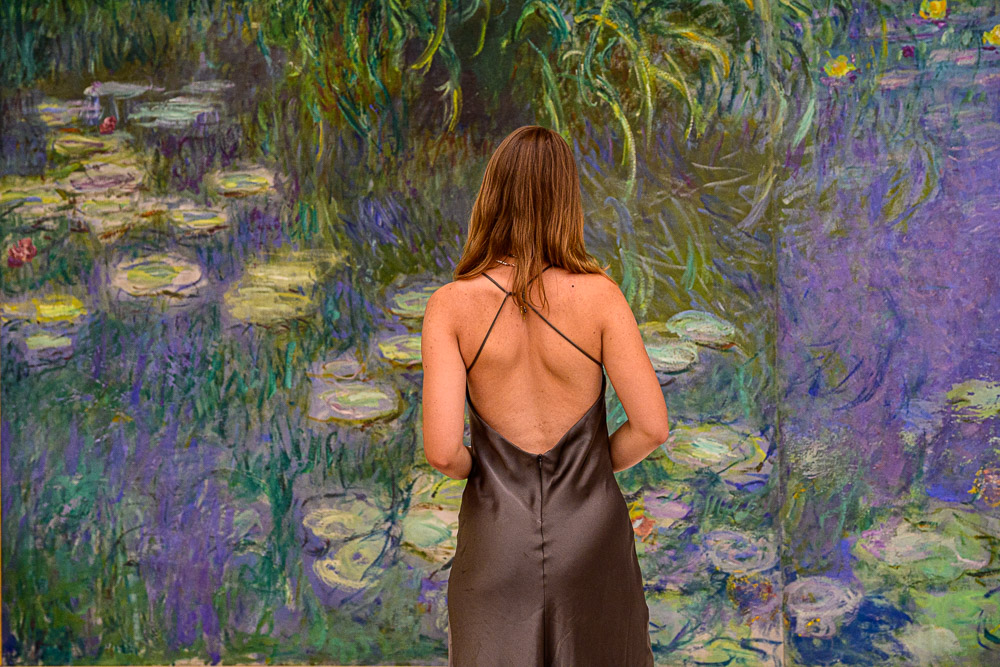
    A reason Monet painted water lilies in the pond at his house was because he became intimately familiar with them on a daily basis and they were changing all the time in different light and seasons. He found a subject he could live with and grow old with.

    Whether this is the first time you have seen the subject or it is an old familiar friend. Whether the weather and light is “good” or “bad”, use your expertise to make a great image if you feel it is worth it. It is up to you.

    Today’s image

    This old battered factory and silo is 1 mile from my studio. I walk and drive by it frequently. I keep my eye on it and occasionally shoot a few images. The silos are 200 feet tall and 40 feet in diameter each. An imposing sight.

    This day, magic happened. The combination of the clearing storm and the rainbow, being in just the right position to highlight the place, the light from the clearing storm being perfect. Well, it made it into something special. I had never seen it like this before and I have not since.

    I gave a print of this to a friend whose dad supervised the construction of the silos decades ago. He had recently passed away and this was very special to her. It is special to me, too. It turned a broken down old industrial eye sore into something very different.

  • What You Find

    What You Find

    This is heresy, but I recommend most of the time we work with what we find rather than planning extensively and expecting everything to be “perfect”.

    Planning

    It is common these days for photographers to research locations is detail before ever going into the field. And there are lots of tools to help us do it.

    For any given location we can find what time of the year is “optimum”, what time of day is best, even where to stand for the best view. We can research the weather we should be able to expect, the temperature, exactly when sunrise or sunset is if that is important to the shot.

    Then, of course, we can work back to where to stay, what time to get up, where the beat eating places are, etc.

    Basically, then, we can just show up at the right time, set up and take the shot we want, and leave.

    Trophies

    A well planned shot like that can lead to some excellent pictures. If you are a National Geographic photographer out on a 6 month assignment to get a certain picture, that is a great approach.

    I have 2 problems with it

    1. It is collecting trophies.
    2. What about the experience?

    Much of photography these days seems to revolve around collecting trophies. We have to get that signature picture of Half Dome or the Eiffel Tower to post on social media to impress our peers.

    That’s not me. I usually avoid places where dozens of other photographers are lined up shoulder to shoulder, fighting for tripod placements. Those sights are well covered. I do not plan to contribute yet another photo of Half Dome to the world, unless I am able to capture something unique. That is less and less likely when millions of shots are taken of it every year by good photographers.

    I fully realize this is a personal value. It also is rooted in my personality type. I derive satisfaction from creating fresh, creative images that represent my vision. Whether or not anyone else likes them. Some other people need to bag trophies. Checking off the bucket list items is more important than actually having the image.

    It would be foolish for me to criticize them. We are different. I do not agree with them, but I recognize that this behavior is true for many people. You have to do what is right for you.

    What you find

    Taking a good photograph is an emotional encounter for me. Talking about the experience you get is subtle and harder to describe. It is intensely personal.

    If you are the meticulous planner I described earlier and you show up at your target location, what happens if things go wrong? What if the weather is too stormy to get out? Perhaps there are forest fires around and it is closed or obscured by smoke. Maybe a road is slowed down by construction and you get to the location “too late” for the planned shot.

    If things like this happen and you can’t get the shot you planned, is it a failure? Are you disappointed with the outing? Was it a wasted trip?

    I’m not usually so disappointed. I am there to see, feel, internalize – and, oh by the way, make images I am proud of. A sunny day may not inherently be better than a rainy day. Why is a snow storm worse than a warm summer day? It all depends on my reaction and attitude and what I am able to do with what I find.

    How good are you?

    I believe the attitude of accepting what we find and using our skill to work with it is healthy and mature. We cannot control what we will encounter. But we can control our attitude.

    So whether I am at the Eiffel Tower or in my neighborhood, I try to make excellent images in whatever conditions I find. OK, allow 2 seconds feeling sorry for yourself, then put it out of your mind, enjoy yourself, and attack the photo problem.

    For example, recently I went out locally to shoot some pictures of trees. A favorite subject of mine. But it turned into an extremely windy day. Did that make it a waste? No. Have you ever tried to shoot pictures of the wind? It was challenging and interesting after I reframed the problem. I enjoyed it and I like some of the images.

    Making good pictures in unexpected conditions is a test of our craft and our character. Loosen your rigid expectations. Roll with the punches. Make lemonade out of lemons. Insert your own cliche.

    But cliche or not, try it. Be flexible. It surprises me that unexpected pictures in bad conditions are sometimes the most memorable to me.

    Today’s image

    This wasn’t taken on the windy day I described. But it was a much worse day. It was in the Garden of the Gods in Colorado Springs, CO. It is not the conditions I came for, but it was what I found. HIgh wind funneling through the rock formations, blowing snow starting to pile up, bitter cold in Colorado in the winter. Sounds like a great day to be out.

    Actually, after I kicked myself out into it and started seeing images, it was great. It turned out to be a very enjoyable experience. I went crazy shooting, when I could keep the snow cleared off my lens. Of course, it took a while later for my hands to thaw out and I was soaking wet and shivering. But I did not notice that very much at the time. All in all, I look back on it as a good time. And I like the image.

  • It Doesn’t Have To Be a Portfolio Shot

    It Doesn’t Have To Be a Portfolio Shot

    Of course we want to build a great portfolio, but don’t stress too much. Sometimes it is best to just go shoot and see what happens. In other words, not every shot has to be a portfolio shot.

    A portfolio shot?

    We all probably have one or more “portfolios” we maintain. Maybe you don’t formally build a physical portfolio box or book. Now days it is probably one or more Lightroom collections (or albums, depending on which flavor you use). That is a separate discussion.

    The portfolio represents our best work. Typically there will be multiple ones for categories like landscapes or portraits or street photography, etc.

    It should be a very limited set. A maximum of 20 works well. If you have 200, either you are a truly exceptional artist or you haven’t edited enough yet. Editing hurts. It is painful to take out a favorite. But the reality is that every one removed makes the remaining set stronger. It is healthy to constantly challenge our portfolio. Test to see if new images are better than existing ones. If they are, replace the old one.

    So my point here is that it is easy to get in our head and not take a picture of a scene unless we are sure it is superior to anything already in our portfolio. This freezes us into fear and indecision.

    Be mindful

    Photography should be a process of mindfulness. We should be present and open wherever we are. This helps us to actually see the possibilities in what is around us at the moment. Being there and being in the moment lets us make the most of whatever situation we find.

    Self-censoring fights against mindfulness. When we pass opportunities because they will probably not make portfolio images, we are building a mental wall to exclude things. It constricts our thinking and leads us to miss great shots that come unexpectedly.

    Practice the craft

    If you are a musician you practice hours a day. Even simple scales train the musical senses. If you are a gymnast you practice hours a day. Strength and flexibility exercise is as important as working on routines.

    Why should it be different in the arts? Our art is part craft. Practice makes us better. We need to be very fluid in handling our equipment. Exposure decisions should be quick. Composition should be almost automatic because we have built such a large base of experience.

    So we need to spend a lot of time just taking pictures. For the practice, if nothing else, even if we discard most of them. It makes us a more virtuoso photographer. The great majority of this practice does not produce portfolio shots. But it sets us up to skillfully make the great shot when we find it.

    Get in the flow

    A lot gets written about flow states. here are reasons for this. One is that it is a simple concept most of us can relate to. Another is that it is a powerful and compelling experience. Everybody seems to understand the basic concept, so I will not define it.

    It is hard to force a flow state. You kind of fall into it and don’t realize it until later. To get there you have to be working – hard. Not working on getting into a flow. Working hard on our craft. That means being out doing it. Not just dabbling in it, but spending significant time and attention. As we immerse ourselves in it for an extended time we may find that we have hit a groove. Time seems to stand still. The stars align, so to speak, and everything seems to work better; ideas come freely; we are on a creative high. We feel good about what we are doing and the results are above normal. It seems to flow.

    Looking back on it with a warm glow we may realize we were in a flow. It is important to realize that the flow is not the goal. The experience we feel and the work we produce is. Flow helps enable that.

    Be surprised

    And by being out and shooting freely with less self-censoring, I often am surprised by what I get. Maybe it is from being more mindful. Perhaps it is when I am in a flow. But regardless of why, I am frequently pleased with images that I thought at the time would be boring. And I am glad I shot them.

    The famous Wayne Gretsky said “You miss 100% of the shots you don’t take.” I think there is application to our photography. Just thinking about a shot does not create an image. Thinking about a shot and deciding not to take it means no image. But when something tickles your subconscious and you go ahead and grab the shot, you might find gold. Even when you are relatively sure it will not make it into your portfolio, it might trigger another thought. Which might trigger another thought. And so on. It can bring you to a better way to see the subject. We can surprise ourselves.

    So don’t be quite so picky. Be very picky in the excellence we demand in our craft. But be careful in prejudging our shots. Do your best with what is there and see where it leads. It could be that it is not a weak subject that is at fault. It could be that we aren’t letting our self think about it very well.

    Today’s image

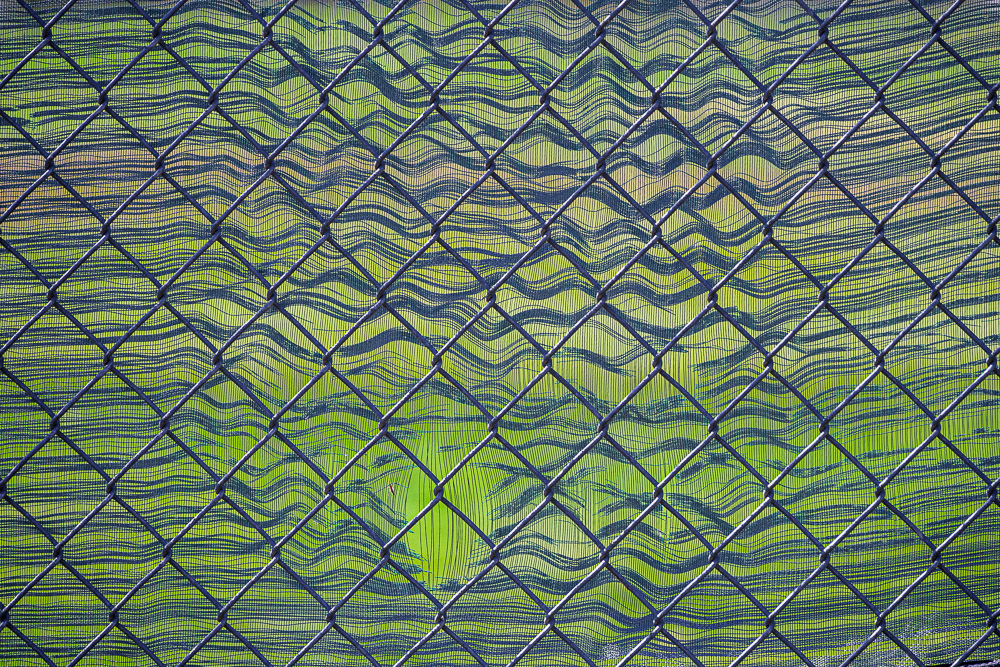
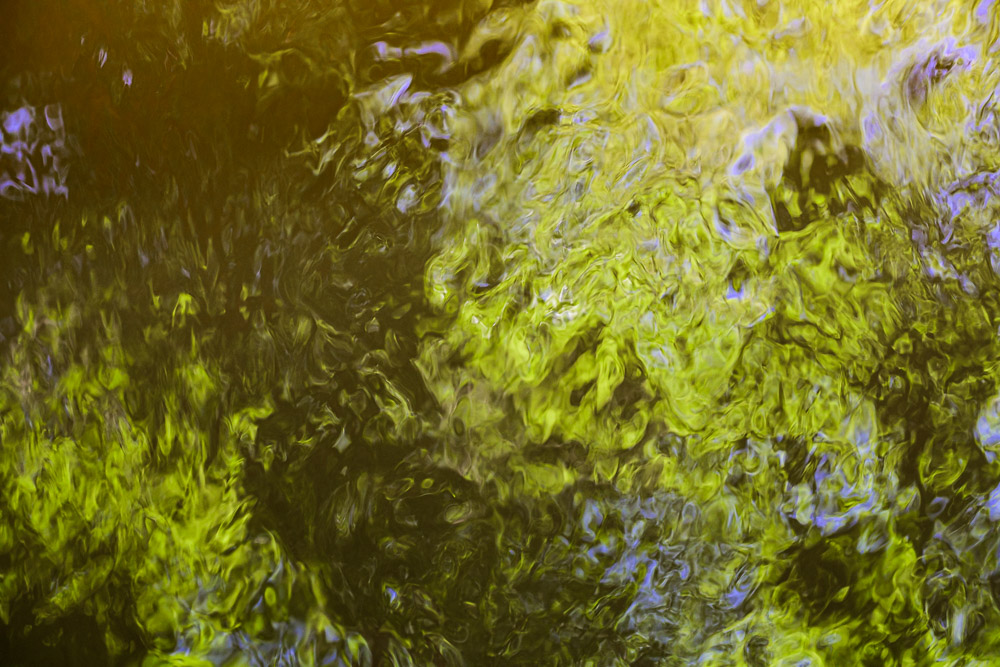
    I’m a sucker for these. I love shooting them. You never know precisely what you will get, but the surprise can be fun. I really like this one. It is also a great exercise for working on timing. Being able to recognize a shot and execute it. It fascinates me that a few tenths of a second or a slight movement of the frame can make all the difference.

  • They Told You Wrong About ISO

    They Told You Wrong About ISO

    Many of us have a wrong idea about ISO settings. I will just say they told you wrong about ISO. It was a misunderstanding. Whoever “they” are.

    Statement of faith

    It is stated as a “strong suggestion“, especially when we are learning landscape or portrait work. Never shoot with ISO over 100. Maybe it is stated as only shoot at the native ISO setting for your camera. Either way, these are given as rules.

    I hate rules, especially for my art. Rule of thirds. Rules of composition. Never put the subject in the center. Never shoot at midday. Always use a tripod. The list goes on.

    Like with religion, most of the so-called rules are based on good ideas, but over time they are repeated as commands and the underlying reasons are lost. Just do it. (I don’t think that is what Nike meant.) The rules become a statement of blind faith that cannot be challenged.

    What is noise?

    All digital cameras have noise. Noise is randomly generated in the sensor and in the electronics of the signal path until the pixels have been digitized by the analog to digital converter (ADC). The noise is a fundamental property of physics.

    The question is how much noise is there relative to the desired data. This is called signal to noise ratio in engineering. When we amplify a signal by increasing the ISO setting, all the signal including the noise is increased. This is why images shot at high ISO settings tend to look noisy. The image is usually not less sharp, but there is more noise obscuring things.

    It is true for a low cost point and shoot camera or a high end medium format camera. What changes are the relative amounts of noise and the limits the image can be pushed to.

    What is ISO?

    You’re familiar with the exposure triad: the combination of aperture, shutter speed, and ISO that determine exposure. That’s it. Many other things affect the composition and quality of an image, but only those 3 control the exposure.

    Aperture is the size of the diaphragm opening in the lens. It controls, among other things, the amount of light coming in. Shutter speed is the length of time the shutter is open to let light come in. And the ISO setting is kind of like a volume control. It sets the gain or amount of amplification of the sensor data.

    Going way back to early film days, there were no agreed on standards for the measure of how sensitive film was. So a couple of the largest standards organizations (the ASA and DIN scales) came together and created a standards group under the International Organization of Standards. They adopted the acronym of the standards organization (in English) as the name. By the way, officially “ISO” is not an acronym, it is a word, pronounced eye-so.

    Long way around, but now there are defined standards for exposure. For a given combination of aperture and shutter speed, the ISO settings on all cameras give the same exposure.

    Why use higher ISO settings

    OK then, in concept, the ISO setting is a volume control for exposure. Turning it up (increasing the ISO value) amplifies the exposure data. But as I mentioned, it is not free. Amplifying the exposure also amplifies the noise in it.

    It is true that low ISO settings produce less noise in the captured image. Modern sensors are much better than early ones. This is one of the wonders of engineering improvements that happen as a technology matures.

    Then, we should not use high ISO settings, right? Well, everything is a tradeoff. We need to use a minimum shutter speed to avoid camera shake when hand holding or to stop subject movement. We need to use a certain aperture to give the depth of field we want. These decisions must be balanced in the exposure triad, often by increasing the ISO.

    Can’t I just underexpose?

    When you accept that we must use the lowest ISO setting, the logical conclusion is that you could massively underexpose the image and “correct” it in post processing. Unfortunately this doesn’t work well. You are still boosting the noise unacceptably.

    The camera manufacturer knows more about it’s sensors than your image processing software does. The camera’s built-in ISO amplification can take into account it’s characteristics and do a better job. And modern sensors and electronics do a very good job.

    Are you wrong about ISO?

    If you are following a rule dictating you must or can’t do something, yes you are wrong. There are no rules in art. No ISO-like standards body specifies what your image must look like. There are always groups wanting to do this (are you listening camera clubs?), but they have no authority.

    If you are hand holding a shot, it is better to boost the ISO to steady the movement than follow a rule about using low ISO. The noise will be secondary to the reduced shake. Or I sometimes use the lowest ISO setting in my camera to create blur. I enjoy intentional camera movement (ICM) shots and will occasionally force an artificially slow shutter speed.

    If it is night and you want to shoot stars or street scenes, are you not going to do it because you would have to violate a rule by the ISO police?

    Use the ISO setting that lets you express what you want to do. It is your art. There are no rules. Besides, luminance noise looks like film grain. It can be an interesting artistic technique in itself. Do what feels right to you.

    Apology

    I used fairly strong language about this. The reality is that most photography writers have softened their recommendations on ISO. Most of them freely recommend using high ISO. This is healthy.

    But I know many of us were “imprinted” by early mentors who left us feeling there was something dirty about going above 100 ISO. I want to free you if you still have those self-imposed limits. Using even a very high ISO and getting the shot is always better than missing it because you wouldn’t want to chance increased noise.

    Today’s image

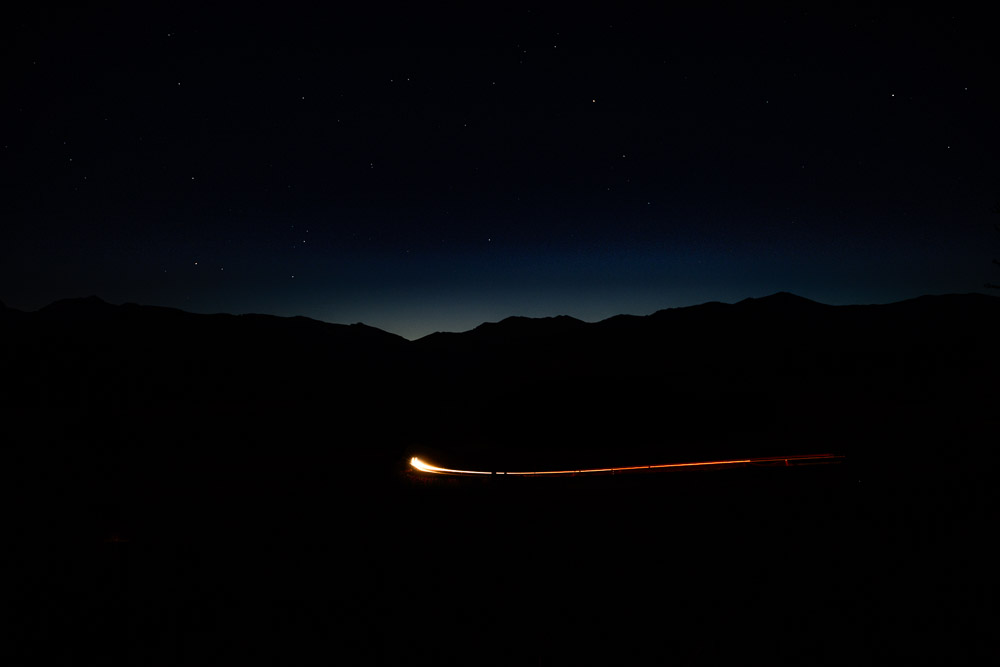
    Since I’m advocating it, here is an extreme case that I’m happy with. This was shot hand held with an old Nikon D5500 camera – at ISO 22800. I have corrected out some of the luminance and chromance noise and I am perfectly OK with what remains. Getting the shot made me happy, even if the noise is high.