An artists journey

Category: Art

  • What You See

    What You See

    An amazing artist, Karen Hutton, said “It’s not what you look at that matters, it’s what you see.” This is very wise. We cannot always control our environment. We cannot always surround ourselves with astounding subjects and grand scenes. Our environment should not control our art. Even when we are looking at a grand scene we should see it differently than others.

    We can’t always control what is around us

    It is easy to say to ourselves “poor me, I’m stuck in [fill in the blank]; I can’t take time off to go to the Grand Tetons to shoot amazing landscapes, so I guess I can’t do anything.” Get over it. An artist explores the subjects he can find around him.

    Adapt. Reframe the possibilities. What you see should be a trigger. Your surroundings are a canvas you can create on.

    Get excited about the environment around you rather than disappointed about where you are not. It is hard to put me someplace where I can’t find great images. That is not bragging. I’m curious about everything I see. That leads me to explore with a good attitude. My curiosity helps me seek out visually interesting things.

    That is not to say we should be equally excited about everything. Each of us is called to by different types of subjects and situations. Flowers, for instance, do not excite me to do much. I know they are a great subject for many people, but you will very seldom see me present a flower image.. Unless I figure out something to do with it that I consider “interesting”.

    You don’t require an amazing subject to make art

    I am the artist. I can’t not look for image possibilities wherever I am. It is not my subject’s job to be so dramatic and interesting that I can just lazily point my camera in its direction and make a great image. I might even say that the more difficult a subject is to “capture” the more it excites me. I have to work at it.

    The image is created in my mind. It is my reaction to the subject that forms the picture. Artists over the centuries have made wonderful pictures of bowls of fruit or fields of wheat or city streets.

    Monet is a good example. Except for some time in the Netherlands and England, he found most of his scenes in a small area of northern France. He could take something I would walk by without noticing and make a great picture of it. That is making art, not just finding it.

    And isn’t that what we should be doing? Shouldn’t an artist make art out of what is around?

    What can you do with what you see?

    Using Monet as an example again, he narrowed and narrowed his focus down to the point where he spent the later part of his career almost exclusively painting scenes of the lily pond in his garden. But he perceived art and drama in the intricacies of the color shifts and light at different times and different seasons. His images of this are amazing.

    That subject doesn’t really excite me. I would love to see his gardens, but if I went there I would shoot some images to record his famous garden, maybe try to do a study of the shapes and colors, but it is unlikely I would create any real art there. He has already done it and that is not where I should spend my time.

    But some things jump out to me that escape most other people. And they do not have to be grand scenes.

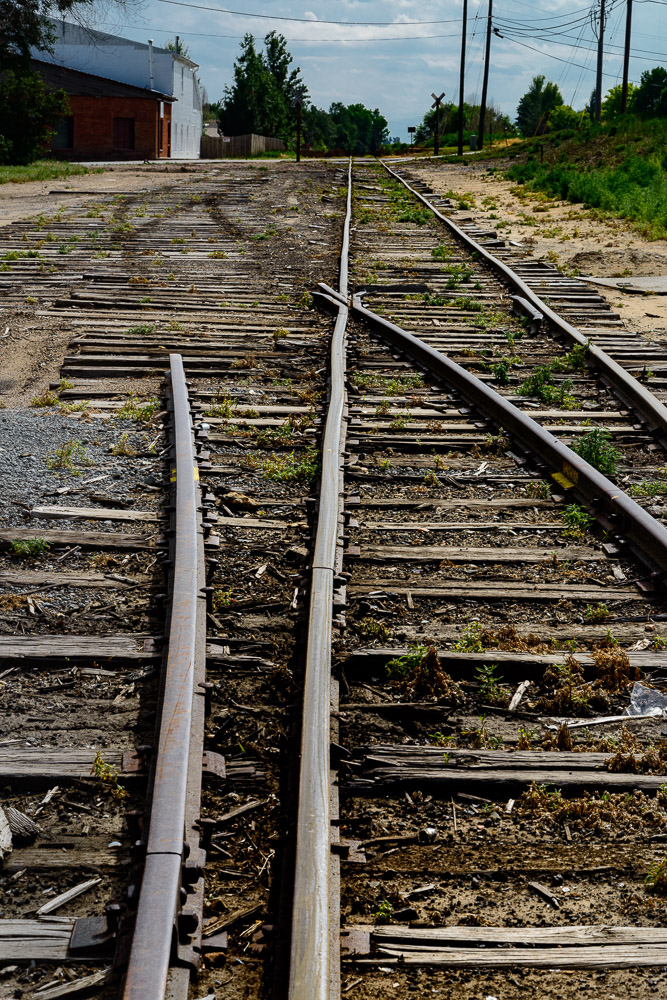
    Nearly every day I wander around my little town. Of necessity, this is where I spend most of my time. I try to keep my eyes open and attentive for things that interest me. I’m not always successful, but a day seldom goes by without taking some pictures.

    When you are “stuck” in one fairly boring location, you learn to scale your perception accordingly. I learn to be aware of smaller, more subtle things. After seeing the same scene a hundred times I sometimes suddenly perceive it differently. Maybe this is kind of what Monet did.

    Everyone sees different

    As Karen Hutton said, “It’s not what you look at that matters, it’s what you see.” We all see differently, or at least we should. If we train ourselves to understand and express our vision and feelings for the subject then our artistic interpretation will be unique.

    Do we want to make images that are simply a record of a location or would we prefer to show the way we perceive it? One of the problems that de-values photography for many people is that much photography is it is just a camera pointed at a scene. If we cannot reveal our emotions or our beliefs or our point of view then there is seldom anything special about it.

    Do you want to be one of the photographers fighting for tripod space to record a famous scene at the perfect time of day with the perfect lighting? Or would you rather turn around and find something interesting the other direction? Something they would not see because they were fixated on the iconic scene?

    Maybe that is a foolish question, since so many people are intent on shooting the same image over and over. But for me, I would rather be the one seeing something different. As Apple said in their famous ad campaign, Think Different.

    What do you see?

  • Vulnerable

    Vulnerable

    Being an artist is creative and rewarding. It is also a position that is vulnerable and lonely. I made my career in an objective, logical engineering world. In contrast, the artist’s world I live in now is based on opinion and perception. I have never felt so vulnerable and out of control.

    Lone-wolf

    A popular view is that the artist is a lone wolf. Fiercely independent, self-sufficient, going his own way regardless of what anyone thinks. To a certain extent, this is true. I think an artist has to have the fortitude to maintain his independence in the face of adversity and pressure to conform.

    Unfortunately, there is a cost to being this lone wolf. A lone wolf is, well, alone. He is isolated, vulnerable, having to go it alone. It’s a position where you don’t have a support infrastructure. You don’t really have people to build you up when you are knocked down. You don’t have people to take care of things and offload work from you – you have to do everything yourself. This can get debilitating at times.

    Some artists maintain a network of mentors, confidants, and collaborators. I envy them.

    Courage

    For me, one of the hardest things is to have the courage and determination to keep pressing on. I am not a natural marketer. It is hard to “put myself out there”. Making noise for myself is a very uncomfortable thing. Especially when I am continually getting knocked down emotionally and passed over.

    An artist has to believe in himself. To believe he has a vision and a message that people should pay attention to. This has to carry him through rough patches when things seem to be going against him. When you seem to be a lone voice in the world, this can be hard to maintain.

    Coming in in the morning with a fresh resolve can be trying. Sometimes it is difficult to say “I am an artist; I believe in myself and know I have something to bring the world”. And act on it.

    Rejection

    Rejection is a part of life, especially for an artist. We have to expect it, even seek it. If you are not being rejected, you’re not trying.

    But it takes a toll. I think even the strongest pay an emotional cost when we are rejected. It’s like being back in school and not being picked for the team or not receiving the scholarship or just not being asked to sit at the table with the “cool” kids. You know it is going to happen sometimes, but it still leaves a bruise.

    With rejection the world seems to be telling me I’m not good enough. That I don’t stack up to the competition. That I probably should just give up.

    But the world is a bitter and heartless place. I have to shrug it off and believe my own inner voice rather than a message some stranger is giving me. I have to believe in myself, even when others don’t.

    Indifference

    Possibly even worse than rejection is indifference. When my art seems to not matter at all to anybody. When everything seems to be futile.

    This is another tool the world uses to try to crush the aspirations of most artists. and it works a lot of the time.

    I sometimes think I would rather have someone write me and tell me they hate my work. At least they took a moment to acknowledge it. (No, it’s an exaggeration. I’m not really asking you to tell me how much you hate what I do.)

    Will power

    This has been much more negative than I usually am. Vulnerability can do that. Rejection and isolation can be cumulative.

    But I think the real point I am trying to make is that these things will come. They happen to everybody. The question is, what am I going to do about it?

    I said an artist has to believe in himself. That is kind of trite, but nevertheless true. Being vulnerable or discouraged or feeling isolated are part of what we have to accept if we call ourselves an artist. If we are feeling down are we going to pick ourselves up, metaphorically, and find the will to go on? Or are we going to pack it in and stop doing our art? It is our call. Nobody else can decide.

    I know of artists who claim to seek rejection and collect rejection letters. Good for them, if they are telling the truth. But good for them regardless, because the attitude is right.

    If I apply for something and get rejected, I have to understand that just means I was not right for that exhibit or the juror was looking for a different style or the gallery has a different culture. The rejection was not a legal certificate from a higher authority saying “you’re not an artist and you should give this up immediately.”

    I am an artist. I believe in what I do. That has to come from inside. If I listen to what other people say I will doubt myself. If I doubt myself, it will inhibit my creativity and my ability to express my vision and my will to apply for that next opportunity. I’m a lone wolf.

    Vulnerable

    Back full circle to the idea of vulnerability. Yes, I am vulnerable in the sense that I am out there, on the edge, exposed to the world, all alone. I have to take the hits and survive. I have to have a strong enough belief in my ability that it can carry me through the rejections and indifference.

    This can be one of the hardest parts of the art world. Many artists are introverts and somewhat shy and self doubting. We have to get over ourselves and put our work out there for the world to deal with. Rejection will come, but we have to go on if we believe we have something worthwhile.

    I will close with a favorite quote from Theodore Roosevelt, popularized recently by Brene Brown:

    It is not the critic who counts; not the man who points out how the strong man stumbles, or where the doer of deeds could have done them better. The credit belongs to the man who is actually in the arena, whose face is marred by dust and sweat and blood; who strives valiantly; who errs, who comes short again and again, because there is no effort without error and shortcoming; but who does actually strive to do the deeds; who knows great enthusiasms, the great devotions; who spends himself in a worthy cause; who at the best knows in the end the triumph of high achievement, and who at the worst, if he fails, at least fails while daring greatly, so that his place shall never be with those cold and timid souls who neither know victory nor defeat.

    To me, this is what it is about. I have to be in the arena to become what I want to be.

  • Chasing Trophies

    Chasing Trophies

    I’ve come to wonder about people whose goal is to win prizes or duplicate famous shots. What is their reason for shooting? Is there a joy in recreating a shot someone already did? What motivates you? Are you satisfying your personal vision or chasing a trophy in a competition?

    Prizes, rewards

    I have to admit I used to chase prizes. Back when I was involved in my local camera club we had monthly competitions. Usually with a defined subject. I would spend hours thinking about the target subject, planning shots, and executing them. I must say that I got good at winning blue ribbons (I have a stack of them in my basement).

    There was a discipline to this that was good training. Those days were not wasted. For anyone wanting to be a commercial or portrait photographer this is good exercise. I believe we had an exceptional camera club that generally did a lot of good.

    But I got to a point where my vision went a different direction. One problem with our club or any organization that is “judging” art is that it has a culture and value system that narrowly filters out work that does not conform to their norm. Whether this is a local club or an international competition it looks to me like this is true.

    So in our local club, I quickly learned what would place well and taught myself how to win. I am ashamed to admit that I helped perpetuate the culture by spending years as a judge critiquing other entrants and helping inculcate them. The day I was the first to win a blue ribbon with a heavily Photoshopped image was a time of soul searching for them and me. I decided I was going my own way and following my vision regardless of their likes and dislikes.

    Recreate great images

    Many people seem to see popular or well known images as a pattern or template they feel they should use. I have seen people researching where and when certain images were made. They want to know what equipment the artist used and how they processed the image. All with the goal, seemingly, of going out and shooting the same image.

    Why?

    That image has already been done. You may, at a chance, do it better, but it is still a copy. It is another artist’s work that you imitated.

    Maybe imitation is the most sincere type of flattery, but it does not help the imitator. You are not using your creativity to make wonderful new works. You are not showing the world what you see. I suspect that people doing this feel that they do not have sufficient creativity or vision to come up with their own unique work, so they copy other artists.

    An exception

    Every rule has at least one exception. That is a good reason to avoid rules.

    In 1998 Colorado photographer John Fielder began a major project to recreate many of the famous Colorado images of William Henry Jackson from the 19th century. He drove 25,000 miles and hiked 500 miles to locate each Jackson image – 156 in Vol 1 – and stand in exactly the same spot as Jackson to create a parallel image of what the scene looks like now.

    In this case, Fielder was a well established photographer with his own vision and a huge, respected body of work. This project was creative and historical, documenting the changes that had taken place in a little over 100 years. Fielder could not be accused of being imitative. It has become the most popular Colorado regional book of all time.

    Few of us are is the same position. If you are working on a project of this significance, good for you and best of luck. I would never imply that it is being an imitator.

    Guided tours

    I have heard photographers bragging that they offer guided tours to take clients to famous spots to recreate well known images. Really?

    I can’t fault them for trying to make a buck if clients will pay for it. It is plenty hard to support yourself as a landscape or fine art photographer and any sources of income are welcome.

    What I can’t believe is that customers will pay to be guided to these locations and told how to recreate these scenes. At the end, maybe they had a fun outing, but they have a bunch of imitation shots. These are somebody else’s work. The person who took the tour is kind of a passive tool, basically like a camera that somebody else is manipulating.

    Wouldn’t it be better to be inspired by these great pictures and use that as motivation to go create your own unique work? Be yourself. Express your own vision.

    Workshops can be a great experience. The right instructor can do wonders to educate and motivate you. I would stay away from template formats, where the instructor is trying to mold you to take exactly the images they take.

    What is your reward?

    Is the reward a prize? Is it a copy of a famous scene on your wall?

    I guess I am not sufficiently competitive. I don’t see the “game” as a contest where there is 1 winner and everybody else loses.

    The reward that matters to me is how I feel about my work. If it won prizes or was copied by other people I guess that would be satisfying. But that satisfaction would quickly fade. What remains is my work and the joy I feel in it.

    In my long life I have discovered repeatedly that I get much better long term satisfaction from things I really earn and from the works of my own creation.

    So enter contests if that motivates you. Get a guide to help you create your images if that helps you. But make sure you are making your images. Make them because it is your vision, not to please or imitate someone else.

    Are you being your own person in your work? Let me know how it is going.

  • Terrible Images

    Terrible Images

    This is a follow up to my previous post “Kill Your Darlings“. It is too big a subject to let go that easily. There is a time and place for making terrible images. Even to seek to do it. Terrible images can be a springboard to new insight and growth.

    One of my heroes I quote often, Jay Maisel, said

    “I used to tell my classes when they raved about my work and compared it to theirs, ‘Believe me, I’ve taken more terrible images than all of you put together.’ The trick is not to show them to people.”

    Experiment

    I believe that experimentation is one of the most common and valid reasons for making terrible images. Many of us photographic artists spend a long time trying to discover our style. But once we have done that, I believe it is a mistake to settle down and only shoot to that style for the rest of our career. We need to push ourselves is different directions. View the works of other artists. Do things to make ourselves uncomfortable.

    I am always reading articles and looking at videos to get new ideas. Making myself get out and try some of these ideas I pick up is necessary to see if they work for me. Sometimes they do, but sometimes I just make terrible images.

    I have determined for my own values that if I am not growing in my concepts and techniques there is no reason to keep going. Keeping an uncomfortable edge to my work keeps me asking questions. It keeps me fresh. I do not want to keep shooting the same picture over and over.

    Shoot a lot

    As Jay Maisel hints in the quote at the start, shooting a lot of images is one of the keys to having good ones. The reality is that for even the best of us, the percentage is depressingly low.

    No, just walking around and pressing the shutter every few seconds will not lead to some gems. It might make a mildly interesting time-lapse video.

    Doing good work in any field takes practice. The infamous 10,000 hour rule is not a truth, but it is generally true. Any discipline takes uncounted hours of practice in addition to formal training. I believe it is certainly true for photography.

    It is important to get out every day and practice. Practice seeing, discovering subjects, planning shots, framing compositions, executing good images. Sometimes you should even use a camera. ☺. The point being that you don’t always need to be actually taking pictures. You can practice while walking to the coffee shop or driving down the street. It is a mental discipline.

    But it is a physical discipline, too. And it is very helpful to use your camera every day. Just having it in your hands helps sharpen your senses. Carry it everywhere. Actually using the tool builds muscle memory. And coming back and having to edit what you have done closes the loop. It makes me evaluate my work and really think about how I have done.

    Edit ruthlessly

    Ah, editing. The point of my previous post on killing our darlings. I believe this is probably the second hardest part of photography (the hardest being marketing).

    Shooting a lot of images means having a lot to edit. This can get to be a real time sink. And it can be depressing. I’m trying to look at it, not as making lots of terrible images, but as having lots of failed experiments.

    If you go out every day and make yourself shoot and try new things, most are going to fail. That is OK. A few will succeed. That is one of the things that keeps me going. A few succeed.

    The failures should be learned from and then trashed. There is little reason to keep a bad image, unless it helps you remember what your were going for and why it failed.

    Even if you are constantly experimenting and expecting large number of failures, there is no excuse for letting down your standards in the editing. Be ruthless. If I get even one “keeper” out of a day’s shoot, I am happy for it. Having no keepers is not a failure for a personal day.

    Another insight from Jay Maisel is “It’s my obligation to take out all the ‘wrong’ pictures.

    Be honest with yourself

    I like to experiment. I like to put myself in new situations and try out new ideas and techniques. But I have to be honest with myself and admit that most of them do not work well. Sometimes there is a glimmer of hope that might lead me to experiment further with an idea, but a glimmer of hope does not mean an image that should be shown to someone.

    I have to accept the fact that the vast majority of the images I make are bad. That is, bad by my standards, which is all I can go by.

    Most of them should be deleted. Even of the ones I keep, that may have some personal significance to me, very few should be shown to people. I am starting to understand and accept this.

    One of the lessons that has been hardest for me is that a tack sharp, well exposed and focused image may well be worthless. It probably is. If it does not have something useful to say it does not matter how technically perfect it is. I owe it to you, the viewer of my images to only show you one worth looking at and considering.

    Don’t fall in love with them

    So I know I am going to throw away the vast majority of the images I take. I know I will throw away piles of technically perfect images. I know I will throw away away most of the experiments I make.

    Because I know that, I have to keep from falling in love with them all. That’s hard. I made them. But the digital ecosystem is littered with useless bits. I have to do my part by cleaning up as much as I can.

    I said in the previous blog about this that I go through many rounds of edits and culls. I really try hard to delay falling in love with any of my images until they have survived several rounds and seem to be contenders. I am not always successful. There are times when I just love an image. I try to not let that bias the objectivity I need in my edits, but of course, love wins sometimes.

    Not falling in love with them is more a goal than a hard rule. But the hard reality in photography is that most of what I produce is not really good and is destined to be deleted or buried deep in my filing system never to be seen by anyone other than me.

    But if it hurts and they are going to be thrown away, why shoot lots of terrible images? I don’t know of any way to improve beyond where I am or to expand my vision without experimenting and then ruthlessly editing. Terrible images are necessary.

  • Making Sketches

    Making Sketches

    I am changing my perception of how I work. I used to view myself as going out and “making pictures”. Now I see myself more as going around making sketches.

    What is a sketch?

    I like words, and I like to know where they come from and what they really mean – their etymology. I know, I’m a geek. You don’t have to tell me. Here, let me prove it: “sketch” may be derived from several words from Dutch, German, Italian, or Latin, but the root seems to be Greek, σχέδιος – schedios. It means something temporary or done off hand. Wow, see. Geek but proud of it.

    One of the most understood meanings of “sketch” is a “rough drawing intended to serve as the basis for a finished picture“. This had been an established process of artists for centuries.

    Most painters begin their studies doing sketches and continue using sketch as an important tool the rest of their career. It is like a serious musician doing scales and simple practice every day. It continues to develop the eye/hand/muscle memory/mind. Plus, sketches are a tool for artists to capture a form or expression or gesture, to work out a plan for a piece, even to just record something they want to remember. Here is a sketch by Manet, 1878:

    Even when doing a final work, artists often sketch the composition on the canvas before starting. They then have a guide to follow as they overpaint the intended image. The final product may depart from the sketch, but it was shaped by it..

    Image capture as a sketch

    How does this apply to photography? I am starting to think of my original captured frames as sketches. But why? I spent a career learning how to set up and perfectly execute an image capture. Why change that?

    It is a concession to reality and a psychological tool. Sometimes (well, often to be honest) when I load my images into Lightroom, I am disappointed with them. They just did not capture the scene the way I saw it, or at least the way I wanted it to be.

    The limitations of photography are well known. It is a process of trying to map a vibrant, dynamic, 3 dimensional world with action happening everywhere to a static 2 dimensional representation. No matter how good a camera and lens is, it is a woefully limited process.

    Now I am reframing the problem. Rather than being disappointed and beating myself up for not having a portfolio image appear right out of the camera, I say “that is a good sketch of what I perceived. What do I have to do to develop the idea and complete it?”

    Starting point

    Giving myself permission to see my original image as a starting point rather than an end is a big deal. If I’m not happy with it, it wasn’t a failure, it was a sketch. The sketch probably captured some important aspects of the scene that attracted me. Now what do I have to do to proceed?

    Maybe everything I need is there in the RAW file and it just needs to be manipulated to bring it out. After seeing the reality of the sketch on screen, maybe I think about the scene differently now. Maybe only a part of the scene I photographed is really the picture.

    Sometimes the sketch can be developed into a picture. Maybe it helped me understand what I wanted and how to frame and capture it. Maybe it proved to be a dead end. In any case, it was worthwhile. I took a chance to explore an idea. If it didn’t work out, no big deal. I was not heavily invested in it. It was not a failure.

    But when it does work out, what a great feeling.

    Incomplete

    I now always view any unprocessed RAW image as a sketch. It is, at best, a starting point. No unprocessed RAW image could ever make one of my portfolios. It is incomplete out of the camera. And I have a really good camera.

    The camera is a piece of technology. It captures pixels. It does an incredible job of doing what it is designed to do, but it does not have my eye. The camera cannot know what is important to me. It does not know where the emphasis or interest is in the collection of pixels. I have to provide that.

    I have to provide the color correction to achieve the look I want, which may not be a completely accurate version of the live scene. I have to provide the tone mapping to achieve the relationships I want between the parts of the composition. I have to provide the level of sharpening (or un-sharpening) to get the effect I want.

    Even at the mechanical level of pixel-pushing there are a huge number of choices and corrections I must make. This is necessary to bring the sketch along toward becoming a picture.

    Turning into art

    The basic corrections and adjustments are great and fun and make a huge difference in the look of the file. But I have a problem here going forward and moving from a decently done image to art. Here, viewing it as a sketch helps me.

    A sketch is obviously rough and incomplete. No one would consider it the final image. Calling my images sketches helps emphasize to me that this is true in photography, too. Don’t stop with a “nice image”. It has to go further. It has to be special, different. It has to tell a story or make a difference.

    The raw material may be there, but it is probably not finished yet.

    By still viewing it as a sketch, it is easier to give my creativity permission to drastically modify what is there on screen. Does the intended mood require it to be darkened to an extreme? Do it. Are there distracting elements that take away from the focus of the image? Remove them or crop the picture. Is it a tone-oriented composition that would work better in black and white? Make it so.

    Sometimes the sketch can’t be developed into the intended final image. This is still good! The sketch proved valuable. It helped me discover what I wanted to do. It was not a failure. Maybe I need to go back with my vision clarified, and shoot it again. It is not always possible, but sometimes it can be done. If I can’t shoot it again I can file away the experience so I can look for similar situations in the future and do a better job of recognizing what I really want to do.

    In either case, I would not have gotten to the point I did without having a sketch to work with to clarify my vision of the subject.

    I shoot sketches now.

    Have you tried looking at your work like this? Did it help you get to better results? Share your experience with us by commenting here.