An artists journey

Category: Art

  • Tools

    Tools

    Man is a tool maker. Tools are used in most activities in our life to extend our performance or help us get our tasks done faster, easier, and more accurately. The same is true in most of our art. Some people say that it is our tool making nature that allowed us to become the dominant species.

    A tool using artist

    I’m an artist. Specifically one who works with images originating as photographs. A camera is a tool I use. So is a computer. So is a printer. These tools do not create my art. I use them as part of my creative process.

    Yes, the tools allow me to create things I could not do otherwise. That just means they are good tools. My Jeep allows me to go places I would rather not have to walk, especially carrying my gear. That does not mean the Jeep creates my art. I know a sculptor who now prints a lot of pieces on a 3D printer. Does that make them no longer art?

    I believe in using tools to make my life better and to take my creativity further. Indeed some images don’t really start coming to life until I am manipulating them in Photoshop. As I try things and apply ideas and tools the essence of the image may start revealing itself to me. Note, though, that I – the artist- decide how the image should develop. I don’t sit back and watch Photoshop create it for me.

    Limits of tools

    There are probably some sharp Adobe computer scientists working on that right now., Maybe someday you will be able to point your phone at a scene and a “perfectly” composed and processed image will appear instantly in your social media feed. I hope for all of our sake that they decide that even though they could, they won’t. (Note: it came faster than I anticipated. Adobe announced many “AI”-based tools at Adobe MAX 2020. Now anyone can do almost anything to an image without know how they did it. Too bad.)

    Tools should be used as force multipliers. Not a crutch to let people with no skills seem to create something. That’s like going to DisneyWorld and believing you went on a pirate adventure. It is a manufactured experience that you did not contribute to. If you are over the age of 5 you know deep down inside it is fake.

    At the risk of being unpopular and sounding like a Luddite I will say I do not believe an image created entirely by a computer without an artist is art. It is just software combining patterns it has been trained with and throwing is a little random variability. Maybe this could be said of some artists, too. Let me just add that I spent an entire career working in advanced computer science, including artificial intelligence. So it’s not like I just hate technology.

    Digital fits my personality

    I am ADD enough that I don’t like there to be much lag between seeing something interesting and capturing it. It would be hard for me to work in a world of making multiple sketches of a scene to work out the best composition and staging, then spending weeks laying down the image slowly in layers with dry times between. All in order to create one work. I would abandon it after the first couple of sketches and be off to another idea.

    Photography is much more immediate and rewarding for me. See a scene. Click. Nice, but maybe move a little to the right. Click. Better. Maybe raise the camera a little higher. Click. Almost there, maybe reduce the depth of field. Wait for the right moment. Click. Good! Now I have a good starting point to work with on the computer to create a final image.

    In the computer I use a fairly disciplined non-destructive workflow. That just means never commit to something that can’t be undone. This does not slow things down and it actually makes it easier to get in a creative flow. That is because whenever I hit a dead end or even just decide I’m not liking the direction things are going, I can back up to any point I want and modify what I’ve done or even throw large “experiments” out and take a whole different path. The tools let my creativity flow naturally.

    This ability to freely experiment and take risks is wonderfully empowering. I even sometimes create several versions of an image. It is an embarrassment of riches to be faced with a hard choice of which one I think works best. The ability to be spontaneous and free is very important to my creativity.

    An artist

    I create art. My camera or my other tools do not create the art, I do. The fact that I start from a photograph should not matter at all. Some people think something is not art unless the artist had a long and difficult process from training through making an image. How myopic and judgmental.

    It had been said that an artist has to suffer. This is true, but you hear the statement from critics more than artists. Critics think they can analyze the process the artist went through to determine the worth of the art. Real artists know that art is suffering and what we learn and the feelings and vision we develop in the process guide our outcome. Art can be a cathartic expression of a deep experience, but that is not required.

    But this “suffering” is very personal and internal, at least for me. It may be the result of decades of failures to realize our vision. A suffering born of frustration that drives a continual renewal and a reach for what we feel but can’t quite express.

    It has almost nothing to do with a camera. That is just a tool, part of the technology used in creating art.

    Any tool

    When someone picks up a tool to create something as art, they become an artist. It doesn’t really matter if it is a brush, a pencil, a welder, … or a camera. What matters is what you do with it. Is something better and more worthwhile because it is carved from marble? Is it better if it is oil applied to canvas? Careful. These are dangerous judgments.

    The art I create is not because I’m a photographer. Photography is a medium that works very well for me. It fits my personality. I use it to create my art.

    I look at the creative process different from an oil painter or sculptor or author or graffiti painter. That is good. Artists are not supposed to be all alike. They should be as unique and individual as possible. That extends to the medium and process and tools, too.

    So, I’m an artist. I use a camera to capture pixels that become my art. I’m proud of it. I like what I create and it works for me. I’m very thankful for the tools I have. They help me create, they do not define me.
  • The Problem of Mega Pixels

    The Problem of Mega Pixels

    I love the capabilities of modern digital cameras, especially the wonderful sensors and great lenses available. But nothing is free, and I’m not just talking about the price of the gear. Having too many mega pixels can cause problems you may not anticipate.

    Resolution is wonderful

    I love extreme resolution. I’m not a fanatic about it, but I really appreciate it. I have not gone to 100+ MPixel sensors yet and I don’t normally do very large panoramas. Still, I get a thrill when I zoom in to 1-to-1 and see the great detail that is there. Then when I sharpen or contrast it more and the detail pops – wow!

    Having large resolution allows me to create large prints. It is a necessary thing since I do this for a living. It is also something I really like to do. I don’t think an image is complete until it is printed. For me, a print is the physical expression of the image.

    All things being equal, which they seldom are, higher resolution usually leads to sharper images. I love certain images to be “crunchy” sharp with great detail. It is part of my values that I can’t get away from.

    Also, larger files allow for more cropping freedom. I try not to rely on this. It is much better to compose the image the way I want it at capture time. But sometimes it cannot be avoided. Maybe the image works better in a square format, or maybe I’m only carrying a lens that goes to 70mm and I want to shoot something I can’t get close enough to. In that case I have to “zoom” in post processing by cropping the image.

    Or maybe I realize later that the real interest is in a smaller part of the frame. I have to crop the image heavily to salvage it. It’s not good practice, but I admit to doing it on occasion.

    For me, a great print from a well executed, high resolution file is a joy.

    Resolution is a pain

    On the other hand, high resolution can be a pain. It increases the cost and time of all the downstream stages.

    Every time I press the shutter it drops around 60 MBytes on my memory card. That is just the raw capture. It requires CFExpress or XQD cards to keep up. They are very expensive.

    As long as I can process the image in Lightroom the size stays around this, but when I step into Photoshop each image balloons to several hundred mega bytes. And that is even without adding a bunch of layers.

    Did you know that a Photoshop psd file (the native Photoshop format) cannot exceed 2 GBytes? Or that a tiff file cannot exceed 4 GBytes? I have found this out the hard way. Some of my images now have to be stored as psb files, the large file format version of Photoshop’s data.

    Processing and editing time goes up with pixels. I use a powerful computer with 64G RAM and very fast Thunderbolt3 disks, but it can take seconds to do a simple stroke when I am masking or burning or dodging. I have seen multi GByte files containing one or more embedded smart objects take 2 minutes just to save to disk.

    And you have to get to know disks in multiples of Terabytes. If you have a disciplined backup strategy, something I am fanatical about, then there are layers and layers of them.

    I have bought in to the need of powerful and expensive equipment for editing and storing my images. The biggest problem, though, is the slow editing speed. This interrupts the flow of my mental process. I don’t like waiting on the computer.

    Technique

    One of the unfortunate truths they seldom tell you when you are looking at a shiny new high resolution camera is that it is harder to take good pictures with it. This is partially because of the geometries you are dealing with.

    A full frame sensor, by convention, is 36 x 24 mm. My Nikon Z7 places 8256 x 5504 pixels in this space. That makes each pixel site 0.004 mm square. That is 4 microns from the center of one pixel to the center of the next. If you do not work in the world of integrated circuits or advanced physics you may have trouble conceiving these sizes. We do not directly encounter these dimensions in the real world.

    As an example, human hair ranges from 17 to 180 microns in diameter. Therefore the thinnest strand of hair you can possibly find would cover over 4 of these pixels. An average sized hair, around 50 microns in diameter, would cover a strip of at least 12 pixels wide across the sensor.

    A fun fact, but so what? The so what is that with each pixel being so small the problems of focusing and holding the camera steady are greatly compounded. Focus is critical and you almost have to rely on the very sophisticated focus system in your camera. Especially if it is contrast detection – meaning that it is searching for the best contrast, hence sharpest focus, measured directly on the sensor pixels.

    And for the sharpest results, don’t even think of taking a picture without using a good tripod. I don’t know how steady you think you can hold something, but consider that for optimum sharpness the camera cannot move or shake as much as 0.004 mm while the shutter is open. I can’t do that, especially after coffee.

    You need new lenses

    Another sad truth is that to realize the full benefit of your high resolution sensor you need lenses designed to match it. Current lenses achieve resolutions significantly better than was the norm a few years ago.

    The requirements for lenses for these new sensors greatly exceed the standard required for film or, say 6 – 10 MPixel cameras from just a few years ago. I have tried older lenses on my Z7. The results might be usable for some things, but nowhere up to the quality of something like a Z 24-70 f/2.8 designed specifically for the Z series.

    So another cost and problem of trying to achieve very high resolution is that you need to use lenses that will achieve the quality you are seeking.

    Why have lots of Mega Pixels?

    With all those problems, why should you want to shoot high pixel images? Maybe you don’t. That is what I am leading to here.

    Your gear should be chosen based on your intended use. These days many people will only post images on social media or put together a slide show of a trip or event. If they print at all it will probably be 8.5×11 inches (about A4 for you in the rest of the world). Quite honestly, a good 6 MPixel camera is all you would need for any of these things. Almost any mobile phone is great, except for the lack of lens choices.

    I have images from a 6 MPixel camera in my portfolio.They are good files and the quality of the pixels is good. I just would not try to print them very large.

    About the only thing that requires huge files is making large prints. This is a world I live in, but if you don’t then why bring these other problems on yourself? A good 12-16 MPixel camera is probably more than adequate for most people. They are smaller and lighter and cheaper. It is easier to take good pictures with them, it is easier to process them if you want to, and they require far less disk space. You can probably keep most of the images you want in online storage.

    But human nature being what it is, we can’t discount the lust factor. Pixel lust. Just like I know people who do some woodworking and have a workshop outfitted with an array of near commercial quality equipment. An expensive overkill, but if they have the space and money to burn, why not? You might need it someday.

    If you want to be logical and save some money and time, resist the lust for lots of mega pixels. You won’t need them.

    Its an OK problem to have

    Some of us are convinced we need them. Some of us just want the biggest and best. Many are just caught up in the hype of shiny new products.

    If you are going to have a high mega pixel camera, be aware going in of the costs and problems. But if you “need” it, go for it! The results are marvelous if you use the tools well.

    I love the results I get so much that I forget about the size and processing problems. I love the results so much that I gladly learn the required techniques to achieve them. They make all of my images better.

    Cameras and gear have advanced to the point where many of us cannot achieve the maximum they are capable of. But that is an astounding problem to have. What an embarrassment of riches! If we are the weak link in the process, we can learn and improve. We get better and our results get better.

    It’s a great time to be a photographer.

    What have your experiences been with high resolution photography? Let me know!

  • Play by the Rules

    Play by the Rules

    OK, I admit it, I don’t do well with rules. I’m a “ask forgiveness, not permission” guy. I don’t cheat and I never take advantage of people, I just don’t necessarily play by the rules. And for context, this discussion is mainly about the world of art, so don’t extrapolate my malady too far.

    Even if you don’t read the rest of this post please study this cartoon. A classic Calvin & Hobbs from the great Bill Watterson. This has been on my wall for at least 20 years. It perfectly captures my feelings about rules. 🙂

    Whose rules?

    Ah, this is a root of the problem. Who has the authority to make up rules I have to follow? Where did they get this power? What governing board set the standards?

    Now, I’m not an anarchist in my everyday life. Not entirely. But in my artistic domain I do not give anyone authority to dictate rules about my work.

    It seems to be human nature to want to control other people. Perhaps it is a power trip. Perhaps it is financially motivated to protest self interests. Maybe it is insecurity. I am a big believer in the old saying “Those who can, do. Those who can’t become critics”. Correct me if I’m wrong, but I have seldom seen successful and respected artists put themselves forward as a critic. They do not see any need to, they are too busy creating. And if someone else wants to go off a different direction, fine.

    What rules?

    The art world has no shortage of rules to live by. Each little group wants to exclude you if you don’t play by their rules. So my work may be criticized because it it too realistic, too abstract, too colorful, too little color, lacking in social message, too much social message, too sharp, too blurry, too painterly, no people, only people, etc.

    Even on a more safe level of visual theory, there is the “rule of thirds”, rules of balance, of leading lines, of framing; there has to be a definite foreground, middle ground, and background; don’t put the subject in the center, expose to the right, the subject has to be sharp, water should be smoothed with long exposure, never shoot in the middle of the day, always shoot on a tripod, …

    Being Conventional

    None of these so called rules make a work of art. If you are new to the craft these guidelines help you quickly learn to make images that are accepted as “conventional” and inoffensive.

    Let me give an anecdote from my own experience. It goes way back, so I’m sure the statute of limitations has expired. I was an early adopter of Photoshop. The excellent camera club I was a member of had monthly competitions. I was the first to enter a “Photoshopped” image. It, of course, won the blue ribbon, because the post processing improved the basic image a lot. When I “confessed” how it had been processed and modified there was a lot of hand wringing and discussion. Some people even wondered if such images should be allowed in their competition. What I did was outside the norm and the expectation, therefore maybe a violation of the rules. At the least it was suspect as not being fair or in the proper spirit of photography. Yet, they chose it as Best of Show.

    I have not been associated with that group for a long time, but from what I have seen, it would be almost impossible to win a contest there now without significant Photoshop processing. A new normal. Since it is conventional it is acceptable.

    Why have rules?

    I think I was on the right track earlier when I said rules create works that are accepted as conventional. Rules are normative, to use the proper term. Accepting a set of rules defines a baseline, a norm, it regularizes things.

    There are times to follow the rules exactly. My accountant needs to follow accepted practices. I fully expect my doctor to follow best practices as he has learned them and as his profession requires. If I go to a restaurant I want them to follow all the health and safety and food preparation regulations.

    But for artists? Well, yes. This may seem like I’m spinning 180 and shooting down my own arguments, but I believe the widely known rules are valuable for artists. Knowing and following them would protect the world from some of the useless stuff thrown around by people who do not know the history of their medium, its limits, or the social conventions people like to abide by.

    I believe all new artists should learn the rules and spend quite a bit of time creating boring and conventional work. It is good practice and it instills some discipline. I’m not saying artists should go to art school. That works for some but not everyone. I don’t believe there are any valid credentials that qualify someone to be an artist.

    After the rules are well understood, then comes the time to start exploring the edges. To start experimenting with breaking the rules that are limiting you if that is consistent with your style. Most experiments will be failures and the learning is that the rules are there because they point out something of general truth. But sometimes… Sometimes some new truth is discovered. Sometimes creatively breaking a rule leads to good art.

    If I break the rules?

    What happens if (when) I break one or more of the rules? Do the art police come and confiscate my computer? Do I go on a secret list shared by galleries and collectors to blacklist my works?

    Actually, nothing happens. If I break a rule it is an experiment. The experiment will have one of 3 outcomes:

    • I love it, do more like that;
    • I hate it, don’t do it again;
    • or that’s interesting, it has promise, I need to modify it and try again.

    And the people who view and potentially purchase my work will look at it and either say:

    • wow, I love it
    • yech, I hate it
    • or eh, don’t care.

    The combination of these 2 sets of votes determines if breaking the rule was a success. And my opinion about what I like is the overriding vote. Note in my value system customers have a vote but people who are just critics do not.

    Creating somebody else’s art

    Playing by the rules guides us to create art that is acceptable to the largest audience. Like the paint by number cartoon above, we, in effect, create somebody else’s art. Our art follows the pattern that many other people follow. “Wow, it looks like Ansel Adams.” “Wow, it looks like John Shaw.” “Wow, it looks like John Paul Caponigro.”

    These are good people to look like, until you develop your own style, your own vision of what you want to say. Then the rules are holding you back. At some point you have to make your own rules. To be you, you have to make something different.

    Nothing new is ever created without a painful break from the past. Impressionism would never have been established if Monet, Renoir and the others had listened to conventional wisdom. John Rewald, in History of Impressionism, said The only thing to be learned from the critics was how to suffer the sting of their attacks and carry on just the same, accomplishing a task which more then any other required serenity.

    If you play by the rules you will just get better and better at what everybody else does. That is not a waste. But to create something new and creative, rules, like eggs for an omelet, have to be broken.

  • Subjects Choose You

    Subjects Choose You

    Subjects choose you. The Canadian photographer Geoffrey James said this. It has stuck with me because I see it happening in my work. Despite my intent to work a certain project I often find myself taken by subjects I did not anticipate.

    Sidetracked

    Most of us have been there. We set out intending to shoot a certain subject or work a certain project, but we find ourselves sidetracked,

    I know some photographers are totally disciplined and do not do anything without a plan. And they seldom do anything off the plan. Of course, if you are doing a corporate shoot and you have hired models and a crew and rented a venue and arranged lighting and equipment, insurance, permits, etc. then you have to make sure you complete the assignment and make your client happy.

    I am happy that that is not the world I live in. It is great to have the luxury of being completely self-directed. I pursue what interests me, so I am very vulnerable to getting sidetracked. I love it. 🙂

    But even I sometimes go out with intent to pursue certain subjects or projects. If I keep my focus and actually work the project, I may get some images I like. But if I come back with almost nothing I set out to do, is that a wasted day? Usually not.

    Blinders

    I usually characterize myself as an explorer. But even so, it is not necessarily completely wide open exploration. I am often focused in a certain direction, say a project I am working on.

    Human psychology is such that when you fix on an idea or you are looking for something particular, most other things are blocked out. An extreme and humorous example of this is called the “invisible gorilla” experiment. Watch the video before reading the article. You can learn something interesting about perception.

    These perceptual blinders are true of almost everyone, even “professional” artists. I don’t claim to be immune. But I do try to examine what is going on sometimes and see if I have blinders on and if that is bad.

    Since I am exploring I try to look around and allow myself to be drawn to new ideas or to perceive new stimulus. Quite often these take me completely out of the mode of the project I was working on. I actually enjoy that! It means I was drawn to something that interested me more.

    Can’t control our mind

    The mind is amazing. It is constantly taking in the stimulus around it and filtering and analyzing it to make associations and meaning. This is not artificial intelligence, it is actual intelligence, and is much better.

    Sometimes your mind tries to help you by filtering out things you don’t seem to be interested in, like we discussed before with the invisible gorilla. But if you loosen the restrictions and allow it to associate over a wider range it can recognize interesting possibilities we did not consciously see.

    I like to work in this more free, wide ranging mode. I have spent decades training my mind to recognize possibilities I might want to pursue. After all that time I should have the confidence to give it the chance to run free and do its best. It is not unusual for my mind to bother me with a recognition of something I want to see, but am overlooking.

    I should let it go, because it will anyway.

    The subconscious is strong

    “The force is strong in this one”. Actually, that is true of most of us. If you have examined your art and the work of others you admire, if you have spent a long time training yourself to recognize scenes of interest to you, your mind will do it subconsciously. You actually have to work to shut it off.

    One common model of competence has 4 stages as we progress up the scale. When we are operating at the unconscious competence level, we are not even consciously aware of what we know and what we are doing. It is “second nature”. We operate on an instinctual level.

    This is awesome for someone like me who relies on an instinctual recognition of scenes and compositions and possibilities. My subconscious is always analyzing my surroundings in the background. Sometimes it triggers a recognition of something I should see. I can’t describe the how or why. It is just that, without giving it direct thought, a light or something goes off and I realize there is another scene I should investigate. This is subjects choosing me.

    It is very related to a state of flow. That can be a great place to be. The art just seems to move through me. I can’t explain it and then is not the time to analyze it. If I have time, if the stimulus is not coming too fast, I can try to being my conscious mind up to speed by expressing to myself why I was drawn to a scene. Sometimes there is no time and it would kill the flow.

    Go with it

    If I am smart I will recognize what is happening and just go with it. Let my subconscious lead me to things I know I am interested in but didn’t see. I almost feel guilty calling myself an artist. It seems I am just a vehicle for something larger that is expressing itself through me.

    But I am not claiming any spiritual or supernatural basis to this. I recognize that my incredible mind, after long training, is just doing its job. This wonderful machine is helping me recognize things I would have wanted to know about, even if I was not consciously paying attention.

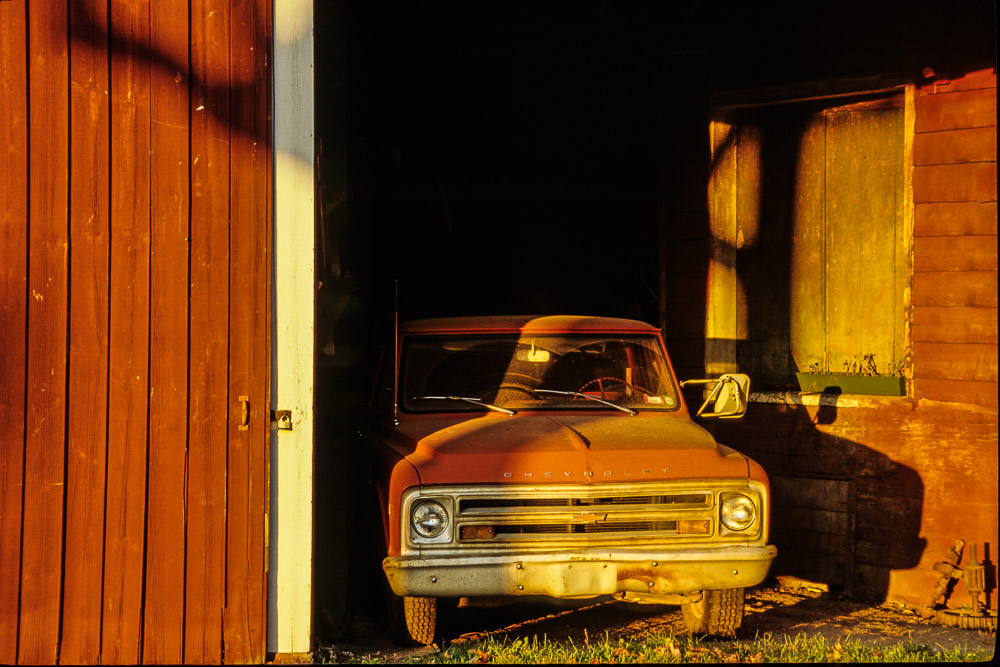
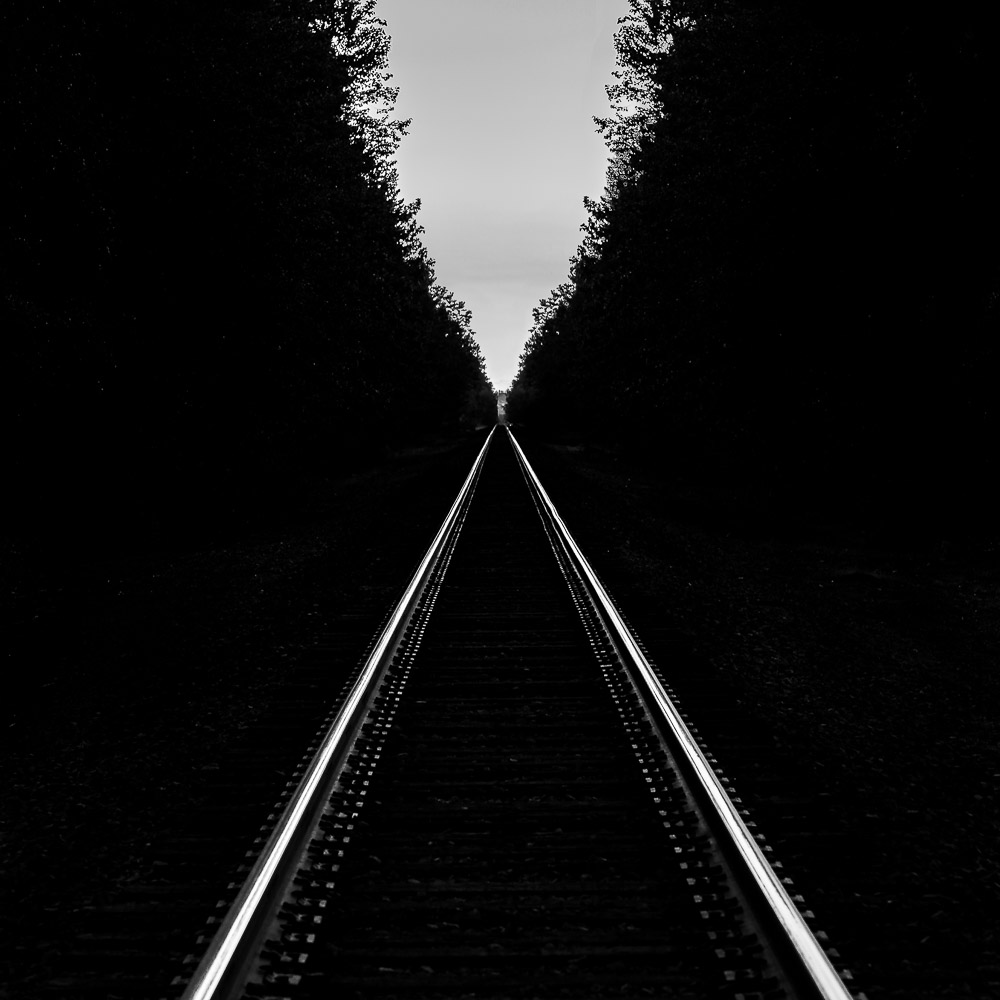
    Let me mention the image with this post. I was searching for great scenes on a beautiful fall afternoon. I was racing through the forests, surrounded by peak color leaves in upstate New York at sunset. Suddenly I was compelled to screech to a halt and turn around and backtrack. My subconscious had recognized this scene even though I thought I was only interested in leaves. I’m very glad I did. This was the keeper. I do not remember any of the leaf images.

    It is joy. It is instinctual. Letting go and following the flow often leads to things I love. Subjects choose you, and it can happen in the most wonderful ways

    Go with it.

  • What Is Color?

    What Is Color?

    This is a fascinating question to me. Most of us do not stop to even ask the question, but it strongly influences much of what we do as photographers. So what is color? Is it the wavelengths of electromagnetic radiation? Is it just a property of the way surfaces reflect light? Or is it simply the response of our eyes to the impinging radiation? Or is it something more subjective?

    Technical Details

    Let me hurry through the technical details. Apparently few people care about actual technology.

    Electromagnetic radiation is the way signals propagate through space. It is the mechanism of everything from radio through X-rays and gamma rays, including what we know of as the visible spectrum. For the really hard core, what we consider “light” is radiation in the range of 380 nm through 760 nm. This chart does a good job of visualizing this.

    The rods and cones in our eyes are sensitive to these wavelengths of radiation that we call light. This provides the sensation of light and color that we perceive. Our window on the world is based on these hidden gems.

    I go into this detail to make the point that light is not a “thing”. It is simply our response to a small range of electromagnetic waves. This is significant because much of what you will read about light in art is very “fluffy”. It supposedly has hidden meanings and deep psychological responses. Maybe it does. But don’t forget that it is basically a simple sensory perception. We each respond to color mostly the same, but a little differently. We are human, not a calibrated scientific instrument.

    Perception

    These rods and cones give us incredible perception of color and light. The very best digital sensors made cannot see the range of lightness values the human eye can resolve. The very best digital sensor cannot distinguish the range of colors the human eye can sense.

    Digital images are represented as a grid of pixels. Each pixel contains 3 pieces of data, values for red, green, and blue. A very good sensor, mapped into a wide color space like ProPhotoRGB, can use 16 bits for each of these values. That gives 65535 steps for each color. This is only an approximation to what our eyes can do.

    Because our eyes are so much better then the sensors, we sometimes have to exaggerate the image data we are working with in order to simulate what we remember seeing. Basically, we often have to trick the eye into believing there is more data there. That is because the eye can perceive more than what we can capture. It is also because the sensor is completely objective. It does not know what we feel when we see the image.

    Objective or Subjective?

    Color has to be objective. It also has to be subjective. Confusing? Yes, but most of the talk about color is.

    I’m a professional print maker. As such, my work has to be reproducible. My computer is well corrected to ensure that the colors I see when I am editing are reasonably close to the “actual” colors of the original subject. Through a little more magic, my prints use color profiles for my printer/ink/paper type to make sure that what I print is as close as possible to what I saw on my computer.

    This is objective use of color. It has known, fixed values and it can be reproduced over and over again. It may suck some of the life and spontaneity out of the process, but it is necessary to produce professional results.

    Subjectively, though, things get interesting. Who says that color has to stay just like the “real” world it was taken from. As an artist, I am free to do anything I want to create a result I want. If I want a world of purple bananas and red oceans that is a valid choice for me. No one can say that is not right because the real world did not look like that. So to an artist, color is a choice, not a limitation or a fixed property.

    Our incredible post-production tools allow amazing enhancement of – or damage to – our images.

    Interpretation

    Now, to get real, my world does not usually include purple bananas. But there is a big overlay between the objective and subjective worlds. Images that come out of the camera as RAW files are flat and dull and lifeless. They contain all of the data the sensor recorded, but not what I remember. I work many of my images to create the impression of color that struck me at the time I took the picture.

    I would call this interpretation. I am selectively enhancing or changing the colors to recreate the impression I saw (or wanted to see). A color purist might see this as wrong, since I am changing the tonal structure of the image to reduce or exaggerate colors or contrasts. I am not a purist.

    There is an irony here that is not lost on me – my systems are set up to deal with color very accurately, but then I sometimes alter the color drastically. What can I say? It’s art, not engineering.

    Symbolism

    The discussion would not be complete without touching on the mystical area of color symbolism. People can get worked up over this: no, that can’t be red because that would mean anger; no that can’t be white because that means death, etc. Some of these considerations are reasonable for some applications. If you’re an advertiser, you want to avoid chasing customers away.

    But is color symbolism a real thing? Yes… but. A lot of it is cultural. And opinion. Colors seem to have different significance in different parts of the world. One representation of this is the Lüscher color test. It attemped to codify the symbolism of colors, at least to the western eye. Given that it varies for different people, it does not seem that the symbolism is a significant tool to use when creating art.

    A small example of cultural differences: in the western world that I’m familiar with, financial reports mark upward trends in green and downward ones in red. In China, Japan, South Korea and Taiwan they are reversed. That is, red marks an uptrend and green marks a downtrend. A very simple thing but it can lead to a lot of confusion if you go “out of culture”. I am trained, in this context, to perceive green as positive and red as negative.

    Emotion

    Color does touch us on an emotional level. Not everyone reacts the same, but there are patterns and generalities.

    It is known that certain colors produce rather similar reactions in people. Blues tend to be calming. Reds tend to increase energy. Yellow tends to cheer people up. So if I was creating an image where I wanted to create a calming mood, I would use a palate of blue and green. If I wanted to be bold and attention getting I would selects strong red and orange hues. This is not relying on the symbolism of colors, as far as meaning, but on general reactions across populations.

    Like smell, color invokes a response in people. It is another tool that artists need to be familiar with and be able to use to their advantage. It can require a lifetime of study and practice.

    What is color?

    Coming back to the original question. Can we say what color is?

    Not satisfactorily in a short blog. Color is electromagnetic radiation in a certain range. It is definite ranges of data represented by red, green, and blue values (in photography). Color is a property that invokes an emotional and/or a cultural response. It is so subtle and well measured by the human eye that we cannot yet capture it precisely in imaging or print all the eye can see.

    In short, color is part of the magic we live with all the time and that we artists work with in various ways to create our art. Understanding the technology does not really help us understand “color”. Neither does treating it as a mystical spell. It is this wonderful stuff we perceive because we are human.

    Even if I spend hours agonizing over mapping color tones and micro-adjustments of hue or saturation, that does not mean you have to know that in order to appreciate the image.

    Enjoy! Don’t over-think it!