An artists journey

Category: Art

  • Beautiful Chaos

    Beautiful Chaos

    I am thinking about some words by William Neill in his book Light on the Landscape, combined with an old country song by Diamond Rio named Beautiful Mess. I’m referring to the visual chaos of the normal world around us. Managing this chaos is one of the great challenges and rewards of outdoor photography.

    Visual chaos

    Alas, the world outside is a chaotic place visually. Things just aren’t naturally arranged to make it convenient for us poor outdoor photographers. Plants are in the way. Trees aren’t in the right place for the best design. Rivers bend the wrong way. Clouds are too much or not enough or arranged wrong. Weather doesn’t cooperate. Sigh.

    I say that facetiously, of course. That chaos and the difficulty of making something pleasing out of a cluttered scene is one of the unique and challenging parts of photography. If it was too easy it would be difficult to create outstanding images.

    Bringing order

    I love this challenge. The inner designer in me rises to it. It is a very satisfying mental exercise to try to mold a chaotic scene into a clean and appealing image. This is one of the defining characteristics of photography. Painters start with a blank canvas and selectively add only the elements they want for their scene. But photographers must start with an existing, disordered scene and simplify it.

    We have many techniques to apply to do this. Lens selection will widen or narrow our field of view. We can change our point of view to include significant parts or exclude distracting elements. Selective focus can emphasize the areas of attention. Exposure can be used to darken or blow out parts of the frame where you don’t want any detail. Long exposure can change moving elements into a different graphical design. These and other techniques give us great control over the arrangements of the parts.

    But above all, it is a design challenge. We have to decide what is key to the scene and how to emphasize that and minimize distractions. Is it the S curve of a river or the graphical arrangement of branches? Is it the forms or the leading lines that draw the eye a certain way? Most scenes can be arranged to bring an interesting view. Some more than others, but most can be improved.

    Refine

    Following on from a previous post, we need to very consciously work to refine our design after we set it up. This is a weakness of mine that I plan to improve. I have long training in composition. When I walk up to a scene I tend to do a tremendous amount of subconscious evaluation to select a composition. My natural tendency is to set up and shoot what I visualized as I came on the scene and stop without taking it further.

    But I know that many designs can be enhanced by exploring variations. I will try to discipline myself to do this more diligently. Move – left, right, up, down – look for improvements in the composition with slight shifts. Look closely at the entire frame to make sure there are no distracting elements that could be eliminated by in-camera techniques. Walk more to see if a more dramatic change of viewpoint could help.

    Most of all, I need to make sure I look and think. What I have is good, but can I make it better?

    Don’t over analyze

    A caution, though. Don’t over analyze the situation. Design and creation should be an act of joy. When you are learning new techniques it is normal to have to concentrate a lot on what you are doing. But try to get to the point where it flows naturally. To where you move with it and follow your instincts. Trust your instincts.

    Shooting in the outdoors should be energizing. We should feel excited about what we are seeing and capturing. Don’t let the joy get sucked out for you. Creativity is exciting and invigorating. Most of us aren’t going to get rich at this. We should at least have fun and feel satisfied.

    This is a journey of discovery. Enjoy the journey and have fun!

    Note on the image

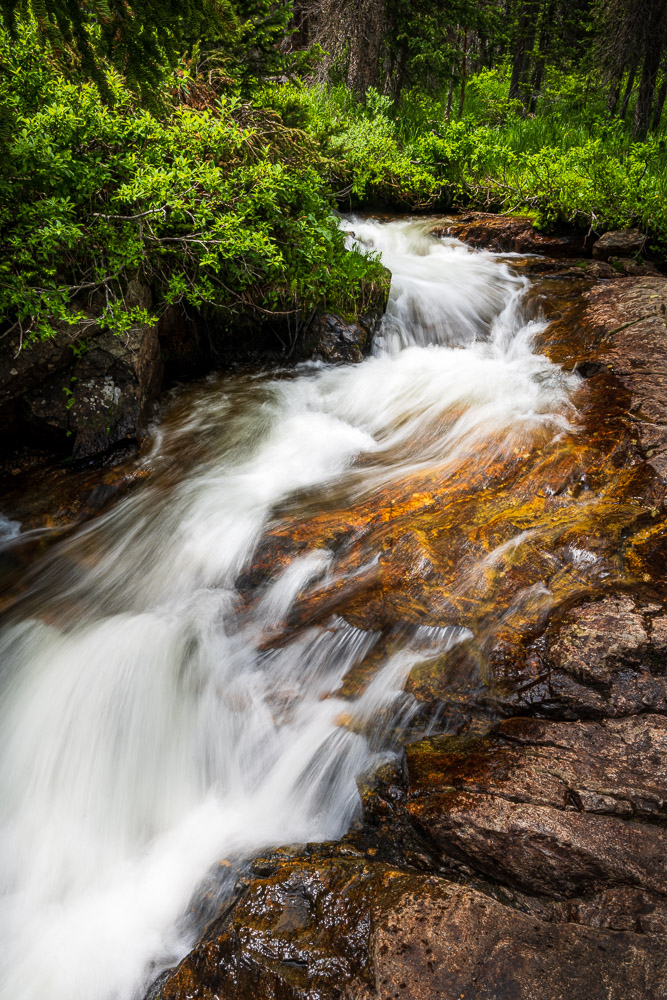
    The image in this article is personally satisfying to me. It is a location that brings me joy and that i return to as often as possible. Despite wading through mud, swatting mosquitoes and trying not to slip in and get swept downstream, I loved the scene. I did follow my advice in 2 significant ways: I worked it until I got to a composition I loved, and I had a great time.

    I hope you will find scenes that bring you such joy.

  • Purity in Photography

    Purity in Photography

    I couldn’t help follow up on my last article with this. I read a photographer’s blog who was wringing his hands about “fake” images. In his plea for purity in photography he went so far as to coin a new term: “PhoTImagery” (the strange capitalism is his). He proposes the term to refer to any image that was not an absolute literal representation of a real scene.

    What is purity in photography?

    The argument presented was that “pure” photography – what he terms the purist photographer – consists of images made on film and processed in a wet darkroom. The end product is a photograph.

    A couple of questions occur to me. For one, why stop at film? Why not define pure photography as coating wet plates in the field before exposing them? That predates film and is even more basic. The practitioner of this has to be very determined and willing to suffer for his art. That brings even more asceticism and rigor to the practice.

    The second question is brought up by his assertion that the pure photographer can use “all possible techniques” in the chemical darkroom and still be acceptable. Editing negatives to remove distractions and compositing images has been done almost since the beginning of photography. Is that OK as long is it is done with film and chemicals? What would a photographer have to do to make it no longer “pure”? It is interesting that he does not count multiple exposures against the purity of an image.

    Can digital imaging be pure?

    The next step in the continuum he describes is the “photographer”. This is a person who does digital imaging, BUT does nothing to alter the image materially. This person is only called a “photographer”. He seems to have lost the sanction of purity, since he is not using a pristine chemical process. The end product here is still a photography, but I guess it is potentially tainted.

    If you edit out distractions or (gasp) change the sky it is no longer a real photograph. Apparently only the actual scene as shot, with no material changes, is worthy to be presented as art. Of course, like in any legalistic argument, there will be long and heated debate about what constitutes a “material” change. And who is certifying this? Do we have to submit our images to the Board of Photographic Purity before publishing them?

    Not real art?

    Finally Mr. Gordon creates the term PhoTImigery to describe any image that was not created and processed entirely by old school chemical methods, or was composited or heavily manipulated. He labels these manipulated images as deceptive and not true photography.

    Happily, he allows that art might want to do these things, but that the use of them must be disclosed. If not disclosed he claims it to be deceptive and wrong.

    I thought this argument was over a couple of years after digital imaging became really practical. Unless you are a photojournalist it should be assumed that ALL images are manipulated. This is not dishonest unless you are presenting it to your viewers as depicting reality.

    The disconnect

    Herein lies the disconnect, I think. Mr. Gordon wants to assume that all photographs are a faithful and literal depiction of reality unless disclosed as otherwise. It seems much safer to assume that all photographs are manipulated freely unless it is stated otherwise.

    We have long moved past the point where the only purpose of photography is to record the world as it literally is. There are billions of images made every day. Reality is overused. A photographer wanting to be heard among all the noise must present his personal vision of a scene. Or create a scene that may not have existed.

    Is this dishonest? No, it is art. Should it be “disclosed” as not real? No, no more than a Picasso painting should be labeled as “not real”. None of my images, no matter how they are created or manipulated, are fake. They are my artistic work.

    By the way, the image with this article is not literal reality. 🙂 Are all my images this heavily processed? No, not even most of them. But I feel free to do what I want with my pixels.

    The argument of purity makes an assumption of the intent and very purpose of photography. I refuse to be bound by someone else’s assumptions. I will follow my own path. Let me state right now to never assume any of my images are literal truth unless I tell you that they are.

  • Over-processing

    Over-processing

    How much post-processing is too much? Is less better? Is there some magic boundary you shouldn’t cross? Over-processing is a controversial topic for many photographers.

    Purity

    Ah, purity, respecting reality, make no changes. This concept and value system is instilled into many photographers, especially landscape artists. I still follow Nature Photography Network. The images are often very lovely. But there is generally, to me, a sterility to them. Most photographers who post here are afraid of departing from literal reality.

    In this group, as in many landscape forums I have seen, there is a real negative feeling about cleaning up distractions, adjusting color to be anything other than the actual original, compositing, or anything else that is not strictly faithful to the original scene. It reminds me of some film photographers who used to make prints with the film rebate showing to prove the image was not cropped.

    The problem I have is the fear to depart from reality. Fear is not a good guide for art.

    What is photography?

    Is photography to be a literal recording of reality? Some people believe that it is. I used to be in this group, way back. As a matter of fact, the camera club I used to be a member of went further to say that a nature image must not show any “hand of man”. That is, there could not be a trail, a contrail, an old mine, anything not completely natural.

    But what is photography, really? I see it as an art medium. Composing interesting images from “real life” scenes in front of a camera is just as valid an art as painting scenes that exist only in the artist’s mind. Just as the painter only includes what is necessary to further the image, the photographer eliminates what is distracting, either in camera or in post processing. The goal and only real measure is the final image.

    In impressionism or modernism or post-modernism or any of the other isms, the artist freely pushes the medium to its limits to give his preferred interpretation of reality. And that, to me, is a key thing that makes it art – it is an artist’s interpretation of the world.

    What prevents photography from doing the same thing? A modern sensor can record a scene in very high resolution, and our software tools allow us to “correct” color and noise and other artifacts to a high degree., Does that mean it is the place of photography to create images that are constrained to faithfully depict reality?

    Is there a line you shouldn’t cross?

    Is there a line, a limit, not to cross? Probably, but it is different for each of us. As an artist, we need to be able to figure it our for our self.

    Our post-processing tools are amazing. They allow a level of control unheard of a few years ago. There is sage old advice, though, that says just because you can doesn’t mean you should. Anything can be misapplied to create garbage.

    It is easy to go to the computer and over-saturate and over-sharpen and re-mix colors in garish ways to make an image into something I would never show anyone. But that line where I have gone too far is personal to me. It would be different for you.

    Go for it

    As I mature, I find the line is moving our toward the horizon. That is, I am finding interesting ways to express my vision using post-processing “excesses”. Is my vision moving or am I learning to use the tools better? I don’t know for sure, but it is probably both. What we discover we can do influences the notions of what we want to do.

    The image with this article is a completely natural scene that has had what I would consider “moderate” post-processing. I like it much better than the bland original.

    These tools that can be used to create horrible garbage can also be used with great subtly and finesse. Like with a painter, the same paint and brushes can create a useless smear or a respected painting. It comes down to the artist’s vision and how the tools are used.

    Maybe asking if the image is over-processed is not the right question. Maybe the question is did the artist realize his vision? And did the vision resonate with me?

  • Ostranenie

    Ostranenie

    Say what? It is probably a word you have never heard. Ostranenie (good luck on the pronunciation) is a Russian word that refers to “defamiliarizing” scenes so we can see them new. I think it has application to art.

    Definition/history

    The term was created by the Russian writer and critic Viktor Shklovsky in 1917. He was originally referring to poetry as opposed to normal writing. His point was that poetic language was intentionally different from our normal language by being more difficult to understand. By being formal and different, it gives us a different perspective on the world.

    The concept was fairly influential in Europe for a time, known as Russian Formalism. It was picked up in various forms by other writers and playwrights. Even Freud referenced it in his notion of the uncanny.

    How it works

    The Russian Formalists maintained that habit is the enemy of art. Therefore the artist must force the reader (in their case) outside of their normal state of perception.

    The problem with this is that it ends up relying on shock value. But shock wears off and becomes a norm. Then it becomes a degenerate spiral because things have to become more and more extreme to provide shock. Just look at most Amazon Prime or Netflix productions.

    Displacement, alternate reality, removal of what is known – these can become pretty heavy-handed psychological manipulations.

    Application

    A slightly softer definition is “Defamiliarization or ostranenie is the artistic technique of presenting to audiences common things in an unfamiliar or strange way so they could gain new perspectives and see the world differently.” This is actionable and a reasonable artistic device.

    It is easy to see in literature. Science Fiction sets things in a different time or place or it creates environments that do not exist in our world. This lets them make observations about us from the outside. Fairy tales give us great insights on the real world by creating fictional situations. Plays, movies, and poems all do it to some extent.

    How about the visual arts? One artist I see doing this is Brooke Shaden. She creates dark and mysterious scenes to ask questions about our situation. I don’t necessarily resonate with her work, but I respect her artistic technique a lot. And she is a very good instructor. Catch some of her classes on Creative Live.

    Even a simple thing like very long exposures can be a form of this, because it changes what you normally see into something different. My friend Cole Thompson does this well. He sometimes uses long exposures to drastically change what you expect to see in the scene.

    As an unlikely example, black & white photography is kind of this. By removing all color from images our perception is dramatically changed. It is familiar, but unfamiliar. It is definitely a new perspective on the world.

    Personal

    In my own timid way, I like to do this sometimes. Black and white is one example. I am a closet B&W artist. I love it, even though most of my work is dramatically colorful. One of the things I love is its ability to present a new viewpoint on the familiar.

    Time exposures are another common process for me. I like its ability to change our perception of what is happening by shifting the time reference.

    Intentionally distorting a scene to change the way we see it is another technique I like. The image with this article is an example. This is a straight shot, no Photoshop magic. One day I was having lunch in a favorite restaurant a couple of blocks from my studio. I noticed that some of the old windows in this 100+ year old train station were very distorted. If I photographed through them at a certain angle it enhanced the distortion in desirable ways.

    This shot is a view of my downtown. The distortion reduces it to shapes and color while adding an intriguing texture. I like it. Luckily, the manager is a friend and didn’t mind me exploring to my heart’s content.

  • Try and Fail

    Try and Fail

    No, I’m not saying try “to” fail. If you have been there trying to do creative work, you know that you will create a lot of failures along the way to some good work. In creative work we often do not clearly know where we are going. That leads to a lot of failed experiments and dead ends. When we try and fail, is that bad?

    Attitude

    Our attitude about failure will have a lot to do with our results. A reality for many of us is that, if we are not failing, we are not stretching ourselves and developing new skills or vision. As creatives we cannot play it safe. We have to be risk takers.

    I love a quote from a blog by Benjamin Hardy. He was talking about Molly Bloom and said “The moment you realize you can try and fail — and that everything will be okay — then you are free to create.

    This is a liberating event in our creative journey. Failure isn’t final. Failure leads to growth. When you fail, no one comes and takes away your camera or your brushes. No one even laughs at us. Realizing we can fail and go on with no consequences frees us to try without worrying much about failing.

    Learn by doing

    We don’t upgrade our skills and exercise our creativity just by thinking about it. We have to take action. But just taking random action will usually lead to random, unwanted results. We need a way to follow a path that will take us to desired results.

    You are probably familiar with the “do it, try it, fix it” loop. It goes by different names, but the concept is pretty much the same. This is an excellent process for improving things.

    The basic idea is you try something new. Then you evaluate the results, Was it a success or an improvement? Decide what, if anything, you want to keep of this experiment to incorporate into your tool set. Then, based on the evaluation, plan what to try next. That becomes the basis of the next experiment. It is important to realize this is a cycle, meaning it continually loops and repeats.

    Evaluate

    At the evaluation stage many experiments may be tossed out. They did not take us in the direction we want to go. It was a failure, but that does not mean we failed. We just tried something that we decided didn’t work for us.

    This is part of a process. It is a deliberate plan to systematically push the limits. To do that, we will try a lot of things that don’t work out satisfactorily. The failures are expected, planned even. Not something to be ashamed of. We should be happy to know we tried. Now we are free to do another experiment in a different direction.

    Freedom

    Freedom is at the core of the process. We are not just trying random things and mostly being disappointed with the results and insecure with our creativity. Instead, we are following a deliberate process of improving our self and our art. And knowing we can try anything with no fear of failure is extremely liberating.

    It is easy to get discouraged and think of our self as the failure. We have probably all felt like a fraud who has no right considering themself an artist. Remind yourself that we have to change and grow creatively, and to do that requires a lot of risk taking and failed experiments. Following a process like outlined above makes it a methodical plan. It help us keep in mind that the failure is not a personal failing but a necessary and expected outcome of the growth process. It can be exciting. We can risk more when the fails are not catastrophic.

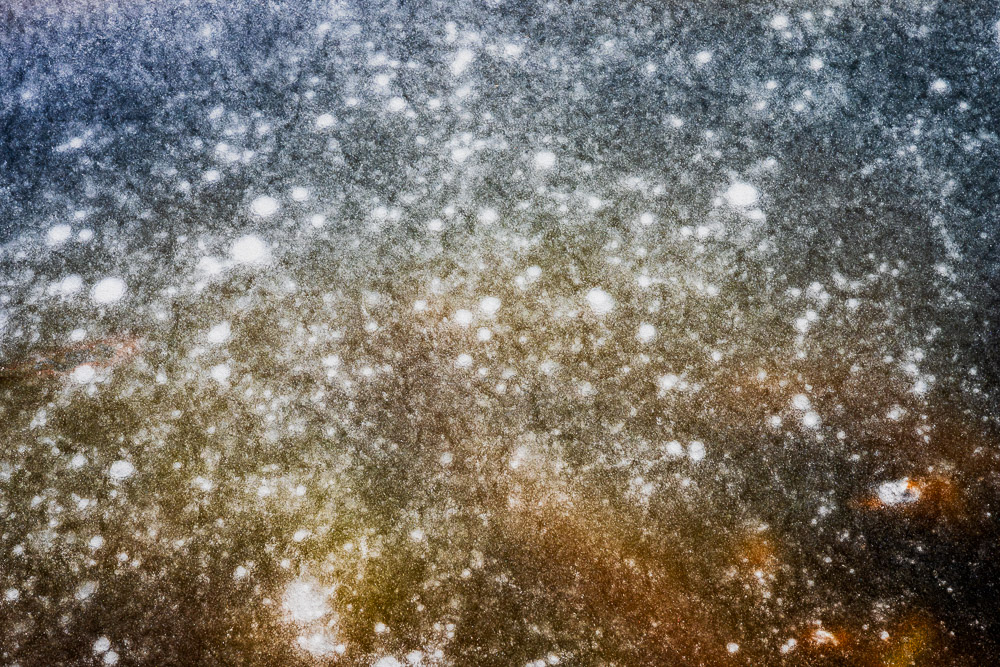
    The image with this article is an experiment. It is probably not what it appears to be. I will leave it to you to decide if it was a failure. I have my own evaluation.