An artists journey

Category: Art

  • The Making of “Nothing Is Quite What It Seems”

    The Making of “Nothing Is Quite What It Seems”

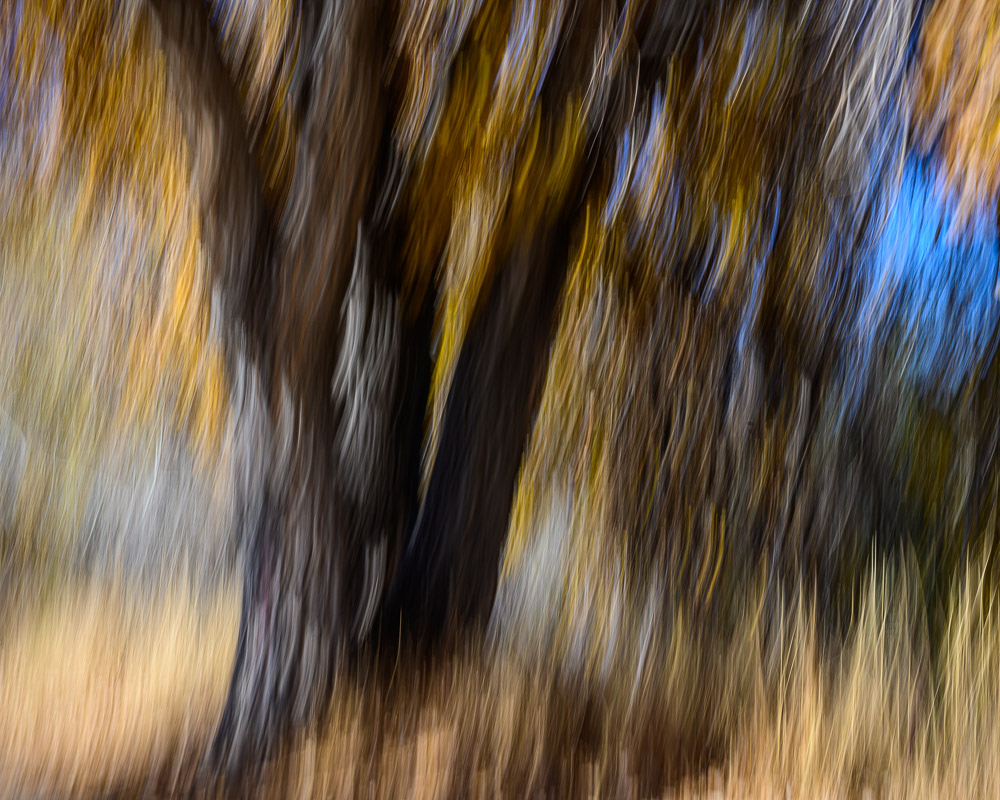
    Today I’m going to discuss the making of this image. I created this abstract image titled “Nothing Is Quite What It Seems” from disparate elements put together to achieve the surreal landscape effect I wanted.

    But as the title suggests, nothing is what it seems to be.

    Base, Idea

    When i saw the thing creating the basic silhouette shapes I knew it needed to be a scene of dead trees in a barren landscape. In reality, though, these shapes are actually cracks in ice on a frozen lake in Colorado.

    I framed the scene up to isolate these 2 cracks that looked the most to me like dead trees. The “brush” in the foreground is the near edge of the ice, looking through to some rocks close under the surface.

    The processing required some touch-up editing and some dodge and burn and contrast enhancement. There was a little hue-saturation enhancement to bring out more of the yellow rocks.

    All of this was done as a smart object in Photoshop. Because I wanted to keep my options open I use smart objects a lot. They give me the freedom to come back and continue editing later. I don’t like to commit permanent changes.

    Texture

    With the basic form set, I started building texture. Tone adjustments in the smart object of the base layer helped. Bringing up the contrast brought forward more of the texture of the ice. This is the dimples and spots all over the image.

    To abstract it a little more I used the oil paint filter in Photoshop to soften the edges and give it a more painterly and abstract look.

    Color treatment

    I knew I wanted to change the color palette and make it look like it could be in an abandoned homestead on the Colorado plains. But I also wanted to layer on more interesting texture. After trying many overlays I settled on a beautiful rusty truck panel. The image I used is part of a 1948 Coleman Truck. Pretty rare, and it was aging beautifully.

    The truck had large rust patterns and also areas of old yellow and green paint. Using this to establish the colors across the image worked for me. This truck overlay is also handled as a smart object. Careful blending achieved the look I wanted without it looking like a rusty truck.

    Finishing

    The final polishing and tweaking takes a lot of time, even though it doesn’t make sweeping changes. As we used to say in software development, the first 90% of the project takes 100% of the schedule. The last 10% takes the other 100% of the schedule.

    There was final dodging and burning to do, bits of masking and retouching. Of course, there was a little bit of final color tweaking to my satisfaction. One of the reasons I use a flexible workflow is that I am prone to tweak things after I have looked at them a while.

    Process

    A comment on my workflow. Although this is a fairly complex image, nothing is permanently locked down or committed. While writing this I was able to open up all the layers and smart objects and see everything about how they were processed. I could still go in and change or modify anything in the image. And I did make some tweaks. I told you I can’t leave images alone.

    And as a very experienced Photoshop user I know new tools will be developed and I will learn new ways of doing things. These will lead to new ways to process images that I will want to take advantage of in the future.

    This is the way I choose to work this way on most of my images. It doesn’t take longer and it preserves total flexibility. I need that. I change my mind often!

    Summary

    I like the finished image. It seems to be a surreal Colorado landscape of dead trees, but it contains no trees or plains or anything else that it appears to be. It is truly not quite what it seems. Is this more interesting than a straight shot of the ice?

    Lightroom and Photoshop are powerful and addictive tools. Know when to use them and know when to stop. Otherwise you may never stop. It’s a great time to be doing imaging.

  • That’s Not What I Was Taught

    That’s Not What I Was Taught

    We all learned our craft somehow. And if we develop as artists there comes a point where we have to stop relying on what we were taught and make our own way, maybe in a different direction. At that point we are going beyond what we were taught.

    Instruction

    Unless you were raised by wolves and picked up the concept of making art through a mystical infusion, you were taught somehow. For many that means formal art school or classes and workshops with leading artists.

    Even though I consider myself self-taught, I had thousands of hours of instruction in the form of books, videos, self-evaluation, looking at art, visiting museums, etc.

    Somehow, we got trained. The “muscle memory” was built. We learned the basic techniques and technology. The history and design and composition and color theory and the dozens of other layers of information we need to create art are introduced to us. We build on what has come before.

    It’s like shooting thousands of baskets until you are completely comfortable with the feel and weight of the ball, until you start the have the “touch” to put it where you want from all different angles and distances. This isn’t playing basketball, it’s just getting prepared to play basketball.

    Apprentice

    When the basics are laid down, most of us go through a long “apprenticeship”. It may not be formal and we may not call it that, but that is what it is.

    By apprenticeship I mean we are practicing the basics until they are smooth and natural. At this point we are probably listening to or watching a mentor and trying to create work like theirs. Nothing wrong with this. It is part of the learning process. But we are still creating someone else’s art. This is practice, training.

    To continue the basketball analogy, now we start to practice with the team. We become comfortable passing and catching and playing positions and working smoothly with the others. The coach is yelling at us and making us do drills and repetitive work that seems boring and useless. Maybe we mostly sit on the bench in games and only rotate in occasionally. The reality is that we are probably not as good yet as we think. The coach knows that. That is why we aren’t playing much right now.

    As artists, maybe we go out shooting or painting a lot with our mentor. They direct us to locations and talk through how they see the image. It is helping us learn to create a decent image. It may not be how we see it, but at this point we are trying to produce results that match theirs.

    Independence

    Ah… someday. The longer we go through our training and apprenticeship, the more we begin to chafe under the restrictions. As we develop our own style and vision some of us yearn to break away and do what we think we need to do.

    One of the things Jesus said to his disciples was interesting (well, a lot were): “Students are not greater than their teacher.” That’s true, as long as there is a teacher/student relationship. As long as the teacher has something to teach you. But he goes on to say “But the student who is fully trained will become like the teacher.”

    There comes a point where there are diminishing returns from studying from a teacher. If the student comes to a parity level with the teacher, they become the teacher.

    That is the thing. At some point, we become our own teachers. Not that we know everything, but that no one else does either, so we have to guide our self.

    Where do you go then?

    What I observe, unscientifically, is 3 paths at this point:

    • Continue doing what you were taught
    • Enhance it a little and go slightly beyond
    • Figure out that there is something different

    It seems to me that most artists proudly continue doing work like they were taught. They go on to get better and better at the same things. I’m not criticizing them. This seems to be the best path for many people. I can’t understand it myself, but that doesn’t make it wrong.

    Another group pushes a little beyond what they were taught. They enhance the techniques, maybe modernize them with new materials or processes. Maybe introduce a little fusion from another school. The result is a natural evolution of what they learned. Again, no criticism. But again, I can’t understand staying so close to home.

    It would seem obvious that I must be in the last group, since I don’t fit anywhere else. 🙂 We sincerely thank our instructors for the training they gave us. But we realize we have a different vision and will be creating a completely different form of art. This is not a rejection of our instructors, just a growth stage.

    Our own body of work

    My view is that at some point, we have to let our own vision and style emerge and take the lead in our work. This is not something that happens automatically as soon as we leave the umbrella of our instructor. It happens over some period of time. The time is completely personal and dependent only on ourselves.

    Hopefully at this point we can trust our judgment to recognize and follow the path we are being drawn to. We are creating our own body of work, in our own style, following our own vision. Now we are really an independent artist. We have no more need for a teacher. Confidants, advisors, mentors, critics even, but not teachers.

    What we are doing is not what we were taught. It is what we have transformed that teaching to that works for us.

  • Finding Inspiration

    Finding Inspiration

    Are you empty sometimes? Are there times when you don’t have any ideas or new projects? We tend to desperately put pressure on ourselves to find something creative and new, but this is often counter-productive. So how do we go about finding inspiration?

    Relax

    Ouch. This can be hard. Our art is important to us. We need to be proactive and driven to produce. But first. relax.

    If you are in a slump creatively, just go with it. You will come out of it. But the more pressure you put yourself under the harder it sometimes is. It is very hard to force ourselves out of a slump. Our subconscious will eventually get re-engaged and start pumping out the great ideas. Give it time to rest and rejuvenate.,

    Take a walk

    Really. “Waste” the time. Carry your camera or not, it’s up to you, but don’t require yourself to take any pictures.

    When you walk, go slow. This is not mainly for the exercise. It is for your head. Look around. Look at everything. See things as it for the first time. Play the game that you just teleported to [your favorite exotic destination] and you are looking around in wonder at everything. Try to see how many things around your neighborhood you never really “saw” before.

    None of these may be in your “style” or preferred subjects, but learning to see new things is good.

    Read a book

    I have heard it said that most adults never read another book after they graduate from school. Maybe that is just males. 🙂 Even so, I hope that is a false statement. Books are one of the most important inventions in history.

    Reading something new will expand your thinking. Studying something related to your art will give you a new appreciation of different styles and ideas. It may teach you something you can apply to improve your images and refresh your creativity.

    Even if not, you will still be better off mentally for exercising your brain. Books are a major repository of the collected wisdom of centuries.

    Watch an educational video

    I can say to watch videos because I do not produce any videos. I’m not selling anything.

    The good thing about the internet is that there is a wealth of information there, free or for relatively low cost. There is probably no aspect of our art that someone doesn’t have a video about.

    That being said, the “signal to noise ratio” (the percentage of useful information) is fairly low. Be careful of who and what you take in. Even so, it is not too hard to find good stuff.

    If you are up to it, it can even be healthy to watch bad videos. That sounds weird, but do you find, as you get more mature and confident in your craft that you can sift the good from the bad? If you watch a bad video, or one you disagree with, it can be empowering to be able to refute the presenter and know why you believe they are wrong, at least for you. It can help bolster your confidence.

    Read other artist’s blogs

    You are reading mine. Thank you! I would love to hear your thoughts.

    Probably thousands of blogs are written every week. Pick a few new ones to add to your list. They do not have to be leaders in your field. Look around and find artists in other fields whose work you admire, who influence you, whose style you admire. Follow them. This is another great source of wisdom and inspiration.

    I follow a few people. Not many. But I am constantly amazed at the wisdom they give away.

    Be open

    None of these suggestions will do much good unless you open yourself to receiving what they might give. Openness is an attitude. Our attitudes are under our control.

    Are you totally focused on one subject? Why? Widen your view. Have you become cynical? As you learn to look around more, re-awaken your wonder and joy. Find new things that excite you. Cast a wider net. Get enthused about something. Give yourself permission to try new things.

    Inspiration sneaks up on us when we aren’t expecting it. The more we can be open and receptive, the more often we will find it. I find that stimulating my mind with new thoughts and learning new things helps keep me open to inspiration. Try it!

    About the image here

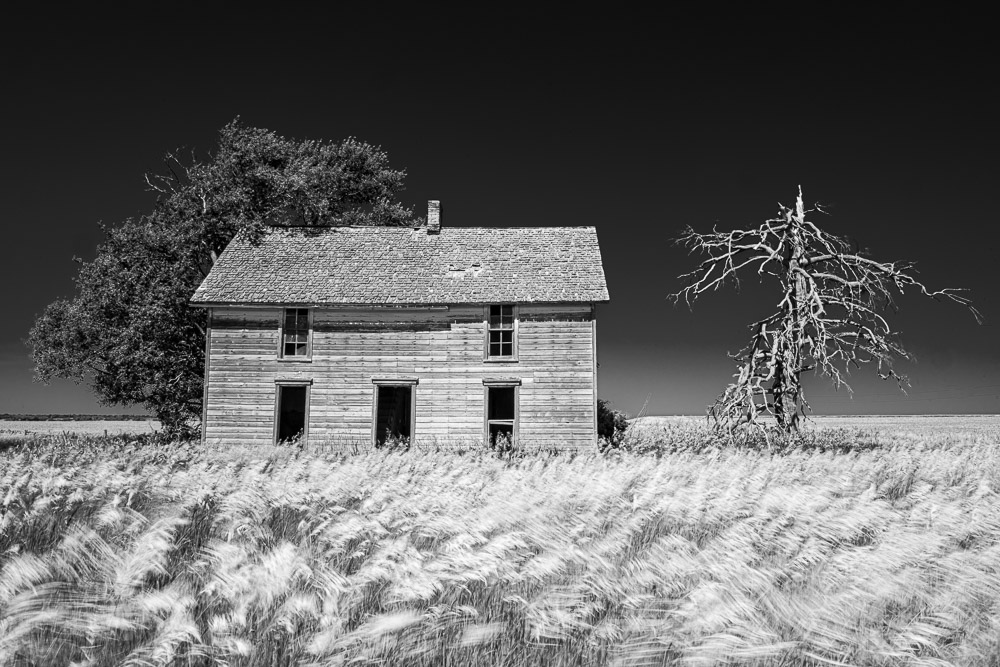
    I can’t claim this is super creative as such, but I am very happy I made this image. This is the epitome of depressing conditions: way out in the midwest, nothing around anywhere, temperature was 108F, winds blowing so hard I had to hold the tripod, totally clear blue sky – what to shoot? I decided the interest was the wind. How to capture the effect of it? I think, by being open to exploring new ideas, I made something good out of it. At least, I’m happy with it.

    This image is part of a series I am working on, tentatively called “Maria”. It is not published yet.

  • Craft Completes Magic

    Craft Completes Magic

    Craft completes magic. I read this in a book on writing poetry by Robert Wallace. This was a new thought to me. It is unusual in my world for a random phrase to seem to crystalize immediately as truth. This did. I have often written about the 2 sides of art as being the creative, the magic, and the technical, the craft. I love the way this brings them together and completes the whole.

    The magic

    Oftentimes we artists focus almost exclusively on the creative aspects of what we do. After all, we think this is what separated us from other artists. And to a large degree, it is true.

    So we look at the work of others we admire. We plan or write or set projects to focus our thoughts. We look for the new and different. The driving challenge is how can we bring a unique perspective to the things we see in the world.

    Sometimes the muse visits us and we feel we have truly made magic. It is a great feeling. Creativity breeds creativity. We try to go on to leverage this new stage into even more.

    But, have you ever had a guilty feeling, looking at your new creative work, that it could have been executed better? Not necessarily more creatively, but with better craftsmanship? Sometimes we don’t know how to make our great idea into a finished work of art. Concentrating too much on just one aspect can throw us off balance.

    The craft

    I believe our craftsmanship is as important as our creativity. Not a replacement, but to balance and complete our work. It’s this completion I want to emphasize.

    There are 2 tendencies I see in a lot of photographers that disturb me. Some seem to feel that a technically perfect image is a good image. Some others take the attitude that “I’m a creative, I don’t know the ‘techie’ stuff”. I believe that either of these, if they drive your behavior too much, lead to bad ends.

    Ansel Adams famously said “There’s nothing worse than a sharp image of a fuzzy concept.” This, to me, is the danger of overemphasizing technical perfection. I see this a lot in online critiques where the objections are things like not enough depth of field or that the color correction may not be completely true to the original scene. The reality in many cases is that no amount of technical improvement is going to give this image life.

    If you don’t have an emotional connection with the scene and a definite point of view to share, then it isn’t going to get great by technical skill.

    On the other hand, it frustrates me to hear even professional photographers dismissively say they don’t do “tech”. Sorry, but photography is a uniquely technical art form. If you don’t understand and appreciate and know how to control the technical aspects you are at a severe disadvantage. You can end up with images that show a great idea but you were unable to produce a gallery-worthy image.

    The whole

    There is a symbiotic relationship between the creative and the craft. Mr. Wallace, who I quoted at the start, related it to the two legs of a runner. The creative leg propels you forward. Then the craft leg helps you bring it into being, which also thrusts you forward to another level. These work together, alternating, each with strengths to add. Neither is complete without the other.

    A comedian doesn’t just walk out on stage and think up funny things. He spends many hours on each skit, refining and rehearsing and tuning it before you ever hear it. Likewise, a magician spends countless hours working on an illusion to make it smooth and believable, to make the magic happen. A musician practices day in and day out for years to get and stay good. Yes, famous musicians still practice scales. It trains their technique.

    Art is hard work. It is hard to do creative things and it requires great skill to make it real. No one can tell you what you can or can’t do, or how you should do your art. But I believe that if we don’t put in as much work on the craft side of our art as on the creative we will never achieve what we could.

    A boring image will never be great because it was technically perfect. On the other hand, you don’t get a free pass to ignore the craft because you are a “creative”. As the initial quote says, craft completes the magic.

  • It’s Not Necessarily About the Outcome

    It’s Not Necessarily About the Outcome

    Sometimes the muse abandons us or conditions conspire against us or we get interrupted by something urgent. This can make us create pictures that do not live up to our expectations. But unless we are shooting for a client, we probably should not worry so much about the results we get, the outcome. We should remember to enjoy the creative exercise and have fun.

    We all want great images

    I assume that creating exceptional images is a goal for most of us. I know my expectations are high. We study technique and browse images by great artists we appreciate. We spend a lot of time getting to a location, exploring, setting up, composing. But it doesn’t always work.

    Despite our best efforts, we are often disappointed. What we get may not be great. It may not even be very good. This can be very disappointing if we only judge our self by the outcome.

    They won’t all be great

    It is not uncommon for me to go out for a day of shooting and end up throwing most of them away, with none to add to my portfolio. Does this make me a failure? I try to see it differently.

    I hope we can be philosophical about it. Sometimes all we seem to get from our effort is experience. Hopefully we learn from our experiences and improve our craft. That’s a bittersweet benefit. But the reality is we will learn more from a failed shoot than a successful one.

    I’m coming to see that I am evaluating it wrong. My attitude was that I failed unless I got a number of great images. I concentrated on the outcome. There are greater goals.

    The process may be as important

    Sure, it is disappointing to not have captured those scenes that called to us at the time. But it is an opportunity for self-examination. What caused them to be unspectacular? Was there something we could have done different?

    The editing process is a mirror where we can see how our mind worked and even see our soul to some degree. The images are captured. For better or worse, the bits are there on the computer. Now we have to deal with them. We can process them, but we cannot change them substantively – well, usually not.

    I actually see something cathartic in deleting bad images. I have evaluated them and analyzed the problems and learned what I can. Now I have no more need of them. Remove them from my world. It’s a purging. In most cases I actually have an informal goal of throwing a certain percentage of my images away in the early stages of editing. The thought process is that I should be experimenting and working at the edge of my comfort zone. This causes a lot of failures. Failure is just part of learning.

    Enjoy your art

    Maybe I’m weird, but I see art as a work of joy. We should love what we do. Loving what we do is not the same as creating great work. They may be related, but they are not the same.

    There are times when I go out and don’t end up with anything to keep except the memory of the great scene and the feelings I had. That is enough. Good art should be based on the feelings we are trying to convey. If I had the feelings but couldn’t realize them in the image, that means I am on the right track but I have to learn more. That is a challenge for artistic growth. I have seen too much art that is technically perfect but seems to me devoid of feeling.

    There is a lot of talk about “flow” in the artistic process. Have you really experienced it? Not the fake stuff that is hyped by a lot of self-help gurus. There is no “hack” or shortcut to get there.

    I developed the ability in my previous professional career, before I ever heard the term defined. There was a “place” I could easily drop into, a creative mode where I did great work and would be completely unaware of time for hours.

    I can occasionally find the same place in my art, both when shooting and when processing. This is a reveling in the work regardless of the outcome. Yes, true flow is independent of what we might or might not produce. It is the joy of creation.

    Let’s learn to revel in the process, the flow. We will create great things, but that is not the goal in itself. The joy of creation will carry us to become greater. Look at what you are becoming, not just what you are producing.