An artists journey

Tag: psychology

  • It Is What It Is

    It Is What It Is

    It is what it is. This is actually an expression I hate, but I’m used to it because some of my kids occasionally use it. In one sense, what I photograph is what it is.

    My methods

    I photograph outdoors in natural light. The subjects I shoot are “found” things. Things I encounter on my way and I shoot them as I find them. That is, I do not stages shots. I will very seldom move anything or do any “gardening” to remove distractions or competing elements.

    This is the method that appeals to me. There is a kind of honesty or transparency about it that feels right.

    One of the things I am indirectly pointing out in it is that most of us go through our daily life with blinders on. We tend to be oblivious to most things we encounter unless they are what we are looking for or they seem a threat.

    What I want to do is take these found subjects and elevate them in a way that makes them interesting and to gently say, “see what you missed by not being mindful”.

    Explore

    To accomplish this, I have to be an explorer. I forage for images rather than planning them. And it requires heightened senses. I have to be outside my head and paying attention to things around me. Some may say I’m out of my head, but I will call it outside my head. I have to quiet the inner critic and be constantly scanning around me for interesting things.

    It is a learned skill that I have practiced for quite a while. While I am far from perfect, I feel like I am getting better at it.

    It has become a joy to me. I look forward to these explores. Most often I am just wandering in the vicinity of my studio. Familiar and well worn paths. It constantly surprises me that I can discover new and interesting things in such familiar territory. Some days it is easier than others. But more often than not I find something new or I see something differently. Even if I don’t come back with any images, I have enjoyed getting out and being in tune with what is around me.

    Go out empty

    One of my inspirations is Jay Maisel. I have mentioned him many times. Jay is a famous photographer living in New York City – now Brooklyn. One of the many things he is famous for is just going out rambling every day on the streets close to home.

    He is so good at spotting interesting scenes that it is almost depressing. I would hate him if he weren’t so phenomenal. 🙂

    Jay describes what he is doing as “going out empty”. He wants to go out as unprepared as possible so he can get filled up with what the world has to offer. The point he makes frequently is that if he has a certain thing in mind to shoot, that is a mental block. He might find that, but would probably miss everything else that’s on offer.

    Through lots of practice I have determined this style works well for me, too.

    Make something out of it

    So I explore. I wander. I’m searching for things that catch my interest. And when I find them, I don’t rearrange them or clean them up, except maybe for a stray blade of grass or a piece of trash.

    Therefore, the challenge is to make something out of what is there. Position, crop, lens choice – these all factor in to making the image. Someone has said the picture is already there, we just have to crop it. There is truth to that. The excellent instructor Ben Willmore once said “What elements are adding to the image? What elements are detracting? How do I remove more of the detractions and add more of the good?” That is a good description of the game: try to remove enough of the bad and include enough of the good.

    It is what it is – work with it

    It is often stated that everything has been shot. What matters now is our personal treatment of it. Can we use our unique vision to see the subject in a new and interesting way?

    I choose to work with things that interest me as I find them. It is what it is. How can I make it the best it can be? It can be a challenge, but the reality is there is a lot more interest in the world around us than we usually notice.

    It is a joy to me when someone exclaims over one of my images and I can think – or say out loud – that is right where you go by every day and you’ve never noticed it.

    A final quote from Jay Maisel: I want people to see what I see. It’s all out there. It’s a joy to look at.

    Yes, it is what it is, but it can be more.

    This process works for me. It fits me and there are benefits. I recommend you experiment with it. It might need several outings to become comfortable. You might discover a new world around you.

    Let me know your experience!

    Today’s image

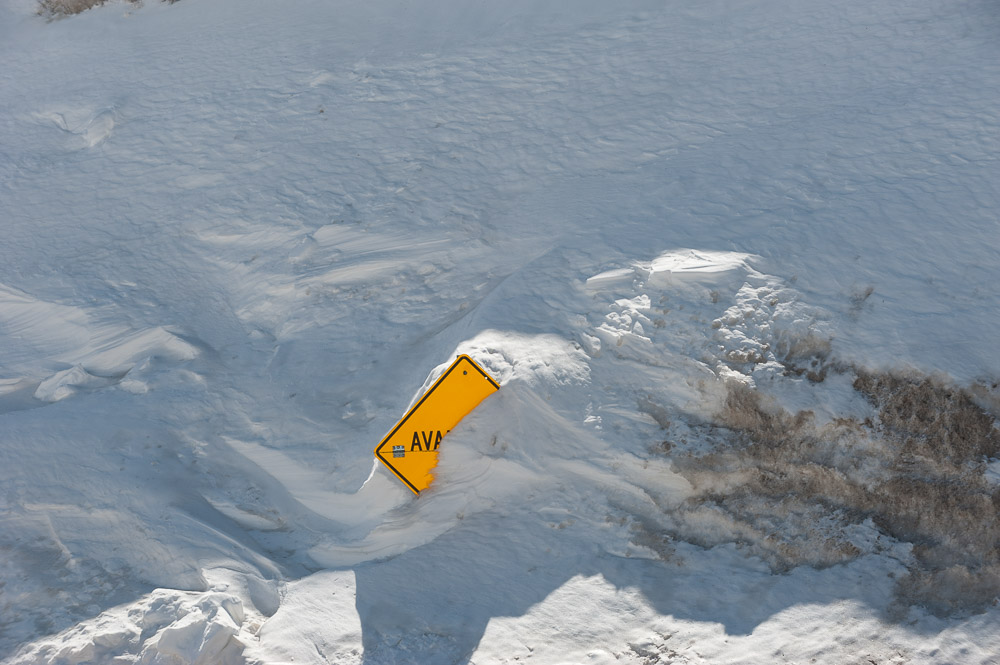
    OK, I didn’t find this around my studio. But thousands of people passed by this daily and I bet few if any ever glanced at the scene closely enough to take notice of it. It was clearly visible from a main highway. There seems to be a story and a lot of unanswered questions wrapped up in a single frame.

    I was driving and I turned around and came back to it. I’m glad I took the time. It is a good memory for me.

    The scene is gone now. But that is a topic for another day.

  • Find the It-ness

    Find the It-ness

    Sometimes you just have to make up a word when you can’t find the right one. In this case Jay Maisel made it up. I think he is referring to seeing beneath the surface. If we find the it-ness, we are starting to get to a level where we understand more about the scene. Then maybe we can show it to our viewers.

    See past the obvious

    Jay seemed to be telling us to get past the first surface response and burrow down to a deeper response to a subject. The normal mode for a lot of us is to see a scene we like, pull the camera up to our eye, and shoot. Done. Go on.

    But I think Jay i suggesting we slow down and not necessarily give in to our first instinct. With a little more thought and introspection we often come to a different relationship with a subject or scene. In other words, stop and think. Get in touch with why you are reacting to it and see if you can bring that out more.

    There are 3 very interesting videos about Jay Maisel on Kelby One (I am not affiliated with them and I get no benefit for referring them; but it would be worthwhile to subscribe long enough to watch these 3). In each, Jay is spending a day walking around with Scott Kelby, demonstrating his technique and thought process. They are very worthwhile (when Jay is talking, not Scott). It seems like Jay is shooting quickly and instinctively, but keep in mind you are seeing the result of 50 or more years of finely honed craft. When asked about an image he can always articulate a detailed reason why he took it, what it meant to him, and why he composed it like he did. And when he reviews his seemingly quickly grabbed images, it make you want to tell him “I hate you”.

    So maybe there is the promise that, with enough practice, little conscious thought is required.

    Wabi-Sabi

    I always hesitate to bring wabi-sabi up. It is easy to step off into really deep stuff. Apparently you can’t really appreciate it’s true meaning unless you are a native Japanese steeped in Zen Buddhism. There is no simple English translation.

    But that doesn’t deter me from trying. Even though I am American and not at all a Buddhism practitioner. 🙂

    Explanations often start from breaking down the two words wabi and sabi. One good definition says:

    Wabi’ expresses the part of simplicity, impermanence, flaws, and imperfection. On the contrary, ‘Sabi’ displays and expresses the effect that time has on a substance or any object. Together ‘wabi-sabi’ embraces the idea of aesthetic appreciation of aging, flaws, and the beauty of the effects of time and imperfections. The two separate parts when put together, complete each other. They express simplicity and the truest form of an object.

    That seems to be an elegantly simple expression of finding the it-ness of something. Regarding a thing with all its flaws and imperfections and appreciating how it changes and weathers and even decays over time is really getting in touch with its essence.

    More than the subject

    I recently explored the idea of the subject not being the subject. Going on beyond that is this notion of capturing the it-ness of something may be more important that just representing the thing.

    The image with today’s post is an example. This old International truck fascinated me for years. It is about 50 miles from my house, not on the way to anywhere, but I visited it many times. I was never satisfied that I had photographed “it”. I took many pictures of the truck, but I never felt I actually got what I felt about it.

    Finally, one day I was going by and I knew I needed to visit it one more time. Some junk was starting to encroach on it and, after it setting there rusting for years, it seemed possible that the opportunity might go away.

    But this time, instead of jumping out and taking pictures, I just stared and thought a while. I walked around it slowly. All the while I was trying to explain to myself what my feelings were about this truck and how I would take its portrait.

    After thinking a long time, I basically just took this one image. To me, it perfectly captures the personality, the story, the history – the it-ness – of the magnificent old truck. I felt a relationship to it.

    The next time I came by there, it was all fenced off and junk was stacked all around. The picture opportunity was gone. That makes me sad, but I finally had the picture I wanted. I believe this is a true and accurate portrait of this giant of the Colorado plains. This will always be my memory of that good old truck that I have known a long time.

    This is a wabi-sabi story. It is also an example of another of Jay Maisel’s maxims: shoot it now, because it won’t be there when you come back.

    Find interest

    I have said several times that we can find interest in almost anything if we try. We have to get over looking just at the surface. Maybe it’s not the prettiest of its kind. Maybe there are imperfections. Do those give it character? Does it tell a story of it’s past?

    As an extreme example, we have had a lot of forest fires here in Colorado in the last few years. As have many places. It is sad to see a beautiful forest destroyed. But I have found great beauty in burn scars and the re-growth that is happening.

    It seems to be more and more a case for me that interest does not equate to pretty. Almost to the extent of being a negative correlation, where pretty implies less interest. So a perfect flower is a thing of beauty, but does that make it the most interesting? I’m not saying it is always true for me, but a “past its prime” specimen may tell a more interesting story of struggle, survival, endurance, and the passing of time.

    Try it. Like my example of working on the truck, slow down. Think more. Figure out the it-ness of the thing. Then shoot to capture that.

  • Lighten Up

    Lighten Up

    By lighten up I don’t suggest we make more high key images. It’s not a bad idea if you don’t do it much. But I mean to give our viewers more opportunity to figure things out for themselves.

    Serious

    Most of us take the world very seriously. Of course, there are serious issues we live with all the time. I don’t minimize them. But I learned from an expert in culture that, being an official old guy, I typically have less anxiety than most of you younger people.

    Personally, I’m glad. I hate going around burdened down with angst and fear. Instead, when I’m out taking pictures I see joy and hope and feel uplifted.

    I’m not trying to change the world with my images. At best, I hope to help a few people have a better day by looking at my work.

    But another way to lighten things up it to be more ambiguous. I notice that most of my work has a clear subject. Low ambiguity. Also, not so many questions for you to answer for yourself. This is probably a fault.

    Ambiguity

    Ambiguity is a marvelous tool. Used sparingly it can liven up our work and give our viewers more challenges and rewards. Ambiguity means being open to more than one interpretation.

    I recently watched a video on Creative Live by Renee Robyn. She is a conceptual artist who constructs images as composites of many layers. Some of her work leads to various interpretations. I was interested that she said about one that she asked many people what it meant to them and every one had a different interpretation. And none matched what she had in mind. That is ambiguity.

    Ambiguity introduces the option of different interpretation. Of course, that is always possible with any image, but more ambiguity makes it more possible.

    Leave questions unanswered

    As I get older I find my work asking more questions than answering them. Maybe I realize I know less as I age.

    I cynically view that a lot of young people come out of art training thinking they now think deep thoughts and have to raise great questions for their viewers. Later, whether they realize it or not, most of them settle down some and their work says “this is what I see”. Even later, like me, they might come around to saying “these are things I still don’t understand, but I see them different and less rigidly now”.

    Intentionally introducing more ambiguity is one way to move away from imposing my own interpretation on a scene. By leaving more room for the viewer to create their own story it becomes more of a conversation.

    Say more

    It is quite possible to say more by saying less. This is one of the beauties of poetry. Great poetry may introduce deep truths in a few words, but in a way that keeps the reader thinking about it on and off for years.

    I have no images where I claim such insight or depth. But I do think that by leaving more for the viewer to fill in from their own experience and viewpoint, there can be more interest.

    Giving viewers the clear answer to things can come across like a boring lecture. It may be good information, but it doesn’t necessarily engage you. I have this problem with a lot of landscape images I see (and take). It’s a landscape. Beautiful place, great time of year, I’d like to go there, but there’s nothing else. Nothing left for me to figure out or question.

    It seems much more rewarding to hint that there is more depth there to be discovered. To give the viewer a chance to participate, to become a co-creator.

    Today’s image

    This image is a little ambiguous. I’ll let you figure out what it actually is. I left a couple of strong hints, but feel free to make up your own interpretation, your own story.

  • The Subject Isn’t the Subject

    The Subject Isn’t the Subject

    Huh? Wrap your self around that for a minute. When we shoot images, we almost always have a distinct subject. What sense does it make to say the subject isn’t the subject?

    Inspired by a quote

    This article was inspired by an article by Ian Plant in Nature Photography Network, Feb 8, 2023. In part, he said:

    But the single most difficult, most counterintuitive aspect of photography, the one thing that most photographers have a tough time wrapping their heads around, is this: your subject is not your subject. Instead, your subject is just part of the overall visual design. The subject might arguably be the primary element of the design, perhaps the most important part, but it is only a part, nonetheless. To make truly exceptional photographs, you need to include more than just your subject; you also need to include other visual elements that work together with your subject, getting the viewer engaged with the story you are telling with your image.

    This requires some careful thought. Many of us tend to be fixated on finding the “right” subject and filling the frame with it. Ian is suggesting that is a limiting view.

    What else is there besides the subject?

    But if you have a good subject, and if you light it and have adequate depth of field, and you expose it right, doesn’t that make the picture? He says probably not, and I tend to agree with him.

    A successful picture is a complex balance of many, often competing, dimensions. Yes, a subject is usually important, but there is the overall visual design, the composition, the feeling, the processing, even the context.

    Presenting a badly designed image of a great subject usually doesn’t work well. Maybe in a photojournalism context, if the subject is truly unique it would be considered a strong image. But as a normal visual image, no.

    It’s that balance thing. All the parts have to be strong.

    It all works together

    A well composed image of nothing particular probably doesn’t work. Neither does a not well composed picture with a good subject. We’ve probably all experienced both.

    Another statement from Ian Plant in that article is:

    Once you learn to stop thinking of your subject as your subject, you instead start seeing your subject as an abstract compositional element, which is a necessary step for making compelling photos. You start to see your subject in terms of its shape, color, and luminosity value. Seeing shapes and learning how to arrange them effectively within the picture frame is of critical importance to successful composition.

    So the subject is part of what you build a compelling image around. Everything else you have learned about composition have to be thought through. You know, the considerations of framing and leading lines and balance and contrast and emphasis and patterns and … it goes on. You can find a million videos on the internet with someone ready to give you the secrets of composition.

    Viewer perception

    Why doesn’t an interesting subject carry a picture by itself? For you, it might. You were there. The image invokes memories of the experience, or the subject is important to you. Not so for the viewer.

    To the user, it is a picture. You have to give him a reason to keep looking at it. People are so inundated with imagery that they are going to move on in about 1/2 second unless you can grab them.

    So, let’s say there is a picture you like of a heron. It was your first trip to Sanibel Island in Florida and you shot lots of bird pictures. It is significant to you. But put yourself in the place of your viewer. They see lots of heron pictures. What does this one have to offer to make them pause on it?

    Is it a significant moment with the bird poised to catch a fish? Is the bird in an interesting pose? Does the lighting enhance the feeling? Have you brought something of the environment where the bird lives that is of interest? Does this tell an interesting story about the bird? A good image is more than just an interesting subject.

    Your mileage may vary

    Seems funny how most of my articles contain a disclaimer like “your mileage may vary”. Art is intensely subjective. There are no hard rules. There are only patterns that have been identified over time that seems to strongly influence people’s perceptions.

    Ian is describing landscape photography. “Rules” may well be different for portraiture or photojournalism or other things. The fine art I do is a lot like landscapes. Sometimes it is straight landscapes. So his thoughts struck me as significant. As always, you do your own art according to what makes sense for you. Never let any so called authority tell you you can’t.

    But listen to opinions of people who have a track record of doing good work. Don’t necessarily follow them, but listen, try it on, see if it fits before rejecting their advice.

    Today’s image

    This is a quick shot of a street scene in Paris. It is not a carefully planned set up shot. I was out for dinner with family when this grabbed me.

    Quick or not, it passed the test of “I’ll think of a reason later“. The more I worked with this the more it went up in my estimation.

    Why? It is a pretty standard tourist shot of Paris streets. Look at the things that help make it more. The curve of the street and sidewalk draws us into the scene, as does the diagonal line of light and color., as do the people walking into the scene on the right. The bicycles give movement and make it more alive. The light and color on the building draw us to the side of the street that has most of the interest. As you look along the lighted street, the people in the cafes each seem to have their own story and interest. They all seem to be enjoying the evening out and that is pleasant and inviting. The receding perspective of the buildings on the left also direct and guide us along the street and through the scene.

    Conclusion

    To me, there is a lot of interest to explore and reasons to keep moving around the image looking at things. A simple shot of a street at night blossomed into an interesting picture. It moved beyond a street scene and became a study of living in Paris.

    Most all of that was instinctual, not planned. A (metaphorical) bell went off alerting me there was something here. I got in position and framed the shot quickly. I really didn’t want to hold up my group, and I didn’t.

    It’s a fairly standard and common subject. Design improved it to something more special. Instinct helped me craft the interest. What do you think? Is it interesting? Am I kidding myself?

  • Throw It Away

    Throw It Away

    This is a controversial subject. I have touched on it before, but it is time to circle back. My assertion is that most of us should throw away more of our work. Horrors! Kill our darlings? Sounds terrible! But I am convinced that one excellent way to improve our work is to throw it away.

    We probably overshoot

    It is so easy now days with digital cameras. There seems to be no cost for shooting a lot of frames. We “work the scene”, taking many shots at different angles and positions and focal lengths. Refining it to find the best view. And then shoot a few insurance shots, you know, in case one doesn’t record properly or we jiggle the camera. You know.

    That’s a pretty typical process and can be useful. But the reality is these shots are not free. We have to edit them, cull through them to select the best, do some “quick” processing to see if they seem worth investing more in. This takes a lot of time. They take up disk and backup storage space.

    So where with film, we might have taken 3 or 4 images of a scene, now we come back with 15 or 20 or more. That can be good. If you really have to work through different views to determine what is best, then do it. Or increased experience might help to get you there in fewer attempts.

    For example, you come to a nice waterfall. So you shoot brackets of apertures from f/ 2.8 to f/22, and brackets of shutter speeds from 1/1000th to 10 sec, and exposures from -3 to +2 stops. Just in case. Why? You should know from experience what you prefer. You should know that f/8 +/- a little is what you like with this lens at this distance. The amount of blurring you prefer is usually achieved at around 1/4 to 1/10 second for this kind of subject. You should know how to expose to the right and prevent clipping of highlights.

    Just that takes it from shooting all possible combinations to intelligently determining what to do. You have a style and preference and you should be comfortable with the craft. Why shoot things you know you won’t like?

    Overshooting creates a huge backlog of work. And lots of wasted disk space. And a cluttered Lightroom catalog. Simplify.

    We keep too much

    OK, let’s say you intentionally shoot a lot of images of a scene as you work it. How much of that do you really need to keep?

    Are you going to keep all the shots in case you later change your mind later about what you like? Don’t. Make an artistic decision and stick with it. Don’t keep that full bracket of apertures “just in case” you change your mind.

    We make it hard on ourselves by second guessing our decisions. Decide what you like in the group, what matches your intent at the time, and throw away most of the others. My experience is that if I didn’t know what I liked at the time, one of the variations seldom captures “it” either.

    The great gets lost in the sea of good

    Are you drowning in a sea of pictures? So much that you can’t locate the shots you like best? I get the impression that this is an increasing problem for a lot of people.

    A solution is a more disciplined filing and catalog system. This is made much easier when there are fewer images competing for our attentions.

    You don’t need 20 decent pictures of that scene. You need the one that represents your best artistic sensibility at the time. And that one should be processed to bring out your vision as you saw it then. It should never be a case of wading through many competing images to pick out the best one.

    Here is a hard lesson I have had to learn: good images are usually worthless. Only great images have any chance of making it. You seldom need the ones that are only good.

    Declutter

    I am arguing for decluttering our catalog by removing images you aren’t going to need. But yes, that means you have to kill some of your darlings. Delete perfectly good images.

    This hurts. Why should you delete good images? Because as I said earlier, we are artists. We have to have the confidence to make a decision and a statement. This is my vision of that scene. None of the other attempts matter. DaVinci didn’t paint 20 variations of the Mona Lisa.

    If you have a catalog of 100,000 images, are they 100,000 excellent images? What good are all those OK images that you will never use? Wouldn’t it be much better to only have 10,000 great images? The numbers are just for discussion. My point is, declutter your environment.

    But, we say, I need insurance shots in case my great image gets corrupted. Really? How often does this happen. And if it does, that is what your backup strategy is there to correct.

    But I really like all those shots. Yes, but when is the last time you used one of them? Why would you use one of them? If they are not the great image you love, their value is close to zero.

    To use the example from before, if you have 100,000 pretty good images, how do you locate that 1 great one you want to submit to a gallery? It is hard to find the signal in the noise.

    Declutter. It hurts at first, but is healthy.

    Tighten up that portfolio

    The same applies to our portfolios and projects. Less is usually more. This is another of those painful lessons experience teaches if we listen.

    Your portfolio should have a max size you pick. If you want to add a new image to a portfolio, make yourself decide which one you will replace. This is hard. But here is a truth: every time you take one out, you make the remaining set stronger. Taking out a picture you love doesn’t mean you don’t love it anymore. It just means that it is not the strongest in the group.

    I don’t think I have ever damaged a portfolio by taking something out.

    Same with projects. That is a little trickier, because sometimes we need images to set a context or help tell our story, but still, they should all be strong. Less is still usually more.

    A personal example. I recently needed to pull together a group of images for an exhibit. The subject was one I love, so I had a lot of images I really liked. In my first pass, I pulled out 162 images I loved that I thought would be great for it. I knew that was a ridiculous number for this exhibit, but I really liked all of them.

    So hard core culling mode on. After my next pass, it was down to 125. Progress, but way out of range still. I had to remind myself that deleting an image from the set doesn’t mean I don’t like it, just that it was bumped by a stronger image of mine. So with a great struggle, I was down to 69. So far I have taken out nearly 100 of my favorite images!

    Narrowing my focus and getting even more selective got it down to 44. It hurt, but now I have narrowed it to 23. I’m kind of stuck right now, but I know I need to get it down to about 15.

    A funny thing has happened, though. At this point I believe ALL of them are great images and I could almost randomly select the next 8 to cut. That is an interesting realization.

    Be reasonable

    In all things you have to make reasonable judgments for yourself. I’m not saying never keep alternate shots of a scene. I routinely keep a few. But I don’t keep duplicates that do not add any value. And I don’t keep alternate images that I know from experience are not my style.

    And there are those shots you know are flawed, but you just love them. Fine. I have a lot of those. Generally they are segregated from my “main” images, but they are important memories for me. Or they tell a behind the scenes story that is valuable to me.

    I use a multi-pass editing process and I usually let images age some before making many final judgments about them. But I figure if I don’t delete about 1/2 of my shots, either I am on a great run (it happens sometimes) or I’m not being critical enough. Often it runs to 2/3 deleted. And by deleted, I mean really gone, erased, trashed, removed, never to be seen again, digital dust.

    It hurts, but the remaining ones are stronger. I want to always be biased toward making the survivors stronger.

    Today’s image

    The project I described above is on France. More about the joie de vivre rather than a tourist view. To present more of a mirror than a window, to refer back to a recent post. This picture is one i am struggling with. Would you keep it? So far I have. I think it says a lot about the environment and culture and spirit of the people. I love it for a number of reasons. If it doesn’t make it into the final set, I will be disappointed, but it means the overall group has a higher bar.