An artists journey

Tag: fine art photography

  • Copying

    Copying

    Most people would say that copying is wrong. They would acknowledge it as plagiarism or even intellectual property theft. Yet successful things are usually copied. This could be visual art or books or products or fashion or almost anything. Less creative people copy the work of more creative ones.

    I’m not going into the plagiarism issues except to say that reproducing someone else’s art as your own without attribution or acknowledgment is always wrong. Give credit to the originator.

    Copy to learn

    We generally start out copying artists we admire. This helps us to perfect our craft and analyze how they created the work. We can study their composition and lighting and equipment choices and editing to see the decisions a good artist made. It is educational and can be enlightening. When you are learning something new I recommend copying examples you admire at first.

    Don’t stay here. It should be a learning experience that you quickly move on from.

    Studying and even copying other artists helps you build your mental catalog of scenes, ideas, tips, how-to tricks, possibilities, and aesthetics. They are all parts of the wonderfully complex experience of developing your own style. Your style will contain elements of other artist’s styles, but only pieces. Not a direct copy.

    Don’t copy, steal

    Picasso famously said “good artists copy, great artists steal“. Steve Jobs also quoted this frequently. It is believed Picasso meant that a good artist will only copy what someone else did but a great artists will adopt (steal) the parts that resonate with him and incorporate it in his own art.

    This gets at the myth of creativity that deludes many people. The reality is that there is little true creativity in the world. Anything we create builds on things we have seen other people do. Accept that. Use it to your advantage by being more open about stealing bits from others. How you modify it or combine it with other ideas is what makes it your own.

    I struggle with cynicism, but the idea that there is little true creativity is comforting. It takes off the pressure to feel like I have to come up with something so “out there” that nothing like it has ever been seen in the world. I can’t do that regularly. I don’t think many can.

    However, I can be quite happy with an occasional “wow”. If I can surprise and sometimes delight myself and my viewers, that is enough. That is creativity.

    Who do you want to be?

    Don’t waste time trying to be someone else. When we copy, we are just being a pale shadow of them. It is not really us. What audience are you trying to win praise from? The only praise that really counts is our own.

    Is this egotistical? Maybe. But at some level all artists are egotistical, because we feel we have something worth sharing with the world. I believe that if you don’t love what you are doing you will not persist in trying to share it. Being an artist is hard enough. If you don’t really believe in what you are doing, then why do it?

    I love the story Cole Thompson shares about the hurtful critique he got that changed his life. Please forgive me for copying it here, but it is some of the best advice I’ve ever heard:

    During the last review of a very long day, the reviewer quickly looked at my work, brusquely pushed it back to me and said “It looks like you’re trying to copy Ansel Adams.”  I replied that I was, because I loved his work! He then said something that would change my life:

    “Ansel’s already done Ansel and you’re not going to do him any better.  What can you create that shows your unique vision?”

    Those words really stung, but the message did sink in: Was it my life’s ambition to be known as the world’s best Ansel Adams imitator? Had I no higher aspirations than that?

    How about you (or me)? Who are we trying to be the world’s best imitator of?

    Much more satisfying to be yourself

    I’ve been there and I am thankful that I have grown beyond it. I am completely my own person now. I look at other artists work with admiration, and with an eye to steal the ideas that resonate with me. But I am not interested in copying them. It would give me no pleasure.

    I will not be satisfied in being an imitation of someone else. I will proudly present my own art. My own point of view. Whether or not it is accepted and regarded by others I can take comfort in knowing this is me. This is my vision. It is who I am.

    So if you are copying other artists, fine. Learn from it and never present it as your creation. But move on and get to the place where you can take all those bits you have stolen from others, process them and your ideas through your own mind and spirit, and bring out something new, because it is you. You will be much happier with the result.

  • One Lens

    One Lens

    We photographers often lug around so much stuff it ends up getting in our way and hampering our creativity. Let me recommend occasionally challenging ourselves to try a minimalist approach. Start with sometimes only going out with one lens and one camera body. One lens? Are you serious?

    Yes. Some interesting things can happen if you really go with it. You learn to see in new ways.

    Which lens?

    Does it matter what lens you use? I don’t know. But probably not. The exercise is about discipline and mental training. Don’t take a 14-400 mm lens (does such a thing exist?) to make sure all your options are covered.

    Just pick a good lens. When is the last time you used that 50mm prime? Yeah. Mine is usually not even in my camera bag. That is one reason it is a good one to choose for this exercise. For many of us, our lowly, unappreciated 50mm may be our sharpest lens. Just because it doesn’t cost a lot doesn’t mean it’s not good. These lenses are usually excellent.

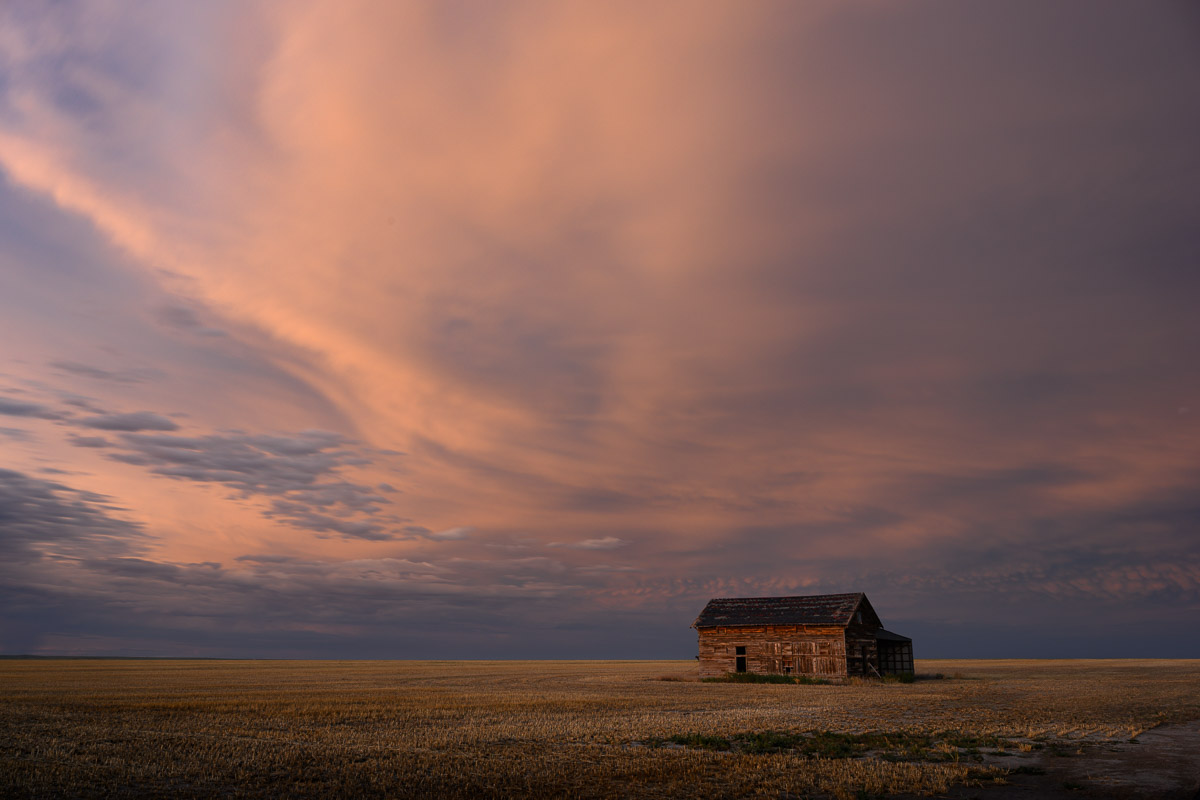
    The image with this post was taken on a “50mm-only” hike. I’m sure I would have framed the scene a little different if I had my normal zoom, but this made me think. And I like it. 🙂

    The lens is not the key, though. If you have a telephoto eye then a 70-200mm might be the answer. Better yet, maybe a fixed 105mm if you have one.

    Limit yourself

    Limit yourself?? That seems absurd. After all, as creatives we do everything we can to remove limits. To envision new things. To create.

    Much good art happens as a result of exploring the limits of a medium. If we walk around festooned with multiple camera bodies and several lenses we definitely are not about limits. We’ve got everything covered. We are confident we can always get any shot we see, right from where we are standing. That is, if we can get the tripod set up and figure out which lens to use and get it installed in time before the moment is gone.

    But if we limit our self to one lens a different mindset happens. If you’re really in the game you quickly learn to visualize the field of view the lens sees. Now we start to reframe the composition process. We work to the limits of the lens we have instead of picking the one we want to use at the moment. Now we begin to be drawn to scenes appropriate for what we have. Eric Kim says “By limiting your field of view, you are forced to capture reality into your limited frame in an interesting and novel way.”

    Limitations can actually be very creative and enabling. The composition isn’t right from here, move. Yes, actually use your feet as a composition tool. Can’t take that shot because it requires a super telephoto? Don’t bother with it. Find a better shot that works with what you have. You quickly adapt to screening out the “not applicable” things and zeroing in on things that will work. It can be quite freeing and creative.

    Get out of your comfort zone

    One of the benefits of the exercise is that it gets you out of your comfort zone. Things that get you out of your comfort zone are usually useful. They may be uncomfortable (hence the name), but they can help us to see and perceive better. As artists I believe we owe it to ourselves to push the limits and try new things.

    One very uncomfortable question is “what if?” What if I used a wide angle instead of a telephoto? What if I used a long exposure instead of freezing the action? What if I got down low and shot up to this subject? I’ve only got a 50mm lens, how can I creatively capture this subject? These kinds of explorations help us to break habits of always approaching shots a predetermined way. Consciously forcing ourselves to look at things differently is very healthy.

    See with new eyes

    This is what this is all about. Seeing with new eyes is part of what is required to be creative. We have to put things in perspective – usually a new perspective. Walk around it to see another side. Take a different viewpoint. Change the lighting. Change our approach to capturing images. As artists we owe it to ourselves and our viewers to bring something dynamic and interesting to our images. I believe we have to always be looking for new paths, new insights.

    Stretching ourselves is always good, if we learn from it. Just like stretching and flexibility exercises are good for our bodies. They keep us fit and slow down the effects of aging. Creative exercises to stretch our mind and vision is at least as beneficial. Our bodies will age regardless but our minds can be sharp until the day we die.

    But a challenge here is to learn from it. We get stretched by things that happen to us but we tend to shrug them off and try to get back to normal ASAP. But it is useful to ask what can we learn and change in our lives? It is healthy to force ourselves to stretch.

    In the same way, an exercise like restricting yourself to one lens is a mental exercise, creativity training. It can stretch us and help us get new insight on our vision. And you will appreciate not carrying so much stuff. That in itself is freeing.

  • Intimate Landscapes

    Intimate Landscapes

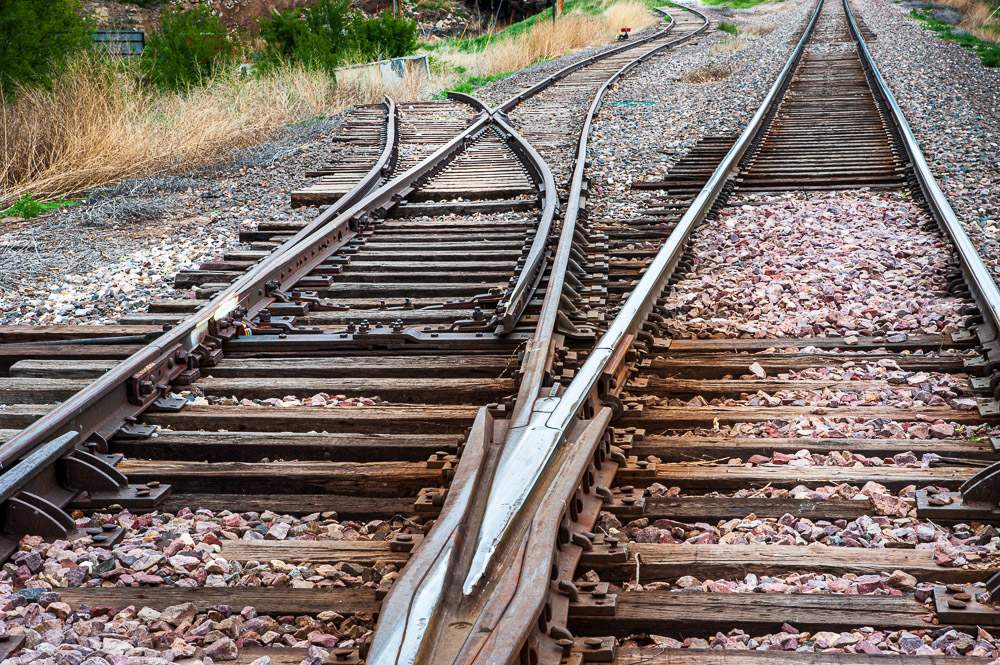
    The term Intimate Landscape was coined by Eliot Porter. It was the title of the first one-person color photography show at The Metropolitan Museum of Art, New York, back in 1979. By convention it refers to isolating one small part of a scene rather than the entire vista. Even though it is called “Intimate Landscape” the technique can be used for almost any type of subject.

    Details rather than sweeping whole

    Landscapes can generally be approached at 3 levels: whole scene, micro/macro view of extreme details, and “in between”. This “in between” area is what we will be discussing. Some consider it the Goldilocks region – not too big, not too small.

    It is easy to pull up to a beautiful, vast landscape view and immediately want to pull out your widest angle lens and capture the whole sweeping scene. That’s great. It will probably be a beautiful image. I’m not suggesting there is anything wrong with that. But unless there is something really magical going on, it tends to look like every other visitor’s picture of the same place.

    I am also going to ignore the macro end of the spectrum for now. This is the domain of the crazies with specialized gear and their own language, who will set up a strange looking rig with focus stages, wind blocks, multiple flashes, and run a 200 image focus stack set. You know who you are 🙂 – I’ve been there too.

    To me the distinguishing characteristic of intimate landscapes is the focus on details rather than the whole.

    Describe the whole by a part

    In formal logic intimate landscapes are related to the process of inductive reasoning. That’s just for free, there is no real reason you need to memorize that. Inductive reasoning is making broad generalizations from specific observations. In logic this can be dangerous – Harold is a grandfather; Harold is bald; therefore all grandfathers are bald. This is a non-sequitur. The conclusion does not follow from the facts.

    But we are not talking about formal logic, we are discussing art. Art is what we feel and perceive. Using parts to give insight on the whole is a valid and very useful technique.

    For instance, let’s say I am looking at a beautiful mountain scene in Colorado, because I hang out there a lot. If I shoot the whole scene it may be very beautiful, but it is a very specific location. You may have been there and seen the same thing. You expect to be able to go to a map and pinpoint the exact spot and be able to go there and see it.

    But what are the features and details I am drawn to? I find that when I focus on these details it helps me to interpret the whole. The details become much more general. They are views of things we all have seen and relate to rather than just a particular place. They are vignettes, glimpses into the grand scene. The detailed scenes represent the concept or essence of the place without pinning it down to a specific location. To me this is more powerful and easier for us to relate to. The part really can represent the whole.

    Telephoto eyes

    Jay Maisel was the first I can remember to express the concept of having “telephoto eyes”. He is not the only one. What he is saying is that he has a natural tendency to zoom in on details in a scene. I discovered that this is my natural inclination, too.

    For many years I shot almost exclusively with a moderate telephoto lens. Recently I have made myself use a wider angle much of the time. This is more to train myself to be able to see other options than because I switched my perspective. And because the Nikon Z 24-70 f/2.8 I am using is a really sweet lens.

    But my instinct to to isolate details. It is the way I perceive scenes. I have to interpret it by deconstructing it into component parts. It requires some patience. To look beneath the obvious beauty of the whole and find the parts that make it up. To me, the parts represent and describe the essence of the scene. And they transcend a particular location and bring out what is interesting about places like this.

    An intimate scene, to me, focuses our attention on nuggets of significance. Guy Tal has a book entitled “More Than a Rock“. He describes that a picture of a scene can take on significance greater than the obvious object. That is the way I feel about intimate landscapes. If I isolate a cascade in a larger scene, it can become more than just a particular place. It says something about mountain cascades in general.

    Opportunity for interpretation

    This generalization process is very attractive to me. I can stop just making pretty pictures of particular places. Now I can respond to the parts individually and emotionally. I can interpret the details in their own right. It is my reaction to and view of cascades or trees or rocks, regardless of the specific location. They take on a life and meaning of their own.

    The process involves deliberately paring away everything that is not adding to my interpretation of a particular detail. The details become independent of any certain location. Without the context of the whole scene they represent the things that catch my attention and that I want to share with viewers. For example, the image in this article of a brook meandering through willow bushes is very representative of many typical locations in the part of the world I hang out in a lot. It is very characteristic of the area, not of the specific location.

    So for me, I view it as a process of breaking a wide scene down to the individual components that make it interesting to me, interpreting the parts, and from that coming to a greater appreciation of the whole scene. I don’t claim this is a conscious process I do methodically or deliberately for every scene. I’m just thinking through how I seem to react to views and trying to understand why.

    We all should seek to understand what we do and why. Even if we are not entirely successful we might learn something about ourselves.

    Intimate landscape

    Maybe it’s quirky and peculiar. Maybe me and Jay Maisel and Eliott Porter and Guy Tal and a few thousand other photographers are the exception. I tend to see the world in details, in bits and pieces. These details come together for me to paint a picture of the whole.

    Sometimes the whole scene is necessary. But more often I find the details help me take it apart and decide what is important to me.

    Anyway, that’s the way I perceive things. I’m glad for the concept of intimate landscapes. It makes me feel a little sane. If you approach the world differently, that is fine, as long as it works for you.

  • Experimenting

    Experimenting

    I can’t speak for your goals or interests or learning style, but I know that my creativity is enhanced by actively experimenting some of the time. It is a conscious decision to try something completely different than what I normally do.

    Break the rules

    If you have read this blog much you have picked up on a love-hate relationship to photographic rules. Rules have a place but also a time when they should be abandoned.

    Learn, study, internalize the normal rules of composition. Get excellent at the techniques necessary to create well executed images. These things prevent you from embarrassing yourself by releasing well meaning garbage to your viewers.

    Sorry to be so blunt, but not bothering to learn the accepted conventions established over the years for good images is just arrogance and immaturity. Learn the conventions and follow them until they are deeply ingrained in your subconscious. Follow them until they become uncomfortable. and confining You will eventually understand when that is.

    Breakout

    At some point you will find yourself saying “yes, but…”. Then the rules are no longer enough for where you are creatively. They are restraining you to do the same kinds of images everyone else is doing. Something inside is compelling you to do it differently.

    It is very important then to realize you have permission to change your norm. You don’t have to ask anyone or apply to some authority for permission to do this. Just follow where your now trained instincts lead you.

    Now you will begin a period of experimentation and uncertainty. The old foundations you trusted are beginning to crumble. Will you trust your instincts to carry you to a new place?

    To be honest, you will probably start doing a lot of bad work. At least, work that is very different from your norm but far short of the vision you have for where you want to go. That’s OK. Push through it. Keep on trying and modifying until you get closer.

    At this point you probably better be content to get criticism. The people who enjoyed your old work will not be happy and you haven’t really gotten to a stage where you could develop a new audience to support you. Honestly, if you have to support yourself from your art you may have to continue doing the old style work and confine this experimentation to personal projects and off times alone. For a while.

    But you have to really ask yourself why you are changing and experimenting. Isn’t it because your vision is changing and you are no longer content with what you used to do? You will need to decide at some point if you want to be true to your vision or keep in the safe zone of doing what worked in the past.

    Do things that can’t possibly work

    Let me challenge you to regularly set aside time to experiment with wild ideas. Come up with crazy ideas that can’t possibly work – and try them. Can’t work might just mean no one has tried it like you are approaching it. Or it really can’t work. Either way you learn something.

    History is full of failed experiments that led to whole new ways of doing things or looking at problems. Did you know that Post-It Notes came from a failed adhesive experiment? What would anyone want with an adhesive that didn’t stick? Until somebody needed a bookmark that didn’t fall out of the book. They got together and things sparked.

    And those things you are trying that don’t seem useful? You are building a catalog of possibilities. A base of knowledge and ideas that will find surprising applications in the future. And you are accepting that not every image has to be “successful” in the conventional sense. Success in expanding your vision and your abilities may be more important long term.

    A special snowflake

    Please pardon the cynicism, but everybody is told they are unique snowflakes and many of us believe it. But do you act it? Or do you spend your energy trying to make the same pictures everyone else does.?

    Most photography tutorials are “how to create the same image I made”. Most workshops take students to locations where they can take the same iconic images everyone else does. Aren’t most online comments praise for safe, conventional images that are just like the norm?

    Everybody has the possibility of being truly unique, but you have to develop that uniqueness. You have to reach deep inside and bring a vision that is truly you. You have to be able to express that vision is a tangible way that others can see.

    Experimenting with ideas you have never seen before is one good exercise for that.

    And now for something completely different…

    All right, so I’m old enough to have been a Monty Python fan.

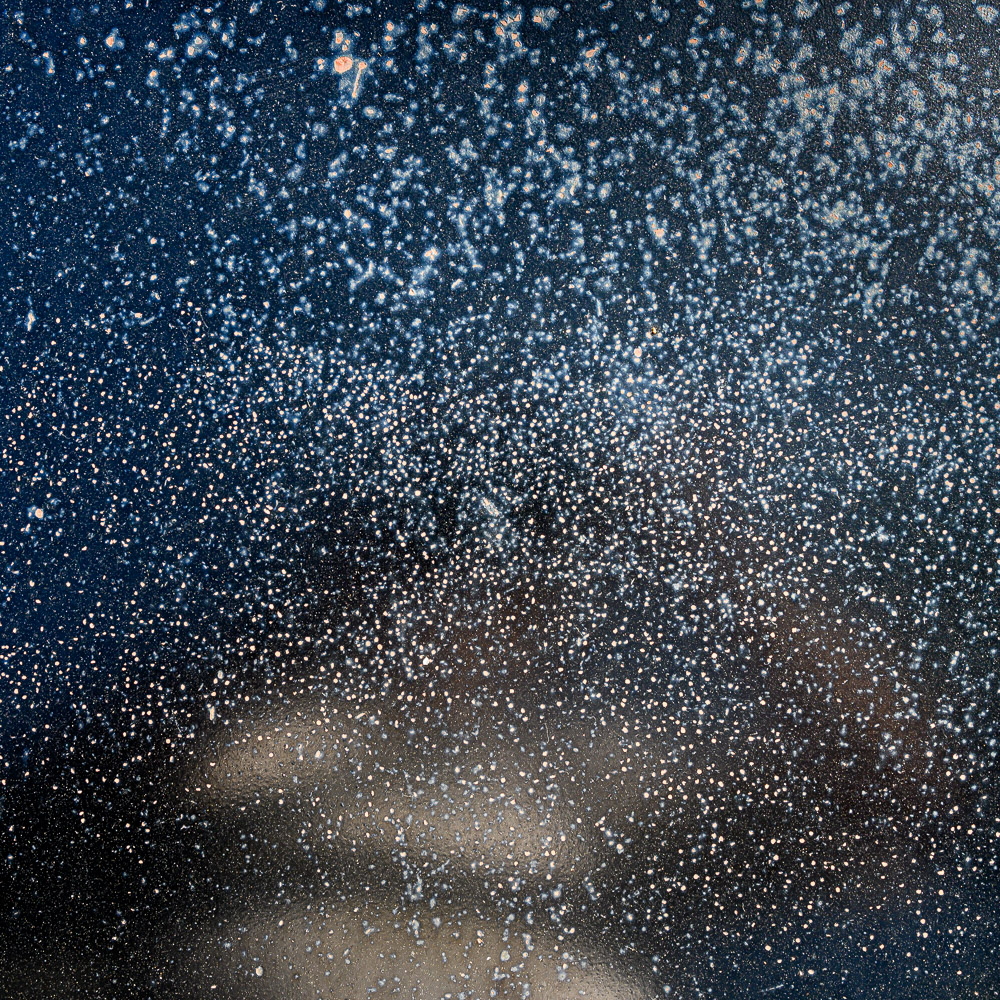
    I have preached the faith of experimenting but I haven’t shared any examples I have done. The image with this blog post is a deliberate experiment I did recently that violates virtually all rules I know of. It is long exposure, hand held, taken from a moving vehicle. There is nothing sharp in the entire image. It doesn’t fit normal composition rules. I certify that this is a single original frame with no double exposure or compositing.

    What has it got, in my opinion? Intrigue, interest, great flow, visual interest, ambiguity, questions, a staying power that makes me want to put is on the wall and look at it for a long time. Those things give me joy. And hope. I’m very glad I experimented.

    It keeps you fresh

    Training yourself to have a habit of experimentation will help keep you fresh. Always ask “what if?”. You lose the fear of trying something new and maybe failing. You gain the benefit of letting your vision expand and bloom in new ways.

    Do you look at your work and see the same subjects, the same treatment, the same composition over and over? Experimenting and taking on “strange” personal projects outside your norm and with no intent of commercial success will keep you from getting stagnant. You need it to keep your creative energy flowing.

    And when your experiments lead to results you are proud of, be confident to incorporate the technique into your mainstream work. You are a dynamic, living being who changes with time. Your work should reflect that. Don’t be afraid.

  • Seeing Better

    Seeing Better

    Beginning a new year might be a good time to think about seeing better. Many of us have been mostly looking at the interior walls of our homes for a long time. If anything, this leads us to see worse. Seeing better is not just our visual acuity, I refer to our ability to perceive, to notice, to be aware of what is around us.

    Acuity

    When we think of seeing better we naturally think about the sharpness of our vision. Technically, this is called acuity. When we go to the optometrist and read the letters on the wall we will hear some number pair, like, say 20/30. This means we can see at 20 feet what most people can see at 30 feet. We would like, of course, to hear that we have 20/20 (normal) or even 20/10 (extra sharp) vision.

    The doctor will be glad to prescribe corrective lenses or contacts to bring our acuity up to par. There are also other visual conditions like glaucoma or astigmatism that need attention. It is good to visit a vision specialist regularly.

    The ability to see well is very important, as an artist and a viewer and to lead a rewarding life. My art is a visual medium. If I cannot see to make it or appreciate it I am greatly handicapped.

    Perception

    But it is not simply a matter of getting good glasses. Most people see, but don’t see. That is, they are able to image the world around them very well, but they do not think about or perceive what they see. This is head skill, not a visual ability.

    I hope I am being too critical. I hope you do not have this problem and you really pay attention to the world around you. If you are a regular reader of this blog perhaps this is so. What I observe of the people around me tells me I am not wrong, though.

    Put away your phone for a few minutes – I’ve tried it; a few minutes without it is not fatal – observe people around you. Are they glued to their mobile device? Are they in a daze, oblivious to what is around them? How many people do you see with their heads swiveling, really observing the people and sights around them? What about you?

    Before you can perceive, you have to see. Seeing is not perceiving, but it is a necessary step. To actually see you have to detach from the attention grabbing time wasters that have mastery of us. When we get to the point of taking the time to intentionally see, we can start to learn to perceive.

    Perceiving is an attitude. It is a skill we develop with time and discipline.

    Observation skills

    Have you watched a good Sherlock Holmes? I recommend the most recent series with Benedict Cumberbatch and Martin Freeman. IMHO it is the best version ever done.

    Anyway, what sets Holmes apart from other people, other than being a self-described “high functioning sociopath”? It is his observation skill. He can take a quick glance at someone and describe their story in detail. He picks up on the clues and tiny details that everyone else overlooks.

    Sherlock Holmes is, of course, a fictional character. But he serves to show a contrast to the way most of us go through the world. Most of us do not take the time and effort to look closely and really see things. To pick up on the details, the story.

    A large part of perception is attitude and training. It is a mental skill. I believe any of us can learn to perceive more of the world around us if we work at it. It takes conscious effort and awareness. Some people are more naturally attuned to it than others, but it is not impossible for anyone.

    See from inside

    Unless you just want to take “pretty pictures”, you cannot make a very interesting image unless you have something to say. I’m not dismissing beauty, I’m just saying even a beautiful scene doesn’t have much staying power unless we can see through the artist’s eyes. Unless he can make us see what he felt about it.

    We have to find something inside of us to connect to so we can interpret it and express our feelings to the viewer. To connect to something, we have to truly see the subject. Not just forming the image on our retina but really taking it in and letting it affect us. This is perception. Jonathan Swift said “Vision is the art of seeing what is invisible to others”. It may be lonely and nobody else may “get it”, but an artist is compelled to share his vision.

    Good or bad, beautiful or ugly, grand or tiny, we have to be able to have an emotional reaction to the subject to give our reaction to the viewer. Any worthwhile image is not just a record of what was there. It is our interpretation of it. You can’t really interpret unless you have taken it in, processed it, examined it, contemplated it, thought about it. All enough to be able to give it meaning.

    I’m not saying you have to develop a deep relationship with the subject, or write an essay about your feelings, or spend weeks visiting it. Any of these things might help, but none are necessary. An artist should build a broad base of experience and interests. That allows a quicker perception and reaction to encountered subjects.

    I find some excellent images driving down the road. It is probably something I can react to quickly because I have thought about the type of subject a lot. Also, I give myself permission to stop and get out and examine it. To set up and frame it give my best interpretation of it. Do you ever stop when you are driving and just look at things?

    Beethoven

    Beethoven? I mention him because he is an inspiration and example to me. Toward the end of his life he became deaf, yet he created what some consider his greatest masterpiece, the Ninth Symphony. He never heard a note of it, except in his mind. What he was able to perceive in the silence of his mind was greater than what anyone else could hear.

    That, to me, is true perception. He could hear without hearing. We should learn to see without seeing. It is in our minds, our experiences, our feelings. We can create experience at a deeper level than just pixels. But first, we have to be able to operate on that deeper level. That takes time and self-discipline. We have to train ourselves to perceive.

    Seeing better is a responsibility of the artist. If we do not perceive and feel, how can we bring something meaningful to our viewers? They want more than just a record of something. We have to see better so we can bring more to them.