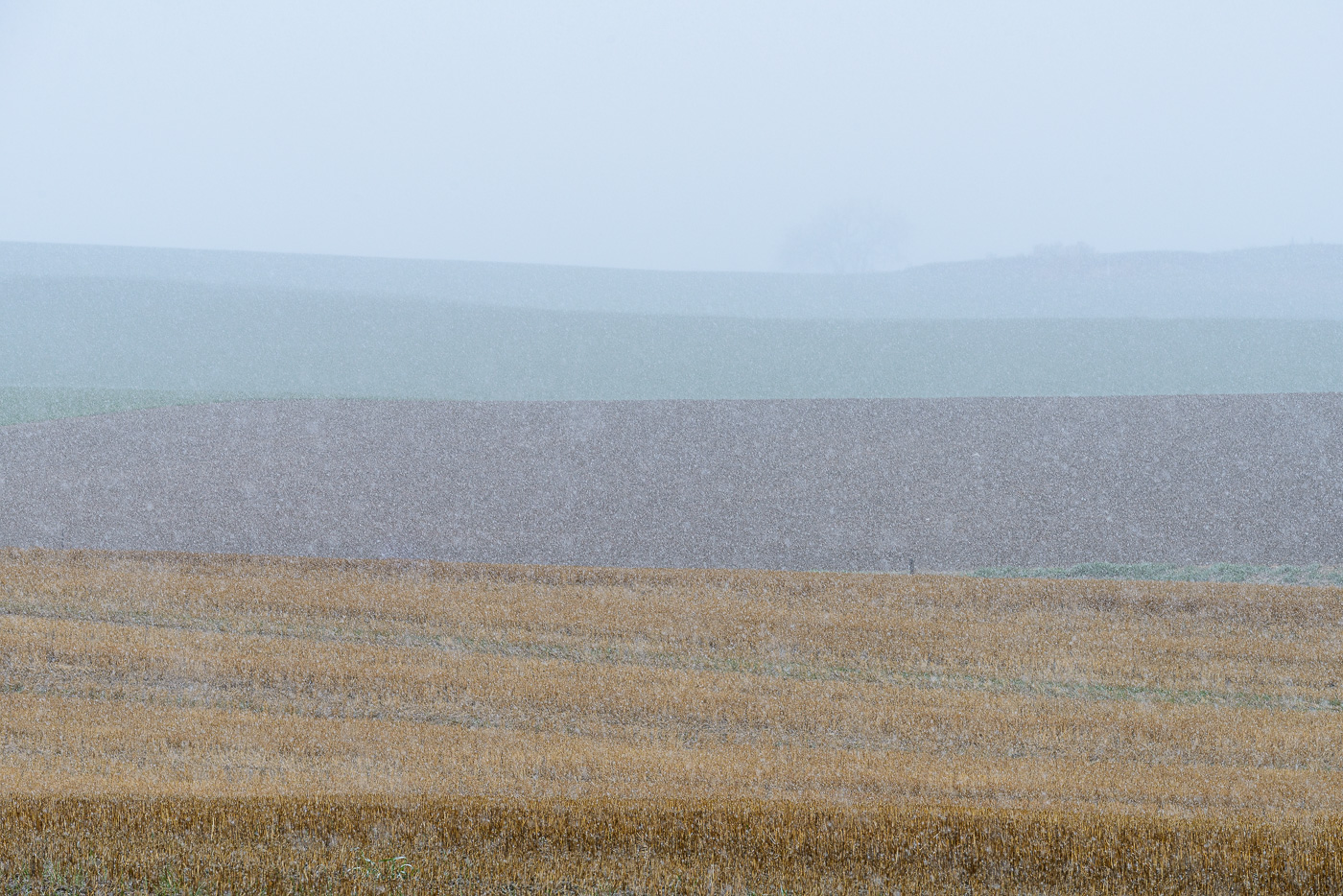
An artists journey

Tag: fine art photography

  • Critique Your Own Work

    Critique Your Own Work

    It is important to be able to honestly critique your own work. Can you objectively see it as others do? I believe it is a learned skill.

    It will be critiqued

    Every time we look at our images, we are critiquing them. When our friends or even our spouse look at them, they are critiquing them. They will probably keep their real opinions to themselves, but inside their head, they are being honest.

    And, of course, when we approach a gallery or enter a contest, we are explicitly inviting critique. The gallery manager or judge is seeing hundreds or thousands of competing images. They will be brutally honest and severe in their comparison and criticism. They are only going to choose a handful of the many competing entries they are given.

    Even if we are just posting on social media to show other people where we are and what we are doing, they are forming opinions of the pictures. I would theorize that, if you care at all about images, it is impossible to look at a picture without forming an opinion. And everyone who looks at yours does it.

    Transportation modes and triangles©Ed Schlotzhauer

    First do it ourself

    That may sound harsh, but I believe it is reality. Since it will happen, shouldn’t we jump in and be the most severe critic of our pictures before others do? Shouldn’t we eliminate weak pictures and fix the problems in the others? If we are very deliberate to only show our best images, that will save us embarrassment and make us look like a better photographer.

    You will never see my unedited images unless I am teaching a workshop on editing and want to prove a point. I shoot a lot. Most are not great. And I don’t even intend some of them to be very good. Some are purely experimental. “What if” moments where I am exploring to see if what I did seems to lead in a useful direction.

    It is common to make several shots of a scene. But I will typically pick only 1 as the best. That is the only one you would ever see. And even then, the best of a set still may not be a very good image.

    And it is much more than the technical perfection of an image.

    Spreading oak branches.©Ed Schlotzhauer

    Study

    My friend Cole Thompson believes in what he calls “photographic celibacy“. He does not look at the work of other photographers so that he is not influenced by them.

    That does not work for me. I consider it valuable to study all forms and genres of image making. There are things to be learned from photography and painting and movies, graffiti and magazines and advertising. Most any genre from Renaissance to Romanticism to Impressionism to Abstract to post-modernism can give us insight in how other artists have chosen to express their ideas.

    Read books where artists discuss their thought process. Go to museums and galleries. Cultivate friends who have artistic perception. Take in as much as possible.

    But learn. Don’t follow.

    Keeping Knowledge locked away©Ed Schlotzhauer

    Learn your taste

    We are artists. That means we have a point of view to share with the world, and particular visual styles we use to do it. We each must find and understand our values and style. These preferences guide our photographic decisions.

    If you are new at photography, it is natural to look at an artist and say we want to make work that looks like theirs. That is OK, for a while. Copy someone we are studying to internalize how they do it. But it is important then to re-center ourself and decide what, if anything, of what we learned we want to adopt to our own art.

    Maybe it is nothing. We may greatly admire their art, but conclude it is not applicable to what we feel and want to do. For example, I really like some of Joel Grimes‘ portraits. But it is unlikely I will ever do an image in his style. I don’t shoot portraits, and the edgy, high-tech style is not mine.

    My point is that, with lots of experience and practice, I am learning how I see and what kind of images I want. Anything that makes me better at that adds to my skills and is valuable. Anything that doesn’t may be interesting and educational, but probably not valuable.

    Give it some time

    We are all basically using the same tools. It is not the technology that differentiates us.

    Famous jazz musician Miles Davis said, “Sometimes, you have to play a long time to be able to play like yourself.” This is probably true of any art form. I believe it is true of photography.

    We learn and practice and imitate other artists and chase “likes”, but eventually, if we persist, we learn to be ourselves. I don’t think there are shortcuts (sorry). If you have been at it for a while, you are probably not producing the same type of work now that you did 20 years ago. Hopefully, you are now creating images that are uniquely you.

    Each of us is a mix of genes and education and experience and values and motivations, tempered by our unique life experiences, and wrapped in a frail human body. No one else’s mix is the same as yours. That’s why we should not try to “be” some other artist we admire. We can’t. We can only authentically be ourselves.

    But even when we learn to be ourselves, that doesn’t mean our work is good. The sad truth is that most of the trillions of photos shot every year are unexceptional. We must learn the skill of critically evaluating our own work.

    Graffiti abstract©Ed Schlotzhauer

    Make a portfolio

    An excellent way to examine yourself and understand where you are artistically is to put together a portfolio. I find that I am not as critical as I should be unless I do this. Pretend you are going to submit your portfolio to a gallery. The portfolio can’t have more than 20 images.

    That limit is the problem and the beauty. It is not difficult pulling out 300 pictures you like. Forcing that down to 200 hurts some, but isn’t too much of a problem. Then grit your teeth and make the cuts down to 100. This is getting painful. You are having to cut some of your favorite pictures.

    Then it gets hard. You think you can’t possibly take any more out. But the goal staring at you is 20. From here on out, you are having to do serious self-examination. Each image must be scrutinized more carefully. Every one must be justified to stay in the select set.

    Liking, even loving an image is not enough. We must objectively decide if it is a strong piece of art on its own. Is the technical craft and the composition solid enough to stand up to criticism? Does it go beyond a record shot, having that “something extra“?

    This is painful. When it gets down to about 30, every one you eliminate feels like you are giving up one of your children. Each picture must compete head-to-head against every other one. The weaker must be eliminated. You try to talk yourself into cheating and keeping 25 or 30 for the portfolio. But push on. Cutting the last 10-20 images is by far the most difficult. But also, the most instructive.

    Abstract, Charles de Gaulle Airport, Paris©Ed Schlotzhauer

    Self-examination

    Congratulations! You have put together a portfolio! The regret over the ones eliminated will fade quickly. You just eliminated them from this portfolio. You didn’t delete them from your disk. Now it is time to reflect on what you have created and try to learn.

    Just look at your images for a while. Consider each one individually. Why do you like it? How is it better than all the ones you eliminated? What do you learn about yourself from it? Then reflect on the whole set. You might be surprised to discover a harmonious style or approach, even though each may be a different subject.

    Forcing yourself through the process of narrowing down a set of good pictures to a very small set of great pictures is an excellent way to learn to critique your work. Having a fixed goal forces us to make hard decisions instead of being vague.

    You will probably discover that you have a set of images that you are proud to show anyone. Ones you believe will stand up to close examination by experts. And that you have a style that is your own.

    Critique your own work, severely. Be such a severe critic that you are sure you will not be ashamed to show anyone the survivors. And make sure your work proves you are human, not an AI.

  • Image Quality

    Image Quality

    As photographers, we often obsess over image quality. The highest resolution, the sharpest focus, the best light, the best composition. All these things are important, but is that really what defines image quality?

    Technical perfection

    Photography is more closely tied to technology than most other 2-dimensional art forms. Our cameras embody sophisticated technology. Our editing tools are leading edge, sometimes AI driven.

    The field seems obsessed with specifications and details. What is the MTF of this lens? Does this sensor have 14 bits of dynamic range or only 12? Should I go to a 100 MPixel medium format system to be a better photographer?

    I have chased all of this at times, and I still have that tendency. A couple of times recently I have gone through the specs and lens choices for medium format, longing for a move up to the “better” gear.

    Underlying all this is the belief that better technology will give us better image quality. But a more technically perfect image is not necessarily a better one.

    Abandoned tracks join©Ed Schlotzhauer

    Composition rules

    The visual arts seem to accumulate a large set of rules meant to guide our work. These are generally sound principles, based on long history of practice and evaluation. Most of them are good, except for the “rule” part.

    The “rule of thirds”, for instance, helps balance compositions and give some dynamic life to an image. Same for rules like leading lines or diagonals or don’t center the subject. All are good advice to keep in mind. The problem comes when it becomes an absolute rule. When a gallery or a photo club judge rejects our photo because it did not conform to one of the standard composition rules, then we are in the wrong place.

    Know and use the rules, and understand that you can freely “break” them whenever you feel you need to. Guidance like these “rules” are good general advice. But general advice does not apply to each individual case. You are the artist. Your decisions create the image. Trust your intuition.

    Canterbury Cathedral©Ed Schlotzhauer

    Work the scene

    Other advice I have heard recently is to work the scene to develop it into the best shot. We are counseled to take many exposures from different angles and maybe with different lenses, with the objective that by shooting all this variety, one of the shots will be “best”.

    It is probably true that one will be best, but is this the best, or only way, to get there? Let’s work through a scenario. Say I am there with lenses of 24mm, 35mm, 50mm, 70mm, 100mm, and 200mm (full frame equivalent). Let’s further say that that I have access to shoot front left from ground level, center above ground level, front right at eye level, and rear center at ground level. Just those individual choices give 24 shots to take. Then throw in bracketing for aperture and exposure and composition and that gives possibly hundreds of shots. For one scene.

    It is true that if you do that, you may occasionally be surprised by the one you select as best. It is a great learning exercise if you are developing your style and vision. And a good exercise to go through occasionally to check yourself.

    But I generally know what I want. I have the experience of shooting and viewing hundreds of thousands of images. My preferences are established, but flexible. That is, I experiment frequently so as not to fall into a rut. But I do not need to shoot hundreds of frames of one scene to get to what I would consider “best”.

    And ever worse, I fear that blindly following this “work the scene” advice will lead to the best possible shot of a mediocre scene. Meanwhile, we miss the better, more imaginative, more creative scene because we were over-concentrating on one thing. I prefer to use my judgment to frame the best shot and go on to find the next, even better one.

    Antique diesel locomotive©Ed Schlotzhauer

    Disappointment?

    I have done all of these. For years I chased technical perfection. During my time in a camera club, I faithfully followed the composition rules. I shamefully confess that as a judge I criticized some images for not following the rules. And at times I have ended up with piles of images bracketing one scene to insensibility. Usually with the result that I kept one of the first ones I shot and threw the rest away.

    Many of these efforts led to technically good images that are lifeless and disappointing. They do not capture my reaction or relationship to the scene. There is no depth of insight. Only a very small fraction are printed and hanging on my wall now.

    I have had to completely rethink what “image quality” means.

    Image quality

    These observations are strictly my personal judgments. I have no authority over your artistic values. As artists, we each should come to our own conclusions.

    I have seen that many of the famous photos and paintings in history are not technically perfect. But something about them elevates them above the crowd. What is that? I know I have images shot with inferior cameras with cheap lenses that are “better” than many taken with much better cameras. This makes me wonder what image quality really means.

    Now days, we are inundated with images. Most are adequately sharp and well exposed. What makes one stand out among those trillions of bits of noise?

    We must reevaluate what it means to be a good image. It is no longer the obscurity of the location or the difficulty of the shot or the perfect composition or the sharp detail. None of those are enough, by themselves, to make an outstanding shot. In a Substack article, Lee Anne White said: “There are always photographs that are technically solid, but missing that something extra“. Ah, that something extra is so hard to describe.

    Photography is a craft as well as an art. We must strive to do an excellent job of technical perfection, composition, etc. But those things are not the something extra that make an outstanding image.

    Looking at a Monet©Ed Schlotzhauer

    Something extra

    In the crowded and noisy world of images, it seems that what we look to now is an emotional attachment. Something must touch us personally. To do that, it generally had to touch the artist, too. We must be able to let our emotional reaction to the scene come through our image.

    Maybe this is what Cartier-Bresson meant by the decisive moment. Perhaps this is what Jay Maisel means by the gesture of something. Either way, an idea is that the subject is expressing something. We must be in sync with it and ready and able to capture the best expression of that.

    These instances sometimes happen in a fleeting moment. Perhaps we can anticipate them and be setup and prepared. Sometimes it is a singular event, and we have one shot at it. But either way, we must recognize and react. We must understand what is happening and be mentally and physically prepared to capture it.

    And being prepared involves understanding our emotional involvement with what it is. We must recognize when that gesture is best expressed to us, and pounce on it.

    Of course, images do not have to be of a fleeting moment to be good and express an amazing gesture. There are those that are static scenes, where you can linger over it to wait for the right light or weather.

    Still, what the viewer relates to is your feeling about it. Why did you take this picture? Why did you select it out of all the others?

    Paraphrasing Jay Maisel: “If the thing you’re shooting doesn’t excite you, what makes you think it will excite anyone else?”

    If an image meant something special to me, and I can capture that and make you feel what I felt, then there is a chance the image is meaningful to you, too. That it embodies the “something extra.” Isn’t this what image quality is about?

  • How Did You Think of That?

    How Did You Think of That?

    Most of us are not limited by our knowledge or our equipment or our environment. We are limited by the boundaries we place on our imagination. The question is not “how did you do that?”. It is “how did you think of that?”

    Self-limiting

    Maybe it is harsh to say we limit ourselves. But I have come to believe it.

    I have gotten a lot from a quote from my friend Cole Thompson:

    Many photographers will see an image they admire and ask: how did you do that? They want to know the techniques used, thinking that once they know those, they could create that image.

    The question they should be asking is: how did you think of that?

    Do we tend to follow what other people do, or do we create our own path? I believe we are afraid because we are not confident in our own creativity. It is safer to imitate.

    In a canal©Ed Schlotzhauer

    Equipment

    There are many excuses for our perceived limitations. One easy one is that my equipment is not good enough.

    Photographers seem to lust for new equipment. If I had a medium format camera I could … That new super zoom lens would let me …

    I understand. I have equipment lust like anyone. But on the other hand, I have come to believe that if you hand a Brownie box camera to a good artist, they will make good images. They will embrace the limitations and use them as part of the art.

    This tells me that, in general, equipment is not the fundamental limitation. There may be specific situations that require certain technology, but artistry is independent of technology.

    So, I don’t think I can use the excuse of not having good enough equipment. What I have is perfectly adequate to make art. I just must learn how.

    Hand held, old digital camera, estimated metering.©Ed Schlotzhauer

    Knowledge

    Learning how brings up the excuse of not enough knowledge. I understand. I am a constant learner. Almost everyday beings a new video or article or book I consume to learn to be better. I have hundreds of hours of videos and a library of books. Photography is more closely aligned to technology than most other arts, and it is supported by huge amounts of training material.

    But I also know this can become a crutch and an excuse. When will you get to the magic threshold of knowledge required to be an artist? Sometimes needing more study becomes an excuse for being afraid to go out and do it.

    Again, I know. I’m talking to myself, too. I get caught up in this. Today I watched a presentation on photographic abstraction, including techniques for in-camera multiple exposure and intentional camera movement. It was educational and motivating. But I didn’t immediately go out and apply it. And if I was not an artist before seeing it, I still could not call myself one after it. Maybe the amount of raw knowledge is not the key. We do not become an artist by a certain amount of training or a degree or certificate.

    Don’t get me wrong. I am a strong believer in learning. Our tools are complex. And I believe that the more examples and points of views we have seen gives us greater fluency with our art. But as an artist, the knowledge must be internalized, then re-expressed in our vision. If we are studying but not doing it, we are not making art.

    Looking through clock, Musee Orsay©Ed Schlotzhauer

    Environment

    I get stimulated and energized by travel. I am lucky in getting the opportunity to take a few trips a year. The places and things I see while traveling seem newer and more interesting than the stuff where I live.

    But travel is a bonus, an extra stimulation. The reality is that I spend most of my time around home. I must discipline myself to see the ordinary things around me with fresh eyes.

    Don’t fall into the trap of feeling like you can’t make any interesting images because you do not have the chance to travel to exotic locations. Great photo opportunities are everywhere if we learn to see them. This is the type of mindfulness I recommend. The ability to see the ordinary with fresh eyes.

    I live in a relatively small town along the Colorado front range. But I seldom take a day to go into the mountains. Almost every day, though, I go out and walk a few miles, starting from my studio. I try to vary my routes, but there are only so many directions I can go.

    This means I see the same areas frequently. Finding something interesting that I haven’t seen before or that looks fresh and different is a challenge. But it is a challenge I have accepted as a test of my creativity. I have been doing this for years and I can still find engaging things.

    Time shift, ICM, intentional blur©Ed Schlotzhauer

    Imagination

    This may seem to have wandered far from the question of “how did you think of that?” My point is that our art is not limited by our equipment or our training or our environment. Our limitation is our imagination. Can we look at something that everybody sees all the time and see it different? Can we think something new?

    That is a problem, but it is a good problem. If the limitation is in our head, we have some control of it and can fix it. Or at least make it better.

    I believe an important step is reclaiming the curiosity we had as kids. Remember that curiosity you had, or your kids had? Why is the sky blue? What is the moon made of? In the olden days, was everything black and white?

    Curiosity like this leads to asking “what if?” questions and to looking at the world different. We can begin to think of new ways to photograph, new ways to see things. The same thing we have always seen may be perceived in a new way. Answering the questions is less important than that we were able to ask them. The questions challenge us to look again and deeper.

    So, maybe, to be a better photographer, I don’t need the latest equipment (bummer), or more training, or a trip to New Zealand. Maybe I just need to re-learn how to ask interesting questions. To be curious about everything. And to not be afraid to ask ourselves “what would happen if…?”

    Try it. Be a kid. Follow your curiosity. Make mistakes and enjoy them. Don’t imitate other people. Create something no one else has ever seen.

    As the great Jay Maisel said: If you want to make more interesting pictures, become a more interesting person.

  • What Does It Mean

    What Does It Mean

    We’re artists. Artists create art. We’re told art is supposed to have meaning. Do we always know what does it mean?

    High art

    We’re repeatedly told that art has meaning. It should educate or challenge or at least raise questions. To many, art should support a cause and try to change the world.

    But when we read artist statements and gallery statements, it can seem they are speaking a different language. One too high for us commoners to understand. Therefore, we are not in the inner circle. But remember, they are selling a product. The more elite it appears to be, the higher the price it can command and the more collectable it is. I understand, but I don’t like the game.

    This is from the point of view of photography, because that is the main art I understand. I can somewhat understand that if you have a very labor-intensive product that takes weeks or months to create, it may be necessary to do whatever you can to make it more valuable. And putting all that time and work into it makes you want to believe it must have great artistic significance. After all, if I can create a finished photo in a few hours but you need weeks to create your painting, the painting must have deeper meaning, right?

    Statue against downtown windows©Ed Schlotzhauer

    Where does meaning come from?

    But where does meaning come from? Do I put meaning in when I create a photograph? Or does the viewer assign meaning to it? Or is there even meaning at all?

    Maybe all of those.

    Sorry to be vague, but that is the way it seems to me. There are no clear, definite answers. Like many important things in life, the answer is “it depends”.

    I think sometimes that I have meaning in mind when I make a photo. Sometimes not. I am occasionally surprised by meanings that viewers of my images describe to me. I have to try to keep a poker face while I’m thinking “where did they come up with that?”

    And when I read some artist statements about images I can’t help being a little skeptical. They must be incredibly deep thinkers to have visualized all of that meaning and symbolism at the instant they took the photo.

    But I typically do not operate on those lines.

    Dancing in the Rust©Ed Schlotzhauer

    Whose meaning?

    This brings up the question of whose meaning are we talking about? As the artist, I may have visualized a meaning at that moment. This would be based on my cumulative feelings and experiences. But each viewer will form his own interpretation of meaning in the image. And each may be different, based on their own feelings and experiences. The viewers are experiencing the image in a different context than I shot it.

    As the artist, do I have the right to decide the meaning and require everyone to line up with it? I don’t think so. The picture is mine, but each viewer’s meaning is theirs.

    An art critic or curator may analyze one of my images in detail. They can talk about the composition and lighting and placement of elements and use of color and how those formed or contributed to the meaning. They could go into the symbolism it contains. How the symbols connect to some event or period and what meaning that has.

    I might say thank you for complimenting my (probably instinctual) compositional design. But at the same time, my BS meter will be pegged. Maybe at some level I was aware of the symbolism and meaning he describes, but maybe not.

    Do I create meaning?

    I have often wondered if I create meaning in an image. I believe I occasionally use symbolism. Occasionally I touch on themes much larger than my work. But it is not my style, when making art, to be heavy-handed on meaning. I probably was unaware or only dimly aware of any symbolism when I make the image.

    For example, a Sierra Club photographer might show hunters clubbing baby seals for their fur. This brutally makes their point, and it has “meaning” in the context of their cause, but it is not necessarily art. It is propaganda photography.

    My art always expresses an opinion. But I do not believe I should try to force my opinion on you. If you look at my image and come to the same opinion I had, great. If not, I hope you form an opinion that makes you appreciate the image.

    Street musician©Ed Schlotzhauer

    Do I know what it means?

    I am continually asking myself if I even know what an image means. This is especially true when I am editing and culling images. We all occasionally ask ourselves “why did I take that?” But at a deeper level the question is “what does it mean?”

    I often have to say, I don’t know. It triggered some emotion. Maybe that emotion was just that it was pleasing. But I know that sometimes I had a feeling that it had some meaning I might not have been able to express then.

    I’ve stopped trying to over analyze my images as I am shooting them. That can come later during editing.

    And another aspect of this I find very interesting is that the meaning or worth of an image often changes for me with time. I usually use a technique I call slow editing. That is, I try to wait for days or weeks before doing serious edits. This lets the emotion of the shoot fade and allows me to examine the images in a more detached way. Obviously, I don’t follow the common practice of downloading daily and rushing some images out to the eagerly waiting internet.

    A side effect of slow editing is that my opinion of some images changes between the time I shot it and the time I edit it. Sometimes dramatically. I have been known to throw out most of a shoot that I thought was going to be significant. On the other hand, there have been times that an image I was about to throw out ends up being my favorite of a shoot. My understanding changes. A realization grows of something I must have been drawn to when I captured the image, but it did not break into my consciousness until I gave it time.

    So, do I know what my images mean? Maybe over time, after reflecting on them long enough, I might have a glimmer of understanding. Perhaps I see a connection to my beliefs or values. I might, occasionally, even say an image has meaning.

    But in general, I resist the presumption that my images “mean” anything of themselves. If I or a viewer give them meaning, that is wonderful. Meaning only makes sense for a human.

    Out the window - through a beer glass.©Ed Schlotzhauer

    Make art

    So, what about meaning? If you are making fine art, I recommend not worrying too much about what does it mean. Instead, concentrate on making what you consider to be your art. Pictures without art are advertising or propaganda or snapshots. Art without obvious meaning is still art.

    I try to be gentle about conveying meaning to my viewers. To me, being heavy-handed robs an image of depth. Viewers will assign meaning to it. Or they won’t. It is fine with me if they just like it.

    And worrying too much about meaning when I am shooting robs me of much of the emotional attachment I felt at the time. I don’t appreciate a meaningful but lifeless image. I want my images to feel fresh and lively and maybe, in a way, humorous. Sometimes just being pretty can be enough.

    Make the best art you can. Put your feelings and intensity into it. Let yourself be surprised by the meaning. The best ones will have meaning, because it is an expression of your deep attachment to the subject. Your viewers want to see the meaning you felt. And they are free to create their own meaning.

  • Post Exploration

    Post Exploration

    We focus a lot on the process of taking pictures. And rightly. But the world of post processing is another rich opportunity for “making” images.

    Taking pictures

    When we think about photography, we think about taking pictures. After all, that is what photography is, isn’t it? That is where we capture the data that becomes the final image. For many, the thinking stops there. Click – picture.

    Maybe crop it a little or remove a distraction. Perhaps work on the overall color. But the picture is the picture. No reason to make many changes.

    Many people, especially some “serious” photographers, feel that the image should be made whole and complete in the camera. Anything other than simple edits that make no substantive changes to the original image is suspect or forbidden. That is their opinion, and they are welcome to it, so long as they do not try to bind it on me.

    Imagined unexplored land©Ed Schlotzhauer

    Post processing

    But for other photographers, the world of post processing is much larger than that. Yes, there is cropping and distraction removal and some color tweaks, but those are just the basic first steps.

    I will go out on a limb and say that post processing is as large and important a skill as is capturing images. The world of digital imaging has thrown us into a situation where what happens after the shutter press can be as important as what happens leading up to it. And our tools have become far more powerful, enabling “darkroom” processing far beyond what any film shooter ever dreamed of. It would be foolish not to take advantage of it.

    I assume you shoot RAW images. There are times to shoot jpg, but those are rare in my world of fine art photography. But RAW images require extensive editing. They look bland right out of the camera, since they did not go through heavy-handed jpg processing that is trying to make a best guess of what we wanted.

    Just enhancing

    After that initial round of basic edits, we get more serious for the images we pull out to work up. Now we probably do some initial sharpening. Then set overall contrast, black & white points, maybe some clarity to punch it up some more.

    At this point the image is starting to take shape. Now I may spend a lot of time working on tonal gradations. Working on the details of lighting and separating element so they can be seen more clearly. Then there is working on global saturation and luminance and maybe even hue of individual colors.

    We may decide to add a vignette to help focus attention on the subject. Perhaps we will use color grading or profiles to change the overall “look” of the image. Maybe so far as going to black & white.

    There are so many more. This is just the tip of the iceberg. We can easily spend hours on one image doing these and many more. I have watched hundreds of hours of tutorial videos describing techniques for doing these things. Really getting in depth on Lightroom Classic or, especially, Photoshop is a project requiring years. And they are moving targets.

    But at this point, we have a nicely corrected image – that is still basically the original photograph. It may be exactly the scene as we remember it, or it may have a color wash, or even be in black & white, but it is the same photograph.

    Again, this is where another large group of photographers stop.

    A fanciful composited image with interesting processing. Good luck guessing what the original image is.©Ed Schlotzhauer

    Permission to play

    And that’s where I stop with most of my images. But there are other doors to open that can lead to new destinations.

    Here is a statement of belief for me: pixels are raw material. They are just pieces of data saved on your computer. They do not “mean” anything except for the meaning we ascribe to them when we view them all together as an image. This is my belief. but since it is not based on laws or regulations or fundamentals of nature, it is just my belief. Feel free to disagree and act accordingly.

    But since this is my belief, I am free to do anything I want with my data. There is nothing like PETA for protecting against the abuse of pixels.

    I give myself unlimited permission to play with my data. And I do, to degrees. The problem is that it is hard to break away from old habits and beliefs. Too often, I am trapped by my limited thinking. I see an image. I don’t always see what those pixels could become. That, more than camera resolution or tools or computer power, limits what I make.

    Permission to play does not mean I will always take advantage of my freedom. I am self-limited. My actions don’t always follow my beliefs. But I’m trying to break my mental barriers.

    Impressionistic photography©Ed Schlotzhauer

    Making new images

    I love compositing, combining 2 or more images to make something new. It is a joy when I can take 2 dissimilar images and make something different from either. Sometimes I put together 3,4, 10 images. The resulting image may only have bits and pieces of each source file. Did you know that a TIFF file has a maximum size of 4G Bytes? After that you must bump up to the PSB format. Quite a few of my experimental images do that.

    And I love taking an image and processing it with different textures or digital effects to create a very different look. So much so that sometimes when I am out shooting, I mainly shoot textures. I have a good library of them.

    And have you played with some of the interesting Photoshop filters that are built in? Quite a variety of tools for blur, rendering, warp, landscape mixer, distort, stylize, etc. I can experiment for hours in Photoshop trying new combinations of things.

    Some actually create results I like. But you never know until you try.

    Heavily processed image, not reality©Ed Schlotzhauer

    The digital world

    My point is that our “photo opportunities” do not stop when we press the shutter. Capturing a good image is very important. But there are endless possibilities for improving it or totally changing it in post processing. Sometimes we see opportunities for doing more than just making an image look better. Post processing is another creative outlet.

    Digital images are much more malleable than film. Pixels are just data. Data can be processed. There is a world of opportunity in the post processing, if we can break out of our limited view of what can and should be done to our pixels. I call it post exploration.

    If you are a fine art photographer, the ethical choice is to do your best, most creative work. Not to protect pixels.