An artists journey

Tag: fine art photography

  • Moving Past Perfection

    Moving Past Perfection

    Photography is a rather technical art form and most photographers get caught up in the gear and techniques. This can be appropriate for some work, but not always. I have stopped worrying about the last line/mm of resolution and absolutely perfect focusing and steadiness. It can be that imperfections can make some images better. I am moving past perfection as a goal.

    Perfection

    Sure, I love technical perfection. I think at some level most photographers do. It is a characteristic of what we can capture. We don’t want to just take a picture of a bird. We want to resolve every detail of every feather. The texture in an image should be so present that the viewer can easily imagine what it feels like. Every part of the subject must be in crisp focus and highly detailed.

    Technical perfection like this is a form of craftsmanship. It shows our viewer that we know how to use our tools and that we can check the craft boxes to prove our work is worthy.

    But this craftsmanship is a table stake, to use a business term. A table stake is the minimum viable offer that will be considered. For example, if you are buying a new car, you would not consider one that does not have a backup camera. It used to be a luxury but it has become an expected necessity. In the same way, digital photography has improved our product so much that there is little room for imperfection. Technical perfection, where is is required, is a necessity to be considered a salable print.

    Unless it is deliberate imperfection. More on that later.

    Don’t let it become the reason for the image

    An overused quote (at least, I seem to overuse it, because I believe it is very insightful) is Ansel Adam’s comment that “There’s nothing worse than a sharp image of a fuzzy concept.”

    I take that to mean that a good image will not be a great image solely because of its technical perfection. Instead, the technical details must serve the mood and intent of the image. Sometimes that means the technical details must be front and center, because they provide the framework that supports the resulting image. But in other cases they may actually subtract from the artist’s intent.

    I keep talking about sharpness, but the same applies to any other technical details. Composition does not make an image. There has to be more there. The absolute peak time and weather conditions at a certain location may help you make a very good image, but by themselves will not guarantee it.

    Who defines perfection?

    But what is “perfection”? That is very difficult. Must every image be 50MPixels or more at 3000 line pairs/mm resolution? Does every picture have to be perfectly aligned with “rule of thirds” lines and points? Does the color balance of the print have to exactly replicate the color of the original scene? How about images that do not have a definite foreground/middle ground/background? And how about the ones where the histogram is just wrong, say pushed too far to the left or right?

    Do these things define perfection? Can we make a great image that violates some or all of these “rules”? If you are thinking about some other articles I have written, you will know that the answer, for me, is there are no rules. There is no authority with the right to define what characteristics my image must have.

    If I have defined for myself that I am doing things in an Ansel Adams style, then that puts me in a box and defines certain expectations of look and sharpness. Or if I have defined that I am doing portrait photography in the style of Richard Avedon, that sets expectations of subject matter and style and print sizes.

    But notice that these are self imposed limitations. I reserve the right to define for myself the nature of perfection for my images. It may or may not include technical perfection.

    How can an “imperfect” image be good?

    If I set the definition of perfection for my images, then what does imperfect mean? It will only be imperfect if I fail to achieve the result I want.

    Think of some of the great shots of photojournalism or street photography. Some of them are a little our of focus. They might be over or under exposed. They might be grainy. But they captured a moment, an emotion, a comment on the human condition that completely overwhelmed all technical considerations. They are great despite their imperfections. Maybe because of them.

    I love (and was infuriated by) the types of comments I used to hear in camera club competitions. A judge might say “the composition would be improved if the photographer had taken 2 steps left”. I appreciate your feed back, but if I had moved left even 1 foot further I would have been over the edge of a cliff. Thank you, I will live with the composition I could get. It works, despite your sincere attempt to improve it.

    Past perfection

    So what do I mean by moving past perfection? For me it is the realization that perfection is not the highest goal. An image can be excellent even if there are technical flaws. Other things can and often are more important. The recording a “perfect” moment that exactly captures the nature and personality and essence of the subject can make a great image, even if there are imperfections.

    Actually, I am finding a lot of my current work is intentionally “imperfect”. I often use camera motion or subject motion as a design element. Some entire projects do not have a single sharp pixel in them. That is what I want, so I am pleased with it.

    A different take on craftsmanship is being able to use your medium to achieve your goals. Would you rather follow your own goals and create work that pleases you or struggle to achieve someone else’s ideal of perfection?

    Judge by your expectations

    No one except you can judge the perfection of your work. The definition of perfection is yours and yours only. They might say they would like it better if it was sharper or more/less colorful, or more/less saturated, of brighter/darker, or composed differently, or if the mid tone contrast was enhanced/reduced. And they may be “right”, in the sense that, after you think about it you decide yes, if I were shooting it again I would change it somewhat.

    But it is you changing your expectations that causes the difference in evaluation. No one else is in a position of judging your work unless you allow them to.

    Today’s image

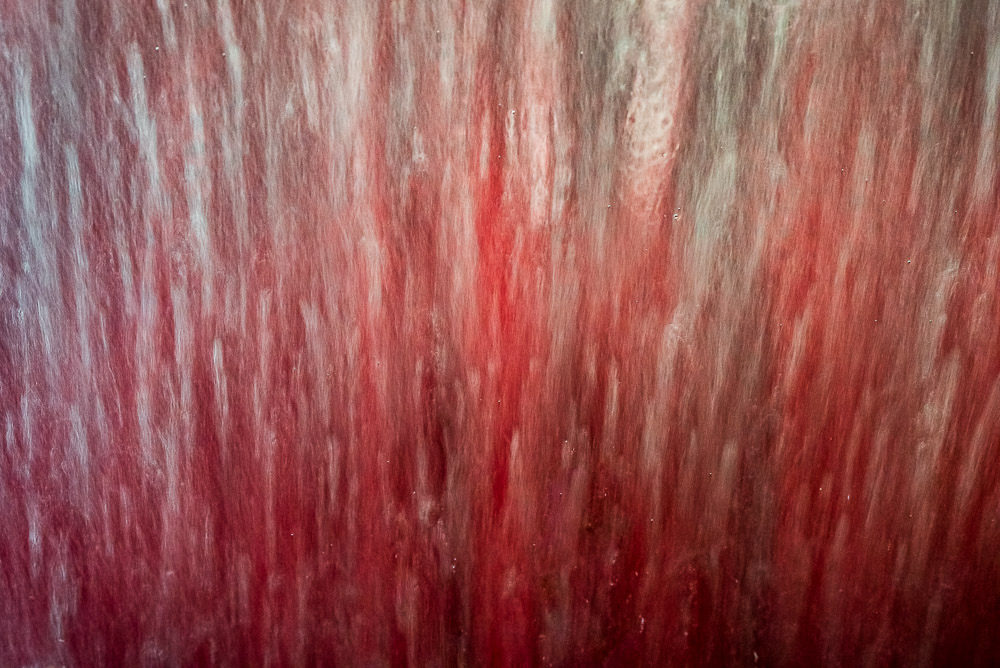
    This is a horribly imperfect image. And it is just what I wanted. 🙂 It was shot out of a fast train in France. I wanted to represent the sense of speed and motion and changing terrain whipping by. There is not a single sharp pixel in the frame. The focus may not be right, I can’t tell. But this was one of the best of many, many tries, and to me, it captures what I was perceiving.

  • Packaged Experience

    Packaged Experience

    Do you create your own photo experiences and adventures or do you rely on packaged experiences? I hope to encourage you to have the confidence to create your own most of the time.

    Packaged experience

    What is a packaged experience? It is any situation where you purchase a ready made happening from a vendor. Someone who offers you a ready to go vacation or adventure you can just step into and passively enjoy.

    A classic example of a packaged experience is a Disney World vacation. Space Mountain and Epcot may be fun and maybe somewhat magical seeming for the kids, but not much for an artist. Another example is a typical vacation cruise. New scenery, good food, but it seldom qualifies as an adventure or a unique experience.

    In both cases, everything is wrapped up in a neat package, all the sharp edges are protected, and a manufactured packaged experience is provided to you. These are exactly the reasons I recommend you avoid them.

    It’s not really an adventure

    An adventure is “an unusual and exciting, typically hazardous, experience or activity”. Packaged experiences are seldom unusual, since you are buying the same product sold to a million other people before and after you. A simulated rocket ride or a roller coaster may seem exciting for a few minutes, because they shake you around and it seems dangerous. But the reality is they are carefully controlled and not at all dangerous, unless you have a serious heart condition. They are a simulation of adventure. Once you reach an age where you realize the Pirates of the Caribbean are not going to stab you, no matter what you do, it should cease to hold much excitement. Unless you step into a Westworld situation, but that is unlikely.

    The packaged experience is in no way unique or dangerous. It’s effects are short lived. There is no long term benefit or learning from it. And even worse from an artistic point of view, it gives you little chance for creativity or exploration of new ideas.

    Maybe the worst part, from my point of view, is that in a packaged experience you did not have to put any of yourself in it. You are a passive spectator.

    Roll your own

    I guess it can seem intimidating if you’re not used to being responsible for your own adventures. And if you are taking the family maybe you want to be extra careful for the kids. But even for them – especially for them – wouldn’t it be wonderful to give them a legacy of being able to amuse and entertain themselves in strange places?

    What does it take? Just a good attitude and the willingness to try it. No special training is required. You have to be open to accepting things as they come and learning to like them. It is almost all your attitude that determines what benefits you will receive.

    Let me give an example of a pattern of things that formed some of my belief in this. Way back, when timeshares were a good thing and not yet ruined by greedy developers, we bought one. Kind of on the spur of the moment. No real planning or investigation. Well, the real utility for us was that we always traded for other locations in some part of the world. So we had a week tied to some location we had never been to. Initially we would get somewhere, explore the area a day or 2, then ask ourselves what we are going to do now? But we were stuck there. Sometimes these places were way out in the middle of nowhere.

    We were forced to amuse ourselves. We would start to explore the vicinity more slowly and carefully. It amazed us what kind of interesting (and photogenic) things we discovered. Looking back on it, I can see what should have been obvious then. Almost every place has interesting things to find, quirky and interesting people, local things they pride themselves on, unique history, local food specialties to try, and just things you have never seen.

    Trust your ability

    We’re just not used to slowing down and looking at what is right in front of us. Instead, we’re looking for the tourist attractions with bright neon signs. The places listed on the tour brochures as welcoming busses of tourists (and having a big gift shop).

    The time share experience taught me to settle in and look around to see what I can find. I can’t remember how many time share trades we did, I would guess at least 20. In all of those, even when we were initially disappointed with an area, there was not one where we went away at the end of a week saying we will never come back there. I remember the very first one we went to was in Palm Desert CA – in August – it was 120F every day. And we loved it. I found fascinating places and sights I had never imagined. We would definitely like to go back, but maybe at a somewhat cooler time.

    I labeled this section trust your ability, but really, little ability is required. The biggest factor is attitude. Keep open and receptive to what is there. This is a learned skill more than any innate ability. I always had a bent toward traveling this way, but the time share experience taught me to recognize and develop it. Now I trust that this is the best way for me to travel.

    Don’t go overboard

    To keep it balanced, let me tell you about a friend I have who is a wilderness photographer. He goes on solo treks in the Rockies all the time, all seasons and weather. He has probably climbed all the peaks around here over 10,000 ft. Many in the winter. Wildlife encounters are not too rare. He builds and stays in snow caves. Blizzards and storms do not dissuade him. I think he is a little crazy. But that is his thing. He gets unique pictures of places and times few other people have seen.

    However, this is not what I am suggesting. It is not at all necessary to go to that kind of extreme to create unique adventures. Just go somewhere new and be open to what is there.

    Try it

    I encourage you to give it a try. It may take several outings before it becomes comfortable. That’s OK. Being uncomfortable is not a bad thing. Sometimes that just means you are learning something new and exercising a new skill.

    To get started, take some short trip, maybe one night. Head out someplace you haven’t been before, but not more than a few hours drive. Stay overnight – I recommend a nice local motel, not a big chain. It will be a little more adventurous and without the sterile industrial feel. Besides, small communities need your money. Then home. During the entire outing, give yourself a mission to stop and see and take pictures of anything even remotely interesting. An overlook, some nice trees, a classic old rusty car, a silly local tourist trap – whatever piques your interest. Let yourself go. Tell yourself you’re not in a hurry and you have permission to stop whenever you like. One of the purposes is to learn to find interests on your own.

    Photo Tours

    Many people I know host photo tours, so I want to address those. Different tours have a variety of goals. For this, let me divide them into 2 groups: tours that take you to famous sites and promise you to make the same well known pictures, vs tours that provide stimulation, discussion, and training while also taking you to interesting locations you have never been. I would call the first kind a packaged experience and advise you to avoid it. The second type, however, would be an enjoyable growth and learning experience. The sights and actual images you get are secondary to the adventure and new experiences. That is the kind of experience I would appreciate.

    Do it

    I know this isn’t for everbody. Some of you are such hard core Type A personalities that you can’t go to the hardware store with out written goals and a definite plan. So the idea of heading off anywhere without a well researched plan would be horrifying.

    But for the majority of us, I encourage you to give it a try. And persist long enough to get over the discomfort and have a fair test to see if you like it. When you learn to see like this, every outing becomes an adventure. Walks in your town become new and filled with sights you never noticed. Trips where you actually get away are more exciting, because you are constantly discovering new things that are not on the tourist brochures. Things that are special to you, that become “yours”. It can revolutionize your life.

    Today’s image

    An interesting road sign found on a tiny back road in Devon, England. We were staying at a time share miles out in the middle of nothing. Wandering around, we found many terrific discoveries. It was a lovely area that is a special place for us still. No tourist map or guide book would have taken you here.

  • Gratitude

    Gratitude

    This article is going to be published around Christmas, so I will be going off the normal artistic or technical track. I think it is important to keep an attitude of gratitude. It focuses us and keeps us open to more of what is going on around us and keeps our life balanced.

    What is gratitude

    Gratitude is an attitude of thankfulness and appreciation. That can seem out of place in today’s world, but I believe it is just as appropriate now as ever.

    Gratitude comes from the realization that I am very fortunate. I am very blessed in my circumstances. When we think soberly about it, we all know that none of us deserves good things, just because we are alive. We may have worked hard for what we have, but hard work alone will not determine the outcome.

    I am healthy and fit enough to do what I want. Even at my age I do not take any medications and I do not have any chronic diseases. I get to set my own schedule and priorities. Few people consider that they have enough money, but the reality is that right now I have all I need and don’t have to worry about it. That in itself gives me tremendous freedom. My mind is still mostly intact (some people may disagree). I love to exercise my creativity in my art and I get the opportunity to do it about as much as I want. And one of my great joys is learning new things.

    This is not bragging. I am telling you I realize I am blessed. I am not smart enough or talented enough or skilled enough to have created this situation on my own. The odds are way against it.

    Basically, gratitude means I do not believe everything I have comes from my own talent and effort and I am extremely grateful for what I have.

    Why is it important

    Gratitude helps keep us humble. It makes it easier to see our self in context: we are limited and occasionally foolish and occasionally bad tempered and we make a lot of mistakes, but sometimes we can be creative and generous and giving. And it helps us realize no one really cares much what we do, so we better do what helps satisfy our own goals and gives us satisfaction.

    So if we make a mistake or if our work is not selected for a show we entered or even if someone criticizes what we do, so what? We are just human like anyone else. Those things may hurt, but it is just part of going through life. Other people’s opinion should not affect us too much.

    What effect does it have on us

    A healthy sense of gratitude leads to contentment and inner peace. Contentment is a decision to accept and get the most out of whatever comes. Not to say you don’t try to change things and better our circumstances, but still be grateful for what we do have and are.

    Contentment is not the same thing as happiness. Happiness depends mostly on our circumstances. Happiness is the temperature is just right. I had a very nice lunch. A friend called and asked me out. I received some unexpected good news. These happiness moments are rather ephemeral. When something goes wrong it can quickly go away.

    Contentment, though, being an attitude or a decision, tends to have a long term flow through our lives. It is not so influenced by circumstances or events. It is an internal value that warms and comforts us all the time.

    Gratitude unlocks the fullness of life. It turns what we have into enough, and more. It turns denial into acceptance, chaos into order, confusion to clarity, a meal into a feast, a house into a home, a stranger into a friend. Gratitude makes sense of our past, brings peace for today and creates a vision for tomorrow.

    Melody Beattie

    And emphasizing the receptivity that comes from gratitude, the great Paul Caponigro says

    I strive to undo my reactions to civilization’s syncopated demands and hope that inner peace, quiet, and lack of concern for specific results may enable a stance of gratitude and balance – a receptiveness that will allow the participation of grace. This meditative form of inaction has been my true realm of creative action.

    Paul Caponigro

    Faith

    I couldn’t really talk about gratitude without pointing out that it acknowledges something bigger than us. My belief is that the gifts I have and the opportunities I have received are a gift from God. I don’t expect or require most of you to share my specific belief, but I have to mention it. It is the basis of so much.

    If you are your own god, you will eventually realize that you are a very poor god, with no power and no promise for a better future.

    Gratitude

    So I urge you to cultivate a spirit of contentment and gratitude. Be at peace within yourself. This leads to a rich life and a joyful spirit of exploration and creativity.

    In the Christmas season when this was published, I urge you to seek contentment and realize the greater blessings we have.

  • Depth of Field, Again

    Depth of Field, Again

    In my last article I discussed, in probably too much depth, the technical aspects of depth of field. But I try to keep this series focused more on artistic issues and creativity. Let me take a different look at depth of field again as a concept.

    Purely technical

    On the surface, depth of field is purely a technical concept. I went into some of the issues in my last article. Sorry for the math. 🙂 I know most people don’t like that. Actually, I don’t like it much either, but some level of understanding is necessary for mastery of the art.

    Maybe the most challenging concept from that article was “circle of confusion”. The idea that there are acceptable levels of unsharpness. Perhaps there are analogies in our understanding of what we shoot.

    Looking deeper

    Let’s set the math and technical details aside for now. I can hear the sigh of relief.

    I propose that there is an analogous concept concerning the sharpness of our intent when we are shooting. That is, did I just point my camera at a subject, make a decent composition, and shoot? Or was I clear in my mind why I was taking the picture and what it was really about?

    I have often referenced the Ansel Adams quote that “There’s nothing worse than a sharp image of a fuzzy concept.” There are 2 reasons for that. First, it is a brilliant observation. Second, it is something I struggle with, so it is very real and close to me.

    Yes, I can compose and I can use good technique to get the sharpness I want. I can use light to my advantage and I have a lot of experience post processing. But even so, I often look at my images in despair. Too often they are sharp images of a fuzzy concept. When I am honest with myself, I know I didn’t have much in mind when I shot them.

    Art happens in our head

    Maybe it is too obvious to state, but art happens in our head, not in the camera or the computer. As with any definite statement about art, this is a generalization. Sure, there have been many times when I was working with images on my computer and experimenting (e.g. playing) and things seemed to come together. That is the exception, though.

    All too often I look at my images and realize they are, at best, just record shots of a place I was at. No “depth of focus”. Not much below the surface to give you a reason to pause over it and consider it.

    The fault is entirely my own. I didn’t have anything to say, and I said it.

    There is a marked contrast with the images I get when I go out to shoot a project, or ones I shot when I was feeling strongly about the subject or the situation. Many more of them are strong and satisfying.

    We all know this: the more we put into something the more we are likely to get out of it. Why don’t I remember it more when I am out shooting?

    My excuse, other than simply laziness, is that I like to go out exploring and shoot interesting things I come across. I don’t always find interesting or “deep” things. That is just that, an excuse. Maybe it is as much that I didn’t have much to say that day. I try to remind myself of Jay Maisel‘s quote that “If you talk with nothing to say, that’s bad. When you shoot with nothing to say, that’s worse.”

    Circle of confusion

    So, is there a “circle of confusion” concept for our shooting? Maybe so. If we can’t get our ideas into focus, maybe we shouldn’t shoot. Do our ideas have to be in perfect focus? No. Like the technical term, maybe there is an acceptable level of unsharpness. I hope so.

    What do I mean by this? Well, sometimes I realize exactly what the scene means to me and I can determine exactly how to shoot it. That is great. I am often happy with the result. Sometimes, though, I just have a feeling, a sense of what I am experiencing. I have learned to follow those instincts even if I cannot clearly express their meaning at the moment. If something is drawing me, there is probably a reason.

    Later, while editing, I may realize what was calling me to it. If I was diligent enough to work the scene a bit to get several views and takes , I might be lucky to find that one of them captures what I was feeling.

    Maybe I am being too hard on myself. Jay Maisel also said “You always end up with too many pictures to edit and too few that you feel ‘got it’.” I suppose the feeling is common to all photographers, but it still is frustrating.

    Projects to focus

    I am learning to use projects to help me focus more clearly. A project is a chance to think deeply about something, decide how I feel about it, and then find opportunities to express it.

    It is basic psychology that when you are concentrating on something you are more attune to it. A simple example: a friend was thinking about buying a Nissan car. I don’t think about there being many of them around, but after that conversation it seemed like every other car I saw was a Nissan. I was more attuned to them.

    A somewhat more relevant example is from a recent trip to France. It was a family trip and we were going to be traveling around quite a bit but I didn’t want to come back with just random tourist shots. So I created a few projects to keep in mind to focus my thoughts and energy. One of them I called Sacred Places. It helped me be much more aware of cathedrals, of course, but monuments and memorials and standing stones. Even a small village celebration of their liberation in WWII. I felt more aligned with the concept of the project, it helped me to see more opportunities, and I felt I looked deeper at the occasions I found.

    If I don’t see it, why should you?

    Circling back to Jay Maisel’s quote: “If you talk with nothing to say, that’s bad. When you shoot with nothing to say, that’s worse.” If we can’t focus our feelings and experience, are we shooting with nothing to say? Just taking a sharp or well composed picture isn’t enough. If you can’t participate in the experience I felt then I’m not bringing you anything other than an “I was there” picture. Maybe it is pretty, but there isn’t much to feel or remember.

    Perhaps I do not have to be able to precisely express what I was feeling at the moment. Maybe there is a “circle of confusion” associated with our understanding of the image we are creating that gives us some margin for imprecision. But the circle of confusion in focusing helps discuss a range of acceptable sharpness, not permission to be out of focus. Maybe there is a range of acceptable understanding of our feelings leading to making an image. But little or no understanding is definitely out of range. With no real understanding or feeling, there is little interest for viewers. Have something to say.

    Today’s image

    I mentioned having Sacred Places in mind and encountering a memorial celebration in a small village in France. This image was a result of that. We happened, by accident, to be there on the day of their annual celebration of liberation in WWII. They still remember and memorialize it to this day. That in itself is heart warming.

    This flag display was presented while local dignitaries and military officials made speeches. I didn’t understand enough French to follow it, but it was moving.

    Having the Sacred Placed project in mind made me more attuned to this. We actually stayed for all of it and loved being there. When they discovered that we were Americans I barely avoided having to give a speech at their village celebration afterward.

    I hope a little of the dignity and solemnity of their memorial comes through.

  • Depth of Field

    Depth of Field

    In a previous post I said I would talk about this later. Here it is. I believe most photographers only vaguely understand what depth of field (DOF) means. That’s probably OK, as long as we can still use it to our advantage. You don’t have to know in detail how your car works to be able to drive it, but it helps.

    What is it?

    You have seen it. We focus on a subject, but when we look at the image we are disappointed that another subject or the background was out of focus. We have been bitten by too little DOF.

    Depth of Field is the distance between the nearest and farthest points in the frame that are in acceptably sharp focus. OK, we can intuitively understand distance that is in focus. But what does “acceptably sharp” mean?

    The reality is that when your focus your super expensive, multi-element, rare earth material lens, it technically only focuses at exactly one point. Everything else is to some degree out of focus. But like many things in life, the precise details do not matter. What matters is the result.

    For most of us in most of our applications, it is OK for things to be a little bit out of theoretical sharp focus. We can’t really see that unless we magnify an image greatly.

    Circle of Confusion

    So for most of our work, we will accept a certain amount of out of focus as unnoticeable. The measure of this for Physicists and Optical Engineers is called the “circle of confusion“. If you focus on a point of light, you expect it to be imaged as a sharp point. But as one of these points gets in front of or behind the sharp focus plane it becomes a circle instead of a point. You have seen this as you adjust the focus point in a scene.

    The overly technical term “circle of confusion” refers to how large these circles are. And what we care about is how large they can get before we perceive them as out of focus. This picture helps illustrate that. The center diagram is focused precisely. The top one is focused slightly behind the focus point. The bottom one is slightly in front of the focus point.

    Circle of Confusion illustration

    Physics

    You probably don’t actually care about the math. But here is it:

    The approximate depth of field can be given by: {\displaystyle {\text{DOF}}\approx {\frac {2u^{2}Nc}{f^{2}}}}

    for a given maximum acceptable circle of confusion (c), focal length (f), f-number (N), and distance to subject (u).

    This is precise, but not helpful. There are DOF calculators available, but most of us will not use them when we’re out shooting. I never would, and I even understand the math. 🙂

    What does it really mean?

    It means that if we want to maximize the apparent range of sharpness in a scene to our advantage, we need to understand some basic things about our cameras and how to adjust them for the results we want. None of it is magic and we do not need to become mathematicians.

    Controlling the DOF becomes just another of the design choices we make more of less automatically as we set up a picture. When we become familiar with the concept it gets to be an easy thing to take in consideration.

    How do you control it?

    If you unpack the equation above you discover that there are are really only three things to juggle: focal length, aperture, and distance to the subject. I take circle of confusion as a relative constant, since we don’t usually think about it while we are shooting.

    Normally we consider the aperture to be our main control of DOF. That is because it is the easiest one to adjust. You have discovered or been taught that a wide aperture (small f/ number) gives a shallow DOF and a small aperture (large f/ number) gives the most DOF. This is true, as far as it goes.

    But there are 2 other components to the equation. We also affect DOF by our lens focal length choice and by our distance from the subject.

    For any given lens, the closer we are to the subject, the shallower the DOF is. Telephoto lenses exaggerate the effect more than wide angles. Increasing the focal length reduces the DOF. And getting further from the subject greatly increases the DOF. Looking back to the formula briefly, notice that the focal length and distance to the subject are both squared. This means they are a much stronger influence than the aperture.

    Aperture, focal length, and distance to the subject all work together to determine the DOF A smaller aperture (larger f/ number) increases it. Moving further from the subject increases it a lot. Using longer focal length lenses decreases it a lot.

    It is said that wide angle lenses have greater DOF

    Conventional wisdom is that wide angle lenses have more DOF than telephoto lenses. Actually, no. But practically, yes.

    The discrepancy is how we tend to use them. We shoot with a long lens and decide there is not enough DOF. So we put on a wide lens and shoot the scene from the same position. DOF increases a lot. But the field of view has also expanded, so we have a much wider shot. If you were to walk up to the subject to make the image size field the same as before, the DOF would be the same. Thank you physics.

    But in practice, yes, using a wide angle lens usually gives us a great DOF because we usually shoot from relatively far away.

    Hyperfocal distance

    One “trick” that has been used for a long time and that simplifies getting maximum DOF is to know about hyperfocal distance. The hyperfocal distance is an optimum point where everything from infinity to a point near the camera is in acceptable focus. Seems too good to be true, but it is just physics again.

    The technique is getting harder to determine now and is probably falling into disuse. Way back we tended to shoot prime (non-zoom) lenses and they had focusing scales. For a given aperture, all you had to do was adjust the lens so the distant aperture number was at infinity. You were now focused at the hyperfocal distance. Everything from the near focus scale mark to infinity is in acceptable focus. It was easy and very useful.

    Now, though, zoom lenses have gotten very good and most of us use them. The problem is that they are optically complex and do not focus the same. They cannot, by their design, provide us with focus scales.

    What to do? A pretty good solution is called the double the distance method. There is some estimating (e.g. guessing) and approximations involved, but it is better than a lot of alternatives.

    Say you want to have a flower about 5 feet away in focus and have everything in focus all the way to infinity. Focus at about 10 feet. Choose a “suitable” aperture, probably around f/11 to f/16. I told you there was guessing. But by doing this, the field from about 5 feet to about infinity will be sharp. Check it in your viewfinder. Adjust if necessary. The hyperfocal point is about 1/3 of the way from the closest point you want sharp to infinity. You have to estimate it.

    Making some educated guesses based on knowledge of what’s going on is better than a random guess based on no knowledge.

    Just do it

    Photography and video production are probably the most technical of the arts. We are constrained by the physics of the sensors and materials, the properties of the optical systems and lens design, and the effects that can be created by these. Compounding these is the reality that we are typically imaging real subjects with all their flaws and constraints. It’s wonderful!

    Don’t get caught up in the math or the technical details unless you are a nerd that really likes that. It is seldom necessary for making good photographs. I just put the DOF formula in to show you it is based on science, not some mystical mumbo jumbo. I would never use it in the field.

    Learn that depth of field is a balance between the aperture, the lens focal length, and the distance to the subject. Experiment with them. Get a feel of how they relate and practice getting the results you want. It is harder to describe than it is to do.

    Today’s image

    This image demonstrates intentional shallow depth of field. I wanted the foreground and background definitely blurred, but still recognizable. The effect was achieved with a moderate aperture, f/11, and a short telephoto of 70mm close to the subject. Remember, increasing the focal length and decreasing the subject distance both strongly reduce DOF.

    Experiment more. Make the use of your equipment to achieve your intentions automatic.