An artists journey

Tag: fear

  • What’s Right

    What’s Right

    Dewitt Jones often makes the point that the mantra of the National Geographic is “celebrate what’s right in the world”. He even has a TED talk about it. At this point in history focusing on what’s right seems like a great idea.

    National Geographic

    Ah, National Geographic. What a great institution with an excellent brand image. How many of us suspect our parent’s houses are held up mainly by the stacks of yellow magazines in the basement? If you are old enough you remember eagerly claiming your time to read each issue cover to cover when it arrived. The photography was amazing and the photographers were idols to us aspiring artists.

    I suspect Mr. Jones is right that one reason for it’s success is that it was positive, uplifting, showing the good side of places and issues. That seems so foreign in today’s world. It is expected now to show how bad everything is. To show the dark and depressing and gloomy side of every issue. Where are you when we need you, National Geographic?

    Some things are depressing

    It is absolutely true that there is disease, poverty, instability, pollution, economic uncertainty and political division all around. But does that need to be what we’re focused on? Is it really healthy and helpful? If we just moan about it without doing anything doesn’t that just make us more depressed?

    Dr. Martin Luther King said “Darkness cannot drive out darkness; only light can do that. Hate cannot drive out hate; only love can do that.” I believe this to be a very true statement.

    When we focus all our attention on how bad things are then everything seems bad. The attitude pervades our life, polluting all we see. That is a choice.

    Art, too?

    Doesn’t it seem that art, too, suffers from darkness and hate these days? There is a lot of dark, empty art. Like many artists seem caught up in depression and can only create brooding, depressing work. Does it have to be ugly now days to be art? Why?

    And we are told that everything has to support a social cause, otherwise it is not worthwhile. Who says? There are a lot of great causes, and a lot of bad ones. What you choose to support is your decision. But art should transcend the cause. Art should be art independent of the social or cultural context. If you are trying to produce art mainly in service to a cause, it might be propaganda. I am passionate about some causes, but they only indirectly influence my art.

    Can anything be done?

    Is the world too far gone to change? Does an individual have any power to effect things?

    I can’t change the world. I can only change me. The world is made up of individuals and each of us can make our own decisions about our values and behavior. Are you restricted to doing certain things or believing certain ways because your Facebook crowd says so? Break free. Are you going to hate everyone who doesn’t believe in your cause because a powerful influence leader says to? Run away.

    Be yourself. Make your own decisions.

    The sources of information we follow have a huge influence on our life. I won’t get into an argument about “fake news”, but a safe starting point is to believe that most everything you hear is wrong, or at least biased. So listen to many viewpoints and make your own decision. Be a grownup. That builds personal integrity.

    If the information you follow is talking about how terrible events or people are but not offering practical and positive solutions to improve things, they are just spreading fear and division. We have enough of that. Stand up for yourself. Go your own way. It doesn’t matter how famous or respected they are.

    And art?

    This blog is supposed to be about art. Being an artist exposes our beliefs and outlooks to the world. What has yours been looking like lately? What do you respond to? Writing about his WW2 years in Nazi Paris, Picasso said the artist “is a political being, constantly aware of the heart-breaking, passionate, or delightful things that happen in the world, shaping himself completely in their image.”

    I suggest we practice being positive and encouraging. Both in our art and our lives. Not just responding to what happens but consciously shaping our response. Being positive is not a Pollyanna, head-in-the-sand avoidance of the pain that is around. It is an effort to make what we touch better. To make people around us better and more able to cope with life. And to make ourself better.

    What do you love? What do you consider good and beautiful? Show it in your art. Help people see something uplifting. Bring joy, not sorrow.

    Maybe National Geographic had the right idea. Maybe focusing on what is right with the world would do a lot more good than harm.

    Be an individual. Be an artist. Don’t be afraid to follow your own values and beliefs. Try to be a positive influence on everyone who sees your work.

  • Indoor Time

    Indoor Time

    During the times when going out to shoot is difficult or impossible, you can still use your indoor time to develop your creativity and refine some critical skills for your photography practice. Just being indoors should not mean we are shut down. We can claim this indoor time as a opportunity to build ourselves up.

    Forced indoor time

    A reality today is than many are locked indoors with few opportunities to get outside. What are you doing with this new found time? When this virus started nearly a year ago I bet most of us had all kinds of upbeat plans for self-improvement activities. We could make a significant dent on our reading list, learn a new language, catch up on years of photo filing, use that rusting exercise bike, etc. How’s that working out for you?

    After we got bored and depression set in we have probably gained a few pounds, played too many hours of video games, and binged on Amazon Prime. Time to make a New Year resolution to take back control of our attitude and refocus on our art.

    It’s not too late. The opportunities are still there. Get off the couch and start working that list again. Remember your earlier resolve. Just because you’re indoors doesn’t mean you brain is shut off.

    Bad weather

    Weather is another factor that shuts some of us indoors. I live in Colorado. Winters here can get rather cold and snowy. But that is cyclic. It happens every year. I plan it into my week. I may get out and walk less, but I get out. Maybe I don’t travel as much, but I still do some.

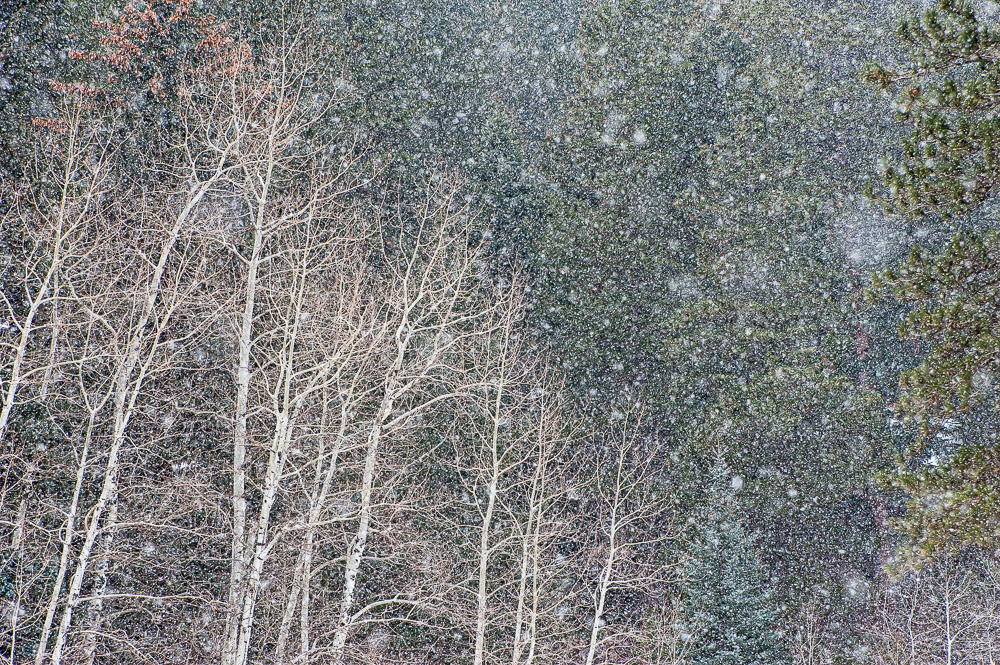
    A reality for me is that bad weather creates opportunity for some of the types of images I really like. Things on the edge or extreme: the edge of a storm, a raging blizzard, ominous clouds. These are things most sane people do not go out to see. I do. What does that say?

    It’s cold at times, but I can dress for it. There might be some pain, but that is life. If a certain amount of pain is a cost of getting images that please me. I’m willing. And I find that when I come back in, with my fingers aching and my beard covered over with ice, I am happy. I am proud that I made myself do it. I feel better about myself and invigorated. There is the satisfaction that I went out and tried instead of sitting at home telling myself the weather was too bad to get out.

    Let me disclaim that I have many years of experience doing this, I get pretty good clothes for the climate, I have a good 4 wheel drive, and I carry proper emergency equipment. Don’t jump off a cliff without looking.

    Seek ideas

    OK, you’re stuck inside. How can you pursue your art? Maybe you can’t be making your images right now, but you can be getting ready to hit it strong when you can. Browse other artist’s sites. (Sorry, blatant plug.) Be amazed at their work and gather inspiration to weave into your style. Not to copy but to motivate new ideas.

    Look, too, for interviews and discussions with artists. These are more prevalent these days because so many of us are feeling very isolated. Artists, among others, are are starting to reach out more to build community. Some are inspiring and motivating.

    Seriously consider online training, like KelbyOne or Creative Live. It costs a few bucks, but really, less than a Netflix subscription. And they are more valuable to your career. Or there are many sources of free videos, such as B&H Explora. The Learn Photography section has an amazing amount of material. Their series on Understanding Exposure is very good.

    And of course You Tube has more photography videos than you could watch in a lifetime. For free. There are valuable ones if you can find them. Your mileage may vary.

    Focus on skill building

    A specific suggestion is to focus on improving your post processing skills during this time. Most of us could use more depth in Lightroom or Photoshop or your tool of choice. This is a great opportunity.

    “For photographers, Adobe Photoshop is still the gold standard of editing applications, and the one to which all others are compared. And even if you’re not a Photoshop user, its omnipresence almost acts like the foundation of a communal language from which to talk about editing photos in general.” – Bjorn Petersen

    Yes, love them or hate them, Lightroom and Photoshop are the basis of a shared cultural experience for photographers worldwide. It is useful to know whether or not you use it.

    The sources I mention above have a lot of good training for this. And you have extra time now for practice and experimentation. That is a great benefit. This new information should be used to build competence. A lot of repetition is necessary before they are ready to be incorporated into your workflow.

    It is not a skill until you can actually do it. The more familiar and experienced you are with your craft, the easier and more fun it becomes. It can be a valuable goal to decide to come out of this with an improved workflow and ability to better craft your art.

    Opportunity

    Opportunity is there. It is always there. My glass has been half empty for too long. I am trying to re-frame my viewpoint. I’m done with the “poor me” attitude.

    The same opportunities are still there. Turn off the TV and Facebook and remember what your creativity is pushing you to do. Start with one little thing. Something you would enjoy and can do in an hour or less. Do it. Now you have accomplished something. Celebrate! Use that to build momentum. Keep going.

    This indoor time is too valuable to waste. Use it wisely.

    Some photographers who inspire me (in random order):

    Cole Thompson

    Fran Forman

    John Paul Caponigro

    Julieanne Kost

    Ctein

    John Shaw

    Ben Willmore (Ben is also a master Photoshop and Lightroom trainer)

    Lorri Freedman

    Karen Hutton

    Jay Maisel

  • Finding Beauty

    Finding Beauty

    Face it, 2020 has been a bleak and trying year for most of us. Perhaps it would seem like talking about beauty is irrelevant at this point. I disagree. I believe beauty is more important than ever. Finding beauty around us will help to elevate our viewpoint to get through this.

    Beautiful fire

    Let me give one personal example. I live in the Colorado front range area. This was a year of wildfires. From mid summer on over 500,000 acres of forest burned in our area, some coming as close as 5 miles to my house.

    This is a great tragedy for me, since I am in the forests every month of the year. This is one of the main places where I do my art and it was a great place for peace and rejuvenation. Much of the area I knew and loved is forever changed (forever being in my lifetime). And not changed for the better.

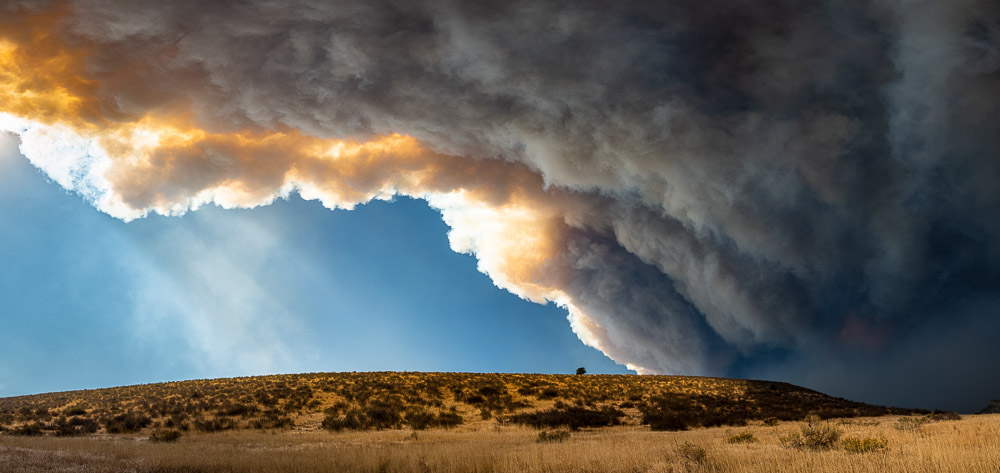
    I’m trying to take an attitude of seeing what is there instead of moaning about what is not there. The image at the top of this post is an example. It was taken at the height of the fires and the massive smoke that blanketed our area. Just behind this ridge a 200,000 acre wildfire is roaring down toward my town. A terrible situation, but an interesting image.

    Attitude

    This illustrates my point that beauty is based on attitude. Appreciation of beauty can also lead to a change of attitude. If I can look at something I think is terrible and worthless and still find beauty, I believe it is healthy for me.

    That is not the same as saying that everything is beautiful. The fires I mentioned are terrible, but there is beauty in places. Cancer is terrible and ugly, but sometimes a person’s character and coping skill is beautiful. Covid is terrible but… Well, I haven’t found it yet, but I’m still looking.

    I have to believe that beauty is there if I learn to see it. That is not ignoring things or burying my head in the sand. Instead, I believe it is an important coping skill and a sign of good mental health. All around us is ugliness. Sifting through that and finding beauty is a worthy skill.

    I will be transparent with you and say I am a Christian. I believe there is a creator who is in charge of everything and has promised us a great eternal future if we believe in him. That faith makes it much easier to look past the problems I am dealing with today and look forward with hope.

    I would never tell you you cannot seek beauty unless you are a Christian, just that I would have a hard time of it. You are completely free to follow your own guide.

    Beauty isn’t kitsch

    People through history have sought beauty. Even if we cannot define it, we can recognize our own values of it when we see it. Whether it is sculptures or paintings of the human form or landscapes or wildlife or still life, or if it is expressed in music, or writing, or dance, the medium does not matter. Humans have expressed ideas of beauty as long as we have had conscious thought.

    Today, though, we are in a time where the idea of beauty is dismissed by the art elite. It is termed kitsch or banal or cliche. Much contemporary art is dark or formless or focused on pain or loss or emptiness.

    I’m sorry to sound critical, but that sounds like artists who are empty. Who are disillusioned or who have no core beliefs in something uplifting. I am sorry for them. Maybe I just don’t understand as fully as they do, but I have to look to things that are encouraging. Or at least things you will look at and say “wow, I didn’t see that”.

    It is human nature, unless art school has trained it out of you, to pause to appreciate a great sunset. Or to linger over a vast landscape or a waterfall or a flower or a face. Different things will appeal to us individually, but almost all of us will call something beautiful.

    Beauty is uplifting. It energizes our spirit and makes us happy for a few moments. How can this be bad?

    If not beauty then…

    If you do not acknowledge beauty in your life, what do you have? What replaces it? Ugliness, darkness, hurt, cruelty? Why would you seek those things?

    You can say “that is reality“, but so what? Why should the negative things be glorified? It has never really been the purpose of art to just depict reality. I want my art to make people feel better, not worse. If you want to feel bad, listen to the news.

    It’s there to be found

    Beauty is still there. It is all around waiting for us to open our perception and appreciate it. I want to be an artist who recognizes that and helps other people to see the beauty, or at least the unique, that I do. I don’t want to make ugly, depressing images because too much of the world is like that already.

    We all need to step back, take a deep breath, and start trying to see the positive aspects of life and our world. Not to ignore problems but to give ourselves the strength to look for solutions. We all need to be uplifted in our spirits. Seek beauty and do not be ashamed to call it beautiful.

  • Boundaries

    Boundaries

    We have or experience boundaries in all aspects of our lives. Some boundaries are essential. Boundaries set limits to define acceptable behavior to allow society to function. But the boundaries I am talking about here are the ones we accept or even impose on ourselves in our creative world.

    What is it that bounds you?

    Most of us are limited by the beliefs we have accepted or been taught. Beliefs are not at all bad. They are necessary. It is when they limit you into a box you can’t break out of that they become a burden. Beliefs should be carefully examined and modified or discarded as we progress through life. Sometimes our beliefs become outdated because we grow to a new level of understanding.

    That is pretty philosophical. Let me take a simple example of a landscape shot. We know what it looked like and we believe it should look like that. But why? Why is it only allowed to look like the exact reality that was there? What is reality? What if you want it to be different? It is probably only your beliefs that prevent you from experimenting with something else and maybe ending up at a completely different place.

    Who sets your boundaries?

    Most of us learned photography from educators or mentors or tutorials. This is great. All are good ways to build skills and learn the craft.

    Many of us, though, simply accept and follow the instruction we were given. We might even proudly tell people “I learned the style of [____] from [____ ]” (fill in your favorites). Congratulations. But so what?

    The great artist you learned from has developed a set of values and skills over the years. They are based on their perceptions, the way they see the world. Their art reflects themselves and their experience. As it should. When they teach a student they are training them to think or view things like themselves.

    Why should you follow their precepts? Doing so limits you to being an inferior clone of the instructor. When we develop our own vision and become confident in the worth of our creativity we will have to uproot some of those fences our instructors put in place to help guide us.

    All the education you have received is good, in that it makes you what you are today. Learn all you can from all sources but reserve the right to form your own opinions. Don’t be complacent. Follow your own path.

    Technical boundaries

    All artistic medium have their own boundaries. Whether it is material properties or technology or physics, everything we use has limits.

    The wonderful cameras I use have hard technical limits. For instance, even though they have excellent dynamic range (the range of dark to light they can capture) it is not as great as some subjects I want to photograph. I have to learn techniques to deal with the limit, like HDR. Or I have to learn to make art that exploits those limits to create something new.

    Great artists tend to push the envelope of their medium. They discover ways to use the limits to express themselves in new ways. Don’t be afraid to push the limits.

    Mental limitations

    For most of us, though, our values and beliefs define our boundaries, not the medium. We hold ourselves back. We avoid pushing past or even seriously questioning the fences we have set up in our minds. Worse, we don’t usually even realize these limitations.

    A lifetime of criticism and training gets deeply embedded. You have to do this. Never do that. Always compose like this. Avoid doing this in post processing. Repetition leads to acceptance and eventually we become blind to alternatives. Fearful, even of trying anything outside the norm as we know it.

    Do you remember the famous Apple 1984 ad? You should watch it. It is a great classic and it has a very important message. Group think and indoctrination prevails in any group. It doesn’t change until someone stands up to it and says “I don’t think so”.

    Overcoming boundaries

    Your biggest creative boundaries are deeply held within you. You have to accept that they are there and learn to take them out and examine them and decide if they should stay or go.

    I recognize that this advice will only be useful to about half the population. The ones who are introverted enough to have the gift of introspection. I know enough extroverts to realize that they don’t think this way. I’m not saying that is good or bad, but since I don’t understand you I can’t offer much advice for you. Personally I observe that a disproportionate percentage of artists I know are introverts.

    I believe the first step to becoming our own is to ask “why”? Ask it of ourselves when we turn back at a “don’t go there” point. Ask it of other people who tell you you shouldn’t do something. Listen to the answers. Be honest with yourself.

    If you find the answer is because somebody you respect told you that is not the way to do it, maybe it is time to experiment. Maybe doing it is right for you even if not for them.

    Asking “why” puts you in a somewhat of a confrontation position. I don’t like that, but I realize it is necessary sometimes. You may get scorn or criticism. You may get evasive answers. But ask, at least ask yourself. Remember, as far as your creative direction, you are the only one who can answer.

    Permission to color outside the lines

    In a previous post I referenced a Calvin and Hobbs cartoon that is very meaningful to me. If you remember, Calvin was doing a paint by number but he wasn’t using the color codes or painting in the lines. When it was pointed out to him, it seemed a bizarre concept to want to paint their picture rather than his own.

    That is perfect! If we accede to other people’s boundaries, we create their art, not our own.

    I have been following this path for years but I still find myself stopped by boundaries I had not consciously acknowledged. I have to constantly give myself permission to go further, do it different, don’t worry about whether or not it looks like the original. It is important to remind myself that if I feel it I can try it. If I can express a reason that makes sense to me, that is good enough. I may not like it after I try it but it is very important and healthy to try something different.

    It is hard to truly give yourself permission to color outside the lines.

    But learn to do it. Make yourself do it. It is worth it. You start to discover what you really see and feel. It becomes your art.

  • Have You Already Done Your Best Work?

    Have You Already Done Your Best Work?

    Have you already done your best work? Have you taken your best image or painted your best picture, or sculpted your best piece? In other words, have you peaked and it’s all down hill from here? What a frightening idea.

    Yet I believe this is a great fear of many artists. Me, too. You love what you have already created. How can you ever top it?

    You have to believe in yourself and in your process.

    Your body of work

    Does your portfolio define you? Many of us believe it does. I think it would better to look at it as saying your portfolio represents the best of what you have done up to now. You will change and move on and do different things with time. Your portfolio doesn’t define you, it reflects you. Who you were up to today.

    If you destroyed your whole library you should be able to go on from here and build a new, better one. Of course, none of us would want to do that. We have done a lot of great work in the past. We have many impossible to recreate scenes. Our library or portfolio represents a huge investment of both time and creative energy. We should embrace that and celebrate it.

    But the creator is much more important than the creation. If I go to the Louvre or Orsay (back in the good old days) or another great museum I see people lined up admiring some of the important and enduring works of history. But the focus is on the art. This is only appropriate at these museums because the artist is dead. It is much more interesting to study and appreciate the people who created these pieces. They are the genius. The art is just a reflection of their vision. These famous works came out of their minds and through their skills. What was it about them that allowed them to create and overcome?

    In the same way, you are the one who makes images. If you have made great images in the past you almost definitely will in the future unless something changed to take away your skill. This can happen, through life-altering events like a wreck or a stroke. But barring something like that, it should be true that your creativity grows and persists. Very few of us can use this excuse.

    An idea

    A great image is just an idea you had at a particular time. You will have more. It is your ideas and your vision that creates. Ansel Adams famously said “The single most important component of a camera is the twelve inches behind it!“. In other words, images are made in your head, not in a camera.

    The “muse” or our creativity has ups and downs. Sometimes it seems like you are empty. You fear you will never do great work again. Be patient. Keep working at whatever you find while you wait for the spark to return. It will. Always.

    Fear

    Don’t be limited by fear of trying something new. Even if you are famous for one look or style, at some point it limits and boxes you in and you start to become stale. Then it is time to re-invent yourself. Don’t be afraid to make a sharp 90 degree turn and do something completely different. If that is what your creativity is calling you to do, follow. Better to follow it into uncharted territory than to have it leave you behind.

    And sometimes we look at the work we have done and think “Wow, I can never do better than that”. This creates fear of failure. We become afraid of creating anything because it might not be as good as what we have already done.

    This is because we are trying to do something like a work we did in the past. Don’t worry about trying to recreate an old look. Go with where you are now. It probably won’t be the same as what you did before, but it is you. It represents where you are now in your life. If you are growing as a person and an artist, it will be better.

    Push

    Always be pushing yourself. You are the only standard of measure that matters to you. Learn, grow, experiment, be open to new thoughts and ideas.

    When you don’t feel creative, work anyway. Just doing the work is refreshing and therapeutic. It is like “putting in the reps” that is required to learn and master almost anything. Keep pushing and when the creativity floods back, you have improved and can do even better work. You will be better equipped to keep up with the inspiration.

    Keep moving. Don’t ever just sit and feel sorry for yourself. Get out and do something. Don’t try to recreate your best works, do new things that are better.