An artists journey

Tag: fear

  • Real Reality

    Real Reality

    As I write this in November 2022, Meta (Facebook) has just laid off about 11,000 employees. I feel sorry for the people, but it got me thinking about virtual reality vs “real reality” I don’t know about you, but I greatly prefer real reality.

    Virtual reality

    Have you noticed that many of the largest tech companies (Meta, Microsoft, Google, etc) want to move us to a world where we experience life through virtual reality goggles. We would sit in our chair and “experience” any place or time, we can do things that would be illegal or impossible in the real world. And generally is seems to be perfectly safe.

    In the virtual world we don’t have to worry much about the consequences of our actions. Game over. Restart. We don’t die or go to jail. What’s not to like?

    Real life

    Contrast that with the real world. Things take time and money and most of us have to work to earn a living. We are “stuck” in the era we are born in. Our society has lots of laws and restrictions we have to live with. We get hot and cold and wet. We get sick and break bones. People can be cruel. Marriages break up. We die.

    Wow, the virtual world sounds pretty good, doesn’t it. 🙂

    It’s about the experience

    To me, one of the differences is a safe, manufactured, managed experience vs what life brings us and what we can find in the world. The real world is real. The virtual world is fake. Even when the technology gets to the point where the virtual world looks real (it’s a long way from it now), it is still fake.

    Deep down inside, you know fake experiences are fake. Unless you live your life with only fake experiences.

    Let me chance making you upset with me. I don’t have much use for Disney World or other similar entertainment vendors. It may be fun to take the kids or grand kids there, if they’re under about 8, just to watch their excitement as they are entertained. But otherwise, I can’t escape the knowledge that it is all fake. It is all a manufactured experience made by a large corporation. That leaves me completely unsatisfied. Except for a good roller coaster. 🙂

    When you know the pirates on the river cruise aren’t able to attack you, it looses any terror. When you figure out the rocket ship you’re flying isn’t going to crash no matter how badly you “fly” it, there is little incentive. Even that good roller coaster that thrills for a couple of minutes, in reality, has no lasting hold for us. It will not fly off the track or crash into something or drown you when it seems to plunge into the lake. Shallow experiences. It is just shaking us around in a safe and controlled way.

    Being there

    This quote captures an essence of the notion of “being there” in real life:

    When I am out, I am there to be in the countryside, to have an experience; to notice, to engage, and perhaps record some good data with my camera. I am not thinking about making images, otherwise, I risk missing the experience altogether, and that seems counter intuitive. The experience comes first.

    Alister Benn, “Luminosity & Contrast”

    It’s not a game. No one is directing it or controlling it. No ads are being served up to us. It is the wild, unpredictable, real world. I agree with Alister’s description of the experience being key. The experience triggers our interests and creativity. We may not even know why we are drawn to an image at the time. We will figure it out later. Right then it is our subconscious speaking to us. But the experience has to be real to be meaningful.

    Safe?

    If there is no risk, there is no reward.

    When we are experiencing the actual world, we are not necessarily safe. If I am in the mountains taking pictures, I could get lost; I could make a misstep and break my leg; i could slip and fall off a cliff; a bear could attack me. Or if I am in the city shooting images, I am even more at risk.

    The fact that there is danger involved heightens the experience. People these days seem to believe that anything unsafe is bad and should be avoided. The reality is that life is unsafe. We don’t know what is going to happen 5 minutes from now.

    Putting our self in situations that can be uncomfortable or even a little dangerous can be good for us. We become more self reliant and able to think and handle situations. It gets the blood pumping and sharpens our senses. A little real danger is far more exciting than a lot of fake danger.

    To me, the dangers of being a couch potato and spending our lives anesthetized in entertainment outweigh the dangers of exposing ourselves to the real world. Entertainment is a dangerous drug.

    Don’t be stupid

    Oh, I can’t say that can I? It would imply that some people do not use good judgment. But as I talk about risk and experience, let me balance that with the counsel to do it realistically. You have to appraise the level of the risk and your capability. I’m not saying you should put yourself in danger.

    For instance, when I talk about going out in very cold conditions and snow, I dress appropriately. I have the equipment. And a good 4-wheel drive to get around. And a lot of experience. Getting a good picture is not worth killing myself.

    Don’t put yourself in any situation that you can’t handle or that is not worth the potential cost. Get training on identifying and countering the types of threats you could face. Most of all, be aware of yourself and what’s going on around you. Situational awareness applies even out in the woods. Be realistic and make sure you are physically and mentally capable of what you are doing.

    Live a real life

    My art involves outdoor photography. I do all of my shooting outside. As such, I have to get out in it. Weather almost doesn’t matter. Today, as I write this, it was 22F and snowing and with enough wind to make it pretty chilly. I was out walking nearly 5 miles in it. It was a nice day. The experience was more memorable than the images I got.

    It is not always pleasant. That is not my goal. Life isn’t always pleasant. Where I live we have temperatures from 110F to -20F. We can have winds over 60 mph. There is snow and blizzards and thunderstorms, even tornadoes and wildfires. Being out in those things makes you take a moment and say “Wow!”. It is real life.

    I feel real and alive and in the moment when I am out experiencing the world live. I am a player, not a spectator. Despite the limitations of my opportunities and capabilities, I want to experience life for myself. I am not content to let a corporation or a game developer or a movie maker package an experience for me, to feed me the same program they give to 1,000,000 other people.

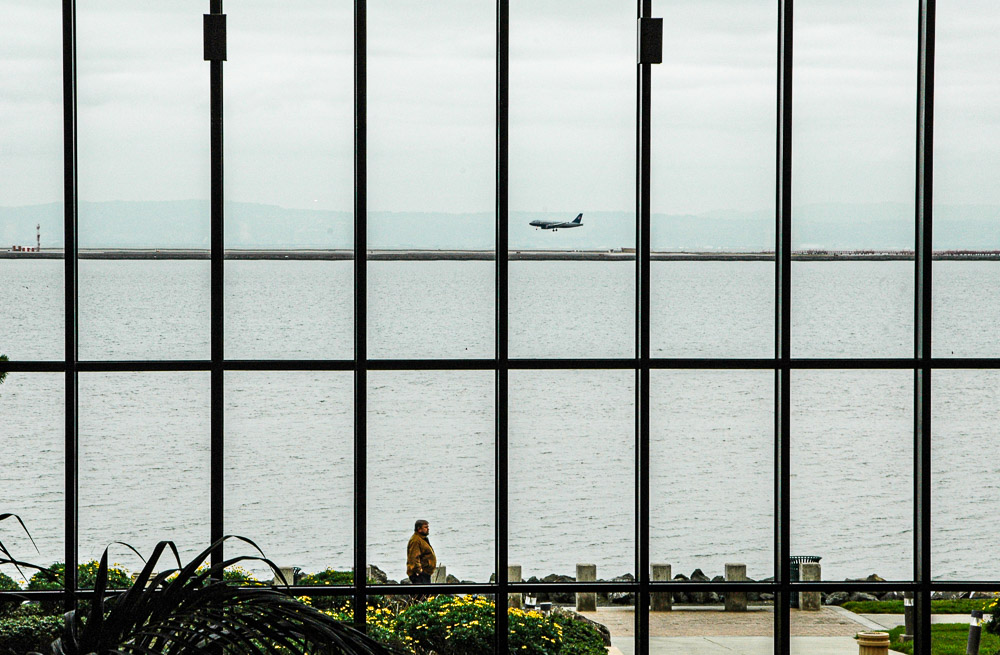
    Look at the image with this article. Look closely in the top right. That woman is living a real life experience at the moment.

    Live life to make art

    Artists are often pictured as counter-culture, wild, living on the edge. To some extent, that is true. We don’t have to look different or dress different, but we should be different. Our art is about bringing experiences to people. As such, we have to experience things ourselves. That is a source of inspiration for us. Our passion from what we experience needs to be felt by our viewers.

    Do we have to suffer to make art? Is danger required? Of course not. Monet painted many of his great works in his back yard. The issue to me is are we actually living a life that fuels our creativity and vision? We have to have real experiences, not fake, packaged, safe entertainment.

    I don’t think I can generate passion for my viewers playing a flight simulation wearing a virtual reality helmet. It may be enjoyable, but it is a fake experience. I don’t want to show fake experience to my viewers. We don’t have to hang out over a cliff to live life. But get out. Be real. Live your own life, not something someone else packages and sells you. Take risks where necessary. Be yourself.

  • Competition

    Competition

    Why is it that we feel like we are in competition with other artists? Maybe, at its root, it is envy or insecurity. I don’t like to live in a competition. My desire is to make art and share my vision with other people. I believe that feeling we are in competition with other artists leads to problems for ourselves and can be a malignant stress eating away at us.

    Not competing until…

    Most people merrily go through their lives enjoying art without feeling any sense of competition. But for those of us who become artists, unfortunately, we tend to become critical and competitive.

    Once we are in the game we tend to look at other artist’s work more critically. It is hard to not think we could do better. Or think that our image that was similar was better composed and executed. Maybe we are right. Often, though, it is our ego or fear talking.

    Theodore Roosevelt (may have) once said “Comparison is the thief of joy”. Regardless of who said it, it is true that comparing ourselves to others is seldom beneficial and uplifting.

    Fear

    Why should we fear looking at someone else’s work? I think a lot of us are insecure. We aren’t secure in our conviction about the adequacy of our artistic skills. We have to boost our confidence by convincing our self that we are as good as them. Perhaps we fear failure and are unwilling to put our work out in the world publicly and face the potential criticism and rejection.

    It is not really a zero sum game – one winner and everybody else looses. When we see someone’s work that is good and excites us, we should be happy. It was a great achievement by them and it can inspire us to rise to greater levels in our own work.

    But doesn’t their achievement strike fear into us? Oh no, we aren’t any good, why am I calling myself an artist, how can I ever compete with them? This is our insecurity turned to fear. We try to compensate by criticizing the other artist’s work. Maybe it will make us feel better. If we believe our self.

    Jealousy

    Another negative feeling we may get is jealousy. We may not like to admit it, but think about it. Other people are getting praise and attention. They are selling well and making a lot of money. I should be in this gallery instead of them.

    We wish we were them. So we resent them. We look for ways to tear them down and to prove, even just to ourselves, that they are not so great. To believe that we are just as good.

    But don’t forget, you are jealous of them because you recognize their talent. That should be sobering.

    Become a critic

    Even if we don’t have full on, green-eyed jealousy, we may become a critic. To paraphrase George Bernard Shaw’s famous quote: “Those who can, do. Those who can’t become critics.”

    We can get to this point through festering fear or envy or jealousy. We try to put ourselves above the other artist. To give ourselves credentials to label them, to minimize their achievements, even to just nit-pick (the top left corner is not in perfect focus).

    Let me be very controversial and say I don’t think there are many critics who are worth listening to. Unless a critic has demonstrated history of creativity and success in similar art forms, they should be just another voice of someone entitled to their personal opinion.

    If George Lepp or John Paul Canponigro gave me a critique I would listen closely and thank them for their opinion. I would carefully consider it and may or may not act on it. If I decided to critique George Lepp, he probably wouldn’t listen to me at all. As he should. I have little experience in his genre and zero track record compared to him.

    Competitive market

    It is unavoidable a highly competitive market. We are always being compared to other artists. Fairly or unfairly, there will be winners and losers. The best don’t always win. “If you make it they will come” is ridiculous. There are biases and vested interests and politics at play everywhere.

    When we compete – and we always compete – we need to avoid the attitude that we are competing against “all those other artists”. That is turning our view out to worry about forces we cannot control. Instead, do your best and make work you are proud of.

    Sure, for a particular contest, we could research the judges and their styles and biases and research the audience and what usually sells and create work designed to score well here. It might work. But whose art are you creating? Is your work going to be dictated by other people’s attitudes?

    Relax

    Fear, jealousy, envy, and being critical are self-destructive attitudes. Look at other artist’s work and admire the ones you like. Go to them and sincerely congratulate them. It will have rewards for both of you. You will reclaim your self confidence and creativity. Getting over the competition and fear and jealousy will free up your emotional energy to create art.

    The reality is that we have our own unique vision, our own style and viewpoint. We are best off when we try to be the best version of our self we can be and create our own art. Even is nobody appreciates it. (cue a vanGogh discussion here 🙂 ) Unless you are starving and view your art as a job to earn money, it is better to follow your own vision. It would feel good to win that contest, but wouldn’t it be more rewarding to feel very proud of what we created?

    Art is an intensely personal internal journey. Hence the tag line for my blog: An artist’s journey.

  • Excuses

    Excuses

    Excuses, we have them for every occasion. There’s nothing interesting here. It’s too hot. It’s too cold. I’m too busy. The weather is not right. I don’t like this light. I’m not good enough. I’m shy. It could go on for a page or more. Excuses are our way of letting ourselves off the hook when we are scared or don’t want to do something.

    As a heads up, this is about the dreaded topic of marketing. In case you want to stop reading now. 🙂

    Why make excuses

    Excuses are a way of absolving ourselves of responsibility. We shift the blame to someone or something else. It lets us off the hook. We didn’t fail, it was “their” fault we couldn’t do it.

    Have you done that? I sure have. We don’t want to feel bad about ourselves. After all, we have a self image to nurture. The problem is when we rely on excuses to not do anything.

    Fear

    A lot of times we make excuses because we are afraid of doing something. Contact that gallery? No, they wouldn’t want my work. Submit for that show? No, I’m not good enough.

    Fear of failure keeps us trapped in our own prison. We build a cage of excuses around us to protect ourselves from failing. But we can become trapped in a cage of our own making.

    But we’re thinking about it wrong. What we fear almost never happens and not achieving our objective is not the same as failing.

    What we fear

    I believe a lot of us artists are introverts. We shun confrontation and don’t like to be criticized. Even if we are not introverts most of us do not like these things. So we fear that if we put our self forward we might be rejected. People might even think bad of us.

    Here’s what I am learning: we will be rejected, again and again, and no one really knows who you are or cares enough to think bad of you. That sounds harsh, but it should actually be somewhat comforting.

    I apply for a show and my submissions are rejected. I don’t know why. They do not give a critique. Perhaps what I entered doesn’t appeal to the juror. Perhaps they had different styles in mind. Maybe the juror was in a bad mood at the time. I cannot know. But what they didn’t say was “you are a failure; I hate your work; you are not worthy of being an artist; don’t ever enter this event again”. No, it was just a rejection. Get over it and go on.

    Trying

    You know the old Yoda line “Do or do not. There is no try“. It is a great line, but kind of misleading. Like Luke in the scene with Yoda, if we do not believe we can do it, we are probably right. The reality is that for most things, trying is all we can do. We cannot always create the outcome we want as long as we are dependent on other people’s decisions.

    Trying does not mean we doubt ourselves. It means we recognize that many of the attempts we make will not succeed. And we’re willing to live with that.

    It’s the trying that we fall short on. We’re afraid so we never try. We get a rejection so we stop trying. Persistence is required in order to succeed.

    As I have said before, “build it and they will come” doesn’t work. We have to let people know about ourselves and our work. This is called promotion. It is called marketing. That is not a bad word. It is what makes us recognized and successful.

    Just do it

    For years I had the attitude that I love doing art but I hate marketing. I am shy so I am not good at it. People will eventually recognize the worth of what I do.

    Ain’t going to happen.

    People are not out there waiting anxiously to “discover” me. They do not know I exist and don’t really care. I have to take definite and active steps to make them aware of me. It may take many attempts before they will take a serious look at my work and see something they like. This is called “marketing”. I now see it in a different light. Rather than being a distasteful thing I should do, but don’t, I see it as an exciting opportunity to promote myself and be recognized.

    No more excuses.

    The great Wayne Gretzky famously observed “You miss 100% of the shots you don’t take.” You cannot succeed unless you try. I have finally internalized that. Just coming to believe that made it far less distasteful. Starting to do it and discovering that a rejection is not fatal and no one blacklists me for trying has made it far easier as I go along.

    Try something. Act quick. Learn from your mistakes. Keep trying. Believe in yourself and never give up.

    You haven’t failed unless you don’t try. Stop making excuses. Just do it.

  • I Don’t Know

    I Don’t Know

    How did it get to where we think we are supposed to know everything? Why is it wrong to say “I don’t know“? I think it would be horrible to believe I knew everything. Where would be the opportunity for discovery? To be able to let my curiosity run free? I am quick to tell anyone I don’t know, if I don’t.

    Fallacy of certainty

    Believing we have to know everything is a trap. It will doom us to failure and disappointment. I would say there are 3 general classes of knowledge:

    1. Our values.
    2. The things we interact with on a regular basis.
    3. Everything else “out there”.

    As a person you have to know your values. Those things you will not bend. At what point will you fight for what you believe? These are the bedrock principles we build our lives on.

    In the next circle, we all do our jobs and use a lot of technology every the day. We probably drive a car or use a computer for various tasks or bank or shop online. It is important to being able to function in society that we understand enough about these things to be able to use them. That doesn’t mean we have to have a deep understanding. I was an engineer in the technology/computer industry for a career, and I absolutely know I do not fully understand all aspects of everything I use. In most cases it is OK to just understand enough to efficiently get the task done and minimize surprises. Maybe just to know enough to know how to not be stupid.

    Then there is everything else. The world is so big and interconnected and complex that no one knows how or why most of it works. I don’t understand micro or macro economics, and I’m not sure anyone else does, either. NFTs still seems like a Ponzi scheme to me. I don’t understand why people become zombies when they enter politics. Why do bad things happen to good people? I don’t know and I will never figure it all out. Nor do I have to.

    No one knows even most of everything

    We listen to the talking heads on the news spouting meaningless information with full confidence. We know they are probably wrong, but they speak with authority. Therefore, we distrust ourselves. And after a while we realize they don’t know anything, either. When neither side of the debate or the “experts” can be trusted, we tend to check out, become cynical and angry. Don’t forget, though, that they have an off button.

    There is a saying called Sturgeon’s Law that says “90% of everything is crap”. I have my own corollary to that: Sturgeon was an optimist.

    If most of the information you get is bad, what do you do? Hopefully you start to trust yourself. Learn to research things that are important to you. Research means even listening to people whose opinions you don’t like. You can’t just listen to your favorite guru who says things you like to hear. Make your own decisions. Build enough knowledge to trust your instincts and decisions. Don’t believe anything you hear until you check it out.

    Curiosity

    Too much ranting about heavy stuff. Let’s talk about art!

    After a long time of working up to being an artist, I have concluded that I have to follow my curiosity and trust my instincts. Sounds simple, but it is sometimes hard.

    I have spent time at times doing things in a way that they would be accepted by other people. It wasn’t entirely wasted, but is seemed kind of phony, and it was. I realized I was making someone else’s art. I don’t do that now.

    But do we follow the fashion of the day? Do whatever we have to do to be accepted by the ones who style themselves as the opinion leaders? Who anointed them with this divine authority? They are just people with opinions.

    I find that most of my best work happens when my inspiration is to ask “what if?” or when I say “I have never seen this like this before”. And do something with it.

    Adventure

    Do you lead a boring, monotonous life? Or is every day a new adventure? Much of the choice is ours. It depends on our attitude.

    I believe that artists have the opportunity to lead lives of adventure and excitement and personal growth all the time. Even if we never leave our town.

    Adventure is exploring and finding new things that excite us. We don’t have to go to exotic locations to find that. Our point of view determines our adventure.

    Nearly every day I go walking in the areas around my studio. I always take my camera. It is covering the same ground. Occasionally I create a new route, but there are only so many variations. Sometimes I get bored with it. But I am coming to realize that when I am bored I am not letting my curiosity roam free. If my attitude is better I am likely to discover new things or appreciate something for the first time. The same with driving through Kansas. It can be a nice adventure.

    Artists are on a journey of discovery

    As artists, we should be explorers. Not discovering unknown lands, but finding new things about ourselves and the world we live in. These discoveries could be as close as our back yard.

    To do that, we need to be always asking questions: What is this? What else is it? Can I see it different? What if this was combined with that? What if …?

    At the root, all of these questions are based on the assumption that I don’t know – but I will explore it to see where I can take it. Not knowing is fundamental to being creative. When we don’t know, it should excite and inspire us.

    Forget about the rest of the world that is pressing in and telling us what we should see and believe. We are capable of deciding for our self. Being an artist means being comfortable with high levels of ambiguity. And the accompanying joy of finding new answers or showing the world something they have never seen.

    Be yourself. Trust yourself.

  • That’s Not What I Was Taught

    That’s Not What I Was Taught

    We all learned our craft somehow. And if we develop as artists there comes a point where we have to stop relying on what we were taught and make our own way, maybe in a different direction. At that point we are going beyond what we were taught.

    Instruction

    Unless you were raised by wolves and picked up the concept of making art through a mystical infusion, you were taught somehow. For many that means formal art school or classes and workshops with leading artists.

    Even though I consider myself self-taught, I had thousands of hours of instruction in the form of books, videos, self-evaluation, looking at art, visiting museums, etc.

    Somehow, we got trained. The “muscle memory” was built. We learned the basic techniques and technology. The history and design and composition and color theory and the dozens of other layers of information we need to create art are introduced to us. We build on what has come before.

    It’s like shooting thousands of baskets until you are completely comfortable with the feel and weight of the ball, until you start the have the “touch” to put it where you want from all different angles and distances. This isn’t playing basketball, it’s just getting prepared to play basketball.

    Apprentice

    When the basics are laid down, most of us go through a long “apprenticeship”. It may not be formal and we may not call it that, but that is what it is.

    By apprenticeship I mean we are practicing the basics until they are smooth and natural. At this point we are probably listening to or watching a mentor and trying to create work like theirs. Nothing wrong with this. It is part of the learning process. But we are still creating someone else’s art. This is practice, training.

    To continue the basketball analogy, now we start to practice with the team. We become comfortable passing and catching and playing positions and working smoothly with the others. The coach is yelling at us and making us do drills and repetitive work that seems boring and useless. Maybe we mostly sit on the bench in games and only rotate in occasionally. The reality is that we are probably not as good yet as we think. The coach knows that. That is why we aren’t playing much right now.

    As artists, maybe we go out shooting or painting a lot with our mentor. They direct us to locations and talk through how they see the image. It is helping us learn to create a decent image. It may not be how we see it, but at this point we are trying to produce results that match theirs.

    Independence

    Ah… someday. The longer we go through our training and apprenticeship, the more we begin to chafe under the restrictions. As we develop our own style and vision some of us yearn to break away and do what we think we need to do.

    One of the things Jesus said to his disciples was interesting (well, a lot were): “Students are not greater than their teacher.” That’s true, as long as there is a teacher/student relationship. As long as the teacher has something to teach you. But he goes on to say “But the student who is fully trained will become like the teacher.”

    There comes a point where there are diminishing returns from studying from a teacher. If the student comes to a parity level with the teacher, they become the teacher.

    That is the thing. At some point, we become our own teachers. Not that we know everything, but that no one else does either, so we have to guide our self.

    Where do you go then?

    What I observe, unscientifically, is 3 paths at this point:

    • Continue doing what you were taught
    • Enhance it a little and go slightly beyond
    • Figure out that there is something different

    It seems to me that most artists proudly continue doing work like they were taught. They go on to get better and better at the same things. I’m not criticizing them. This seems to be the best path for many people. I can’t understand it myself, but that doesn’t make it wrong.

    Another group pushes a little beyond what they were taught. They enhance the techniques, maybe modernize them with new materials or processes. Maybe introduce a little fusion from another school. The result is a natural evolution of what they learned. Again, no criticism. But again, I can’t understand staying so close to home.

    It would seem obvious that I must be in the last group, since I don’t fit anywhere else. 🙂 We sincerely thank our instructors for the training they gave us. But we realize we have a different vision and will be creating a completely different form of art. This is not a rejection of our instructors, just a growth stage.

    Our own body of work

    My view is that at some point, we have to let our own vision and style emerge and take the lead in our work. This is not something that happens automatically as soon as we leave the umbrella of our instructor. It happens over some period of time. The time is completely personal and dependent only on ourselves.

    Hopefully at this point we can trust our judgment to recognize and follow the path we are being drawn to. We are creating our own body of work, in our own style, following our own vision. Now we are really an independent artist. We have no more need for a teacher. Confidants, advisors, mentors, critics even, but not teachers.

    What we are doing is not what we were taught. It is what we have transformed that teaching to that works for us.