An artists journey

Tag: creativity

  • Fine Art

    Fine Art

    Fine art is a very nebulous term. I don’t like the term, but I don’t have a suggested replacement. What is “fine art” photography? How do I know if I am doing it? Is there a right and wrong way to do it?

    Photography genres

    Photography is a large domain. It contains many specialized disciplines within it. Each has unique focus and techniques.

    I will not attempt to list them all. I don’t even know them all. But some that occur to me are portraits, street photography, photojournalism, architectural photography, food photography, commercial photography, fashion photography, macro photography, and landscape photography. Cross-cutting differentiators within that are things like High Dynamic Range (HDR), Intentional Camera Motion (ICM), and black & white.

    In addition, the majority of the photos shot in the world every day are on cell phones. And a lot of these are selfies used to make other people think we are having a better time on vacation than we really are.

    Each of these areas has different goals and motivations and markets. It is very hard to talk about “photography” in general.

    What is Fine Art?

    But narrowing it down, what is “fine art photography”? How do you know if you are doing fine art?

    Fine art photography is distinct from most other genres of photography in that it is first and foremost about the artist. It is not about capturing what the camera sees; it is about capturing what the artist sees. In fine art photography, therefore, the artist uses the camera as one more tool to create a work of art.

    One thing you should never hear asked about a fine art image is “is that the way it looked?”. It is not intended to be representational. That is, unlike traditional landscape or photojournalism, it is not a literal representation of what was there.

    What are the rules?

    We have to define our own rules. This form of art is about expression and interpretation. I want you to participate in what I saw and felt about the image. That may be considerably different from a straight photograph of the scene.

    But depending on the situation, sometimes the captured image is the artistic impression I want. It is not a rule that an image must be modified extensively. There are no rules except those you adopt. If I am able to achieve my intent in camera, so much the better.

    When I capture a scene for art, I consider it to be raw material. It needs to be shaped and molded to become the final image. So even if the captured image is essentially my final vision, approaching it with this attitude gives me more freedom to be more creative. When I expect to modify my images I have little inhibition to doing it.

    Politics and causes

    I try to avoid politics in my work, but that is a personal choice. Some photographers are very caught up in a cause and want to do work to support it. You might consider Ansel Adams and Galen Rowell to be advocates for the Sierra Club. David duChemin does publicity for the charities and non-governmental organizations he is involved with. There are many more examples. It is natural to want to use your talent to support things you believe in. I do not make any judgement one way or another on that.

    I believe, though, that the first job of an artist is to make art. This is completely my own value that I cannot bind on anyone else. I see many artists get so caught up in their cause that everything becomes deathly serious. There is no more fun and enjoyment. No more creativity for its own sake. Everything is pushing their cause, and if you don’t agree, then you are evil.

    To me, the end result of this is that you become a propagandist and cease to be primarily an artist. If that is what you want, great. But it seems very difficult to balance creative, inquiring, free ranging art with propaganda. One or the other will be dominant.

    I do fine art

    Whatever fine art is, I have concluded that is what I do. I want you to feel what I was feeling, and see what I thought was significant. Whether I achieve that in-camera in one snap of the shutter or through something that is edited extensively or even composited from multiple images is immaterial. No more important than how many layers of paint a painter applies to his canvas. He does what he feels he needs to do.

    My work is intended first and foremost to satisfy my creative urges. It exists purely for its aesthetic qualities. I am my primary audience. No one gets to tell me, no, you should do this. Well, my wife can, but even then I may not listen to her.

    My work is intended to be art, not documentary. I am not presenting literal truth, I want you to respond to it emotionally. And for an introvert like me, dealing in feelings is a stretch goal.

  • How To Be Creative

    How To Be Creative

    Is creativity a talent only certain people have? Is it a process to be learned? Did you ever wonder about how to be creative?

    The Muse

    People often speak of being visited by the Muse. Or more likely, not being visited recently. The muse seems to be this mysterious, invisible force that comes on us at times and endows us with tremendous creative force. For a while. Until she decides to leave. The muses are almost always described as female.

    I can’t deny that sometimes I seem to be filled with creative energy and sometimes I can’t come up with a single good idea. Is that because of muses? I don’t want to jinx myself, but I don’t think so. It is too easy to blame external things. There is an ebb and flow to everything in life. I think creativity is part of that. It is unreasonable to expect to be on a creative high all the time. It would be nice, but we have to recharge sometimes, too. If it was constant, we would appreciate it less.

    A talent

    OK, so is creativity a talent a few have naturally and most of us don’t? It seems like that sometimes. Have you ever met someone, maybe an artist, maybe someone in your work life who seems to exude a flow of creativity? Someone who seems to get more done than anyone else?

    I have. Several times. It can be humbling. It can make you want to change careers because you seem so inferior.

    Talent is a real thing. Back in my life as a software developer I did some investigation into this and found evidence that there can be a 20 to 1 difference in productivity between developers. That seems to imply that some have a natural talent for doing the work. But, don’t let this slip by, they evaluated a 20 to 1 difference in productivity. That is not necessarily creativity. Creativity is much harder to measure.

    Here is a truth of life that is important to remember: just because something is easier for someone than for you does not mean their work is better. So while there are differences in talent, that does not exclude anyone.

    A process

    On the other hand, we can demonstrate that creativity is a process. We have to do it, not sit around waiting to be inspired. A couple of quotes from my article I reference above:

    Inspiration is for amateurs. Us professionals just go to work in the morning.” – Chuck Close

    Hard work will outperform talent any day of the week.” – Joel Grimes

    One thing we seldom talk about as an element of creativity is domain skill. That is, to be creative you first need to be good at what you are doing. Whether it is photography or writing or software development, you have to be skilled in your domain to be able to rise above the average.

    So a good part of our process is to always be working to improve our skills. When “the muse is gone” and we do not feel inspired, at least be working on our craft. I have often seen in my own life that sometimes just focusing on a technical skill can lead to new thoughts and ideas for new work.

    Am I creative?

    Ah, the question that haunts most “creatives”. We often doubt ourselves. After all, what we think and do is obvious to us. So it must be obvious to everyone else. Right? Probably not.

    Almost everyone is creative is some areas. But I have never met someone who has all their faculties who does not have the ability to create at some level.

    But we set a very high standard for ourselves, don’t we? We expect massive, glowing creativity. World changing things. Really? Not many things change the world to any measurable extent. Our insecurity about our creativity is right up there with our imposter syndrome fears.

    Try this experiment. Look at a lot of the published work by other artists is your field. There will be some that blow you away. That really impress you and make you feel inferior. But think about 2 things. First, remind yourself that you are only seeing their best of the best. You never see the 99% of the failures. Are you comparing your failures to their best?

    Second think about what you consider the fails among that work. Will there be a significant part of it where you will say “Really? I throw away stuff like that.”? This should convince you that you can be just as creative as most of them.

    Ebb and flow

    Human nature is such that we don’t just go through life at an even level. There are peaks and valleys, ebb and flow. Sometimes we are up and sometimes we are down. Don’t get disappointed when your creativity follows this pattern.

    But one of my points above is, get to work. Do something. Don’t sit around feeling sorry for yourself and waiting for the muse to come back. Work. Maintain a discipline of doing things anyway. You may throw away most of what you do in this phase, but you can learn and improve your skills and it can be effective at getting you out of the valley more quickly.

    One of the self help gurus I for some reason get stuff from recently said “Confidence is a byproduct of action”. I happen to agree with this. And I would add creativity is, too.

    Little C or Big C

    Notice that I have never defined what creativity is. This is intentional. Don’t most of us say “poor me, I’m not creative” without defining what we mean.

    One conventional definition from Psychology research is that creativity is “the production of ideas or outcomes that are both novel and appropriate to some goal” (COMPONENTIAL THEORY OF CREATIVITY, Teresa Amabile, Harvard Business School). The clause about goals is there because the motivation of the research was the corporate environment. Talking solely about art, I would remove that and concentrate on the novelty of a work product.

    So, what is novelty and how novel does it have to be to be considered “creative”? Amabile and others say that almost everyone has some degree of creativity. It is expressed in different ways and with different impact.

    She uses an example of what she terms little C creativity vs big C creativity. The dentist who came up with the idea of letting kids wear fun sunglasses during exams to protect their eyes from the bright lights is what she calls little C. It is creative but not hugely novel. At the other extreme Schawlow expressed the principles on which all lasers are based. He won a Nobel Prize for that. Definitely big C.

    So maybe we ought to give ourselves a little more freedom. Creativity does not have to be Nobel Prize winning. A novel composition or idea in our images is genuinely creative if you have never seen it before.

    Novelty for its own sake

    So if creativity revolves around the concept of novelty, how novel and new does something have to be? I think many artists are too caught up in this and try to do novel things regardless of their artfulness. Just browse through most contemporary art galleries or The Hand Magazine.

    The definition of creative above brings together novel and appropriate. Maybe doing something solely because no one else has ever done it is not good enough. Don’t forget that the idea is to make art while we are doing it.

    Creativity

    So maybe we shouldn’t be expecting lightning flashes of brilliance in our daily work. Maybe we should work our craft and perfect our skills to make sure we are about as good as anyone else. Then “connect the dots” as Steve Jobs used to say. If we can be open and receptive to thinking in new ways, we can look for opportunities to apply novelty as an edge to differentiate our self from the pack. Then the novelty is actually a creative enhancement to our work, not just something novel.

    Today’s image

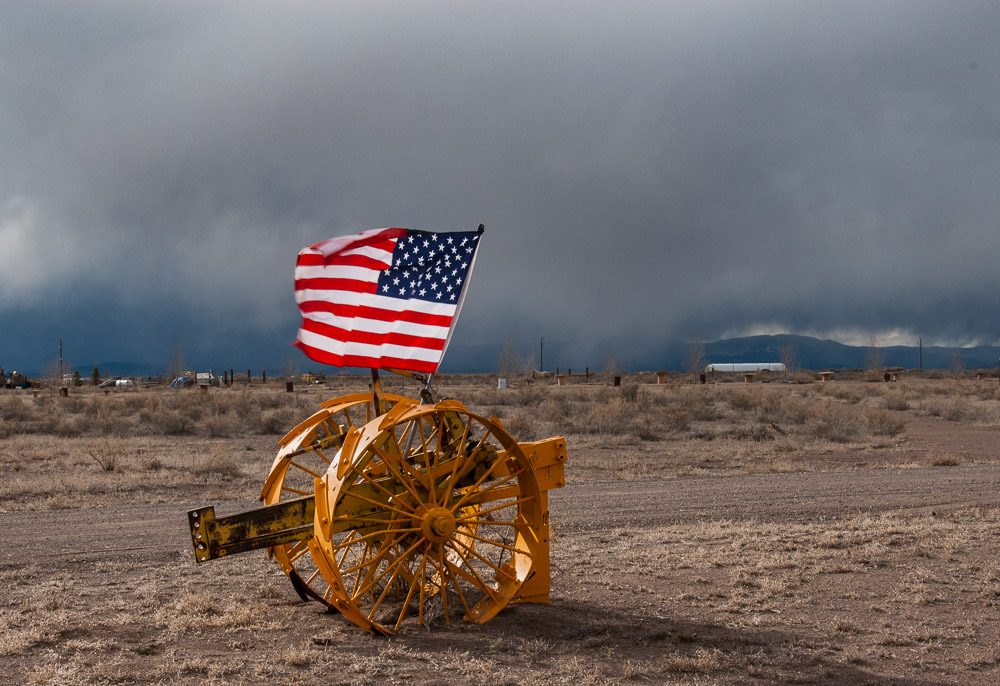
    I seldom try to create “message” images. When I came across this scene, though, it was too powerful to pass up. It connected several dots with me. I think I have made a creative image that can express a strong idea. Maybe more than one. What do you think?

  • Overcome Boredom

    Overcome Boredom

    I have written before that we should be able to find interest wherever we are, even if it is familiar territory. I still agree with this, but sometimes it helps to do something different. It is easy to get stagnant without a refresher. So what can we do to overcome boredom?

    Love the familiar

    There is a comfort and special knowledge that comes from working with well known subjects or locations. We get to know all of the moods, the look in different lighting and conditions, the “best” times. When we have a familiar subject we can work when we want, we are not dependent on the luck of what we find the day we are there. We can keep coming back whenever we want to explore how we best like to see it.

    This has always been true. Claude Monet was drawn to his water lilies. Some artists only do portraits, because they are energized by the personal interactions. Guy Tal mostly does images of the Colorado Plateau in Utah. That is what he loves and it is where he lives.

    Probably most of us have a favorite place or subject we are more drawn to and spend a lot of time working with. It is natural. Familiarity tends to build strong ties and a deep appreciation.

    Stagnant

    But if we are not careful, we can get stagnant. We get into a rut. If we keep doing the same familiar thing over and over without injecting new thought or new creative approaches, we will cripple our art.

    Are we able to see something new in the familiar territory? Can we look at the same thing and visualize it differently? This is a skill. Like any skill, it must be developed by thoughtful practice.

    I mentioned Claude Monet. How much can you do with a small pond with water lilies? Well, I recently visited l’Orangerie in Paris. This museum has a special wing built to host an incredible set of paintings he did of his garden. It hosts 8 images, each 2 meters high and 91 meters long. Yes, each painting is 299 feet long! It is quite an experience. This, to me, is an example of creating a fresh approach to a familiar subject.

    Seeing new approaches to the familiar is a great creativity exercise. Sometimes, though, the subject doesn’t support the depth of vision required. We burn out on certain subjects. That is OK. Take what we have learned and fall in love with a new subject. This is one of the advantages of doing projects. A project gives us a subject or a theme to pursue for a while until we feel it is exhausted. Some may run out in a few weeks. Some last our whole career.

    Shake yourself up

    However we do it, we have to shake our self up. Shake off the rust and barnacles. To pull out of the rut and make our work fresh again. What works for you is intensely personal. I am not one to try to tell you what you should do. I don’t like it when someone presumes to know what I need without even knowing me.

    Some things commonly recommended are projects, travel, workshops, classes, and tools. I have tried all of these and all have varying degrees of impact on me.

    I mentioned projects already. This has been very useful for me. Having a project as a focal point for your creativity is stimulating. Taking a subject or a concept you have never seriously considered and trying to make a coherent and excellent portfolio around it is a great creativity exercise. It might give you a fresh viewpoint on other things, too.

    As a personal example, I just returned from an international trip. Rather than going with the idea that I would shoot “everything” that is interesting, I had 4 projects in mind for the trip. Yes, I shot lots of pictures just because they were interesting, but I found myself drawn to my project ideas in a deeper way. They gave me a focus for my creativity.

    Travel is almost universally recommended. Getting out of your comfort zone and into a new environment tends to change our perspective. I believe almost any travel is useful, but that idea of getting yourself out of your comfort zone is important. What I mean is, if you live in Philadelphia, traveling to Cincinnati would be interesting, but going to Utah or France would have a lot more impact. Those are a major change of comfort zone.

    Other tools

    Workshops and classes have good results for a lot of people. I find myself not drawn to workshops for a variety of reasons, many related to my personality and learning style. I do, though, take a lot of classes. Mostly online. There is a wealth of instruction available now. I get many of my classes from CreativeLive or Kelby One. And I get no consideration for referring them.

    Sometimes new tools or technology can spur us on to new levels. New camera bodies with great built in features might cause us to try new things. New software tools might give us incentive to apply new techniques to our work. To think in different ways.

    Whatever works for you, find a way to do it.

    Feed your head

    Like Jefferson Airplane said way back, we have to feed our head (but hopefully not the way they did). Our creativity comes from within. We must protect it and grow it. If we let ourselves get stuck in a creative rut, all our work starts to look alike and we are just repeating the same things over and over.

    Sometimes this is the result of boredom from focusing on the same subjects and the same locations too long. Get out of your comfort zone. Get scared when you cannot find new things to do in your work. Don’t repeat yourself.

    I don’t want to do that. I hope you don’t, either. And have fun while you are doing it. After all, this is your art.

  • The Product or the Experience

    The Product or the Experience

    There is a lot of contradicting statements and articles floating around, especially about photography. I think a lot of it comes down to the statements being more or less true, but the assumptions behind them are different. One of the biggest and often unstated assumptions concerns whether the focus is the product or the experience. Should the focus be the final produced piece or the artist’s state of mind?

    What is the output?

    I am talking about fine art, not commercial photography. What is the purpose of an artist? How do you measure art? Is the artist to be graded on the number of works he creates? Or are there other values or metrics that are important?

    Have you ever been to a great location and not taken any pictures? I have. Sometimes I just want to soak up the experience as it is happening. Enjoy the wonder of the moment. Or maybe I get there and discover I am drawn to something completely different from what I anticipated.

    I will go where my interests take me and not worry about the original plan. Does that make the outing a failure? Not to me. For me there are other considerations besides getting a planned shot or even getting any at all. So the results I value may not be just a particular image.

    That does not seem to be true for some people. There are those who plan an outing to the last detail. Making sure they show up at the “right” spot and time to get the classic light on the subject. If the weather is not what they wanted or conditions have changed, like a forest fire that alters the landscape totally, they are devastated. Not getting the planned shot is a failure to them.

    The product

    Is the goal of an artist to make the most nice works he can? Is an outing a failure if it didn’t result in some minimum number of “keepers”? I think this is a mindset many have. We tend to be very production oriented. Society in general pushes the idea of efficiency. . Sometimes we believe it for our art.

    So, for those times we have gone out to photograph a well known, iconic location , what is your attitude if it doesn’t work out?f Is that a wasted trip? What if all you got was a memory? If your only goal was to recreate someone else’s photograph, I guess it was wasted for you.

    What of the experience you had? Did you experience wonder at the great scene? Did you let yourself be drawn to some smaller scene within the scene? Maybe to something else entirely? Or was the disappointment of having your goal thwarted overwhelming?

    Even if it is not a great icon, what is your goal when you go out? Are you desperate to collect a certain number of good images? Why?

    What is a good image worth compared to a great one? If you create 1 image that you consider shows the peak of your ability as of now, isn’t that more worthy than having a whole memory card full of mediocre pictures?

    My point is that, for art, it is not a game of numbers. Quantity is not better than quality.

    The experience

    Some would say photography is about the experience. That if the artist experiences significant emotion or awe or connection, and if he is able to capture it in a way that helps others participate in the same experience, then maybe he has created art.

    There are a lot of “ifs” and “maybes” there. That is part of the problem. I tend to buy in to the intent of this, but there are a lot of pitfalls.

    One problem with the equivalence postulate is that it can be very difficult to transfer a feeling or experience from one person to another. Or from a piece of art to a person. You have seen it. Have you ever made an image that is dripping with meaning for you, but have someone else look at it and say “meh…”.?

    It is easy to say that I must not be skilled enough as an artist if that happens. Perhaps. But our viewer wasn’t there when we were. The image may not touch the same things in them that it does in us. We all have different experiences and values and feelings.

    I think the point for me is that we should first make images that touch something significant in us. If we are able to do that, them perhaps our viewers can see some of it, too. Then we will have been successful at communicating our experience. If we cannot share our experience through our image, then at least it is notable for us.

    Which are you?

    I have made it pretty clear which way I lean. My images should capture an experience or an idea that is meaningful to me. It is my goal to have you see significance in some of them, too. That said, it can be significant sometimes to just say “wow, that is beautiful”.

    If you are on the other side and feel like you need to collect images of famous scenes or make works that are popular with many other people, then that is your decision. It is your life and your art. I don’t understand why you would let things external to you dictate your interests, but whatever makes you happy.

    Whatever you do, enjoy your artistic life.

    Today’s image

    This article came across as kind of heavy and preachy. So I Iightened up some on the image. But not going off theme.

    This was from a visit to a “famous” landmark in Kansas. It was interesting and I’m glad I went there, but when I turned around, the road leading in to it was more interesting than the landmark. There was no reason to dream there would be a picture here, but I remember this more than I do the landmark. Look around. Be open and flexible.

  • Recording the Obvious

    Recording the Obvious

    The great photographer Edward Weston once said “I see no reason to record the obvious.” But isn’t recording the obvious what most of us do most of the time? What are the alternatives?

    Cameras record everything

    As I have pointed out many times, our marvelous high tech sensors are great recording devices. They do a great job of capturing what they are pointed at.

    Because of that, these days our phones have become an invaluable data capture device. We record a sign we want to look into later, or a wine label we want to remember, or selfies of us and friends. When I rent a car I always do a 360 degree bracket of it before leaving the lot, just in case there are and disputes about when some damage happened. We have our phone with us, so when in doubt, snap a picture.

    Most of this is never intended to be considered art. It is just data. Maybe memories. They are a ubiquitous part of our lives.

    Most pictures are of a clear, well defined subject

    Most of these images, whether on our phone of our “real” camera, follow the rules of composition we have been taught. The subject is centered and as sharp and well lit as we can do. Perhaps we have a clear foreground, middle ground, and background. Maybe we have made the lighting interesting: high key or low key or strong side light.

    What is common is that the photos are “of” something. They are generally straight representation or even utilitarian.

    I do not dismiss this as unimportant. But it is not art. If we want to make art we have to take a different path.

    Can there be more?

    Trillions of pictures are taken every year, no exaggeration or typo. One more image I take is just a drop of water in the ocean. Why should I bother? How can I stand out? What can we do to be a new voice?

    We are often told to be creative. But almost everything has already been tried. True creativity, in the sense of something that has never been seen, is very rare. We may never do something truly creative, but we can do work that is fresh, because it captures our feelings and point of view.

    If we try to get in touch with what we feel and our reaction to a scene, we can capture it in a way that no one else has seen. We are unique, in that our thoughts and experiences and values are different from anyone else. Therefore we should be able to see things somewhat different.

    This difference that is unique to us is what sets our work apart from everyone else. We just have to follow our unique view and not try to make our work look like everyone else’s.

    Look for the story within the story

    You walk up to a beautiful landscape. There are 20 other photographers there snapping away. What do you do? Are you going to make the same image as all the others?

    Go ahead and shoot it. Capture a record of that standard scene. Get that out of the way. Now start responding to it at a deeper level. What do you really see? It may be a famous scene, but what draws you? Everyone else is using wide angle lenses. Maybe you feel like using a telephoto to isolate just part of it. Small sections of a scene can give an impression of the whole. This is making the picture “about” something.

    It doesn’t matter what people expect to see there. What do you see? What tweaks your interest? One fresh, interesting frame is better than a whole memory card full of “me too” shots. You are the audience you have to please.

    Look deeper

    I find it useful to keep asking myself questions and demanding an answer. Especially “why?”. Forcing myself to go through 3 or 4 levels of why questions about a scene can reveal a lot. But only if I make myself answer truthfully and with some detail. It is too easy to accept a vague idea of what I feel. No, be specific.

    Can you find something more there than the surface image? Is it actually interesting? Does it excite you? Paraphrasing the great Jay Maisel, “If the thing you’re shooting doesn’t excite you, what makes you think it will excite anyone else?”.

    So peel back the layers until you discover the truth or essence of what you are drawn to. It doesn’t have to be a deep, profound truth. It could simply be “I really like the way the water is flowing over that rock.” But you have identified what part of the scene you are drawn to and why. Now the resulting image can clearly convey your intent.

    Edward Weston famously told us “This then: to photograph a rock, have it look like a rock, but be more than a rock.” (Guy Tal based a whole book on the idea. It is good. Get it). This statement is pretty Zen-like, but it brings up a lot to think about.

    How can a picture of something as simple as a rock actually be about a deeper idea? Maybe it can or maybe it can’t. I have to say that some of the pictures in Mr. Tal’s book did not bring deep concepts to me. That is the problem of conveying feelings to another person. It doen’t always work. But, the artist attempted it and discovered something meaningful for him. Perhaps I cannot perceive it, but it was there for the artist. It is an honest attempt to bring me more than a rock.

    Get over the obvious

    So I encourage us all to dig below the obvious when we are creating our images. The obvious may be pretty, but is there any substance to it, in the sense of engaging our brain, our thoughts, our feelings?

    I have come to believe that I just bring you the same images you would have shot if you were there, I have probably not added much value for you. I owe it to you to force myself to understand what I was drawn to and capture my feelings, while making a beautiful image.

    Today’s image

    New Orleans French Quarter comes alive at night. The color and interest of this scene really drew me in, but it lacked depth. I had an idea of what I would like to see and I refined it as I watched various people stop and look in. This person finally paused there in the entrance, alone, questioning, swiveling. He seemed torn between conflicting ideas. Go in or keep going? To me this captured inner conflict and moral ambiguity. Choices.