An artists journey

Tag: creativity

  • Not A Spectator Sport

    Not A Spectator Sport

    For most of us, I believe photography is not a spectator sport. We only learn a little by watching other work, even great photographers. Photography is craftsmanship and creativity and vision. These have to be developed. Watching only helps a little.

    It’s a first person experience

    I have written before about life and our art not being a spectator sport. To me, this is still strongly true. But I’m taking a slightly different direction here. Many of us take workshops or watch videos to observe other photographers taking pictures. I watch a lot of videos, but I have to realistically ask why. What is gained by it?

    The reality is that we do not learn our art or develop our vision by watching someone else. Unless they are an exceptional teacher. But even then, it does us little good until we have internalized it and made it our own style.

    Craft

    Photography is a craft. Any craft has to be learned and then practiced over a long period to master it. So I’m not saying there is never anything to be learned by watching another practitioner work. I’m just saying that it is a somewhat dangerous act. We must be careful what we are taking in.

    Some instructors are good about talking us through what they are doing and thinking. Giving us insight into their thought process. This is very beneficial. As long as we carefully examine what we are learning and deciding what to keep and what to leave.

    The basic craft aspects of photography can be learned, to some extent, by watching a good instructor. Then we have to practice, and practice, and practice… Repetition, evaluation, mistakes, trial and error practice that teaches us how to do the craft. So there is a little instruction then a lot of self-teaching.

    It is easy to make the mistake of trying to mimic a teacher. We respect them and are in awe of their ability, so we want to be just like them. Don’t do that. They have their vision, we have to create our own.

    Creativity

    Our art is not really ours if we are just copying someone else. The instructor we admire and copy may be very creative. Doing the same thing does not make us creative.

    Maybe I’m wrong, but I have studied this a long time. A good instructor may inspire us to be more creative, they may challenge us, they may give us some good ideas, they may even give us some hints how to do it. But we cannot achieve creativity by watching them. It has to come from within.

    Cole Thompson was tempted to copy the style of artists he revered, especially Ansel Adams. He famously started the idea of “Photographic Celibacy” – never looking at other photographer’s work. I think that is going too far. We can learn a great deal from studying other people’s work. But it worked for him and it emphasized the danger of copying other artists.

    We don’t have to be celibate. But we do consciously have to maintain our own identity. Follow our own interests.

    Vision

    What we express with our art is our own vision. We each have a unique vision, unless we are slavishly copying someone else. A tendency when we are starting out is to try to copy someone, because we are insecure. We don’t think we have developed a “vision” yet.

    I think Chuck Kimmerle insightfully captured the essence of it in an article in Nature Vision Magazine #1: “We can’t discuss style without mentioning vision. The two are related but vastly different. While style is fairly easy to describe, vision is much harder to define. At its core is who we are as individuals: our experiences, lifestyles, likes and dislikes, politics, spirituality, family, priorities, and so forth. Our soul. It is the story of our lives, a personal diary if you will, and is what makes us unique. Vision is what drives our style. Unlike our personal style, our vision rarely changes.”

    This vision influences and comes through in the work you produce. We can’t help it. That is one reason why several photographers can be out together shooting the same area at the same time and produce a variety of different images.

    So don’t worry that you don’t have a vision. You do. The trick it to let go and let our vision express itself. Don’t be concerned about it being different from what other artists do. Eventually you will recognize yours.

    Who are you learning to be?

    So watch other photographers and get what you can from them. But never loose sight of who you are learning to be – you.

    Just this morning I watched a short tutorial on an aspect of Lightroom editing by a good instructor. He was very good about describing why he did every step of the process. It was a little valuable. But overall my internal dialog was “nope, nope, that’s interesting, not the way I see it, not the result I would try to get”.

    Was he a bad instructor? Not at all. He is good and quite well known. Was is a useless genre? No. He was editing a landscape image. that’s reasonably close to what I do.

    So why did I reject a lot of what he said? Because I am pretty confident in my craft and vision. I can watch another photographer and not be intimidated or pressured. This is because, for the most part, I have learned to be me. I know what I want to achieve. I appreciate picking up tips on doing the craft better, or easier ways to get to the product I want, but no one is going to (very easily) convince me to become something I’m not and don’t want to be.

    How do you learn?

    So how do you learn? Do you intently study a master and “try on” their style for a while? Do you study basic theory, such as composition, design, color, etc? Do you go to workshops where the instructor shows you where to put your tripod and what settings to use and how to set up your shot to get the same results he got?

    Any or all of this and anything else you do is fine, as long as it works for you. But never forget the purpose of studying is to learn to be a better you. Not a knock-off copy of someone else. No matter how much you admire them. Personally I would shun experiences where the instructor seems intent on making you a copy of them.

    Most of us are self-taught. That is, we do not have a fine art degree with a specialty in photography. We learn through various formal or informal methods. Make the most of it. Learn from every opportunity you get. But you will grow fastest by getting out and working and evaluating and learning from the results. Pick up ideas and techniques anywhere. But don’t ever forget the goal is to grow as an artist and find your own path.

    So is it true that photography is not a spectator sport? Well, that’s a little bit of click bait. Be a life long learner. Eagerly watch other photographers work. Listen to what they say. But discard what does not apply to you. Never forget the goal – be you.

    Today’s image

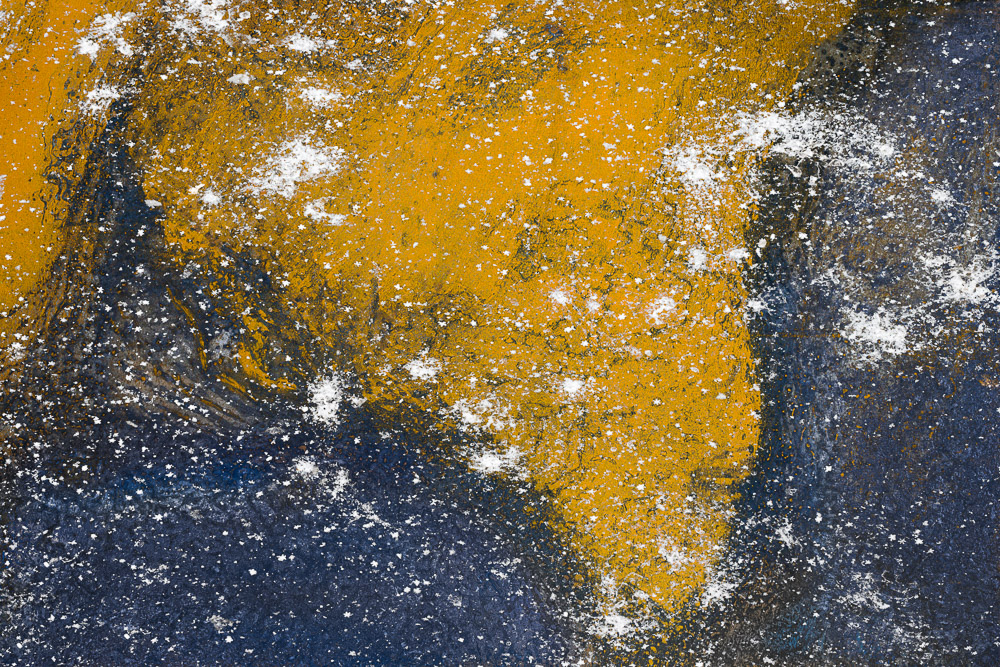
    I couldn’t find a single image that illustrated this idea of “not a spectator sport”. I guess because I have always believed it and gone my own independent way. This image was chosen because maybe it shows that, if you are in a place like this at a time like this, shoot! Don’t watch someone else. Make your art.

  • Sustainability

    Sustainability

    Sustainability is a common buzz word these days. It is applied to everything. Every company and product claims it. For this, I’m going to redefine sustainability from an artistic point of view.

    Creative sustainability

    As artists, we live on our creativity. Do you worry that the well may dry up? What if your creativity goes away?

    If we produce hard, do we use it up? Or is the engine somehow fed by using more? Is creativity a “sustainable” resource or does it get used up?

    Since this is the core of what we do as artists, it is natural to worry about it. Probably all of us at some point have concerns that we may use it up. What would we do then?

    So, an ongoing concern for many of us is, should we ration and conserve our creativity so we don’t use it up? Is it even possible to conserve it?

    Sustainable creativity

    I don’t believe creativity actually gets used up. It is like a good well that always seems to be full when we need it. If anything, creativity thrives on being challenged and used. It seems like the more we call on it, the more there is.

    But is it sustainable? I think so, but we can be our own worst enemies. If we keep doing the same stuff over and over we get less creative. When we try to stay in a safe rut, there is less need to exercise creative. We’ve done it all. Many times. It is a major challenge to apply new creativity to repeating the same things.

    Unless we are following the lead of where our creativity wants to take us, we risk getting stale. When that happens, we seriously fear we are not creative any more. And we are right.

    That doesn’t mean our creativity is gone. But if we do not give it free rein to take us in new directions, it stops challenging us. For all practical purposes, our creativity is them used up.

    Creativity is like a good friend. It will be there for us, but we have a responsibility to nurture the relationship. If we ignore it, if we do not make time for it, it will eventually give up on us.

    Burnout

    Everyone goes through cycles. Creativity, and everything else in life, can ebb and flow. That is natural. But burnout is an extreme. It is a depressed state where it can seem impossible to ever again do the quality of work we want to do. It can persist for months or years if we let it.

    I know. I have been there. There was a time in my career when I worked long hours for years in a job that was not fulfilling. It caught up to me. I crashed. I pulled back, working less hours and not being as satisfied with the quality of my work. Eventually, by changing position and increasing the creativity of my role, I became productive and happy in my job again. It was probably a 3 year process.

    In burnout, it seems evident that creativity must be unsustainable. That’s not true, though. It is not creativity that lets us down, it is the other parts of our context. It is important to manage our lives and environment if we want to stay creative.

    Creative stimulus

    Like an athlete trains constantly, we must exercise our creativity to stay on top of our game. Everyone’s needs are different, so it is impossible to lay out a plan for you to follow to do it. You have to figure that out for yourself.

    I can provide some creative stimulants I have seen and used. Consider them. Try the ones that seem to fit you. Develop your own methods.

    I will just bullet point some of them. Each could be a topic on it’s own.

    Read. And not just the same old stuff. Read new things. Read things by people you disagree with. And also read some light stuff just for fun.

    Study something new. Don’t plan to get a PhD in it. Just learn something about it. If you like it, go deeper. If not, try something else.

    Write

    Go back and review your old work. Put together a new portfolio.

    Go to a museum.

    Travel to a new place that is NOT a major iconic photo location.

    Put blocks of time in your calendar to do nothing. Turn off your phone. Let your mind wander. Doodle. Look around. Intentionally be unproductive.

    Spend time with friends, just living life.

    Take your significant other out for a nice and unexpected meal.

    Find things that make you happy, but that are not just entertainment. Try to do more of them.

    Take walks, with and without your camera.

    Just do it

    The theme here is to fill your mind with new information. This connects in strange and unexpected ways, leading to who knows what. And to give yourself space and time to just think, ponder, consider, unwind. The more pressure we put ourselves under, the more it shuts down creativity.

    And like the inspired Nike tag line, “just do it”. Get out and work. Take pictures, Don’t worry so much about the results. Going through the motions is comforting and leads to results. Eventually. Creativity is not just inspiration, it is a process.

    Relax and try to de-clutter your head. Follow your instincts.

    Is creativity sustainable? I would say definitely. It is one of the most important traits we have as artists. We can consciously take actions to keep our creativity healthy and flowing. But we have to listen to ourselves and recognize what our needs are.

  • Created From Joy

    Created From Joy

    There are many motivations and reasons for creating art. I can’t say any are wrong if the result is art that truly pleases the artist. For me, I am sure my art is created from joy.

    Many motivations

    What is it that motivates artists to create? Trauma? Money? Desperation? Joy? I am not qualified to say, because I can only speak for myself. Without being in the mind of another artist and experiencing their motivations, I cannot know.

    Much has been written on this, but, again, i am not sure we can fully know what motivates someone else.

    We can look at some works and believe they were created as the artist tried to work out some grief or tragedy or great wrong. Or maybe just try to understand life.

    Guernica

    Picasso’s Guernica seems to be a deep reaction to the horrors of war. Actually, he had been given a commission by the Spanish Republicans to paint a mural for the 1937 Paris World’s Fair. He was not making much headway on it and did not seem highly motivated. Then on 26 April 1937 the Nazis bombed the village or Guernica. Picasso was urged to make this his theme and, after reading eye witness accounts of the attack, he did.

    Yes, he was Spanish, although he did not live there at the time and never would again. But rather than being a deeply personal experience for him, he seemed to be able to empathize well enough to bring the emotion through. Anyway, it is considered by many to be his masterpiece.

    This does not prove or disprove anything. It just shows that artists motivations are deeply internal and personal. As much as critics try to analyze and dissect a work, they are groping in the dark unless the artist enlightens them.

    Joy motivates me

    I have discovered myself well enough to understand that joy is my primary motivation when I am making images. Even though I am old and increasingly cynical, joy is what enlightens my work.

    Joy can be a small thing like finding a dew covered spider web in the niche of a wall or it can be the sweep of a grand landscape at the right time, like the image with this article. It is not a particular thing or place or time. It is my reaction to it. How does it move me? What does it bring to me at the moment?

    Finding these moments of joy draws me on from one to the next. The act of selecting a scene to photograph, framing it, composing it, deciding on exposure settings, etc. is a skill. Doing it is a calming and pleasant activity to immerse myself in for a few moments. Everybody takes pictures. To take one that people stop to look at or talk about is art.

    My joy is in capturing and expressing a scene in a way that will be memorable. But even if no one other than me sees it or enjoys it, it is joy and it is my art. No critic or reviewer can take that joy away from me. It matters little what other people think about an image. It can still give me joy.

    Not happiness

    We need to distinguish between happiness and joy. Many people take them as about the same, but they are quite different. Happiness is a pleasant feeling because circumstances made us content at the moment. A warm cup of cocoa on a cold day. An unexpected letter from a friend.

    The next moment, something can take away our happiness.

    Joy is a long term view of life. It comes from within and is not completely dependent on what is happening around us. We tend to be joyful when the way we are living our life is aligned with our values and beliefs.

    Making images that bring me joy definitely aligns with my values and closes the loop. It reinforces my joy. That is, my images come from joy and making them increases my joy. For me, they are created from joy.

    Values

    Do you ever consider your values? The principles you build your life on are too important to go un-analyzed. We are more fulfilled when what we do is aligned with our values and we tend to be frustrated and unhappy when we are opposing them. Think about what you believe.

    I’m not saying everything we do needs to be for some grand social cause. Not at all. I think that tends to make our work stiff and preachy. I am just suggesting we will be happier and do better work if we are doing it for the joy of our feelings and the pleasure of the creativity.

    Try it. You might find more joy in your art and it might come across that way to your viewers.

  • I Want That Job

    I Want That Job

    I got a job ad recently that really caught my eye. The position was for an “Intermediate Unreal Technical Artist”. My first reaction was: I want that job! But my scatterbrained mind spun up a lot of questions.

    Unreal

    The “unreal” part immediately got me. Yes, I know that Unreal is a 3D animation platform. It looks quite capable. You don’t have to write me about that. But that is not the point. Just the surreal nature of the job description gave me a laugh.

    Depending on where I am mentally at any time, I like to take flights into the unreal. I never guessed it could be a paying job.

    The coincidence I could not ignore is that I have been working on a project I call Terra Incognita. It envisions imaginary, unexplored regions of our world. In doing it, I had to become an unreal artist, for real.

    It turned out a little more difficult than I thought to create imaginary, unreal worlds that look real. I want you to look at my images in this project and tell yourself that it could be an undiscovered part of the world. Creating a fake Sci Fi movie scene was not interesting to me.

    Intermediate

    The “intermediate” adjective added to the surreal situation. The possibility that there might be quantifiable levels of unreal-ness in our artistic abilities jumped out at me.

    Well, I knew that I wanted my images to seem real, not fantastic or unworldly. But what would an intermediate level unreal artist be capable of doing? Would I have to be an advanced unreal artist to look real? Or does an advanced unreal artist only do obviously fantastic scenes? Would a beginner unreal artist “fail” in his unreality and create a real seeming scene? Should I be striving towards beginner or advanced level unreal art?

    Inquiring minds want to know. I never knew the questions lurking here.

    Technical

    And it says they are seeking a “technical” unreal artist. Again, the surreal nature of the words caught me. If there is technical unreal then is there non-technical real or non-technical unreal or technical real?

    Technical real is probably what most photographers do all the time. After all, we use high resolution lenses on great high mega pixel sensors to capture huge amounts of detail. Photography is inherently a technical art. We want our images to be more real than real.

    The job posters seem to be seeking someone to create unreal scenes with a high degree of technical precision. Although I know what they mean, it still sounds absurd. Would non-technical unreal be like old 1950’s Sci Fi movies with the rubber creatures and terrible sets? Actually, what they did back then was the highest degree of technical unreality they could do before computer graphics.

    Maybe non-technical reality would be street photography shot with a cheap plastic film camera. Terrible technical quality but real scenes. There seems to be a niche market for that with people who value alternate processes.

    Artist

    And they are calling the position one for an artist. Really? Maybe in that industry, which I suspect is movies, that is true by their standards. In my experience, when someone is hired to create visual work as specified by an employer, I would call them a designer or an illustrator.

    A Pixar animated film or something like Despicable Me is a great achievement. I know there are large teams of animators and character illustrators and colorists and groups doing hair and fur and fabric. Others doing lighting and other effects. And many other teams doing software and asset management and other coordination roles. It is a large and complex process requiring many people.

    I am probably projecting too much of my values on this, but I believe an artist creates work he conceives and in his own style. That does not sound like an employee. I am not in any way minimizing productions like an animated movie, just questioning if the roles are what I would call an artist.

    The whole package

    So, could I be an “Intermediate Unreal Technical Artist”? Probably not. As much as I like the sound of it, I do. not understand it. And besides, they are looking for someone to work for them. When I retired I vowed I would not be an employee again unless I was desperate. Been there; done that. I want to only do what I choose to do and on my own terms.

    Thank you for following this strange diversion. It is quite a sidetrack from what I normally write. But as I mentioned, the coincidence with a project I am working on now was too much to ignore.

    In addition, it fits in with a long term theme I keep bringing up about whether or not photography is about reality. To me, it is not any more. Unless an image is presented as documentary, it is not to be believed as reality. And with the rapid encroachment of AI, I suggest we be very skeptical of all images, even if they claim documentary status.

    So maybe all photography is an unreal art. Maybe the job description I saw is redundant.

    Today’s image

    The image today is from the series Terra Incognita that I mentioned above. It tries to represent unexplored areas of our world. Maybe it just has not been seen before. Maybe it only exists in our imagination. Either way, consider yourself a modern day explorer flying over this never before seen vista.

    I want to hear your comments! Let’s talk!

  • If We’re Not Moving Forward…

    If We’re Not Moving Forward…

    We can get trapped in our own mind. Fear can pen us in. We must constantly remind ourselves of what happens if we’re not moving forward.

    Can’t stand still

    The actual quote, attributed to Sam Waterson, is “If you’re not moving forward, you’re falling back.” There is a lot of truth in that. As much as we sometimes would like to lock things down, we can’t. Time moves on. We move on. Relationships change. People grow apart or together. Our knowledge and tastes and perceptions change.

    Have you ever gone back and looked at some of your art or writing from a few years ago? It can be depressing. Our first reaction is probably that our work was terrible back then. But no, that is not necessarily true. That was the best work we could do at the time. We are seeing what we were at that moment in the past. But we have moved on now and are in a different place. And it’s an ongoing process.

    Fear

    Some of us get trapped in the past by fear. We did some work we thought was very good. Maybe we received some recognition for it. Perhaps we even were so unfortunate as to become famous. Now we are afraid to move away from what we became recognized for in the past, even though we are feeling a pull in a different direction.

    Past work becomes an anchor on our creativity unless we consciously cut it loose. But it is all to easy to fear that we have peaked and will never be able to do any more work as good.

    Well, maybe that is true. Maybe the next body of work we do will be inferior. We won’t know until we do it. When we strike out in a new direction it is quite natural to grope around hesitantly for a while until we find our footing. The first versions of new work could be fairly bad. But if it is where we are being pulled, we will find what we are looking for.

    Growth

    We are growing creatures. Life constantly gives us new stimulus, new knowledge, new ideas. We meet people and have good discussions. We learn new things and connect ideas and resolve old questions and ask new ones.

    At least, we are intended to do that. Some people stay in their rut, doing the same thing over and over without advancing. It’s like the question do you have 10 years of experience or 1 year of experience repeated 10 times? When put like that it seems obvious there is a big difference. But a rut is safe and comfortable. There is no risk. No one criticizes us. But where there is no risk, there is no change, no growth, no reward.

    As artists, we should be comfortable learning and changing. Experimenting with new ideas and ways of looking at our art and the world. Having confidence that our best work is yet to come.

    It really is true that there are only 2 paths. If we stop growing, we start dying. When we find ourselves in the inevitable rut, they can be hard to get out of. You have to very deliberately and carefully steer out. Let the wheels grab the sides and climb out slowly. Your car will complain, but change always causes criticism. Hopefully, you are not in too deep.

    We are different every day

    We are not the same person today that we were yesterday. Like the expression that we can never step in the same river twice. Of course, that does not mean we are jerked around in some type of schizophrenic fugue. We don’t bounce randomly to wildly inconsistent states. At lease, I hope you don’t.

    Who we are, our values and beliefs, stays relatively constant. We build on that base and develop as a person. Growth is usually incremental. Hopefully becoming a better person as we progress. Our art may seem to jump more as we embrace new expressions of what we are feeling. Like Picasso going through a blue period or an African period or a cubism period. He never changed who he was, he just responded in different ways at different phases of his life.

    Our art changing as we grow is natural and healthy. It is much easier said than done, but we should not fear letting go of what we have done in the past, even if we are well known for it. We should trust that we are growing as an artist and being led to new and better work.

    It is exciting to look forward to what is to come and what we have yet to create.

    What would be of life if we didn’t have the courage of doing something new?

    Vincent van Gogh

    Today’s image

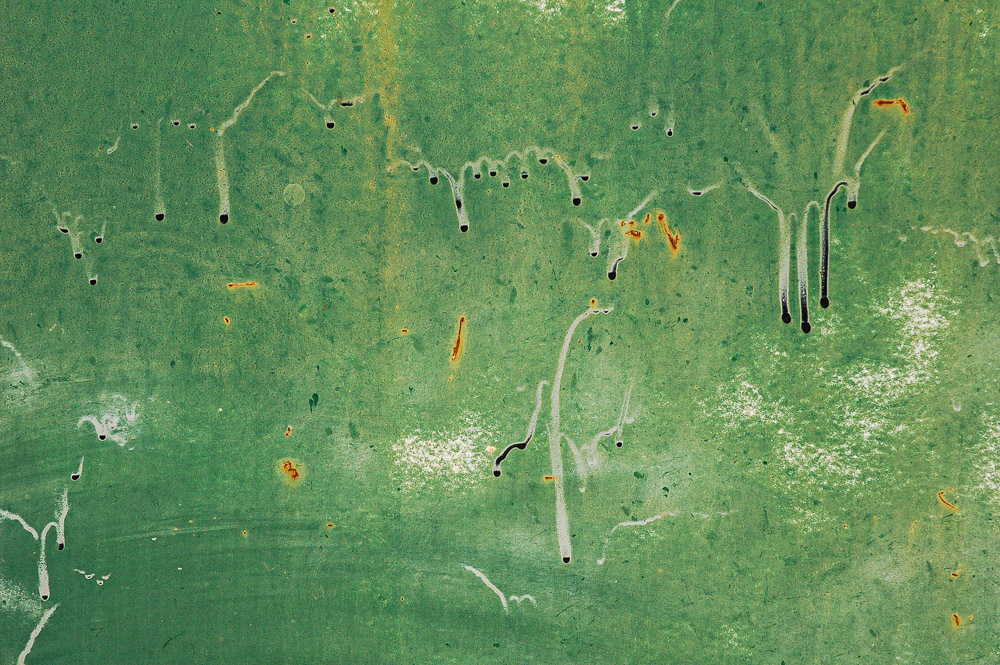
    I chose this to represent the daily battle we all face. The internal struggle to rise above conformity and create what we have inside us. Don’t settle. Don’t give in.