An artists journey

Tag: Artist

  • Themes

    Themes

    I have come to realize I am attracted to certain themes in my art. Before I fall off into art-speak, what I mean by a theme is just the simple dictionary definition: “a subject or topic of discourse or of artistic representation”. In other words, what subjects do we chose for our art. Themes tend to be bigger than a subject. A theme may tie several seemingly separate subjects together.

    Think about artists you admire. Do you also picture the typical types of works they do? Ansel Adams – grand black and white landscapes of the west. Georgia O’Keeffe – modernistic flowers. Monet – impressionistic rivers and ponds in northern France. John Paul Caponigro – abstract and ethereal seascapes and landscapes. They tend to go together in our minds because we know they very often do these subjects.

    Chicken or egg?

    Do artists pursue themes because that is what they like or do they pick something to get known for? Kind of a trick question. It doesn’t have to be just one or the other. Sometimes themes choose artists. Sometimes artists choose themes.

    What is available to us often has a huge impact on our themes. Ansel Adams lived in California. Yosemite and the Sierra Nevadas were his back yard. John Paul Caponigro lives in Maine. Seascapes are common to him. Monet lived along the Seine River. He painted what was around him. This is quite common. We tend to grow to love what we see most. I live in Colorado, right on the dividing line between the mountains and the arid plains. Both are beautiful to me. I see them every day. The more I see them the more I resonate with them.

    Some artists deliberately choose themes or subjects to become known for. They want a “signature”. Joel Grimes is well knows for his commercial work and stark, gritty treatment. Some people become famous portrait artists or wedding photographers. In general these are things they have consciously decided to build their career around.

    I won’t claim there is a right or wrong. If you pick a certain subject matter to build your career and reputation on, I hope you really love it. Otherwise you could be like these old rock bands still touring around whose audience only wants to hear their hits from 40 years ago. It would get very frustrating to me.

    I am a searcher and explorer. Themes are less conscious for me. Looking back through my portfolio I can detect a few. The ones I have detected make it less surprising now for me when I find myself drawn to them. I recognize it and have come to expect it. That doesn’t mean I am not open to new things, just that I can see larger patterns in my work.

    Very personal

    Themes or typical subjects tend to be personally meaningful in some way to the artist. It is hard to keep on doing art you don’t care for. That is probably one reason we have themes. The subjects we are drawn to are somehow meaningful to us so we keep coming back to them.

    I don’t want to go too deep on the need for meaning. Our themes do not have to align with deeply meaningful social or environmental causes for them to be meaningful. If they are meaningful for us, that is sufficient.

    I used Georgia O’Keeffe as an example earlier. Her mentor and, later, husband Alfred Stieglitz promoted the idea that her flower pictures had deep sexual significance. It helped build her reputation in the modern art world of the time. She later vigorously denied this was true. She maintained it was only the form and color that was important to her.

    Maybe meaning is a very nebulous and personal thing. What is meaningful to me may not be to you. And vice versa. Or you may see meaning I didn’t when I made the image. I have never thought that pictures have significant meaning in themselves. The themes I discover in my work have meaning to me, but I do not try to force it on you. Maybe on the rare times I try to express my feelings in words the viewer may occasionally get a glimpse of the meaning there is to me. But I do not expect you to get one of my images and hang it on your wall unless you like it as an image and maybe, there is something there that is meaningful to you.

    Consistent over long times

    Themes tend to be a persistent feature of an artist. We are drawn to certain subjects. Maybe we understand there is a theme there that we are pursuing. But regardless, we keep coming back to certain things.

    Our themes can fade with time and be replaced with new themes. We all grow and change our values and interests. This tends to be a slow process, but it happens for most of us. I hate to try to quantize it, but I would guess that when we find we are interested in a theme it will stick with us for a few years. Sometimes, for our whole life.

    Unifying themes

    Sometimes we find that several seemingly disparate subjects that interest us are really part of a unifying theme. This is a wonderful realization, because it unites large parts of our work and brings a new meaning, or realization to us to understand why we are drawn to it.

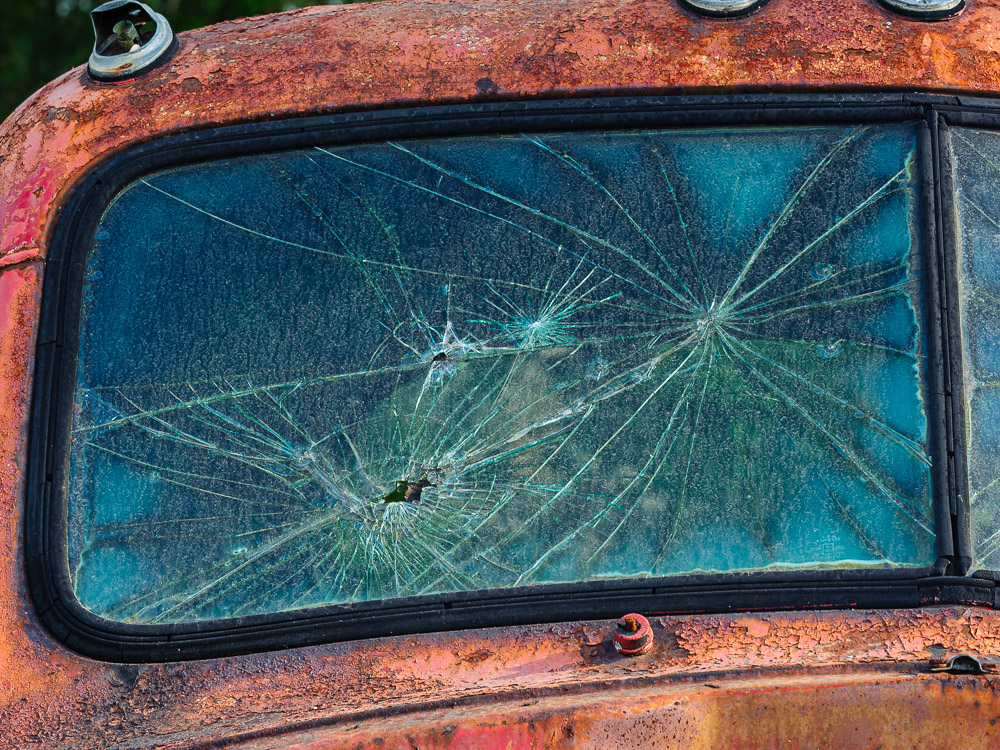
    Let me give a personal example. I am drawn to old things that are worn and aged, but only certain ones. Some old things excite me and many are of no interest. Old rusted cars, abandoned buildings, old machinery, these have always been interesting subjects to me. As I’ve gotten older I have discovered the Japanese term wabi-sabi. I realized I was embracing the philosophy before I ever heard it expressed. It has become a unifying theme for many of the subjects of interest to me.

    It is apparently impossible to succinctly and even correctly translate wabi-sabi to English. There are too many subtleties in the Japanese meanings. Some day I will attempt to write a better blog on it.

    Here is one very compact description of wabi-sabi: “‘Wabi’ expresses the part of simplicity, impermanence, flaws, and imperfection. On the contrary, ‘Sabi’ displays and expresses the effect that time has on a substance or any object. Together ‘wabi-sabi’ embraces the idea of aesthetic appreciation of aging, flaws, and the beauty of the effects of time and imperfections. The two separate parts when put together, complete each other.”

    I discovered that I am drawn to flaws and imperfections and the beauty of aging and the effects of time, especially of things that are bravely standing against time. This theme unites my collection of old rusty cars, broken down buildings, and broken flawed objects. I was happy to be able to wrap a higher vision around my old rusty things.

    It makes us different

    Our affinity for themes is one reason we can go out with a group of other photographers and still come back with our own unique images. We each have a different viewpoint. We are drawn to different aspects of a scene. Even if we shoot the “same” scene, we probably each have our unique viewpoint. This causes us to frame it differently, isolate a different part, emphasize different things.

    Or, for some of us, even turn away from the classic landmark and shoot a different direction entirely.

    Our themes help unify our images. They give a meaning and long term point of view to our portfolio. In another sense, our themes are an indication of our values and world view. What we are drawn to shoot are often things that are meaningful to us because of the themes we embrace. We still shoot other things, but something keeps drawing us in certain directions…

    This image

    The image with this blog was taken in Blaine Washington. It is on the seacoast right at the border with Canada. It is a lovely small town. I was across the harbor. There were good views all around of the harbor and the sea, but I was fixated on this great old boat. Rusty fittings, deteriorating paint, obviously it had seen better days. But it was still standing against the elements. That is encouraging. For me, a perfect wabi-sabi moment.

  • A Private Journey

    A Private Journey

    Being an artist is a private journey, but one the viewers are invited to participate in. I don’t collaborate or take votes to guide my journey. It is just me. It is intensely private.

    Private

    I have to make my own way in the world. As such, I am stuck in my own head. Creativity has to somehow spring up from within. Being an artist is lonely. LIke a writer, there are those terrifying times when you are facing a blank page (or empty frame) and you have to create something. No one else can do it for me.

    Not everyone agrees with this approach. Some people, especially if they are young and just learning, want to run in a crowd. They have to immediately post every image to social media to get feedback. To me this is a form of insecurity. My values and style is deeply ingrained and I do not seek immediate validation from the internet. But that is just me.

    What works for me is to explore, to be receptive to what I encounter. I seldom have a detailed plan for what I want to shoot. Rather, I turn myself loose and let myself be drawn to scenes that interest me. It doesn’t always work, but that is what inspires me. The word that keeps coming up is”me”. Not in an egotistical way, but in the sense that I am the only one who can take this journey. If it wasn’t me it would be someone else’s art.

    I also find, and this is just me, that when I put pressure on myself to “have” to come up with something creative the results may be good but they are seldom great. But when I let go and just react and experience then creativity can flow. Understanding this about myself has let me keep my art constantly being a joy.

    A journey

    Virtually all my subjects are collected outdoors. It is extremely rare for me to set up a controlled indoor shoot. So a shoot for me involves movement. I have to leave my studio and get out in the field where my subjects are.

    This is a joy for me. I am an explorer. It is hard to pass a road I haven’t seen the end of. As an example, just a couple of days ago I was exploring up along the border of Wyoming. I went down an obscure dirt road I knew was a dead end, but I had never been down it. It was great! I loved the sights, the remote wildness, the windswept barrenness, the newness. It was fresh. Something I had not seen before. It energized me. Even if none of the images make it into my portfolio, it was well worth it for me personally.

    But a journey doesn’t have to be far. I do a lot of shooting while walking around within a mile or 2 of my studio. Journeying is an attitude. A sense of exploring and investigating. It is sometimes difficult to feel a sense of discovery in an area I have been over and over so many times. But that is part of the game. It is a mental discipline. If I can find new and fresh sights in a familiar area then it is even easier to get inspired in an interesting new place.

    Viewers

    It is true that my art makes me happy. If I never showed it to anyone I would still have the joy of creation and discovery that would compel me to make it.

    But artists are also somewhat egotistical. We feel we have something worthwhile to share with other people. I hope those who see my work enjoy it and can share in the sense of wonder and amazement I felt while making it. I’ll be honest, I also hope you decide to buy some of my prints for your walls. The money is nice, but even more is the knowledge that this had an impact on you and that it will now continue to influence you. We all would like to leave a legacy.

    I know your time is valuable and increasingly scarce. I seek to make art that is captivating enough for you to give me some of your time to view it and think about it. I hope my art will awaken some new thoughts and feelings that will make your day better, to refresh and renew you. I like to feel that some of my pieces on your wall will have a long term benefit as you see them every day.

    Internal and external

    My art is a private creation of my own mind and energy. I do not collaborate with others or shoot assignments. What energizes me is exploring and finding wonder in the everyday sights around us. I may work a project or a theme at times, but mostly I let myself be drawn to whatever is exciting me at the moment. I am very much in the moment when I am creating, even when working at the computer.

    Even though my art and my process is intensely private and personal, I also have the viewer in mind. I am constantly reaching for something creative and fresh to share with my you. If you give me some of your time and attention I want to give back. I hope I can succeed with you. It is my private journey but I want to share it with you.

    Go to my web site at photos.schlotzcreate.com to view a little of my work and let me know if any of it resonates with you. Please join me in my private journey. I welcome your feedback.

  • Tools

    Tools

    Man is a tool maker. Tools are used in most activities in our life to extend our performance or help us get our tasks done faster, easier, and more accurately. The same is true in most of our art. Some people say that it is our tool making nature that allowed us to become the dominant species.

    A tool using artist

    I’m an artist. Specifically one who works with images originating as photographs. A camera is a tool I use. So is a computer. So is a printer. These tools do not create my art. I use them as part of my creative process.

    Yes, the tools allow me to create things I could not do otherwise. That just means they are good tools. My Jeep allows me to go places I would rather not have to walk, especially carrying my gear. That does not mean the Jeep creates my art. I know a sculptor who now prints a lot of pieces on a 3D printer. Does that make them no longer art?

    I believe in using tools to make my life better and to take my creativity further. Indeed some images don’t really start coming to life until I am manipulating them in Photoshop. As I try things and apply ideas and tools the essence of the image may start revealing itself to me. Note, though, that I – the artist- decide how the image should develop. I don’t sit back and watch Photoshop create it for me.

    Limits of tools

    There are probably some sharp Adobe computer scientists working on that right now., Maybe someday you will be able to point your phone at a scene and a “perfectly” composed and processed image will appear instantly in your social media feed. I hope for all of our sake that they decide that even though they could, they won’t. (Note: it came faster than I anticipated. Adobe announced many “AI”-based tools at Adobe MAX 2020. Now anyone can do almost anything to an image without know how they did it. Too bad.)

    Tools should be used as force multipliers. Not a crutch to let people with no skills seem to create something. That’s like going to DisneyWorld and believing you went on a pirate adventure. It is a manufactured experience that you did not contribute to. If you are over the age of 5 you know deep down inside it is fake.

    At the risk of being unpopular and sounding like a Luddite I will say I do not believe an image created entirely by a computer without an artist is art. It is just software combining patterns it has been trained with and throwing is a little random variability. Maybe this could be said of some artists, too. Let me just add that I spent an entire career working in advanced computer science, including artificial intelligence. So it’s not like I just hate technology.

    Digital fits my personality

    I am ADD enough that I don’t like there to be much lag between seeing something interesting and capturing it. It would be hard for me to work in a world of making multiple sketches of a scene to work out the best composition and staging, then spending weeks laying down the image slowly in layers with dry times between. All in order to create one work. I would abandon it after the first couple of sketches and be off to another idea.

    Photography is much more immediate and rewarding for me. See a scene. Click. Nice, but maybe move a little to the right. Click. Better. Maybe raise the camera a little higher. Click. Almost there, maybe reduce the depth of field. Wait for the right moment. Click. Good! Now I have a good starting point to work with on the computer to create a final image.

    In the computer I use a fairly disciplined non-destructive workflow. That just means never commit to something that can’t be undone. This does not slow things down and it actually makes it easier to get in a creative flow. That is because whenever I hit a dead end or even just decide I’m not liking the direction things are going, I can back up to any point I want and modify what I’ve done or even throw large “experiments” out and take a whole different path. The tools let my creativity flow naturally.

    This ability to freely experiment and take risks is wonderfully empowering. I even sometimes create several versions of an image. It is an embarrassment of riches to be faced with a hard choice of which one I think works best. The ability to be spontaneous and free is very important to my creativity.

    An artist

    I create art. My camera or my other tools do not create the art, I do. The fact that I start from a photograph should not matter at all. Some people think something is not art unless the artist had a long and difficult process from training through making an image. How myopic and judgmental.

    It had been said that an artist has to suffer. This is true, but you hear the statement from critics more than artists. Critics think they can analyze the process the artist went through to determine the worth of the art. Real artists know that art is suffering and what we learn and the feelings and vision we develop in the process guide our outcome. Art can be a cathartic expression of a deep experience, but that is not required.

    But this “suffering” is very personal and internal, at least for me. It may be the result of decades of failures to realize our vision. A suffering born of frustration that drives a continual renewal and a reach for what we feel but can’t quite express.

    It has almost nothing to do with a camera. That is just a tool, part of the technology used in creating art.

    Any tool

    When someone picks up a tool to create something as art, they become an artist. It doesn’t really matter if it is a brush, a pencil, a welder, … or a camera. What matters is what you do with it. Is something better and more worthwhile because it is carved from marble? Is it better if it is oil applied to canvas? Careful. These are dangerous judgments.

    The art I create is not because I’m a photographer. Photography is a medium that works very well for me. It fits my personality. I use it to create my art.

    I look at the creative process different from an oil painter or sculptor or author or graffiti painter. That is good. Artists are not supposed to be all alike. They should be as unique and individual as possible. That extends to the medium and process and tools, too.

    So, I’m an artist. I use a camera to capture pixels that become my art. I’m proud of it. I like what I create and it works for me. I’m very thankful for the tools I have. They help me create, they do not define me.

  • Did It Really Look Like That?

    Did It Really Look Like That?

    “Did it really look like that?” is not an uncommon question. But it is tricky to answer. Sometimes I try to probe to find out what question they are actually asking. But really it comes down to their point of view.

    Why

    There are many possible reasons for the question. Most are probably innocent. Some, maybe not.

    Looking at it generously, many people simply are expressing that they have never seen anything quite like that and wonder if it is really real. It may look too good to be true. Has it been there all this time and they’ve just missed it? Maybe they have been to this place or one like it and they did not bring back any pictures that looked like that. They are impressed, but maybe skeptical.

    I will take this as a compliment.

    On the other hand, some ask suspiciously. Underlying the question is the implication that it is a fake. If it looks too good to be true then it is probably not true. Therefore I must have manipulated or over-processed the image to the point that it no longer represents reality.

    This is an interesting concept to me. Sometimes I like to engage them in a dialog, but most of the time I just ignore them rather than trying to educate them or get into a heated exchange.

    Look like to who?

    One of the simplest responses to the question is to ask “look like to who?” If the questioner was there at the same time they may have seen something different from me. Another photographer also probably would have gotten something different out of it. If a painter was there, they may well have interpreted it very differently.

    That is one of the things that makes art. Each artist brings their own unique interpretation of a scene or event.

    Underlying the “did it look like that?” question is the assumption that I am supposed to represent exactly what the scene was. That is your assumption, not mine. Get over it. I spent decades believing a photography should faithfully record a scene. I have grown well past that.

    I have never promised you I am trying to bring you images that are absolutely, exactly what a scene looked like. As a matter of fact, I promise that is not my goal. Unless it is what I decide to do. 🙂

    The negative is the score

    This is a great and classic observation from Ansel Adams. I refer to it often. As I have observed in another post, I consider that technology has brought us to a re-interpretation of the statement.

    The digital capture is raw material. It is no longer processed like a dance in a real time performance. It is edited and processes at leisure on the computer. We have the tools and the technology to go far beyond what could be considered in the film days. Alain Briot uses the French term esquisse. I believe it refers to an artist’s rough, preliminary sketch of a piece. This sketch would only hint at the composition and details of the final work. He relates the raw material of the image capture to this artist sketch.

    What a wonderful time to be an artist! Our imaginations are less constrained. We have more freedom to let our creativity reinterpret the raw material. Why constrain yourself? Don’t stop with the basic capture. Continue on to make it conform to the vision you had that compelled you to take the picture in the first place.

    What does it matter what it looked like?

    At the risk of offending some people, I will say that a reproduction of what a scene looked like can get pretty boring. Once you have seen it you know everything about it. There is no challenge. No mystery. Nothing to draw you back to look at it again and again.

    Unless I, as an artist, am able to bring something unique to it, what is the image worth? When I bring you my point of view, though, you have something more to consider. You may not agree with my point of view. It may not speak to you. But I want you to know that this is mine.

    I hope, of course, that my viewpoint will challenge you, make you think, make you see at least a small part of the world differently, maybe even open up your perception to other things. That is my role as an artist.

    Art is

    So I would challenge you that “did it really look like that?” is not the right question. It would be better to ask “what is the artist saying?”, “what does it mean to me?”, and “how can this help me see the world differently?”

    Art is art. It is a unique work of human creativity. It does not have to mean something. It does not have to faithfully reproduce a real scene in nature. It cannot be fake unless it is a mindless copy that brings nothing of the artist.

    Art is art. It is not truth. Any truth you find in it is what you derive for yourself from what the artist has shown you. It is a communication between the artist and the viewer. Both have to do their work.

    Don’t shoot what it looks like. Shoot what it feels like.
    David Alan Harvey

  • Nature vs. Nurture

    Nature vs. Nurture

    It’s a long-standing debate and it has been studied for a long time. Can we do the things we do because it is our natural ability (nature) or is it things we have learned (nurture)? The nature vs. nurture question comes up with anyone who sets out to call himself an artist.

    Would you expect to sit down at drums, like in this image, pick up the sticks, and be a master immediately? Of course not. If you take lessons and practice for a long time will you become a famous drummer? Probably not. You may be a good one, but not necessarily great.

    So what should natural ability do for us? I think it makes it easier for some people to learn to do some things. We say they “take to” things naturally. Whether it is playing tennis, or doing math, or playing the drums, there is no doubt that it is less of a struggle for some. Note, though, that it is “less” of a struggle. It’s still a struggle. I’ve never met anyone with natural talent who did not have to also work very hard to excel.

    On the nurture side, should we expect that anyone can master anything if they are determined enough? Yes, but. Sorry to break it to you, but you probably can’t become a world class ballerina just because you practice enough. Most people can learn to be good at almost anything if they apply themselves diligently. Some things take certain inherent physical characteristics that cannot be learned. E.g., don’t expect to be the next Michael Jackson unless you are about 7 feet tall.

    If I decide I want to play tennis well, I can take lessons and practice hard. I might get to the point where I can beat most of the people in my area, but I won’t be competing at Wimbledon. There is a huge gap between good and great.

    10,000 Hours

    It is often quoted that it takes at least 10,000 hours of practice to master something. That may be correct, but what does it mean? That study is documenting that it takes those 10,000 hours of great practice to get to the level of a Tiger Woods in golf or a Yo-Yo Ma on the cello.

    The number gets thrown around a lot to prove how hard it is to learn things, but it is not as daunting as that. Most of us rightly get discouraged at he prospect of taking 10,000 hours to get good at something, so we don’t do it. Remember, though, that this is the investment to get to be the best in the world. Other studies, and common sense. show that it takes a much lower level of investment to get to proficiency or a level of expertise. Common numbers I hear are 20 to 40 hours.

    Try it yourself. Pick out something you think you are interested in but know nothing about. Take knife throwing as a weird example. Get a simple throwing knife at your local sporting goods store, watch some You-tube videos and practice for 40 hours. Good practice where you evaluate your mistakes and learn to correct them. You will probably be the most expert knife thrower in your area.

    Conclusion

    I asked the question of nature vs. nurture in the context of an artist. Do you have to have natural talent or else you should give up? If you have natural talent do you need training?

    What I have observed is that “making it” – whatever that means to you – takes work. Lots of work. If you have a natural talent you may get there with less pain. If it takes pain, you will probably learn more deeply because of it. Either way you have to put in the work. If you want to be an artist, put in the time. Artists don’t have to suffer, but they do have to work long and hard at their craft.

    So, nature or nurture? For me, it’s a don’t care. If you put in the time and keep developing yourself you will not need to ask the question. Some luck doesn’t hurt, too.