An artists journey

Tag: Artist

  • Self-centered

    Self-centered

    If you describe someone as self-centered, that is probably taken as a negative. It often is, but there is another way to see it. If you are a “fine art” artist, I believe you have to be self-centered to really be true to yourself.

    Who do you listen to?

    It’s a problem these days that people are so “connected” to social media that it can be hard to maintain our identity. Is all your work instantly posted, tweeted, shared to “the world”? Do you measure your success by the “likes” or lifts or re-tweets you get?

    This echo chamber of voices can make it hard to listen to your own. If a significant number of your followers don’t like something you post, is it bad? As with any criticism, you have to try to be objective.

    These people giving you feedback – what do they know of your intent, your feelings, the direction you feel your art should go? What do they know about the process you followed to get there?

    Most pictures on the internet don’t get more than 1-2 seconds of attention. When someone hits the “thumbs down”, what does that mean? Is that a well reasoned, critical evaluation based on objective knowledge?

    Likewise, when most people gush over your post and give you glowing praise, what does that mean? Unless they are an artist who takes the time to look more deeply, probably very little. If they follow the praise with “and I will contact you to buy it,” that carries weight.

    Who should you listen to?

    The feedback of random people on the internet probably will not take you to where you need to go as an artist.

    Do you have a small set of trusted friends who will give you reasoned and honest feedback? If so, you are lucky. I desperately wish I did. Try to build such a group. If they really are good friends their honesty will be valuable for you, even when it hurts. If they really are good friends, they will hurt you occasionally.

    Do you work with one or more galleries? Ask them for evaluations, especially of your new work. I haven’t tried it, but I understand portfolio reviews can be good. Your mileage may vary, depending on which ones you choose. I know of successful artists who still go to them for the feedback. Read Cole Thompson’s portfolio review by Mr. X that changed his art.

    Are there artists in your area who you trust? Your style may be totally different and you may not even like what they do, but that is not the point. Can they give you objective and well reasoned feedback? Try to put a group together. I am looking to collect such a group in my area.

    Ultimately, though, it comes down to having to trust your own instinct. You are you. You are the artist. No one else can answer for you or decide what your style or theme or subject is.

    Can you be objective about your own work? Some people can, some can’t. Learn to. Since you are the only one responsible for your work, you have to be able to make your own decisions.

    Unashamed

    Sean Tucker used the term unashamed in a discussion of this problem in his book The Meaning in the Making. I think it is a good word choice. This is where the self-centered aspect comes in. It is understanding who we are and what we are trying to do, regardless of what anyone else thinks. Not arrogance but confidence. We have to realize that only we own our results and are responsible for our decisions.

    Anyone who does anything publicly will be criticized for it. That is true for us when we present our art to the world. A lot of people will hate it. Some will love it. The ones who don’t like it will be quick to tell us what is wrong and how to fix it or why we should quit. As an artist, we must be able to say “thank you for the feedback, but I am going in this other direction.” We have to believe it and in our self.

    Do you believe in you? Are you confident to the point of seeming self-centered? Good. Your opinion of your art is ultimately what matters. That doesn’t mean you will get rich or famous. But you will be at peace with yourself.

  • Finding Inspiration

    Finding Inspiration

    Are you empty sometimes? Are there times when you don’t have any ideas or new projects? We tend to desperately put pressure on ourselves to find something creative and new, but this is often counter-productive. So how do we go about finding inspiration?

    Relax

    Ouch. This can be hard. Our art is important to us. We need to be proactive and driven to produce. But first. relax.

    If you are in a slump creatively, just go with it. You will come out of it. But the more pressure you put yourself under the harder it sometimes is. It is very hard to force ourselves out of a slump. Our subconscious will eventually get re-engaged and start pumping out the great ideas. Give it time to rest and rejuvenate.,

    Take a walk

    Really. “Waste” the time. Carry your camera or not, it’s up to you, but don’t require yourself to take any pictures.

    When you walk, go slow. This is not mainly for the exercise. It is for your head. Look around. Look at everything. See things as it for the first time. Play the game that you just teleported to [your favorite exotic destination] and you are looking around in wonder at everything. Try to see how many things around your neighborhood you never really “saw” before.

    None of these may be in your “style” or preferred subjects, but learning to see new things is good.

    Read a book

    I have heard it said that most adults never read another book after they graduate from school. Maybe that is just males. 🙂 Even so, I hope that is a false statement. Books are one of the most important inventions in history.

    Reading something new will expand your thinking. Studying something related to your art will give you a new appreciation of different styles and ideas. It may teach you something you can apply to improve your images and refresh your creativity.

    Even if not, you will still be better off mentally for exercising your brain. Books are a major repository of the collected wisdom of centuries.

    Watch an educational video

    I can say to watch videos because I do not produce any videos. I’m not selling anything.

    The good thing about the internet is that there is a wealth of information there, free or for relatively low cost. There is probably no aspect of our art that someone doesn’t have a video about.

    That being said, the “signal to noise ratio” (the percentage of useful information) is fairly low. Be careful of who and what you take in. Even so, it is not too hard to find good stuff.

    If you are up to it, it can even be healthy to watch bad videos. That sounds weird, but do you find, as you get more mature and confident in your craft that you can sift the good from the bad? If you watch a bad video, or one you disagree with, it can be empowering to be able to refute the presenter and know why you believe they are wrong, at least for you. It can help bolster your confidence.

    Read other artist’s blogs

    You are reading mine. Thank you! I would love to hear your thoughts.

    Probably thousands of blogs are written every week. Pick a few new ones to add to your list. They do not have to be leaders in your field. Look around and find artists in other fields whose work you admire, who influence you, whose style you admire. Follow them. This is another great source of wisdom and inspiration.

    I follow a few people. Not many. But I am constantly amazed at the wisdom they give away.

    Be open

    None of these suggestions will do much good unless you open yourself to receiving what they might give. Openness is an attitude. Our attitudes are under our control.

    Are you totally focused on one subject? Why? Widen your view. Have you become cynical? As you learn to look around more, re-awaken your wonder and joy. Find new things that excite you. Cast a wider net. Get enthused about something. Give yourself permission to try new things.

    Inspiration sneaks up on us when we aren’t expecting it. The more we can be open and receptive, the more often we will find it. I find that stimulating my mind with new thoughts and learning new things helps keep me open to inspiration. Try it!

    About the image here

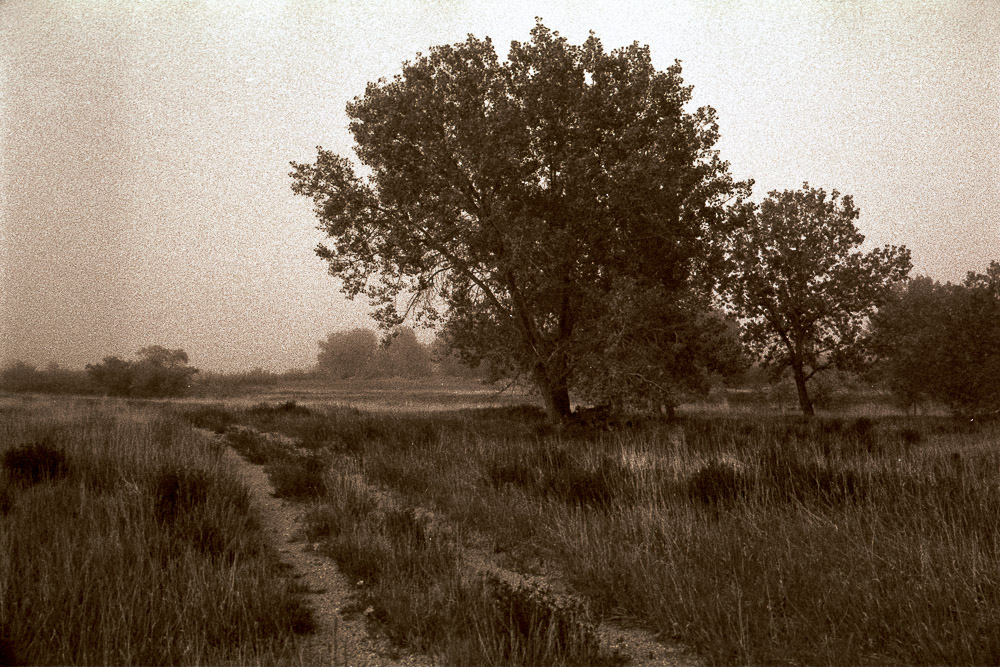
    I can’t claim this is super creative as such, but I am very happy I made this image. This is the epitome of depressing conditions: way out in the midwest, nothing around anywhere, temperature was 108F, winds blowing so hard I had to hold the tripod, totally clear blue sky – what to shoot? I decided the interest was the wind. How to capture the effect of it? I think, by being open to exploring new ideas, I made something good out of it. At least, I’m happy with it.

    This image is part of a series I am working on, tentatively called “Maria”. It is not published yet.

  • Do You Need A New Camera?

    Do You Need A New Camera?

    The reflexive answer is “Yes, of course”. Most of us lust for new equipment. But think about it a bit. What about your camera is holding you back? How will having a new camera make you a better and more creative photographer?

    Resolution

    Resolution is one of the technical parameters of cameras that increases over time. It is an easy thing to measure and use as a figure of merit for comparing cameras. Is it a good measure?

    Well, yes, more is better, some of the time. It depends on your needs. Will you be making and selling prints that are 48″ or larger? You probably need a lot of resolution. But even then, it depends on what you shoot. If your subjects are highly detailed and you want your viewers to be able to come up nose-length to the print and see every bit of the fine detail, well, it comes with a cost. You want all the resolution you can get. And more.

    Be aware there is a cost. Not just the price of the camera. File sizes get huge. After I’ve taken an image into Photoshop for editing I sometimes end up with files that are more than 4GBytes in size. Everything has to scale up with this: the computer memory, all my disk sizes, including backups, memory card size and cost, and my speed of working slows down.

    So far it is worth it to me, but there will be a limit.

    Speed

    One of the other metrics people use to justify a new camera is image capture speed. If your current camera can “only” take 5 frames a second wouldn’t it be a lot better to have one that takes 10 frames a second?

    Maybe. It depends on what you do. I no longer shoot sports so this has become insignificant to me. Occasionally I need to take a burst of a few frames to try to capture a certain moment. It is becoming more and more rare, though. I usually challenge myself to use my instincts developed over the years to know how to recognize and capture the “decisive moment” instead of blasting through a group of 20 frames hoping the one I want is in there somewhere. It usually works well for me and I feel like a better craftsman.

    Again, your mileage will vary. It depends on the real needs you have. Don’t just optimizing specs.

    Dynamic range

    Dynamic range is one that can draw me. This is the range of dark to light values the sensor can reliably record.

    I often have very wide exposure ranges in my images. It is much better for me to be able to capture the entire range in one frame instead of relying on putting together an HDR set. This is because many of my pictures are strongly oriented to motion. That makes each frame unique. It is almost impossible to stack them for HDR.

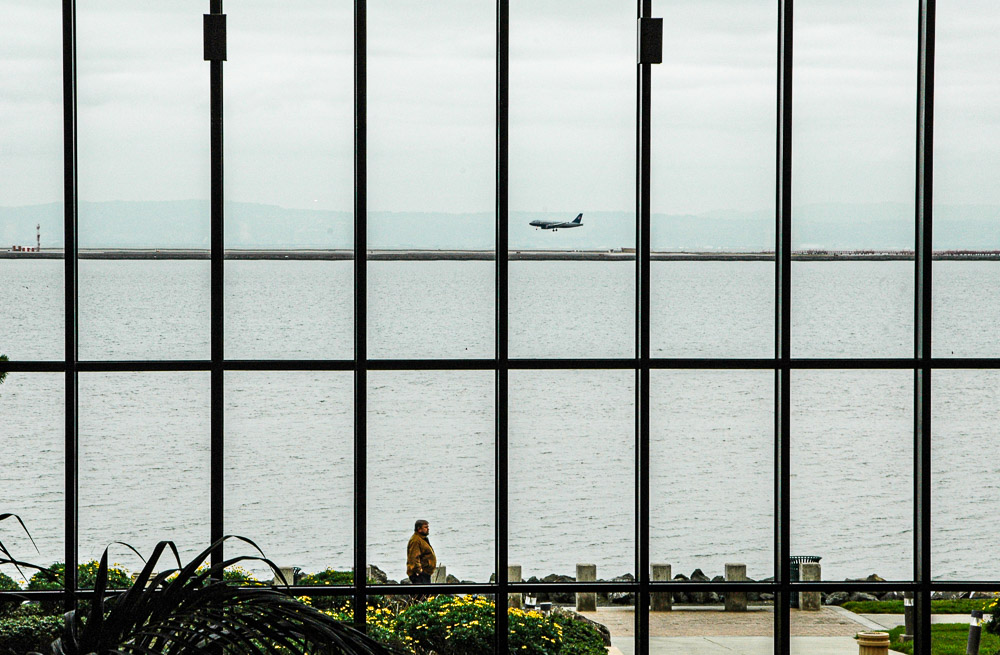
    But are you really at a disadvantage with what you have today? I shoot Nikon, so that is all I can talk about. Full frame Nikons since at least the D800 (about 2012?) have excellent dynamic range. So if you have a high end camera that is not more than about 10 years old it probably does a very good job. Note, the image with this blog is one of my earliest pictures shot on my D800. Great camera.

    Are you really being held back?

    I suggest you give it careful consideration before laying out a lot of money on a new camera. Unless you just have thousands sitting around that you want to get rid of. If so, congratulations. Check out my prints. 🙂

    Instead of “do I need a new camera” maybe a better question for yourself is “how do I make better images?” This is much more difficult and important. And it is something you can do without spending much money.

    Ansel Adams once said “The single most important component to a camera is the twelve inches behind it.” Meaning, of course, that the photographer, the artist,, determines the quality of the image. Do you have the skills to get the best from the equipment you have now? Do you really know all the ways you can edit and improve your “negatives”?

    Todd Vorenkamp, whose opinion I’ve come to respect, said:

    “Search yourself for improvement, not your gear. A great photographer can make a great photograph with any camera. A poor photographer can make a poor photograph with the world’s most expensive camera. Photography is a technologically based art form, but the technology does not make the art, the human behind the camera does. Do not look for solutions in something that runs on batteries and arrives in a box. “

    I believe this. And it is a gutsy thing for Todd to say, because he works for a large camera retailer. BTW, B&H is a great place to buy your equipment. Be assured I get no compensation for this plug.

    We have come to a time where camera designers are pushing the limits of physics. Improvement in resolution and dynamic range are getting much harder. Incremental Engineering improvements still happen all the time, but true breakthroughs are more rare. Newer cameras usually have small improvements and more bells and whistles to have to learn.

    How to move forward

    Most photographers are always shopping for shiny new equipment and the greatest new technology. I include myself. Nikon, if you’re listening, I would love for you to bring out a 100MPixel mirrorless body. I would probably put my deposit down immediately.

    But Todd is right, and Ansel is right – it is the photographer that makes the difference. I believe you should not go for a new camera (and the computer processing to go with it) until you are confident you can wring all the performance possible from your current one. Best to master your current tools before getting new ones to learn.

    Are your techniques good enough to make the best image the camera is capable of? Are you confident you can edit well enough to achieve your goals? Maybe hardest of all, do you understand your vision for what you want to create?

    When you can honestly assess those questions I think you will know when it is time to move on. Maybe you do need a new camera.

  • Teamwork

    Teamwork

    Teamwork can be a great thing. In my professional life I have been on excellent teams and worked with talented people to achieve amazing results. Different people can bring varied background and experiences to the mix and blend them to achieve good results.

    Art, though, is a different thing. We are basically not trying to create a good result or a solid product, we are creating a work of art. Art is inherently not a team sport. It is a creation from one head – the artist’s. Some artists use a team, but they supplement the effort of the artist. The creativity and decisions come from one head.

    Teamwork does not lead to creativity

    I am going to have to say some controversial things. Things that go against the conventional wisdom you hear everyday. But all “conventional wisdom” should be challenged sometimes.

    Collaboration is not creativity. It sounds like I am dismissing collaboration as useless. Not so. There are good times for it. Collaboration can let us overcome obstacles and come up with solutions to hard problems.

    Working collaboratively is all the buzz in the corporate world. Schools have picked it up as the great thing for doing projects. I was there for years and my experience was that collaboration is a leveling process. It lets a group create at around the average of their capabilities. It is like the Olympic scoring where they throw out the high and low scores and average the rest.

    This may be decent insurance for a company. It ensures that they will probably get OK work not poor work, but it is not creativity. I have not seen these efforts lead to actual original, creative solutions. And I have been through lots of creativity exercises with very capable teams. Even sessions facilitated by top consultants.

    Let me concede for the moment that a team effort may lead to a creative solution. Whose creativity is that? Can I call this my creative work? Other people directly contributed to it. Is it really mine?

    A lonesome sport

    For an artist, the buck stops here. The artist has no one else to blame or defer to. No one else is responsible for coming up with the ideas and making the decisions. Right or wrong, it is his call.

    Think what goes through your mind when you see an art piece: what was the artist thinking? Why did the artist make these decisions? Why even choose that subject? You don’t wonder if the artist’s team did mind mapping or used a focus group to select and refine the ideas and style. No, you assume the art is the work of a singular artist.

    It can be lonesome and terrifying. As an artist you are sometimes almost paralyzed with fear and uncertainty. There is the terror of the blank canvas, when you don’t seem able to come up with ideas. There is the embarrassment of riches, where you have several images you like a lot but are unable to select the one to present. A certain subject is calling to you. Should you pursue that, even though it is different from your normal work? Should you go with the creativity you feel or play it safe and stick to producing work that is safe and mainstream?

    Only you as the artist can solve these problems and answer these questions. That is, only you can answer them for you. Your answers are part of what make your art your art.

    Teamwork examples

    OK, to answer your objection that teamwork can work sometimes. Yes, it can, in certain ways. There are husband and wife teams like Wendy Shattil and Bob Rozinski or Sarah Marino and Ron Coscorrosa that work together very closely. And there are great friends who collaborate closely, like Tony Hewitt and Peter Eastman. These are very healthy, symbiotic relationships.

    From what I’ve seen, these teams work closely on idea generation and location scouting. They give each other very candid and honest critique. They encourage each other and honestly want the other to succeed. But at the end of the day, they are in competition. Only one name goes on the print. They collaborate, but the final art is one person’s work.

    If it was not one person’s work it would be a corporate product, not art.

    A land of introverts

    It has been said that a disproportionate number of artists are introverts. I believe that is true. We tend to enjoy working alone without having to negotiate with anyone to get something done. We are OK being in our heads without needing the validation of other people’s opinions. And many of us are shy. It is easier to create in silence than to ask other people for help or critique.

    We may get completely caught up in our work, almost as a way to hide from the world. It is safe – until we have to exhibit it or sell it. We can let our inner self be expressed through our art rather than have to interact with people.

    I disagree, though, that it is disproportionate. Who says what the right proportion is? Given the descriptions above it seems natural that introverts would gravitate to art. That is like saying a disproportionate number of talk show hosts are extroverts. No, the introverts run away from that and say “you can have it”.

    Teamwork is not the natural style for us introverts. We tend to be very independent and self reliant. Not to say we are immune to fear and self doubt. If anything we are more susceptible to it. But good or bad, we want it to be our own work.

    A circular argument

    Since this is based on my first person experience, it is somewhat of a circular argument. The thesis is that artists are generally introverts and don’t do teamwork. This is true of my experience in my world. That is all I can really speak for.

    There certainly are many successful extrovert artists. These people would need lots of interaction with other people and need to bounce ideas off other people. But even so, who creates the art?

    Let me come back to the original thought. Introvert or extrovert, the art is almost always the creative expression from one head. It is not a team sport. We can get inspired and motivated by talking to other people. People can stimulate us or give us feedback to help point us in a slightly different direction. But in the end, no one but me is responsible for what I create. And I wouldn’t want it any other way.

  • Frozen in Time

    Frozen in Time

    Many of us go around trying to freeze moments in time. For a lot it takes the form of happy, smiling images to post to social media to prove (to us?) what a great time we are having on vacation, graduation, the wedding, etc. Or we may freeze great landscapes or seascapes or sunsets so we can show their beauty.

    But what is your experience when you share these moments with other people? You pull them up on your phone to show your buddy. Flip, view a few seconds, flip, flip (faster now), flip…. People only look at images on screen for a couple of seconds.

    As someone who shoots thousands of images and makes prints I can say from experience that an image is not really complete and meaningful until a great print is made.

    Digital images are impermanent

    Digital images are impermanent in several ways. They are just bits on your hard disk or in the “cloud”. Unlike in the days when we had albums or even shoe boxes of prints, our pictures now can disappear in an instant. Hard disks fail. I know very well. I have thrown away dozens of them.

    My main storage devices now are all RAID drives. This means they have multiple drives in each and the information is partitioned so that if one drive fails, everything can continue with no data loss. But that is just mitigating the problem.

    Technologies change and become obsolete. How many of you have some pictures on a floppy disk or CD or some other media that you can’t read anymore? It happens. Fairly frequently.

    And your cloud provider can go away or stop serving you if you don’t pay. Or if you don’t keep up with the never ending system updates for your computer and they stop supporting your version.

    Another problem with digital images is that most people do not have a good cataloging system for them. Are your images stored in chronological order in Apple Photos? How do you locate that great photo of Grandma you took once? Do you even remember the year? It sounds harsh, but if you can’t find it, you basically don’t have it.

    Digital images are fluid

    Another property of digital images is that they are fluid. That is, they can be changed at any time. That can be useful sometimes. Break up with that loser? Edit him out.

    On a more serious note, it also means that the look of the image can be changed at a whim, depending on your mood or your developing Photoshop skills. Your digital image will be content to exist on your disk in an easily editable state. By its nature, it is perpetually a work in progress. It does not require you to ask or answer hard questions. It is not forcing you to confront your feelings or interpretation. But a print commits the image to a hard media.

    When you make a print, you are compelled to think it through in more depth. You are not going to take the time and effort and expense of printing unless you know how you view the image. You work on it more that if you are going to put together a slide show. It has more permanence and It represents our convictions about the image at a point in time. This forces us to think about it more.

    When the ink is laid down you have created a piece of art, not just some bits. It means something different to you and your viewers.

    A good print is compelling

    Have you been in front of a well crafted original print by Ansel Adams or Dorothea Lange or John Paul Caponigro or any great photographer you like? It has depth and significance that is impossible to create on a screen. We assume from our experience that images on screen are fleeting. But these great prints are different.

    People look at images on a screen for a few seconds. They study great prints for minutes. The print can grab you; stop you in your tracks; confront you with something you can’t ignore. It is a piece of art, not just flickering bits. It is real.

    Prints are the gold standard

    I talked before about how transient bits can be and how devices fail and technologies go obsolete. Good prints, though, have substance. They are physical. They are a real object with weight and texture and size. A well done print can last 100-200 years without degrading. It is something that can stand the test of time.

    Ansel Adams stopped printing over 40 years ago, but one of his prints is as impressive today as it was then. And it will probably be as impressive 100 years from now.

    A print is a frozen idea

    As I mentioned, you are not compelled to “finish” your digital images. It is far easier to shoot than to finish them. You can leave them sitting there on your computer with only a fuzzy notion of how we really feel about them.

    When you commit to creating a print it forces you to confront your feelings or interpretation. You go through some serious self-examination. Once the ink is on the paper it is not going to change. It represents our idea about the image at a point in time. We have to go through the work to decide how we really feel about the image in order to print it. And we spend a lot more time bringing it to a high level of perfection.

    This is a good thing. We are creating a real, permanent object. It represents us. We feel pressure to make it our art. It is our expression for the world to see. We are creating something that will probably outlive us. We want our viewers to see what we saw and feel what we felt.

    It is quite possible to return to an image years later and make a new print that is very different. That is quite common and healthy. It means we have grown and developed new viewpoints. If we rework the image and create a new print, it is a new work of art. It could hang proudly beside the original as portraits of the artist at 2 different points in his life.

    It is the only physical result of photography

    When I press the shutter of my digital camera, not much really happens. Some photons are exposed to the sensor and some electrical change is read and converted to bits and transferred to the memory card.

    Even when I import the digital files into my computer, they are still just bits – minute, almost unmeasurable units of electrical or magnetic energy. I can hit the Delete key and they are gone without a trace. My main photo disk has over 6 TBytes of data on it (6,000,000,000,000 chunks of 8 bits). But it does not weigh a gram more than it did empty.

    I can argue that I have not actually made anything of value until I make a print. The print is something real. It is physical. People can see it and feel it and look at it as art or garbage. But regardless of how they feel about it, they can’t see or feel anything until it is a print. The print can be framed and hung on the wall and passed down to generations or sold. The bits cannot.

    It completes the cycle

    And printing is good for you as an artist. It completes the process. It brings art to life. You have to work at it, wrestle with it, make mistakes and do it over. You have to make hard decisions that shape the final result. The print is a commitment of your vision, frozen in time.

    And when you get done, you may be disappointed. You envisioned more. You hoped, when it was just bits, that it would be more. The reality of the print can be cruel. You have to reexamine everything from your conceptual idea to your technique. It is what it is. Learn from it. We want people to see and feel what compelled us to take the picture. Sometimes it works. Sometimes it doesn’t.

    But you won’t know what it really is until you have made the best possible print. That is your art. If you revisit the image later you may see it differently and print a different interpretation. Printing is a key expression of our art.

    I reference Ansel Adams a lot in this article. In closing, he famously said:’

    The negative is comparable to the composer’s score and the print to its performance. Each performance differs in subtle ways.”