An artists journey

Tag: art

  • Perfection

    Perfection

    For an artist, I believe perfection is a false goal. It can lead us to spend our energy in the wrong places. This seems especially true for photographers. Our technology-based art can lead us to believe technical perfection makes good art. It doesn’t. At least, not by itself.

    An absolute

    I am a recovering Engineer. I know a lot about specs and technical details and I am naturally drawn to “perfection”, whatever that is. As photographers, we tend to be pulled this direction. Are there any overexposed highlights? Do the shadows contain some information and very low noise? Did the lens and sensor resolve every bit of detail that could be used? Was “proper” technique used to maintain total sharpness and low noise? Did it follow the “rules” of composition?

    More and more I am convinced these things are relatively unimportant compared to the impact of the image on the viewer.

    Normal people view and enjoy prints at a distance of about 1 1/2 times the diagonal measure. Photographers tend to press their nose right against the print to try to see any imperfections. Yes, I do too at times. But this is not realistic or very important for normal viewers.

    One of the themes I enjoy at times is images that have super high detail. Images about complexity and texture and the details of the material. I have good equipment and I am OK at using it, so I can do that whenever I want. Some subjects seem to lend themselves to it. But I don’t think I have any images that I consider great solely because of their technical perfection.

    A moving goal

    And what is “perfection”? Who defines it? Is such a thing achievable?

    Our technology is constantly improving and pushing the boundaries back. The camera I use now is vastly better than the one I used 10 years ago. It has higher resolution, lower noise, and wonderful new features like live histogram view. These things let us achieve ever better results with our craft.

    Likewise with printers, drop sizes get smaller, allowing for sharper prints, inks get better permanence, and printers get larger. Along with that software technologies improve all the time. We can upscale and sharpen images with much less artifacts. New algorithms can reduce noise without materially damaging sharpness. It’s a great time to be a photographer.

    Is this perfection? Sure, a photographer can put his nose up to a large print and see “perfect” detail, low noise, great edge sharpness, and smooth tonal gradation. Is that what perfection is?

    So is perfection the absence of any artifacts and a hyper-realism that looks sharper than real life? That is nice, for some images, but I do not believe it is what perfection is.

    Why perfection?

    Before I attempt to get in over my head, I will ask why we need perfection? Does it make better art?

    I have seen prints by Ansel Adams, Edward Weston, Stiglitz, and many others. Many are stunning and have amazing presence, but not all are technically perfect. At least, by today’s standards. I have also seen many paintings by Monet, da Vinci, Rembrandt, PIcasso, O’Keeffe, etc. Again, I would say that the great ones may not be because of perfection in the sense I have been discussing it.

    Craft trumps perfection

    Take Ansel Adams for example. He shot mostly 8×10 negatives and spent many hours producing a print. But, the film technology he had was arguably not as good as modern high-end medium format sensors. And his lenses were not particularly good compared to modern designs. Some of his prints are not as technically “perfect” as many artists at their studio today making a print on their Epson or Canon printers.

    But there is something else that overrides the technical limits. There is a magic in what he brought out in the printing process. He was a marvelous craftsman. He knew how to work an image until it changed from an average original to a stunning final print. “Moonrise, Hernandez” is a classic example of that. He shot it quickly because he was losing the light. So quickly that he couldn’t find his exposure meter, so he had to guess. Because the negative was badly exposed, it was very difficult to print. It required many hours of work in the darkroom to create a rendition of it. But it became one of his masterpieces. The final print is far superior to the original capture.

    As he himself said

    A photograph is not an accident it is a concept. It exists at, or before, the moment of exposure of the negative. From that moment on to the final print, the process is chiefly one of craft; the previsualized photograph is rendered in terms of the final print by a series of processes peculiar to the medium.

    Ansel Adams

    Adams was very good at all the aspects of photography. But in my opinion, it was his craftsmanship that made him rise above most everyone else. He would work a print until it glowed and had a life in it. The tones and contrasts and lighting were amazing. The results he created went far beyond considerations of technical perfection.

    Story trumps perfection

    I include story here because I believe it is powerful. But in general I struggle some with the concept. In a sense, story happens automatically. If you pause to examine a print for more than a couple of seconds it is natural to build a story. Humans naturally seek meaning and story. Guiding the viewer into seeing a more interesting story is a plus, both for the viewer and artist.

    I do prints. Generally single images, meant to hang on a wall. To me, it is difficult to tell an extensive story with one isolated image. Not that it can’t be done, but I don’t see it happen as much as critics and some artists want us to believe. Probably the Engineer in me is still too literal.

    But I see examples sometimes that make me wrong. A great one is Henri Cartier-Bresson’s “Place de l’Europe, Gare Saint Lazare, Paris“. Long name, but you’ve seen it:

    Place de l’Europe, Gare Saint Lazare, Paris

    I think this is a great story captured at, what Cartier-Bresson called “the decisive moment”. As you look at it, you tell yourself a story about what is happening, why he is doing this, what he is thinking, what happens next. It is still a memorable image today, even though it is under exposed, the subject is slightly blurry, and, depending on your notion of proper composition, the guy being about to disappear out of the right frame can be a problem.

    It is a great and famous and beloved image. Being technically perfect would not have improved it at all.

    Emotion trumps perfection

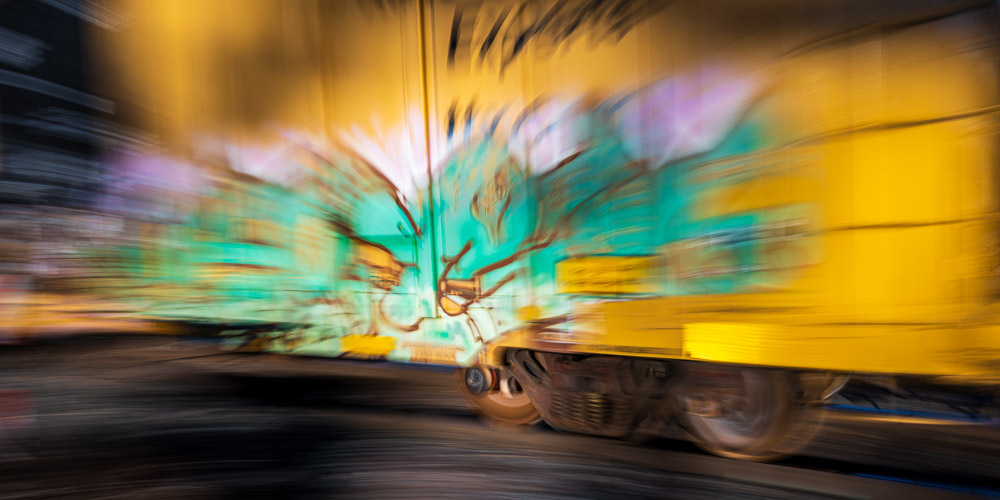
    Emotion is something I have struggled with for a long time. I now believe that if I can’t make you feel something about my print, it is cold and sterile. I believe it so much that I feel that emotion far outweighs technical perfection. This is one reason I have been doing more ICM (intentional camera motion) projects lately. It throws out all notions of sharpness and detail and focuses mainly on capturing a feeling or impression.

    Emotion in art has been written about a lot lately, but let me repeat and reinforce it. If I can’t make you feel something of what I felt when I made the image, I have probably failed.

    There are techniques for creating an emotional response, but I am not concerned with them here. The fact is, we have to do it. As an artist, I have to share my feelings in an image or there is not much interest for the viewer.

    Sharing and being transparent is a challenge for some of us (me). I am learning. The results are apparent to me. An image with a depth of feeling has more impact and staying power. Sigh. I will just have to force myself.

    But the point is that an image that touches you emotionally is more meaningful than one that is just technically perfect.

    Table stakes

    So perfection, mostly technical perfection. Where does it fit? Am I saying it is not important? No. A technically perfect image may be excellent, but not just because it was perfect. It also has to embody emotion and story and excellent craft. Perfection is a table stake. It has to be there in order to get in the game. It is not the game itself. Art has to go beyond technical measures.

    Today’s image

    Earlier I mentioned ICM as a tactic I have been using occasionally to break away from the feeling I needed technical perfection. This image is an example of that. It is from a series I did called Speeding Trains. The intent is to capture the sight and feeling and power of a huge train speeding by. I hope you like it. Read the artist statement and see the rest on my web site.

  • When Do You Make a Picture?

    When Do You Make a Picture?

    When do you make a picture? Have you thought about that? On the surface, it seems an ambiguous or simplistic question. I have been asking myself this, though.

    Time, place?

    I could be flippant and say I make pictures Tuesdays in the canyons west of my home. That is not true, though. I capture images at least 5 days a week, in general. And I make pictures most places I go. There is no special place for making images.

    Looking for things to satisfy my curiosity is not about a time or place. Even traveling to an “exceptional” destination is a special case of just making images wherever I am, of whatever interests me, whenever I have a chance.

    The click

    OK, so you could say I make a picture whenever I click the shutter of the camera. While it is true that the shutter release is the event that causes the recording of the data in front of the lens, I have written before about sometimes needing to think about and process the data before I am done.

    When I go out shooting and come back with 200 images on my memory card, does that mean I have made 200 “pictures”? No, but it is a subtle semantic distinction. My answer would be that I have 200 new possible pictures at this point. However, I am going to go through them, cull out the defective ones, decide which of the duplicates I want to keep, and then try to decide if there is any merit in the ones that are left.

    When all is done, maybe I would end up with 0-10 that are worth doing something with. Your mileage may vary. Mine does, too, depending on time and place and my mood. Note that I still have to do things with them. In my mind, they are not “pictures” yet, since I am not ready to show them to anyone.

    Post processing

    So, of course I have to post process the ones I have kept so far. This may only involve simple exposure processing, especially corralling highlights and shadows, color correction, and contrast adjustment. Typically there may be some spotting and minor blemish removal.

    At this point I “may” have a picture. For straightforward scenes, this may be enough. I am done. It may be beautiful or interesting and no more than the literal scene before the camera. A lot of pictures are just that.

    Deciding what it is and it is going to be

    But not always. Sometimes an image is trying to tell me that it is something more. It may take a while for me to hear it. This often manifests as a discomfort I can’t quite identify. A suspicion that I am missing something.

    When this happens during the initial culling process, I usually keep the frames I am struggling with. I might not be able to articulate why, but I know I’m not ready to eliminate them yet.

    Even after the image is processed and is a nice picture on its own, sometimes it keeps trying to talk to me. Deep down inside, I know I have not understood or brought out all it means to me.

    Sometimes I realize I have been capturing images of a certain subject or mood. I may recognize a theme that is emerging. Recognizing it helps me identify and clarify a truth I was not consciously aware of. This could put me on track to follow the idea for a while as a project. With these nagging images in context, I learn more about why they were talking to me. All seems different. Sometimes I don’t even need to modify the images more. Just understanding what I was feeling may be enough.

    Combining

    And sometimes I recognize an image is an interesting piece, but not complete in itself. I will often file these away as raw material, expecting to revisit it is the future and decide what it needs to say what it wants to say.

    There are times when it comes to me and I know that these pieces have to fit together in a certain way to create a new image. This can be satisfying, fulfilling, exciting. It is a true creative journey.

    It is time consuming but often very rewarding to spend sessions in Photoshop playing with various combinations of pieces and parts, doing “what if?” games. These often end up in “failure”. Failure in the sense that I did not create a new picture. But it is seldom actually failure because I explored ideas and tested new things. It often sparks new ideas for the future.

    Disconnected from capture

    This comes around to an idea I have presented before. Sometimes I have to let an image age before it becomes whole. It can take me an indeterminate time to recognize what the image wants or needs to be.

    Images are raw material until I become comfortable with how they should be expressed and presented. This is a separate creative process from image capture and a necessary part of how I make a picture. It is not until the end of this journey that I feel I have a picture to share with the world.

    Today’s image

    The image with this article is a minor example of what I describe. I was fortunate to find this scene late one winter afternoon in what I considered an unlikely place in the back country of northern Oklahoma. I’m a sucker for lone bare trees silhouetted against the sky.

    I liked it, but I know it was not “done”. A few months later I added the birds, because I felt they built and reinforced the mood of the image and added some dynamic interest. Just today when I came back to it again after about another 6 months, I saw I wanted to eliminate some distracting foreground elements, crop it to emphasize the sky, and make it overall higher contrast and more saturated. I’m good with it – for now. ๐Ÿ™‚

  • Time Builds Perspective

    Time Builds Perspective

    I find that a distance of time often builds a healthy perspective on my images. Sometimes, when the images are “fresh”, the experience of the capture clouds my judgment. Letting them age can build a clearer judgment of them. They can take on a new life.

    Let go

    I have written that we need to fall in love with our images and capture the emotions we were feeling at the time. That is true, but the experience of the moment is not sufficient to make it worthwhile. I could point to many images in my catalog that bring back great memories. Ones where I felt alive and on fire when I took them.

    They will always be meaningful to me, but that does not make them great images. I have to learn to let go of my emotional attachment to them and look at them with detachment. That is the only way to begin to see if they could bring satisfaction to other people.

    Be analytical

    I have said that we need to balance our emotional side with our analytical side. This is one of those times. Looking at one of my images may bring back a flood of joy or suffering or pain or other feelings. But I must coldly and analytically figure out if I have brought any of that to my viewers.

    Just because it was significant to me does not mean it should be to you. This may be the last picture I took of my father before he died, but that doesn’t make it meaningful to you unless it brings out something significant about the human condition.

    I may have a group of shots I took in 2 feet of snow in white-out conditions where hardly anyone was dumb enough to be out. The images may be beautiful to me and bring back the experience as a pleasant memory, but what can they convey to you?

    If I can’t bridge from personally important to an exciting image from your perspective, it is only a selfie.

    Distance

    One way to be able to see this is to use time as a distance mechanism. I have found myself instinctively doing this a lot, but it was interesting to see it discussed by Alister Benn, CaptureLandscape’s 2020 Photographer of the Year:

    When I turned professional, I suddenly found the time between shooting in the ๏ฌeld and getting around to processing was extending from a matter of hours, to months, or even years. I have thousands of images I have never looked at since importing them (apart from rating and deleting any obvious weak ones.)

    Alister Benn – Luminosity & Contrast

    He goes on to describe how this separation helped him by allowing him to view images more objectively. They are distanced from their original meaning. How he perceives and reacts to the image right now is all that matters. Sometimes he looks through old images and “discovers” ones he was cool to at the time that he can now develop into a great image. Seen on its own without the baggage of the emotions of the shoot, it means something new. Distance builds perspective.

    See them for what they are

    Alister asks how, then, does he decide what images to work on? “Simply, I work the ones that speak to me.” Sitting in front of the computer days, or even months after the shoot, they look different. They have different meaning. A meaning may arise independent of the original context.

    He is in a different place – literally and figuratively. He has different feelings and emotions. The images are perceived different. Some become more important. Presumably some become less important. But he is processing them from the point of view of where his head is at the time.

    At the time

    Interestingly, this means that there could be a kind of ebb and flow to our perceptions. At any given time our feelings will be different. We may be happy, sad, melancholy, reflective, hopeful. How we feel at the time determines how we perceive our images and how we process them.

    In a recent article, I suggested an exercise to discover our natural themes: pick your “best” 100 images from your portfolio. Brainstorm descriptive terms. Group those into categories and name them. I also gave the opinion that this was not deterministic, because repeating the exercise at another time could be a little different, because you would pick different images as your “best”.

    I think I was discovering the idea that even our portfolio is not a fixed set. There is not necessarily 20 or 50 or 100 images that is fixed in time that represent me. The members can change, not only as we do new work, but as we change our perspective. Time brings new points of view. Distancing our self from the emotions of when we captured the image changes how we view it. We are always growing and learning.

    It’s actually exciting for me to look back through old images in my catalog. The excitement is when I have one jump out at me and I look at the way I processed it and say “what were you thinking?” Then I re-process it from a different point of view and create a new, different image.

    Example

    The image here is an example of this idea. Every time I come back to it, I see something different. Sometimes I love it, sometimes not as much. It is in or out of my portfolio on any given day. The longer I live with it, the more I like it. I am tending to see more layers and ideas swirling through it. Right now I would say it is a definite “in”. It speaks to me.

  • Reality is Overrated

    Reality is Overrated

    Is this controversial for a photographer to say? I hope so. ๐Ÿ™‚ Photography used to be the land of total realism. Not so any more. Photography for me is purely artistic expression, with little concern for reality. That’s because reality is overrated.

    Reality – the good

    There is a long and honored tradition of highly realistic landscape and street photography. When you think of landscapes, you might think of John Fielder or Art Wolf or Ansel Adams. For street photography maybe it is Henri Cartier-Bresson or Jay Maisel or Elliott Erwitt.

    All of these artists were true to the reality of the scenes they found. Of course they looked for the best composition or the right light or the dramatic expression – that is why they are recognized artists. But the photographs they took were not modified at all, other than routine spotting or color corrections.

    Is their work good because they only shot reality? No, their work is good because they are great artists. I could walk outside and shoot a picture looking down my suburban street and publish it. It would be absolutely real and unmodified. Would it be good art because of that? Not to me.

    Reality – the bad

    Following up on the point about shooting down the street, a picture isn’t good just because it is reality. Reality can be boring. It can be depressing. It can be dreary and banal. While there may be a time and place for these things, they are not where I want to spend much time.

    I am not a critic or authority. I would never say such subjects do not constitute art. But don’t get caught up in the post-modernism depression where you don’t view art as worthwhile unless it is depressing or banal. That is just one passing movement led by some people with a very dark world view.

    Be yourself. Express your own values. Like, and buy, what you like.

    Assume no reality

    Photography has become much wider and more diverse than it was a few decades ago. It used to indeed be true that “a photograph didn’t lie”. You could believe what you saw. Not anymore. Photojournalism may be an exception, but in today’s climate, I wouldn’t rush to ascribe too much credence to any particular image you see on the news unless you know the circumstances. News has become just a business, not a guardian of truth.

    A lot of artists, including myself, no longer consider it necessary to represent reality. Now, some of my work is extremely detailed, with sharp, crunchy texture and edges. I actually like doing these sometimes. It is almost reveling in the detail that can be captured by my sensor and lenses. Quite the opposite of some of my blurred, low texture images.

    But if you see one of my images with super sharp detail, don’t necessarily assume it is reality. Even when I am going for crisp and detailed, I am not at the same time representing to you that it is reality. It could be manufactured. Even if I know that it is real, it could look so abstract to you that you could not describe exactly what it is.

    It is art, not a documentary

    My point being that I am making art. I think most “artists” are making art. Enjoy it as art. Don’t be disappointed if you find out it is not reality. I’m not sure there is much overlap between art and reality.

    Art may speak to universal truths and bring deep insights into our lives, but it does it through its metaphors and imagery. It does it by touching something within us. In the same way that Shakespear gives us a lot of insights about life, even though his stories are fiction.

    So don’t assume photography has to depict reality while painting does not. Both are art.

    It is art, not reality

    I will go out on a limb and state that art is not reality and it cannot be. Art might show a representation of reality. Even a very realistic representation. But the art is not the reality. Art is a 2 or 3 dimensional object you look at.

    To take an example that may be easier to comprehend, it is like a book. An excellent work of fiction may create a reality in our mind, but that reality is what we interpret from what the book describes. The places may seem real. The characters may seem real and alive to us. But they are feelings the author has communicated to us through the words. Not reality itself.

    I am drawn to joy

    On a personal note, I am drawn to joy and things that are uplifting. Even when my images are dark or showing bleak mid winter scenes, they are not depressing. At least, not to me. I try to find a hopeful angle on my art.

    For instance, I love finding certain types of old rusty trucks and cars. After surviving for 50 to 90 years, it seems these relics have something to tell me. They have resisted the elements far longer than most things. They may be beat up and rusty and out of service, but they are still there defiantly. That is the joy to me in old things like this. They are still standing and making a statement; they are not junk. There seems to be something significant about that generation. Some quality that makes people want to keep them. A 1952 truck is often still around in 60 years. I don’t expect that many 2022 trucks will still be in as good a shape after 60 years.

    The picture with this article is composited from shots of some old vehicles. It is detailed and sharp, but it is not “real”. No object I know of in the world actually looks exactly like this. That doesn’t keep me from creating it. I could even represent it as something that could be, even if it does not currently exist. But realism or potential realism is not an important consideration for me. I only care about if I like it. I do.

    What do you think?

  • Finding Inspiration

    Finding Inspiration

    Are you empty sometimes? Are there times when you don’t have any ideas or new projects? We tend to desperately put pressure on ourselves to find something creative and new, but this is often counter-productive. So how do we go about finding inspiration?

    Relax

    Ouch. This can be hard. Our art is important to us. We need to be proactive and driven to produce. But first. relax.

    If you are in a slump creatively, just go with it. You will come out of it. But the more pressure you put yourself under the harder it sometimes is. It is very hard to force ourselves out of a slump. Our subconscious will eventually get re-engaged and start pumping out the great ideas. Give it time to rest and rejuvenate.,

    Take a walk

    Really. “Waste” the time. Carry your camera or not, it’s up to you, but don’t require yourself to take any pictures.

    When you walk, go slow. This is not mainly for the exercise. It is for your head. Look around. Look at everything. See things as it for the first time. Play the game that you just teleported to [your favorite exotic destination] and you are looking around in wonder at everything. Try to see how many things around your neighborhood you never really “saw” before.

    None of these may be in your “style” or preferred subjects, but learning to see new things is good.

    Read a book

    I have heard it said that most adults never read another book after they graduate from school. Maybe that is just males. ๐Ÿ™‚ Even so, I hope that is a false statement. Books are one of the most important inventions in history.

    Reading something new will expand your thinking. Studying something related to your art will give you a new appreciation of different styles and ideas. It may teach you something you can apply to improve your images and refresh your creativity.

    Even if not, you will still be better off mentally for exercising your brain. Books are a major repository of the collected wisdom of centuries.

    Watch an educational video

    I can say to watch videos because I do not produce any videos. I’m not selling anything.

    The good thing about the internet is that there is a wealth of information there, free or for relatively low cost. There is probably no aspect of our art that someone doesn’t have a video about.

    That being said, the “signal to noise ratio” (the percentage of useful information) is fairly low. Be careful of who and what you take in. Even so, it is not too hard to find good stuff.

    If you are up to it, it can even be healthy to watch bad videos. That sounds weird, but do you find, as you get more mature and confident in your craft that you can sift the good from the bad? If you watch a bad video, or one you disagree with, it can be empowering to be able to refute the presenter and know why you believe they are wrong, at least for you. It can help bolster your confidence.

    Read other artist’s blogs

    You are reading mine. Thank you! I would love to hear your thoughts.

    Probably thousands of blogs are written every week. Pick a few new ones to add to your list. They do not have to be leaders in your field. Look around and find artists in other fields whose work you admire, who influence you, whose style you admire. Follow them. This is another great source of wisdom and inspiration.

    I follow a few people. Not many. But I am constantly amazed at the wisdom they give away.

    Be open

    None of these suggestions will do much good unless you open yourself to receiving what they might give. Openness is an attitude. Our attitudes are under our control.

    Are you totally focused on one subject? Why? Widen your view. Have you become cynical? As you learn to look around more, re-awaken your wonder and joy. Find new things that excite you. Cast a wider net. Get enthused about something. Give yourself permission to try new things.

    Inspiration sneaks up on us when we aren’t expecting it. The more we can be open and receptive, the more often we will find it. I find that stimulating my mind with new thoughts and learning new things helps keep me open to inspiration. Try it!

    About the image here

    I can’t claim this is super creative as such, but I am very happy I made this image. This is the epitome of depressing conditions: way out in the midwest, nothing around anywhere, temperature was 108F, winds blowing so hard I had to hold the tripod, totally clear blue sky – what to shoot? I decided the interest was the wind. How to capture the effect of it? I think, by being open to exploring new ideas, I made something good out of it. At least, I’m happy with it.

    This image is part of a series I am working on, tentatively called “Maria”. It is not published yet.