An artists journey

Blog

  • Over-processing

    Over-processing

    How much post-processing is too much? Is less better? Is there some magic boundary you shouldn’t cross? Over-processing is a controversial topic for many photographers.

    Purity

    Ah, purity, respecting reality, make no changes. This concept and value system is instilled into many photographers, especially landscape artists. I still follow Nature Photography Network. The images are often very lovely. But there is generally, to me, a sterility to them. Most photographers who post here are afraid of departing from literal reality.

    In this group, as in many landscape forums I have seen, there is a real negative feeling about cleaning up distractions, adjusting color to be anything other than the actual original, compositing, or anything else that is not strictly faithful to the original scene. It reminds me of some film photographers who used to make prints with the film rebate showing to prove the image was not cropped.

    The problem I have is the fear to depart from reality. Fear is not a good guide for art.

    What is photography?

    Is photography to be a literal recording of reality? Some people believe that it is. I used to be in this group, way back. As a matter of fact, the camera club I used to be a member of went further to say that a nature image must not show any “hand of man”. That is, there could not be a trail, a contrail, an old mine, anything not completely natural.

    But what is photography, really? I see it as an art medium. Composing interesting images from “real life” scenes in front of a camera is just as valid an art as painting scenes that exist only in the artist’s mind. Just as the painter only includes what is necessary to further the image, the photographer eliminates what is distracting, either in camera or in post processing. The goal and only real measure is the final image.

    In impressionism or modernism or post-modernism or any of the other isms, the artist freely pushes the medium to its limits to give his preferred interpretation of reality. And that, to me, is a key thing that makes it art – it is an artist’s interpretation of the world.

    What prevents photography from doing the same thing? A modern sensor can record a scene in very high resolution, and our software tools allow us to “correct” color and noise and other artifacts to a high degree., Does that mean it is the place of photography to create images that are constrained to faithfully depict reality?

    Is there a line you shouldn’t cross?

    Is there a line, a limit, not to cross? Probably, but it is different for each of us. As an artist, we need to be able to figure it our for our self.

    Our post-processing tools are amazing. They allow a level of control unheard of a few years ago. There is sage old advice, though, that says just because you can doesn’t mean you should. Anything can be misapplied to create garbage.

    It is easy to go to the computer and over-saturate and over-sharpen and re-mix colors in garish ways to make an image into something I would never show anyone. But that line where I have gone too far is personal to me. It would be different for you.

    Go for it

    As I mature, I find the line is moving our toward the horizon. That is, I am finding interesting ways to express my vision using post-processing “excesses”. Is my vision moving or am I learning to use the tools better? I don’t know for sure, but it is probably both. What we discover we can do influences the notions of what we want to do.

    The image with this article is a completely natural scene that has had what I would consider “moderate” post-processing. I like it much better than the bland original.

    These tools that can be used to create horrible garbage can also be used with great subtly and finesse. Like with a painter, the same paint and brushes can create a useless smear or a respected painting. It comes down to the artist’s vision and how the tools are used.

    Maybe asking if the image is over-processed is not the right question. Maybe the question is did the artist realize his vision? And did the vision resonate with me?


  • Ostranenie

    Ostranenie

    Say what? It is probably a word you have never heard. Ostranenie (good luck on the pronunciation) is a Russian word that refers to “defamiliarizing” scenes so we can see them new. I think it has application to art.

    Definition/history

    The term was created by the Russian writer and critic Viktor Shklovsky in 1917. He was originally referring to poetry as opposed to normal writing. His point was that poetic language was intentionally different from our normal language by being more difficult to understand. By being formal and different, it gives us a different perspective on the world.

    The concept was fairly influential in Europe for a time, known as Russian Formalism. It was picked up in various forms by other writers and playwrights. Even Freud referenced it in his notion of the uncanny.

    How it works

    The Russian Formalists maintained that habit is the enemy of art. Therefore the artist must force the reader (in their case) outside of their normal state of perception.

    The problem with this is that it ends up relying on shock value. But shock wears off and becomes a norm. Then it becomes a degenerate spiral because things have to become more and more extreme to provide shock. Just look at most Amazon Prime or Netflix productions.

    Displacement, alternate reality, removal of what is known – these can become pretty heavy-handed psychological manipulations.

    Application

    A slightly softer definition is “Defamiliarization or ostranenie is the artistic technique of presenting to audiences common things in an unfamiliar or strange way so they could gain new perspectives and see the world differently.” This is actionable and a reasonable artistic device.

    It is easy to see in literature. Science Fiction sets things in a different time or place or it creates environments that do not exist in our world. This lets them make observations about us from the outside. Fairy tales give us great insights on the real world by creating fictional situations. Plays, movies, and poems all do it to some extent.

    How about the visual arts? One artist I see doing this is Brooke Shaden. She creates dark and mysterious scenes to ask questions about our situation. I don’t necessarily resonate with her work, but I respect her artistic technique a lot. And she is a very good instructor. Catch some of her classes on Creative Live.

    Even a simple thing like very long exposures can be a form of this, because it changes what you normally see into something different. My friend Cole Thompson does this well. He sometimes uses long exposures to drastically change what you expect to see in the scene.

    As an unlikely example, black & white photography is kind of this. By removing all color from images our perception is dramatically changed. It is familiar, but unfamiliar. It is definitely a new perspective on the world.

    Personal

    In my own timid way, I like to do this sometimes. Black and white is one example. I am a closet B&W artist. I love it, even though most of my work is dramatically colorful. One of the things I love is its ability to present a new viewpoint on the familiar.

    Time exposures are another common process for me. I like its ability to change our perception of what is happening by shifting the time reference.

    Intentionally distorting a scene to change the way we see it is another technique I like. The image with this article is an example. This is a straight shot, no Photoshop magic. One day I was having lunch in a favorite restaurant a couple of blocks from my studio. I noticed that some of the old windows in this 100+ year old train station were very distorted. If I photographed through them at a certain angle it enhanced the distortion in desirable ways.

    This shot is a view of my downtown. The distortion reduces it to shapes and color while adding an intriguing texture. I like it. Luckily, the manager is a friend and didn’t mind me exploring to my heart’s content.

  • What’s the Noise?

    What’s the Noise?

    Noise in digital imaging. Is it a problem? Is it part of the art? Should you be concerned? Are there exotic techniques you need to learn to eliminate the noise?

    Fear

    Many of us have been taught to fear noise. So much so that I know people who would pass up a great shot because the image might be noisy. The fear of noise is an irrational, superstitious fear.

    This seems most common in the landscape photography community. Conventional wisdom, and the teaching of most instructors, says we should always shoot at the “native” ISO of the camera for lowest noise. That would be ISO 64 for my camera. If we don’t, we are increasing the noise in our images and that would be a “bad thing”.

    Have you ever examined the feared noise yourself? Do you understand what it is and what effect it has on prints? Have you confronted the monster and stared it down?

    Noise Technology

    The digital sensor is an amazing piece of technology. It has a HUGE grid of photo-receptive sites. My Z7 has nearly 46 million pixels. A strand of the smallest human hair would cover at least 14 of these pixels. No wonder I see dust spots!

    Did you know that “digital” imaging is actually an analog process? Each receptor “adds up” the number of photons it receives for a frame. This is a scalar value, an analog signal. Each site is read out to an amplifier and analog-to-digital converter where it is transformed into a digital value. The amplification is determined by the ISO setting – dialing in a greater sensitivity corresponds to more amplification. This amplification is one source of noise. Any time you take a very low level analog signal and amplify it, some noise is inescapable.

    But in addition, the sensor chip itself contributes noise. There is a phenomenon called “shot noise”. It is beyond my ability to explain simply, but electrons spontaneously generate noise. It is usually low level and it is temperature dependent. This is why your camera probably has a long exposure compensation mode. It is there to reduce this background noise accumulated over a long exposure. During a long exposure the sensor is powered for long enough to raise its temperature, leading to increased noise. The compensation mode takes another exposure, but with the shutter closed. This reads the background noise level with no light coming in. The camera basically subtracts the noise signal from the original image. It does a pretty good job.

    The amplifier and the sensor noise generation are 2 significant sources of noise in digital imaging. Not the only ones, but they are big. Keep in mind that most of the writers you will see do not have a significant technical background. They sometimes give bad advice because they do not really understand what is happeningl

    What does the dreaded noise look like?

    Take an image with the ISO cranked up pretty high, say 12,800. Look at it at 1-to-1 magnification in your editing software. You will see that it looks kind of like blotchy sandpaper. You are seeing the 2 primary types of digital noise: luminance noise and color noise.

    Luminance noise looks kind of like the grain we used to see in fast black and white film. Some people like it and it does add an interesting texture to some images. Color noise is the mottled color patches you may see at high magnification. I don’t know of anyone who likes that. Both of these types of noise can be compensated for significantly by your editing software, like Lightroom Classic.

    Let me point out that noise is just a part of the image capture. It is not something that, when they see it, the authorities kick you out of the gallery or revoke your artist’s certificate. You have an artist’s certificate, right? 🙂

    Noise Techniques

    Noise is part of the technology we deal with because we do digital imaging. We need to be aware of it and know how to deal with it, if it is a problem for us. I mentioned amplification noise and sensor noise.

    To minimize noise, keep the ISO low, keep the sensor cool, and minimize long exposures. Simple. But what if that doesn’t work?

    I will use me as an example. I often shoot in low light, sometimes hand held with no tripod. And I often use long exposures. Am I doomed?

    Here are the decisions I generally make: if I want the image to be free from blurring caused by shake, I up the ISO until the shutter speed is at about 3x the focal length. Yes, conventional wisdom is 2x, but I find that does not work well for very high resolution sensors, even with great image stabilization. If I want a long exposure for the creative effect, I use it. Noise is not a significant consideration most of the time. And, unconventionally, I usually leave the long exposure noise compensation off.

    Let me address that last one. Why would I leave the long exposure noise compensation off? The noise here is made worse by sensor heating. I shoot a lot in Colorado. Unless it is mid summer, the sensor stays pretty cool. As a matter of fact, it is often more of a problem keeping the battery warm enough to not shut off. And even in summer, it is not a problem to wait a few seconds between shots to let it cool. There have been a few times where I have gotten in trouble with this, but very few.

    So what?

    For me, noise is just a part of the creative balance. Sometimes I want to minimize it, sometimes I actually want to introduce it. Even for the vaunted landscapes, noise can introduce a welcome texture at times, maybe to give a grit for effect or to give subtle interest to a featureless sky.

    I do not fear noise. ISO 400 is my default setting – that is 3 stops over the camera native ISO. I do not mind going to 3200 or 6400 if I need to as a tradeoff to capture what I want.

    With my camera it is hard to discern noise at 400. There is not much to find at 1600. I admit, my old training to favor the lowest ISO sometimes interferes with my artistic judgment. I try to fight it.

    The image with this article was shot at ISO 6400, with what is, as of this writing, an 8 year old sensor. I’m not ashamed of the noise. It I didn’t shoot at 6400 I would not have gotten the image. Good tradeoff, to me.

    Noise is a traditional part of photography. It is a feature that sets it apart from painting. Black & White photography favored grain for a gritty look. Many artists like the effect. Even the ones who may not use it recognize and accept it as part of the medium. Digital noise is the equivalent.

    So don’t fear noise. Accept it. Use it where you can. Understand where it comes from and what control you have. Your editing tools have ways to reduce it, and they do a pretty good job. Luminence noise is not exactly the same thing as grain, but the overall effect is not that different. Perhaps always totally eliminating noise is not the goal. Did you ever see the slider in LIghtroom Classis in the Effects panel to increase grain? Play with it sometime. It may add to your artistic vision.

  • Try and Fail

    Try and Fail

    No, I’m not saying try “to” fail. If you have been there trying to do creative work, you know that you will create a lot of failures along the way to some good work. In creative work we often do not clearly know where we are going. That leads to a lot of failed experiments and dead ends. When we try and fail, is that bad?

    Attitude

    Our attitude about failure will have a lot to do with our results. A reality for many of us is that, if we are not failing, we are not stretching ourselves and developing new skills or vision. As creatives we cannot play it safe. We have to be risk takers.

    I love a quote from a blog by Benjamin Hardy. He was talking about Molly Bloom and said “The moment you realize you can try and fail — and that everything will be okay — then you are free to create.“

    This is a liberating event in our creative journey. Failure isn’t final. Failure leads to growth. When you fail, no one comes and takes away your camera or your brushes. No one even laughs at us. Realizing we can fail and go on with no consequences frees us to try without worrying much about failing.

    Learn by doing

    We don’t upgrade our skills and exercise our creativity just by thinking about it. We have to take action. But just taking random action will usually lead to random, unwanted results. We need a way to follow a path that will take us to desired results.

    You are probably familiar with the “do it, try it, fix it” loop. It goes by different names, but the concept is pretty much the same. This is an excellent process for improving things.

    The basic idea is you try something new. Then you evaluate the results, Was it a success or an improvement? Decide what, if anything, you want to keep of this experiment to incorporate into your tool set. Then, based on the evaluation, plan what to try next. That becomes the basis of the next experiment. It is important to realize this is a cycle, meaning it continually loops and repeats.

    Evaluate

    At the evaluation stage many experiments may be tossed out. They did not take us in the direction we want to go. It was a failure, but that does not mean we failed. We just tried something that we decided didn’t work for us.

    This is part of a process. It is a deliberate plan to systematically push the limits. To do that, we will try a lot of things that don’t work out satisfactorily. The failures are expected, planned even. Not something to be ashamed of. We should be happy to know we tried. Now we are free to do another experiment in a different direction.

    Freedom

    Freedom is at the core of the process. We are not just trying random things and mostly being disappointed with the results and insecure with our creativity. Instead, we are following a deliberate process of improving our self and our art. And knowing we can try anything with no fear of failure is extremely liberating.

    It is easy to get discouraged and think of our self as the failure. We have probably all felt like a fraud who has no right considering themself an artist. Remind yourself that we have to change and grow creatively, and to do that requires a lot of risk taking and failed experiments. Following a process like outlined above makes it a methodical plan. It help us keep in mind that the failure is not a personal failing but a necessary and expected outcome of the growth process. It can be exciting. We can risk more when the fails are not catastrophic.

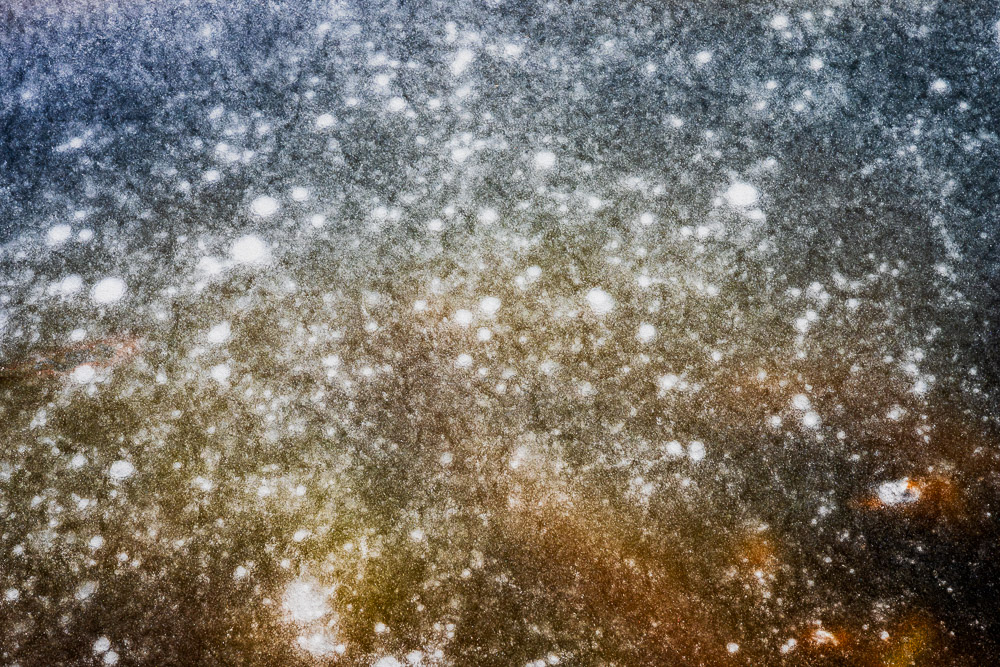
    The image with this article is an experiment. It is probably not what it appears to be. I will leave it to you to decide if it was a failure. I have my own evaluation.

  • How Do You Upgrade a Boring Photo?

    How Do You Upgrade a Boring Photo?

    I recently got an email with this subject line. Really. And it was from a high profile photographer who frequents the internet. I won’t name names. It made me think, though, about boring photos. What to do with them? How to improve them? We all take boring photos on occasion. Should we upgrade them?

    What to do with a boring photo?

    My first reaction is to say throw them away. Or don’t take them in the first place. It seems a waste of time to spend a lot of effort working on a boring photo. It is a waste of resources in some ways to even keep them, because they are choking your catalog and disk, filling up your backups, and just creating clutter.

    A little further down I talk some about when and why you might want to shoot boring photos, but for here I question your intent. If you are a regular reader of this blog you probably have more than a passing interest in taking photos. Hopefully you have progressed to the point where you seldom make bad images. At least, you know how to do better.

    When I am editing a shoot on the computer – never in camera – I sometimes am almost yelling to myself “Boring! Boring! Boring!” Usually I throw almost all of that set away. Yes, I know photographers who say they keep everything, but that seems silly to me. It ascribes too much valuable to a collection of pixels that doesn’t do anything for me. Save yourself a lot of useless future work and throw it away now.

    Once in a lifetime images

    But what about that once in a lifetime trip or a one of a kind event? Sorry. I’ve been there, too. Maybe I was so excited that I didn’t get the camera settings right. Maybe in my haste the shutter speed was too slow and everything was blurry.

    Keeping some bad photos of that special trip to Paris is fine, for your memories only. Working on a few of them to try to make them better is a good idea because they are personal to you. Never think you can show them to anyone else outside your family. And never try to enter them in a portfolio submission. Be realistic. If they are not good, they are not good. Only show your best.

    The only major exception I can think of only applies if you are a photojournalist. A key shot of an important event can be perfectly acceptable and publishable even if it is flawed technically. In this case it’s the subject that is important.

    I’m not being judgmental. Your mileage may vary. Set your own standards.

    Why shoot boring photos?

    Circling back to the idea of shooting boring photos, why did you do it in the first place? You know how to do better. Why not always try to take exceptional photos?

    I’m not saying you need to interrupt the family trip and spend 3 hours “working a scene” with tripod and a selection of lenses, waiting for the right light. That would be rude unless you have a very understanding family and a flexible schedule. No, but you can apply what you know of composition and lighting quickly in most situations.

    You know, the basic stuff that makes a huge difference: look for a good vantage point, try a step to the left or right to see if that improves the composition, think leading lines, contrast, pattern and repetition, foreground/background, nail the exposure. I’m sure this is familiar to you. Learn to do it fast and automatically when you need to. Applying decent workmanship to a photo when you are taking it can improve a lot of them.

    I wouldn’t presume to tell you to never shoot a photo if it is boring. Doing that is your decision and there are times it is valuable to you. Just make sure it is a conscious decision. That is, don’t be surprised when you look at the photo and find it is boring. Know when you took it that it will be boring and do it anyway if it is valuable to you.

    One compelling reason why I sometimes shoot boring photos is when I am experimenting. When I am trying new techniques or styles the results may not be exciting at first. I do this a lot. This is that area where I knew I was taking a chance, and if they came our boring, well, I can still evaluate the results of the technique I was trying. One way of another, I learned something. I’ll improve it next time. I wouldn’t do the experiment where I was very concerned about getting a lot of keepers.

    When to keep boring photos

    I freely admit I keep some boring photos. I even intentionally make some. Usually this is to use parts of them as raw material for compositing or texture or skies. Not every image needs to be great and complete in itself.

    Compositing is a creative and fun exercise. It is interesting to build a new image from pieces of others. It is a new way of thinking. To do it, you need a good library of “parts”. This is challenging and needs some time to build.

    Building your library is not an excuse to keep bad images, though. When you want to composite images together, each part must be strong enough to carry its weight in the resulting image. Say you want to “mine” a photo for its sky. The sky has to be large enough, the right perspective, the right lighting, exposed the same way, and sharp enough to be included with the other pieces. That is a reason to rescue a boring photo, if the part you want to use for something else is not boring.

    The other reason I routinely keep them is for my memories. But I hide them. That is, I do not show them or kid myself they will ever be anything other than a boring photo.

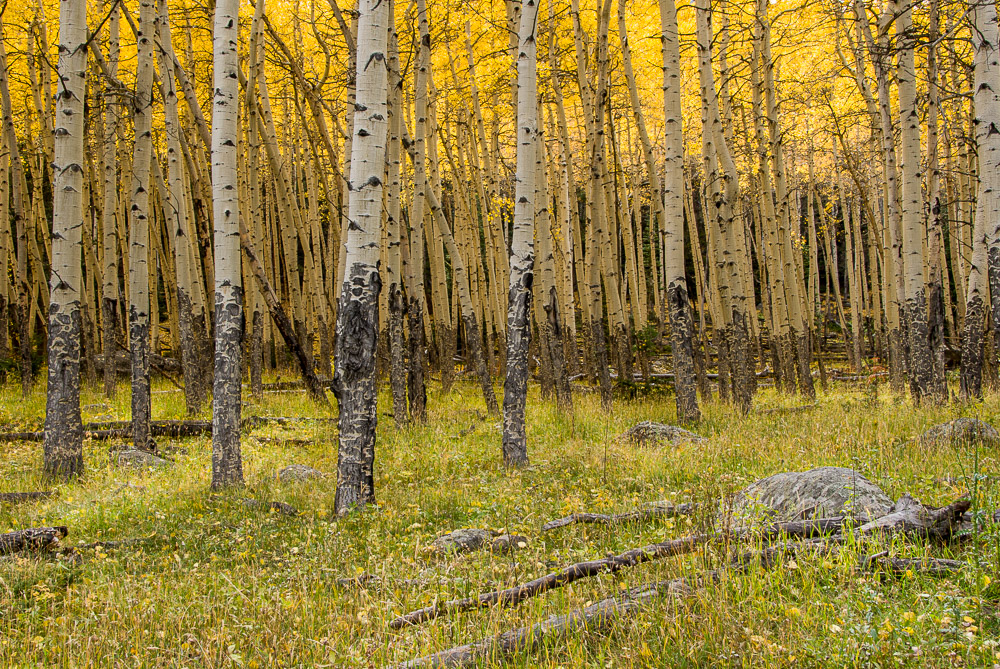
    Sometimes, rarely, I am undecided about a set of images. I may keep them and let them age. Later on, maybe weeks or even months later, I may find there was something there calling softly to me that should be explored. Usually not, and I throw them away. 🙂 The image with this article is one of those exceptions. Something told me I should keep it, although I didn’t know why. Years later I noticed the rock and fallen trees in the foreground looks like a dead horse. That was the interest that didn’t register with me consciously. I like it now.

    If it comes out boring

    Despite your best efforts, sometimes you find you have shot a batch of boring photos. It is a learning opportunity. Evaluate why. What were you thinking when you shot them? Is this the result you anticipated? You were excited when you took then, why did they come out boring?

    This batch probably cannot be salvaged, but maybe you can avoid repeating the experience in the future.

    So boring photos? Don’t do it. Learn to do better. You should seldom shoot boring images unless you have a well reasoned need to. Make your compositions and camera handling smooth and automatic so your photos will improve. Don’t give in to wishful thinking – bad photos are bad. Don’t waste too much time trying to polish them. It will be disappointing.