An artists journey

Blog

  • Seeing What You Believe

    Seeing What You Believe

    Most of us assume we believe what we see. That views ourselves as completely rational and objective. I have started to doubt this. My opinion is that we tend to see what we believe.

    World view

    Don’t believe it? How about your political views? Are you confident you are completely correct and anyone who disagrees with “your side” is an idiot? That usually comes from only listening to one side of the arguments – the ones you agree with.

    Take the Covid “crisis”. Lockdowns are required, or foolish. Vaccination should be required, or should be optional. Isolation is necessary to save lives, or it is causing more problems than it cures. Have you really taken a cool, rational look at all of the facts and arguments on both sides and come to an unemotional decision? No, your decision is based on emotion and on who you listen to.

    What you see tends to be based on the “tribe” you identify with and associate with.

    Rational

    In our current society, rationality is basically a myth. I’m not saying that is good or bad. The problem is not recognizing it. All advertising and news and political discourse and “scientific” pronouncements are targeted to our emotions. Some are designed to breed fear so we are more vulnerable and can be controlled more easily. Some are designed to make us lust for products they want to sell us. In all cases, we are treated as cattle, existing to benefit the power structure you give allegiance to.

    Not recognizing what is happening makes us content to stay in the herd,. If we learn to recognize it, we can gain back some control of our lives. Artists should lead self-examined lives.

    In art

    Enough depressing hand-wringing. This column is about art and us as artists.

    Have you thought about how you decide what to shoot? If I suggest you pick up your camera now and go out for a quick shoot, what are you going to do?

    I suggest that, as artists, we also tend to see what we believe. In this narrow domain, that is not a bad thing. Our world view, our values and beliefs color and shape what we see and are drawn to.

    I am of the group who enjoys going out exploring with little agenda or plan. I wander and shoot what I am drawn to where I am. This is invigorating to me. But if someone else was doing the same thing in the same area, they would get a different set of shots. Why?

    I believe it is because our different values and interests make different subjects stand out. This is part of what makes us all individually creative and interpretive. Out internal view determines how we see the world and what we want to being into our art.

    Boundaries

    I have maintained before that I go out empty and discover what is there to see. Yes and no. I do, but I am not open to shooting everything. I see what I believe.

    As new artists we do tend to shoot everything around us. We don’t really know yet what our true interests are. When we mature more and start building a body of work we start discovering that we are drawn to certain subjects or designs or looks. We can see they are recurring in the work we like. This may be an unconscious process at first.

    Part of this process is us establishing boundaries for our art. Consciously excluding things that take us away from our main focus. Allowing ourselves to walk away from subjects that may have potential, but we know are not our style.

    Let me give a simple example from myself. I am not a portrait artist. I don’t want to do it and, the rare times I have been talked into it, I have been uncomfortable. It wasn’t fun. Portrait photography is a huge and important area, but it is not for me. Candid shots of people are interesting to do, but not formal portraits. So when I am out exploring, I seldom even consider people shots. It is almost completely blocked off from my view.

    Another example: flowers. Take me to a great garden and tell me I have unlimited time there to shoot and I might as well just sit and read a book. Flowers do not interest me much unless I think I can bring something unique to the scene or treatment. This is rare.

    I am beginning to see a pattern that the more we mature in our art, the less widely we shoot.

    Discover your themes

    Let me propose a new year exercise for us all. Go back and pull together a portfolio of the 100 images from last year you appreciate the most. Not necessarily the most meaningful in any social or environmental sense. Not the ones that have the most “likes”. These are the images that you like the best.

    Study this set. Are there themes you can identify? Are there repeating subjects? These probably represent the themes you are most interested in, at least for now. Think about these. Meditate on them. Determine to pursue these themes to a greater depth this year. Explore how to bring out the best treatment of these. Expect to see these subjects or themes when you are shooting, realizing that they interest you. Sensitize yourself to them.

    This is a positive application of seeing what you believe.

  • Creativity is a Process

    Creativity is a Process

    Is creativity something that just happens when the “muse” takes you over and directs you? I want to challenge that. I believe creativity is a process that we can follow almost anytime, not just when we are “inspired”. I hope this will seem inspiring, because it means we can create great work any time we decide to.

    The myth of the muse

    Ah, if only the inspiration would come! I guess I will sit and drink wine and read poetry while I wait for the muse to visit. That sounds like a pleasant way to spend a rainy day, but not a way to create art.

    The concept of muses comes from Greek and Roman mythology. They were 9 goddesses who controlled the arts and sciences and inspired artists. It is amazing how the concept has stuck. The idea of muses makes a good metaphor. We all know that our creativity seems to increase or decrease at unpredictable times. None of us understand the reasons why. But I will not believe my life and psyche is at the whim of Greek goddesses.

    I don’t feel like it

    If you believe some external influence controls you then it is easy to say “I’m not feeling it today, so I’m not going to do any art.” Maybe you can do that. I can only behave that way for very short periods of time.

    My art is something I have to do. Not doing it is worse than feeling like I am not inspired. I would make “bad” art rather than no art at all. I don’t have to show it to anybody.

    I find that when I assign myself a project to focus my creativity or just pick up my camera and get outside looking around I start to feel and see possibilities. Something magical happens to me when I hear the shutter click that first time. Now I am drawn into creative mode. My camera, like many new ones, has a fully silent mode. I don’t use it. I want to hear that shutter slap. It activates decades of muscle memory and discipline. I have made an image. Now I can go on.

    Hard work

    The bad news (for some of us) is that art is hard work. We cannot always sit around waiting for “inspiration”. We have to make our own inspiration.

    Inspiration is for amateurs. Us professionals just go to work in the morning.” – Chuck Close

    Hard work will outperform talent any day of the week.” – Joel Grimes

    Motivation exists, but it has to find you working.” – Pablo Picasso

    A professional is someone who can do his best work when he doesn’t feel like it.” – Alistair Cooke

    Sorry for the blizzard of quotes, but I find encouragement in the experience of others who have been there before. I could have found a lot more quotes on the subject.

    So, if you just dabble in art and it is not a driving passion, it is OK to wait for inspiration. But if you are serious about your art you have to just do it. Create your own inspiration. Work. Push on. Get moving to get the juices flowing.

    The process

    I said creativity is a process. What is the process? As Fast Company magazine said: “stop your whining and sit your ass in the chair.” Sorry to be crude, but it is true. They were referring to book authors, but the same principle applies to other creative efforts.

    It doesn’t do much good to complain about lack of inspiration. Do something. Taking positive action will lead to the work flowing. Eventually. It is hard at first, but it is a learned process. “Professional” creatives, like screen writers, copywriters, commercial artists, illustrators, wedding photographers – people who must deliver work to clients on a schedule – just have to get it done. Whether or not they feel like it. The rest of us can, too.

    Assign yourself a deadline. Define a project and a timetable. Go out and say you won’t come in until you have shot a certain number of images. Re-evaluate and re-organize your portfolio. Take some action to get some momentum going. It will overcome the barriers in your mind and get ideas flowing. The work you do right then may not be great, but it will get you going.

    Projects focus us

    I have said that projects are a good way to get ourselves going when we don’t feel like it. Actually, I am coming to believe it is one of the best tools we have. What is a project and why does it work?

    A project as I describe it is shooting and editing a collection of images that center on a theme or subject. I believe it helps focus us to write an artist statement before starting the project. This collects our thoughts on the purpose of the project, its scope, its meaning, and what your interest or motivation is.

    Write something? You’ve got to be kidding! No, I’ve come to believe writing is just another part of the creative process. It is organizing a linear series of words to communicate rather than communicating solely visually. Both are forms of expressing our thoughts. Both, I believe, are complimentary creative processes.

    The artist statement does not have to be long, maybe 200-300 words. It will serve as the guide to focus us and give unity to the project. So be clear to yourself.

    Maybe I’m just weird, but putting the blinders on and restricting my thoughts to a project gives me a huge boost of creativity. Rather than my thoughts being diffuse and wandering all over the place, they are focused on one thing. My creativity and energy have something to work on. Throwing myself into coming up with diverse ways to express a single subject is a challenge and, actually, fun.

    Get going

    Whether you challenge yourself with projects, go to museums, read books, write, finger paint, whatever, do something. Do not fall into the trap of feeling depressed and uninspired and, therefore, not doing art. Get moving to get your mind working. Doing creative things breeds creativity.

    Let me know what you do to get your creativity going,

  • Boredom

    Boredom

    Boredom. We’ve all been there. We get in a funk. What we usually see and shoot is distasteful to us. We are discontented. Everything has been done, there is no creativity left. Do you ever feel like this?

    The time of year

    This article will be published in the depths of winter. Many of us don’t think there is anything interesting to see or shoot. After all, there are no flowers or green trees or lush fields.

    I would say, look again. Get out in it. Yes, out in the cold and snow if you have that. Or the rain and clouds. Whatever winter is in your area.

    Forget what you want to be shooting. Look with fresh eyes at what is there. You may discover a whole new world. In the words of an old song, “if you can’t be with the one you love, love the one you’re with.” While I do not recommend this as a way of managing your relationships, it can be very useful artistically.

    I actually love shooting in winter. Today I was out shooting in 70+mph winds and temperatures not much above freezing. Do I love being out in that kind of wind? Not at all. When you have to bundle up in layers of wind-tight clothes and hold your tripod to keep it from blowing over, it looses some of its charm. However, there were great opportunities out there. I have, by chance, been working on a project about wind. Today was a great opportunity to fill in some gaps in the image set.

    It happens to all creatives

    We all feel blocked, bored, empty at times. The “muse” is not around. We fear our best work is behind us and there is nothing to look forward to. Might as well give up.

    You are not alone. We all feel this sometimes. Like temperature and climate and relationships, our mental energy is cyclic. Sometimes the spark seems to be gone. It is a low time for us.

    Recognize that this is a natural part of life. Don’t be (too) discouraged. It will change. The creative energy will flood us again. Just give it time.

    Use it!

    But we don’t have to sit passively waiting for the creativity to return! Use this boredom to propel us to a new level.

    If we are bored perhaps we have plateaued on our current path. Maybe we aren’t reaching far enough. It is a great time to reexamine where we are and how we feel about our art. And actually do something about it.

    Boredom is frustrating to most of us. Use that! That is an energy and motivation. What are we lacking? Should we strike out in a new direction? What would we love to do if we had the opportunity?

    Like with our body, if something hurts, that is a sign that we need to take care of it. Taking care of it doesn’t necessarily mean we should rest it and take a “oh, you poor thing” attitude. Maybe we need to work it, eat right, exercise, build it up.

    The point is, the frustration of boredom can be a motivation to change our self or redirect ours thoughts or energy.

    Opportunity

    I have made some of the best discoveries of my life because I was bored. Really.

    Let me give an example. Way back, we owned a timeshare. For those who don’t know them, it is a vacation ownership scheme that was popular at one time. Don’t buy one. It’s not a good investment. The way it worked was, you “bought” a fraction of a property, say one week during the year. Typically your ownership time would be traded for a week at another property. Because of this, we got to visit beautiful places around the world. But a side effect was that we were “planted” at a single location for the week.

    This led to interesting trips. On one occasion I can think of, we were in a nice place way out in the country in Devon, England. Ten miles or more from the nearest town. It quickly got boring. As a result, we started exploring. Even though this wasn’t an area you would find featured on many tourist itineraries, the things we found were intensely interesting. We still cherish the memories.

    Because of the boredom, we were led to explore with our eyes and minds open. We had to forget the expectations that were not being met and become receptive to the wonderful things that were there. Repeating this experience many times completely changed my travel style. Therefore, now I want to settle in somewhere, get to know it, and have to find out what is there.

    Use boredom to your advantage

    So I encourage you to let boredom be motivating. With the right attitude it can free and empower us. It can lead us to opening our eyes to our surroundings, to learning new subjects or techniques, to re-evaluating our work and making improvements, to getting out and doing something about it. Or, you can sit on the couch and feel sorry for yourself. Your choice.

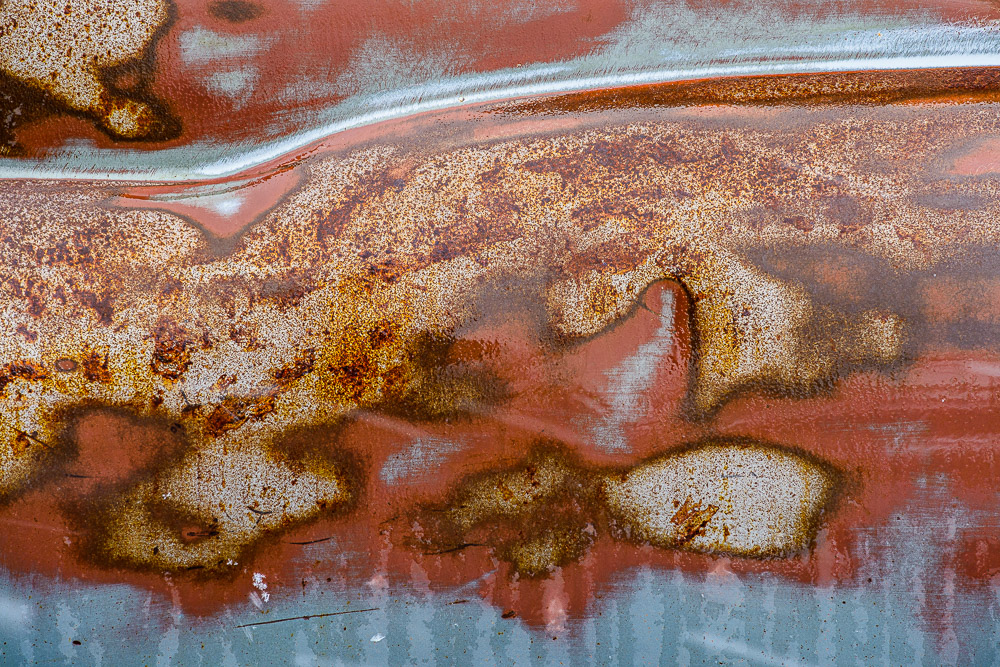
    The image with this article is one of many surprises we discovered on that “boring” trip to Devon I talked about above. It is a beautiful place with hidden gems all around.

  • Purity in Photography

    Purity in Photography

    I couldn’t help follow up on my last article with this. I read a photographer’s blog who was wringing his hands about “fake” images. In his plea for purity in photography he went so far as to coin a new term: “PhoTImagery” (the strange capitalism is his). He proposes the term to refer to any image that was not an absolute literal representation of a real scene.

    What is purity in photography?

    The argument presented was that “pure” photography – what he terms the purist photographer – consists of images made on film and processed in a wet darkroom. The end product is a photograph.

    A couple of questions occur to me. For one, why stop at film? Why not define pure photography as coating wet plates in the field before exposing them? That predates film and is even more basic. The practitioner of this has to be very determined and willing to suffer for his art. That brings even more asceticism and rigor to the practice.

    The second question is brought up by his assertion that the pure photographer can use “all possible techniques” in the chemical darkroom and still be acceptable. Editing negatives to remove distractions and compositing images has been done almost since the beginning of photography. Is that OK as long is it is done with film and chemicals? What would a photographer have to do to make it no longer “pure”? It is interesting that he does not count multiple exposures against the purity of an image.

    Can digital imaging be pure?

    The next step in the continuum he describes is the “photographer”. This is a person who does digital imaging, BUT does nothing to alter the image materially. This person is only called a “photographer”. He seems to have lost the sanction of purity, since he is not using a pristine chemical process. The end product here is still a photography, but I guess it is potentially tainted.

    If you edit out distractions or (gasp) change the sky it is no longer a real photograph. Apparently only the actual scene as shot, with no material changes, is worthy to be presented as art. Of course, like in any legalistic argument, there will be long and heated debate about what constitutes a “material” change. And who is certifying this? Do we have to submit our images to the Board of Photographic Purity before publishing them?

    Not real art?

    Finally Mr. Gordon creates the term PhoTImigery to describe any image that was not created and processed entirely by old school chemical methods, or was composited or heavily manipulated. He labels these manipulated images as deceptive and not true photography.

    Happily, he allows that art might want to do these things, but that the use of them must be disclosed. If not disclosed he claims it to be deceptive and wrong.

    I thought this argument was over a couple of years after digital imaging became really practical. Unless you are a photojournalist it should be assumed that ALL images are manipulated. This is not dishonest unless you are presenting it to your viewers as depicting reality.

    The disconnect

    Herein lies the disconnect, I think. Mr. Gordon wants to assume that all photographs are a faithful and literal depiction of reality unless disclosed as otherwise. It seems much safer to assume that all photographs are manipulated freely unless it is stated otherwise.

    We have long moved past the point where the only purpose of photography is to record the world as it literally is. There are billions of images made every day. Reality is overused. A photographer wanting to be heard among all the noise must present his personal vision of a scene. Or create a scene that may not have existed.

    Is this dishonest? No, it is art. Should it be “disclosed” as not real? No, no more than a Picasso painting should be labeled as “not real”. None of my images, no matter how they are created or manipulated, are fake. They are my artistic work.

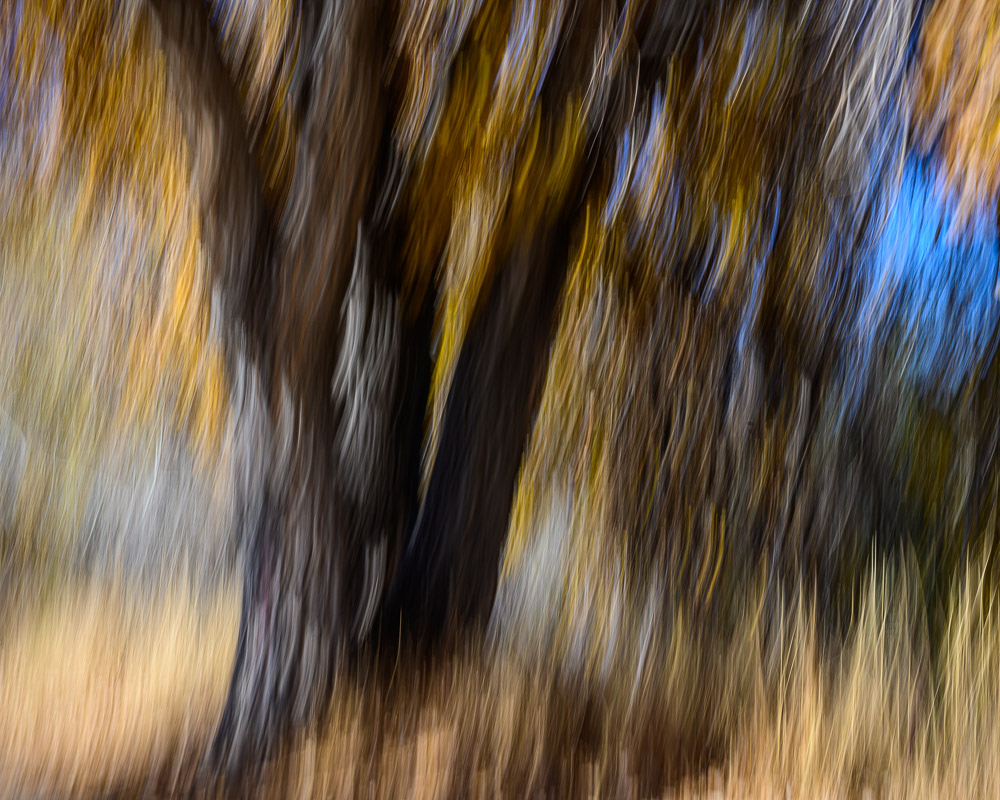
    By the way, the image with this article is not literal reality. 🙂 Are all my images this heavily processed? No, not even most of them. But I feel free to do what I want with my pixels.

    The argument of purity makes an assumption of the intent and very purpose of photography. I refuse to be bound by someone else’s assumptions. I will follow my own path. Let me state right now to never assume any of my images are literal truth unless I tell you that they are.

  • Over-processing

    Over-processing

    How much post-processing is too much? Is less better? Is there some magic boundary you shouldn’t cross? Over-processing is a controversial topic for many photographers.

    Purity

    Ah, purity, respecting reality, make no changes. This concept and value system is instilled into many photographers, especially landscape artists. I still follow Nature Photography Network. The images are often very lovely. But there is generally, to me, a sterility to them. Most photographers who post here are afraid of departing from literal reality.

    In this group, as in many landscape forums I have seen, there is a real negative feeling about cleaning up distractions, adjusting color to be anything other than the actual original, compositing, or anything else that is not strictly faithful to the original scene. It reminds me of some film photographers who used to make prints with the film rebate showing to prove the image was not cropped.

    The problem I have is the fear to depart from reality. Fear is not a good guide for art.

    What is photography?

    Is photography to be a literal recording of reality? Some people believe that it is. I used to be in this group, way back. As a matter of fact, the camera club I used to be a member of went further to say that a nature image must not show any “hand of man”. That is, there could not be a trail, a contrail, an old mine, anything not completely natural.

    But what is photography, really? I see it as an art medium. Composing interesting images from “real life” scenes in front of a camera is just as valid an art as painting scenes that exist only in the artist’s mind. Just as the painter only includes what is necessary to further the image, the photographer eliminates what is distracting, either in camera or in post processing. The goal and only real measure is the final image.

    In impressionism or modernism or post-modernism or any of the other isms, the artist freely pushes the medium to its limits to give his preferred interpretation of reality. And that, to me, is a key thing that makes it art – it is an artist’s interpretation of the world.

    What prevents photography from doing the same thing? A modern sensor can record a scene in very high resolution, and our software tools allow us to “correct” color and noise and other artifacts to a high degree., Does that mean it is the place of photography to create images that are constrained to faithfully depict reality?

    Is there a line you shouldn’t cross?

    Is there a line, a limit, not to cross? Probably, but it is different for each of us. As an artist, we need to be able to figure it our for our self.

    Our post-processing tools are amazing. They allow a level of control unheard of a few years ago. There is sage old advice, though, that says just because you can doesn’t mean you should. Anything can be misapplied to create garbage.

    It is easy to go to the computer and over-saturate and over-sharpen and re-mix colors in garish ways to make an image into something I would never show anyone. But that line where I have gone too far is personal to me. It would be different for you.

    Go for it

    As I mature, I find the line is moving our toward the horizon. That is, I am finding interesting ways to express my vision using post-processing “excesses”. Is my vision moving or am I learning to use the tools better? I don’t know for sure, but it is probably both. What we discover we can do influences the notions of what we want to do.

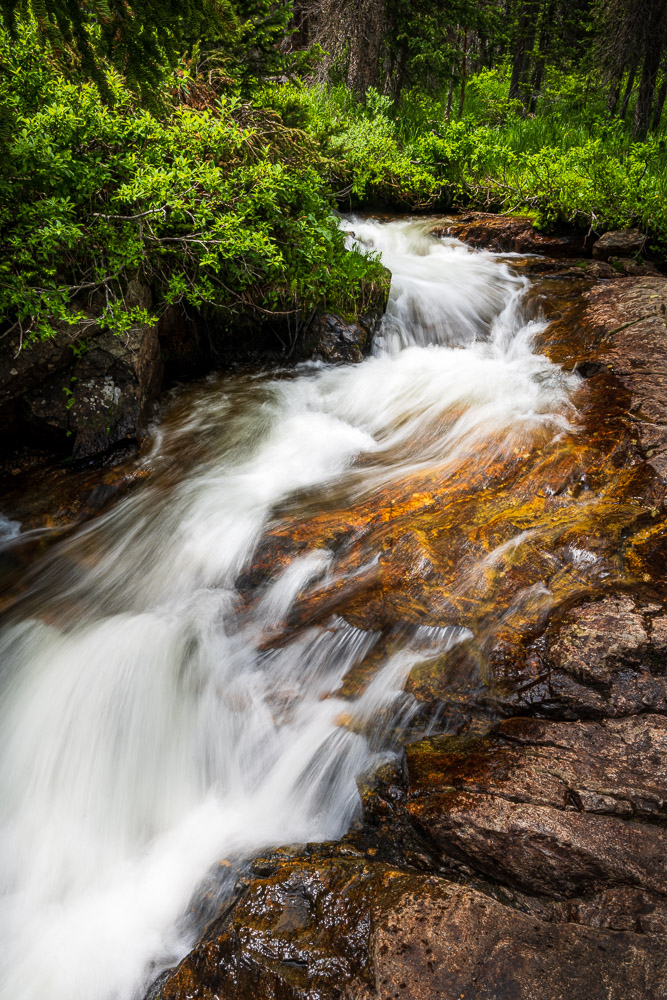
    The image with this article is a completely natural scene that has had what I would consider “moderate” post-processing. I like it much better than the bland original.

    These tools that can be used to create horrible garbage can also be used with great subtly and finesse. Like with a painter, the same paint and brushes can create a useless smear or a respected painting. It comes down to the artist’s vision and how the tools are used.

    Maybe asking if the image is over-processed is not the right question. Maybe the question is did the artist realize his vision? And did the vision resonate with me?