An artists journey

Category: Training

  • Learning Takes Effort

    Learning Takes Effort

    Contrary to the forest of web sites and blogs and newsletters promising you easy hacks, quick fixes, and effortless skill building, let me disillusion you. Learning takes effort. The more different your new subject is from what you already know, the harder it gets.

    Curiosity

    I think I can speak to this. In a previous post I said I was afflicted with curiosity. That is stated in a humorous way, but I am very serious. I have a deep and burning curiosity about many things. Learning new things or just extending my knowledge of an area occupies a lot of my time.

    I’m the kid who, way back in the days before internet, would spend hours browsing through encyclopedias. Any one remember what those are? Looking up a word in the dictionary could take me an hour. I kept getting sidetracked by other interesting words I see along the way.

    It also drives my approach to photography. I am more interested in finding interesting things, no matter what they are, and making interesting pictures from them than I am in looking for particular subjects or iconic scenes. Almost anything can be a good subject if you can “catch” it doing something interesting.

    Learning

    But if we want to go beyond just an idle curiosity, we have to learn new things. That requires significantly more effort.

    Learning demands a commitment of time and study and effort. And dedication. And drive. It is not easy to master a new subject or field.

    But what is learning, really? It is the ability to independently use knowledge or apply a skill over time and in new situations. As opposed to just recalling facts. The American education system is woefully deficient on this. Our schools teach and measure mainly performance, not learning. That is, what is 3 times 4? Who gave the Gettysburg address and what year?

    It is not that performance is unimportant, but recalling facts for a test is just not making us much more educated. For instance, I love studying history. There are usually several history or biography books around me in various states of completion. But I only care about dates as much as required to be able to put things together in a timeline. It is much more interesting and enlightening to find out why things happened, why to those people, why then, what is the back story.

    Failing

    Actual learning is hard. It requires work. And, sorry, but that is the way it has to be. We learn more deeply when we have to work at it and when we fail.

    Fail?? Yes. I don’t mean like repeat a grade. Failing as in try to use your knowledge and find you are incorrect or inadequate. Then you have to concentrate more on it to learn the right way. This reinforces the correct way and you know and remember it better.

    A small personal experience: one of the things I am learning is French. It’s a long story. You know that old expression that it’s hard to teach an old dog new tricks? That is true for me when it comes to learning a new language. A theory, that seems to hold true, is that it takes repetition and mistakes to learn new words. Repeating them over time builds memory, but repeating the ones you miss more often reinforces them.

    My point here is that the purpose of learning is to be able to use the knowledge or skill independently and with some confidence. We usually can’t do that until we have tried and failed and reinforced it and practiced. This involved making mistakes and correcting them and building on that. This applies to our everyday lives and our art. I don’t recommend that as a way to learn brain surgery.

    Interleaving

    Another learning topic that I have found to be very relevant to me is called interleaving. Conventional wisdom says to practice one thing intensively until it is perfected. Then move on to the next thing. If you are learning tennis, then, you should practice forehands over and over until you have mastered them. Then go to backhands. Etc.

    Interleaving, though, says you should mix a variety of things, even if you have not mastered each of them. So in the tennis example, is says it would be better to mix forehands and backhands and volleys in a match-like experience. There is evidence that this is a better way of learning.

    I am sold, because I do it in many ways with good results. I believe interleaving the activities forms more and stronger connections between different components you are learning. The long term benefit is deeper understanding or skill.

    Learning builds on itself. The more diverse things we learn, the easier it is to learn other new things.

    Dots

    Steve Jobs famously called it “connecting the dots“. He stated it best in his 2005 Stanford Commencement Speech. The picture is that we learn many different, unconnected, things and have experiences we may or not welcome. We can’t look ahead to see how they will connect. But somehow, looking back, they form the path we have taken.

    I love his example of how his audited calligraphy course led to personal computers as we know them. Read it!

    In order to connect the dots, we need a rich set of “dots” in our lives. Because the more we know the more there is to connect to.

    Photography

    What does this have to do with photography and art?

    I am suspicious of typical ways photography is taught. A linear process seems logical and fits well in a course outline, but I believe students should be out making bad pictures from day one. They should have daily or weekly project assignments. As they see their results they can be shown what aperture or shutter speed or ISO or lens choices could do and why they would want to make tradeoffs. They can be shown compositional problems they made and pointed to great artists to see the choices they made. Students can quickly get the hang of manipulating the camera to get results they want and can then get on to the harder part – figuring out what they have to say.

    But in an environment of experimentation and unlimited choices. After all, we are learning to create our vision.

    I believe we should be life long learners and open to new influences. The attitude that we know all we need to know is dangerous. We can always learn something new and get inspiration from new sources. I recently saw work by a contemporary artist I had never heard of. But some of Aline Smithson‘s project The Ephemeral Archive touched me in new ways and opened windows of inquiry for me. And I didn’t think I liked contemporary photography.

    Learn to be comfortable with being challenged with new ideas and with failing. It is one of the best ways to learn. It’s not supposed to be easy.

    If you are making mistakes, then you are making new things, trying new things, learning, living, pushing yourself, changing yourself, changing your world. You’re doing things you’ve never done before, and more importantly, you’re doing something.

    Neil Gaiman

    I want to hear your comments! Let’s talk!
  • Craftsmanship

    Craftsmanship

    I have written a few times about how intent and expression are more important in a photograph than craftsmanship. I don’t want to leave the impression that craftsmanship is unimportant. It is critically important for a serious artist.

    What is craft?

    Craft is defined as skill at carrying out one’s work, or an activity involving skill in making things by hand. I believe an artist first has to be a craftsman. Proficient with his tools. Using our tools and equipment must be second nature.

    Craftsmanship is usually a learned skill rather than an innate talent. Sure, some things are easier for some people than others, but it still has to be learned. Lots of investment of time and practice.

    When we get skilled at the craft, the mechanics recedes into the background. It becomes a support and enabler for our artistic vision.

    Perfection doesn’t make a picture

    I have argued before that perfection of craft does not make a great image. The classic statement is Ansel Adam’s quote that “There’s nothing worse than a sharp picture of a fuzzy concept”.

    It might be better to say craft alone does not make a great image. It is a table stake. You need it to get in the game. An excellently crafted image may not be great, but a poorly crafted image is very seldom great.

    Craftsmanship is the base

    Craftsmanship is a base we build our work on. But it is only a base, one of the legs of the stool. We also have to have vision and creativity and the drive to express them. I believe this expression cannot happen without solid craftsmanship.

    I have said before that photography is one of the most technical of the arts. We are dependent on our equipment. Knowing how to use it correctly and effectively is absolutely critical to success.

    We must study and practice and drill until it becomes second nature. Have you trained your hands to just “know” where the camera controls are? Can you use them in the dark? With gloves on? Can you quickly and almost instinctively determine the exposure solution that aligns with your intent for the image? Are composition and framing decisions happening rapidly in the background with little conscious thought?

    When you’re out in the field working a scene you like, you don’t need to spend time juggling the technical tradeoffs in adjusting the camera. This distracts you from the artistic side. For instance, recognizing that this scene needs about f/8 to get the depth of focus you want and, since you are hand holding, at least 1/200th second shutter speed to insure a crisp image. Given that, are you willing to go to ISO 1600 to get these settings? These decisions should be almost instantaneous and subconscious.

    This is not to say you are operating by habit or on automatic. Quite the opposite. It is a state of flow. You are channeling all the craft you know to focus on the moment at hand. It is exhilarating.

    Photography is a craft

    Photography is a craft. Most arts are, but it seems more obvious in photography. We cannot create without our tools. And we cannot create well unless we are proficient with our tools.

    Let’s take a quick look at the chain of technologies required in photography.

    On the capture side there is the camera, of course. They are not trivial anymore. The user manual for my Nikon Z7-II is 866 pages. That just describes all the settings available, not how to use them. Becoming skilled at using one of these is formidable. Luckily, most of us only use a subset of the capability.

    And how much data do I need for what I am doing? Shooting full frame 40MPixels and above requires much more refined technique to achieve great results. Maybe what I’m doing today would be just fine with a 20MPixel APC camera. Do I have large and fast enough memory cards for my shoot? Enough batteries?

    There are the lenses and filters to select. It takes training to understand the effects possible and how to select the right look for the situation. Should I use a zoom lens when I know it is theoretically possible get a little better sharpness with a prime lens?

    Am I in the camp that says all images must be shot on a tripod? Or am I a hand-held guy? Or either, depending on the situation? Shooting hand held, do I know the techniques to get maximum sharpness? Or the techniques to shoot moving subjects?

    What about capture file formats? White balance? Camera profile settings?

    Processing

    That’s just the capture of an image. If you shoot RAW images, which I hope you do, the images are useless until they have been processed intensely.

    First, they have to be transferred to your computer. Do you have enough storage? My main image storage is currently using over 7 Terabytes. Then there’s multiple backup of that.

    If you are processing high resolution files you will need significant computing power. Lots of memory and graphic processing power. And a great, color calibrated monitor. Hopefully of 5K or more. That power is required to be able to process images fluidly without having to wait for the machine to catch up. Waiting really breaks your concentration.

    And of course, you use a color balanced process. Your camera and monitor are calibrated and you are using a wide color gamut system like ProPhoto RGB. A wide gamut allows lots of freedom in editing.

    All that processing takes a lot of time. So when you go out and shoot 1000 images, don’t forget that they have to be processed, and culled and keyworded and filed.. For me, processing an image takes anywhere from 1 minute to 8 hours.

    Output

    How you process an image depends on what you are using it for. Getting something ready to post on social media probably just requires some color and tone correction and maybe cropping. Preparing an image for a print could take a long time.

    Let me take the path of going to a print, since that is my preferred utilization.

    A print is a physical object that is perceived different from an image on a screen. The viewing time of a print is usually much longer than an image on screen. As such, it generally needs to be processed to a higher standard. Very careful spotting – removing sensor dust spots – is critical. Spending time removing or mitigating distracting elements is usually important.

    Many of the remaining decisions center on the characteristics of the final output. What size will the print be? What paper will be used. All papers have different properties and strengths and weaknesses. The paper can make the print look very different. Is it matte or glossy? Coated or uncoated? Heavy or thin? What color is it – papers aren’t necessarily white.

    To get an estimate of the final result requires turning on proofing during the editing. The computer attempts to simulate the final printed result. Of course, to do that, you need accurate profiles for the paper and printer combination. But that is just an approximation. It may need more than one attempt. And what about out of gamut colors on your print? Handling those can be tricky and exasperating.

    Build on it

    That is a lot! And this is just talking about still photography. Photographers have to be expert at most of what I described. That is some of the craft involved. All of this craft has to be used intelligently in the process of making a great image. It’s why I say that photography is one of the most technical and craft-based arts.

    But as much as we sometimes like to burrow into the fun details, the craft is a base. Build your base solid. But on top of the base, we need to build our artistic sensibility, our vision. We have to establish our style.

    Craft means knowing how to use your tools to achieve the results you want. Maybe that is an ultra crisp, tack sharp image. Maybe it is a flowing abstract with no sharp pixels. Yours might run to dark and moody and underexposed. Somebody else might be bright and high key. Those are your choices. Whatever your vision leads you to do, it is your craft that allows you to achieve it.

  • License to See

    License to See

    I have written before on learning to see. This is a follow on to that and talks about a psychological tool that works for me to see more and move to actually making images. When I pick up a camera, that is a license to see.

    We forget to see

    I have made the point many times that as adults, we become so busy and caught up in daily life that we protect ourselves by closing our world down around us. Our interest and curiosity doesn’t extend much beyond our immediate problems of every day life. Job, kids, kids activities, paying bills, maintaining the house and car. It seems like there is not much room for anything else.

    Yet every day as we go to work or kids activities or shopping, we pass through a beautiful and interesting world. But mostly we don’t pay much attention to it. It just doesn’t seem important because we are focused inward.

    We are robbing ourselves of a lot of joy and good mental health. Learning to see more of what is around us is great for our head and our attitude.

    We have to relearn to see

    I hate to repeat myself, but I think this is important. Seeing more of what is around us is a learned skill. One that can be developed with practice.

    We used to do it. As kids we were interested in everything around us. This gets beaten out of us as we grow up. But the fact that you used to do it means you still could. It’s a matter of relearning and practicing.

    It’s also a matter of valuing it and increasing its importance. If you are an artist, I believe it is a vital skill. Isn’t that one of the important things that distinguishes us from non-artists? We observe, we see things, we see things different. To see things different, we have to first see things.

    Awareness comes first

    Seeing, in my view, starts with 2 things. First is curiosity. Curiosity helps us eagerly seek to find out about things. It gives us the motivation to see. Second is awareness. Curiosity is necessary, but it can be directed inward. We can get lost in our head and not do anything external. Awareness helps get us in touch with the world around us.

    In more flowery language than I usually use, Eden Maxwell says: “To be aware is the prerequisite for experiencing life beyond illusion, your own, or the cumulative self-consciousness amassed by society.”

    Awareness requires us to be, well, aware. Sorry. It seems too simple and obvious, but do you actually practice it? We can practice doing it. Driving to work tomorrow, after you pass a car ask yourself: what color was it? What make was the car? What color shirt was the driver wearing? When you go for a walk stop and look at a tree you pass all the time. Did you ever really notice the pattern of the branches and the shape of the leaves? Did you see that bird’s nest? Pay attention to the reflections in windows you go by.

    All these things add to your awareness of things around you.

    My hacks

    But these things require work, or worse, thinking. It seems most people don’t want to do those things anymore. Everyone wants a quick hack to make it seem like they can do something.

    So let me present 2 tools that work for me. I will call them “hacks”. For me they are a license to see. They trigger action.

    The first is picking up a camera. Yes, that simple. With a camera in hand I become immediately focused on making images. It amazes me how this works, but it usually does. I may think I am being aware and thinking like an artist, but a camera in hand focuses me. Most often I fall into the zone and flow and move toward actually making images instead of just thinking about doing it. The camera is compelling. This usually works even with an iPhone in hand.

    There are times, though, when my head just doesn’t seem to be in it. Then I have to go to the next hack: take a picture. Something happens to me mentally when the shutter clicks. The sound triggers years of muscle memory and behavior. It breaks the fear of not being able to find a subject. I am in motion now. The mental block is removed and I can go on creating images. This first frame may be intentionally a throw-away. It doesn’t matter how good it is. Now I am across the barrier and actively making images.

    Artists

    As artists, we have to be more aware of the world around us. We have to see better to help interpret life and the world to other people. Seeing is a learned skill that can be practiced and improved.

    I hope these simple “hacks” – picking up a camera and taking a picture – work for you. They are tools I use all the time in my own life, especially when I am not feeling motivated. It gets me out of my head and actually moving and doing something. Once in motion things seem to roll along better.

    Today’s image

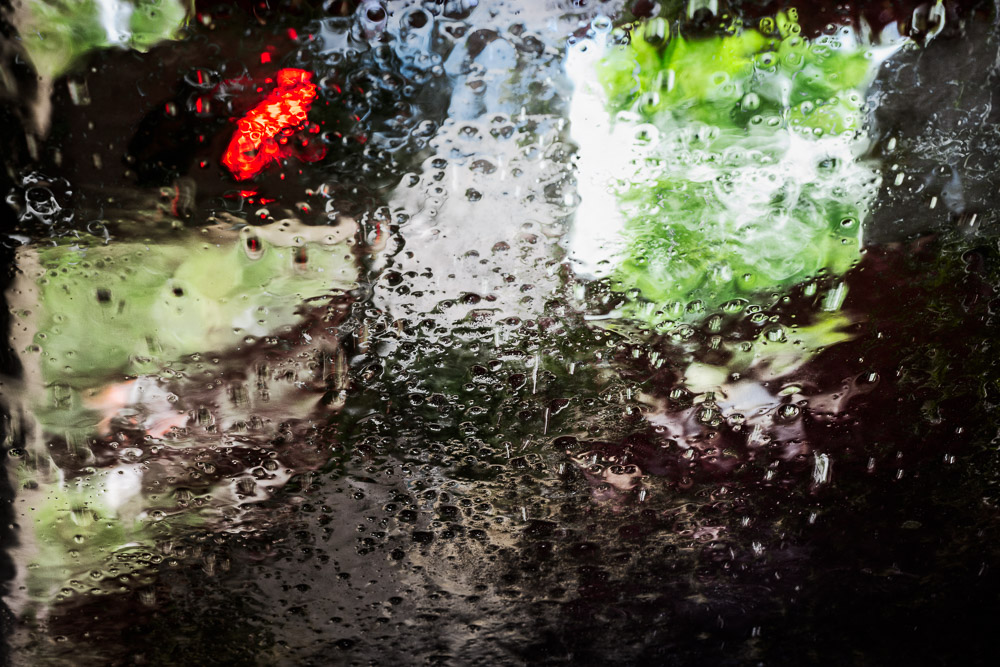
    Following my own advice, one day sitting, bored, in a car wash, I decided to pick up my camera and see what I could do. I am happy with the result. It was not planned, it happened because I held my camera and looked around. The world is rich in images and interest. We just have to see.

  • Learning to See

    Learning to See

    Learning to see is something we all need to constantly practice. Seeing is actually a learned process. Yes, we can image scenes on our retina, but that is not what I mean. With practice we can learn to see more of what is around us, to be more aware and mindful.

    We learn to not see

    Children seem filled with a sense of wonder at everything around them. It all seems exciting and amazing. But somewhere along the path to becoming an adult, this excitement is squeezed out of us.

    In school our peers pressure us to look down on everything with disdain. Being excited about things is “not cool”. In our work life we have to learn to develop a single-minded focus on the tasks of the job. Non-essentials get pushed away. We may get married and have a family. This is great, but it focuses us even more on the day-to-day activities we have to do to earn a living and keep the household going.

    Eventually we no longer really see anything except the immediate problem that seems important. To some extent, we have to do this. It is a survival technique. But it takes away so much potential joy and beauty from our life.

    It takes an effort to start to see

    Are you at a point in your life now where you realize there is more going on around you that you are not perceiving? You look at other people’s art and become aware that it is not just about great iconic locations. They seem able to find beauty and interest in all kinds of places. They are attuned to their surroundings and open to more.

    Practice seeing. No, really. That sounds silly, but maybe it is time to re-learn how to see. That vision that came so easily and naturally when we were a child can be regained to a great extent.

    You know that it takes practice to develop any skill. Why does it seem strange to practice seeing? Isn’t seeing a critical first step in making art?

    Does it seem unlikely that seeing is something that can be learned? We just do it. I believe it is a skill that can be improved. The fact that we used to do it easily but forget how over time means we have the inherent ability to see better. Sharpening that skill can make a huge improvement in our art.

    Overcome lazy habits

    As I mentioned before, we tend to narrow our circle of interest as we “grow up”. Part of this is a coping skill, but some of it is just laziness. We’ve seen it all. We’re bored with it. It is all the same, so why pay attention?

    You would be surprised at the interest all around if you were just looking. Seeing more is rewarding in itself. It brings more interest to our life.

    Like developing most new habits, a key first step is awareness. When you are out walking or driving or riding your bike, make a habit of reminding yourself to look around. Changing any habit takes time and you will need to remind yourself over and over to do it.

    Pay more attention to where you are and what is going on. Even if you do not improve your art, improving your situational awareness will keep you safer.

    Try to become more curious about what is around. Where does that road go? Those tree branches make an interesting shape. I’ve never noticed that this little stream is quite lovely at certain times. Look at the great reflections in that glass.

    Curiosity is the magnet that helps pull us to look more. It is also a trait that can be developed. If you re-awaken your curiosity you will find it almost impossible to keep from seeing more interesting things around you.

    Becoming mindful

    I almost hesitate to say we need to become more mindful. The concept is great and true and is a good description of what we need to be able to see more. The problem is that too many people go overboard with it. It gets all wrapped up in transcendental meditation and eastern religious practices. You do not have to be a yogi to be mindful.

    As the link above states, “Mindfulness is the basic human ability to be fully present, aware of where we are and what we’re doing”. That is harder than it sounds. Consequently, many say “we don’t want to spend time to learn what this means. Give us a quick hack that will let us do it in 10 minutes”. So it becomes a program someone is selling. Or a mystical incantation. Or something you wedge into a daily meditation regime.

    Instead of all that, just pick out a certain time and place and practice for a little while clearing your head of the normal clutter that vies for our attention. When you go out for a walk, whether or not you bring your camera, forget about the project that is due tomorrow or tonight’s game, or what you will fix for dinner – and especially Facebook or your personal social media addiction. Instead, try to be fully aware of just the moment. Where you are, what you feel, what sensations you are experiencing. Look around with curiosity. Try to see things you have never seen before.

    It may be hard or even frustrating at first. Push on. It gets easier.

    The more you see

    When you really get in to it, you will find this exercise relaxing. Getting out of the normal grind for a few minutes is refreshing. It is a vacation for your head. And you start to see more things. Interesting things you never noticed before. Even right there in your neighborhood. You will probably find the experience to be invigorating and something you want more of.

    As a matter of fact, it is a feedback process. The more you begin to see, the more you see, the more you like to see, the more you want to see. Each outing, it becomes easier to see new things. You find it easier to focus you attention on the external things in your environment. Things that you used to pass by with no recognition start to become very interesting in themselves. It is a mental game that sparks new interest and awareness. You come back from an outing refreshed instead of tired.

    Practice

    Start slow. You will “fail” a lot at first. That’s OK. As long as you keep trying, you will get there. Just commit to doing it.

    Don’t think you have to go out for 3 hours with a totally clear head, completely open to new sights and sounds. Maybe someday, but don’t frustrate yourself with setting a goal like that initially. Start with 10 minutes. Just walk around and note a couple of things you haven’t seen or haven’t paid much attention to. Then celebrate by rewarding your self with a coffee – or your preferred beverage or treat.

    It is a cause for celebrating. It is a step toward re-awakening your awareness of the world around you. Dare I say, you are becoming “mindful”?

    Today’s image

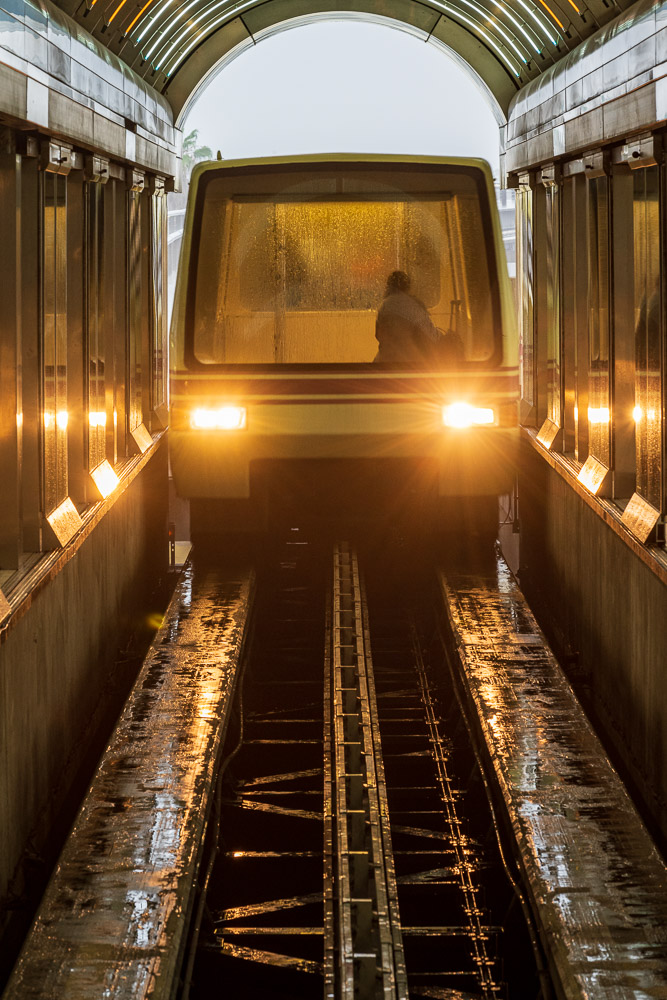
    The image with this article is an example of what I suggest for your exercise. I was stuck in the Orlando airport. Everything was shutdown temporarily by a thunderstorm. I got bored reading and walked around to stretch a little.

    Then I noticed the trains coming in from the terminal. This one was mostly empty because no flights were going. It was beautiful. I shot several images and this one captured the spirit of the occasion.It brings me joy. I am glad I noticed it.

  • Invest in Yourself

    Invest in Yourself

    You are your best asset. As a matter of fact, you are your only asset. Invest in yourself to develop your skills and abilities.

    Professional

    I am primarily talking about our skills as an artist. We need to invest in our self to grow and get better professionally. It is a life-long process.

    Time

    Do you invest enough time in your art? Many of us have a “real” job to pay the bills. And we have families and other obligations. It stretches us pretty thin at times.

    But we cannot grow as an artist unless we put in the time to do the work. Practice, practice, practice. Repetition. Experiment. These things make us more skilled and more mature in our craft.

    I have heard of a gallery saying they are not interested in an artist until they have painted 10,000 pictures. Of course, that is a silly metric. There is no arbitrary number to reach your peak. I do believe, though, as Linus Pauling said, “The best way to have a good idea is to have lots of ideas and throw away the bad ones.” Same with our art. We get better with practice as we learn to recognize the bad stuff and throw it away.

    We have to put in the reps.

    Training

    I don’t know about you, but before becoming an artist, my professional life involved constant learning. I seldom did things I learned in college. One of the great benefits of my previous career was that I had to learn to learn. My life as an artist is the same.

    My friend Ramit Sethi makes a point of how much he spends on personal development, from courses to books to a personal trainer. He has a much larger budget to play with than I do. Even so, in proportion to where I’m at I may rival him. No personal trainer though. I have to be content with getting out almost every day and walking about 5 miles with my camera. His advice is good. I do like and generally follow his book buying rule: “If you see a book you like, just buy it”. As I write this I’m waiting for a new one to show up.

    It’s not the amount you spend on training that matters, it’s the results. I have occasionally spent hundreds of dollars on classes that were a marginal benefit, but gotten a lot of good from a free online class. It is a matter of what speaks to you at the time. And the fact that you’re doing it regularly. I probably watch 10-15 hours of videos a week on art, marketing, sales, general business, and selected other subjects of interest. No, no funny cat videos.

    The point, though, is that we must constantly invest in our self. When you say you already know everything you need, you start to stagnate. You can always learn something new and improve your artistic skills and yourself personally. You have to.

    Marketing

    Now it starts to hurt, at least for me. I don’t like marketing. I would rather just do art.

    But I have been told over and over and I now believe I have to invest at least 20% of my time marketing. The reality is probably more like 30-40%. I have a lot of catching up to do.

    Unless we are doing our art as a hobby, and are content to just show our work to friends, we have to market ourselves. “Build it and they will come” is a great line for a movie, but is not true in real life.

    Art is a very competitive world. Galleries don’t want to hear from you. They have too many artists already. Selling online? So is everyone else. So what can we do? We build a distinct brand and be very persistent and professional in our outreach.

    Several marketing gurus have made a point that we will never get anywhere if we do something a couple of times then get discouraged and move on to something else. Persistent, repetitive, sustained marketing is required to “break in” to the world we want. I don’t like it, but that is life.

    Personal

    As important as it is to grow and take care of our self professionally, I believe it is equally important to take care of our personal life. I hope your vision for your life is about more than just professional achievement. Do not neglect your health and fitness and your mental and spiritual development.

    The training I advocated above also helps you mentally. Keeping your brain active and learning new things has a lot of long term benefits. A substantial part of the training should be targeted at things that do not seem directly related to your art. Read biographies, history, science, psychology, and even fiction. It is amazing what seemingly unrelated things can spark a creative idea.

    A key word there is “read”. You are a professional. You cannot just watch videos. Reading has a greater benefit than watching a screen. Try it. It is good for your mind.

    Mindful

    A common thread to all of this is mindfulness. This is just a fancy psychological term for being deliberate and conscious in what we do and very aware of what is going on around us. I am studying this now and I am sure I will be writing more on it later. But for now, pay attention to what you do and be very aware of your choices.

    The picture

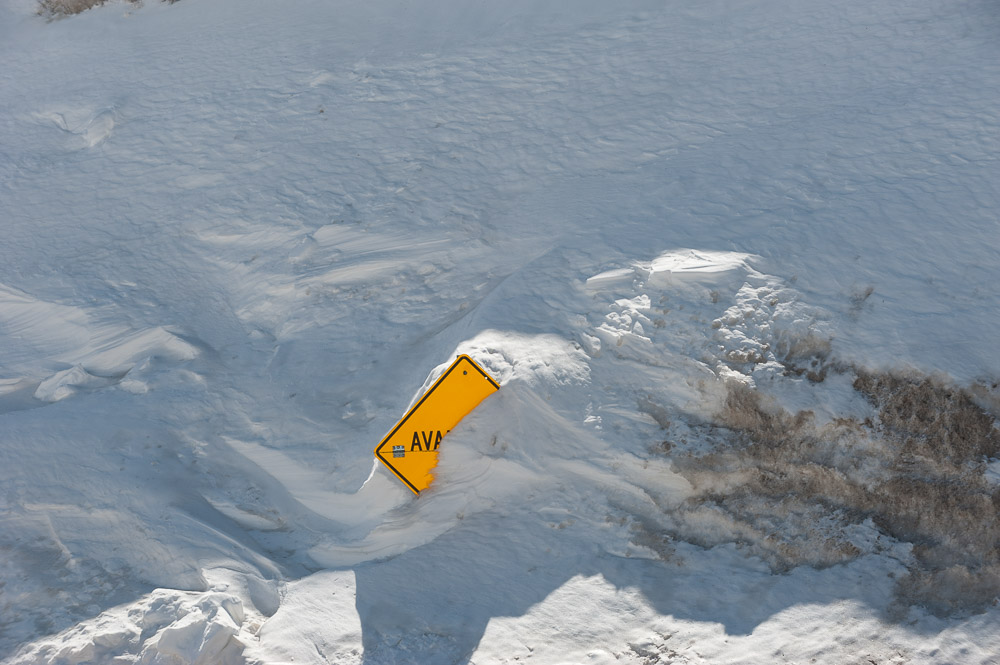
    I love this picture with the article. It is one of the greatest train tracks I have ever seen. Look closer if nothing jumped out at you when you first saw it.

    I can take it as metaphors for a lot of things. For this article, I will use it to make the point that there are many paths we can chose. But they do not all lead to the outcome we want. Choose wisely and deliberately. The path you want is usually not the easy one. You are your best asset. Take care of yourself. Work at it.