An artists journey

Category: Psychology

  • Making Sketches

    Making Sketches

    I am changing my perception of how I work. I used to view myself as going out and “making pictures”. Now I see myself more as going around making sketches.

    What is a sketch?

    I like words, and I like to know where they come from and what they really mean – their etymology. I know, I’m a geek. You don’t have to tell me. Here, let me prove it: “sketch” may be derived from several words from Dutch, German, Italian, or Latin, but the root seems to be Greek, σχέδιος – schedios. It means something temporary or done off hand. Wow, see. Geek but proud of it.

    One of the most understood meanings of “sketch” is a “rough drawing intended to serve as the basis for a finished picture“. This had been an established process of artists for centuries.

    Most painters begin their studies doing sketches and continue using sketch as an important tool the rest of their career. It is like a serious musician doing scales and simple practice every day. It continues to develop the eye/hand/muscle memory/mind. Plus, sketches are a tool for artists to capture a form or expression or gesture, to work out a plan for a piece, even to just record something they want to remember. Here is a sketch by Manet, 1878:

    Even when doing a final work, artists often sketch the composition on the canvas before starting. They then have a guide to follow as they overpaint the intended image. The final product may depart from the sketch, but it was shaped by it..

    Image capture as a sketch

    How does this apply to photography? I am starting to think of my original captured frames as sketches. But why? I spent a career learning how to set up and perfectly execute an image capture. Why change that?

    It is a concession to reality and a psychological tool. Sometimes (well, often to be honest) when I load my images into Lightroom, I am disappointed with them. They just did not capture the scene the way I saw it, or at least the way I wanted it to be.

    The limitations of photography are well known. It is a process of trying to map a vibrant, dynamic, 3 dimensional world with action happening everywhere to a static 2 dimensional representation. No matter how good a camera and lens is, it is a woefully limited process.

    Now I am reframing the problem. Rather than being disappointed and beating myself up for not having a portfolio image appear right out of the camera, I say “that is a good sketch of what I perceived. What do I have to do to develop the idea and complete it?”

    Starting point

    Giving myself permission to see my original image as a starting point rather than an end is a big deal. If I’m not happy with it, it wasn’t a failure, it was a sketch. The sketch probably captured some important aspects of the scene that attracted me. Now what do I have to do to proceed?

    Maybe everything I need is there in the RAW file and it just needs to be manipulated to bring it out. After seeing the reality of the sketch on screen, maybe I think about the scene differently now. Maybe only a part of the scene I photographed is really the picture.

    Sometimes the sketch can be developed into a picture. Maybe it helped me understand what I wanted and how to frame and capture it. Maybe it proved to be a dead end. In any case, it was worthwhile. I took a chance to explore an idea. If it didn’t work out, no big deal. I was not heavily invested in it. It was not a failure.

    But when it does work out, what a great feeling.

    Incomplete

    I now always view any unprocessed RAW image as a sketch. It is, at best, a starting point. No unprocessed RAW image could ever make one of my portfolios. It is incomplete out of the camera. And I have a really good camera.

    The camera is a piece of technology. It captures pixels. It does an incredible job of doing what it is designed to do, but it does not have my eye. The camera cannot know what is important to me. It does not know where the emphasis or interest is in the collection of pixels. I have to provide that.

    I have to provide the color correction to achieve the look I want, which may not be a completely accurate version of the live scene. I have to provide the tone mapping to achieve the relationships I want between the parts of the composition. I have to provide the level of sharpening (or un-sharpening) to get the effect I want.

    Even at the mechanical level of pixel-pushing there are a huge number of choices and corrections I must make. This is necessary to bring the sketch along toward becoming a picture.

    Turning into art

    The basic corrections and adjustments are great and fun and make a huge difference in the look of the file. But I have a problem here going forward and moving from a decently done image to art. Here, viewing it as a sketch helps me.

    A sketch is obviously rough and incomplete. No one would consider it the final image. Calling my images sketches helps emphasize to me that this is true in photography, too. Don’t stop with a “nice image”. It has to go further. It has to be special, different. It has to tell a story or make a difference.

    The raw material may be there, but it is probably not finished yet.

    By still viewing it as a sketch, it is easier to give my creativity permission to drastically modify what is there on screen. Does the intended mood require it to be darkened to an extreme? Do it. Are there distracting elements that take away from the focus of the image? Remove them or crop the picture. Is it a tone-oriented composition that would work better in black and white? Make it so.

    Sometimes the sketch can’t be developed into the intended final image. This is still good! The sketch proved valuable. It helped me discover what I wanted to do. It was not a failure. Maybe I need to go back with my vision clarified, and shoot it again. It is not always possible, but sometimes it can be done. If I can’t shoot it again I can file away the experience so I can look for similar situations in the future and do a better job of recognizing what I really want to do.

    In either case, I would not have gotten to the point I did without having a sketch to work with to clarify my vision of the subject.

    I shoot sketches now.

    Have you tried looking at your work like this? Did it help you get to better results? Share your experience with us by commenting here.

  • Don’t Shoot

    Don’t Shoot

    A hero of mine, Jay Maisel, says “If there’s nothing to shoot, don’t shoot.” This is generally very good advice. He also points out that, if you love your subject, there is almost always something interesting to shoot if you take the right attitude. Inconsistent and contradictory? No more than life in general.

    Don’t shoot if you don’t feel it, but try to learn to feel it. Any creative endeavor is part inspiration and part discipline and hard work. Many people say that hard work is the main determinant.

    Don’t force it

    Have you ever been to a great place but didn’t see anything? Did you feel the need to fire off frames anyway? Me too. But the shots I get are seldom outstanding.

    Forced shots like these seldom have passion. You know there is something there and you feel the need to record it, but it is not calling to you. Your shots may be technically good, but they do not convey life or interest. If it wasn’t interesting to you, why should it be to your viewer? If it won’t come, just put your camera away and sightsee. At least enjoy being out and being there. Or use the time to practice your technical craft, knowing you will probably throw away most or all of these images.

    But there is a strange and interesting corollary to this phenomenon , at least for me. Sometimes when I’m out for the purpose of taking pictures, I need the first shot as an ice breaker. Something magic happens when the shutter clicks. Now I am in image capture mode. Now I start to see. I suspend judgement and open up my emotions. Pictures start to emerge and form, even though they did not seem to be there before.

    I can’t explain it, but I have seen it happen to me enough times to trust it and accept it. It is not a 100% guarantee, but it is frequent.

    Flow

    Psychologists talk about the state of “flow“. This amazing place brings a real mental and physical change to you and your perception of the world around you. If you haven’t experienced it, I sincerely hope you are able to find it someday. It is a wonderful thing to experience. But you are not going to get there by reading about it.

    I used to go there frequently in my technical career. There would be days when I would realize it was 6 pm and I had not had lunch or even gotten up to go to the bathroom . Looking back on the day I was wonderfully productive and felt accomplished and energized.

    The same happens in my art too. I may lose track of the time and even where I am. I get in a mode where I see intriguing images everywhere. Where I get in a creative mode and ideas and possibilities are flowing faster than I can catch them. Being tired or hot or hungry don’t matter at the time. It is wonderful and fulfilling.

    It is not easy, and it takes getting yourself into a receptive position. This is about as far as you can get from my “don’t shoot” advice above.

    Exploring

    But how to get into a receptive state like this? For myself, getting into a flow state in my art often requires adopting an explorer attitude. I am naturally curious and am something of a polymath. An explorer attitude, to me, is turning off my preconceptions. I take the attitude that I am seeing these things for the first time. How do I perceive them? How will I capture this new thing to present to others who were not there?

    Have you ever traveled to a new location, a different culture? Even the little things you would never pay attention to are interesting. My friend taught me to go into places like grocery stores in a foreign country to see how common and familiar things can be so different.

    Capturing that attitude at home, in your everyday life can be a challenge for many of us. But it is necessary. It is one of the mental disciplines that keeps us fresh and lets us see the familiar as different and special.

    Train yourself to see fresh. To look at the ordinary things around you as if you were in a foreign country and you had never seen them before. Really look and see. Forget that you “know’ what they are and have walked by them a hundred times; see them as for the first time.

    Let me get painfully personal for a minute. Some people are so connected to their cell phones that it is usually in front of their face. Turn it off if that is what it takes to manage it. Your Facebook friends can live for a little while without your input. Work can wait a bit for an answer. You owe it to yourself to give yourself permission to unplug for a while. See the world for yourself.

    Beauty in the common

    This brings me around to one of my recurring themes, there is beauty in the common.

    We do not have to travel to grand, exotic locations to get interesting images. They are everywhere. Our limitation is our ability to see them. They are there, everyday, all around us, but we tend to walk right by them without noticing.

    I love grand locations, but even more, I love finding new and interesting sights in familiar haunts. Seeing new in the familiar is very rewarding. And humbling. When I see a great shot lurking in a worn out area I have been walking by it makes me wonder how many other great shots am I passing by. And somehow, it makes it more important to me. As Jay Maisel also says “It’s always around. You just don’t see it.

    At a grand location any klutz with a camera should be able to make a pretty picture. But when I discover beauty in the ordinary, beauty I didn’t think was there, it is meaningful. I feel like I have uncovered something special. And it encourages me to keep looking. To keep exploring, wherever I am.

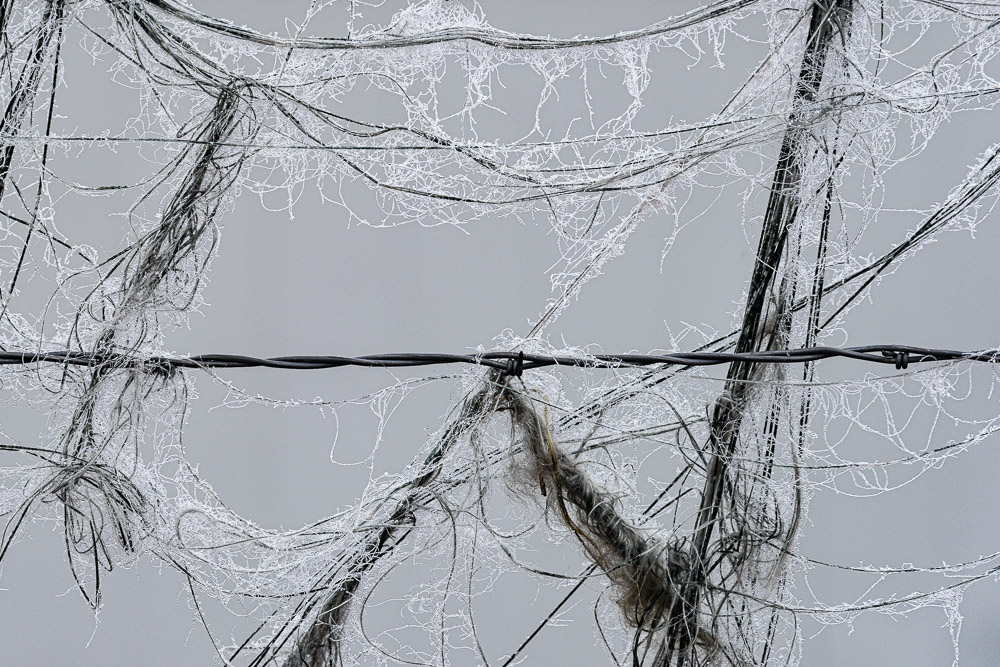
    The image at the top of this post is one of these. It was a very cold winter day, probably 0F. My hands were getting frostbit even with gloves on. There was a frost that morning. This fence with bits of construction cloth stuck in it was beautiful in the conditions. Most other times it would be very forgettable.

    If you really can’t get into it, don’t bother trying to shoot. But I hope you can condition yourself to be able to discover interesting images everywhere. I often find that when I can’t see good images, the problem is in me. I am distracted or preoccupied or in a bad mood. If I can change my attitude it makes a huge difference in my perception.

    I would love to hear about your experiences.

  • Ordinary/Extraordinary

    Ordinary/Extraordinary

    I think most of us try to avoid the ordinary and instead seek the extraordinary when we look for subjects to shoot. It’s almost like we equate ordinary = bad; extraordinary = good. This may be a limiting approach. Changing our attitude may open important new creative experiences for us.

    This is something I have believed for a long time. The travel restrictions from the Corona virus have made me re-examine this issue. I came back around to the attitude that the ordinary is potentially our richest source of inspiration.

    Extraordinary can be great

    Don’t get me wrong. When you encounter an extraordinary experience, live it, soak it up, revel in it. Those things happen rarely for most of us. Maybe it happens for you on a special trip to a “bucket list” location. Maybe it is an event you have planned for a long time.

    Whatever it is, be there, be in the moment, enjoy it. You might even make some great images.

    But don’t think an experience like that is a requirement for you to make great images.

    Not all scenes need to be grand

    Do you really need a grand scene to inspire you to your best work? Why? Are normal scenes not worthy of your effort? Is a scene in New Guinea inherently more worthy than one down the street from where you live?

    There is a strong argument that the ordinary, everyday scenes you are familiar with are some of our best opportunities. Familiarity might breed contempt, as the old saying goes, but actually, familiarity more often leads to intimacy. Getting to know a subject, knowing its moods and looks, finding its real character can lead to images that have a special depth. Even love.

    Some would even say that a steady diet of grand scenes is kind of like eating junk food. It might taste good at first, but it doesn’t have the substance you really need for a balanced life.

    Beauty in the ordinary

    The ordinary can be beautiful in ways that extraordinary scenes can’t compete with.

    Almost all of life is lived in the ordinary. I wanted to honor what we see every day, our shared experiences. Rain. Street workmen. Coke bottles. The more I looked, the more I realized there are wonderful shapes and colors and beauty to be found everywhere.
    Dianne Massey Dunbar, in Fine Art Today magazine

    As Dianne says, there is wonder and beauty to be found everywhere. Monet did most of his work in a narrow slice of western France along the Seine River. Van Gogh did most of his best work in Provence. Ansel Adams worked mostly in California. Georgia O’Keeffe is strongly associated with New Mexico. Even though all of them occasionally lived or traveled other places and did great work, the point is that they thrived best “at home”. The “ordinary” everyday scenes they loved inspired them to greatness.

    Their love of the place they lived gave them a special relationship to it. They were excellent enough artists to express that relationship in their work and help their viewers to see the world through their eyes.

    Find what inspires you

    We are each drawn to the world around us in different ways and for different reasons. Some are drawn to faces, others to grand landscapes, still others to intimate landscapes, while some relate mostly to wildlife. Others may reject looking for particular subjects and view the world as objects for abstract expression or black and white.

    The point is that we usually become drawn to certain things or types of images. More often than not, these are things we know well and see often. Things that are ordinary for us because we live with them. Things that other artists may walk right by without noticing, because they are not inspired by it.

    But when something inspires us it can produce magic. Like Monet with a Lilly pond. Or like Van Gogh with crows in a wheat field or with a night sky.

    When we are drawn to something, it becomes extraordinary. The magic happens because or our relationship to the subject or scene. It is the artist’s subjective expression of that relationship that transforms it to art.

    I encourage you to learn to be more open to the ordinary around you. Learn to really look at those common things you normally pass by. It can be the greatest source of inspiration you will find.

    Intimacy

    I believe a lot of it comes down to intimacy with your subject. A grand, once-in-a-lifetime scene may be fun, but it is a “one off” experience. It probably is exciting at the time, but there is no real intimacy or depth.

    I have been married a very long time, and I can say with assurance that long term relationships are far more rewarding. It is similar with your subjects.

    When an artist creates an image, he is revealing his subjective relationship with the subject. This is one thing that makes one of Monet’s lily pad pictures much better than anything I could do with a lily pad. He developed a special love for them over time. I do not have any strong feeling for them.

    Intimacy is defined as familiarity, friendship, closeness. I believe that when we develop such feelings for our subjects, it comes through as deeper and more meaningful images. We are most likely to develop these feelings with the ordinary world around us than by waiting for a once-on-a-lifetime experience. Familiarity really does lead to intimacy.

    Stop. Look. See. Really see. Look again. Think. Visit with these things. Learn about them.

  • Open to the Unexpected

    Open to the Unexpected

    When you go out to shoot do you know before you leave exactly what you want to find? Many people do. I feel sorry for them. I greatly prefer to “go out empty” as Jay Maisel would say and let the amazing world around me surprise and delight me. Learn to expect the unexpected.

    This is absolutely my opinion and my photographic style. I am a fine art photographer who works primarily outdoors. The world outside is my canvas. If I were a portrait or commercial photographer I would have to do things differently. When there are crews and talent and art directors and contracts to fulfill, I recognize that the photographer has to plan and organize tightly. I am glad that that is not my world. I thrive on spontaneity.

    Subjective vs. Objective

    In a recent webcast by Chris Murray on Nature Photographer’s Network, he discussed the idea of objective vs. subjective photography. (Sorry but this is a fee site, but you can sign up for a free month.) It was a good talk. He spend a lot of time on his journey from objective to subjective.

    He characterized objective images as ones that document a scene and subjective images as images that convey how the artist felt about or responded to the scene.

    I think most of us start out objective. It happened naturally when we point our camera at a beautiful landmark and get a picture that makes us say “wow, that’s beautiful”. But if it has no more interpretation by us, it is not really different from the hundreds or thousands of other captures of that scene.

    The thing I want to point out here, though, is that Chris said when shooting objective images he would research a location, decide the time of year and time of day that would be best for it, and go there and sit until the conditions were what he expected. He told about camping on a mountain for 3 days waiting for the image he visualized.

    The image he got was a beautiful scene in the Adirondack Mountains. But my reaction to it was “meh…”. (Sorry Chris). To me it did not have any passion or depth. He got almost exactly the shot he planned, but my thought was “why?”.

    What do you miss?

    What did he miss while he was waiting 3 days on that mountain for the “right” time and conditions? Maybe nothing, but maybe a lot. To me that is too great a price to pay.

    I have heard other photographers talk about fighting for a tripod spot at a grand, iconic spot, realizing that they were about to take the same shot that thousands of others take every year. Then they turn around and see a scene the other direction that is more meaningful to them. One that most of the other photographers failed to see because they were totally fixated on the iconic scene.

    I try to be open and aware of what is around wherever I am. Same applies as much if I am walking a downtown street as if I am in a wilderness. Wonderful images can be discovered anywhere.

    Avoid preconceptions

    If you decide before you head out what you want to shoot, you put mental blinders on yourself. It is a fact that you only see what you expect to see.

    This is called “selective attention”. A famous, effective, and short demonstration of this is in this video. Watch it! It is very enlightening. I won’t give a spoiler here, but this applies to any of us. If you are only looking for birds you will tend to only see birds.

    Maybe that works OK for you. It’s not what I want for me. I want to be open to all the exciting things around me. And there are a lot of them. Many of my favorite images are things I would not have known to look for if I was making a list beforehand. I don’t want to miss out on the excitement of truly seeing and openly exploring what an area has to offer..

    Grow

    We all need to practice our skills and our visualization. Even the most famous and experienced photographers make themselves take time for personal projects to keep from getting stale and to grow in creative ways. Learning to avoid the trap of preconception can be part of that growth.

    All artists need constant practice. Pablo Casals was possibly the greatest cellist.

    The world’s foremost cellist, Pablo Casals, is 83. He was asked one day why he continued to practice four and five hours a day. Casals answered, “Because I think I am making progress.”
    — Leonard Lyons

    Repetition is one thing. I have advocated for that before. It is necessary. But there are other ways of learning to break your habit of preconception.

    A great thing to do is to go minimalist. Go out for a day of shooting with one camera body and one lens. I can hear you sputtering now. ☺ “But I might need my fisheye; or I might need 400mm”. No, not if you don’t have it. Practice getting great shots with what you have.

    An interesting thing happens when you let go and go with it. Let’s say you just take your 50mm prime. When you get into it, you will quickly start to see the world from the 50mm perspective. This is probably a type of selective attention, but it is forcing you in a different dimension. Instead of being selective on subjects, you are selecting your viewpoint on the world around you. It is a great exercise.

    I did something similar on a larger scale. My natural vision is telephoto. My ideal lens is 70-200mm. Even longer is great for me sometimes. I like to crop in on details. But for over a year I have switched to mainly shooting with my wonderful 24-70mm. I think it has helped me grow in my creativity. I am surprised at some of the new things I see.

    Let yourself be surprised!

    For me, my art is a voyage of discovery. It is exciting because I never know what I will find. I like to be surprised!

    When I can get into seeing the excitement and possibilities all around me there is sometimes so much to shoot that I have to just stop and take some deep breaths. Slow down. Decide how I feel about what I am seeing and what I want to say. Pace myself. It can be an embarrassment of riches. I am drowning in the imagery.

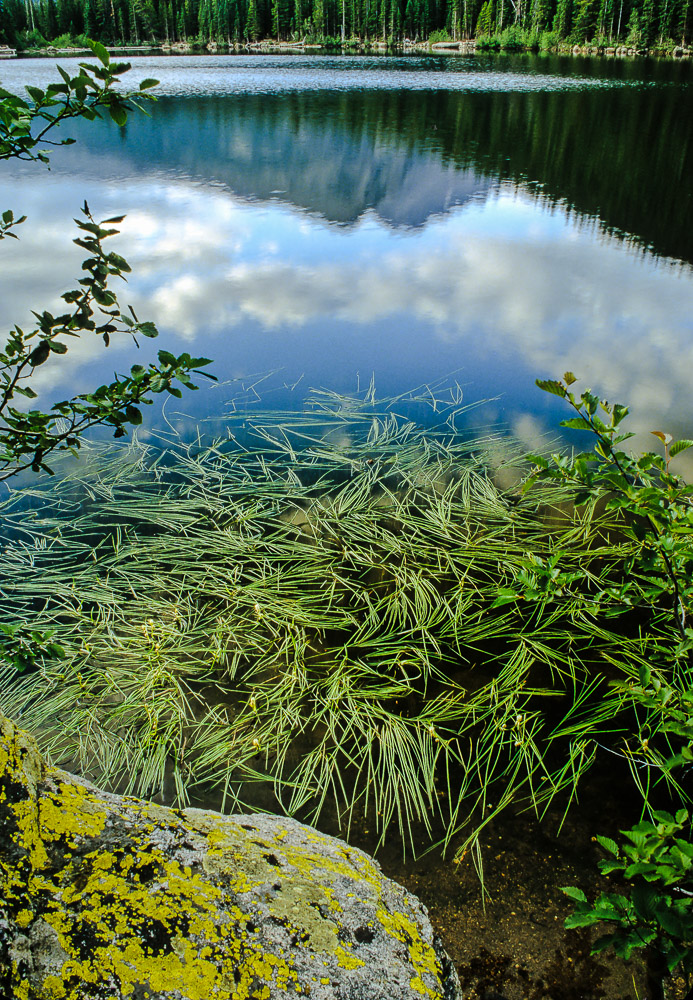
    The image with this article is an example. I was head down by a lake shooting grass and reflections. That is all I was paying attention to. Eventually I noticed that things were changing and getting colorful. Looking up, I discovered this gorgeous thunderstorm was forming practically right by me. This became the picture. The other images I shot that day are forgotten.

    It even applies to post processing. Sometimes I shoot frames just because my instinct tells me there is something there I am not consciously seeing. Sometimes whatever I was drawn to becomes apparent in post. As I work an image, something magical begins to emerge. It is like creating an image in front of me on the screen directly from light and the manipulations I am doing to coax out an elusive something. That is a joy, too. It is the kind of surprise that makes art worthwhile.

    So I invite you to stop limiting yourself artificially. Don’t block your vision by deciding in advance what you only want to find. Let go. React. Be open to the unexpected. Go out empty, as Jay Maisel famously says. Enjoy discovering what there is instead of being frustrated by what you can’t find.

  • 15 Minutes From Home

    15 Minutes From Home

    It is pretty easy to take good images in exotic locations. A real test of our skill is to see how well we do in familiar territory close to home. What if we arbitrarily said we were going to restrict ourselves to 15 minutes from home? Actually, that kind of sounds like the situation many of us are in right now.

    I use ideas from Cole Thompson too often, but he often says things I wish I had said. In a recent newsletter of 3/27/2020 he challenged the idea that you have to go to great locations to take great pictures. Referring to the fact that many of his recent images were made in far flung locations, he said “You see the same coming from other photographers: exotic images coming from exotic lands. The conclusion is obvious: To create great images you must go to great locations! But that’s a lie. The real truth is this: great images are created anywhere you can see them. Even at home, your back yard or hometown. “

    He went on to show a portfolio of great images taken within 15 minutes of his home. To me, his picture of wrenches hanging in a tool shed is at least as beautiful and intriguing at the classic figures on Easter Island.

    Then why travel?

    I will readily confess to being a traveler. I love to travel (hate airports and airlines though). Seeing different cultures and different landscapes energizes me. I tend to see things with a fresh eye. It’s an opportunity to give yourself permission to be a tourist and to view new things differently.

    Travel makes you set aside time for the new. It removes you from the clutter and noise of your everyday environment. It may replace it with different clutter and noise, but the difference makes it new. Plus, you don’t worry much about the routine things that occupy you at home. That email you need to write, the business contact you need to follow up on, that blog post you have been meaning to write – they are just a distant murmur in the back of your mind. The lure of the exotic location tends to drown out the mundane things that usually shout so loud for your immediate attention.

    The immediacy of the new sights in front of us makes it pretty easy to lose ourselves in the experience.

    Burnout

    Many of us can get in a rut and suffer from creative burnout. We start to think there is nothing new to photograph. Nothing new to inspire us or make it worth even getting the camera out of the bag. Travel to a new location seems to hold the hope of drawing us out of our slump.

    I’ve been there. I still fight it frequently. Now with travel restrictions it seems worse than ever. What can we do?

    I advise you not to get overly frustrated and fight head on against it. Reframe the problem. Go out walking with your camera. Tell yourself you do not expect to make any portfolio images today. You just want to look and practice, maybe work on technique. With no pressure to try to “make” a great shot you might be surprised at what you see. Give it time to work.

    You will probably find yourself less dismissive of things. You might notice new things you never took the time to actually see because you were too focused on a preconceived notion of what you wanted to find.

    Burnout is a real problem, physically, mentally, and creatively. Let yourself heal by taking it easy. Ease up on yourself by reducing the pressure you feel to make “great” shots every time.

    And do something. Don’t let yourself wallow in feeling sorry for yourself. Get off your rear end and do something. Anything. Build something. Take walks or bike rides. Keep moving.

    Inspiration

    Ah, the problem of inspiration. I already admitted I am inspired by travel. Is that the only drug to feed my need?

    Being confined at home is a great time to learn new skills. Learning should be a life long pursuit. Here is an exceptional opportunity to catch up.

    We all have an opportunity now to pull back. It is a good time to read inspiring books. To view a lot of training online, such as Creative Live, The Nature Photographer’s Network, or B&H Photo. Or just play with Photoshop. Experiment. Try things you would not give yourself permission to do normally. Photoshop by itself is a life long learning experience.

    But these activities do not directly apply to creating images in our particular style, do they? How do they really help?

    Do you know how a laser works? (Not a laser diode; that is different mechanism) The acronym stands for Light Amplification by Stimulated Emission of Radiation. Without getting technical, a laser has two mirrors parallel to each other with a cavity in between. Electronics around it pump energy into it causing it to start emitting light. The light bounces back and forth between the mirrors, getting pumped to higher and higher energy states, until it finally breaks out as a focused, high energy beam. The point is that the signals that pump the laser to higher energy levels are not the same as the laser light. They feed the energy of the laser.

    I believe my creativity is like that. I believe it is actually common to many people. Anything that feeds my knowledge, that makes me see new things, stimulates my creativity like a laser. So for me, some authors do that. Some classes may. Even some movies. In a strange way, even writing this blog pumps my inspiration. Get pumped and then do something with it.

    Lack of faith in our creativity

    A problem many of us have is little faith in ourselves. Deep down we believe we are fakes. That we really don’t have much creativity. Just because we did something good last week does not give us confidence that we will be able to do something great next week. This is called The Imposter Syndrome.

    I believe this is more common than we let on. Some people have said that almost all creatives suffer from this. We do not like to admit it.

    I am a fine art photographer and most of my work is outdoors. My personality and workflow is such that I do not plan my outings in any detail. I go with the flow snd take my inspiration from what I find. It can be scary when I’m not “feeling” it. I have to trust that something will capture my imagination and get me started and into the groove. If I relax and let myself be attuned to what is around me, it usually works.

    But when it doesn’t, that can be a challenge to my self confidence. A usually reliable cure for me is to spend time in my image collection. I am lucky to have a large collection of images. Of that large collection, a small percentage are the ones I would not be ashamed to show to other people. Browsing through these picks can be inspiring to me. It reassures me that I can make good images over a long time. Remembering the story behind some of the images can be especially heartwarming. Like the times when I was in a hurry or not feeling inspired or creative or not happy with the work I was doing that day and suddenly I come up with a great image that I still love years later.

    Close to home

    Exercises and mind shifts like this give me the faith that valleys of inspiration, like virus epidemics, do not last. I believe most of my best work is yet to come.

    It may seem easier to shoot good images in beautiful exotic locations, but there are very good reasons to focus most of our energy on the near, the familiar, the things we grow to love. Having a relationship with an area will usually lead to more intimate and insightful pictures. And I believe that there is great potential even in the overworked area 15 minutes from my home.

    How about you? Are you shut down because you can’t travel? Let me know.

    The image at the top of this article was made less than 100 ft from my studio.