An artists journey

Category: Fear

  • Learning Takes Effort

    Learning Takes Effort

    Contrary to the forest of web sites and blogs and newsletters promising you easy hacks, quick fixes, and effortless skill building, let me disillusion you. Learning takes effort. The more different your new subject is from what you already know, the harder it gets.

    Curiosity

    I think I can speak to this. In a previous post I said I was afflicted with curiosity. That is stated in a humorous way, but I am very serious. I have a deep and burning curiosity about many things. Learning new things or just extending my knowledge of an area occupies a lot of my time.

    I’m the kid who, way back in the days before internet, would spend hours browsing through encyclopedias. Any one remember what those are? Looking up a word in the dictionary could take me an hour. I kept getting sidetracked by other interesting words I see along the way.

    It also drives my approach to photography. I am more interested in finding interesting things, no matter what they are, and making interesting pictures from them than I am in looking for particular subjects or iconic scenes. Almost anything can be a good subject if you can “catch” it doing something interesting.

    Learning

    But if we want to go beyond just an idle curiosity, we have to learn new things. That requires significantly more effort.

    Learning demands a commitment of time and study and effort. And dedication. And drive. It is not easy to master a new subject or field.

    But what is learning, really? It is the ability to independently use knowledge or apply a skill over time and in new situations. As opposed to just recalling facts. The American education system is woefully deficient on this. Our schools teach and measure mainly performance, not learning. That is, what is 3 times 4? Who gave the Gettysburg address and what year?

    It is not that performance is unimportant, but recalling facts for a test is just not making us much more educated. For instance, I love studying history. There are usually several history or biography books around me in various states of completion. But I only care about dates as much as required to be able to put things together in a timeline. It is much more interesting and enlightening to find out why things happened, why to those people, why then, what is the back story.

    Failing

    Actual learning is hard. It requires work. And, sorry, but that is the way it has to be. We learn more deeply when we have to work at it and when we fail.

    Fail?? Yes. I don’t mean like repeat a grade. Failing as in try to use your knowledge and find you are incorrect or inadequate. Then you have to concentrate more on it to learn the right way. This reinforces the correct way and you know and remember it better.

    A small personal experience: one of the things I am learning is French. It’s a long story. You know that old expression that it’s hard to teach an old dog new tricks? That is true for me when it comes to learning a new language. A theory, that seems to hold true, is that it takes repetition and mistakes to learn new words. Repeating them over time builds memory, but repeating the ones you miss more often reinforces them.

    My point here is that the purpose of learning is to be able to use the knowledge or skill independently and with some confidence. We usually can’t do that until we have tried and failed and reinforced it and practiced. This involved making mistakes and correcting them and building on that. This applies to our everyday lives and our art. I don’t recommend that as a way to learn brain surgery.

    Interleaving

    Another learning topic that I have found to be very relevant to me is called interleaving. Conventional wisdom says to practice one thing intensively until it is perfected. Then move on to the next thing. If you are learning tennis, then, you should practice forehands over and over until you have mastered them. Then go to backhands. Etc.

    Interleaving, though, says you should mix a variety of things, even if you have not mastered each of them. So in the tennis example, is says it would be better to mix forehands and backhands and volleys in a match-like experience. There is evidence that this is a better way of learning.

    I am sold, because I do it in many ways with good results. I believe interleaving the activities forms more and stronger connections between different components you are learning. The long term benefit is deeper understanding or skill.

    Learning builds on itself. The more diverse things we learn, the easier it is to learn other new things.

    Dots

    Steve Jobs famously called it “connecting the dots“. He stated it best in his 2005 Stanford Commencement Speech. The picture is that we learn many different, unconnected, things and have experiences we may or not welcome. We can’t look ahead to see how they will connect. But somehow, looking back, they form the path we have taken.

    I love his example of how his audited calligraphy course led to personal computers as we know them. Read it!

    In order to connect the dots, we need a rich set of “dots” in our lives. Because the more we know the more there is to connect to.

    Photography

    What does this have to do with photography and art?

    I am suspicious of typical ways photography is taught. A linear process seems logical and fits well in a course outline, but I believe students should be out making bad pictures from day one. They should have daily or weekly project assignments. As they see their results they can be shown what aperture or shutter speed or ISO or lens choices could do and why they would want to make tradeoffs. They can be shown compositional problems they made and pointed to great artists to see the choices they made. Students can quickly get the hang of manipulating the camera to get results they want and can then get on to the harder part – figuring out what they have to say.

    But in an environment of experimentation and unlimited choices. After all, we are learning to create our vision.

    I believe we should be life long learners and open to new influences. The attitude that we know all we need to know is dangerous. We can always learn something new and get inspiration from new sources. I recently saw work by a contemporary artist I had never heard of. But some of Aline Smithson‘s project The Ephemeral Archive touched me in new ways and opened windows of inquiry for me. And I didn’t think I liked contemporary photography.

    Learn to be comfortable with being challenged with new ideas and with failing. It is one of the best ways to learn. It’s not supposed to be easy.

    If you are making mistakes, then you are making new things, trying new things, learning, living, pushing yourself, changing yourself, changing your world. You’re doing things you’ve never done before, and more importantly, you’re doing something.

    Neil Gaiman

    I want to hear your comments! Let’s talk!

  • If We’re Not Moving Forward…

    If We’re Not Moving Forward…

    We can get trapped in our own mind. Fear can pen us in. We must constantly remind ourselves of what happens if we’re not moving forward.

    Can’t stand still

    The actual quote, attributed to Sam Waterson, is “If you’re not moving forward, you’re falling back.” There is a lot of truth in that. As much as we sometimes would like to lock things down, we can’t. Time moves on. We move on. Relationships change. People grow apart or together. Our knowledge and tastes and perceptions change.

    Have you ever gone back and looked at some of your art or writing from a few years ago? It can be depressing. Our first reaction is probably that our work was terrible back then. But no, that is not necessarily true. That was the best work we could do at the time. We are seeing what we were at that moment in the past. But we have moved on now and are in a different place. And it’s an ongoing process.

    Fear

    Some of us get trapped in the past by fear. We did some work we thought was very good. Maybe we received some recognition for it. Perhaps we even were so unfortunate as to become famous. Now we are afraid to move away from what we became recognized for in the past, even though we are feeling a pull in a different direction.

    Past work becomes an anchor on our creativity unless we consciously cut it loose. But it is all to easy to fear that we have peaked and will never be able to do any more work as good.

    Well, maybe that is true. Maybe the next body of work we do will be inferior. We won’t know until we do it. When we strike out in a new direction it is quite natural to grope around hesitantly for a while until we find our footing. The first versions of new work could be fairly bad. But if it is where we are being pulled, we will find what we are looking for.

    Growth

    We are growing creatures. Life constantly gives us new stimulus, new knowledge, new ideas. We meet people and have good discussions. We learn new things and connect ideas and resolve old questions and ask new ones.

    At least, we are intended to do that. Some people stay in their rut, doing the same thing over and over without advancing. It’s like the question do you have 10 years of experience or 1 year of experience repeated 10 times? When put like that it seems obvious there is a big difference. But a rut is safe and comfortable. There is no risk. No one criticizes us. But where there is no risk, there is no change, no growth, no reward.

    As artists, we should be comfortable learning and changing. Experimenting with new ideas and ways of looking at our art and the world. Having confidence that our best work is yet to come.

    It really is true that there are only 2 paths. If we stop growing, we start dying. When we find ourselves in the inevitable rut, they can be hard to get out of. You have to very deliberately and carefully steer out. Let the wheels grab the sides and climb out slowly. Your car will complain, but change always causes criticism. Hopefully, you are not in too deep.

    We are different every day

    We are not the same person today that we were yesterday. Like the expression that we can never step in the same river twice. Of course, that does not mean we are jerked around in some type of schizophrenic fugue. We don’t bounce randomly to wildly inconsistent states. At lease, I hope you don’t.

    Who we are, our values and beliefs, stays relatively constant. We build on that base and develop as a person. Growth is usually incremental. Hopefully becoming a better person as we progress. Our art may seem to jump more as we embrace new expressions of what we are feeling. Like Picasso going through a blue period or an African period or a cubism period. He never changed who he was, he just responded in different ways at different phases of his life.

    Our art changing as we grow is natural and healthy. It is much easier said than done, but we should not fear letting go of what we have done in the past, even if we are well known for it. We should trust that we are growing as an artist and being led to new and better work.

    It is exciting to look forward to what is to come and what we have yet to create.

    What would be of life if we didn’t have the courage of doing something new?

    Vincent van Gogh

    Today’s image

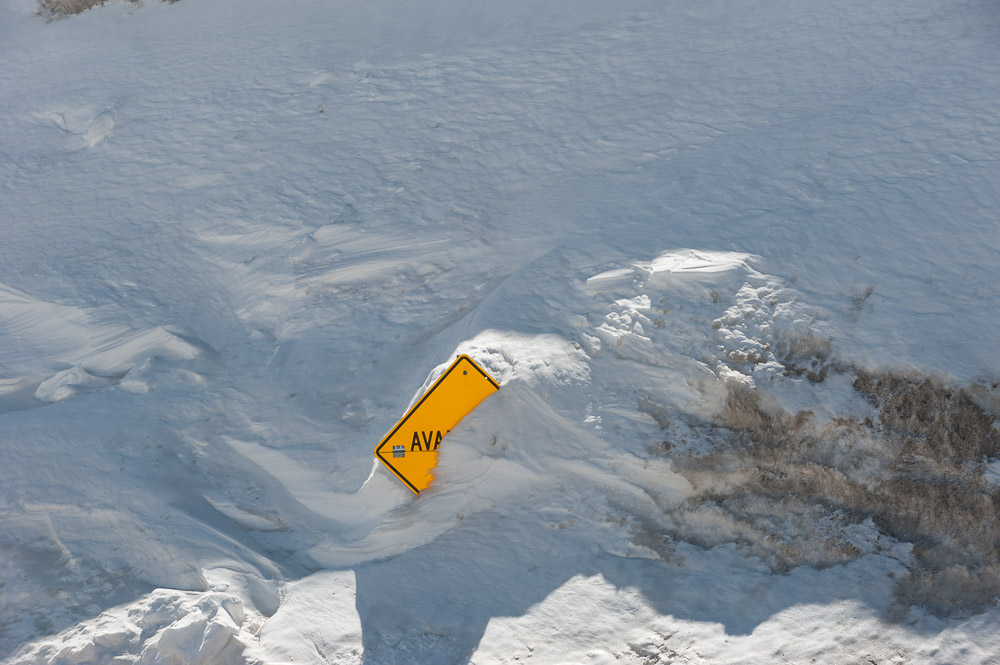
    I chose this to represent the daily battle we all face. The internal struggle to rise above conformity and create what we have inside us. Don’t settle. Don’t give in.

  • Overcoming Cynicism

    Overcoming Cynicism

    Other than doubt and discouragement, cynicism is probably one of my worst traps. Do you ever think there is nothing left to do or no use trying to do it? Overcoming cynicism is a constant battle.

    It’s been done

    It has been done already. Everything has been photographed. Trillions of photographs are taken every year (“Trillions”, not a misprint). How can I find something new and interesting?

    It is hard to look around at all the work that is out there and not be cynical. And depressed.

    But occasionally I see something that looks new and fresh to me. That gives me hope that there are still opportunities to be creative. It can be hard to hold on to the hope, though.

    Nobody wants it

    There are probably millions of people with web sites selling photographs. And there are probably thousands of galleries carrying art, including photography. This is in addition to the limitless supply of photos on social media. It is an over saturated market. What makes me think my work can stand out and be noticed and bought?

    It seems like most photographers who have to support themselves with their art do workshops to earn enough money. There seems to be more money in teaching than in sales.

    Why try?

    Given all this discouraging news, it sometimes seems like none of us should even try to sell photographic art. The probability of success (however you measure it) seems remote.

    It appears that an artist needs to become a marketing machine to survive. Marketing has to be an almost full time job. Promoting our self, contacting outlets, getting recognition, talking our self up constantly seems necessary to be noticed. But a lot of us are rather introverted and would almost prefer a root canal to doing these things all the time.

    So why bother? It seems useless.

    Antidote

    When I am feeling like this, one of the things that will sometimes pull me out of it is going back through my image catalog. When I do, I sometimes decide maybe I do bring something to the market that is useful. Maybe I do have some occasional creativity. My point of view, my vision might be fresh and different enough to be welcome by some people.

    I find that reviewing some of my favorite images can, if not cure cynicism, at least diffuse it enough for me to go on. It can reinforce my faith in myself and encourage me to believe I should keep on, because I have something for people to see.

    Sure, a lot of my work is mediocre and “me too”, but some, well, seems to me to be extraordinary. When I can get out of my own way, when I can take the pressure off to try to produce great images, I can occasionally create something nice.

    I find that feeling like I have to create an outstanding image in a given situation is self defeating. It is like sitting down with the goal to write a world class bestselling novel. Too much pressure.

    Instead, my working style is to let it flow. If I can get excited by what I am seeing, it draws me in and inspires me to create. Feeling too much pressure chills that creativity. I am better off to relax and just be me.

    For me, that is what art is about. Being myself, expressing my vision, my point of view in my art. If I am doing that, maybe that is enough. Maybe I don’t have to be famous or rich. The first and most important person to please is myself.

    Move

    Being creative and producing art that pleases me is the reward. That is what I can control. I cannot control how it is received or if galleries are contacting me to get me to exhibit with them. The internal reward of being satisfied with my work is for me to create in myself. No one else can give it to me.

    So the way to combat cynicism is the same as the way to combat depression or fear or inertia: get up and get moving. Being in motion – doing something constructive – will help overcome the doubts and negative thoughts. Doing something positive almost always beats sitting and feeling sorry for yourself.

    Today’s image

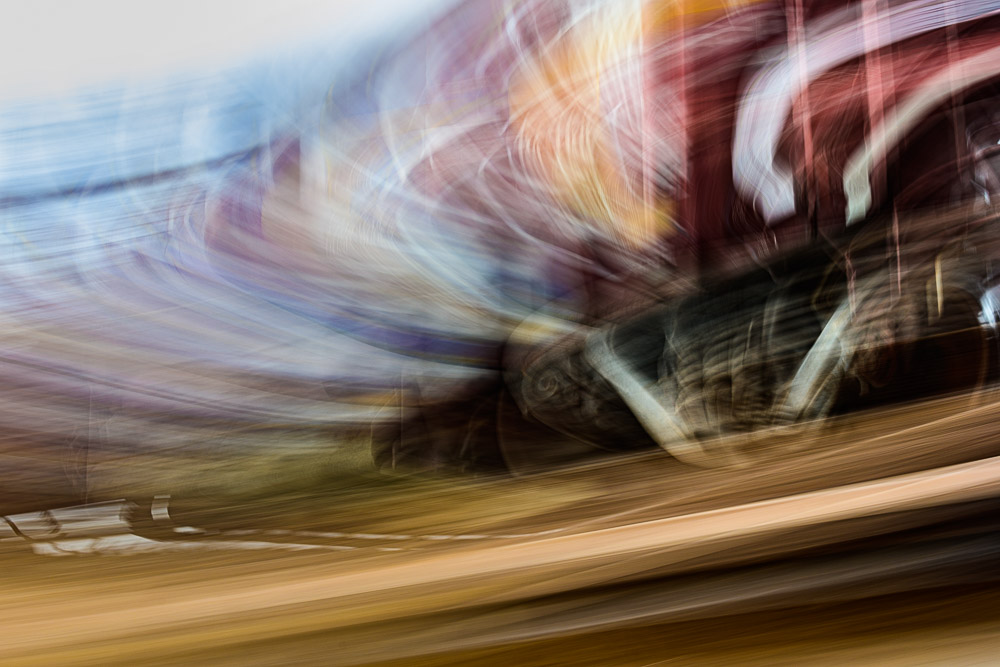
    This is a train. An “ordinary” fright train. Actually, they are extraordinary. Have you ever seen one like this? Probably not. You would have to be stupid close to a fast moving train and shoot it with a slow shutter speed a certain way. I think it captures the moment in a creative way. What do you think?

  • Waiting for Permission

    Waiting for Permission

    Are you using all your artistic talent and showing the world what you really see? Or are you waiting for permission to be an artist? Guess what, no one is going to give you permission.

    Priorities

    You are an artist. As such, you have to be fiercely independent and confident. Yeah, I know. Few of us are really that confident, especially when we get criticism. But criticism comes with the job. We are an artist if we let it roll off and not distract us from what we feel we have to create. It hurts just as much, but it can’t derail us.

    As an artist, we each have a unique viewpoint. This is what gives us our own style. Expressing our viewpoint has to be a priority for us. Even if it is not popular. Even if it seems to be going in a different direction to the mainstream.

    Our priority has to be making the art we see and feel. If we are not following our own heart artistically, we are not authentic, we are an imitation of someone else. Sorry to be harsh, but if we are copying someone else’s art to be popular, we are a fake.

    Agenda

    The world has an agenda. Never believe otherwise. Galleries are not interested in the creativity or uniqueness of your art. They only want to include what their customers have historically bought. Curators have built a reputation for promoting a certain style or type of work. They are only going to select art that matches their program. Art consultants seek to maximize sales by choosing safe, known styles for their applications.

    If you are creative and following your own path, you may well not be a match for their agendas. Anything even slightly outside the norm or expected will be rejected.

    Does that mean your work is inferior? No, If it is your heartfelt creation, it is your art. Just because the gatekeepers do not embrace it does not mean they have the authority to deny you being an artist.

    It may not be popular

    There are people selling programs to “help” us sell our art to a wider audience. Usually they are based on some version of “look on Etsy or Artfinder and see what is selling, then do that.” These programs probably work, and if your only goal is to sell things, that is OK.

    But I’m assuming you feel a burning need to create your own art, not a copy of someone else’s popular work. Now things get more difficult.

    In his marvelous little book “A Beautiful Anarchy“, David duChemin writes:

    Of course, public reaction, either negative or positive, in not the point. The point is that the long history of creativity – in every imaginable field – takes us inevitably into places where we have to pour new wine into old wineskins, and that invites criticism, which in turn invites fear, and soon we’re back to hiding in the shadows, letting others take the risk while we abdicate the responsibility to do the one great thing we can do with our lives – be fully ourselves and make art of our lives.

    A Beautiful Anarchy, David duChemin

    What you see and feel

    As an artist we have to be able to stand up and say “This is what I see and feel; look at my view of the world.” We are out in the world seeing with fresh eyes. Capturing images to present to our viewers from a new perspective. No one should be able to take that away from you.

    As Mr. duChemin puts it, we cannot shrink back in fear and hide in the shadows. If we do, we have robbed our self of creating our art and we have robbed the world of what we can give them.

    Go your own way

    One of the sayings I live by, to my wife’s alarm, is “ask for forgiveness, not permission”. Actually, I seldom ask forgiveness either.

    Asking permission gives someone the opportunity to say no. Why give this person the authority to place rules or limits on your creation? They should not have the right to deny you your art. Do not be left waiting for permission.

    An artist is driven by his vision and a need within to create. Do not let the world discourage you or quench your creative spirit. Do not accept labels or let the world pigeonhole you. Take responsibility for your own art. Avoid the trends and whims of the gatekeepers around you. Be what you feel is right for you. Create for the joy of creating.

  • Am I A Failure?

    Am I A Failure?

    It’s the end of a calendar year. For most of us, it is a time of reflection. Are you having doubts and insecurity about your art and your capability? Do you, sometimes, deep down inside, fear you are a failure? I know I do. At this time of the year especially, I wonder if I am a failure.

    An ongoing problem for most creatives

    I have written before about failing. We all feel it. I think creatives feel it more than most.

    The fact that we are creatives means we have to create. But when we show our creations to the world, we are very likely to get rejection and criticism. That hurts. It bruises our ego and makes us insecure. As creatives we have to be out doing new, fresh, interesting work that sets us apart from our peers. But we can’t always feel the inspiration or be on top of our game. When we look at other artists work or awards, it is natural to feel inadequate. A failure.

    My reading tells me most artists feel this way at times. Sometimes a lot. Even the famous or well known are troubled with this doubt.

    What are your metrics?

    We have to be careful to select what we are measuring and how we are doing it. When we feel a failure it is usually compared to what we see other people doing, or our goals, or based on some negative feedback we get.

    So one problem is who do we compare our self to? Remember, what you see on social media or magazines or gallery shows is the very best work they can do. But we compare our everyday work, or even our throw-aways, to them and feel a failure. What if you took your carefully selected portfolio of a few great images and compared those to these other people? Would you compare better? Even if you say they are better, can you justifiably say, “but mine is very good”? Don’t assume you are not up to the measure.

    External metrics

    And we tend to tie our sense of worth to external measures. Like money or recognition or winning contests. One problem with this is that these are things out of our control. We might work hard and market our self extensively, but still we cannot control our sales success. We may enter a lot of contests and open exhibits, but the fact that we are not picked very often is mostly dependent on circumstances we cannot know or understand. And no, saying we just need to get better doesn’t ensure success there.

    Recognition is more subtle and in some ways more dangerous. What artist doesn’t want recognition? It makes us feel significant. It validates us and our work. We may seek it, even need it, but we have little control over it happening. The “best” artists are often passed over for seemingly inconsequential reasons. Personal preferences of judges or curators, biases, maybe entering subject matter that is not popular with them. Any number of reasons.

    Who said you failed?

    But when we are not selected for the show or contest or gallery, what do we internalize? When no one is rushing to buy our prints, what do we assume? We tell our self we are a failure. We are not good enough. No one said that. It is what we tell our self. We are our own worst critic. We rush to think the worst.

    Of course, we could try to game the system. We could study the styles and opinions of the judges or gallerists and design work to match their preferences. This might get some show entries and even sales. But whose work are you doing at that point? Are you still an artist if you subvert your vision to the opinions of others?

    The moment I decide to create my work first for your approval, and not because it scratches some creative itch within me, I have lost.

    David duChemin, “The Soul of the Camera”

    All critics have their own opinions. Many are locked in to certain positions because they have developed a reputation in that movement. Some cannot rise above their training. A few are just narrow minded. A lot just may not like our style of art. I’m not saying it is useless to listen to them, just that their opinion is just that, an opinion. It is not law or given from God.

    Take the failure or criticism as just an input. Think about the merits, if any, but feel free to discard the advice. Your own opinion must direct your art.

    Understand your goals

    Be careful of needing to seek the approval of others. They can reject your work, but they cannot judge your art. David duChemin also said, in the book cited above: “Craft can be measured; art cannot”.

    The reality is, no one but you can judge your art. Our creativity is a gift from God. When we create art, we are giving back a praise and thanks to him. It is from within. The judgment of our art is our own.

    Sure, we can, if we are lucky, find one or more trusted mentors who can give us good feedback. But even then, it is up to us to accept or reject their input.

    Out art must scratch the particular itch within us. That is the goal that matters. We must create what we have within. This is internally driven, not dependent on the whims or opinions of other people.

    Never give up

    I have heard it said that if you can be talked out of your goal, you should give it up. Some disagree, but I think there is a good core of truth to it. Being an artist is particularly difficult. You must be driven and willing to follow your heart despite rejection. It was much easier to become an engineer than to become an artist. The goals were clearer and more easily attained.

    I like the phrase what is the thing you can’t not do? This is your art. I think it is a good description. If we have art in us, we are almost compelled to produce it. It doesn’t matter if it is rejected. It doesn’t matter if we don’t get rich with it. This is our art. We have to do it. Other people’s opinions may hurt, but they should not knock up off course.

    If I do the art that is within me crying to get out, and I’m happy with it, I am not a failure.

    Despite what I may feel today.