An artists journey

Category: Composition

  • Is It Interesting?

    Is It Interesting?

    I find myself pondering this question a lot these days. More and more I believe the answer to “is it interesting?” overrides many considerations of composition and technique. This is a personal judgment, of course. as is the question of what is interesting.

    Learning

    Art is almost as much about our training as it is about our natural creativity. We all start somewhere, whether we have formal training or we are self taught. When we are learning a skill or an art we concentrate on the mechanics first.

    The tendency is to focus our attention on what we are trying to master. This is natural. What we should recognize, though, is that we may not really be making art in the process. Yes, it is art in the sense that we create it as art, but it is not a mature and well rounded style yet.

    Technique

    Photography is possibly the most technical of the normal arts. We have to master many layers of technology to get skilled at the craft. There is the camera with its hundreds of settings and controls, each of which may help us make a great image or a terrible one. Then there is the computer system required to store and process the image. And the software we choose to use for managing and editing the image. If you are taking it all the way to the end of the chain, there is the whole printing process to learn.

    Each of these areas is a huge field that could require years of study to master.

    If this is where you are, plow into it. Work through the learning process. Get to the point where the camera is a comfortable tool that you can use with little thought. Ideally you should be able to adjust all the major setting in the dark, just by feel.

    The image processing software is probably an even bigger challenge. Photoshop is one of the deepest tools I have ever used, and that is from the point of view of a long career in very complex software development. There are only a few people in the world I know of who totally “know” Photoshop. Julianne Kost comes to mind, but then she is the chief Photoshop evangelist for Adobe. It is her full time job to be able to train people on any aspect of it. Others at about that level are Ben Willmore and Dave Cross. I study and use Photoshop hours a week but I will never get to their level.

    But the good thing is, I don’t have to be a Ben Willmore. As long as I know enough to realize my artistic vision, I’m OK. I know of excellent and successful photographers who I consider to have only a rudimentary knowledge of the tools. They know enough to do what they want to do. I personally can’t be happy unless I feel I have mastered my tools enough to comfortably use them as an extension of my creativity. So I study a lot. But that is just my own burden.

    It should be about creating interesting art, not our ability to use the tools.

    Composition

    The next major pillar of image making is composition. It is another thing that can become a lifelong study in itself. We can burrow into art history, visual theory, Gestalt psychology, and all manner of ideas and opinions.

    We start with only an intuitive feel for good composition, based on art we have seen and our inherent notions of what we like. Probably we cannot express in words what good composition is. As we study and practice we get to where we have a more formal view of it. We can critique our own or other images in terms of their design. Eventually, we can compose our images intuitively, without much conscious thought. We can repeatedly produce compositions that please us.

    Keep in mind that most of this time, we are producing images that are now technically “correct” and have “good” composition. But maybe nobody wants to look at them yet.

    Is it interesting?

    This idea was clarified for me in a book about poetry. (Writing Poems, Robert Wallace. The link is for a later edition of the book) Weird, huh? It is a book about writing poetry rather than a regular book of poems. I find hints and ideas to improve and better understand my art from all sorts of diverse sources.

    The author made the statement that if the poem is not interesting, what good is it? It can have wonderful form, metaphor, irony, symbolism, etc., but if it is not interesting, no one will read it.

    I believe there is something here to apply to our art.

    I have seen, and made, too many technically perfect, classically composed images of … nothing memorable. While I value sharp, well executed images, and pleasing compositions with flow and leading lines and great light, I have come to realize that is not enough by itself to really be art. This is, of course, just my personal opinion. But then all art is a personal opinion. ๐Ÿ™‚

    When you have mastered the basics I suggest you first visualize something that will make a memorable image. Then use your acquired skill to capture it perfectly. Don’t just work on technique. You’re better than that.

  • Take It Out

    Take It Out

    A lot of times, our image can be improved by taking out some of what’s there. This point of view tends to come with experience. When we start photographing the tendency is to go wide and try to get “everything” in the frame. It is a learned discipline to restrict our view and take out distracting elements.

    A subtractive art

    One way that photography is fundamentally different from most other arts is that the sensor in our camera automatically records everything it sees. Other arts construct an image by consciously selecting and adding elements to the frame. If you don’t like something in the scene you are painting, don’t include it.

    This creates a very different workflow and thought process for photographers. I have to be aware of everything in the frame in real time. That is, I don’t have the luxury of easily picking and choosing what I will include. Unless I am very careful everything the camera is pointed at will be recorded. Yes, I could spend many hours in Photoshop removing the things that distract, but I don’t like doing it like that. Besides taking a lot of time, I believe it is better to be careful when composing the image capture. I feel better as an artist to get the captured image as close to the desired result as I can get it.

    It takes lot of discipline to make myself aware of every bit of the frame. Even those far away corners where distractions seem to lurk. And those mysterious things poking in from the edges must be seen and dealt with. And that trash in view. Being aware is crucial. I must move or reframe to eliminate distractions.

    You are responsible for every part of your image, even the parts youโ€™re not interested in. โ€“ Jay Maisel

    Elimination

    Photography is much more about elimination than inclusion – John Paul Caponigro

    Mr. Caponigro is on to a great truth here. I find when I am composing a shot that I’m caught in a strong tension. “What should I include?” fighting with “what should I exclude?”. Usually this battle plays out quickly in my subconscious. I have a lot of experience. But even so, I sometimes find myself blindsided. I look at an image and think “what is that doing here?” when I was blind to a distracting element.

    I find that the decisions to eliminate things often are more taxing that the ones to go ahead and include them. When you are unsure it seems safer to include it, just in case. This is usually the wrong attitude. If you are not sure it should be there eliminate it. Taking things out, to some limit, usually makes for more clear images. Anything that competes with the main subject and composition should be very suspect.

    Minimalism

    Does the desire to take out distracting elements lead to minimalist images? Maybe. Not necessarily.

    Minimalism tends to be an extreme. To me it can be a bleak and harsh discipline. My work is not minimalist. I love the richness of excellent textures and compositions that may include a lot of elements. Simplicity and reduction of distraction are different from minimalism.

    I would characterize minimalism as a mind set. The process is to take out absolutely everything that is not completely required for the image. My attitude is to strongly consider eliminating everything that seems to be distracting. I allow for occasional riots of seemingly useless complexity when I thing it adds to the image.

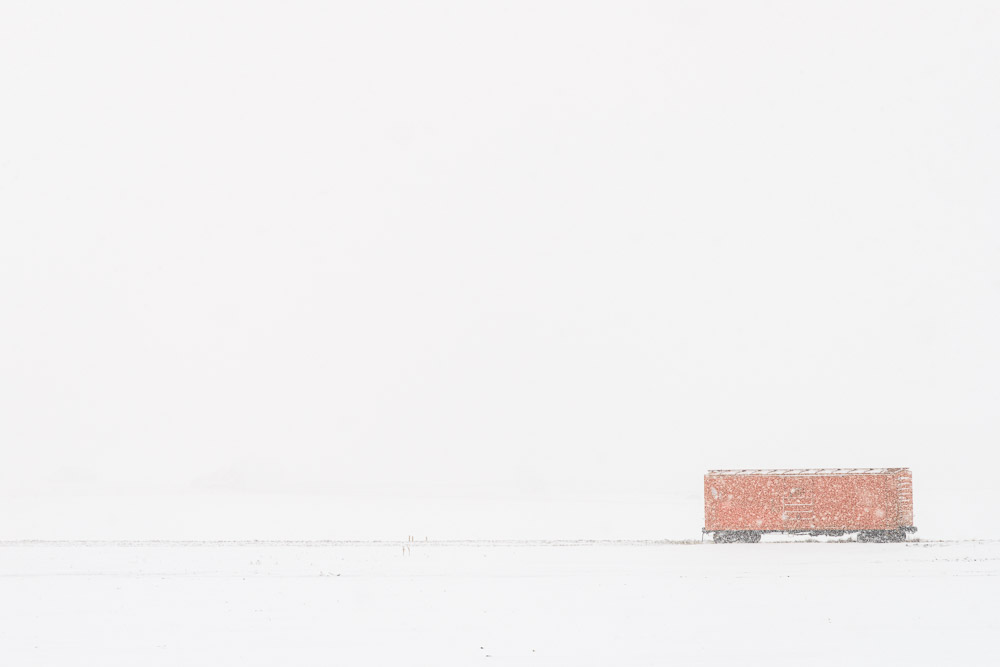
    The image with this post is borderline minimalist. If I had removed the grass and the hints of field it probably would qualify for minimalist in my mind. I don’t care. I don’t like labels.

    Ambiguity

    Less information often leads to more interpretation. – John Paul Caponigro

    Have you noticed in some paintings or songs or stories that less is actually more? Less complete information leads to some ambiguity. It allows space for the viewer to fill in what’s missing. Viewers like to be challenged a little, to have to work some to figure out an image. It is engaging and stimulating. It also allows for their private interpretation to be applied. They may well create a story that is different from what the artist envisioned. That is wonderful. It means the image is big enough to encompass multiple points of view.

    Enjoy the creative stimulation of the frame. Deciding whatโ€™s in the frame is composition. Where you put the frame is cropping. Keeping things out of the frame is selection, selectivity, defining the subject. Less is often more. Use your judgment and don’t be afraid to take it out.

  • Rule of Thirds

    Rule of Thirds

    The famous Rule of Thirds. I use that name here, even though I don’t like it. It has become almost a deep seated religious belief to some. Let’s examine it. It is a good idea, not a rule that can’t be broken.

    What is it?

    Briefly, the Rule of Thirds says to divide the frame into a 3×3 grid of 9 equal squares, like a tic-tac-toe grid. Important features, like horizons, should be placed on one of the grid lines rather than centered. Also, the grid intersections are “special” and powerful. Place major subjects on one of the intersections.

    Theory says that aligning subjects with this grid creates more interest and tension than most other arrangements. This are not really wrong. The Rule of Thirds is generally good advice. The fault is in the application as a prescription rather than just good advice.

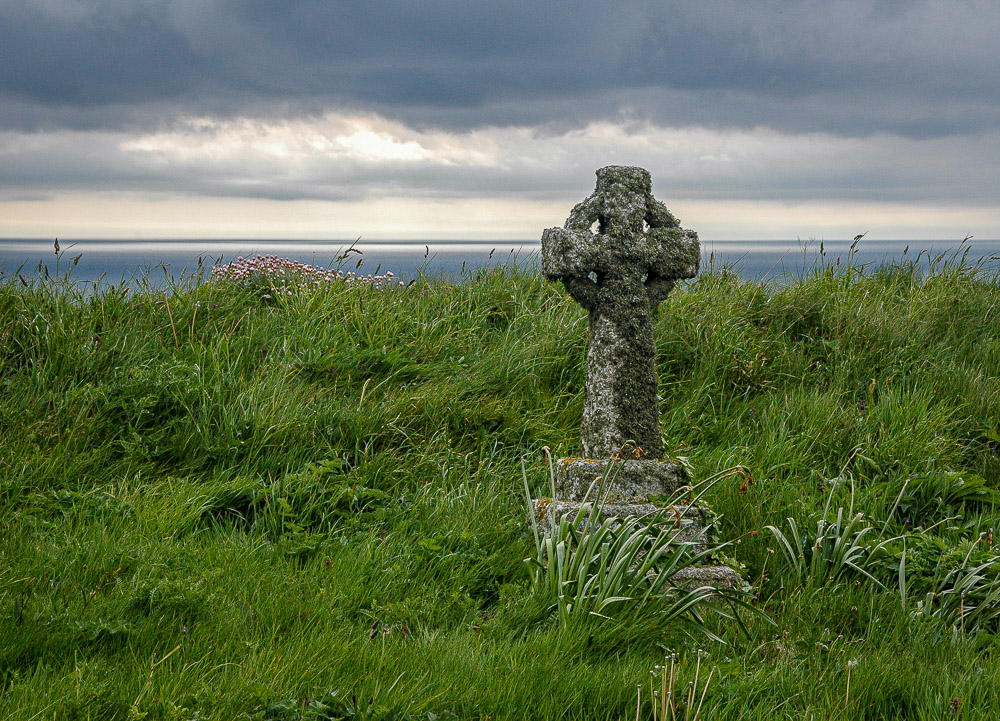
    The image with this article is faithfully cropped to the Rule of Thirds. The horizon is on the upper line and the gravestone is aligned along the right one. It works for this.

    Origin

    The rule of thirds was first written down by John Thomas Smith in 1797. And he was quoting remarks by the painter Sir Joshua Reynolds from 1783. It goes way back.

    Reynolds says:

    Analogous to this “Rule of thirds”, (if I may be allowed so to call it) I have presumed to think that, in connecting or in breaking the various lines of a picture, it would likewise be a good rule to do it, in general, by a similar scheme of proportion; for example, in a design of landscape, to determine the sky at about two-thirds ; or else at about one-third, so that the material objects might occupy the other two : Again, two thirds of one element, (as of water) to one third of another element (as of land); and then both together to make but one third of the picture, of which the two other thirds should go for the sky and aerial perspectives. This rule would likewise apply in breaking a length of wall, or any other too great continuation of line that it may be found necessary to break by crossing or hiding it with some other object : In short, in applying this invention, generally speaking, or to any other case, whether of light, shade, form, or color, I have found the ratio of about two thirds to one third, or of one to two, a much better and more harmonizing proportion, than the precise formal half, the too-far-extending four-fifthsโ€”and, in short, than any other proportion whatever.

    They were very wordy back then. But basically, he is describing what we still call the Rule of Thirds.

    Even further back

    But the basis of what we term the Rule of Thirds goes much further back, probably to around 450 BC. It was known as the Golden Ratio in ancient Greece.

    The artists back then worked out a mathematical description of their concept of beauty. The ratio was key to the design their temples, such as the Parthenon. It is surprisingly similar to the ratios of the Rule of Thirds.

    I won’t go into depth on it, but the Golden Ratio is about 1.618. It is actually an irrational number, which means it never repeats. Like pi. Sounds weird, but if you use the ratio to divide a frame they way they suggest you get something like

    Golden Ratio
    https://www.pixpa.com/blog/golden-ratio

    As you see, the proportions are roughly 2/3 to 1/3. Like the Rule of Thirds.

    To a large degree, beauty is universal.

    Why does it work for photography?

    It works for photography for the same reason it works for painting or architecture or other media. It creates compositions that are both balanced and dynamic. They are balanced because the 2/3 to 1/3 split creates arrangements that for some reason are pleasing to most people. Having the horizon or major features offset from the center creates more interest and avoids boring, static compositions. Following the grid also helps to introduce a certain dynamic layout that gives interest to an image.

    It touches us on a deep psychological level by keeping our images less centered and boring. Having things off center helps emphasize what is important to us, e.g. more sky or more foreground, and it gives our minds some work to do to balance the elements. Viewers like to have to figure things out a little bit.

    The Rule of Thirds is very pragmatic. It has proven itself for a long time. All photographers should learn it when they are learning composition.

    Learn it, use it, learn to see by it’s pattern. When you are starting you need to learn the normal conventions. This is one of the oldest and most fundamental. Internalize it. Unlike most artistic opinions it is backed by centuries of use.

    Is it a rule?

    No, at best it is a guideline, a “rule of thumb”. It contains good advice for most compositions. But composing is an art, not a science. Don’t take it too literally. Do what feels right to you as an artist. But know why you are doing it. If you don’t understand the Rule of Thirds then you will not know when it should be broken.

    You enter an image in your local camera club competition. It gets down-voted because it was not composed according to the Rule of Thirds. Talk to them. Find out if they have a valid artistic opinion about this or if they are just being legalistic. If they are legalistic, sorry, it is time to leave this group. You have outgrown them.

    If you post an image on social media and it gets negative comments because it is not “Rule of Thirds’ compliant, then just ignore the comments. You are the artist and the only one who can decide how to compose your image. If you intentionally broke the rule for a good reason, then good to you.

    Break the law

    As a guideline, it should be followed when it makes sense and abandoned when it doesn’t. Yes, the Rule of Thirds can make your compositions generally pleasing to most people. That is why you should pay attention to it most of the time. It is time honored and proven.

    Maturity and experience will help understand that there are times when the rule should be abandoned. For instance, for a very symmetrical composition, off-centering it to follow the Rule of Thirds would probably look weird and damage the impact of the symmetry.

    Or in the case where you have a subject you want to fill the frame with. Do it. That supersedes the rigid rule.

    Or let’s say you are a photojournalist who has just captured a unique event that the world needs to see. Didn’t have time to compose according to the Rule of Thirds? No problem. Most people would agree that a strong or important subject overrides the rule.

    Basically, if you understand the “rule” but feel you have a good artistic reason to break it, do it. You are the artist.

    Create

    Ultimately, that is what it comes down to: you are the artist. If you understand composition and believe you have a better idea than the Rule of Thirds feel free. You may be right or you may be wrong. Either way, you made an artistic choice. That is what you need to do.

    Composition rules are based on principles of perception and gestalt psychology. They usually make sense and any artist should learn them and internalize their application. But creation sometimes involves taking a new direction, abandoning norms, breaking rules. Do not insult your viewers by being ignorant of the norms. Rather, delight them by occasional creative rule breaking. Be an artist.

    Learn the rules like a pro so you can break them like an artist. —ย  Pablo Picasso

    There are rules about perception, but not about photography. โ€“ Jay Maisel

  • One Lens

    One Lens

    We photographers often lug around so much stuff it ends up getting in our way and hampering our creativity. Let me recommend occasionally challenging ourselves to try a minimalist approach. Start with sometimes only going out with one lens and one camera body. One lens? Are you serious?

    Yes. Some interesting things can happen if you really go with it. You learn to see in new ways.

    Which lens?

    Does it matter what lens you use? I don’t know. But probably not. The exercise is about discipline and mental training. Don’t take a 14-400 mm lens (does such a thing exist?) to make sure all your options are covered.

    Just pick a good lens. When is the last time you used that 50mm prime? Yeah. Mine is usually not even in my camera bag. That is one reason it is a good one to choose for this exercise. For many of us, our lowly, unappreciated 50mm may be our sharpest lens. Just because it doesn’t cost a lot doesn’t mean it’s not good. These lenses are usually excellent.

    The image with this post was taken on a “50mm-only” hike. I’m sure I would have framed the scene a little different if I had my normal zoom, but this made me think. And I like it. ๐Ÿ™‚

    The lens is not the key, though. If you have a telephoto eye then a 70-200mm might be the answer. Better yet, maybe a fixed 105mm if you have one.

    Limit yourself

    Limit yourself?? That seems absurd. After all, as creatives we do everything we can to remove limits. To envision new things. To create.

    Much good art happens as a result of exploring the limits of a medium. If we walk around festooned with multiple camera bodies and several lenses we definitely are not about limits. We’ve got everything covered. We are confident we can always get any shot we see, right from where we are standing. That is, if we can get the tripod set up and figure out which lens to use and get it installed in time before the moment is gone.

    But if we limit our self to one lens a different mindset happens. If you’re really in the game you quickly learn to visualize the field of view the lens sees. Now we start to reframe the composition process. We work to the limits of the lens we have instead of picking the one we want to use at the moment. Now we begin to be drawn to scenes appropriate for what we have. Eric Kim says “By limiting your field of view, you are forced to capture reality into your limited frame in an interesting and novel way.”

    Limitations can actually be very creative and enabling. The composition isn’t right from here, move. Yes, actually use your feet as a composition tool. Can’t take that shot because it requires a super telephoto? Don’t bother with it. Find a better shot that works with what you have. You quickly adapt to screening out the “not applicable” things and zeroing in on things that will work. It can be quite freeing and creative.

    Get out of your comfort zone

    One of the benefits of the exercise is that it gets you out of your comfort zone. Things that get you out of your comfort zone are usually useful. They may be uncomfortable (hence the name), but they can help us to see and perceive better. As artists I believe we owe it to ourselves to push the limits and try new things.

    One very uncomfortable question is “what if?” What if I used a wide angle instead of a telephoto? What if I used a long exposure instead of freezing the action? What if I got down low and shot up to this subject? I’ve only got a 50mm lens, how can I creatively capture this subject? These kinds of explorations help us to break habits of always approaching shots a predetermined way. Consciously forcing ourselves to look at things differently is very healthy.

    See with new eyes

    This is what this is all about. Seeing with new eyes is part of what is required to be creative. We have to put things in perspective – usually a new perspective. Walk around it to see another side. Take a different viewpoint. Change the lighting. Change our approach to capturing images. As artists we owe it to ourselves and our viewers to bring something dynamic and interesting to our images. I believe we have to always be looking for new paths, new insights.

    Stretching ourselves is always good, if we learn from it. Just like stretching and flexibility exercises are good for our bodies. They keep us fit and slow down the effects of aging. Creative exercises to stretch our mind and vision is at least as beneficial. Our bodies will age regardless but our minds can be sharp until the day we die.

    But a challenge here is to learn from it. We get stretched by things that happen to us but we tend to shrug them off and try to get back to normal ASAP. But it is useful to ask what can we learn and change in our lives? It is healthy to force ourselves to stretch.

    In the same way, an exercise like restricting yourself to one lens is a mental exercise, creativity training. It can stretch us and help us get new insight on our vision. And you will appreciate not carrying so much stuff. That in itself is freeing.

  • Pre-Visualization

    Pre-Visualization

    For many people, one of the fundamentals of the craft of photography has been pre-visualization. This simply means that before exposing the image you have worked out the exposure and what mood and effect you want to capture and how you plan to process it.

    I’m going to push back on this idea. My premise is that pre-visualization is no longer as important as it was in film days.

    Ansel did

    Yes, Ansel Adams was a big proponent of pre-visualization. He said โ€œthe term [pre]visualization refers to the entire emotional-mental process of creating a photograph, and as such, is one of the most important concepts in photographyโ€.

    I think he got a little carried away here. He is veering into mystical/religious experience. The reality is that, because of the technology of the time, he had to pre-visualize carefully to get good results.

    Think about it, he was shooting film – no immediate preview. He was shooting black & white – he used strong filters to change the tonal arrangement, and he had to anticipate the result mostly based on experience. Negatives had to be developed and this introduced ranges of contrast choices that couldn’t be seen until after the fact. And then there was reciprocity failure that required compensation for long exposures – something those of us shooting digital don’t even know about. His negatives had to be fairly low contrast to try to capture as much information as possible so he could spend hours in the darkroom creating a final print. He generally exposed pretty conservatively to make sure he got something to work with.

    All this made it critical to him to plan out exposures and filter sets and contrast ranges as much as possible without actually being able to see the result. Everything had to be carefully done to capture a decent negative for processing back in the darkroom. Hence, a strong need for “pre-visualization”.

    Ansel and some of his associates even developed the famous “zone system” as part of pre-visualization. It divided the world into an 11 stop range from black to white. In normal practice, they pre-planned where the significant tones would end up after development and printing. This was part of the process of trying to make a useful negative at capture time.

    Fast forward

    We live is a very different world. Shooting digital, we can see a preview image and its histogram immediately. We know what we captured.

    And our modern digital sensors are incredible pieces of technology. Despite what Moose Peterson famously says in some of his videos, we can capture a dynamic range of about 14 stops, with a “useful” range of around 8 stops. That is a game changer. And if that is not enough it has never been easier to use high dynamic range (HDR) to capture about as much as you could want.

    For those of us still doing black & white – I love b&w and do it a lot – it is the best time in history to practice this. Very few people actually shoot in b&w, e.g. have their cameras physically modified to remove the Bayer color filter. Instead we capture full color images and use the fantastic post processing capabilities we have on our computers to do the conversion and tone mapping. But we don’t have to pre-visualize the tone effects we will get because we can non-destructively play with a wide range of effects to work out what we like. And we see in real time what we are getting. Ansel would have killed for this.

    Post pre-visualization

    John Paul Caponigro has said “Digital allows us to get away from pre-visualization and get back to visualization.” What does it mean? How can it be?

    My take on this is that we are much freer now to let our creativity run wild. Unlike previous generations of photographers we have immediate viewing of our images and non-destructive editing for post-processing. Every frame can be a different ISO speed. It doesn’t cost much or usually take much time to shoot a bracket of images to make sure we get a good original.

    And now, instead of huddling in the dark smelling strong chemicals, we can sit at our computer with a nice glass of wine and interpret an image however we want. The range of options is staggering. There are far fewer limits now. It’s a good time to be a photographer!

    This plays directly to the imaging style I love. In the field I can be in the moment. As long as I am making good captures I don’t have to have worked out in detail exactly what I am going to do with each image. I am free to treat the processing as an almost completely separate creative act. The raw image can be modified in ways Ansel never dreamed of.

    If you can get to the Luminous Landscape web site Alain Briot has a good discussion of this topic.

    Getting a good capture

    Pre-visualization is much less important now as long as we capture as much data as possible. Get a well formed histogram. Expose to the right where possible to avoid noise. Use appropriate technique for sharpness and detail.

    Capturing good images is still an art form. It is just my personal values, but pointing your camera at a scene and saying you will crop a good image out of it later and “Photoshop out” clutter is sloppy thinking and lazy. I believe I should decide what the subject is and create the best composition when I am taking the picture.

    Being an artist includes being a good craftsman.

    Wonders of post processing tools

    Pre-visualization is not as important because of the wonders that can be done now in post. I do not agree with the philosophy that “if it doesn’t work in color make it black & white”. But it is true that the decision does not have to be make up front. That is the point. I can make an artistic decision later when I determine the look I want for the image. I did not have to put a red filter on the lens or carefully place the tones on a zone scale. That can all be done in post processing. It’s great!

    Darkroom work was sort of the dirty little secret of photographers way back. They would labor for many hours to coerce a good print out of a negative. We might still spend hours post processing, but we are probably playing with alternate looks and having a lot of fun with the image.

    Free your spirit

    I am telling you my interpretation and what works for me. I believe we have been liberated from the detailed planning that was necessary in the film days. Now imaging is a more fluid and artistic medium. Pixels are data. Data can be processed many ways and to different degrees.

    It is not uncommon for me to see something completely different in an image at post than I felt in the field. This is one of the joys of being an artist today. I am free, creativity can flow, I am not tightly constrained by what I planned at capture time.

    I encourage you to not be burdened by a literal concept of pre-visualization. Do your best creative and technical work when you are capturing images and then feel free to decide how you really feel when you process them. Give yourself permission to follow your instincts and take each image where you want to go.