An artists journey

Category: Attitude

  • Acceptance

    Acceptance

    Some people are detailed planners for a shoot. Some go out with an attitude of acceptance, ready to work with what they find. Which is best?

    Planning can achieve great results

    Some people love planning and are good at it. I will totally admit that there are occasions where it is necessary and appropriate.

    Chris Weston (sorry, this is a subscription site; I asked, but they could not provide a way for me to give you access to this lesson for free) tells of a time on assignment when he had a very special shot in mind. Lions hunting at night under the stars. By planning it out in detail, even sketching the final shot, he knew what lens to use, how many flashes to use and where, where to set up, and what direction to aim the camera to get the milky way positioned as he wanted. It worked and he got his desired shot. But even then it took 6 days. Not because it took many tries to get it, but because he had to wait for the new moon so the stars would be optimum.

    It was a unique and interesting shot. I applaud his persistence and hard work. Yes, and even his planning. But it is not the way i work. I don’t do National Geographic or book assignments where a certain result is needed. I accept the scene I’m given and try to make it the best I can.

    Mountain lake at sunrise©Ed Schlotzhauer

    Not negative

    Acceptance may be a negative word to some people. It could imply a type of fatalism. A form of low standards and values, where you are willing to settle for anything. Like, you are not worthy. Or you are not the kind of person who should expect to receive good things. Or maybe it’s not worth trying for something better. Poor me. Eeyore.

    Don’t go there. I encourage you to take a different meaning. View acceptance as a kind of peace and contentment. In the context of photography, I mean it to be a mindful encounter with our subject or scene. One where we are willing and able to look at it honestly and evaluate it for what it is. Once you accept it, you can more fully see its story. You might discover something unexpected. And you are free to reinterpret it according to the story you want to tell with it. But it is important to get our biases out of the way first.

    Seeing it for what it is releases us from assumptions and expectations that could hold us back. We see the flaws, but also the possibilities.

    Dead tree in snow. Bent, broken, but still trying to stand.©Ed Schlotzhauer

    Acceptance gets more results

    I hear people complaining about not getting the great shot they had planned because conditions were not what they anticipated and planned for. Some astronomer friends of mine spent a year planning a trip around a solar eclipse. When they got there, it was cloudy. There was nothing else they wanted to photograph. That is sad. I empathize with them, because it has happened to me.

    I sometimes still go out with expectations in mind. That is a trap, but it is natural and I’m not immune. For example, it being winter here as I write this, I went out shooting today with images in mind of nice ice shapes along the river. Well, it snowed a couple of days ago and most of the ice is covered up. And it is warmer today and some of the ice has melted. Not what I had in mind.

    Having a fixed expectation in mind is like a filter. Our mind obediently screens out everything else that is not what we are looking for. So we are disappointed because we did not see any good picture possibilities.

    But there’s a different reaction we can take to a situation like this. We could say to our self “Bummer, the conditions I wanted are not there. But let’s see what is there and what I can do with it.” I believe if we take a mindful attitude we can discover new points of view, even on an iconic scene.

    Accept what you see and make your images to the highest level of quality you know how to do. Compose each frame as if it was the most important image you have ever shot. It might be.

    And peace

    A hidden benefit of having an accepting attitude is that it can bring us peace and joy. Rather than getting frustrated and walking away we can launch into a productive session exploring what we discover. We turn disappointment into joy and contentment. Most likely, we come away with unexpected images we like. Some may even make it into our portfolio.

    Happiness springs from a clear-minded engagement with the present moment

    Gary Buzzard

    Changing our attitude and turning a disappointment into a joy is a good thing. Even if the pictures aren’t great, isn’t the good feeling worth it?

    This is a benefit I don’t hear talked about for mindfulness. When we are mindful, we are looking for the opportunity, the good, the fresh. That is beneficial to our life and attitude.

    And we can get some interesting pictures.

    So is detailed planning or spontaneity best? That’s up to you. It depends on your personality and your needs. But whichever you choose, I recommend keeping a mindful attitude of acceptance. You will enjoy yourself more and discover some new images you did not have in mind.

    An interpretation of my feelings for Trail Ridge Road©Ed Schlotzhauer

    Today’s image

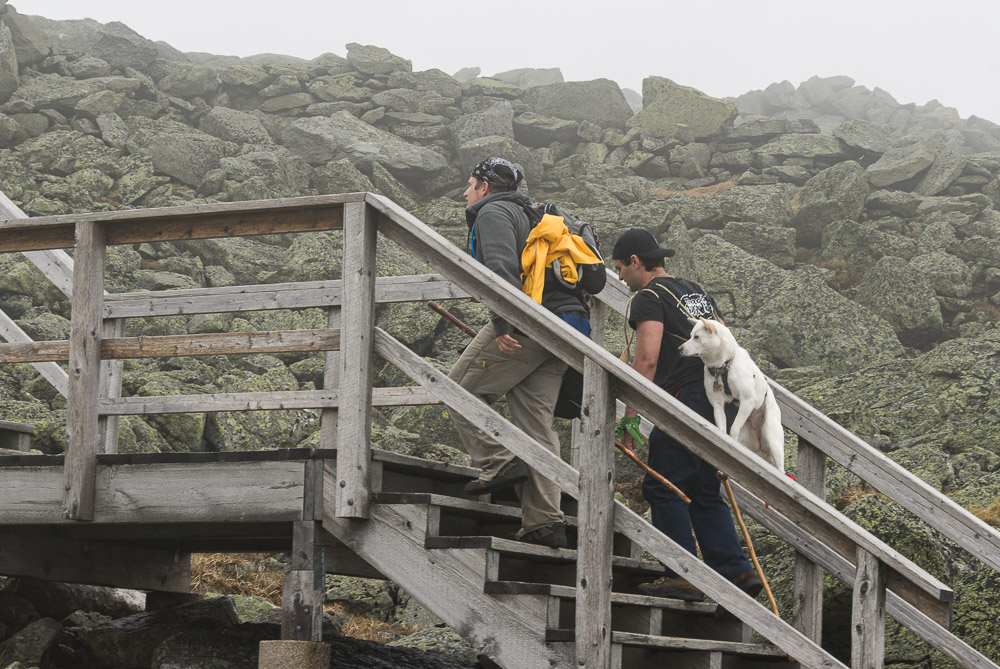
    This is an example of lemons to lemonade. We were on top of Mount Washington. I guess it was fairly typical weather for there. Completely socked in by clouds. So windy we could barely stand up. Not good photography weather.

    We were going to walk the last few feet up to the top, but conditions were so bad that I decided to not even to take my camera. Then I saw this, ran back to the car – still close luckily – got my camera and was only able to get this one shot.

    I don’t know the story. I don’t understand why it is happening. And still, years later, I wonder about it. If you know of a reason to have the dog hung on his back, please let me know. But it is one of those images i remember.

    Side note: after that, I took the camera to the top. The clouds broke for moments and I got some shots I liked. Don’t ever leave your camera behind.

  • If You Were There

    If You Were There

    One “rule” I hear about expressiveness is “is this creative, or is it the same picture anyone would take if they were there?” I struggle with this. Should I care what picture you would take if you were there?

    Obvious

    I think I understand the intent of this phrase. Most pictures are fairly obvious. At least, to the photographer.

    You come out at tunnel view in Yosemite, stop, and shoot the scene you see. You are doing the same thing and getting basically the same picture thousands of other people do every day.

    Obvious and uncreative. Yes, that is judgmental, but it is very difficult to get creative with such an iconic scene.

    As we grow in our artistic journey, we should try to avoid doing the simple and obvious thing. We should find something fresh and creative to add to the image. But at a famous icon location, good luck. It has been shot in every light and every weather.

    You might catch an eagle flying by in the foreground carrying a large fish, just as a storm breaks allowing a majestic sunbeam to light up the scene. That would stand out. Some. But wouldn’t anyone else there shoot it, too?

    I don’t see you

    But here’s one of the things: I didn’t see you there when I was shooting most of the images I like best. Maybe you chose not to be out in the sub-zero cold, or not in a remote location where few people go. I didn’t see you embarrassing yourself too, shooting photos out the window of any of my recent flights. You weren’t around when I was in the junkyard looking for interesting rusty old trucks.

    How broadly do I interpret the “if you were there” question? Do I question what a dozen other photographers would have done if they were magically transported to where I am now? I think that the fact that they are not here is significant.

    Perhaps it means that what I choose to see and give significance is part of my unique style. What I am drawn to by my own particular mindfulness.

    A fact is that there are seldom any other photographers around me when I am shooting. I guess few people care about the things that call to me.

    Pinocchio?©Ed Schlotzhauer

    On a recent trip to France we did some short tour groups part of the time. Sure, I would look at what the guide is talking about, maybe even shoot a couple of pictures to remember it. But I found myself wandering off on side trips. The light is great over here. Look at the scene down this side street. That window is interesting. Look at this ancient stone work. Occasionally I would lose the group completely and have to go try to find them. Luckily for me my wife would sometimes come looking for me. I would hate to be a guide with me in the group.

    My point is, no one else was tagging along on these side trips. It was just places and things I was being drawn to. No one else. If people had followed me, they likely would have shot some of the same things I did. But they didn’t seem to be called to do that.

    I don’t know what you would do

    Another, even bigger factor, is that I cannot predict what you would shoot, even if you were there. It has become obvious to me that I am drawn to some things most other people would ignore. And vise versa.

    If you were flipping through my portfolios you would likely be thinking to yourself “that’s weird; I wonder why he shot that”. Even if I was shooting at a location you were familiar with, you probably would say “I didn’t see that, or if I did, it did not register with me as being a picture.”

    The point being that a significant part of our personal style is our vision – what we are drawn to. What we are mindful of. Some things seem to jump out to me. Other things jump out to you.

    This is one of the reasons I don’t trust the test of “if you were there, would you shoot the same picture?” We have different interests and values. If you were standing right beside me, you may well chose to not shoot at all. Rather, you would probably get engaged by something off to the side that I ignored.

    Zig-zag shadow©Ed Schlotzhauer

    Expressiveness

    We are told that we have to add our own expression, our own point of view and feelings to distinguish our images. While I believe this, I also don’t believe it is something to worry too much about.

    If we are an artist, we have a burning need to express our view. Just do it.

    Fall in love with every frame. You are taking the picture because you love it, right? If that is genuine, it will come through. Never try to fake it. You should not have to.

    If you are an artist, you make images that express your feelings and beliefs, or at least, what interests you in a scene. If you are a businessperson, you take pictures that you calculate will make the most money. Some of us are a mix of both. Only you can set your own goals.

    Balanced between. Which path to take? Uncertain.©Ed Schlotzhauer

    Do my own thing

    So I plan to bumble along on my own path, not worrying about what other photographers may or may not do. One reason is that there seldom are any around. Another is that I believe I have a different viewpoint and value set than them.

    I’ll be the guy you see stopped along the road shooting a picture of who knows what. I’ll be the geek shooting out the window of the airplane, even at night. You may drive by and see me wandering around out in a snowstorm.

    Anything that interests me is fair game. It is the dead of winter as I write this. Today I shot up through patterns of snow on a grid what was part of a sign above a sidewalk. I shot ice patterns forming along a river. Some majestic old Cottonwood trees silhouetted against storm clouds drew me in. I did not see a single other photographer. Not even someone using a cell phone camera.

    If you were walking with me, would you have seen these things? Even if you did, would they interest you enough to shoot them? In the cold?

    Maybe. Maybe not. I’m not going to bother worrying about what interests you. I have trouble keeping up with what interests me.

    I hope you do, too.

  • Life Is Happening

    Life Is Happening

    Life is happening right now. it is not something you hope will happen someday. Make the most of it, now. This includes your photography.

    Now is all we have

    The past is gone. The future is uncertain. The present time is what we have. Use it. Use it up. Wring it dry.

    Time is a scarce and fleeting resource. We can’t slow it or bank it or save it. It passes, whether we want it to or not. It moves at the same rate for all of us. Use this very moment wisely. Once it is gone, it can never be reclaimed.

    I don’t mean to be all Zen or depressing. But this is true and should be top of mind for all of us. Time is a resource we cannot control. All we can do is use it wisely.

    Pinocchio?©Ed Schlotzhauer

    We don’t get a “do over”

    We only have one life. I won’t argue reincarnation with you.

    The choices we make on a day to day basis shape our future. When we decide not to do something, it is rare to get a second chance. How many opportunities do we let slip by to do something that would make us better?

    Deciding to spend our time watching TV or playing games or hanging out on social media is wasting one of our most valuable treasures – our time. Solely my opinion, of course. Only you can decide what is the best use of your life.

    Do days seem to slip away, disappear into a fog of sameness as we repeat the same actions every day? Why do that? That is the result of having no direction. Of letting external voices control our lives. Those voices do not have our best interests at heart.

    It is commonly documented that when people are asked on their death bed what they regret, one of the most common regrets is that they did not take the chances they wanted to. For instance:

    I wish I’d had the courage to live a life true to myself, not the life others expected of me. This was the most common regret of all. When people realize that their life is almost over and look back clearly on it, it is easy to see how many dreams have gone unfulfilled. Most people had not honored even half of their dreams and had to die knowing that it was due to choices they had made, or not made.Old Colony Hospice

    Fear caused them to miss out on the opportunities to lead a different life. This is what they regret at the end. It is so easy to do and it seems like the safe path. But who said everything should be safe or easy?

    Rise Against, representing the daily struggle©Ed Schlotzhauer

    Don’t just live for the future

    On the other hand, we sometimes see people who seem to live entirely for the future. They have a “plan”. Their current time and energy and money is being banked for what they plan to do “someday”.

    This is another way of avoiding living your life in the present. It is great to have goals. Even great goals that will take years to achieve. But what about now? The goals should direct the trajectory of our lives and influence how we spend our time. But they should not shut us down. No matter how important our long term goals seem, we are still living our life right now.

    Even if you’re an entrepreneur and are starting a business from the ground up, you still have a life to live Maybe you decide it is in your best interest right now to be working 100 hours a week and pouring all your money into this business. But at least have an exit plan. It’s got to be a temporary agreement with yourself. Know when to call it quits. Think about what it is doing to your life and health and your family. Some things are more important than making a big bundle of money.

    There is a saying “if you want to make God laugh, tell him your plans.” One point of this is that we are not as in charge of our plans as we sometimes think. If we cannot control the future then it is foolish to pin our entire life on an uncertain outcome. Live for now, too, while we are working for that future.

    I had a friend who worked and saved to retire early. He had great plans: extensive travel, learning languages, doing good works for charity, etc. A great list. A few months after he retired, he was dead. Didn’t see it coming.

    Wouldn’t he have been better off doing those things when he had the chance rather than putting them off to “someday”?

    Be in the moment

    That probably seems very heavy and perhaps depressing. It shouldn’t be. It really resolves to a theme I come around to a lot – mindfulness.

    Mindfulness simply means being present, in the moment, aware of things around you and what you are doing. It helps us to live our lives now rather than fretting about the past or worrying about the future. A mindful attitude encourages curiosity. It leads us to learn, to explore, to experiment.

    As photographers, these are skills we should always be practicing. Are we really seeing what is around us? Are we open to the opportunities that are there? Do we see past our preconceptions? Are we able to see the things around us for what they are and what they can be? And are we willing to put it in action by going out and photographing it?

    Compared to the life experiences I was talking about this may seem trivial. But it is all related. When we are mindful – when we can really be aware and in the moment – we will be more successful living in the present. Think of photography as training for living a more rewarding life.

    So I believe it is at least a double reward. Being mindful in our photography will keep us more engaged. We will be more creative and we will likely be happier with our images. Isn’t that one of our purposes in photography? What is really more important than growing creatively and being pleased with our work?

    But, too, as we practice mindfulness in our photography it helps discipline us to be mindful in our daily life. Just thinking and being aware and in the present helps us to consider what is important. It helps us to decide how to make better use of this moment.

    In a storm? Standing bravely?©Ed Schlotzhauer

    Moderation

    Am I suggesting that you should quit your job and go do whatever “fulfills” you at the moment? Of course not. Living your life means you have responsibilities. Some things are urgent, some are important, some are just necessary. Being mature is knowing the difference and deciding what to do when.

    You have bills to pay. You have a career, a family, housing to provide, people have to eat. Your government wants you to pay taxes. Unfortunately, we do not just get to do anything we want. We will do what is necessary because we are responsible adults.

    But we have a hundred moments a day to choose what to do. When we can choose to drift instead of doing something useful and constructive. To be on automatic and just do the easy things. Practicing mindfulness is a great help in being aware of what we are doing and deciding to choose better things to do.

    Mindfulness in photography is practice that helps us lead a more mindful life overall. Photography can help shape our life. Who knew?

    Life is happening all the time. We can’t call a time out. Let’s not let our life drift away without giving it the best we can do.

    I don’t want to come across as “preachy” or judgmental or having all the answers. I am a fellow traveler, looking for my path. Perhaps I am further down my path than you are.

    Please take this as encouragement to practice a more mindful life. Remind me, too. When we are mindful we can take joy in where we are and when we are.

  • Do You Take Pictures?

    Do You Take Pictures?

    Do you take pictures? Well, of course. We all do. I suggest if we are serious about making art that may not be the best attitude.

    Take pictures

    It is estimated that about 2 Trillion pictures are taken a year. That is several hundred pictures for every person on the planet. Probably 99.999% of those are shot on cell phones. Nothing wrong with that. Cell phones have gotten amazing. But realistically, most of the shots taken are selfies or predictable tourist pictures. Again, nothing wrong with that. If the picture makes them happy, it is good.

    Everybody takes pictures. Do you know anyone who has never taken one? I don’t.

    But I am writing to an audience who admires photographic images and probably aspires to make much better ones themselves. What makes a picture good?

    There are obvious qualifiers like being sharp, well lit, subject easy to see, things like that. Those are things that, if you do not do them, it probably will make the picture bad (unless you did it deliberately). But, as you have figured out from experience, eliminating the problems does not mean your pictures become “good”.

    Rocky Mountain fall panorama©Ed Schlotzhauer

    Taken by pictures

    The concept of being taken by pictures is one I picked up from John Barclay. It resonates with me, because I have seen it working in my art.

    What I have seen in my photo shoots is that sometimes something special happens. We no longer are looking for pictures. We have found a subject or place that captivates us. It releases some kind of creative energy within up. We are not just trying to take a picture, we are trying to capture the magic we are feeling. We have to shoot this. There is no choice not to.

    It may be very easy or it may be hard. That is, the scene may present itself to us complete. We have found a treasure. We just have to compose it, set the camera, and take the picture. It is already perfect. Don’t mess it up;

    Sometimes it teases us. We know there is something great hiding there, just out of reach. Maybe we have to walk around to look for the right angle. Perhaps it is zooming in on the right piece. Or waiting for the right light, Maybe it is a matter of thinking about it to figure out what is calling to us. Whatever it is, we usually know it when we see it. The inner voice guiding us says “Yes!”. Then we know we have captured the essence we are searching for.

    When this happens it is very rewarding. We know we have glimpsed something great and good and we feel like we have captured a view of it.

    What is the difference?

    The difference is taking a picture vs making art. Taking vs giving.

    When you’re at the Eiffel Tower and you think “I like that and I should shoot it”, you probably know how to make a good record of it. You and 50,000 other people that day. When anyone sees it they say “yep, that’s the Eiffel Tower”. No passion. It is just a fact. You might even want to hang a print of it on your wall. But you could get the same thing from any print on demand web site.

    But when we are taken by a scene, there is an intensity and passion invoked in us. It is a personal experience. With luck and skill on our part, some of the feeling might be shared by some of our viewers.

    We did not take the picture to show it to you. We had to take it for us. It was something we were drawn to. It is like it was a gift given to us.

    Geese flying at sunset©Ed Schlotzhauer

    If it does not captivate you

    I use a recent trip to France as an example a lot lately. It is recent and fresh in my mind.

    I was unashamedly a tourist. That means I shot a lot of pictures because I felt I needed to record where we were and what we were seeing. Just like everyone else with their smart phones. Even though I was using a nice mirrorless camera, they were still mostly tourist shots.

    Some of these are nice. That is, they are sharp, well composed, and show what I want of the scene. I will keep too many of them, but just for my own private memories.

    But a few were moments where something spoke to me and drew me into an image. These times were meaningful to me. As far as images go, these were the Wow moments of the trip for me. Whether anyone else ever sees them or appreciates them doesn’t matter. They are special to me. When I go back and look at them I remember the feelings of the moment.

    It’s about emotion

    A common theme that recurs is that it is about passion, emotion. Did I feel anything deep or special about this, or was it a record shot? Record shots are pretty and a few will go into a slide show or book of the trip.

    The really meaningful images weren’t shot to a plan and were not shot primarily to record the event or place. They may be random occurrences. But these are special to me. Times when I was truly engaged and excited by what was there.

    If I wasn’t excited about what I saw, why should you be?

    Car wash brush abstract©Ed Schlotzhauer

    Don’t settle for just taking pictures

    So take pictures. But don’t settle for just taking pictures. Let’s turn up our sensitivity to hear when something is calling to us. If we are not actively listening, we will probably miss it. We know something great is there. Now we have to find it. Work the scene. Peal away the clutter. Follow your instinct. Let yourself be taken by pictures. It is worth it.

    When we get caught up in a situation like this, it doesn’t really matter if all we have if a cell phone. Use what you have. But follow you passion. Figure out what is really there and get the shot. Take the gift. Appreciate it.

  • Take a Cheap Trip

    Take a Cheap Trip

    Most of us like to vacation. Travel is booming at levels not seen for years. Popular vacation spots are often overcrowded. And costs continue to increase. What if I suggested a way to take a cheap trip? One that may benefit your photography. And it’s not a timeshare sales pitch.

    High costs

    Travel inflation seems to be higher than other inflation in general. It restricts some of what we can do.

    A trip overseas for a few weeks can be out of reach, both in money and the time required. It can suck up our entire savings for a year or more. Even taking a local road trip is getting to be a burden and out of reach for some of us.

    But some of us rely on travel to refresh and relax us. What are we to do?

    Antique narrow gauge steam locomotive snowplow©Ed Schlotzhauer

    Why do photographers travel?

    Photographers seem to have a special fondness for travel. We expect the travel experience to renew us, shake out the cobwebs, invigorate our vision and interest. And we want to come back with exciting new images to show and talk about.

    This has long been the case. From the beginning photographers tended to travel.

    As soon as the technology allowed fairly portable equipment, it seems like photographers were traveling. Matthew Brady traveled and photographed extensively during the American Civil War. Other famous artists like William Henry Jackson and Ansel Adams shot exclusively outdoors. And I’m just highlighting American photographers.

    These artists traveled to places most people couldn’t go in those times. They opened up our understanding of the world and what was going on. In this, they did a great service.

    Our travel expectations are probably more modest. We will seldom go to uncharted lands no one has ever seen. But we go to places new to us. Or at least places outside of our normal routine. It is enlightening and changes our perspective and understanding. That is usually a good thing. And refreshing.

    I think a yearning to travel is an inherent part of society these days. Especially for photographers.

    Shake it up

    But I promised you a cheap trip. Here goes: shake up something you usually do.

    Yes, that’s it. That’s all.

    We all fall into ruts. Shooting the same subjects in the same way with the same lens in the same lighting. It becomes a habit. A habit is where we avoid thought and go through life on automatic. Shake that up by changing something. Force yourself to confront a different situation where we have to think.

    One simple thing is to pick one lens we seldom use and photograph exclusively with it for a while, say a month. Some of us are naturally wide angle shooters. Switch to a telephoto. Some of us see only telephoto shots. Switch and only carry a wide angle for a while. Or a macro lens and only shoot closeups. Or a fish eye, or a tilt/shift. If you are a landscape photographer, try street photography. If you do portraits, try night skies.

    And yes, just carry that one lens. Not your whole kit. It will force you to play the game.

    Maybe try putting aside your “serious” camera for awhile and only use your phone. Or shoot with the expectation that you will process everything to black & white. Maybe it could be as simple a thing as deciding everything you are doing now will be cropped square.

    Chain link fence with frayed cloth©Ed Schlotzhauer

    Just do something different

    It really does not matter what you choose, as long as it is different enough from what you usually do. During this time you are not concentrating on adding to your portfolio. The goal is to break free from your normal habits and learn to see better. Think again.

    How is this a cheap trip? Travel encourages us to see different. We are out of our comfort zone. We become more mindful. Basic assumptions have to be re-examined. Things look new and different so we pay more attention to them. Making a change in our routine triggers similar things.

    One way to simulate that same effect as travel to force our self out of our normal rut. A cheap and easy way to do that is to force a change in how we see through our camera.

    Sound too easy? Try it. You may be surprised.

    Practice mindfulness exercises

    Making a change like this is one example of a mindfulness exercise. I’m not talking about chanting and navel gazing. The purpose of mindfulness is to set aside our preconceived notions and expectations. Wall out the distractions that are enticing us to other things. Learn to be in the moment, and to look around and actually see what is there.

    Some people can get there through meditation. Some others through travel or workshops. Maybe for you going to a museum and looking at the work of great masters does it. But regardless of the mechanism that works for you, mindfulness comes down to creating a still place for yourself. A place where you can set aside distractions and competing thoughts for a while. Where you can free yourself to really see and consider what is around you for what it is. Where you can immerse yourself in the experience of creating.

    In a canal©Ed Schlotzhauer

    A cheap trip

    I am not really joking when I say changing up your normal routine or environment occasionally is a cheap trip. It can produce some of the same benefits we often get from travel. Granted, it may not be as much fun, but it is a lot cheaper. And you can do it anytime or anywhere.

    No, I’m not suggesting that this is an excuse to go buy that great new lens you have been wanting. Of course, whatever excuse works for you is up to you. But that shoots down the idea of a cheap trip.

    Getting out of our normal territory and traveling to a new location often puts us in a more mindful attitude as we shoot. It amazes me that everything we see becomes an interesting subject. Part of that is because we set aside the uninterrupted time to be there and shoot. But I believe a large part of it is that we are seeing things new. That refreshes and energizes us.

    I am suggesting another way to stimulate a similar effect of travel is to change something about our routine. Something to make us think, reconsider, focus more on what we are doing. Something to make us see past mechanics and rules of composition and social media likes.

    Make it a habit to challenge yourself like this periodically. It does not require an uncomfortable 10 hour plane ride.

    Today’s image

    The image at the top of this article is an example of shaking myself out of a rut. This was taken in the Rockies in fall. Normally during this time I am concentrating on beautiful fall colors and aspen trees.

    In this case, I tasked myself with ignoring the leaves and shooting the mountains after dark. No trees or fall colors visible. This is the Eisenhower Tunnel from the Loveland Pass road. Stars are just becoming apparent as the last light fades, illuminating the mountain silhouettes. The trail of lights in and out of the tunnel adds unique interest.

    I felt good about it. Definitely not a conventional fall landscape.