An artists journey

Category: Artist

  • I’ll Think of a Reason Later

    I’ll Think of a Reason Later

    I get tired of hearing all the pronouncements from leading photographers about how all our shots should be carefully planned and pre-visualized. While this is good advice sometimes, it is not always true. At least, not for me. I have come to see some of my best work as happening when “I’ll think of a reason later”.

    Source

    I got the title from an old country & western song by Lee Ann Womack, lyrics by Tony Martin and Tim Nichols. Great lyrics, but the song has nothing to do with photography or any art. But when I heard the title, it seemed to perfectly fit what I often experience. So I decided to “repurpose” it.

    You know how you sometimes hear something that sparks other ideas or seems to crystalize some ill-formed thoughts that have been gnawing at you? This was that for me. I love the image it brings to my imagination.

    Planning

    It is part of the accepted religion of many photographers that you never shoot a picture without a well thought out plan. Even to a firm visualization of what the final product should be. Being a matter of faith, it is unquestioned and can’t be reasoned. But I will question it. There is an old quote that says “sacred cows make the best burgers”.

    Is there a time for careful planning? Yes. Of course. Otherwise the whole controversy would be foolish.

    When is planning important? First, on any commercial shoot, where a certain result must be obtained, on schedule and on budget. You will not work in the industry if you can’t deliver repeatable and acceptable results to your client. Sure, you must also have a recognized style to flavor your work, but that is secondary to the results the client wants.

    Second, if you are doing some type of conceptual photography, where you have to synthesize the result from materials you shoot specially for it. It all has to be coordinated so the right materials are available for constructing the final image. The parts must be consistent in lighting, focal length, position, color, etc. Most of all, they have to be complete. You don’t want to start bringing your product together and find that a key piece is missing. This process takes good planning and visualization.

    A third possible one is a once in a lifetime trip to an exotic location. It would be reasonable to scout the location, plan for lighting, weather conditions, etc. I say maybe, because I probably wouldn’t do it. I might want to have some idea of what to expect, but I would be more energized by abandoning preconceived notions and reacting to what I find.

    Spontaneity

    What’s missing in this very disciplined notion of planning? To me, it is spontaneity, happy accident, feelings, reactions. These are the things I thrive on. These things make my work more alive and vibrant.

    The things I find, unanticipated, can captivate me. When something excites me and energizes me, I find I am generally happier with the results. The engagement is memorable and meaningful. I am drawn to the subject or the scene. The feelings I have seem to come through in my images. Dare I say it, there is love there.

    Can a planned, rehearsed shot engage me? Yes, sometimes I like to really get deep into whatever I do. But that is accidental. Usually I find in those situations that my engagement has to be secondary to the planned event. For me, I don’t want it to be secondary.

    I enjoy the discipline of shooting for a project. But even when I have a certain theme in mind, I do not have a fixed plan for what I will shoot. I may hypothesize what some of the images in the project might look like, but that is only a guide to spark my imagination.

    I would much rather find joy in something no one else has noticed. Something that, at just that moment, is interesting, even exciting. Tomorrow it may look like junk, but right now it is something else. This is more interesting to me than getting yet another beautiful shot of an iconic scene.

    I’ll think of a reason later

    So, “I’ll think of a reason later” means to me that I will follow my instincts, my interest at the moment. Later, when I am working on the image on my computer, I will see if I can think of the reason it called to me. Usualy there are some good reasons.

    I will be lead by my heart. Planning can be useful, but I will not be a slave to it. I have no problem abandoning a plan to shoot something more interesting.I am a fine art photographer, not a commercial shooter. This means I will follow my instincts, shoot what I like and what I am drawn to at the moment.

    I will be the first to admit that this does not always lead to the best possible results. Sometimes I follow my instincts down a rat hole to a dead end. That’s OK. Better than OK. It is wonderful. It is better to me to try and fail and sometimes achieve something special than to rise to nothing more than mediocrity.

    So I am amazed sometimes working on these spontaneous images on my computer, to see things I was not conscious of at the time I shot it. I see shapes and forms, color harmony, framing, patterns, and lines that work to make an interesting image. These were mostly subconscious at the time I was shooting.

    I seem to be able to use all my years of training instinctively. Was I pre-visualizing my images? Probably, but it wasn’t conscious. I was not aware of it in the moment I was shooting. The measure for me is: was I excited at the time? This is I’ll Think of a Reason Later.

    What works for you

    I’m reacting here to intense evangelism I see from some so called authorities. The reality is, there is no “one way”. At best, they can tell you what works successfully for them. Sometimes they just want to evangelize you to their point of view.

    An artist’s working style and subject matter is intensely personal. What works for one will completely trip up and block another. Do what works for you without thinking you have to follow a plan some famous photographer told you.

    I don’t mean to ignore everybody. Listen, try their ideas out. Experiment. But ultimately reject what doesn’t work for you.

    Today’s image

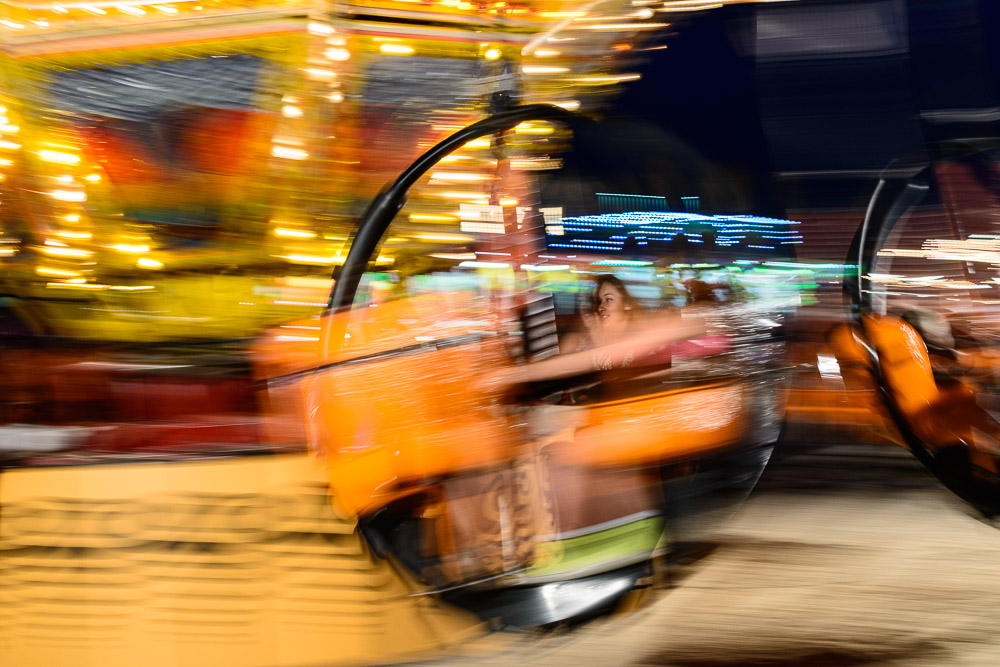
    This image was taken going down the Seine River in Paris. I glanced up and instantly recognized a scene of interest to me and snapped it. It was not pre-visualized, and I was not consciously searching for a situation like this.

    Sometimes happy accidents happen. I plan on it. That is, I find if I am receptive and looking around with interest, they happen. Frequently.
  • Window or Mirror

    Window or Mirror

    It has been observed that photography can be either a window or mirror. The idea has some merit. But like most real world things, it depends.

    Szarkowski

    The idea originated with John Szarkowski, at the time the head of the Department of Photography at The Museum of Modern Art in New York City. It was expressed in an exhibit named “Mirrors and Windows, American Photography since 1960” at the Museum of Modern Art in 1978.

    Mr. Szarkowski was a huge influence on photography for many years. I don’t agree with many of his ideas, but I believe there is something to consider in the ideas behind this exhibit.

    The press release for the show states that “In metaphorical terms, the
    photograph is seen either as a mirror–a romantic expression of the photographer’s sensibility as it projects itself on the things and sights of this world; or as a window–through which the exterior world is explored in all its presence and reality.”

    Let’s try to unpack that.

    A window on the world

    At the beginning of photography, it was seen as a way to quickly capture real scenes. The “writing with light” aspect was a big thing. A landscape or a portrait could be captured much more quickly than by previous artistic media. What a breakthrough! To make a portrait in a few seconds instead of having to sit for days while a painter works! And it was “real”! Indisputable. Unaltered. Exactly what the person or place looked like.

    This notion that a photograph is true to reality carries on strongly today. I see photographers who refuse to alter anything in the frame for fear of being dishonest. And most viewers have a natural belief that what they see in a print is real. Unless an image obviously looks like a fantasy illustration, it must be fact.

    A great many photographers follow this tradition. I started there, too. The idea that an image represented exactly what was there at the time. No illusion or tricks or modification. Many great photographers like Ansel Adams and Gary Winogrand could be placed in this group.

    This could be described as the “window on the world” view. What I choose to frame in the image is bringing the viewer an exact representation of reality. It is an outward looking viewpoint. The photographer is silently in the background. It is not obvious what he was thinking or feeling. There is little clear message beyond “look at this”. And there is always the implication that you could go there and see the same scene.

    A mirror reflecting the artist

    Somewhere in the mid twentieth century (around 1960 according to Szarkowski), many photographer’s intent started to shift. This would describe some great artists like Paul Caponigro and Jerry Uelsmann. It was no longer sufficient to just bring reality. It was important to express my beliefs, to make a statement, to convey my feelings. And it was no longer important that the image depict the scene literally.

    Now the goal became to express the scene as I perceive it. That may require extreme processing or compositing or absolutely anything as long as my intent is brought through. The final image may bear little or no resemblance to the original. That is OK, though, because it is an expression, not a capture of reality.

    There was one idea in the exhibit notes that resonates strongly with me. The image that a scene projects on the artist who then internalizes it and interprets it to the viewer. This seems to me to capture a large range of what is done in art now.

    A natural evolution?

    I believe this movement from window to mirror was fairly natural and predictable. By the 1950’s or 1960’s people had become used to seeing images of the world. Major publications like Life and National Geographic flooded us with images of the world, both landscapes and people. Pictures were becoming commonplace.

    To take landscapes, for instance, there is only room for a limited number of shots of the major sights of the world. The market was saturated. So artists started to differentiate their work by allowing their own personality to show through. The notion of a personal style became important.

    The part of this that seems valid to me is that, while there are millions of photographers out there shooting everything imaginable, only I have my personal point of view and style. Therefore, my images are unique. Even if they are of the same scene many others shoot. That seems to me to be the only chance of artists to carve a niche in the crowded market.

    Both?

    Even Szarkowski was quick to point out that this was not intended to be a clear division of artists. It is an axis, with strong window view points on one end and strong mirror view points at the other. Most people will fall somewhere in between. And they may move back and forth on the axis with time. Although I think the movement is typically from window toward mirror. At least that was my path.

    But even with that said, I do jump around. It depends on the context and what I am feeling at the time. So, for instance, when I go to a new location that excites me, I may start out taking “window” shots. To capture the locale, the scenes I am loving. Many of these are consciously for my own memories.

    If I have the opportunity to spend time in the location, I move past the “window” shots and start feeling a personal view that begins to be expressed. This is now drifting toward the “mirror” end of the axis. But in the same day of shooting I will probably do both. In familiar territory where I spend a lot of time, there is a greater tendency to concentrate on mirror views, since the conventional views are well gone over.

    The metaphor is useful to help us reflect on how we are seeing subjects at any time.

    Neither?

    This idea of window vs. mirror views is just Szarkowski’s concept. That doesn’t make it right or some universal truth. I must admit, though, the model has merit. It is a valuable metaphor.

    Photography started out as a window on the world. Just the fascination of being to quickly capture as “real” scene in all it’s complexity was one of the things that propelled it into popularity. And I think many new photographers still start out intending to shoot realistic scenes of nature or architecture or people. It is a great way to hone our technique.

    And I believe that many who stay serious about the art move toward the mirror end of the axis. It is no longer enough to just present a scene and say “here is what it looked like”. We feel a need to express how we felt about it, or how we perceived it differently than other people.

  • In Focus

    In Focus

    Focus, as an optical phenomenon, is unique to photography. But when we consider being in focus, there are other considerations besides the obvious optical one.

    Focus is unique to photography

    I had never considered this consciously, but it is only photographers who worry about optical focus. What is focus? Photography is created by imaging a three dimensional scene onto a two dimensional sensor via a lens. The lens has properties such as focal length and aperture that interact with the light passing through it to the sensor. The physics of imaging determines the thing we call Depth of Field (DOF). This is the amount of the the scene that is in acceptable focus. What is acceptable and what this means is the subject for another article.

    So as I am setting up a photo and making decisions about the focal length and aperture to use, my location relative to the subject, lighting, etc., it is also affecting the range of clear focus I will achieve. I praise the wonderful auto focus systems in modern cameras. They have come a long ways and do a great job if used properly.

    How is other visual art different? Well, a painting is created directly on a canvas. The sharpness or blurriness of elements in the image are determined by the painter by the marks he puts on the canvas. Since the resulting painting is a 2 dimensional thing, it has no depth to influence sharpness or DOF.

    Or take a sculpture. It is a 3 dimensional object. We view it with our eyes. Since our eyes and brain construct a sharp representation of the scene we are viewing, we see it as all in focus.

    Other focus considerations

    But the optical sharpness or unsharpness of an image is not the only consideration. An image can be in focus or not in other ways. How well did the artist understand his intent? Is it clear what we should see as the subject? Does it move us in any intended way?

    Worrying about or concentrating much on optical focus is a beginner issue. Once we mature that becomes just a natural part of the craft we take care of automatically. I don’t know any advanced photographers who worry about “nailing” the focus. Sure, there may be times when camera shake or something causes the image to be blurry, but it is seldom because the artist did not know how to achieve good focus.

    Intent

    Sometimes when we are shooting we are moving fast. Maybe the light or the subject is moving quickly and we are having to react in real time. Or maybe we are just too lazy to analyze what about the scene we are framing interests us.

    I believe very much in instinctive shooting. But our instinct has to be well trained and experienced enough to bring together a huge amount of decisions quickly and without much conscious thought. Until we get there, we need to be very slow and intentional about what we are doing.

    Ansel Adams expressed it well when he said “There’s nothing worse than a sharp image of a fuzzy concept.” Our image may be in perfect optical focus, but were we intentional about what we wanted to say?

    Similarly, Jay Maisel, in his brusque New Yorker manner said “If you talk with nothing to say, that’s bad. When you shoot with nothing to say, that’s worse, because you still have to edit the damn pictures.” Well, he’s right, too.

    Before we even raise our camera we need to go through a dialog with our self. “What draws me to this?” “What do I want my audience to see and feel?” “How can I frame and compose this to achieve my goal?” With experience this process becomes almost automatic, but I strongly recommend being slow and intentional with it for a long time.

    When I feel I’m going too fast I still will slow myself down and consciously go through the dialog. It helps to center me and clarify my focus and intent.

    Subject

    Do all of your images have a defined subject? A certain object or area or pattern that is the key that the image revolves around? If you are shooting portraits or street scenes that may seem obvious. But even then, is it conscious?

    In a video I watched of Jay Maisel shooting street scenes in Paris, one of the images he shot was of a girl riding a scooter in a park. It was a sweet and nice image. But when he showed it and described his reason for taking it, we see that it was captured at the perfect moment when her head was up and she was kicking her pushing leg dramatically. A perfect moment. That gesture, as he terms it, made it a beautiful image.

    So in this case the subject wasn’t just a girl riding a scooter in a park, it was her posing and moving in a very characteristic way that gives a dramatic insight into her personality. He moved beyond the simple surface subject and opened up a deeper insight.

    Shooting the eye of the bird

    When I was learning to shoot (archery and guns) I was taught a simple but impactful lesson. You have to aim for what you want to hit. Duh. But not so simple or obvious as it sounds.

    One expression of it I heard was a story about an archery master teaching pupils to shoot birds. The students arrows were wildly all over. The master almost always brought down a bird. They asked him why. He said they were shooting at the bird. He was aiming at the bird’s eye.

    I have seen the similar effect in hunting, even in modern times. If you are trying to shoot a deer in the woods, if you shoot “at the deer” you will likely miss. Pick out the exact point you want to hit and aim carefully for that. Your percentage will go way up.

    So in our art, the subject isn’t necessarily everything in the whole scene or even that lovely grove of trees. What is really key, important? Pick what is really the subject and make it the basis of the image. The eye of the bird. This may seem nearly impossible in a landscape. But think about it. Give it a try. See if you can’t pick out what is actually the key point in the scene. Make sure it is treated properly.

    Experience

    But even more important and powerful than a clear subject is the experience we bring to our viewer. Photographers, in particular, often get caught up in the technology or craft and sort of forget abut the viewer.

    It’s kind of like what Ansel Adams said about there being nothing worse than a sharp image of a fuzzy concept. If you don’t know precisely what you intend the viewer to see and feel, they probably won’t figure it out, either. Then we’re both disappointed.

    Clear focus and optical sharpness is often important, but will probably not be what makes or breaks a great image. Having a distinct subject is also important, but also will not be the deciding factor. The artist must have a clear vision of the effect he wants to create in the viewer. Everything about the image must work together to achieve that goal. That is being in focus.

  • What Would You Make?

    What Would You Make?

    As creatives, we make things. But are we constrained by sets of rules and conventions? What would you make if those rules weren’t there?

    We’re makers

    Artists are makers. Maybe that is obvious. We have to be able to realize what we visualize.

    It doesn’t do any good to say “I wish you could see what I’m thinking about doing.” It is not real until we do it. But sometimes we are held back by rules that seem to prevent us from doing what we want to do. Sometimes those “rules” are the voice in our head that is trying to keep us out of trouble, since trying something new carries the risk or failure or rejection. That protective voice can’t evaluate the upside of what we do, just the potential downside of loss or embarrassment. That fear can be as debilitating as hard rules someone imposes on us.

    Whether it is our inner voice or the things we have been taught, when they prevent us from making what we feel we should, they are in the way.

    Follow the rules

    Many people seem eager to put rules on us. There is the famous rule of thirds. Then other rules of composition. You must have a foreground, middle ground, and background to have a balanced image. Don’t put the subject in the middle. Watch the edges. You can’t have any clutter or distraction there.

    If you make it past all those, there are rules about what a photograph can or can’t be. Have a well defined subject that is in sharp focus. Never shoot in the 4 hours each side of noon because the light is too harsh. Expose (the histogram) to the right, but do not blow out highlights. Always use a tripod. There are many more. You know the routine.

    Sometimes it seems impossible just to make an image. It all gets too complicated.

    Whose rules?

    But as I often ask, where did those rules come from and are they really “rules”?

    There is no standards body that certifies artists. No one needs to grant you permission to practice your art, even if you went to art school and they thought they had the right to do that. No one can come and yank your image from the gallery wall because you broke a rule.

    Given that, why do we act as if we are bound by rules or conventions? Is it to fit it? To be part of a group? Because we are insecure about our style or ability?

    Maybe our favorite artist only does very realistic and dark black & white work, so that is the constraint we put on ourselves. We submitted work for an exhibit and it was rejected. Everything selected was highly abstract, so we think that is what we must do. Our local camera club disallows landscape images that show any sign of man, so that must be a rule for landscapes.

    Don’t apply them indiscriminately

    All the “rules” may well have been created for good reasons. But they should not be applied indiscriminately. There is a story of the mother teaching her daughter to cook. The mother cuts off the end of a roast before putting it in a pan and cooking it. The daughter asks why she did that. She says she doesn’t know, but that’s what her mother taught her to do. Sometime later the little girl asks her grandmother why she cut off the end off roasts. The grandmother told her it was because when she was young her pan was too short.

    The story is probably fake, but it’s point is valid. Even if rules were created for good reason, they may not apply to you in the situation. Always evaluate the reason realistically.

    Be yourself and do your own art. Who gets to decide if the work pleases you? Isn’t it only you?

    What would you make if there were no rules?

    Imagine there were no rules imposed on you. What would you do in that case? What would you create that is different from what you are doing now?

    Would you be bold to create fresh new art that may bend genres and go in new directions? Then do it! You do not have to be bound by anybody else’s rules. Set your own values and constraints. That is how creativity happens.

    Now, I am not advocating total anarchy. There is enough of that posing as art. It does not have to be disturbing or unrecognizable to be creative. Just make it your own vision.

    Learn the history of image making. Study what has been done by masters over time. The things that have been recognized as leading to “good” art. Knowing what has been done will not pollute you.

    What will pollute you is taking those things as rules that you must follow. Learn the rules then creatively break them. That is the way to push the boundaries to new limits. Limits you discover and exploit. Be free to take your art in whatever direction feels best to you.

    No rules.

    Credit

    I get ideas in a lot of unlikely places. It fascinates me that I got the idea for this article from an interview I heard with Carrie Underwood, the Country singer. A lot of her songs bend and even blur the limits of her genre. She was describing one project she was working on and being frustrated in not being able to come up with the effect she wanted, The patterns and constraints of what makes a typical country song seemed to box her in. Then she asked herself “what would I make if I didn’t have rules?”. After that she felt more free to relax the constraints and take ideas from rock or other sources that she liked. Now she could create her own preferred style.

    We can do it, too. What would you make if you didn’t have rules?

  • Fine Art

    Fine Art

    Fine art is a very nebulous term. I don’t like the term, but I don’t have a suggested replacement. What is “fine art” photography? How do I know if I am doing it? Is there a right and wrong way to do it?

    Photography genres

    Photography is a large domain. It contains many specialized disciplines within it. Each has unique focus and techniques.

    I will not attempt to list them all. I don’t even know them all. But some that occur to me are portraits, street photography, photojournalism, architectural photography, food photography, commercial photography, fashion photography, macro photography, and landscape photography. Cross-cutting differentiators within that are things like High Dynamic Range (HDR), Intentional Camera Motion (ICM), and black & white.

    In addition, the majority of the photos shot in the world every day are on cell phones. And a lot of these are selfies used to make other people think we are having a better time on vacation than we really are.

    Each of these areas has different goals and motivations and markets. It is very hard to talk about “photography” in general.

    What is Fine Art?

    But narrowing it down, what is “fine art photography”? How do you know if you are doing fine art?

    Fine art photography is distinct from most other genres of photography in that it is first and foremost about the artist. It is not about capturing what the camera sees; it is about capturing what the artist sees. In fine art photography, therefore, the artist uses the camera as one more tool to create a work of art.

    One thing you should never hear asked about a fine art image is “is that the way it looked?”. It is not intended to be representational. That is, unlike traditional landscape or photojournalism, it is not a literal representation of what was there.

    What are the rules?

    We have to define our own rules. This form of art is about expression and interpretation. I want you to participate in what I saw and felt about the image. That may be considerably different from a straight photograph of the scene.

    But depending on the situation, sometimes the captured image is the artistic impression I want. It is not a rule that an image must be modified extensively. There are no rules except those you adopt. If I am able to achieve my intent in camera, so much the better.

    When I capture a scene for art, I consider it to be raw material. It needs to be shaped and molded to become the final image. So even if the captured image is essentially my final vision, approaching it with this attitude gives me more freedom to be more creative. When I expect to modify my images I have little inhibition to doing it.

    Politics and causes

    I try to avoid politics in my work, but that is a personal choice. Some photographers are very caught up in a cause and want to do work to support it. You might consider Ansel Adams and Galen Rowell to be advocates for the Sierra Club. David duChemin does publicity for the charities and non-governmental organizations he is involved with. There are many more examples. It is natural to want to use your talent to support things you believe in. I do not make any judgement one way or another on that.

    I believe, though, that the first job of an artist is to make art. This is completely my own value that I cannot bind on anyone else. I see many artists get so caught up in their cause that everything becomes deathly serious. There is no more fun and enjoyment. No more creativity for its own sake. Everything is pushing their cause, and if you don’t agree, then you are evil.

    To me, the end result of this is that you become a propagandist and cease to be primarily an artist. If that is what you want, great. But it seems very difficult to balance creative, inquiring, free ranging art with propaganda. One or the other will be dominant.

    I do fine art

    Whatever fine art is, I have concluded that is what I do. I want you to feel what I was feeling, and see what I thought was significant. Whether I achieve that in-camera in one snap of the shutter or through something that is edited extensively or even composited from multiple images is immaterial. No more important than how many layers of paint a painter applies to his canvas. He does what he feels he needs to do.

    My work is intended first and foremost to satisfy my creative urges. It exists purely for its aesthetic qualities. I am my primary audience. No one gets to tell me, no, you should do this. Well, my wife can, but even then I may not listen to her.

    My work is intended to be art, not documentary. I am not presenting literal truth, I want you to respond to it emotionally. And for an introvert like me, dealing in feelings is a stretch goal.