An artists journey

Author: eoschlotz

  • Heartland – Spring, Redux

    Heartland – Spring, Redux

    Three weeks ago I wrote an article about reasons I don’t like spring. I thought I should update it and discuss my progression of getting comfortable with spring artistically. It happened via a driving trip through some of the heartland of America.

    Heartland

    You know, the flyover country. The middle section of the US that most of you have not been through, or at least, haven’t paid attention to. Most people try to avoid this area. There are long distances to drive and seemingly little to see. Unless you learn to appreciate what is there.

    I just got back from driving over 2000 miles without getting on a freeway at all. That was by choice. I love back roads and little towns. I believe driving on a freeway is a type of narcotic. Your senses blur and you get tunnel vision just looking at the road ahead. You become desensitized to the view or the geography or great scenes. And if you have expended effort to pass some slow trucks or campers you certainly can’t entertain the notion of stopping to take a picture. They would get ahead of you again.

    So I was making my way through eastern Colorado and Nebraska and Kansas and Ohlahoma. Like I said, most people would pay to fly to avoid these areas. Not me. I would pay more to drive it. A lot of it, not all of it, is very good country.

    This is true rural America. Not in a fake dude ranch type of tourist trap, but a land of farmers and ranchers. Hardworking people who earn an honest living and feed most of the rest of us in the process. Generally they are good people.

    Great year for it

    A few weeks ago I wrote a post talking about it being hard for me to get into spring. Coincidentally, this has been one of the prettiest springs in years. Where I live and most of the area I drove through had near record moisture this spring. Everything is exceptionally green. The grass and hay and crops are tall and healthy. The trees are very green and full.

    It became hard for me to not be seduced by the look of this year.

    Going for this long trip forced me to be immersed in it. I was there, I wanted to make good pictures, so I began to loosen up and find interesting subjects and compositions. I gave myself permission to stop whenever I wanted to look at things. Pretty soon I found myself liking more and more. Subjects became more frequent.

    Some of these things required miles of driving down dirt roads, even 2-track lanes. But there were usually rewards of things I have never seen of even imagined were there. Would you guess the image at the top of this blog is from Kansas? Even if you’ve been through Kansas 100 times, I bet you haven’t seen this.

    So now I feel I am fully “into” spring. I see it’s beauty and don’t currently waste my time and creativity longing for fall and winter. I am completely in the moment

    Wide open spaces

    This trip also steeped me in one of my favorite themes, wide open spaces. I saw a lot of them. There is something both compelling and a little frightening to me about a view with only the road and the horizon in the distance. It draws me to it while repelling me a little.

    There are occasional weathered abandoned houses and barns that add to the bleak beauty. I love composing these into scenes that portray the vast distances or bounty of crops.

    In a lot of these areas I just park my car in the middle of the road while I’m taking pictures. And I’m talking about setting up my tripod, composing perhaps several shots, maybe shooting HDR brackets or several long exposures to capture motion of the grass. Only 2 or 3 pickup trucks seem to come by a day, so I almost never inconvenience the locals.

    Jump into summer

    To be honest, this trip almost jumped me over spring into summer too quickly. I talked about the extraordinary moisture that made the vegetation very lush. But in the course of the trip we were hit with an abnormal heat wave that made things seems more like summer.

    In some parts of the trip the temperature was 108F. Add a 30-40 mph dry wind and conditions were not fun. That is good for showing the dynamics of the grass or wheat rippling furiously, but not pleasant to be out in.

    Amazing country

    I have made this journey before. I have family at the destination, so it was not just a random selection. Each time I go I try to take a different route, always avoiding freeways.

    Like almost every time I make it, I come back with a renewed love for this heartland area and the people there. It is a good place. Good country. It makes me feel better about America.

    At one point I stood at the exact geographic center of the contiguous 48 states. The point where a map of the 48 states would balance exactly. I couldn’t help thinking that I hope America can stay balanced. Revisiting the heartland would help.

  • A Balance

    A Balance

    Being an artist is a balancing act. There are many dimensions that must balance against each other. Get too far off in the weeds in any dimension and you risk losing the path you are seeking. This time I will discuss the balance between egotism and self doubt.

    Egotism

    Egotism is the sense of being self-important. It is arrogance. It is being focused on yourself and thinking, for instance, that your opinion is more important than others.

    Who would want to be such a person? Well, an artist does.

    He doesn’t seek to be arrogant, but it is a necessary component of the creative struggle. An artist has to feel he has something to say. That he has a point of view that is unique and worthwhile. And you feel compelled to share your vision with other people.

    You have to believe you have the right, even duty, to grab people and say “look at this!” Because you are bringing something fresh and new into the world that people should see. If you are not bringing something new, then why are you wasting your time? But you are, so you should shout about it.

    Your art is the best art you know how to make. You believe it is worthwhile. Therefore you should be a little pushy and arrogant. Egotistical, within bounds..

    Self doubt

    On the other hand, most artists are plagued with self doubt. There is always the voice whispering (shouting?) in our ear. Telling us we are not good enough. We aren’t doing anything new or creative. No one would want to see our work. What the critics say is right – we’re not really an artist.

    Because of that self doubt we shrink back. We don’t shoot those extreme or controversial images. We don’t push our work to galleries or contests. Aren’t we quick to believe the worst about ourselves and equally quick to believe that everyone else knows more than us?

    That little voice thinks it is doing us a favor by trying to keep us from making a fool of ourselves. To keep us from being hurt. But the reality is we can’t be an artist unless we are willing to be a fool. We will be hurt and rejected and told by the “experts” that we are not good enough.

    It is up to our egotism to balance that and help us push on despite criticism and disappointment.

    The intersection

    Where egotism and self doubt balance is where I believe most artists live. You need both.

    Egotism gives us the confidence to believe in ourselves. Self doubt makes us evaluate ourselves more objectively and see if we need to improve. We need both.

    If they are not in a healthy tension we can go off track. Unchecked egotism can be self destructive. We can delude ourselves into believing everything we conceive is wonderful and a benefit to the world. Unchecked self doubt will cripple us and shut us down from ever risking anything.

    On the other hand, a healthy amount of egotism keeps us moving forward, creating new work, experimenting, believing that we are doing something useful. Balancing that with a certain amount of self doubt will temper us. It will make us question and evaluate things but not be enough to paralyze us.

    Like many things in life, being mature and creative means being able to manage the tension of competing and contradictory ideas. We have to use our core values and faith and life experience to understand the inherent contradictions and still deal with them. Without going crazy.

    It’s about balance.

  • Frozen in Time

    Frozen in Time

    Many of us go around trying to freeze moments in time. For a lot it takes the form of happy, smiling images to post to social media to prove (to us?) what a great time we are having on vacation, graduation, the wedding, etc. Or we may freeze great landscapes or seascapes or sunsets so we can show their beauty.

    But what is your experience when you share these moments with other people? You pull them up on your phone to show your buddy. Flip, view a few seconds, flip, flip (faster now), flip…. People only look at images on screen for a couple of seconds.

    As someone who shoots thousands of images and makes prints I can say from experience that an image is not really complete and meaningful until a great print is made.

    Digital images are impermanent

    Digital images are impermanent in several ways. They are just bits on your hard disk or in the “cloud”. Unlike in the days when we had albums or even shoe boxes of prints, our pictures now can disappear in an instant. Hard disks fail. I know very well. I have thrown away dozens of them.

    My main storage devices now are all RAID drives. This means they have multiple drives in each and the information is partitioned so that if one drive fails, everything can continue with no data loss. But that is just mitigating the problem.

    Technologies change and become obsolete. How many of you have some pictures on a floppy disk or CD or some other media that you can’t read anymore? It happens. Fairly frequently.

    And your cloud provider can go away or stop serving you if you don’t pay. Or if you don’t keep up with the never ending system updates for your computer and they stop supporting your version.

    Another problem with digital images is that most people do not have a good cataloging system for them. Are your images stored in chronological order in Apple Photos? How do you locate that great photo of Grandma you took once? Do you even remember the year? It sounds harsh, but if you can’t find it, you basically don’t have it.

    Digital images are fluid

    Another property of digital images is that they are fluid. That is, they can be changed at any time. That can be useful sometimes. Break up with that loser? Edit him out.

    On a more serious note, it also means that the look of the image can be changed at a whim, depending on your mood or your developing Photoshop skills. Your digital image will be content to exist on your disk in an easily editable state. By its nature, it is perpetually a work in progress. It does not require you to ask or answer hard questions. It is not forcing you to confront your feelings or interpretation. But a print commits the image to a hard media.

    When you make a print, you are compelled to think it through in more depth. You are not going to take the time and effort and expense of printing unless you know how you view the image. You work on it more that if you are going to put together a slide show. It has more permanence and It represents our convictions about the image at a point in time. This forces us to think about it more.

    When the ink is laid down you have created a piece of art, not just some bits. It means something different to you and your viewers.

    A good print is compelling

    Have you been in front of a well crafted original print by Ansel Adams or Dorothea Lange or John Paul Caponigro or any great photographer you like? It has depth and significance that is impossible to create on a screen. We assume from our experience that images on screen are fleeting. But these great prints are different.

    People look at images on a screen for a few seconds. They study great prints for minutes. The print can grab you; stop you in your tracks; confront you with something you can’t ignore. It is a piece of art, not just flickering bits. It is real.

    Prints are the gold standard

    I talked before about how transient bits can be and how devices fail and technologies go obsolete. Good prints, though, have substance. They are physical. They are a real object with weight and texture and size. A well done print can last 100-200 years without degrading. It is something that can stand the test of time.

    Ansel Adams stopped printing over 40 years ago, but one of his prints is as impressive today as it was then. And it will probably be as impressive 100 years from now.

    A print is a frozen idea

    As I mentioned, you are not compelled to “finish” your digital images. It is far easier to shoot than to finish them. You can leave them sitting there on your computer with only a fuzzy notion of how we really feel about them.

    When you commit to creating a print it forces you to confront your feelings or interpretation. You go through some serious self-examination. Once the ink is on the paper it is not going to change. It represents our idea about the image at a point in time. We have to go through the work to decide how we really feel about the image in order to print it. And we spend a lot more time bringing it to a high level of perfection.

    This is a good thing. We are creating a real, permanent object. It represents us. We feel pressure to make it our art. It is our expression for the world to see. We are creating something that will probably outlive us. We want our viewers to see what we saw and feel what we felt.

    It is quite possible to return to an image years later and make a new print that is very different. That is quite common and healthy. It means we have grown and developed new viewpoints. If we rework the image and create a new print, it is a new work of art. It could hang proudly beside the original as portraits of the artist at 2 different points in his life.

    It is the only physical result of photography

    When I press the shutter of my digital camera, not much really happens. Some photons are exposed to the sensor and some electrical change is read and converted to bits and transferred to the memory card.

    Even when I import the digital files into my computer, they are still just bits – minute, almost unmeasurable units of electrical or magnetic energy. I can hit the Delete key and they are gone without a trace. My main photo disk has over 6 TBytes of data on it (6,000,000,000,000 chunks of 8 bits). But it does not weigh a gram more than it did empty.

    I can argue that I have not actually made anything of value until I make a print. The print is something real. It is physical. People can see it and feel it and look at it as art or garbage. But regardless of how they feel about it, they can’t see or feel anything until it is a print. The print can be framed and hung on the wall and passed down to generations or sold. The bits cannot.

    It completes the cycle

    And printing is good for you as an artist. It completes the process. It brings art to life. You have to work at it, wrestle with it, make mistakes and do it over. You have to make hard decisions that shape the final result. The print is a commitment of your vision, frozen in time.

    And when you get done, you may be disappointed. You envisioned more. You hoped, when it was just bits, that it would be more. The reality of the print can be cruel. You have to reexamine everything from your conceptual idea to your technique. It is what it is. Learn from it. We want people to see and feel what compelled us to take the picture. Sometimes it works. Sometimes it doesn’t.

    But you won’t know what it really is until you have made the best possible print. That is your art. If you revisit the image later you may see it differently and print a different interpretation. Printing is a key expression of our art.

    I reference Ansel Adams a lot in this article. In closing, he famously said:’

    The negative is comparable to the composer’s score and the print to its performance. Each performance differs in subtle ways.”

  • Spring

    Spring

    As I write this spring is fully come to Colorado where I live. This is a favorite time for most people. The hard winter is mostly over. The world is waking up. Spring is joy and refreshing and newness.

    Too bad I’m not appreciating it as much as most people do.

    New life

    New life is breaking out all over. On a walk today I saw the first fuzzy goslings being coaxed into the lake by their anxious parents. Flowers are budding. Trees are leafing out. Grass is green (and I hear lawn mowers). Baby bunnies are running all around.

    It is a time of beauty and peace, especially after a long winter. What is not to like?

    What kind of curmudgeon wouldn’t be thrilled with it?

    Uninspired

    Me.

    I went on a 4+ mile walk today and didn’t even take my camera. I never go out without my camera. But I knew I would not find shots to excite me. And I was right.

    It is hard sometimes when you are so different from most other people.

    Unfortunately for me, spring seems boring and predictable. At least when it first comes. Everywhere I look I see what most people would consider pretty pictures. Flowers, grass, new leaves on trees – these things hold little interest for me. Even though I will shoot a beautiful landscape when I find it, my interests are not in “pretty pictures”.

    What calls to me

    I am drawn to scenes with graphic interest, with stark lines or motion or drama. It is harder for me to find this in the spring. I could be out all day in a blizzard or a really cold winter day, but give me flowers and fluffy clouds and i am at a loss. I’ll take a bare tree against a snowy field. When the leaves come out the graphic structure of the tree is hidden. The tree becomes a green blob (to me).

    Give me a frozen lake instead of, well, just a plain lake. A frozen lake may have interesting abstract patterns in it. A regular lake, to me, is just wet. It is very hard for me to do anything useful with it unless there are some good storms around to give nice reflections.

    A freshly plowed field brings promise of things to come. But right now it is about as interesting to me as a painted wall. When the corn or wheat gets high things get more visual.

    Finding lemonade

    I don’t mean to whine. It is not really all lemons. There is lemonade. Spring also brings good things. I really enjoy being out without a coat. And not having to scrape ice off my car windows is great.

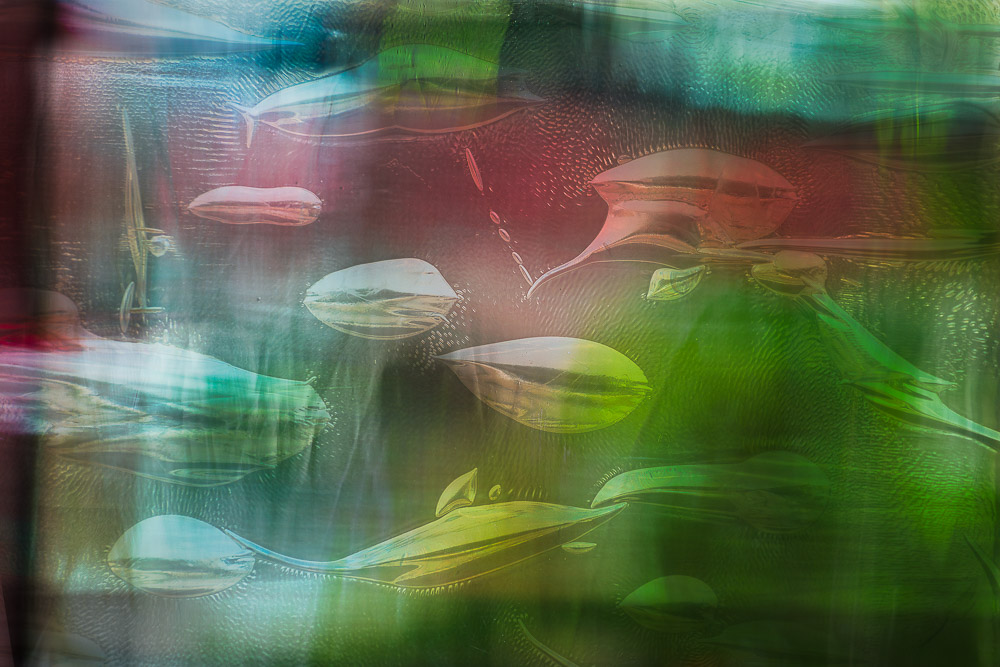
    Spring also brings back more color. I love color, so when I get back in the mood I start seeking that. The image with this post is an example. Reflections on the river in Cincinnati are always lovely.

    And hiking is opening back up without needing snowshoes. It will be refreshing to be back on trails in the mountains. Free to wander with less restrictions.

    Spring kicks off the best travel time, too. It is tricky trying to do a trip in Winter. I have had interesting experiences doing that. Interesting = near death experiences.

    And thunderstorms. I love them. I like the power and the awesome size and structure of them. I’m drawn to them like a moth to a flame. Winter storms can be great, but not like a good roaring thunderstorm. I am lucky to live at the edge of the Great Plains. I can pop out on them and follow some thunderstorms often. Maybe even without getting my car pounded by hail.

    I don’t mean to imply it is all bad.

    Learning to appreciate it

    It is just harder for me to get into it when the season changes to spring. I love shooting in winter. Interesting subjects seem to present themselves to me more frequently. Spring is something I have to relearn every year. But I do. Once I get into it it is great.

    Each season has its own drama and characteristic subjects. For me, spring just happens to be the hardest transition. Fall to winter seems a gradual transition here where I live. I ease into the hard season over time. Spring seems to just pop up.

    But I go out shooting all the time. I force myself to find subjects. Eventually I warm up to spring and learn to appreciate it.

    I’m still trying this year. It will come.

  • How Many Pictures Do You Shoot?

    How Many Pictures Do You Shoot?

    Think back over the last month or so. How many pictures did you shoot and how often did you go out shooting? This idea jumped out at me listening to an interview with the great Jay Maisel. He uses this as a probe to find out about his students.

    Who cares how many?

    In reality, it should not matter to anybody else, except you, what your photogrpahy habits are. It’s a trick question in the sense that there is no right or wrong answer. At least not quantitatively.

    Jay uses the question as a probe to understand his student’s style and work habits. He would rather hear that you carry your camera all the time and shoot some every day. If you say you go out once a week and shoot some he will likely tell you that you need a lot more practice. If you say you go out once a month he may tell you to go home. That would be a shame because his workshops are expensive and hard to get into.

    I’m hoping to convince you that you, and only you, should care how many shots you take.

    Predictor

    So in Jay Maisel’s experience your shooting habits are a predictor of your ability. Frequent photo practice, in his view, helps you become more experienced, quicker to see a good image, and more practiced in the technical aspects of using your gear. This all combines to make you far more capable of recognizing and capturing the best moments and gestures.

    The repetition and the self evaluation that comes with it also makes us more thoughtful. We learn to see more when we practice seeing. Our ability to open up and be receptive to the stimulus around us increases.

    Repetition

    In one sense the constant repetition of taking a lot of pictures frequently builds the equivalent of muscle memory. It is the same way a good athlete does a lot of practice. Besides their intense training a basketball star may spend hours just shooting baskets. A baseball player may spend hours in the batting cage hitting balls over and over. A soccer star may spend hours just kicking the ball around, kicking goals, taking passes.

    Doing this makes them more used to the feeling of the ball or the bat. The pump or the swing of their muscles. The rhythm of the movement. It builds familiarity with the movements they want to do in a game. The motions become routine and automatic.

    I believe a similar effect happens to us in our image making. There is great benefit in being out a lot. Taking lots of pictures, even if we throw most of them away. We are practicing the motions of using our camera, framing, composing, executing images. It becomes a smooth and automatic reaction. The camera controls become instinctive. Our fingers learn to find and use them in the dark, without having to think.

    In addition, lots of repetitions gives us lots of opportunities for failure and evaluation. When the result we get does not match what we visualize we can ask why. This gives us lots of very personalized feedback to help us improve.

    Then when we are taking “serious” pictures, this helps us work smoothly and confidently. We can concentrate more on our creativity and less on the techniques of using the gear. The camera becomes an unconscious extension of our creativity. We are adept at framing great compositions so it flows easily.

    Obsessive

    This may seem fairly obsessive. Good. I hope so. It is and it should be.

    A great athlete or musician, or artist, should be obsessive about their work. It is not a simple 9 to 5 job you can just step away from. It consumes a lot of your thought and time.

    In looking at examples of athletes or musicians I find that good ones may come to a point where they can say “I’ve achieved good proficiency in what I do and some fame and recognition; I can settle back and enjoy the good life.” But the top ones are driven, obsessed. They practice hours every day even if they are considered to be the best. They know that they can improve and they are driven by some internal guide to only compare themselves to their own results, not other people.

    Your mileage may vary.

    I talk a lot about how Jay Maisel does his work. It is because I believe we can learn a lot from him. He is a fantastic artist, an interesting character., and very open about what he does

    But Jay is Jay; you are you; I am me. We cannot and should not just try to imitate another artist, no matter how much we admire them. We each are different. Each one has different vision and responds to different stimulus and motivation.

    I am not trying to be a (slightly) younger Jay Maisel. Nor am I encouraging you to be that. When you find wisdom, though, it pays to study it. A wise mentor usually has something we can learn and adapt for our own life.

    I was reminded of this again recently viewing a class by Jennifer Thorson. She has an interesting class on conceptual fine art photography on CreativeLive. Her work and working style is completely opposed to my thought processes or interests. I would never do the types of work she does. Nevertheless, I learned things from her that I can adapt. Part of my constant practice is to learn from the best.

    Practice, practice, practice

    One of my key learnings from Jay Maisel is to practice, practice, practice. Have your camera with you all the time, as far as you can. Take lots of shots. Experiment. Try new things all the time. Make a lot of mistakes and learn from them. Get so familiar with your camera that you can do most of the settings automatically.

    I try to get out with my camera 4-6 times a week and shoot something each time, usually regardless of the weather. I find that when I have a camera with me, it gives me permission and encouragement to shoot. Has it made me a great artist? Well, that is an evaluation for someone else to make. Just doing these things will not do that by themselves. If you shoot baskets 10 hours a day it will not make you a Michael Jordon. But it helps.

    Try it for a few weeks. Get out a lot and take lots of pictures. Try to build muscle memory. Let me know if it helps!

    “We are what we repeatedly do. Excellence, then, is not an act, but a habit.” – Aristotle