An artists journey

Tag: psychology

  • Dancing With the Frame

    Dancing With the Frame

    All 2-dimensional art exists within a frame. The frame is a powerful creative spark, because it requires choices and it strongly influences the resulting image. This is the magic of the frame. I have come to consider the process “dancing with the frame”.

    Finite

    I do 2-dimensional art. Most paintings or photographs are. But besides being flat, 2-dimensional works are also bounded. They cannot extend to infinity. So, a print may be 16×20 inches, or maybe 6×9 feet, but there is a limit. A print of a landscape scene is not an attempt to physically transport the scene to your wall. The image is an interpretation.

    And because the print is bounded, there are edges. The edges create the frame, or more precisely the bounding rectangle of the image. I am assuming rectangular prints for the discussion. So, in simple physical terms, the frame is the box that encloses the print.

    Likewise, our sensors or film are rectangular. There are pragmatic reasons for this. The point is, though, that the image we see through our viewfinder and capture in our camera is rectangular. It lives within the bounding box of a frame.

    It turns out, though, that this simple bounding box gives life and drama to the content. And taking a picture is dancing with the frame. At least, for me.

    Aged old cottonwood tree in snowy fields©Ed Schlotzhauer

    A window

    The frame is much more than an annoying constraint of the shape of the sensor or print. Something magical happens when we look through the viewfinder or crop our image in our processing software.

    What we see through the frame is our window onto the world. This window sparks much of our creativity. As we move and zoom and continue to examine our subject through this window we compose our image within it. We visualize the image and intuitively or deliberately decide what is important to bring out, what should be excluded, and how the parts should be arranged.

    Since we are photographers, we are usually working with an existing scene, at least, I am. We seldom can go physically re-arrange things to suit us – at least I don’t. Instead, we must change our position or lens selection to arrange the parts in what we consider the most advantageous orientation.

    We may realize the interest is not the whole scene, but only certain parts of it., and they should be presented from a certain point of view. So, we adjust our window and keep searching for the magic.

    After all, if we are an artist, we want to bring something to our viewers that is more than just what anyone would have shot if they walked up on the scene. We bring our own interpretation. A big part of this is how we decide to arrange what we see in our window.

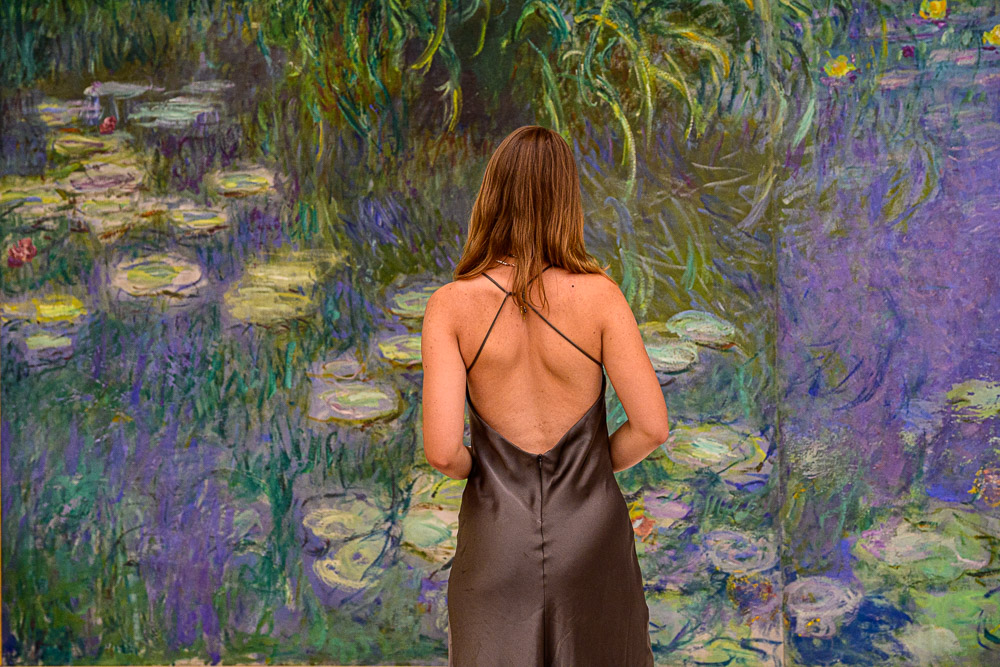
    Looking at a Monet©Ed Schlotzhauer

    Composition

    Over the centuries many “rules” of composition have been formed. I put it in quotes because there are no real rules. The “rules” are observations of patterns that have been found to be generally pleasing to viewers.

    It was very interesting to me to realize that most of these “rules” are defined by or relative to the frame. Let’s look at a few.

    The rule of thirds helps to increase dynamic tension by placing the subject along the intersection points of dividing the window into 3 groups horizontally and 3 groups vertically. This is totally relative to the frame.

    Along with that is the oft quoted “do not put the subject in the center” – of the frame.

    The horizon should be level – relative to the frame.

    Diagonals can add a lot of interest to many compositions. The diagonals exist because of their relation to the frame.

    Leading lines are often recommended. They help encourage the viewer’s eye to lead from the edge of the frame to the subject and keep them exploring.

    We need to be careful to not have distracting elements at the edges of the frame.

    Unless it is really your intent, we must be careful to not cut the subject off at the edge of the frame.

    This could go on a long time. Go examine your favorite composition rules and see how many are describing relationships to or within the frame.

    Transportation modes©Ed Schlotzhauer

    The dance

    What I describe as dancing with the frame comes from my typical shooting style. I am mostly an intuitive photographer. I don’t carry flip books of composition ideas or sample books of other photographer’s work. My shots are seldom pre-planned.

    When my subconscious notifies me that there is potentially an interesting shot nearby, I get engaged. I seem to know from experience the lighting and exposure details and camera settings. Those don’t occupy much of my thought. The dance really starts when I raise my camera to my eye and see what the camera sees. What I perceive through the viewfinder now becomes the main focus of my attention. The view in the frame.

    Now I can inventory what I have to work with in the scene. It probably looks like a performance art to the observer. I move and zoom and bend and twist to rearrange things in the frame. What is important? What needs to be minimized? Are there diagonals I can use? Where should I move to make the composition pop? Are there distractions at the edges that I could remove by repositioning?

    These decisions seem to flow effortlessly during the dance. It is kind of like manual focusing. Turn the focus knob. Did it get better or worse? If worse, go the other way. Keep going until it gets clear then starts to get blurry again. Carefully go back a little to where the peak sharpness was.

    Working within the frame is like that to me. It is a dynamic process of optimizing. The big difference is that, with manual focus, the results are objective. Composing within the frame is an intuitive process of real-time judgment. That is part of what makes it hard but fun.

    Winding path through forest©Ed Schlotzhauer

    Artist’s judgement

    So, part of the work of a photographer is to arrange the elements within the frame in the most pleasing or impactful way. This is the magic of the frame. The frame imposes a dynamic tension between itself and its contents. It is the canvas where we compose. It is the crucible where our creativity is tested. I can only do it well while looking through the viewfinder.

    Since the camera sensor captures everything in the frame, it is not only critical to arrange the elements as we wish, but it may be as important to know what to exclude. That is one of the tricks of photography. What is in view of the sensor will be in our image unless we consciously figure out how to eliminate it.

    Much of the artistry is in working the frame: figuring out what is significant and how to present it within the frame. It is the stage where we work our magic. It turns out that the frame is more important in our work than we usually express. This is what, to me, is the magic of the frame.

  • Two Questions and a Problem

    Two Questions and a Problem

    I don’t like to get too deep into philosophy, but sometimes I step in it and get some on me. Lately I have pondered the question of what is good in art. A quote by Henry James brought up 2 questions and a problem that I can’t resolve.

    The quote

    Henry James was a well-known literary critic in the late 1800’s to the early 1900’s. Many people rightly disagreed with Henry James, but he was articulate and good at presenting and defending his points, and never at a loss for an opinion.

    Even though his work was in literary criticism, many of his comments seem to me to apply to visual art, too.

    Anyway, James once proposed what might be a template for art criticism. Paraphrased, it is “What is (the artist) trying to do? Does he do it? Was it worth it?”

    When I first read it, it seemed reasonable. But the more I considered it, the more I got sucked into a spiral of imponderables. I will be forced to reveal the shallowness of my philosophical thinking.

    Photographers stay out - except for me©Ed Schlotzhauer

    Author’s intent

    This first question is the artist’s intent. At first, it seems like it shouldn’t be a problem. We just need to decide what the artist wanted to create or achieve with the work. I often hear this given as a necessary step in analyzing art.

    But… how can we know? Unless the artist clearly stated their intentions, all we can do is speculate. Any criticism of the work would start with I think they were trying to do this, or I think their goal was to create that.

    Doesn’t that setup a framework of our own ideas that we evaluate the work against? That seems invalid and unfair to the artist.

    Some genres might be deduced with relative accuracy. We can look at some images and think that “that seems to be a traditional realistic landscape along the lines of Ansel Adams.” But it is still our interpretation of their intent. Therefore, it may or may not be right.

    And, on the other hand, is the artist required to justify each piece by thoroughly describing their intent? Without doing this, does it open them to criticism based on any criteria the viewer sets up? What about the artist who wants to leave such questions to the viewer? Are they sabotaging themselves?

    So, I’m already stuck on the first question and haven’t even gotten to the one I called a problem.

    Through a Screen©Ed Schlotzhauer

    Author’s success

    The second question embedded in James’ statement is whether the artist achieves his intent. To me, this still has the problem of not being addressable without knowing the answer to the first question. If we don’t clearly know what they are trying to do, can we say if they did it?

    We can criticize it for being out of focus, or what we consider to be an unbalanced composition, or poor lighting or exposure. But maybe the artist was making a satirical comment about postmodernism and the meaninglessness of meaning. Maybe what we criticized was exactly what they intended to do, and they successfully did it.

    Without understanding intent, can we do more than saying “I don’t like it” or “this doesn’t appear to be as well done as other images that seem similar”? Maybe both are true statements, but do they address the artist’s intent?

    There’s a big difference between saying “that didn’t succeed by my standards” and “that did not achieve what the author was trying to do”. One is judging it by my standards, the other is judging it by the author’s intent, which we may not know.

    Intentional Camera Movement©Ed Schlotzhauer

    The problem

    But then comes the problem for me. The part of the question that asks, “was it worth it?” Who can answer that?

    A Twentieth Century science fiction author named Theodore Sturgeon put forth what is known as Sturgeon’s Law. He said that “ninety percent of everything is crap”. These are words I have lived by, but my corollary to this is that Sturgeon was an optimist.

    I have become rather jaded in my view of art. It seems like a small percentage of the art I see, including photography, including mine, has any great inherent worth. Value is subjective. A Rolex watch has a high price tag, but low value to me. I don’t want one. I know people who value them highly and wear them. A personal value judgment that I can’t criticize.

    It is a joy to me when someone sees one of my pictures and values it enough to spend money to have it. It means that they want to hang it to see every day and it has worth to them. But that is a personal judgment based on their values. Did it mean that picture was worth it? Well, it was to them. Probably to me. But not necessarily to someone else. Worth seems a very subjective thing.

    Dead tree in snow. Bent, broken, but still trying to stand.©Ed Schlotzhauer

    What does it mean for me

    I guess my takeaway is that I’m not going to precisely and accurately figure out the value of other artist’s work and other people are not going to be the faithful judges of my work. So, I should stop being a critic and I should develop a thick skin against criticism from others.

    Should I have to write a detailed description of my intent and thought process behind a picture? I hope not. Most of the time I couldn’t give a very impressive explanation. I much prefer to leave it to my viewers to create their own story.

    I have developed a cynical view of theories and movements and lots of words poured out by people who talk but don’t do.

    If a critic or a juror or a gallerist or another artist gives me feedback, I should receive it gratefully as input and consider it, but not necessarily take it as a truth carved on stone that I must act on. It matters more to me if the image met my expectations. If it succeeded according to my intent. They did not know what was in my mind.

    I see a scene or I have an idea, and I make an image that represents the best of my ability. If it is a true representation of what I saw or felt or wanted to convey, and if it is a level of creativity and craftsmanship that I am proud of, that, to me, may be a good image. If it delights me, it is worth it. But not all images that meet my intent actually have lasting power. That is another discussion.

    I find that when I over-analyze my art or get too formal in making it, some of the life gets sucked out of it. Better results come from following my instincts and my feelings. Doing that leads to pictures that I can say are worth it.

    “What is the artist trying to do? Does he do it? Was it worth it?” The 2 questions and a problem I brought that I struggle with. I can only discuss them accurately about my own pictures.

    The deeper questions of criticism will have to be left to philosophers. I don’t know what makes good art. But I know what delights me.

    I decided to accept as true my own thinking. I have already settled it for myself, so flattery and criticism go down the same drain, and I am quite free.

    Georgia O’Keeffe

    The purpose of art is to inform and delight.

    Horace, 1st century AD

  • Impatience

    Impatience

    Here’s a confession: one reason I’m a photographer is that I’m too impatient to do any other type of art I like (except writing). Have you ever considered that photography is a form of impatience?

    Not painting

    I long ago figured out that I could never be happy painting. I can’t draw well. Most of my grandkids exceeded my drawing ability when they were about 4. Well, I have one who is only 6 weeks old, so I can do better than him. But even more than my inability to draw, I know that I would not be able to keep my interest going through rounds of sketches and design trials, and through days or weeks of work manually laying pigment on a canvas to create a finished work.

    And then if I want another copy, I must either photograph it and make prints or go through the manual work of painting another one. I guess that enforced scarcity works to the advantage of a painter by keeping numbers low and prices high.

    I’m just not wired that way. If I see something interesting, I want it captured now. And if you like it and want a print, I want to be able to make a copy for you quickly.

    Sailboat, healed over in the wind.©Ed Schlotzhauer

    Not short attention span

    Based on what I said, you might assume I have a short attention span. But that’s not true. In my career as an Engineer I would often get so lost in a project that I might disappear in it for hours without remembering to eat or go to the bathroom. Flow states were common. Even now, I can spend hours reading or writing or working on images on the computer. No, I can focus my attention fully on something I am interested in.

    The problem is a type of boredom that stems from impatience. If I am not engaged, if something is not keeping my interest, I tend to avoid or abandon it. More of my life is behind me than in front of me. I can feel that, and my reaction is to walk away from things that I consider a waste of my time. Time can’t be saved, only spent well.

    For instance, as I write this, it is tax time in the US. I gather up all of my data and hand it off to someone else to go through the details of figuring it and filling out the forms. It is worth it to me to pay them. Otherwise, I would go crazy beating my head against that mindless bureaucracy.

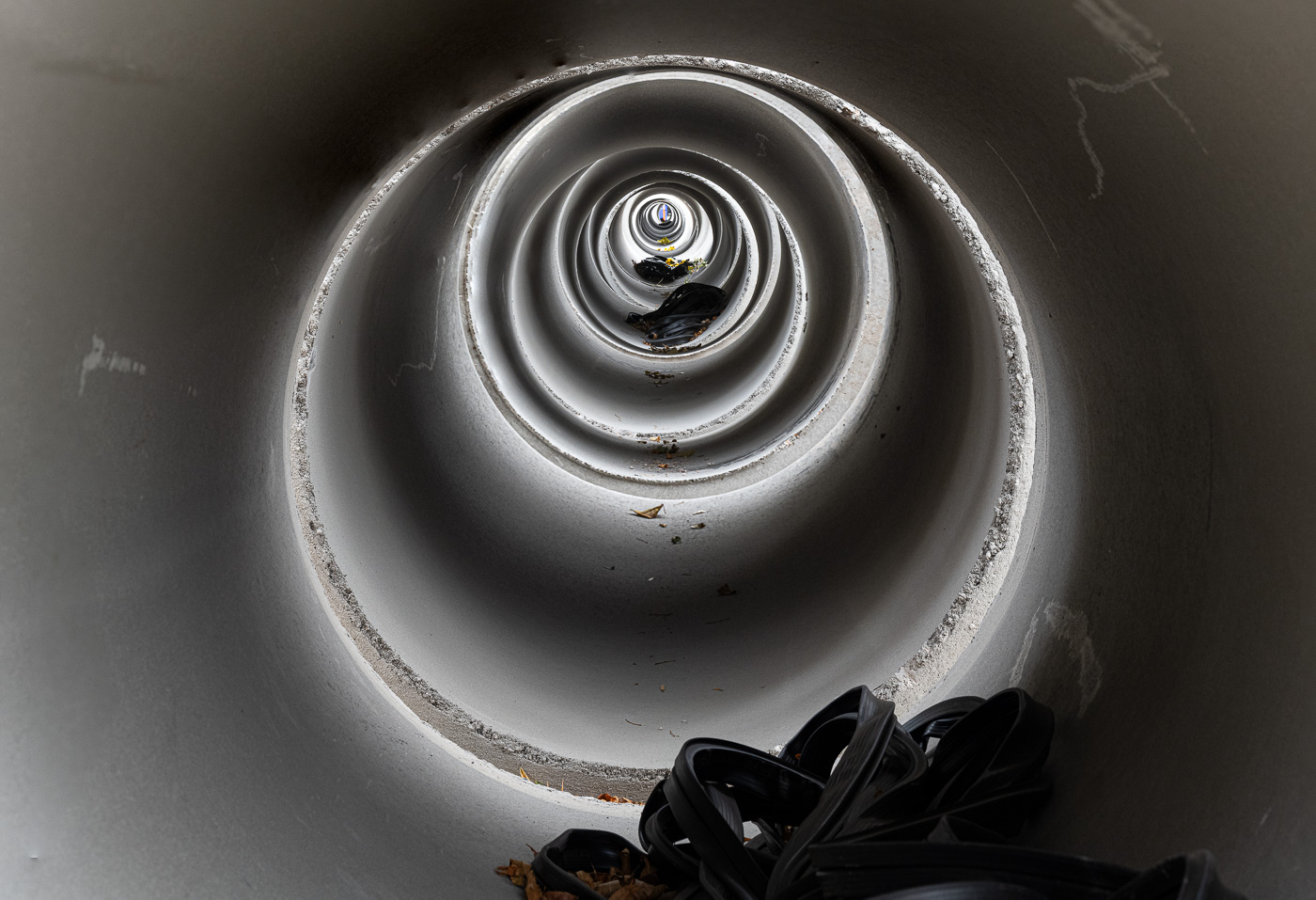
    Going around in circles©Ed Schlotzhauer

    Spontaneity

    I find that in my art, I love spontaneity. If I see something interesting, I want to capture it immediately. Spending hours, if necessary, working it on the computer is not a problem. I did the raw image capture when I saw it. That satisfied my basic need.

    My photography is almost exclusively “in the moment”. I am a hunter-gatherer. Planning usually does not go farther than “it should be stormy tomorrow. Maybe I’ll head east to see if I can find some good shots without getting caught in a tornado.” Literally, being aware of tornadoes, hail, or serious thunderstorms is a primary consideration where I live. But that makes for some great images.

    I know that some people plan their shoots in great detail. They want to know the exact day and time and location to be at to get “the shot.” This doesn’t work for me. Unless it is a commercial shoot, that much planning narrows my options too much. It takes all the spontaneity out.

    I don’t care about “the shot” as much as finding something interesting that I can exercise creativity on.

    Mysterious road, Where is it? Where does it go?©Ed Schlotzhauer

    Work with what’s there

    Why do I work this way? The simple answer is “it works for me.” I am generally happy with the results I get, even if I sometimes come back with nothing. The thrill of the hunt is reward enough. It is a percentage game. Win a few, lose a few, the process is satisfaction. The benefit of finding a new viewpoint or something unique is enough.

    Perhaps I’m an endorphin junky. If I’m out and about my subconscious may recognize something, even if it is just a potential to be worked. It alerts me to it, and this creates a burst of light/energy/warmth, whatever. It is difficult to describe. But there is a joy and excitement of discovery. Each find creates a kind of high. I would not be finding these things if I was fixed to a shot list and schedule.

    Plus, there is something about my psyche that enjoys working with a real scene rather than creating a fictitious world. I may take the image, or bits and pieces of several and create something different, abstract, even surreal. but ultimately my raw material is real world elements.

    Stylish airport lighting©Ed Schlotzhauer

    It fits me

    So, I have learned and rationalized that photography fits me. I prefer to “run and gun” instead of carefully planning. I want to be inspired by what I discover and be able to capture it immediately. Then go on to the next scene that stimulates me.

    It’s not so much the overall time. An image may require hours of computer work to perfect. It is the lack of barrier between what I see and what I capture that keeps me going. My creativity likes to work spontaneously and in the flow. That is one reason I could never express my art in painting.

    Sure, I could try to do plein air painting or paint from photographs. But why? Plein air painting seems to me to be attempting to (slowly) capture a photograph. And if I were to paint from a photograph, I would have to wrestle with the question of why not just print the photograph?

    So, over time, I concluded that photography is my art. Besides not being able to draw, I would be bored trying to express my vision so slowly and painfully. I like to move fast when I see something interesting. It is a joy to get in a flow, to follow my mood and instincts.

    I have great respect for good painters. But I could not be content doing what they do. Too much impatience.

  • Your Favorite Photograph

    Your Favorite Photograph

    Has someone ever asked to see your favorite photograph? I have. I was frozen. There was no way to answer that.

    Your favorite

    I tend to take things too literally. This is a legacy of my Engineering background. So, when I hear talk of a “favorite” image, I think of a singular, one and only favorite. One image above all the others.

    That is what freezes me into inaction. I have far too many images that I like to narrow it down to a single one.

    When I go through my best images collection, my “favorite” will change from day to day, even moment to moment. It depends on my mood and what I am thinking about. Am I in the mood for landscapes or street scenes; waterfalls or architecture; vibrant color or B&W, realism or abstract? I don’t believe any are inherently better than others.

    Rock creatures©Ed Schlotzhauer

    What does favorite mean?

    What does “favorite” mean? This is where I get hung up. A literal definition is preferred above all others of the same kind, or closest to one’s heart. I can’t do that. Maybe this is a fault of mine, but I can’t choose a single above all photograph.

    My suspicion is that when talking about favorite pictures, people take a broader view of the meaning. If we extend it to say we mean it is a choice or a pick then I can follow along. I can have a lot of choice images without having to designate one as the ultimate, number one winner.

    Too many favorites

    I have mentioned my lengthy selection and promotion process for images. It’s kind of like a playoff series where images must compete head-to-head to get promoted. The difference is that it is not a zero-sum game. A winner does not mean there had to be a loser.

    That process has led to a situation I have identified: too many favorites. An embarrassment of riches.

    Right now, I am, for the first time, working through just my top-rated images specifically to cull them. I am (trying to be) brutal. These are the images I have at one time marked as my best. None of them are being deleted, just potentially demoted to a lower level.

    Terra Incognita©Ed Schlotzhauer

    Competition

    This quickly leads to 2 problems: I like them, and I probably need to tweak them.

    I like each one of them. Obviously, they have each individually earned a spot in the top group. To eliminate one of them means either my tastes have changed, or my skill has improved, or my expectations of what I want to create have changed. Or maybe I have another very similar image that can replace it.

    We are not static beings. I know my taste changes as I grow and have new experiences. This leads to some images “falling out of favor” in the overall scope of my work. I accept that. It is a good reason to remove some from the favorite category.

    Another thing I observe is that I look at some images that were favorites and realize that my skill set and/or my equipment has improved, and these are no longer up to my standards.

    My personal criterion is that I can randomly select any of my favorite images and show it to anyone and not be ashamed. I would be ashamed of some of the old ones. They’re out. It may hurt, but less is more.

    Just a little tweak

    The other part of the process that is making this take so long is that I can seldom look critically at one of my images without needing to tweak something. My tools have improved and my knowledge of how to use the tools has increased since I took a lot of these.

    Therefore, I see most images needing some correction. Some are very slight but some need more extensive edits.

    Let’s say each image needs from 2 minutes to 30 minutes of study and manipulation. I won’t give an exact number, but figure there are thousands of images in my top set. That is making for a very long process.

    But it is rewarding. I have revisited images that I haven’t thought about for years. Sometimes I must conclude they are unworthy of being in the top group. Sometimes I remember and appreciate them anew. Each one brings back memories of the time and place and circumstances. A pleasant trip down memory lane.

    Going around in circles©Ed Schlotzhauer

    Expectations

    Another factor is that my expectations of what I want to create is a moving target. My interests change. My values and notions of quality changes.

    These images I am culling are in my Lightroom catalog. In addition to those, I have stacks of slides and film images that go back much further. Maybe someday I will start revisiting them.

    But even over the years I have been shooting digital I can see a steady progression of what and how I shoot. Way back I was fixated on technical quality. Esthetics was not the main component of my values.

    Then I progressed to concentrating more on composition and design principles. My work got somewhat better, but in general, it was still lacking depth. It was good pictures of things, not about things.

    Now I find that I don’t worry about making “prize winning” pictures. You know, the ones designed to win competitions or get the most “likes”. I don’t care about that anymore. I try to make images that I like and that are more unique, quirky even, with a fresh point of view. Ones that express my feelings about what I am seeing. And I am turning more abstract in my vision.

    These are the ones I find myself promoting in my top collection. Images that are simply a good technical photo tend to drop out. The ones that are intensely human and obviously not AI survive.

    As I write this, I am about ⅓ of the way through my top collection. I haven’t kept detailed records, but it looks like I am eliminating about 20% of the ones I have re-evaluated. It hurts sometimes, but I must remind myself they are not being thrown away, just demoted because they do not belong here. It is said that every time you intelligently remove an image from a portfolio, the portfolio get stronger.

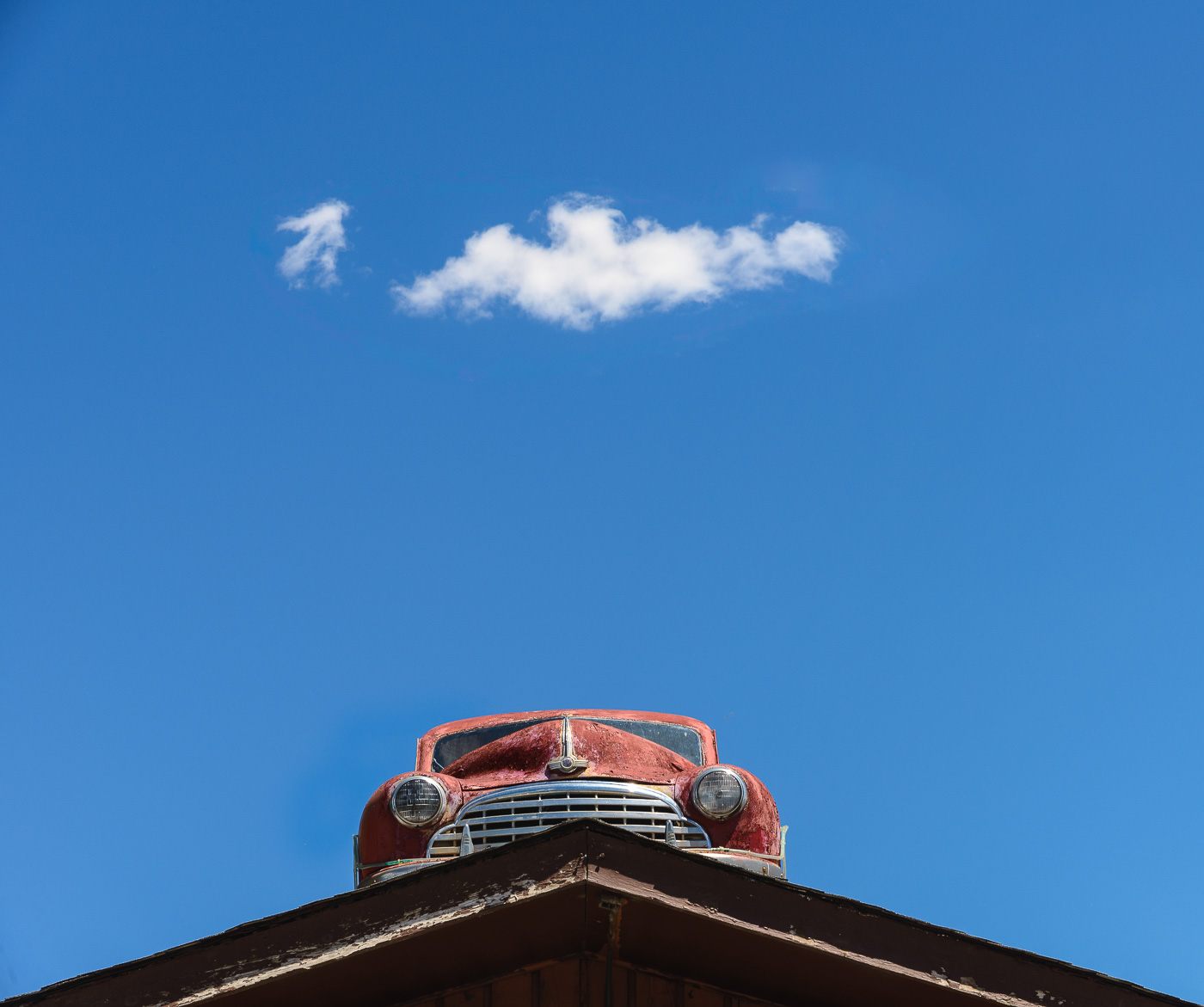
    Red barn, red truck©Ed Schlotzhauer

    Defined by 1 photo

    So, even culled down, out of all these is there a single favorite image? No. My conclusion is that I cannot define myself by 1 image. It will be impossible for me to choose the one image I hold above all the others. The one that definitively and completely says, “this is who I am”.

    The only way I could come close to doing that is if I play the game of saying to myself this is my best image – right now, in the mood I’m in, if I don’t go back and look again, but it will change tomorrow. I seldom play games and that one doesn’t interest me. I will just be content knowing that I cannot choose just one.

    Favorite photograph

    Even within the set that I consider my best images, there are subsets that I like more than others. Yes, I can have favorites within favorites. Some are just more impactful to me personally or grab my current sense of aesthetics more.

    But those favorites of the favorites may easily be dozens or hundreds of images. I do not have a single favorite photograph.

    So, if the situation comes up again where someone asks to see my favorite photograph, I hope to be more ready. Depending on the context, I might point to one of my images and say, “this is one of my favorites.”

  • Elevate Me

    Elevate Me

    Why do you view art? Is it just to enjoy it, to see what other people are doing, to get ideas? I do those, but at a slightly deeper level, it is to elevate me.

    Elevate

    I admit to being somewhat jaded about art after years of focusing on it and trying to make it. It seems sometimes that my artistic appreciation is dulled, drained. I have seen so much that it is unusual to encounter anything that excites me. It is a sea of sameness.

    I read an article that said that our dopamine sensitivity falls off 10% per decade after we get to be adults. Therefore, the things that excited us in the past don’t have the same impact later. I think I feel this in my life. I don’t get juiced as easily.

    But then it happens. Something breaks through my deadened barriers and grabs me and shakes me. An artist has created something that speaks to me, shouts to me even.

    When I thought there was nothing new to discover, I discover something new. When I thought I couldn’t get excited any more, suddenly I am – metaphorically – jumping and shouting.

    This piece lifts me up; pulls me out of the depressing sameness I thought was the norm. It elevates me. I see more clearly and can think new thoughts. I become a better person. There is reason to go on.

    Spring snow, aerial haze, minimalist©Ed Schlotzhauer

    Inspire

    An event like this is inspiring. When I was beginning to think there is nothing new and creative to be done, suddenly that depression is shaken, even broken.

    A new work like this can point the way to new ways of viewing my work. Not to copy the other artist, but as the introduction of new ideas into my thought process. New ideas are there to chase. New possibilities appear.

    It is a joy to be given the gift of new vision to see the world with.

    Fabric covered head©Ed Schlotzhauer

    Challenge

    Events like this are a challenge to us. Rather than depressing us because of the remarkable insight another artist had, it is an enticement to use it to catapult us to a whole new place. I may not want to do work at all like theirs, but something in their work shook me. Something helped reveal new directions. It gave me a glimpse of a distant place I want to find.

    I used to believe that the best creative challenges came from within. Now I see that other artist’s creativity shapes many of those challenges. Yes, they come from within, but part of them may have come from something we see in another artist’s work that reacts with something in us to germinate a new idea.

    There is an old quote I always liked but never fully understood:

    Immature artists imitate. Mature artists steal.

    Lionel Trilling

    As mature artists, we do not imitate something we see that inspires us. Copying does not recreate their work or produce new work we can be proud of. Instead, we try to isolate what excited us, distill it down to its essence, and incorporate that flavor, that scent, into our thought process. It influences our new work.

    I steal the inspiration and re-form it into something of my own. It elevates me. From this elevated position, I can see further. I can discover new things.

    Red barn, red truck©Ed Schlotzhauer

    Artist’s intent

    Where does meaning and intent come in? For me, it doesn’t matter much. I have said before that I believe I must try to bring my feelings and intent out in my images. But I have also said I believe the only thing that matters to a viewer is the feelings and meaning they derive from the image.

    Christopher P. Jones is a writer on Medium who analyzes the structure and composition and symbolism painters put into great works. His articles are very interesting, and they reveal background and levels of depth I had no idea about. It is educational.

    But, when I look at a famous painting or another artist’s photograph, all I can get is what I perceive, the meaning and depth I take from it. To the artist, it may be the deepest, most symbolic and meaningful work they have ever done. And that may be completely lost on me. Sorry, I’m rather dense. I’m not very interested in theoretical analysis of art.

    Because of or despite their intent, I may perceive something fresh and creative in the image. Something that attaches to something in me to strike a spark that might ignite a fire. It may have nothing to do with the artist’s intent. But it is my valuable takeaway.

    Artistic value is a difficult concept. But I am more an artist than a viewer. It is more important to me to develop my own creative eye than to become a more knowledgeable viewer.

    Abstract, Charles de Gaulle Airport, Paris©Ed Schlotzhauer

    It could be mine

    I love those rare times when an artist’s image sparks excitement in me. But sometimes there are golden events when my own image does that.

    I am not being egotistical. Honestly, I take a lot of bad images. Occasionally there are some pretty good images, but only rarely does one take my breath away. Often, I do not recognize it at the moment. Most often when I am shooting, I am experimenting with camera or subject motion or working a scene to try to refine my point of view or caught up in the flow or shooting. Later, when processing the images, it may get a “hum, that is kind of interesting.” It is usually after doing some color correction and processing that the image comes into its own and starts to reveal itself.

    Sometimes there is a magical one that jumps out and grabs me. I get a chill and my breath catches. It is a rare one. It is like finding a treasure.

    What an absolute joy to find that one of my own images thrills and excites me. Something I shot elevates me. Wow. That is a double bonus.

    But whether it is one of our own images or something from another artist, great images elevate us. They make us see a new point of view on something. They give us new ideas. That makes us better artists.