An artists journey

Tag: creativity

  • Created by Me

    Created by Me

    Generative AI is all the rage now. I suppose there might be some applications for it, but you will not see any of it in my work. What I show is entirely created by me, and I have no plans of ever changing that.

    It’s all around

    The news is full of hype about ChatGPT and Bard and, for images, DALL-E 2. Tech companies are inventing hundreds of billions (yes, “billions”) in it, so it must be about to take over everything, right?

    It is hard to read anything without seeing references to the coming revolution. It is the “next big thing” in tech. MIcrosoft, for instance, has invested huge in ChatGPT and says it will embed it in its browser and all of its applications. With so much press and money and interest, it must be true, right? Maybe.

    But do you understand what it is?

    What is AI?

    I have said before that I am a reforming Engineer. Well, I must admit that at one time I was involved in AI applications. I even believed in it at the time. That is just to say I have some technical background in the subject, so I am not just quoting press releases.

    “Artificial Intelligence” is a weird term. It is definitely artificial. Whether or not it represents intelligence is debatable. To me, there is no real “intelligence” involved. It is just a fancy computer algorithm with a lot of data embedded in it.

    The AI that is hyped today is called neural networks. It is based on a fairly simple structure that tries to mimic the way the human brain is organized by simulating neurons and synapses. Then they train the network with huge sets of data. The connections and values of the neurons and synapses are adjusted to give a desired output for a given input.

    To over-simplify it, imagine a patient teacher trying to train a neural net to recognize an egg. They “show” it a picture of an egg and say “this is an egg” and let the network adjust its values to give a positive output. Then they show it a picture of something else and say “this is not an egg” and again let the network adjust its values to give a negative output. Repeat it over and over thousands, maybe millions of times with different pictures. Eventually the neural net would get pretty good at identifying an egg, if the training data was good enough and extensive enough.

    But so what? The AI does not at that point know what an egg is. It just classifies shapes as being one or not.

    What is the good of it?

    We are discussing generative AI, so I will try to focus on that. Generative AI takes a request to make a picture or song or some such work, maybe based on the style of another artist. You could say “make a picture of a tree in the style of van Gogh”. It would make one. It would probably look like something Vincent might have done.

    If you were generating the image for an advertisement, you might be able to simulate a certain style without the encumbrances of creative fees or intellectual property laws. For you, the user of the image, you get to bypass paying the artist. Or maybe, charitably, you get something you wish the artist had created, but they did not.

    Many companies are very eager to have AI trained to be able to produce minimally acceptable results faster and cheaper than a human. Be aware of those companies that want to get rid of their people and replace them with minimal acceptable results. Have you used an AI-based chat agent to try to get support from a company? My results have been way below minimum acceptable. Maybe search engines is the best application for these bots. Most of the search results already can’t be trusted.

    So for someone wanting something cheap for a practical use, it can be a good thing.

    Is it art? I have my opinion, but let’s get to that in a minute.

    What are the limitations?

    Neural network-based AI only “knows” what it is trained to do. Its abilities are limited strictly by the data it is fed. And I used “know” in quotes because, one of the great limitations of this system is that it doesn’t know what it knows. It doesn’t even know what knowing is.

    AI cannot explain it’s actions. The data compressed into its network has been stripped away from its source. This is going to become one of the major limitations that will cripple it or stop it’s use. So, for instance, when an AI system turns you down for a loan, you cannot force it to explain why. All it can say is that you just didn’t meet the pattern. Lawsuits will come of this.

    And it may produce wonderful seeming results, but it is a cheap trick. AI products are a regression to the average, at best. That is, a large set of training data defines the average of whatever domain is being learned. This is all it knows. It does not understand the difference between unacceptable and acceptable and exceptional results. It does not understand the concepts behind what it is doing at all.

    So when you ask it to make a picture of a tree in the style of van Gogh, its data bank has many images of trees. It has encodings of parameters describing patterns of van Gogh’s style. It can mix them and make something. But it can’t step back and say “Wow, that is great. I’m proud of that! That is good art.” There is no more feeling than a tax form.

    Where does the training data come from?

    This is a little off topic of the quality of the results, but have you considered where this huge volume of training data comes from? Google, Meta, Amazon, Microsoft and many, many others, including your Government, collect and use all the information they can find . This includes public data like Wikipedia or the Library of Congress, but also everything they can scrape up about you. So every network search you have ever done, every web page you have ever visited, all of your email, all of your pictures, your contacts, your contacts contacts, every post you have ever made, your facial images, your job, your salary, your spending habits, all of your telephone calls, everything is just free data to them.

    This is all used without your permission or control. So for an artist, for example, all of their online works can be used to train the AI to do better to try to replace them. And with no compensation or attribution.

    There is currently no accountability for AI or the companies profiting from it. It has been proven that much of the training data used was biased or incorrect, producing bogus responses from ChatGPT. And Google’s Bard got a black eye the day it was announced when it gave false information to a query about the Hubble telescope. No accountability, no ability to explain.

    A passing fad?

    One part of me thinks AI is just another passing fad. It has come and gone before. AI was going to revolutionize the world about 20 years ago or so. It died. Now the pundits are enamored with it again. Most of them are too young to realize it died of natural causes already. But venture capitalists and tech gurus are very quick to throw billions of dollars at “the next big thing”, even if it has been unable to generate any money.

    But no, I’m afraid we will have to live with this for a while. Too many billions have been invested for it to die soon. And it can show some limited tricks. Either you believe AI is a higher and more perfect form of life that will make the world better or you don’t. I don’t.

    Not on my watch

    Lots of rambling, but back to the adoption of generative AI. As far as I can see, I will never use this in my art. This is not like the introduction of digital imaging, where film purists wailed about the passing of a wonderful era. This is not a technology shift, it is a tool that plans to eliminate artists.

    I will use useful tools, like sky selection in LIghtroom or Photoshop, but that is just a force multiplier to get my job done quicker. I could do the same thing myself and I can often get better results. It is like a woodworker using a planer to smooth a tabletop quickly rather than spending hours sanding it. You don’t say the tool created the piece of furniture.

    When you see images from me, they were created personally by me. I don’t and do not plan to use AI to create my art. I don’t think art created by AI is really art, but that gets into the argument of what art is. What I call art is only created by humans.

    Call me a Luddite, but I believe only humans can actually create.

  • Out There

    Out There

    My previous article discussed being an explorer based on curiosity. I absolutely, intensely believe that. But I don’t want to leave the impression that most of the exploration can be done in books and videos and trips to museums and even on the computer. For what I do, I have to be out there. Out there in the outdoors. Thinking about images is great, but you haven’t created art until you actually make an image.

    Exploration can happen anywhere

    Exploration is partly a mental activity. Feeding your mind with new ideas and new images causes growth, new connections. This is a vital activity for artists – and for everyone if you care about growing. There is a limit to it, though.

    Creativity is a balance between thinking and doing. Thinking allows us to consider new possibilities and imagine what we would do. Actually getting out shooting lets us test the ideas, see unexpected things, apply the ideas and discover new ones.

    The craft of making something balances and perfects the ideas of what we might do. It is a feedback loop. They reinforce each other. Thinking new ideas helps us see more possibilities when we are out shooting. Capturing images helps refine what works and doesn’t. Then when we see what works we discover new possibilities to try another time. Putting theory to practice is necessary to perfect both.

    I shoot outdoor images

    At some point we have to stop just thinking about what we want to do and actually go do it. Get off the couch and out the door.

    Occasionally I set aside time to travel someplace specifically to shoot pictures. That is a joy. But i don’t get to do it as much as I would like. Some reasons are:

    1. It is expensive
    2. I have to be at my studio to process images and take care of all the things that need to be done.
    3. New places are enjoyable but I’m a visitor there. I feel the need to find fresh images where I live.

    So I force myself to get out frequently and explore in my own backyard, so to speak. I consider it great discipline to find new, interesting images in familiar areas. And I do find many that I consider good.

    I will confess that I am naturally something of a couch potato. Getting out in all kinds of weather is a significant act of will. Especially when you consider that where I live the temperatures can range from -10F to 110F. It can be easy to convince myself that is is just not fun. But it is a habit I force myself to do. When I am home, then 4 to 5 days a week I go our walking with my camera.

    Yesterday, for instance, it was 2F and snowing and we had about 4 inches of fresh snow on the ground. I walked over 4 miles. I’m not bragging. Probably many of you do much more. My point is that it is a conscious decision that I will go out with my camera and explore every chance I get. I am somewhat amazed at what I find.

    When I am looking at an image I like, I always remember what the conditions were when I shot it, but that is not a factor in my evaluation of the worth of the image itself. The image must stand on its own. But I sometimes find the best pictures in the worst weather.

    Practice makes perfect

    Exploration is largely a mental activity. Feed your mind. Take in new ideas and possibilities all the time and assimilate the learnings into your vision. But you have to do it, too. Make images. Express the creative ideas you formed. Realize the idea in a finished product for your viewers. It can be hard.

    In his e-book “10 Tips for Aspiring Photographers”, William Patino said

    One thing that I feel greatly helped my learning was the amount of time I was willing to invest in being outdoors, playing with my camera and observing light and the land.

    Invest the time. Be out looking and feeling. Getting good at anything takes time. Practice. Play.

    I find that creative ideas tend to be rather vague. They tend to come as an idea of something that would be interesting. But actually making it happen can sometimes be difficult. It may require planning or more research or travel or, typically, many attempts to capture the idea in a real image.

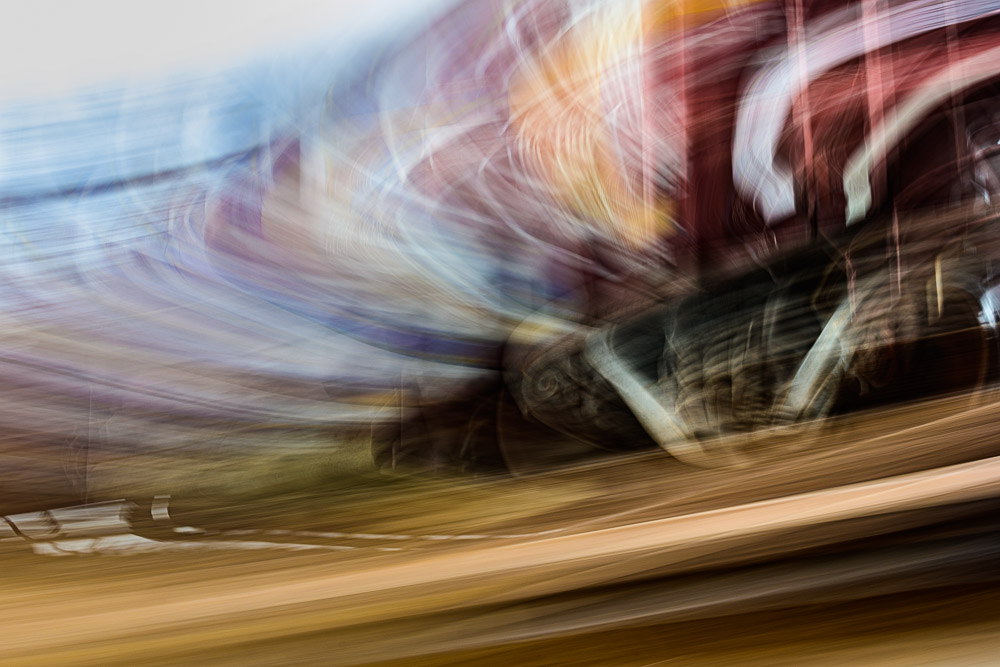
    When I was working on my Speeding Trains project I threw away hundreds of attempts before I learned how to capture the impression of motion and speed and power and presence that I envisioned. Even after I sort of figured it out, my “hit rate” was probably about 1 in 10. Practice makes perfect. Or at least better. 🙂

    Believe you are very lucky

    Being an artist is hard work. If anyone tells you different, they haven’t tried it. You have to create a huge body of work and continually refresh it. You have to deal with rejection. Gatekeepers are everywhere proclaiming themselves to be the arbiter of taste and style and you are not fit to be allowed in to their select club. You will want to give up. As an artist you have to believe in yourself and your work. Regardless of what others say or do. Push on.

    It seems a contradiction, but on the other hand, many people admire and look up to you. They dream of being able to step out of their drab world and create. To have the freedom to make art and tell the world they don’t care if no one else likes it, because it pleases them. We seem an independent rebel, living the creative artistic life. They are right.

    In a private correspondence my friend Les Picker said:

    It’s like a colleague of mine once said: There is no such thing as a bad day for a nature photographer. We’re out there. We’re walking the path. How fortunate we are!

    So when it’s 0F and I am feeling frostbite or it’s 100F and I’m about to pass out from heat exhaustion, I remind myself that I am out creating and following my vision. How can this be bad?

    My vision leads me to shoot outdoors. So this is where I have to go. I can’t cherry pick and just say “Oh, today is not totally perfect , so I will just stay in”. That would never get anything done. Get out in it. Get dirty or wet or hot. Look past the conditions and discover what is there to see.

    Being an artist is about seeing. I have to be out in the place I plan to shoot before I can see. I want to make art, not just think about art.

    Your mileage may vary

    It sounds like I am saying that you have to shoot landscape scenes to be an artist. Not at all. I think the principles apply to anything you do. If you do portraits, do them, a lot. Don’t just think about doing them. If your thing is commercial or food or street photography or abstract still life studio shots, it doesn’t matter. Do it. Practice. Get in the reps.

    My thing involves outdoor photography. I have to kick myself out the door to shoot. If you do your work in the studio then make yourself get up and go do the work there.

    You’re not an artist unless you are creating art.

    Don’t think about making art, just get it done. Let everyone else decide if it’s good or bad, whether they love it or hate it. While they are deciding, make even more art.

    Andy Warhol

    The image this week

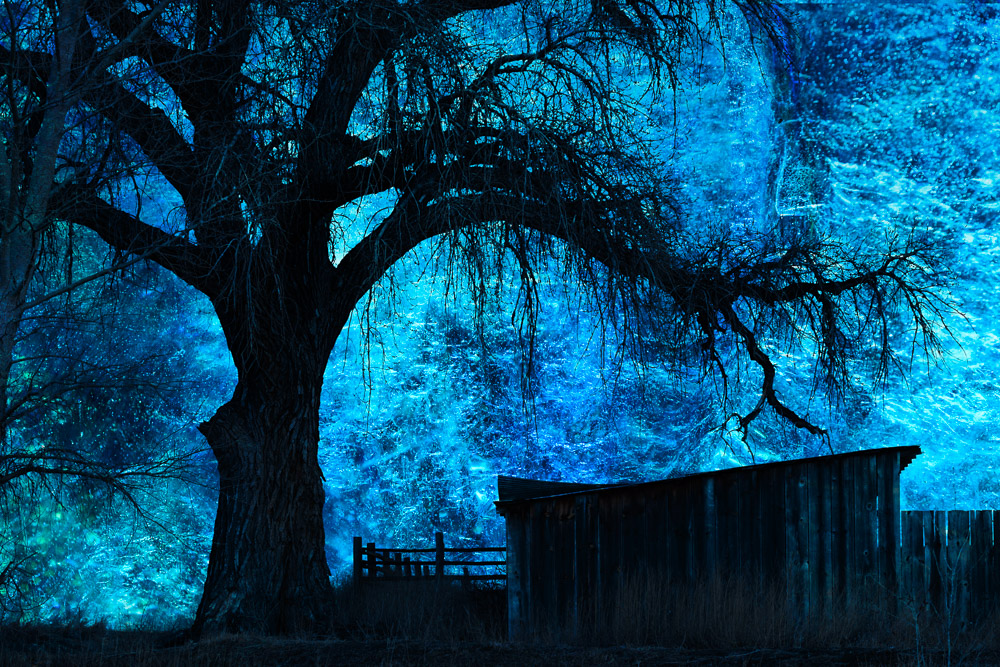
    I mentioned suffering in the cold. That is the time of year I’m in as I write this. What would be worth going out in that kind of weather? Well, things like this. I love patterns and reflections in ice. It is a very interesting subject to me. This kind of shot makes me forget the discomfort and think of the beauty in unlikely places. I hope you get out and find things like this, too.

  • Exploration

    Exploration

    I firmly believe exploration is a foundation of art. Without it, we become stale and stagnant and eventually just start repeating the same things over and over. Exploration leads to growth and creativity.

    Many ways to explore

    I consider myself an explorer. It is a fundamental activity that I pursue. But I seldom go off to uncharted lands. There are countless ways to explore. Many without even leaving my studio.

    Exploring often involves travel, but it also encompasses the ideas of searching and inquiry and discussion and evaluation. It is more a mental activity than physical. Just being in an exotic location does not automatically classify, for me, as exploring. That depends on what you bring from the experience.

    When I read books by artists or view videos about artistic technique and thought, that is exploring. It is an inquiry process. I ask questions of myself and attempt to answer them. The process stretches us. Once stretched, we don’t come back to the same shape.

    I sometimes spend hours at a time “exploring” on my computer. No, I don’t mean watching TikTok. Exploring editing possibilities and compositing possibilities. Reviewing images and trying to discover new things in them.

    When I go out wandering in my local neighborhood, that is exploring. I do it with an open mind, seeking to see things in a new way. It is amazing that I can usually find new sights or see familiar ones in a different way. That is exploring.

    Feed your creativity

    At the heart of exploring is curiosity. Curiosity is the fountain that waters art. We need to have an active and healthy curiosity to sustain us.

    Most people aren’t overly afflicted with curiosity. Is your curiosity a living and active part of you? We have various needs that have to be met, things like food and shelter and emotional satisfaction. I consider my curiosity almost on that level. I wouldn’t die physically if it died, but mentally and emotionally I would be very damaged.

    Curiosity can be fed and nurtured to help it to thrive. There are many ways and I’m sure each of us responds in different degrees to each. Some that work for me are reading, learning new things, looking at good art, listening to intelligent people talk, a change of scenery, and play. All of them are consciously done activities that stimulate my brain. I believe this is very important for a healthy, creative life. The fact that you are reading this means you probably feel the same.

    The one that probably seems out of place to most people is play. Are you too serious and grown up to play? I hope not. It is actually very important. In a newsletter, Srinivas Rao once said “When we play, we return to a childlike state of curiosity”. I believe this attitude is important for artists. Through play we discover opportunities to extend our artistic vision.

    If you believe something is interesting, you are right. Go with it. Follow it to see where it leads. Considering something play lowers the barriers of expectation. No big deal if it is a failure – we were just playing. Brilliant!

    Get out of a rut

    Without experimentation that is driven by curiosity, we get stuck in ruts. We repeat the same old way of seeing and thinking all the time. Do you have any self imposed “I always do it this way” limitations? We need to view life fresh. Spend a certain part of your time just playing and trying random and ridiculous things. Do something silly. Have fun.

    Brooke Shaden once said creativity is curiosity + experimentation. I think that is a good viewpoint. Experimentation helps us discover new things to encourage us to climb out of the rut. Curiosity drives the experimentation. I think most exploration begins with “what if…”.

    Head in the clouds

    Has someone told you you have your head in the clouds? They were probably not complimenting you. Most people are so focused and pragmatic that anything other than today’s goals seems useless. As artists, we can’t be that. We are on a lifelong quest to create and see the world differently. Sometimes that is best to do from the clouds.

    If I can reframe “head in the clouds” to mean healthy exploration backed by wide-ranging curiosity, then I want to be called that.

    Be an explorer

    Become an explorer. That doesn’t necessarily mean we have to jump on a plane to a remote corner of the world. Your attitude determines it. It may just mean going outside with a fresh, new attitude. Let your curiosity guide you. Give yourself permission to play, to experiment, to do silly things. Shoot something new. Go extreme in post processing. Find new themes. No telling where that might lead.

    I consider myself an explorer. It is the way I live my life. It has nothing to do with how many frequent flier miles I have. Wherever I am and whatever I’m doing I’m looking at interesting sights, examining compositions, thinking about themes or possible projects. Curiosity compels me to always be seeking.

    Today’s Image

    I love this image. It is built on some things most people would never stop to look at, much less photograph. It was put together in a playful way with some post-processing magic thrown in to flavor it. Complete play. It is a joy to me. I hope you enjoy it.

  • When Do You Make a Picture?

    When Do You Make a Picture?

    When do you make a picture? Have you thought about that? On the surface, it seems an ambiguous or simplistic question. I have been asking myself this, though.

    Time, place?

    I could be flippant and say I make pictures Tuesdays in the canyons west of my home. That is not true, though. I capture images at least 5 days a week, in general. And I make pictures most places I go. There is no special place for making images.

    Looking for things to satisfy my curiosity is not about a time or place. Even traveling to an “exceptional” destination is a special case of just making images wherever I am, of whatever interests me, whenever I have a chance.

    The click

    OK, so you could say I make a picture whenever I click the shutter of the camera. While it is true that the shutter release is the event that causes the recording of the data in front of the lens, I have written before about sometimes needing to think about and process the data before I am done.

    When I go out shooting and come back with 200 images on my memory card, does that mean I have made 200 “pictures”? No, but it is a subtle semantic distinction. My answer would be that I have 200 new possible pictures at this point. However, I am going to go through them, cull out the defective ones, decide which of the duplicates I want to keep, and then try to decide if there is any merit in the ones that are left.

    When all is done, maybe I would end up with 0-10 that are worth doing something with. Your mileage may vary. Mine does, too, depending on time and place and my mood. Note that I still have to do things with them. In my mind, they are not “pictures” yet, since I am not ready to show them to anyone.

    Post processing

    So, of course I have to post process the ones I have kept so far. This may only involve simple exposure processing, especially corralling highlights and shadows, color correction, and contrast adjustment. Typically there may be some spotting and minor blemish removal.

    At this point I “may” have a picture. For straightforward scenes, this may be enough. I am done. It may be beautiful or interesting and no more than the literal scene before the camera. A lot of pictures are just that.

    Deciding what it is and it is going to be

    But not always. Sometimes an image is trying to tell me that it is something more. It may take a while for me to hear it. This often manifests as a discomfort I can’t quite identify. A suspicion that I am missing something.

    When this happens during the initial culling process, I usually keep the frames I am struggling with. I might not be able to articulate why, but I know I’m not ready to eliminate them yet.

    Even after the image is processed and is a nice picture on its own, sometimes it keeps trying to talk to me. Deep down inside, I know I have not understood or brought out all it means to me.

    Sometimes I realize I have been capturing images of a certain subject or mood. I may recognize a theme that is emerging. Recognizing it helps me identify and clarify a truth I was not consciously aware of. This could put me on track to follow the idea for a while as a project. With these nagging images in context, I learn more about why they were talking to me. All seems different. Sometimes I don’t even need to modify the images more. Just understanding what I was feeling may be enough.

    Combining

    And sometimes I recognize an image is an interesting piece, but not complete in itself. I will often file these away as raw material, expecting to revisit it is the future and decide what it needs to say what it wants to say.

    There are times when it comes to me and I know that these pieces have to fit together in a certain way to create a new image. This can be satisfying, fulfilling, exciting. It is a true creative journey.

    It is time consuming but often very rewarding to spend sessions in Photoshop playing with various combinations of pieces and parts, doing “what if?” games. These often end up in “failure”. Failure in the sense that I did not create a new picture. But it is seldom actually failure because I explored ideas and tested new things. It often sparks new ideas for the future.

    Disconnected from capture

    This comes around to an idea I have presented before. Sometimes I have to let an image age before it becomes whole. It can take me an indeterminate time to recognize what the image wants or needs to be.

    Images are raw material until I become comfortable with how they should be expressed and presented. This is a separate creative process from image capture and a necessary part of how I make a picture. It is not until the end of this journey that I feel I have a picture to share with the world.

    Today’s image

    The image with this article is a minor example of what I describe. I was fortunate to find this scene late one winter afternoon in what I considered an unlikely place in the back country of northern Oklahoma. I’m a sucker for lone bare trees silhouetted against the sky.

    I liked it, but I know it was not “done”. A few months later I added the birds, because I felt they built and reinforced the mood of the image and added some dynamic interest. Just today when I came back to it again after about another 6 months, I saw I wanted to eliminate some distracting foreground elements, crop it to emphasize the sky, and make it overall higher contrast and more saturated. I’m good with it – for now. 🙂

  • Going too far

    Going too far

    We often hear this as a challenge or criticism. “You’re going too far” Meaning, back off. But as an artist, I don’t think I go far enough. I need to push myself to be always going too far. That is how we explore the limits

    Too timid

    I have written about this before, but it is so important I think it deserves a refresh. In a previous article I encouraged us to go “far enough“. But I think now this is too timid an attitude. We should push “it”, whatever it is, too far.

    I know I tend to have too much focus on the actual captured data of the file and what the scene really looked like. Time helps. I tend now to wait to process images until they have aged enough to let me distance myself from the experience of being there.

    But still, I tend to hold back and stay too true to the original. I am learning to push beyond to create something else.

    As a bonus, this short video by Matt Kloskowski might encourage you to think about editing in new ways. He does not talk much about going too far, but he shows an unconventional approach. The kind of thing I am talking about when I recommend pushing beyond the captured data.

    Push it

    I know I’ve said it before, but I find truth in something John Paul Caponigro said “You don’t know you’ve gone far enough until you’ve gone too far.”

    This is something I need to take to heart. The engineer in me tends to make the image look like the literal, original scene. That ends up creating record shots. Sometimes all I need is a record shot, but that is rare. I have to push it more to make the image into art. Into something interesting that goes beyond the original.

    For example, I live in Colorado. If I shoot a beautiful scene in the mountains, so what? Anyone could have stopped there that day and taken the same picture with their cell phone. What sets mine apart? It often will be something more than just the literal scene. It has to rely on my interpretation of what I saw.

    Be decisively indecisive

    So when I suggest going too far, I am not speaking about relationships or physical safety, but my interpretation of the image. I am discovering more and more with time that images can take a great deal of manipulation.

    A raw file from a good camera contains a tremendous amount of data that can be exploited. Editing in Lightroom is completely non-destructive. We can re-edit at will with absolutely no loss. Likewise, although Photoshop is inherently destructive, there are processing techniques that can be used to manipulate images with no damage and with the ability to re-edit in the future. I strongly advise learning and adopting these techniques.

    Yes, I know of good artists who can say they know exactly what they want to do with an image and it is OK to do destructive edits, because they will never change their mind in the future. That is not me. Every time I revisit an image I usually tweak it some. Sometimes a lot.

    Does that mean I am indecisive? Perhaps. I wouldn’t argue the point. I look at it as an evolving artistic judgment. What I see and feel in an image can change over time. So I consciously decide to use techniques to give me the maximum flexibility to change my mind later. Decisively indecisive.

    Don’t worry about breaking it

    Let me use Lightroom (“Classic”, because I consider it the only real Lightroom) as an example. I said that all editing in Lightroom is non-destructive. Do you really understand that?

    Lightroom uses a marvelous design that always preserves the original data unchanged and keeps all edits as a separate set of processing instructions. Don’t believe me? Here is a portion of actual data from the XMP sidecar file of an image I edited today:

    crs:WhiteBalance=”As Shot”
    crs:Temperature=”5650″
    crs:Tint=”-14″
    crs:Exposure2012=”+0.50″
    crs:Contrast2012=”+6″
    crs:Highlights2012=”+19″
    crs:Shadows2012=”0″
    crs:Whites2012=”0″
    crs:Blacks2012=”-12″
    crs:Texture=”0″
    crs:Clarity2012=”+20″
    crs:Dehaze=”0″
    crs:Vibrance=”+5″
    crs:Saturation=”0″

    If you are familiar with Lightroom, you should recognize these adjustments as the contents of the Basic adjustment panel. I’m not sure what the “2012” suffix means on them, but probably a process version. Anyway, this is literal data copied from the XMP file. It is an industry standard format called XML markup. It is just text. If I change a slider, the text value is changed. These text values are read and re-applied when I open the file in Lightroom. The original pixel data is never altered. You cannot destroy the image by editing it in Lightroom.

    What are the limits?

    There are limits, but not absolutes. If we boost the exposure too much, at some point we will introduce an unacceptable amount of noise. If we sharpen too much we will introduce artifacts around edges. We can make such a high contrast image that it cannot reproduce properly on screen or in print. We can increase saturation to the point that it is out of gamut for the screen or print.

    Most of these are sort of a judgment call by the artist of what the acceptable limit is for the intended application.

    But these are just physical limits of what we can do with the tools. The bigger problem, at least for me, is what am I willing to do?

    It’s our mindset we need to break

    I am the one who usually limits the extents of the changes I will make. I am still too much of a left-brained engineer who is constrained by my memory of what the scene actually looked like.

    One way I can tell this is happening is that it is common for me to push an image further every time I revisit it. Upon seeing it again, I think,”that is nice, but I can go further”. And I do. Sometimes the image turns into something different from what I shot. I love it when that happens.

    But it is a constant struggle to give myself permission to do it. I am afraid of going too far.

    Knowing how the tools work and how to non-destructively edit, I should feel free to slam adjustments to the limits just to see what happens. Then back off to the “right” value for the image. I find that the “right” value tends to be higher if I have over-corrected than it is if I come up from the original. I think this is what Mr. Caponigro means when he says “You don’t know you’ve gone far enough until you’ve gone too far.”

    Give yourself the freedom to go too far, than back off as necessary. I will try to do the same.

    Not for everyone

    I know this advice is not for everyone. I still see photographers who say they pride themselves in getting the image “right” in camera and doing minimal editing. That’s their style and their values, so good for them. But if “right” means the closest match possible to the real scene, that seems very limiting. I think we have progressed well beyond the stage of assuming that a photography must be a true representation of reality.

    At least, that is my assumption. I operate from the point of view that I am as free to creatively imagine the contents of my frame as a painter is to create on a blank canvas. Even plein air painters take a lot of liberties with what they choose to include or exclude, what colors to use, etc. Some even use the plein air session as a sketch. Later in the studio they refine and complete it according to their interpretation.

    That is basically what I do. Some images require more interpretation than others, and my tools allow more freedom for manipulation. One reason I think I could never paint is there is no “undo” with paint. 🙂

    Go too far

    So I am discovering that what works for me is to consciously push my adjustments beyond what I first think is right. Yes, it may create a bizarre effect and I have to back it off. But I often find that the new setting I back it off to is more extreme than I thought was correct originally. Seeing the extreme helped me understand a new way to view the image.

    If you do it right, you can’t damage the image. Give yourself permission to experiment.

    Example

    The image with this article is an example. This is the mountains and plains about 5 miles from my home. It seems like every time I go back to the image, I need to tweak it a little. And I always push it a little further. I do not back off of what I already did. I think I am nearly to “far enough”.