An artists journey

Blog

  • Appreciating Imperfection

    Appreciating Imperfection

    Maybe it’s from getting older, maybe it’s from realizing more and more how imperfect I am, but I have developed a greater appreciation of imperfection. As a matter of fact, there are philosophies of “admirable imperfections”.

    My friend recently made me a wooden bowl. It’s beautiful. But he pointed out a couple of small imperfections in it. That made me appreciate it even more. It has character that could not be duplicated if he made another similar one. I value it even more because of the imperfections.

    Michael Freeman touched on this briefly in his book The Photographer’s Vision. Michael is a very articulate author who is excellent at communicating difficult photographic concepts. I wish I could call him a friend, but I have never met him in person. I just feel like I know him because I have read so much of his work.

    Michael argues that the growth of photojournalism (think Life magazine) and the freedom brought by the 35mm camera format led to a change of attitude toward “perfection” in images. The pendulum swung over to photographers embracing an intentionally casual style of shooting. This developed into an appreciation of imperfection. Some of the leading influencers of this were Robert Frank, Elliott Erwitt, Richard Avedon, and Henri Cartier-Bresson.

    The attitude ties into an older Japanese philosophy known as Wabi-Sabi. I will have more to say about this on another day. It is a large topic.

    But where am I on this? Well, I am not to the extreme of Robert Frank or some of that group, even though I often shoot with a casual indifference to normal “rules” of composition or exposure or sharpness. If you know me you would know I treat most “rules” with a similar disdain. On the other hand, for some subjects, I LOVE achieving a crunchy crisp sharpness in a formal composition. One of the things I am most consistent about is my inconsistency. To my value system they are not at all inconsistent. But to you who are (thankfully) not in my head, it would leave you scratching your head to see my body of work.

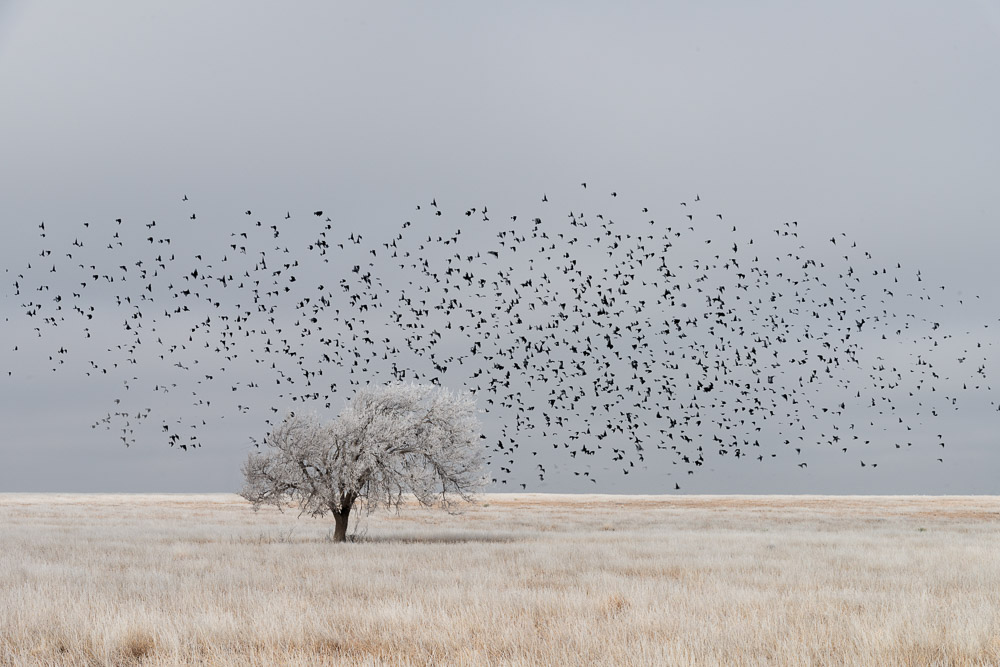
    Take the image at the top of this blog. This was a quick “grab” shot with a really lousy point-and-shoot camera. It could have been composed better. If I had time to “work” the scene I’m sure I could have improved it. But I didn’t. I love what I got. It’s grainy and blurry and you can hardly tell it is a beach with waves washing in. But it has character and it was an unplanned “once in a lifetime” moment. I’m very glad to have even gotten this and I have no apologies for the imperfections.

    Perfection is overrated. It can easily become sterile and lifeless. Or it can be thrilling and inspiring. I guess I believe it really comes down to the vision and ability and intent of the photographer.

  • If It Doesn’t Excite You, Why Should It Excite Anyone?

    If It Doesn’t Excite You, Why Should It Excite Anyone?

    This idea is taken from one of the greats, Jay Maisel. One of his quotes, paraphrased, is “If the thing you’re shooting doesn’t excite you, why makes you think it will excite anyone else?” Good advice. I try to remember it all the time, but I sometimes find myself trying to force it.

    Sometimes when I am out shooting (most of my shooting is outside) I can feel it. There is a tingling in my gut, my pulse is racing, I just know I’m going to love this image and I hope I don’t mess it up. Please let the light hold for a few seconds more; please don’t let the person move until I get the picture; please let me get to the place I need to be to get the shot before things change. This is one of the adrenaline moments of photography. It is like being is a flow state when you are working. Everything aligns and falls into place. Things get easy. It is a joy.

    Sometimes, though, it seems like you can’t find a good image anywhere. You look and look and nothing excites you. It is a natural tendency to force it. To talk yourself into believing it is better than it is. Yeah, I can make something out of this in Photoshop. This will composite with something and it will get better. It’s really not so bad. It is actually kind of interesting…

    All artists probably have a lot of self talk in our heads telling us all kinds of things. This wishful dialog can be dangerous, though. It can fool us into settling for mediocre instead of holding out for a higher standard. Mediocre is always going to be mediocre. No amount of wishful thinking is going to magically transform it into a portfolio image. Be realistic with yourself. Sometimes you just have to pack it in and move on to someplace else.

    However, nothing is black and white (except black and white prints ☺). The muse, if that is how you view the creative spirit, works in strange and non-obvious ways. Sometimes you don’t get the tingle in the gut at the time. There are times when a scene just calls to you without necessarily exciting you. I have learned to go with it and shoot what seems interesting, even if I don’t fully understand why. This is not the same as trying to make something out of nothing.

    Sometimes looking at images later on the computer, maybe weeks or months later, the light bulb goes on and I realize my instinct was drawing me to something very interesting. Maybe I did not get “the” shot that time, but it opened the idea and the vision. If possible, I will go back to the location later with this new inspiration and capture what the little itch was trying to tell me.

    The basic idea from Jay Maisel still applies. If it doesn’t excite me, why should I expect it to excite you? Maybe I am sometimes slow to pick up on the excitement, but that is part of the creative joy. You, the audience, deserve the best, the exciting ones. I should never try to pawn off mediocre images on you just because that was the best I could find at the time.

  • Living a Rich Life

    Living a Rich Life

    I have come to a place in my life where I understand that living a rich life is much more rewarding than recognition or even money.

    But what is a “rich” life? This will vary for different people. For me, I find it to be having a great, supportive spouse, family, good friends to share things with, enough money to do many of the things I want without worrying, and time and opportunity to pursue my creative interests. It rests on a foundation of peace that comes from a secure relationship with God.

    There are 2 words that summarize a lot of this for me: Contentment and Gratitude. Contentment is not the same as happiness. Happiness is a momentary state caused by circumstances. Riding a roller coaster may give you happiness (and fear). A few minutes later you may be sad when the ice cream falls off your ice cream cone. Contentment is a decision to accept and get the most out of whatever comes. I can be content when things are going great and also content when trouble comes. It is a state of mind, a decision, something I have determined beforehand to do. I’m l lucky, too, that I can be content being alone with myself. A lot of my time is spent alone. I’m OK with that. When I’m driving I seldom even turn on any audio. I would rather spend the quiet time just thinking or letting my mind wander. That ability is a blessing.

    Gratitude comes from the knowledge that I am very fortunate. Hard work and determination do not always lead to success. I know I am very blessed in my circumstances. I don’t think anyone inherently deserves anything, and the fact that I have above and beyond what I need is something I am grateful for every day. This is not just a result of my hard work. Those blessings do not necessarily mean riches in a monetary sense. But I consider myself one of the most fortunate people I know. I have good health, I can eat or drink what I want, we can plan a trip with good friends and have a great time enjoying each other’s company, we can get together with family and like their company. Basically, gratitude means I do not believe everything I have comes from my own talent and effort. I am blessed.

    But this blog is nominally about art. How does that apply? I now approach my art from a place of joy. I have a vision and it is unique. Life has put me in circumstances that let me spend time pursuing my art and vision and that gives me contentment. Since I see interesting things all around me, my art focuses mostly on out of the way things I find that I hope to have you see in a new way. I am grateful to see these things and be able to show them to you through my vision. I hope to bring convey my sense of wonder to you.

  • Prolific, not Perfect

    Prolific, not Perfect

    This was inspired by a great blog by Benjamin Hardy. One of his points in this article is that it is better to be prolific than perfect. I believe this translates directly to my journey as an artist. Perfection is a dangerous and elusive goal. Being prolific and creating a lot of work leads to better craft and many more new ideas.

    Benjamin illustrates the point about being prolific with this story taken from a book  Art & Fear, by David Bayles and Ted Orland.

    The ceramics teacher announced on opening day that he was dividing the class into two groups. All those on the left side of the studio, he said, would be graded solely on the quantity of work they produced, all those on the right solely on its quality.

    His procedure was simple: on the final day of class he would bring in his bathroom scales and weigh the work of the “quantity” group: fifty pounds of pots rated an “A”, forty pounds a “B”, and so on. Those being graded on “quality”, however, needed to produce only one pot — albeit a perfect one — to get an “A”.

    Well, came grading time and a curious fact emerged: the works of highest quality were all produced by the group being graded for quantity. It seems that while the “quantity” group was busily churning out piles of work — and learning from their mistakes — the “quality” group had sat theorizing about perfection, and in the end had little more to show for their efforts than grandiose theories and a pile of dead clay.

    I have seen so many times in my life that the demand for perfection leads to paralysis. If you take the perfection requirement seriously it creates such a high bar that it is impossible to meet the goal. Instead you delay, study the problem, try to think of new or “creative” alternatives. But mostly you avoid doing anything, because you know you cannot create perfection.

    On the other hand, when faced with a difficult goal or a creative block, just getting busy and doing things will usually lead to progress. Planning is good, but in art and creativity working seems to clear out roadblocks faster. Many psychologists and business leaders have established that a bias to action is a predictor of success. Action brings confidence. Action gets us in motion and builds momentum. To follow the story above, doing and learning, trying and rejecting and keeping going will lead to much better work than sitting waiting to figure out how to do the one great and perfect thing.

    One word the story authors used that jumps out at me is theorizing. This is a great trap. Art is ultimately a very practical and pragmatic discipline. It is about making things. We have to make a lot of things to figure out how to make the things that please us. Theorizing about how great something ultimately could be actually inhibits us from doing the work. The fear of not living up to the theoretical perfection makes us not try.

    So cast off the inhibitions. Just do it. Make things. If you’re stuck, make something, even if just to throw it away. The process of making something gives us momentum and stimulates our creative spirit. Good writers have a habit of this. They write a certain number of words a day, even if they know it is not great. Doing it exercises the writing “muscles” and lets ideas flow. Visual artists should do the same thing. Work every day, whether or not you feel like it. Work when you are uninspired. Let your creativity flow through your work and lead you to new ideas. Being prolific really is the way to create better work.

  • Questions, not Answers

    Questions, not Answers

    Photography, being by its nature realistic, tends to present facts or answer questions. But I believe fine art photography and some other genres have a different point of view. I try to raise questions rather than answer them for my viewers. By participating in the creation process I believe the viewer is more engaged.

    Much traditional photography is based on presenting a realistic and recognizable subject to the viewer. This includes landscape photography, nature photography, product photography, fashion and portraiture, food photography, photojournalism and others. That is not to say these are of less value, but they tend to avoid ambiguity and represent the subject clearly and relatively unobstructed. Doing this is a skill, and if done well great images can be produced. I cannot resist taking pictures of great landscape and nature scenes when I find them. I love doing it and value the images.

    But I concentrate mostly on “fine art”. I quote it because there are few good definitions of the genre. One I like is: an image taken as art. That still leaves a lot of ambiguity. On a practical level I take it to mean the image should raise questions; it should usually be abstract rather than projecting a clear “meaning.” A fine art image does not have expectations of realism, accurate colors, traditional focus, frozen in time subjects, or even recognizability.

    I don’t try to force different media into compartments. If you look at one of my images and say “that looks like a modernist or abstract painting” that does not bother me. Chances are that is exactly the idea I was pursuing. If you look at one of my prints and have to ask how it was created I will probably be delighted. When you ask “what does it mean”, I will probably not answer directly. Look at it, ponder it some; it means whatever you take it to mean. Your interpretation may well be different from mine and it is equally valid. I am elated to hear some of the meanings viewers come up with. They may be far different from what I had in mind, but that’s OK. I am thrilled when an image can evoke very different responses.

    So when you look at one of my more abstract or surreal images, like the one at the top of this article, go ahead and ask yourself “what is it” and get it over with. Then go on the the more important questions, such as how was it done, what is the context, what does it mean to you. I. hope you, as the viewer, will care enough to ask the questions and to participate in the art.