An artists journey

Blog

  • The Decisive Moment

    The Decisive Moment

    Henri Cartier-Bresson was well known for promoting the “decisive moment”. I know from experience that in some situations there is an optimum instant to capture the image you want. But for some it becomes a mantra. Let’s examine some nuances of the concept of a decisive moment.

    Sometimes it is not a precise moment

    Almost all of my work is shot outdoors. Sometimes I shoot straight landscapes. Often other found objects around me.

    I believe I have the experience to say that in these outdoor settings, the “decisive moment” may last from a second to many minutes. Or I may have to wait an hour for the moment to occur. In a slowly changing landscape scene it can be difficult to recognize which moment was decisive – and hope you had the presence of mind to capture it.

    In these situations, there may well be a decisive period of time, maybe not an actual moment. It often requires great patience rather than lightning fast reflexes.

    A decisive moment

    I have shot some sports and kids. These are areas with definite decisive moments.

    Sports is easier, in a way. Most sports have a rhythm, a pattern. Once you learn it for a particular sport, you can anticipate the action and predict the best moment. It still may be difficult and you may not be in the best position, but you often will know when it will happen.

    I consider kids more challenging than sports. They are unpredictable. Their moods and expressions can change quickly. Framing then, lighting them, and being in position with the right lens and camera settings requires constant attention. Then on top of all of that is the delicate trigger you need to “spring” at the right moment, when the expression or activity is just right. You have to be fully engaged and in the moment.

    I make it harder on myself, because I never do formal portraits where I try to control things. I greatly prefer being in the environment where they are comfortable and letting them basically forget about me. Candid shots are what I like.

    Now is the decisive moment

    This brings up one of the main points I want to make here: now is the decisive moment. Wherever we are and whatever we are doing, we should consider it a decisive moment. We need to be in this moment. Things will never be the same. We will never have exactly this light or these clouds. We won’t feel the same or look at the subject the same.

    This used to be a problem for me. I would see something interesting, but I was on my way to do something else “important”, so I didn’t stop. If I even remembered what interested me, it was usually not the same when I came back. The light was wrong. The vegetation had grown up and obscured it. It was raining and foggy. Just not the same. If I wait a couple of months before coming back, it may be a housing addition now!

    Well, it may still be a problem, but I recognize it and fight it now. I am much more prone to go ahead and stop and get the shot when I see it. If I am late to something, I don’t mind asking forgiveness. It has not become a problem, except maybe for my wife. She knows now to bring something to read, because I will stop at unpredictable times and places.

    Being mindful

    This all now brings us to the larger issue of mindfulness. Not the pseudo-spiritual mumbo jumbo we get from the self-help crowd. Real mindfulness involves being in the moment. Being fully aware and conscious.

    Modern society does it’s best to train us to not be mindful. We are constantly distracted and entertained. Other people’s ideas bombard us and lead us to pay attention to what they want us to do. But learning to think our own thoughts and to look around and actually see what is there is necessary and healthy.

    Do you walk down the street looking around and actually seeing what is there, or are you scrolling Facebook or email to make sure you don’t miss something? Where is your focus?

    Do you ever take time for yourself? To think, to consider things, to read? Not to think about work or politics or where you are going with your friends tomorrow night. Is the idea of being alone with yourself scary or exciting?

    I suggest you practice being alone in your own head. It might be hard at first. Give yourself some time to just think and to just look around, not expecting something – just looking. Making a quiet place in your head could be a welcome retreat in our noisy, distracting world.

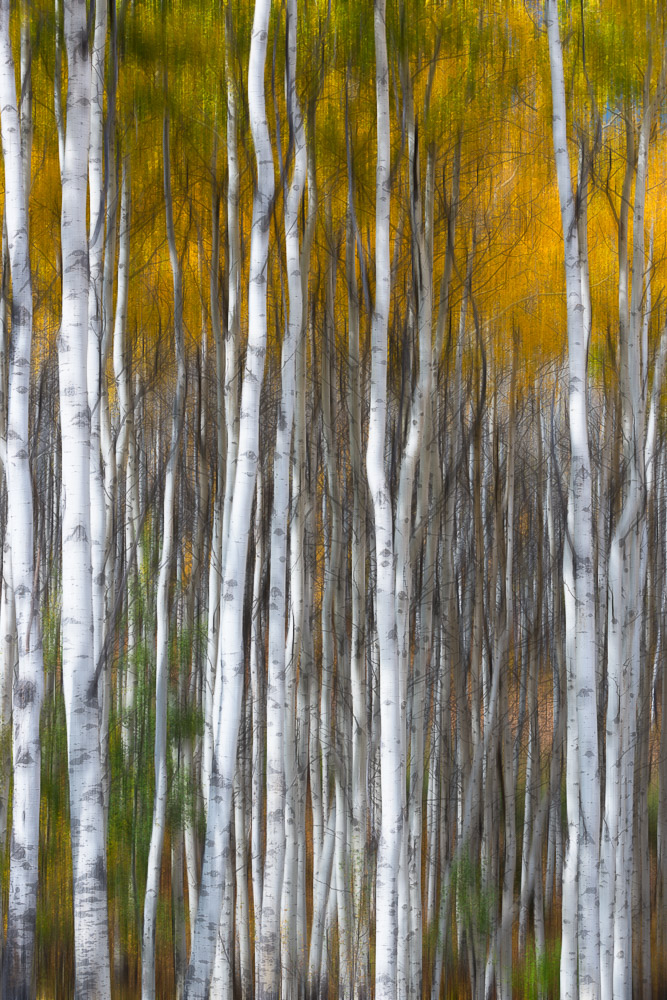
    The image with this post is a result of just being mindful. I noticed this scene on a walk along an ugly little canal in town. The location was not “pretty” in itself, but the conditions were right to make an image I love. I am very glad I took the time to notice it.

    Do you practice mindfulness? Let me know your experience!

  • Changing the World

    Changing the World

    Is your work important if it’s not changing the world? I know many earnest artists believe this must be their goal. They are focused on their particular cause and it seems the center of the universe. Their work must be serious and significant and world changing.

    And sometimes it happens. A couple of Nick Ut’s and Eddie Adams’s photograph of the Vietnam war or some of Robert Capa’s images of the Spanish Civil War, among others, probably effected a lot of opinion. But these events happen once or a small number of times in a photographer’s lifetime. And they happened because the photographer was there in harm’s way and snapped a quick image of a poignant scene that materialized in front of him.

    Maybe setting this as our standard is an unrealistic goal for most of us, unless we are going to spend our lives in danger zones. It might even be self-defeating.

    Serious art

    You may have a cause that is very important to you. Seems like everyone does these days. It may be climate change or pollution or human trafficking or animal rescue or any of many other things. It is healthy to be trying to make positive change.

    But how does this affect your art? Should it?

    Here is a huge generalization I freely admit I cannot prove: when the cause becomes the center of focus, the art is secondary. This is just logic. If your primary goal is to promote your cause, the art will probably become photojournalism or even propaganda. I have seen things that grab me, but I have seldom also said, “and what great art”.

    Exceptions

    Every “rule” has exceptions. One that comes to mind is the great Paul Simon song Kodachrome. Did you know this was kind of a protest song done to try to stop Kodak from obsoleting Kodachrome film? It didn’t work, but it was an excellent song all on it’s own. It is still well known, long after Kodachrome is fading from memory.

    A famous painting that was intentionally done as a protest was Picasso’s Guernica. While it is almost unapproachable by me, it was influential and generated a lot of support for the Republicans in the Spanish Civil War. But, it was done by Picasso. He already had credibility and a huge following. If Bob Smith (sorry Bob) did it, would it have been so widely received?

    Another whole class of art was done to promote conservation. Great activists such as Ansel Adams and Galen Rowell, often working with organizations such as the Sierra Club, promoted conservation by showing beautiful pictures of wilderness areas. They were making art and serving a cause. It was and continues to be an excellent strategy: beautiful and uplifting art to show the benefits of advancing the cause. First, it was great art. Secondly, it furthered their cause.

    Create art that resonates

    I suggest, for those of us who haven’t reached the stature of a Picasso, that we first create great art. If we can capture beauty or reveal deep insights into the human condition or the world around us, that will attract attention. If we earn a forum to speak from, then we can tie our art in to a cause and try to persuade people. Produce things that attract people so they will listen to you.

    There is an old saying that “you can attract more flies with honey than with vinegar.” Leaving aside the question of why you would want to attract flies, you will build an audience by giving people things they are drawn to.

    Alexandra Klimas paints portraits of animals that are part of our food chain. They are warm and touching portraits and they make us think fresh about the animals. She says, “I am not an activist, I am an artist and I make art. Art should touch people and make them think. I don’t want to shock people. I am satisfied when people feel more connected to this group of ‘forgotten’ animals.” I think she has a great approach.

    Even if you are not promoting a cause, don’t you want people to resonate with your art? Not to say we should take a coldly commercial view and only produce what is popular at the moment. That is a sell-out. Shouldn’t we use our creativity to engage people, to draw them in, to make them ask questions?

    After all, it is supposed to be art. Go and make great art. It might help promote your cause. Or it might just make the world better. We need that more and more these days.

  • Is Scaling Bad?

    Is Scaling Bad?

    I have written about image sharpness before, but I was challenged by a new viewpoint recently. An author I respect made an assertion that gave me pause. He was describing that when you enlarge film it is an optical scaling but digital enlarging requires modifying the information. Implying that modifying information was bad. So I was wondering, is digital scaling bad?

    Edges and detail

    Let me get two things out of the way. When we are discussing scaling we only mean upscaling, that is, enlarging an image. Shrinking or reducing an image size is not a problem for either film or digital.

    The other thing is that the problems from upscaling mostly are edges or fine detailed areas. An edge is a transition from light to dark or dark to light. The more resolution the medium has to keep the abruptness of the transition, the more it looks sharp to us. Areas with gradual tone transitions, like clouds, can be enlarged a lot with little degradation.

    Optical scaling

    As Mr. Freeman points out, enlarging prints from film relies on optical scaling. An enlarger (big camera, used backward) projects the negative on to print paper on a platen. Lenses and height extensions are used to enlarge the projected image to the desired size.

    This is the classic darkroom process that was used for well over 100 years. It still is used by some. It is well proven.

    But is is ideal? The optical zooming process enlarges everything. Edges become stretched and blurred, noise is magnified. It is a near exact magnified image of the original piece of film. Unless it is a contact print of an 8×10 inch or larger negative, it has lost resolution. Walk up close to it and it looks blurry and grainy.

    Digital scaling

    Digital scaling is generally a very different process. Scaling of digital images is usually an intelligent process that does not just multiply the size of everything. It is based on algorithms that look at the spatial frequency of the information – the amount of edges and detail – and scales to preserve that detail.

    For instance, one of the common tools for enlarging images is Photoshop. The Image Size dialog is where this is done. When resample is checked, there are 7 choices of scaling algorithms besides the default “Automatic”. I only use Automatic. From what i can figure out it analyzes the image and decides which of the scaling algorithms is optimal. It works very well.

    All of these operations modify the original pixels. That is common when working with digital images and it is desirable. As a matter of fact, it is one of the advantages of digital. A non-destructive workflow should be followed to allow re-editing later.

    Scaling is normally done as a last step before printing. The file is customized to the final image size, type of print surface, and printer and paper characteristics. So it is typical to do this on a copy of the edited original. In this way the original file is not modified for a particular print size choice.

    Sharpening

    In digital imaging, it is hard to talk about scaling without talking about sharpening. They go together. The original digital image you load into Lightroom (or whatever you use) looks pretty dull. All of the captured data is there, but it doesn’t look like what we remembered, or want. It is similar to the need for extensive darkroom work to print black & white negatives.

    One of the processes in digital photography in general, and after scaling in particular, is sharpening. There are different kinds and degrees of sharpening and several places in the workflow where it is usually applied. It is too complex a subject to talk about here.

    But sharpening deals mainly with the contrast around edges. An edge is a sharp increase in contrast. The algorithms increase the contrast where an edge is detected.

    This changes the pixels. It’s not like painting out somebody you don’t want in the frame, but it is a change.

    By the way, one of the standard sharpening techniques is called Unsharp Mask. It is mind-bending, because it is a way of sharpening an image by blurring it. Non-intuitive. But the point here is this is digital mimicry of a well known technique used by film printers. So the old film masters used the same type of processing tricks to achieve the results they wanted. They even spotted and retouched their negatives.

    Modifying pixels

    Let me briefly hit on what I think is the basic stumbling block at the bottom of this. Some people have it in their head that there is something wrong or non-artistic about modifying pixels. That is a straw man. It’s as silly as saying you’re not a good oil painter if you mix your colors, since they are no longer the pure colors that came out of the tubes. I have mentioned before that great prints of film images are often very different from the original frame. Does that make them less than genuine?

    Art is about achieving the result you want to present to your viewers. How you get there shouldn’t matter much, and any argument of “purity” is strictly a figment of the objector’s imagination.

    One of the great benefits of digital imaging is the incredible malleability of the digital data. It can be processed in ways the film masters could only dream of. We as artists need to use this capability to achieve our vision and bring our creativity to the end product.

    I am glad I live in an era of digital imaging. I freely modify pixels in any way that seems appropriate to me.

  • The Making of “Brush Off”

    The Making of “Brush Off”

    It was refreshing for me talking about making a piece of art instead of just discussing process or training. I will do it again. This time it is the making of the piece presented here. It is titled “Brush Off”. It is one of those abstract, “what is it?” pieces that I like to do.

    Context

    If you think this is something very exotic, sorry to disappoint you. As a matter of fact, it is something common and mundane.

    This is the brush going over the top of my car in an automatic car wash. Looking up through the sun roof. Like I said, mundane. Sorry.

    The point, though, is: even something as common as this can be interesting if you look at it the right way. That is a constant theme of my images.

    Technique

    It was not as easy as just pointing the camera up and shooting. If I did that, even scrunching down in the seat, the lens would be almost right against the sun roof glass. That doesn’t work.

    In order to get the glass in focus and sufficient field of view and depth of field to render the brush the way I wanted I had to get the camera a couple of feet away from the glass. After a couple of wasted sessions of trying to juggle a small tripod in place, I gave up on that and placed the camera on the console looking up. That was the solution. As long as I didn’t bump it.

    Unfortunately though, with the camera there I can’t see what is going on. I had to use the Nikon software on my phone to connect to the camera and control it. Again after trial and error I figured out that I had to put it in manual focus and stop transferring captured images to the phone.

    Even so, there is a noticeable lag between triggering a capture from the phone and it actually happening. Probably about 1/2 to 3/4 second. This took practice to get in the rhythm. I had to anticipate when things would be in place and try to lead the event correctly. Lots of trial and error. I ended up throwing a lot of frames away.

    Finishing

    After all that, I wish the image I saw on the computer screen had looked like I visualized. But no. This was a sunny day. There were lots of reflections on the sun roof glass, both from outside and inside. It was worse because I had to abandon my polarizer to get the shutter speed I needed. It was a balancing game to blur the brush just enough to add to the mystery and abstraction without making it just a smear.

    I did the initial exposure balance and crop in Lightroom, as usual. Then in Photoshop it required extensive selective color tonal manipulation to eliminate the reflections. Then there was more tonal corrections, dodge/burn, limited sharpening, etc.

    Mindfulness

    What I want to point out, though, is that the image is not mainly about technique. Behind the “how” is the “why”. I was curious and mindful even while in a car wash. I asked what it would look like looking up through the top during the wash. And I spent the effort to explore it.

    I’m glad I did. I like it. This is one of a series of images I did in the same car wash over many washes. It turned out to be a useful place to ask some “what if” questions and see what happened.

    I encourage you to follow your curiosity. Don’t be afraid of looking foolish. Don’t worry what anyone else thinks. It is your curiosity and vision.

  • Invest in Yourself

    Invest in Yourself

    You are your best asset. As a matter of fact, you are your only asset. Invest in yourself to develop your skills and abilities.

    Professional

    I am primarily talking about our skills as an artist. We need to invest in our self to grow and get better professionally. It is a life-long process.

    Time

    Do you invest enough time in your art? Many of us have a “real” job to pay the bills. And we have families and other obligations. It stretches us pretty thin at times.

    But we cannot grow as an artist unless we put in the time to do the work. Practice, practice, practice. Repetition. Experiment. These things make us more skilled and more mature in our craft.

    I have heard of a gallery saying they are not interested in an artist until they have painted 10,000 pictures. Of course, that is a silly metric. There is no arbitrary number to reach your peak. I do believe, though, as Linus Pauling said, “The best way to have a good idea is to have lots of ideas and throw away the bad ones.” Same with our art. We get better with practice as we learn to recognize the bad stuff and throw it away.

    We have to put in the reps.

    Training

    I don’t know about you, but before becoming an artist, my professional life involved constant learning. I seldom did things I learned in college. One of the great benefits of my previous career was that I had to learn to learn. My life as an artist is the same.

    My friend Ramit Sethi makes a point of how much he spends on personal development, from courses to books to a personal trainer. He has a much larger budget to play with than I do. Even so, in proportion to where I’m at I may rival him. No personal trainer though. I have to be content with getting out almost every day and walking about 5 miles with my camera. His advice is good. I do like and generally follow his book buying rule: “If you see a book you like, just buy it”. As I write this I’m waiting for a new one to show up.

    It’s not the amount you spend on training that matters, it’s the results. I have occasionally spent hundreds of dollars on classes that were a marginal benefit, but gotten a lot of good from a free online class. It is a matter of what speaks to you at the time. And the fact that you’re doing it regularly. I probably watch 10-15 hours of videos a week on art, marketing, sales, general business, and selected other subjects of interest. No, no funny cat videos.

    The point, though, is that we must constantly invest in our self. When you say you already know everything you need, you start to stagnate. You can always learn something new and improve your artistic skills and yourself personally. You have to.

    Marketing

    Now it starts to hurt, at least for me. I don’t like marketing. I would rather just do art.

    But I have been told over and over and I now believe I have to invest at least 20% of my time marketing. The reality is probably more like 30-40%. I have a lot of catching up to do.

    Unless we are doing our art as a hobby, and are content to just show our work to friends, we have to market ourselves. “Build it and they will come” is a great line for a movie, but is not true in real life.

    Art is a very competitive world. Galleries don’t want to hear from you. They have too many artists already. Selling online? So is everyone else. So what can we do? We build a distinct brand and be very persistent and professional in our outreach.

    Several marketing gurus have made a point that we will never get anywhere if we do something a couple of times then get discouraged and move on to something else. Persistent, repetitive, sustained marketing is required to “break in” to the world we want. I don’t like it, but that is life.

    Personal

    As important as it is to grow and take care of our self professionally, I believe it is equally important to take care of our personal life. I hope your vision for your life is about more than just professional achievement. Do not neglect your health and fitness and your mental and spiritual development.

    The training I advocated above also helps you mentally. Keeping your brain active and learning new things has a lot of long term benefits. A substantial part of the training should be targeted at things that do not seem directly related to your art. Read biographies, history, science, psychology, and even fiction. It is amazing what seemingly unrelated things can spark a creative idea.

    A key word there is “read”. You are a professional. You cannot just watch videos. Reading has a greater benefit than watching a screen. Try it. It is good for your mind.

    Mindful

    A common thread to all of this is mindfulness. This is just a fancy psychological term for being deliberate and conscious in what we do and very aware of what is going on around us. I am studying this now and I am sure I will be writing more on it later. But for now, pay attention to what you do and be very aware of your choices.

    The picture

    I love this picture with the article. It is one of the greatest train tracks I have ever seen. Look closer if nothing jumped out at you when you first saw it.

    I can take it as metaphors for a lot of things. For this article, I will use it to make the point that there are many paths we can chose. But they do not all lead to the outcome we want. Choose wisely and deliberately. The path you want is usually not the easy one. You are your best asset. Take care of yourself. Work at it.