An artists journey

Category: Emotion

  • Seeing What You Believe

    Seeing What You Believe

    Most of us assume we believe what we see. That views ourselves as completely rational and objective. I have started to doubt this. My opinion is that we tend to see what we believe.

    World view

    Don’t believe it? How about your political views? Are you confident you are completely correct and anyone who disagrees with “your side” is an idiot? That usually comes from only listening to one side of the arguments – the ones you agree with.

    Take the Covid “crisis”. Lockdowns are required, or foolish. Vaccination should be required, or should be optional. Isolation is necessary to save lives, or it is causing more problems than it cures. Have you really taken a cool, rational look at all of the facts and arguments on both sides and come to an unemotional decision? No, your decision is based on emotion and on who you listen to.

    What you see tends to be based on the “tribe” you identify with and associate with.

    Rational

    In our current society, rationality is basically a myth. I’m not saying that is good or bad. The problem is not recognizing it. All advertising and news and political discourse and “scientific” pronouncements are targeted to our emotions. Some are designed to breed fear so we are more vulnerable and can be controlled more easily. Some are designed to make us lust for products they want to sell us. In all cases, we are treated as cattle, existing to benefit the power structure you give allegiance to.

    Not recognizing what is happening makes us content to stay in the herd,. If we learn to recognize it, we can gain back some control of our lives. Artists should lead self-examined lives.

    In art

    Enough depressing hand-wringing. This column is about art and us as artists.

    Have you thought about how you decide what to shoot? If I suggest you pick up your camera now and go out for a quick shoot, what are you going to do?

    I suggest that, as artists, we also tend to see what we believe. In this narrow domain, that is not a bad thing. Our world view, our values and beliefs color and shape what we see and are drawn to.

    I am of the group who enjoys going out exploring with little agenda or plan. I wander and shoot what I am drawn to where I am. This is invigorating to me. But if someone else was doing the same thing in the same area, they would get a different set of shots. Why?

    I believe it is because our different values and interests make different subjects stand out. This is part of what makes us all individually creative and interpretive. Out internal view determines how we see the world and what we want to being into our art.

    Boundaries

    I have maintained before that I go out empty and discover what is there to see. Yes and no. I do, but I am not open to shooting everything. I see what I believe.

    As new artists we do tend to shoot everything around us. We don’t really know yet what our true interests are. When we mature more and start building a body of work we start discovering that we are drawn to certain subjects or designs or looks. We can see they are recurring in the work we like. This may be an unconscious process at first.

    Part of this process is us establishing boundaries for our art. Consciously excluding things that take us away from our main focus. Allowing ourselves to walk away from subjects that may have potential, but we know are not our style.

    Let me give a simple example from myself. I am not a portrait artist. I don’t want to do it and, the rare times I have been talked into it, I have been uncomfortable. It wasn’t fun. Portrait photography is a huge and important area, but it is not for me. Candid shots of people are interesting to do, but not formal portraits. So when I am out exploring, I seldom even consider people shots. It is almost completely blocked off from my view.

    Another example: flowers. Take me to a great garden and tell me I have unlimited time there to shoot and I might as well just sit and read a book. Flowers do not interest me much unless I think I can bring something unique to the scene or treatment. This is rare.

    I am beginning to see a pattern that the more we mature in our art, the less widely we shoot.

    Discover your themes

    Let me propose a new year exercise for us all. Go back and pull together a portfolio of the 100 images from last year you appreciate the most. Not necessarily the most meaningful in any social or environmental sense. Not the ones that have the most “likes”. These are the images that you like the best.

    Study this set. Are there themes you can identify? Are there repeating subjects? These probably represent the themes you are most interested in, at least for now. Think about these. Meditate on them. Determine to pursue these themes to a greater depth this year. Explore how to bring out the best treatment of these. Expect to see these subjects or themes when you are shooting, realizing that they interest you. Sensitize yourself to them.

    This is a positive application of seeing what you believe.

  • Try and Fail

    Try and Fail

    No, I’m not saying try “to” fail. If you have been there trying to do creative work, you know that you will create a lot of failures along the way to some good work. In creative work we often do not clearly know where we are going. That leads to a lot of failed experiments and dead ends. When we try and fail, is that bad?

    Attitude

    Our attitude about failure will have a lot to do with our results. A reality for many of us is that, if we are not failing, we are not stretching ourselves and developing new skills or vision. As creatives we cannot play it safe. We have to be risk takers.

    I love a quote from a blog by Benjamin Hardy. He was talking about Molly Bloom and said “The moment you realize you can try and fail — and that everything will be okay — then you are free to create.

    This is a liberating event in our creative journey. Failure isn’t final. Failure leads to growth. When you fail, no one comes and takes away your camera or your brushes. No one even laughs at us. Realizing we can fail and go on with no consequences frees us to try without worrying much about failing.

    Learn by doing

    We don’t upgrade our skills and exercise our creativity just by thinking about it. We have to take action. But just taking random action will usually lead to random, unwanted results. We need a way to follow a path that will take us to desired results.

    You are probably familiar with the “do it, try it, fix it” loop. It goes by different names, but the concept is pretty much the same. This is an excellent process for improving things.

    The basic idea is you try something new. Then you evaluate the results, Was it a success or an improvement? Decide what, if anything, you want to keep of this experiment to incorporate into your tool set. Then, based on the evaluation, plan what to try next. That becomes the basis of the next experiment. It is important to realize this is a cycle, meaning it continually loops and repeats.

    Evaluate

    At the evaluation stage many experiments may be tossed out. They did not take us in the direction we want to go. It was a failure, but that does not mean we failed. We just tried something that we decided didn’t work for us.

    This is part of a process. It is a deliberate plan to systematically push the limits. To do that, we will try a lot of things that don’t work out satisfactorily. The failures are expected, planned even. Not something to be ashamed of. We should be happy to know we tried. Now we are free to do another experiment in a different direction.

    Freedom

    Freedom is at the core of the process. We are not just trying random things and mostly being disappointed with the results and insecure with our creativity. Instead, we are following a deliberate process of improving our self and our art. And knowing we can try anything with no fear of failure is extremely liberating.

    It is easy to get discouraged and think of our self as the failure. We have probably all felt like a fraud who has no right considering themself an artist. Remind yourself that we have to change and grow creatively, and to do that requires a lot of risk taking and failed experiments. Following a process like outlined above makes it a methodical plan. It help us keep in mind that the failure is not a personal failing but a necessary and expected outcome of the growth process. It can be exciting. We can risk more when the fails are not catastrophic.

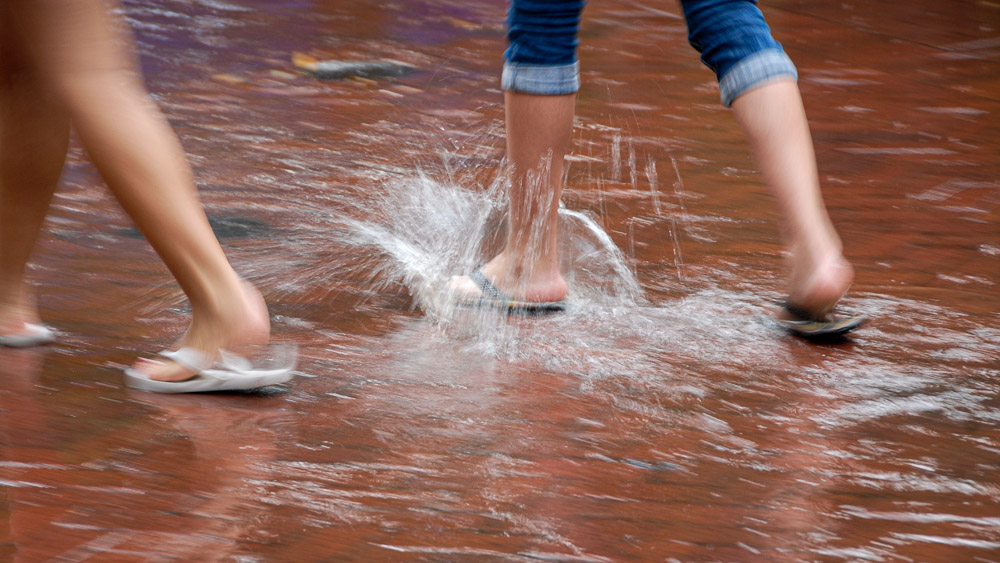
    The image with this article is an experiment. It is probably not what it appears to be. I will leave it to you to decide if it was a failure. I have my own evaluation.

  • Is It Interesting, Part 2

    Is It Interesting, Part 2

    In the first part of this I made a point I learned from a book on poetry, that if it isn’t interesting, no one will read it. It doesn’t matter how formally structured or well composed it is. More and more I am coming to believe this is true for most art, too. But how do we get from boring to interesting?

    Familiarity

    It is conventional wisdom that you do your best work in an area you are familiar with. I sort of believe this, but I violate it all the time. Being an explorer nature I get a lot of energy out of photographing in new areas. Things seem fresh and waiting to be discovered. I get really psyched in interesting new places.

    I am getting enough experience to see the other side, too. Yes, having familiar places can help us to make more interesting images. We learn the range of possibilities. We see the variations with seasons and weather and light. Familiar subjects give us an opportunity to pick and choose. To wait for the best conditions without having to feel rushed because this is the only time we will see this location.

    Once we become well acquainted with an area we can develop a more sophisticated view of it. We won’t waste our time on shots that have little hope of being good. This is a progression to shooting more interesting images.

    I do not feel this is an absolute. That is, it is incorrect to take it to the extreme and sat you will only get interesting images of areas you are familiar with. But I do agree that familiarity probably makes it easier.

    Recording

    Most of us have a progression we go through. We start out making record shots of places we visit. Of the billions of photos taken every day most are record shots or selfies. Have you ever gotten stuck being forced to watch 2000 pictures of someone’s trip to Disney World? Just shoot me.

    I call this taking pictures “of” something. We are recording the superficial. We have not formed a refined artistic opinion of the subject. This is still operating at the “oooh, pretty; I will take a picture of it” level.

    If you follow this blog you probably do a much better job than average. Our record shots can be well composed and exposed. They are decent images. But mostly they are there to record an event that will trigger a memory for us. That doesn’t make them very interesting to other people.

    I’m not being critical, really. We all react this way when we see a new thing that captures our interest.

    Interpreting

    After we get over the initial excitement of a great new location, we can start to examine what we are being drawn to. We become more aware of our feelings and perceptions. Now we can peel back some of the superficial and uncover deeper aspects of the subject.

    I call this taking pictures “about” something. It reveals to our viewers a new side of the subject or our emotional reaction to it. We are giving an interpretation of what we see. These images are probably more appealing than simple record shots.

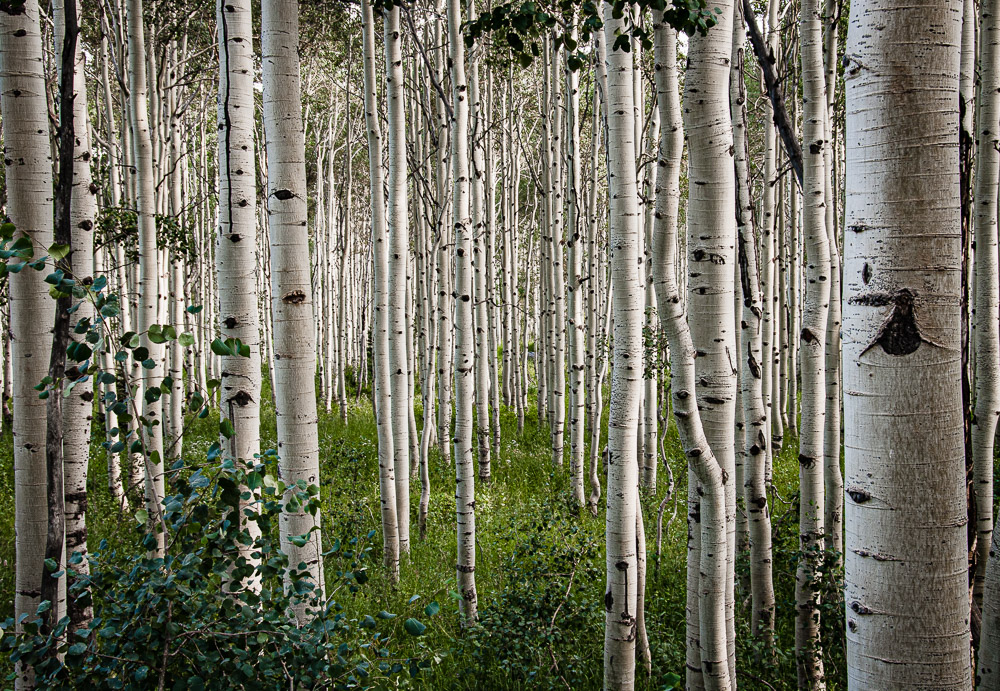
    Being intimately familiar with a location or a subject does make this easier. Take trees as an example. I have aspen trees where I live. If I didn’t know them well, the first time I saw them I would get a “wow, an aspen tree” shot. After having seen thousands of them in all conditions I have a much more focused appreciation of them. There are far fewer situations where I will capture an image, because I look for certain compositions that appeal to me.

    Hopefully I now make images about aspens, not just of them. Because I appreciate them more, I shoot them more selectively.

    Saying something

    At this point, we have figured out what attracts us about the subject. We have refined our emotional attraction to the subject to the point we know what we want to represent to viewers. Now we can bring our creativity in to allow us to synthesize an interesting image based on our vision. This is above and beyond just our emotional reaction.

    To continue the aspen example, it is the difference between “I like aspen trees because” and “here is a fresh and interesting image; it happens to be of an aspen”.

    Unfortunately, I have to give up the description of what makes an interesting image. I don’t have the knowledge or the vocabulary to be able to quantify it. Actually, I don’t think it is possible to do it.

    Thousands of tutorials and books are out there to teach us how to become better photographers. They can help boost us from the taking pictures “of” to taking pictures “about”. We can study vast amounts of description about composition and gestalt psychology and eye movement and contrast and lighting and color harmony and art history and … All of this is extremely valuable and should be studied.

    I don’t think it is possible for any of the training to give us the secret of making an interesting image. It is too complex and subjective and personal. I sincerely hope it cannot be quantified. If it is ever reduced to a formula then there will be no room left for artistic vision.

    Vision

    At the end, artistic vision is the secret ingredient that creates interesting images. You develop it through your training and experience and self examination. It is unique to an individual. No two of us will have the exact same vision.

    People may not like your vision. It may not be popular – remember, van Gogh never sold a painting in his lifetime. But what emerges is your vision. Embrace it and develop it. Use it to make unique and wonderful images.

    Familiarity with an area or a subject probably helps speed the process. I do not believe it is a requirement. If it were, it would be foolish for me to go to any new locations to try to make images. I do not believe that. Once we have developed our artistic vision I believe we can quickly apply it it new situations.

    Example

    Since I do not know how to describe the details of what happens, I will give some examples. I love the Trail Ridge Road area in Rocky Mountain National Park. I am a frequent visitor there. It resonates with me and I have refined my view of it a lot over the years.

    I give 3 examples here of that progression. The first was taken many years ago. It is a picture “of” Trail Ridge Road.

    Image “of” Trail Ridge Road

    This next image was shot years later. I have a much different feel for Trail Ridge Road. This captures much more of my emotional reaction to it. Notice that here the road is less visible and important than the setting.

    Image “about” Trail Ridge Road

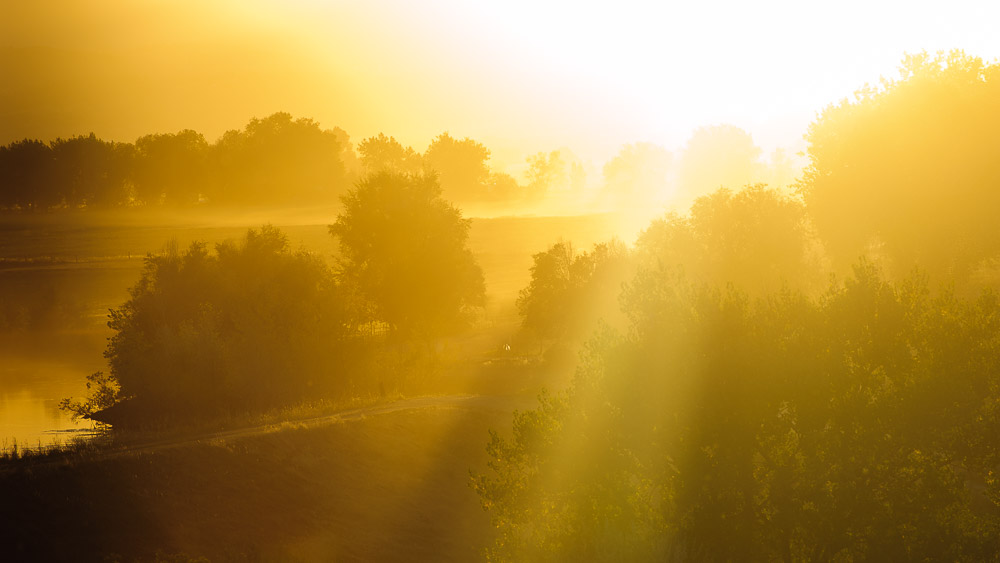
    Finally, the image at the head of this article is a very recent interpretation. I feel I am getting down to the essence of Trail Ridge Road and, I hope, it is interesting also.

    The first time, I usually skim off the outer layer and end up with photographs that are fairly obvious. The second time, I have to look a little deeper. The images get more interesting. The third time it is even more challenging and on each subsequent occasion, the images should get stronger, but it takes more effort to get them.” – Michael Kenna

  • Teamwork

    Teamwork

    Teamwork can be a great thing. In my professional life I have been on excellent teams and worked with talented people to achieve amazing results. Different people can bring varied background and experiences to the mix and blend them to achieve good results.

    Art, though, is a different thing. We are basically not trying to create a good result or a solid product, we are creating a work of art. Art is inherently not a team sport. It is a creation from one head – the artist’s. Some artists use a team, but they supplement the effort of the artist. The creativity and decisions come from one head.

    Teamwork does not lead to creativity

    I am going to have to say some controversial things. Things that go against the conventional wisdom you hear everyday. But all “conventional wisdom” should be challenged sometimes.

    Collaboration is not creativity. It sounds like I am dismissing collaboration as useless. Not so. There are good times for it. Collaboration can let us overcome obstacles and come up with solutions to hard problems.

    Working collaboratively is all the buzz in the corporate world. Schools have picked it up as the great thing for doing projects. I was there for years and my experience was that collaboration is a leveling process. It lets a group create at around the average of their capabilities. It is like the Olympic scoring where they throw out the high and low scores and average the rest.

    This may be decent insurance for a company. It ensures that they will probably get OK work not poor work, but it is not creativity. I have not seen these efforts lead to actual original, creative solutions. And I have been through lots of creativity exercises with very capable teams. Even sessions facilitated by top consultants.

    Let me concede for the moment that a team effort may lead to a creative solution. Whose creativity is that? Can I call this my creative work? Other people directly contributed to it. Is it really mine?

    A lonesome sport

    For an artist, the buck stops here. The artist has no one else to blame or defer to. No one else is responsible for coming up with the ideas and making the decisions. Right or wrong, it is his call.

    Think what goes through your mind when you see an art piece: what was the artist thinking? Why did the artist make these decisions? Why even choose that subject? You don’t wonder if the artist’s team did mind mapping or used a focus group to select and refine the ideas and style. No, you assume the art is the work of a singular artist.

    It can be lonesome and terrifying. As an artist you are sometimes almost paralyzed with fear and uncertainty. There is the terror of the blank canvas, when you don’t seem able to come up with ideas. There is the embarrassment of riches, where you have several images you like a lot but are unable to select the one to present. A certain subject is calling to you. Should you pursue that, even though it is different from your normal work? Should you go with the creativity you feel or play it safe and stick to producing work that is safe and mainstream?

    Only you as the artist can solve these problems and answer these questions. That is, only you can answer them for you. Your answers are part of what make your art your art.

    Teamwork examples

    OK, to answer your objection that teamwork can work sometimes. Yes, it can, in certain ways. There are husband and wife teams like Wendy Shattil and Bob Rozinski or Sarah Marino and Ron Coscorrosa that work together very closely. And there are great friends who collaborate closely, like Tony Hewitt and Peter Eastman. These are very healthy, symbiotic relationships.

    From what I’ve seen, these teams work closely on idea generation and location scouting. They give each other very candid and honest critique. They encourage each other and honestly want the other to succeed. But at the end of the day, they are in competition. Only one name goes on the print. They collaborate, but the final art is one person’s work.

    If it was not one person’s work it would be a corporate product, not art.

    A land of introverts

    It has been said that a disproportionate number of artists are introverts. I believe that is true. We tend to enjoy working alone without having to negotiate with anyone to get something done. We are OK being in our heads without needing the validation of other people’s opinions. And many of us are shy. It is easier to create in silence than to ask other people for help or critique.

    We may get completely caught up in our work, almost as a way to hide from the world. It is safe – until we have to exhibit it or sell it. We can let our inner self be expressed through our art rather than have to interact with people.

    I disagree, though, that it is disproportionate. Who says what the right proportion is? Given the descriptions above it seems natural that introverts would gravitate to art. That is like saying a disproportionate number of talk show hosts are extroverts. No, the introverts run away from that and say “you can have it”.

    Teamwork is not the natural style for us introverts. We tend to be very independent and self reliant. Not to say we are immune to fear and self doubt. If anything we are more susceptible to it. But good or bad, we want it to be our own work.

    A circular argument

    Since this is based on my first person experience, it is somewhat of a circular argument. The thesis is that artists are generally introverts and don’t do teamwork. This is true of my experience in my world. That is all I can really speak for.

    There certainly are many successful extrovert artists. These people would need lots of interaction with other people and need to bounce ideas off other people. But even so, who creates the art?

    Let me come back to the original thought. Introvert or extrovert, the art is almost always the creative expression from one head. It is not a team sport. We can get inspired and motivated by talking to other people. People can stimulate us or give us feedback to help point us in a slightly different direction. But in the end, no one but me is responsible for what I create. And I wouldn’t want it any other way.

  • Failing

    Failing

    Most of us fear failing. We often avoid taking a risk because we don’t want to fail and feel bad about ourselves. This is a deep seated behavior that is hard for most of us to overcome. Fear of failing can paralyze us.

    But I feel that, if you are an artist, you do not have the luxury of always playing it so safe you can never fail.

    Fear failure?

    Most of us fear failure in most things. Maybe almost as much as we fear public speaking.

    Are you a perfectionist? Are your expectations so high that you cannot try new things for fear that you might not do a good job? Does even thinking about the possibility of failing give you rapid heart rate, chest tightness, trembling, dizziness, lightheadedness, sweating?

    Or, sorry I’m getting very personal with myself now, are you afraid you are a fake? That you are not good enough or able to do what you profess to do?

    Do not believe the labels other people want to put on you. They are quick to want to do it. Did you get rejected for that exhibit you applied for? It doesn’t mean you are a failure. Did a gallery reject you? They were just looking for something else. You can’t really be a failure unless you accept that you are.

    Accept disappointment

    Not getting the recognition or sales we are seeking hurts. Being rejected by the ones we seek approval from is painful and discouraging.

    We have to have a core of confidence in our ability that will keep us going. Our belief in our self must be stronger that the negative messages we get from the outside. Otherwise we will either give up or we will believe that our art is not worthwhile the way we want to do it and we will change to try to become someone else’s idea of an artist. That is living a lie.

    We must persist. There are very few true “overnight successes”. Here are some examples from authors. They seem to keep score more.

    JK Rowling’s Harry Potter was rejected by 12 publishers.

    John Grisham’s A Time to Kill was rejected by 16 publishers before he decided to get an agent. The agent eventually rejected him as well.

    Chicken Soup for the Soul, by Jack Canfeld and Mark Victor Hansen, was rejected 140 times.

    Stephen King’s Carrie was rejected 30 times.

    These are just anecdotes, data points. Your mileage will vary. But isn’t it great that these people persisted despite what must have seemed like overwhelming failure?

    Redefine

    Perhaps your expectations are wrong. Maybe you won’t be the next Joe McNally. There are very few of them.

    It could be time to change your metrics. Are you defining success as huge sales? Is success for you to be rock star-famous or published in National Geographic? Try looking at it in terms of the satisfaction you get from what you create. Whether you get fame or rejection, the inner evaluation of your art is your own.

    Maybe the failures are a necessary part of our growth and maturing. They can reinforce our will to succeed and our belief in our self. It is part of growing up as an artist.

    Seek failure

    I’m kidding, right? Who in their right mind would seek failure?

    Well, when we put ourself out there, that is giving the world an opportunity to reject us. To consider us a failure. We have to do it, to persist, to accept that the rejection will come because we need to have our art seen.

    “I love my rejection slips. They show me I try.” – Sylvia Plath

    We should embrace the rejections and failures as steps along the way. It is never fun or easy, but we need to get used to it. Keeping on trying even after rejections helps us overcome fear of failure. If we retreat into our shell and refuse to try anymore we will consider ourselves failures. We will believe that self-talk.

    Plus, we learn from the experience.

    Learn from failure

    Whenever we are learning something challenging there is a time of testing ourselves to see if we are getting it. If we are studying math, we solve problems and take tests. If we are learning Karate we spar and go through testing to measure our proficiency. When we are learning music we are asked to do recitals to demonstrate our capability. The exercises develop our skill and the tests not only prove our ability, they develop our mental toughness.

    If we never confront our fears we will never know what we are and what we are capable of. This is easier for some of us than others. It is pretty hard for me. I don’t like it. But I force myself to keep on. I may grumble and be in a bad mood for a while after getting a rejection, but I know I have to keep on.

    Perhaps the real thing we are learning is how much we believe in our self. Do we consider our art worthwhile and worth the pain?