An artists journey

Category: Artistic Process

  • I’ll Think of a Reason Later

    I’ll Think of a Reason Later

    I get tired of hearing all the pronouncements from leading photographers about how all our shots should be carefully planned and pre-visualized. While this is good advice sometimes, it is not always true. At least, not for me. I have come to see some of my best work as happening when “I’ll think of a reason later”.

    Source

    I got the title from an old country & western song by Lee Ann Womack, lyrics by Tony Martin and Tim Nichols. Great lyrics, but the song has nothing to do with photography or any art. But when I heard the title, it seemed to perfectly fit what I often experience. So I decided to “repurpose” it.

    You know how you sometimes hear something that sparks other ideas or seems to crystalize some ill-formed thoughts that have been gnawing at you? This was that for me. I love the image it brings to my imagination.

    Planning

    It is part of the accepted religion of many photographers that you never shoot a picture without a well thought out plan. Even to a firm visualization of what the final product should be. Being a matter of faith, it is unquestioned and can’t be reasoned. But I will question it. There is an old quote that says “sacred cows make the best burgers”.

    Is there a time for careful planning? Yes. Of course. Otherwise the whole controversy would be foolish.

    When is planning important? First, on any commercial shoot, where a certain result must be obtained, on schedule and on budget. You will not work in the industry if you can’t deliver repeatable and acceptable results to your client. Sure, you must also have a recognized style to flavor your work, but that is secondary to the results the client wants.

    Second, if you are doing some type of conceptual photography, where you have to synthesize the result from materials you shoot specially for it. It all has to be coordinated so the right materials are available for constructing the final image. The parts must be consistent in lighting, focal length, position, color, etc. Most of all, they have to be complete. You don’t want to start bringing your product together and find that a key piece is missing. This process takes good planning and visualization.

    A third possible one is a once in a lifetime trip to an exotic location. It would be reasonable to scout the location, plan for lighting, weather conditions, etc. I say maybe, because I probably wouldn’t do it. I might want to have some idea of what to expect, but I would be more energized by abandoning preconceived notions and reacting to what I find.

    Spontaneity

    What’s missing in this very disciplined notion of planning? To me, it is spontaneity, happy accident, feelings, reactions. These are the things I thrive on. These things make my work more alive and vibrant.

    The things I find, unanticipated, can captivate me. When something excites me and energizes me, I find I am generally happier with the results. The engagement is memorable and meaningful. I am drawn to the subject or the scene. The feelings I have seem to come through in my images. Dare I say it, there is love there.

    Can a planned, rehearsed shot engage me? Yes, sometimes I like to really get deep into whatever I do. But that is accidental. Usually I find in those situations that my engagement has to be secondary to the planned event. For me, I don’t want it to be secondary.

    I enjoy the discipline of shooting for a project. But even when I have a certain theme in mind, I do not have a fixed plan for what I will shoot. I may hypothesize what some of the images in the project might look like, but that is only a guide to spark my imagination.

    I would much rather find joy in something no one else has noticed. Something that, at just that moment, is interesting, even exciting. Tomorrow it may look like junk, but right now it is something else. This is more interesting to me than getting yet another beautiful shot of an iconic scene.

    I’ll think of a reason later

    So, “I’ll think of a reason later” means to me that I will follow my instincts, my interest at the moment. Later, when I am working on the image on my computer, I will see if I can think of the reason it called to me. Usualy there are some good reasons.

    I will be lead by my heart. Planning can be useful, but I will not be a slave to it. I have no problem abandoning a plan to shoot something more interesting.I am a fine art photographer, not a commercial shooter. This means I will follow my instincts, shoot what I like and what I am drawn to at the moment.

    I will be the first to admit that this does not always lead to the best possible results. Sometimes I follow my instincts down a rat hole to a dead end. That’s OK. Better than OK. It is wonderful. It is better to me to try and fail and sometimes achieve something special than to rise to nothing more than mediocrity.

    So I am amazed sometimes working on these spontaneous images on my computer, to see things I was not conscious of at the time I shot it. I see shapes and forms, color harmony, framing, patterns, and lines that work to make an interesting image. These were mostly subconscious at the time I was shooting.

    I seem to be able to use all my years of training instinctively. Was I pre-visualizing my images? Probably, but it wasn’t conscious. I was not aware of it in the moment I was shooting. The measure for me is: was I excited at the time? This is I’ll Think of a Reason Later.

    What works for you

    I’m reacting here to intense evangelism I see from some so called authorities. The reality is, there is no “one way”. At best, they can tell you what works successfully for them. Sometimes they just want to evangelize you to their point of view.

    An artist’s working style and subject matter is intensely personal. What works for one will completely trip up and block another. Do what works for you without thinking you have to follow a plan some famous photographer told you.

    I don’t mean to ignore everybody. Listen, try their ideas out. Experiment. But ultimately reject what doesn’t work for you.

    Today’s image

    This image was taken going down the Seine River in Paris. I glanced up and instantly recognized a scene of interest to me and snapped it. It was not pre-visualized, and I was not consciously searching for a situation like this.

    Sometimes happy accidents happen. I plan on it. That is, I find if I am receptive and looking around with interest, they happen. Frequently.

  • Moving Past Perfection

    Moving Past Perfection

    Photography is a rather technical art form and most photographers get caught up in the gear and techniques. This can be appropriate for some work, but not always. I have stopped worrying about the last line/mm of resolution and absolutely perfect focusing and steadiness. It can be that imperfections can make some images better. I am moving past perfection as a goal.

    Perfection

    Sure, I love technical perfection. I think at some level most photographers do. It is a characteristic of what we can capture. We don’t want to just take a picture of a bird. We want to resolve every detail of every feather. The texture in an image should be so present that the viewer can easily imagine what it feels like. Every part of the subject must be in crisp focus and highly detailed.

    Technical perfection like this is a form of craftsmanship. It shows our viewer that we know how to use our tools and that we can check the craft boxes to prove our work is worthy.

    But this craftsmanship is a table stake, to use a business term. A table stake is the minimum viable offer that will be considered. For example, if you are buying a new car, you would not consider one that does not have a backup camera. It used to be a luxury but it has become an expected necessity. In the same way, digital photography has improved our product so much that there is little room for imperfection. Technical perfection, where is is required, is a necessity to be considered a salable print.

    Unless it is deliberate imperfection. More on that later.

    Don’t let it become the reason for the image

    An overused quote (at least, I seem to overuse it, because I believe it is very insightful) is Ansel Adam’s comment that “There’s nothing worse than a sharp image of a fuzzy concept.”

    I take that to mean that a good image will not be a great image solely because of its technical perfection. Instead, the technical details must serve the mood and intent of the image. Sometimes that means the technical details must be front and center, because they provide the framework that supports the resulting image. But in other cases they may actually subtract from the artist’s intent.

    I keep talking about sharpness, but the same applies to any other technical details. Composition does not make an image. There has to be more there. The absolute peak time and weather conditions at a certain location may help you make a very good image, but by themselves will not guarantee it.

    Who defines perfection?

    But what is “perfection”? That is very difficult. Must every image be 50MPixels or more at 3000 line pairs/mm resolution? Does every picture have to be perfectly aligned with “rule of thirds” lines and points? Does the color balance of the print have to exactly replicate the color of the original scene? How about images that do not have a definite foreground/middle ground/background? And how about the ones where the histogram is just wrong, say pushed too far to the left or right?

    Do these things define perfection? Can we make a great image that violates some or all of these “rules”? If you are thinking about some other articles I have written, you will know that the answer, for me, is there are no rules. There is no authority with the right to define what characteristics my image must have.

    If I have defined for myself that I am doing things in an Ansel Adams style, then that puts me in a box and defines certain expectations of look and sharpness. Or if I have defined that I am doing portrait photography in the style of Richard Avedon, that sets expectations of subject matter and style and print sizes.

    But notice that these are self imposed limitations. I reserve the right to define for myself the nature of perfection for my images. It may or may not include technical perfection.

    How can an “imperfect” image be good?

    If I set the definition of perfection for my images, then what does imperfect mean? It will only be imperfect if I fail to achieve the result I want.

    Think of some of the great shots of photojournalism or street photography. Some of them are a little our of focus. They might be over or under exposed. They might be grainy. But they captured a moment, an emotion, a comment on the human condition that completely overwhelmed all technical considerations. They are great despite their imperfections. Maybe because of them.

    I love (and was infuriated by) the types of comments I used to hear in camera club competitions. A judge might say “the composition would be improved if the photographer had taken 2 steps left”. I appreciate your feed back, but if I had moved left even 1 foot further I would have been over the edge of a cliff. Thank you, I will live with the composition I could get. It works, despite your sincere attempt to improve it.

    Past perfection

    So what do I mean by moving past perfection? For me it is the realization that perfection is not the highest goal. An image can be excellent even if there are technical flaws. Other things can and often are more important. The recording a “perfect” moment that exactly captures the nature and personality and essence of the subject can make a great image, even if there are imperfections.

    Actually, I am finding a lot of my current work is intentionally “imperfect”. I often use camera motion or subject motion as a design element. Some entire projects do not have a single sharp pixel in them. That is what I want, so I am pleased with it.

    A different take on craftsmanship is being able to use your medium to achieve your goals. Would you rather follow your own goals and create work that pleases you or struggle to achieve someone else’s ideal of perfection?

    Judge by your expectations

    No one except you can judge the perfection of your work. The definition of perfection is yours and yours only. They might say they would like it better if it was sharper or more/less colorful, or more/less saturated, of brighter/darker, or composed differently, or if the mid tone contrast was enhanced/reduced. And they may be “right”, in the sense that, after you think about it you decide yes, if I were shooting it again I would change it somewhat.

    But it is you changing your expectations that causes the difference in evaluation. No one else is in a position of judging your work unless you allow them to.

    Today’s image

    This is a horribly imperfect image. And it is just what I wanted. 🙂 It was shot out of a fast train in France. I wanted to represent the sense of speed and motion and changing terrain whipping by. There is not a single sharp pixel in the frame. The focus may not be right, I can’t tell. But this was one of the best of many, many tries, and to me, it captures what I was perceiving.

  • Packaged Experience

    Packaged Experience

    Do you create your own photo experiences and adventures or do you rely on packaged experiences? I hope to encourage you to have the confidence to create your own most of the time.

    Packaged experience

    What is a packaged experience? It is any situation where you purchase a ready made happening from a vendor. Someone who offers you a ready to go vacation or adventure you can just step into and passively enjoy.

    A classic example of a packaged experience is a Disney World vacation. Space Mountain and Epcot may be fun and maybe somewhat magical seeming for the kids, but not much for an artist. Another example is a typical vacation cruise. New scenery, good food, but it seldom qualifies as an adventure or a unique experience.

    In both cases, everything is wrapped up in a neat package, all the sharp edges are protected, and a manufactured packaged experience is provided to you. These are exactly the reasons I recommend you avoid them.

    It’s not really an adventure

    An adventure is “an unusual and exciting, typically hazardous, experience or activity”. Packaged experiences are seldom unusual, since you are buying the same product sold to a million other people before and after you. A simulated rocket ride or a roller coaster may seem exciting for a few minutes, because they shake you around and it seems dangerous. But the reality is they are carefully controlled and not at all dangerous, unless you have a serious heart condition. They are a simulation of adventure. Once you reach an age where you realize the Pirates of the Caribbean are not going to stab you, no matter what you do, it should cease to hold much excitement. Unless you step into a Westworld situation, but that is unlikely.

    The packaged experience is in no way unique or dangerous. It’s effects are short lived. There is no long term benefit or learning from it. And even worse from an artistic point of view, it gives you little chance for creativity or exploration of new ideas.

    Maybe the worst part, from my point of view, is that in a packaged experience you did not have to put any of yourself in it. You are a passive spectator.

    Roll your own

    I guess it can seem intimidating if you’re not used to being responsible for your own adventures. And if you are taking the family maybe you want to be extra careful for the kids. But even for them – especially for them – wouldn’t it be wonderful to give them a legacy of being able to amuse and entertain themselves in strange places?

    What does it take? Just a good attitude and the willingness to try it. No special training is required. You have to be open to accepting things as they come and learning to like them. It is almost all your attitude that determines what benefits you will receive.

    Let me give an example of a pattern of things that formed some of my belief in this. Way back, when timeshares were a good thing and not yet ruined by greedy developers, we bought one. Kind of on the spur of the moment. No real planning or investigation. Well, the real utility for us was that we always traded for other locations in some part of the world. So we had a week tied to some location we had never been to. Initially we would get somewhere, explore the area a day or 2, then ask ourselves what we are going to do now? But we were stuck there. Sometimes these places were way out in the middle of nowhere.

    We were forced to amuse ourselves. We would start to explore the vicinity more slowly and carefully. It amazed us what kind of interesting (and photogenic) things we discovered. Looking back on it, I can see what should have been obvious then. Almost every place has interesting things to find, quirky and interesting people, local things they pride themselves on, unique history, local food specialties to try, and just things you have never seen.

    Trust your ability

    We’re just not used to slowing down and looking at what is right in front of us. Instead, we’re looking for the tourist attractions with bright neon signs. The places listed on the tour brochures as welcoming busses of tourists (and having a big gift shop).

    The time share experience taught me to settle in and look around to see what I can find. I can’t remember how many time share trades we did, I would guess at least 20. In all of those, even when we were initially disappointed with an area, there was not one where we went away at the end of a week saying we will never come back there. I remember the very first one we went to was in Palm Desert CA – in August – it was 120F every day. And we loved it. I found fascinating places and sights I had never imagined. We would definitely like to go back, but maybe at a somewhat cooler time.

    I labeled this section trust your ability, but really, little ability is required. The biggest factor is attitude. Keep open and receptive to what is there. This is a learned skill more than any innate ability. I always had a bent toward traveling this way, but the time share experience taught me to recognize and develop it. Now I trust that this is the best way for me to travel.

    Don’t go overboard

    To keep it balanced, let me tell you about a friend I have who is a wilderness photographer. He goes on solo treks in the Rockies all the time, all seasons and weather. He has probably climbed all the peaks around here over 10,000 ft. Many in the winter. Wildlife encounters are not too rare. He builds and stays in snow caves. Blizzards and storms do not dissuade him. I think he is a little crazy. But that is his thing. He gets unique pictures of places and times few other people have seen.

    However, this is not what I am suggesting. It is not at all necessary to go to that kind of extreme to create unique adventures. Just go somewhere new and be open to what is there.

    Try it

    I encourage you to give it a try. It may take several outings before it becomes comfortable. That’s OK. Being uncomfortable is not a bad thing. Sometimes that just means you are learning something new and exercising a new skill.

    To get started, take some short trip, maybe one night. Head out someplace you haven’t been before, but not more than a few hours drive. Stay overnight – I recommend a nice local motel, not a big chain. It will be a little more adventurous and without the sterile industrial feel. Besides, small communities need your money. Then home. During the entire outing, give yourself a mission to stop and see and take pictures of anything even remotely interesting. An overlook, some nice trees, a classic old rusty car, a silly local tourist trap – whatever piques your interest. Let yourself go. Tell yourself you’re not in a hurry and you have permission to stop whenever you like. One of the purposes is to learn to find interests on your own.

    Photo Tours

    Many people I know host photo tours, so I want to address those. Different tours have a variety of goals. For this, let me divide them into 2 groups: tours that take you to famous sites and promise you to make the same well known pictures, vs tours that provide stimulation, discussion, and training while also taking you to interesting locations you have never been. I would call the first kind a packaged experience and advise you to avoid it. The second type, however, would be an enjoyable growth and learning experience. The sights and actual images you get are secondary to the adventure and new experiences. That is the kind of experience I would appreciate.

    Do it

    I know this isn’t for everbody. Some of you are such hard core Type A personalities that you can’t go to the hardware store with out written goals and a definite plan. So the idea of heading off anywhere without a well researched plan would be horrifying.

    But for the majority of us, I encourage you to give it a try. And persist long enough to get over the discomfort and have a fair test to see if you like it. When you learn to see like this, every outing becomes an adventure. Walks in your town become new and filled with sights you never noticed. Trips where you actually get away are more exciting, because you are constantly discovering new things that are not on the tourist brochures. Things that are special to you, that become “yours”. It can revolutionize your life.

    Today’s image

    An interesting road sign found on a tiny back road in Devon, England. We were staying at a time share miles out in the middle of nothing. Wandering around, we found many terrific discoveries. It was a lovely area that is a special place for us still. No tourist map or guide book would have taken you here.

  • What Would You Make?

    What Would You Make?

    As creatives, we make things. But are we constrained by sets of rules and conventions? What would you make if those rules weren’t there?

    We’re makers

    Artists are makers. Maybe that is obvious. We have to be able to realize what we visualize.

    It doesn’t do any good to say “I wish you could see what I’m thinking about doing.” It is not real until we do it. But sometimes we are held back by rules that seem to prevent us from doing what we want to do. Sometimes those “rules” are the voice in our head that is trying to keep us out of trouble, since trying something new carries the risk or failure or rejection. That protective voice can’t evaluate the upside of what we do, just the potential downside of loss or embarrassment. That fear can be as debilitating as hard rules someone imposes on us.

    Whether it is our inner voice or the things we have been taught, when they prevent us from making what we feel we should, they are in the way.

    Follow the rules

    Many people seem eager to put rules on us. There is the famous rule of thirds. Then other rules of composition. You must have a foreground, middle ground, and background to have a balanced image. Don’t put the subject in the middle. Watch the edges. You can’t have any clutter or distraction there.

    If you make it past all those, there are rules about what a photograph can or can’t be. Have a well defined subject that is in sharp focus. Never shoot in the 4 hours each side of noon because the light is too harsh. Expose (the histogram) to the right, but do not blow out highlights. Always use a tripod. There are many more. You know the routine.

    Sometimes it seems impossible just to make an image. It all gets too complicated.

    Whose rules?

    But as I often ask, where did those rules come from and are they really “rules”?

    There is no standards body that certifies artists. No one needs to grant you permission to practice your art, even if you went to art school and they thought they had the right to do that. No one can come and yank your image from the gallery wall because you broke a rule.

    Given that, why do we act as if we are bound by rules or conventions? Is it to fit it? To be part of a group? Because we are insecure about our style or ability?

    Maybe our favorite artist only does very realistic and dark black & white work, so that is the constraint we put on ourselves. We submitted work for an exhibit and it was rejected. Everything selected was highly abstract, so we think that is what we must do. Our local camera club disallows landscape images that show any sign of man, so that must be a rule for landscapes.

    Don’t apply them indiscriminately

    All the “rules” may well have been created for good reasons. But they should not be applied indiscriminately. There is a story of the mother teaching her daughter to cook. The mother cuts off the end of a roast before putting it in a pan and cooking it. The daughter asks why she did that. She says she doesn’t know, but that’s what her mother taught her to do. Sometime later the little girl asks her grandmother why she cut off the end off roasts. The grandmother told her it was because when she was young her pan was too short.

    The story is probably fake, but it’s point is valid. Even if rules were created for good reason, they may not apply to you in the situation. Always evaluate the reason realistically.

    Be yourself and do your own art. Who gets to decide if the work pleases you? Isn’t it only you?

    What would you make if there were no rules?

    Imagine there were no rules imposed on you. What would you do in that case? What would you create that is different from what you are doing now?

    Would you be bold to create fresh new art that may bend genres and go in new directions? Then do it! You do not have to be bound by anybody else’s rules. Set your own values and constraints. That is how creativity happens.

    Now, I am not advocating total anarchy. There is enough of that posing as art. It does not have to be disturbing or unrecognizable to be creative. Just make it your own vision.

    Learn the history of image making. Study what has been done by masters over time. The things that have been recognized as leading to “good” art. Knowing what has been done will not pollute you.

    What will pollute you is taking those things as rules that you must follow. Learn the rules then creatively break them. That is the way to push the boundaries to new limits. Limits you discover and exploit. Be free to take your art in whatever direction feels best to you.

    No rules.

    Credit

    I get ideas in a lot of unlikely places. It fascinates me that I got the idea for this article from an interview I heard with Carrie Underwood, the Country singer. A lot of her songs bend and even blur the limits of her genre. She was describing one project she was working on and being frustrated in not being able to come up with the effect she wanted, The patterns and constraints of what makes a typical country song seemed to box her in. Then she asked herself “what would I make if I didn’t have rules?”. After that she felt more free to relax the constraints and take ideas from rock or other sources that she liked. Now she could create her own preferred style.

    We can do it, too. What would you make if you didn’t have rules?

  • How To Be Creative

    How To Be Creative

    Is creativity a talent only certain people have? Is it a process to be learned? Did you ever wonder about how to be creative?

    The Muse

    People often speak of being visited by the Muse. Or more likely, not being visited recently. The muse seems to be this mysterious, invisible force that comes on us at times and endows us with tremendous creative force. For a while. Until she decides to leave. The muses are almost always described as female.

    I can’t deny that sometimes I seem to be filled with creative energy and sometimes I can’t come up with a single good idea. Is that because of muses? I don’t want to jinx myself, but I don’t think so. It is too easy to blame external things. There is an ebb and flow to everything in life. I think creativity is part of that. It is unreasonable to expect to be on a creative high all the time. It would be nice, but we have to recharge sometimes, too. If it was constant, we would appreciate it less.

    A talent

    OK, so is creativity a talent a few have naturally and most of us don’t? It seems like that sometimes. Have you ever met someone, maybe an artist, maybe someone in your work life who seems to exude a flow of creativity? Someone who seems to get more done than anyone else?

    I have. Several times. It can be humbling. It can make you want to change careers because you seem so inferior.

    Talent is a real thing. Back in my life as a software developer I did some investigation into this and found evidence that there can be a 20 to 1 difference in productivity between developers. That seems to imply that some have a natural talent for doing the work. But, don’t let this slip by, they evaluated a 20 to 1 difference in productivity. That is not necessarily creativity. Creativity is much harder to measure.

    Here is a truth of life that is important to remember: just because something is easier for someone than for you does not mean their work is better. So while there are differences in talent, that does not exclude anyone.

    A process

    On the other hand, we can demonstrate that creativity is a process. We have to do it, not sit around waiting to be inspired. A couple of quotes from my article I reference above:

    Inspiration is for amateurs. Us professionals just go to work in the morning.” – Chuck Close

    Hard work will outperform talent any day of the week.” – Joel Grimes

    One thing we seldom talk about as an element of creativity is domain skill. That is, to be creative you first need to be good at what you are doing. Whether it is photography or writing or software development, you have to be skilled in your domain to be able to rise above the average.

    So a good part of our process is to always be working to improve our skills. When “the muse is gone” and we do not feel inspired, at least be working on our craft. I have often seen in my own life that sometimes just focusing on a technical skill can lead to new thoughts and ideas for new work.

    Am I creative?

    Ah, the question that haunts most “creatives”. We often doubt ourselves. After all, what we think and do is obvious to us. So it must be obvious to everyone else. Right? Probably not.

    Almost everyone is creative is some areas. But I have never met someone who has all their faculties who does not have the ability to create at some level.

    But we set a very high standard for ourselves, don’t we? We expect massive, glowing creativity. World changing things. Really? Not many things change the world to any measurable extent. Our insecurity about our creativity is right up there with our imposter syndrome fears.

    Try this experiment. Look at a lot of the published work by other artists is your field. There will be some that blow you away. That really impress you and make you feel inferior. But think about 2 things. First, remind yourself that you are only seeing their best of the best. You never see the 99% of the failures. Are you comparing your failures to their best?

    Second think about what you consider the fails among that work. Will there be a significant part of it where you will say “Really? I throw away stuff like that.”? This should convince you that you can be just as creative as most of them.

    Ebb and flow

    Human nature is such that we don’t just go through life at an even level. There are peaks and valleys, ebb and flow. Sometimes we are up and sometimes we are down. Don’t get disappointed when your creativity follows this pattern.

    But one of my points above is, get to work. Do something. Don’t sit around feeling sorry for yourself and waiting for the muse to come back. Work. Maintain a discipline of doing things anyway. You may throw away most of what you do in this phase, but you can learn and improve your skills and it can be effective at getting you out of the valley more quickly.

    One of the self help gurus I for some reason get stuff from recently said “Confidence is a byproduct of action”. I happen to agree with this. And I would add creativity is, too.

    Little C or Big C

    Notice that I have never defined what creativity is. This is intentional. Don’t most of us say “poor me, I’m not creative” without defining what we mean.

    One conventional definition from Psychology research is that creativity is “the production of ideas or outcomes that are both novel and appropriate to some goal” (COMPONENTIAL THEORY OF CREATIVITY, Teresa Amabile, Harvard Business School). The clause about goals is there because the motivation of the research was the corporate environment. Talking solely about art, I would remove that and concentrate on the novelty of a work product.

    So, what is novelty and how novel does it have to be to be considered “creative”? Amabile and others say that almost everyone has some degree of creativity. It is expressed in different ways and with different impact.

    She uses an example of what she terms little C creativity vs big C creativity. The dentist who came up with the idea of letting kids wear fun sunglasses during exams to protect their eyes from the bright lights is what she calls little C. It is creative but not hugely novel. At the other extreme Schawlow expressed the principles on which all lasers are based. He won a Nobel Prize for that. Definitely big C.

    So maybe we ought to give ourselves a little more freedom. Creativity does not have to be Nobel Prize winning. A novel composition or idea in our images is genuinely creative if you have never seen it before.

    Novelty for its own sake

    So if creativity revolves around the concept of novelty, how novel and new does something have to be? I think many artists are too caught up in this and try to do novel things regardless of their artfulness. Just browse through most contemporary art galleries or The Hand Magazine.

    The definition of creative above brings together novel and appropriate. Maybe doing something solely because no one else has ever done it is not good enough. Don’t forget that the idea is to make art while we are doing it.

    Creativity

    So maybe we shouldn’t be expecting lightning flashes of brilliance in our daily work. Maybe we should work our craft and perfect our skills to make sure we are about as good as anyone else. Then “connect the dots” as Steve Jobs used to say. If we can be open and receptive to thinking in new ways, we can look for opportunities to apply novelty as an edge to differentiate our self from the pack. Then the novelty is actually a creative enhancement to our work, not just something novel.

    Today’s image

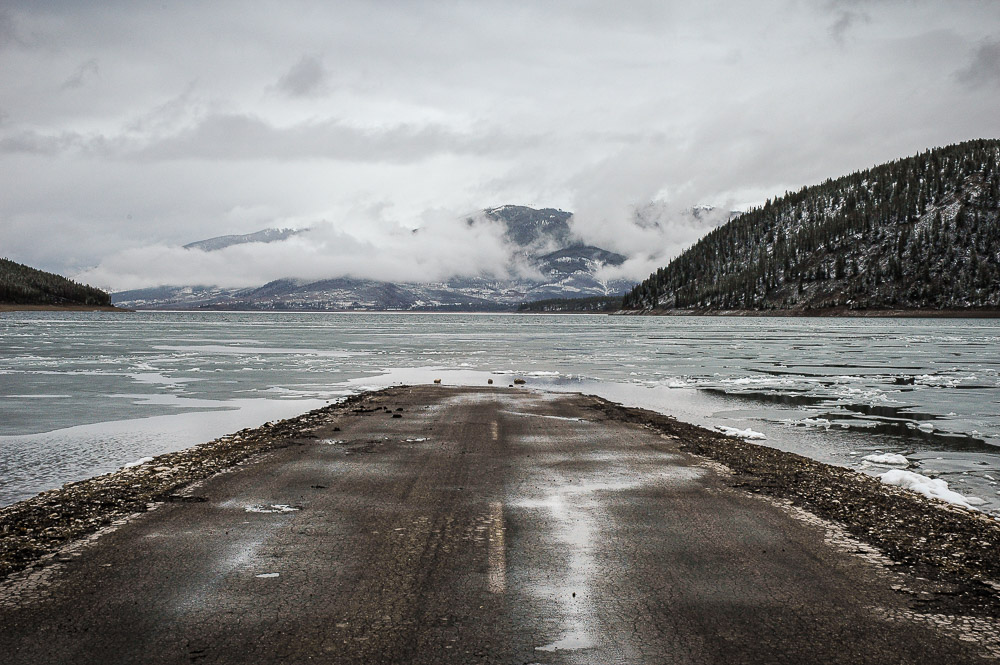
    I seldom try to create “message” images. When I came across this scene, though, it was too powerful to pass up. It connected several dots with me. I think I have made a creative image that can express a strong idea. Maybe more than one. What do you think?