An artists journey

Category: Attitude

  • Moments 2

    Moments 2

    Moments are frozen instants in the flow of time. Our life is about moments. Most art, but especially photography, is about capturing moments.

    Flow of time

    Time is like a stream flowing around us. It goes from infinity to infinity as far as we can perceive. But we can’t stop it or dam it up. We can’t even jump in the stream and ride a moment forever. Instead, we must watch it flow by and hear the clock ticking.

    Time itself may be virtually infinite, but our time is not. We have been alive a certain time, but we have no idea how long we have left. There may be many years left, or our time may be done tomorrow.

    Many of us live our lives as if we have infinite time left. That is simpler and less troubling than acknowledging the impermanence of our existence. So, we become numb to the passing of time. We bury our self in our job or other responsibilities or diversions. Days flow into weeks into months into years and we barely realize it. Someday we look back and wonder where the time went.

    Lobster shack, Maine coast©Ed Schlotzhauer

    Art is moments

    All we can clearly perceive is the current moment we are living in. The past is a sequence of moments that are gone. The future is a potential sequence of moments we cannot yet see.

    A characteristic of a lot of art, especially photography, is that it records moments. They may be beautiful moments, or touching ones, or poignant ones, or frightening ones. But the moment itself is the art.

    Art portrays these moments so we can look at them from outside the time stream. It gives us a new perspective on the moment. Whether the art captures the moment as a 2-dimensional image to hang on our wall, or a 3-dimensional form, or a poem or story we can visit whenever we want, they re-create for us a moment or a scene we want to save.

    One of the powerful aspects of our art is that it is concrete. That is, it is fixed, unchanging, staying as it was created. This plucks moments out of the stream of time and preserves them for us, beautiful and unchanging. A photograph is a frozen moment.

    What we remember

    Our memories are really a collection of remembered moments. Do you remember what you did at your job last month? Probably not, but you remember that time last month when your boss came to you and praised you on doing a great job on something.

    Do you remember college? Or is your memory based on some great times, some miserable times, a time when a professor said something that opened a whole new world of thought for you?

    In our lives and with our families we tend to remember events, certain happenings – in other words, moments. Everything else is just a blur.

    Sailboat, healed over in the wind.©Ed Schlotzhauer

    Moments we miss

    Astounding moments are flowing by us all the time. Mostly, we don’t notice. Those moments are lost and can never be regained.

    Mindfulness is a practice of being aware and “in the moment.” It attempts to let us forget the past and not worry about the future but instead be very aware of what is happening right now.

    Being mindful is a good thing, but when you look up “mindfulness” it often gets co-opted by types of eastern mysticism. Ignore that. The concept is simple, even if the practice may be hard.

    When I say we should be mindful I simply mean we should practice greater awareness of the world around us and the way we are responding to it. As artists this is especially important. There is beauty and interest almost everywhere. Fascinating moments are happening all the time wherever we are. Mindfulness is teaching our self to see them. We must notice moments.

    This usually involves unplugging from our technology and stepping away from the fast pace of our lives for a bit. A walk is a great tool for me. Being outdoors and getting exercise helps me see more of what is going on. Of course, this only works if we put the phone in our pocket and take off the headphones, freeing our self from our tether to the machine.

    But being there and seeing the moments are two different things. We must be open to the experience. Pause and marvel at small moments. At common, ordinary things around us that can become magical sometimes.

    The way we live our moments is the way we live our lives.

    Annie Dillard

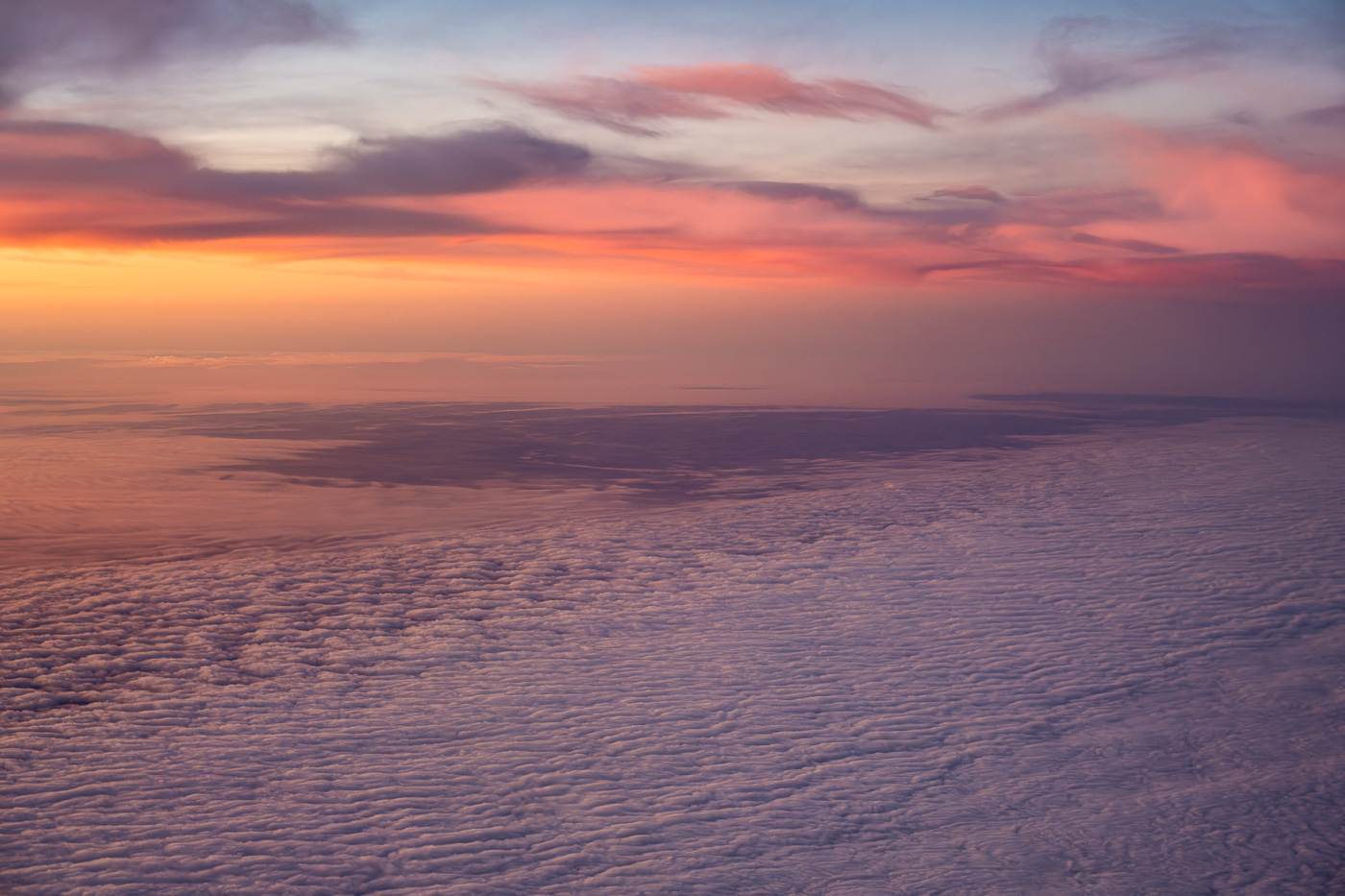
    Sunset with power lines©Ed Schlotzhauer

    Photography is about moments

    By its nature, photography is about capturing moments. The shutter opens on a scene in the “real world” for a fixed slice of time. The sensor records what is happening during that time slice. What we get is not imagined or fake. We have captured a moment. If we are good, it is a worthwhile moment.

    Of course, I can create fantasy art that is impossible or surreal. I enjoy doing that. But most photography is a relatively straight capture of a real scene.

    The typical photograph is a portrait of a moment. It is not the moment itself, but an abstract image of it. We have plucked it out of the stream of time and set it aside for contemplation, to show other people what was there that they could have seen. Since there is such a rich flow of moments passing before us, one of the challenges is to develop the experience, the “eye”, to recognize a worthwhile moment as it is happening. In a sense, what Henri Cartier-Bresson called a “decisive moment”.

    Shoot it when you see it. Painters may be able to hold a moment in their memory well enough to be able to sketch and paint it back at their studio. But photographers must react immediately. Capture it or lose it. The famous Jay Maisel so rightly said “Always shoot it now. It won’t be the same when you go back.

    Pinocchio?©Ed Schlotzhauer

    Prints freeze moments

    Even in the realm of photography, there is the special case of the print. A print takes this fleeting moment and casts it in a permanent form onto a substrate like paper or canvas or metal.

    The moment becomes a real object. It has weight and form and texture. This is important because by being an object of substance, we have a different relationship with it. An ephemeral moment has been transported to a physical object we can see and touch and hold.

    Even more, it has permanence. Memories are unreliable things. They fade and change. A print holds the moment up for us to see for many years to come. We can come back to it and relive it at will. Maybe only to remind ourselves that great moments are happening all the time and we should be more mindful of them.

    In computer speak, a print is read-only-memory. That is a technology that, once written, can never be altered. Once the print is printed, it is an unchangeable record of the artist’s intent at that moment. The digital file can be altered and a new, modified print can be created, but the original print is fixed for its lifetime.

    A print celebrates a moment that is worth keeping among the continuous flow of time.

    Precisely by slicing out this moment and freezing it, all photographs testify to time’s relentless melt.

    Susan Sontag

    Fabric covered head©Ed Schlotzhauer

    Moments

    Be intensely aware of moments. They are our life. Each moment we have should be precious to us. Don’t let them drift away unnoticed.

    As photographers, we should be on the lookout for the moments we want to record. To do this we must be very aware of the world around us, mindful, in other words.

    We have the privilege of capturing moments and presenting them to people so they can marvel at the moments that have gone by. This is one of the things artists do. This is awesome.

  • Shoot What Interests You

    Shoot What Interests You

    Should we shoot what we are paid to do, or what we love, or what interests us? Yes, probably all of them. But perhaps the most important thing is to shoot what interests you.

    Motivation to shoot

    We are motivated by different things at different times. Everything from paying the bills to self-actualization are motivators. We must bend to the circumstances.

    When a client is paying you to create a shot, we have to rise to the occasion. We give it our all, even if our heart is not in it. Chances are we are not in love with the product they want to sell. The executive’s head shot is probably not our idea of the pinnacle of creative artistry. And this wedding. Well, maybe we would rather not be here.

    But if we receive money for it, we must give good value to the client and make them happy. Paying the bills is often a motivator.

    Neon and incandescent abstract at night©Ed Schlotzhauer

    What we love

    It is often said that we should shoot what we love. I have probably said it. I agree in principle, but there are other considerations.

    What we love may inspire us. But long term, we could trap ourselves. We can get burned out on a subject. We still love it, but at some point, it does not challenge us anymore. It is easy to get into a rut. Doing the same things over and over with little new thought. See it – shoot it.

    This becomes a comfort zone trap. It becomes too easy and safe. We may believe our favorite subject is the most beautiful thing there is. But if we run out of things to say about it, our images get stale.

    This happens sometimes with “experts” in a field. They become more interested in protecting their position as expert than they are about learning new approaches or even contradictory ideas. We can sort of build a mental fort around our thoughts to protect ourselves from being challenged.

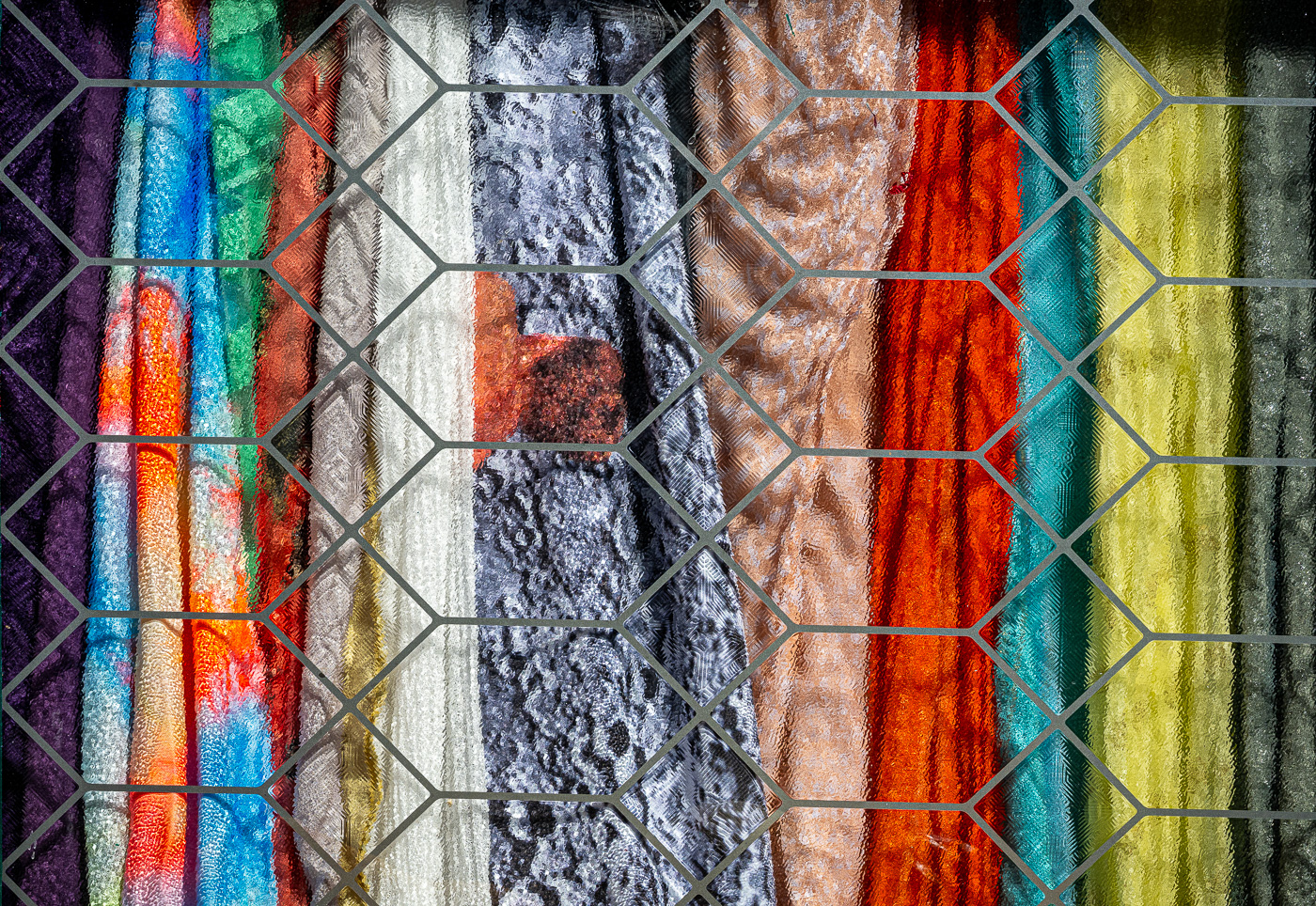
    I see this myself with 2 dispirit things I love to shoot: landscapes and stained glass. I live in Colorado. Rich sources of landscape opportunities are all around me. But as time goes on I find it harder to create something new with them. Similarly, I am drawn to beautiful stained-glass windows. I can’t help but shoot them. But I recognize when I am doing it that this is the same old record shot of a window. It is very hard to find much new to say about them.

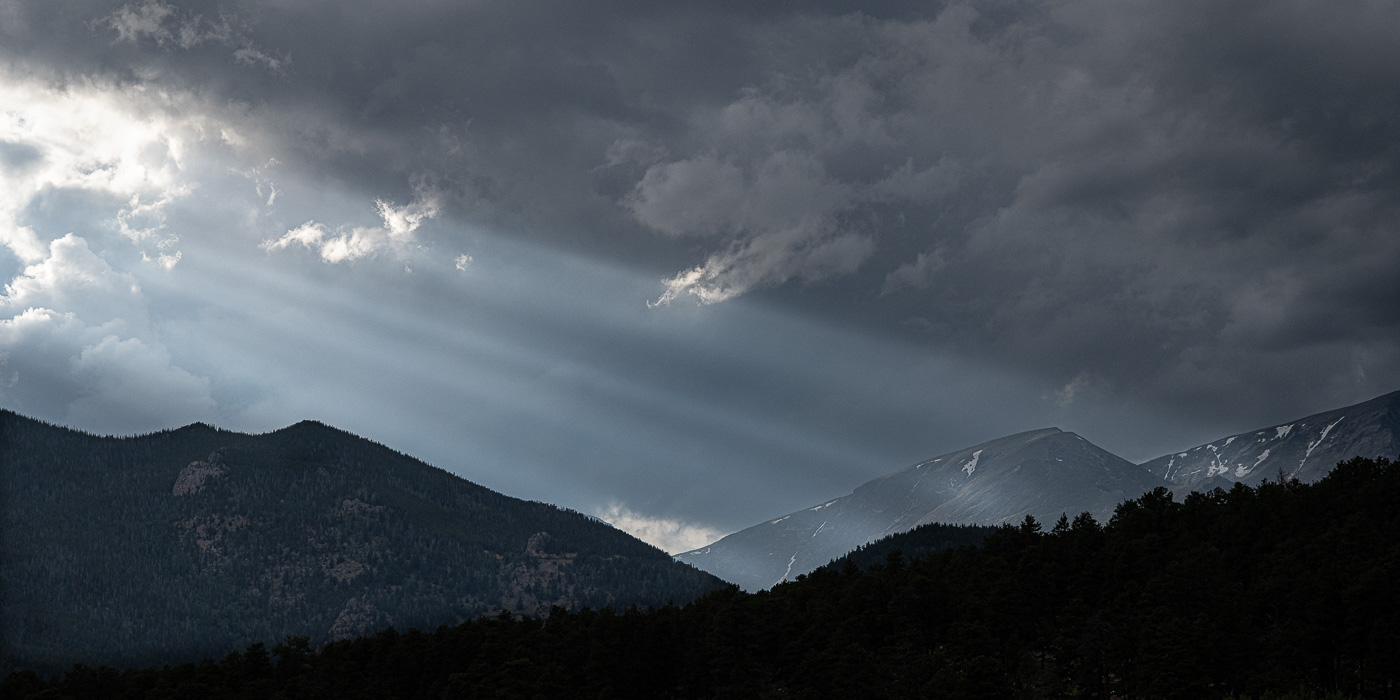
    Tunnel through the mountains©Ed Schlotzhauer

    What interests us

    I have come to believe the greater motivator is to shoot what interests us. This may not be what we think we love.

    More and more I believe that our curiosity is a searchlight that will lead us to challenging and creative new work. I love a phrase from David duChemin: “Go in the direction your brain is already running.” This beautifully captures the idea that our interests and our curiosity is pulling, nudging, directing us forward to new things. We just have to follow. And marvel at how we got there.

    He points out that this might take us far from what other people are doing. But that is great! It lets us play in exciting new areas that other photographers are not trampling all over, working to death. Our curiosity will lead us to areas that are uniquely our own vision.

    Antique reflections©Ed Schlotzhauer

    Practice

    Everyone is naturally curious as kids, but it seems to be squeezed out of us as we “adult”. But we can relearn. it. How can we practice being curious? Easy. Let go and don’t try to force it. Ask yourself questions.

    Curiosity is our brain making connections between things and asking questions to learn more. The more sources of connections we have, the better that works. We must encourage the questions.

    One way to learn about curiosity in practice is to be around a 4-year-old. They have questions about everything. Many of their questions are things we might wonder about but wouldn’t ask because we are too “mature”. That’s the advantage of the kid. They feel free to ask any question. Imitate that. Ask the questions, at least in our head.

    And since curiosity is about our brain making connections, it helps to feed our head, Dabble in all sorts of different things. Get a little information on everything you encounter, even if you don’t think you will be interested in it. No telling where that path will take you or how that random bit of information may emerge later.

    You know that Google makes an extensive dossier of you based on your searches (don’t use Google search). Be so eclectic that their algorithm gives up on you because it can’t pigeonhole you.

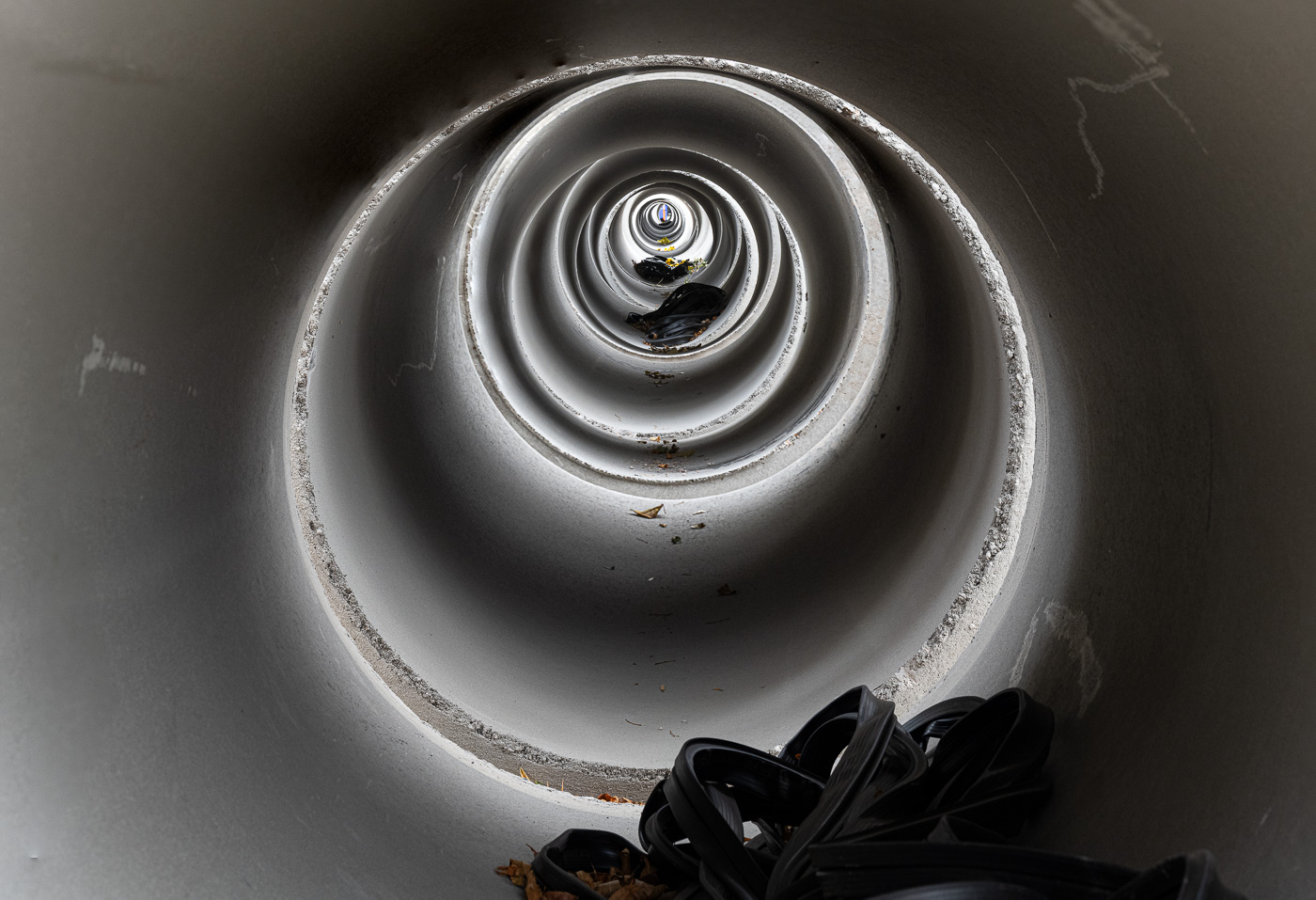
    Going around in circles©Ed Schlotzhauer

    Challenge

    Creativity needs challenge. Without challenge, it will atrophy. Staying in a safe comfort zone does not challenge us. This is why I believe it is important to shoot what interests us. When we are shooting pictures, always be asking “What if…?”

    Our interests are fluid. They shift and move to new ideas as we learn and think more. And if we accept the challenge to experiment with those ideas, we can see new things in even the common things around us.

    Following our shifting interests keeps us fresh and challenges us with learning and adopting new viewpoints. It is based on our curiosity rather than a particular subject.

    Always be curious. Always be asking questions. And give yourself permission to follow your curiosity. No one is stopping you except you. Follow your curiosity and shoot what interests you.

  • Love The One You’re With

    Love The One You’re With

    Good general advice is that we should photograph subjects we love. I want to bend it some and suggest we love the one you’re with.

    Love our subjects

    It seems good advice to say we should concentrate on photographing subjects we love. Then we will feel a strong draw and affection for it. We will think more and look deeper into what it means and what it can be.

    We see it all the time. Some photographers only shoot landscape, others only portraits. People focus exclusively on food photography or mini-figures or architecture. There are hundreds of specialties.

    That’s great. I agree that if we have an affinity for a subject, we should photograph it. It will be fun and rewarding. But it can be limiting.

    But what if your only true photographic love is reefs in Fiji, or volcanoes in Iceland, or hidden temples in Malaysia? Unless you are retired with fat investments, most of us would not have the opportunity to do that very often.

    Have you painted yourself into a corner in that case? Do we have to resolve that there’s nothing for me to shoot here where I live? I must wait until I can go to my dream location. But when I get there someday, I will kill it.

    This is where Paradox's come from©Ed Schlotzhauer

    Song

    For some reason I was reminded of the very old song by Stephen Stills, “Love the One You’re With“. Yes, I go back that far. I don’t remember hearing it recently, but this idea of shooting what you love must have triggered it.

    The main theme of the song is “If you can’t be with the one you love, love the one you’re with”. That is so 1970’s. It is good advice for causal relationships with groups of friends, but terrible advice for couples. But no marriage counseling here.

    Love the one you’re with

    Yes, it is great to be able to photograph the subjects and themes you love. But we don’t always get to do that. I recommend adopting a more mindful attitude of being attuned to what is around you.

    If you are so exclusive that you will only photograph certain subjects I suggest getting checked for obsessive/compulsive tendencies. You are passing by many joys of discovery that happen when you let your curiosity take you down unexpected paths. And being so selective means, you miss the practice that comes from taking the opportunity to explore how to photography other things. Anytime we use our camera to take a picture, we are practicing our craft.

    Instead of waiting exclusively for the thing you love, fall in love with what you find. It is great photographic practice, it is great mindfulness exercise, it keeps you engaged where you are, and you might find new love interests.

    Rock creatures©Ed Schlotzhauer

    Mindfulness

    Accepting the challenge of photographing things you did not know you were interested in requires re-orienting your mindset. It is that scary idea of practicing mindfulness.

    Mindfulness used to have a negative connotation for me. I associated it with some of the ridiculous examples I see on the internet involving a deep spiritual philosophy, incense, yoga poses, chants, and, what seemed to me to be mind games. It is that for some.

    But I already have a strong spiritual path, I don’t bend the way a 20-year-old yoga instructor does, and if I started changing mantras, I would burst out laughing at myself. Few of those things have much to do with photography, in my opinion.

    Mindfulness in our art involves the mental discipline of staying aware of what is around us. Looking, being in tune with what is there, being receptive. And, going back to the original idea of this article, looking for and learning to appreciate the interest, even beauty, in what we find. Even to the extent of falling in love with the ordinary things around us.

    Dry docked. Permanently.©Ed Schlotzhauer

    Challenge

    Exercises like 52 Week Photo Challenges are popular. That is one reason there are so many of them. I know from experience that they are good learning experiences. They keep us trying new things and having to creatively find a solution for a word problem.

    I don’t do these anymore, but mostly because am not competitive and because I find so many challenges around me all the time that I don’t want to distract myself. That’s just me. Don’t let me discourage you if you have not tried it.

    If you are not going to do one of these scripted challenges, I encourage you to challenge yourself. Ignore your one great subject love. Go out wide open. Turn off the music and your phone. Walk around and look around. “Force” yourself to look more closely at what is there. Determine that you are going to shoot things you never photograph. See something and think “that is mildly interesting; how could I make it very interesting?” Discover that there are endless possibilities besides what you normally focus on.

    it seems like I often come around to the idea of mindfulness in our photography. I guess it is one of my ongoing themes. Mindfulness seems to be joined to creativity. Mindfulness helps us discover interesting things. Creativity stimulates us to do something interesting with them.

    It’s simple. That’s why it is so hard.

    In your photography: Love The one you’re with.

  • What Do You See?

    What Do You See?

    We all have different interests, which triggers different perceptions of things around us. What do you see? That determines a lot about what you will photograph.

    Visual mechanics

    If we are an average human beings, we have fairly similar optical equipment. We have rods and cones, corneas and irises, an optical nerve. In the brain we have the occipital lobe doing the major image processing, the parietal lobe handling spatial recognition, and the temporal lobe interfacing to memory. Memory is important to the scene recognition process.

    This is fascinating in a general way, but I’m not interested in any of that for this discussion. I don’t care about the mechanisms of how we see.

    If I was shopping for a car and the salesman insisted on going on in great length about the design details of the engine, he would probably lose a sale. I’m not uninterested in that, but I am more interested in what the car will do for me.

    Stylish airport lighting©Ed Schlotzhauer

    Perception

    In a similar way, I’m not very interested in the mechanism of sight. I want to know how we use our vision. Why do we see what we see? Do we see the same things others around us see?

    I refer to this as our perception. That is not based on how well our visual system works, but in what we are drawn to notice and decide to photograph. Basically, what we choose to see.

    I have heard it said that if you take 2 photographers and put them side by side in a 10×10 foot area they couldn’t leave and have them take pictures, they would be different. Sure, they would image many of the same subjects, but their work would be different. One may favor wide angle shots taking in all the field around them. The other may favor telephoto views narrowing in on details. Even if they used the same cameras and lens, their compositions would be distinct. Basically, they are perceiving different stories. They see and feel different things.

    I haven’t tried this literal experiment, but I have been on photo walks where a group traveled through the same area for an hour or two. When we compared results there were significant differences in treatments and subject selection. We each had different perceptions.

    Decrepit sign along old Route 66.©Ed Schlotzhauer

    Insight

    To me, our perception is closely related to the insight we bring to a scene or subject. Insight in the sense of intuition. A Psychologist’s definition of insight is “when a solution to a problem presents itself quickly and without warning.” I believe that is too limited for our application to photography.

    I prefer to broaden it to include more of our consciousness. The term noesis better captures it. Very simply, it is “the power of acute observation and deduction, discernment, and perception.”

    In our photography, that is basically saying we are looking, we recognize the interest to us, and we know what to do with it. That allows that we could be intentionally looking to photograph the subject, or we may just suddenly recognize that it is interesting. But either way, our perception is working, our eyes are open, and our mind is engaged.

    Selective attention

    Most people are not open and engaged most of the time. We are glued to our tiny screens for much of our day. Even when we put them down, we tend to be lost in thought about our to-do list or an important meeting coming up or a problem we are trying to solve.

    It is a human tendency to have tunnel vision when we are worrying or focused on a problem. Psychologists call this selective attention. There is an old but famous video used as an experiment in this. Try it before reading ahead to the next paragraph. Really focus on counting the passes.

    Did you notice the gorilla? About half the people who are concentrating on counting the passes didn’t. This is selective attention. Even when something bizarre passes through our field of view, we can miss it completely because we are concentrating on something else.

    There is a second finding that came out of this. Most of the subjects who missed the gorilla were very surprised they had done it. They seriously overestimated their ability to multitask. It seemed inconceivable to them that they could miss something so obvious.

    Rusty chair, shadows at sunset©Ed Schlotzhauer

    Are you open?

    When we have the privilege of getting in the “doing photography” mode, whatever that means for you, we must fight to free ourselves from the things that are stealing our attention.

    When we are distracted, we will miss amazing things. Doing photography means to take ourselves out of this, to invert our attention to what’s going on around us, to be receptive.

    This is being open. It is letting the noesis I described earlier function: “the power of acute observation and deduction, discernment, and perception.”

    There is power in this. It turns simple seeing into deep observation and insight. We are aware of relationships and gesture and color and composition and beauty and detail that would otherwise flow by unobserved and unrecorded. It allows us to capture moments that others around us did not perceive.

    I love it when I show someone an image and they say ‘Wow, I pass by that every day and I have never noticed it!” I treasure a memory of one time when I was setting up to take a picture and a woman passing by dismissively said “I don’t see anything interesting here.” But I did. That was satisfying.

    It is very natural to be thinking about our daily worries. I can’t help you with that. I do too. But some of our significant distractions are self-inflicted. If we are photographers, I believe we need to set aside blocks of time where we put the phone down and out of sight and pay attention to what we are missing all around us.

    We only have a certain amount of attention. Moment by moment we choose what to spend it on. Multi-tasking is very ineffective for creative tasks. When we try to do our art and something else, both will suffer.

    Giant bear peeking into an urban building©Ed Schlotzhauer

    Give yourself permission

    One joy of being a photographer is that we can give ourselves permission to step out of the flood that carries most people along. Picking up our camera is an excuse and an opportunity to be immersed in the moment, in a creative flow. Eyes open, mind engaged, not distracted. This is tremendously energizing. It makes us feel very alive. We start to see.

    We photograph what we are looking at. That’s the direction our head is pointing, so that is where our field of vision is. That limits what we could see. But what are we seeing? That is our choice. We “see” with our mind. What we notice in our field of view is determined by our interests and curiosity. With practice and experience we can learn to see more. To more clearly see things that are not obvious to other people.

  • Critique Your Own Work

    Critique Your Own Work

    It is important to be able to honestly critique your own work. Can you objectively see it as others do? I believe it is a learned skill.

    It will be critiqued

    Every time we look at our images, we are critiquing them. When our friends or even our spouse look at them, they are critiquing them. They will probably keep their real opinions to themselves, but inside their head, they are being honest.

    And, of course, when we approach a gallery or enter a contest, we are explicitly inviting critique. The gallery manager or judge is seeing hundreds or thousands of competing images. They will be brutally honest and severe in their comparison and criticism. They are only going to choose a handful of the many competing entries they are given.

    Even if we are just posting on social media to show other people where we are and what we are doing, they are forming opinions of the pictures. I would theorize that, if you care at all about images, it is impossible to look at a picture without forming an opinion. And everyone who looks at yours does it.

    Transportation modes and triangles©Ed Schlotzhauer

    First do it ourself

    That may sound harsh, but I believe it is reality. Since it will happen, shouldn’t we jump in and be the most severe critic of our pictures before others do? Shouldn’t we eliminate weak pictures and fix the problems in the others? If we are very deliberate to only show our best images, that will save us embarrassment and make us look like a better photographer.

    You will never see my unedited images unless I am teaching a workshop on editing and want to prove a point. I shoot a lot. Most are not great. And I don’t even intend some of them to be very good. Some are purely experimental. “What if” moments where I am exploring to see if what I did seems to lead in a useful direction.

    It is common to make several shots of a scene. But I will typically pick only 1 as the best. That is the only one you would ever see. And even then, the best of a set still may not be a very good image.

    And it is much more than the technical perfection of an image.

    Spreading oak branches.©Ed Schlotzhauer

    Study

    My friend Cole Thompson believes in what he calls “photographic celibacy“. He does not look at the work of other photographers so that he is not influenced by them.

    That does not work for me. I consider it valuable to study all forms and genres of image making. There are things to be learned from photography and painting and movies, graffiti and magazines and advertising. Most any genre from Renaissance to Romanticism to Impressionism to Abstract to post-modernism can give us insight in how other artists have chosen to express their ideas.

    Read books where artists discuss their thought process. Go to museums and galleries. Cultivate friends who have artistic perception. Take in as much as possible.

    But learn. Don’t follow.

    Keeping Knowledge locked away©Ed Schlotzhauer

    Learn your taste

    We are artists. That means we have a point of view to share with the world, and particular visual styles we use to do it. We each must find and understand our values and style. These preferences guide our photographic decisions.

    If you are new at photography, it is natural to look at an artist and say we want to make work that looks like theirs. That is OK, for a while. Copy someone we are studying to internalize how they do it. But it is important then to re-center ourself and decide what, if anything, of what we learned we want to adopt to our own art.

    Maybe it is nothing. We may greatly admire their art, but conclude it is not applicable to what we feel and want to do. For example, I really like some of Joel Grimes‘ portraits. But it is unlikely I will ever do an image in his style. I don’t shoot portraits, and the edgy, high-tech style is not mine.

    My point is that, with lots of experience and practice, I am learning how I see and what kind of images I want. Anything that makes me better at that adds to my skills and is valuable. Anything that doesn’t may be interesting and educational, but probably not valuable.

    Give it some time

    We are all basically using the same tools. It is not the technology that differentiates us.

    Famous jazz musician Miles Davis said, “Sometimes, you have to play a long time to be able to play like yourself.” This is probably true of any art form. I believe it is true of photography.

    We learn and practice and imitate other artists and chase “likes”, but eventually, if we persist, we learn to be ourselves. I don’t think there are shortcuts (sorry). If you have been at it for a while, you are probably not producing the same type of work now that you did 20 years ago. Hopefully, you are now creating images that are uniquely you.

    Each of us is a mix of genes and education and experience and values and motivations, tempered by our unique life experiences, and wrapped in a frail human body. No one else’s mix is the same as yours. That’s why we should not try to “be” some other artist we admire. We can’t. We can only authentically be ourselves.

    But even when we learn to be ourselves, that doesn’t mean our work is good. The sad truth is that most of the trillions of photos shot every year are unexceptional. We must learn the skill of critically evaluating our own work.

    Graffiti abstract©Ed Schlotzhauer

    Make a portfolio

    An excellent way to examine yourself and understand where you are artistically is to put together a portfolio. I find that I am not as critical as I should be unless I do this. Pretend you are going to submit your portfolio to a gallery. The portfolio can’t have more than 20 images.

    That limit is the problem and the beauty. It is not difficult pulling out 300 pictures you like. Forcing that down to 200 hurts some, but isn’t too much of a problem. Then grit your teeth and make the cuts down to 100. This is getting painful. You are having to cut some of your favorite pictures.

    Then it gets hard. You think you can’t possibly take any more out. But the goal staring at you is 20. From here on out, you are having to do serious self-examination. Each image must be scrutinized more carefully. Every one must be justified to stay in the select set.

    Liking, even loving an image is not enough. We must objectively decide if it is a strong piece of art on its own. Is the technical craft and the composition solid enough to stand up to criticism? Does it go beyond a record shot, having that “something extra“?

    This is painful. When it gets down to about 30, every one you eliminate feels like you are giving up one of your children. Each picture must compete head-to-head against every other one. The weaker must be eliminated. You try to talk yourself into cheating and keeping 25 or 30 for the portfolio. But push on. Cutting the last 10-20 images is by far the most difficult. But also, the most instructive.

    Abstract, Charles de Gaulle Airport, Paris©Ed Schlotzhauer

    Self-examination

    Congratulations! You have put together a portfolio! The regret over the ones eliminated will fade quickly. You just eliminated them from this portfolio. You didn’t delete them from your disk. Now it is time to reflect on what you have created and try to learn.

    Just look at your images for a while. Consider each one individually. Why do you like it? How is it better than all the ones you eliminated? What do you learn about yourself from it? Then reflect on the whole set. You might be surprised to discover a harmonious style or approach, even though each may be a different subject.

    Forcing yourself through the process of narrowing down a set of good pictures to a very small set of great pictures is an excellent way to learn to critique your work. Having a fixed goal forces us to make hard decisions instead of being vague.

    You will probably discover that you have a set of images that you are proud to show anyone. Ones you believe will stand up to close examination by experts. And that you have a style that is your own.

    Critique your own work, severely. Be such a severe critic that you are sure you will not be ashamed to show anyone the survivors. And make sure your work proves you are human, not an AI.